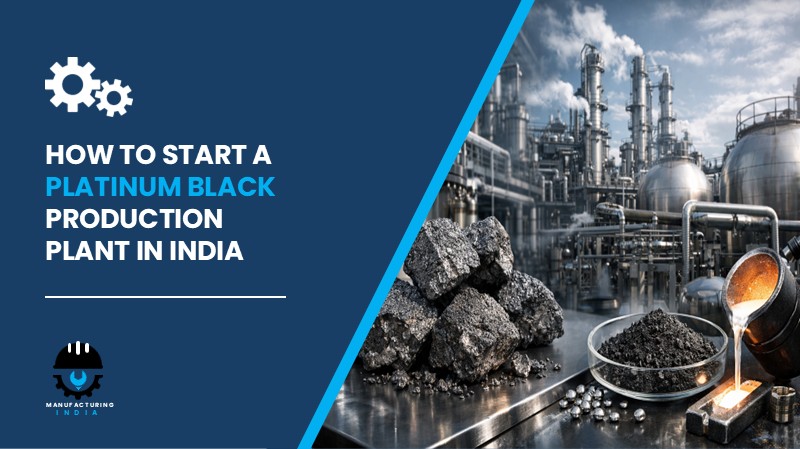
Setting up a platinum black production plant in India presents a compelling investment case at a time when the country’s hydrogen energy ambitions, specialty chemical manufacturing sector, pharmaceutical industry, and advanced research ecosystem are simultaneously generating growing demand for one of the world’s most technically sophisticated and highest-margin catalytic materials. Platinum black — a highly divided form of metallic platinum possessing an exceptionally large surface area, produced through chemical reduction methods — is the foundational catalyst for hydrogen fuel cell electrodes, hydrogenation reactions in specialty chemical and pharmaceutical synthesis, gas sensor arrays, and electrochemical applications where no viable substitute can match its combination of chemical stability, electrical conductivity, and catalytic surface activity. As India accelerates its hydrogen economy ambitions, expands its specialty chemical processing capacity, and deepens its pharmaceutical manufacturing base, the domestic requirement for high-performance platinum-based catalysts is growing into a commercially significant opportunity for producers who can establish technically credible, quality-certified production in-country.
India’s positioning for platinum black production is strengthening across multiple dimensions. The Asia-Pacific region, of which India is an increasingly important advanced materials manufacturing hub, holds the largest market share at 40.8% of the global platinum black market — a regional dominance that reflects both the concentration of fuel cell and hydrogen technology investment and the density of specialty chemical and pharmaceutical manufacturing that collectively constitute the primary demand base for this ultra-premium catalytic material. India’s pharmaceutical sector — already one of the world’s largest by volume — is a major consumer of platinum catalysts for selective hydrogenation reactions in active pharmaceutical ingredient synthesis, creating an immediate and growing domestic demand anchor. The Make in India initiative and government support for advanced materials and clean energy technology manufacturing provide policy tailwinds, while chemical industry clusters in Gujarat, Maharashtra, and Telangana offer the laboratory-grade infrastructure, chemical handling expertise, and regulatory frameworks that a platinum black production facility requires.
Investing in a platinum black production plant in India today aligns the hydrogen economy’s accelerating expansion, pharmaceutical sector growth, and specialty chemical demand with APAC’s dominant 40.8% global market share position and the exceptional financial returns that this ultra-premium catalytic material generates. With gross profit margins of 55–65% and net profit margins of 30–40% — the highest margin profile in this investment guide series — the unit economics are extraordinary, and the facility’s technically specialised production model — designed for 1 to 10 MT annually — supports commercially compelling returns across a well-defined niche-product investment horizon.
What is Platinum Black?
Platinum black exists as a highly divided form of metallic platinum possessing a very large surface area, produced through chemical reduction methods that convert platinum salts into finely divided metallic powder. The substance exists as a soft powder displaying a dull black colour, and it is valued primarily for its exceptional ability to act as a catalyst — a material that speeds up chemical reactions while remaining chemically unchanged itself. The material is produced through the reduction of chloroplatinic acid and other platinum salts using hydrogen gas or formaldehyde as reducing agents under controlled conditions.
Platinum black exhibits extremely high surface activity — creating multiple active sites that enable chemical reactions to occur at rates and selectivities unachievable with other catalyst materials — and shows high performance across hydrogenation, oxidation, and different types of electrochemical operations. The material serves various applications in fuel cells, gas sensors, laboratory research, and specialty chemical synthesis. It maintains chemical stability, electrical conductivity, and physical durability across demanding operating environments, making it a crucial component for advanced energy technologies and modern catalytic applications. A significant recyclability advantage — platinum can be recovered and recycled from spent catalyst applications — further enhances the long-term economic viability of production and investment in this category.
The primary production process covers preparation of chloroplatinic acid solution, chemical reduction using reducing agents, precipitation, filtration, washing, drying, controlled heat treatment, pulverisation, quality testing, and packaging. End-use industries served include chemical manufacturing, energy storage and fuel cells, pharmaceuticals, electronics, and research laboratories. Applications span hydrogenation reactions, fuel cell electrodes, catalytic converters in specialised applications, gas sensors, and analytical chemistry experiments.
Cost of Setting Up a Platinum Black Production Plant in India
The cost of establishing a platinum black production plant in India depends on production capacity, the purity grade and surface area specification of the target product, chemical reduction process technology selection, geographic location, laboratory infrastructure investment, and the stringent chemical safety, precious metal handling, and quality certification requirements applicable to platinum catalyst products supplied to pharmaceutical, fuel cell, and research laboratory customers.
1. Capital Expenditure (CapEx)
Land and Site Development forms a foundational component of total capital investment, covering land acquisition charges, site registration, boundary development, precious metal secure storage infrastructure, chemical containment and drainage systems, and site utilities. Given the extremely high value of platinum metal feedstock — one of the world’s most expensive industrial metals — site security, vault storage, and access control infrastructure represent a capital requirement with no equivalent in conventional chemical manufacturing. Investors may explore specialty chemicals industrial estates or pharmaceutical-adjacent industrial parks in Gujarat, Maharashtra, or Telangana, where chemical handling infrastructure, hazardous material compliance expertise, and proximity to pharmaceutical and specialty chemical customer clusters create a commercially advantaged operating environment.
Civil Works and Construction cover the main production area housing corrosion-resistant reactor systems, filtration and washing stations, drying and heat treatment areas, pulverisation systems, and analytical laboratory spaces — all requiring chemical-resistant surfaces, fume extraction, and controlled-environment conditions appropriate for precious metal processing. Platinum vault storage, waste treatment infrastructure, and precious metal recovery systems are additional civil requirements that go beyond standard chemical plant construction scope.
Machinery and Equipment represent the largest single component of total CapEx for a platinum black production plant. Key machinery required includes:
- Corrosion-resistant reactors
- Filtration systems
- Drying ovens
- Pulverisers
- Analytical instruments
- Packaging units
Other Capital Costs include an effluent treatment plant (ETP) with precious metal recovery capability to capture platinum from process effluents — a critically important financial consideration given platinum’s extreme value — pre-operative expenses, regulatory approval costs for precious metal handling, commissioning charges, and any import duties applicable to specialised analytical instruments or reactors not available domestically at the required corrosion resistance and precision specification.
Request a Sample Report for In-Depth Market Insights: https://www.imarcgroup.com/platinum-black-production-cost-analysis-report/requestsample
2. Operational Expenditure (OpEx)
Raw Material Cost is the overwhelmingly dominant operational expense, accounting for approximately 85–90% of total OpEx — a concentration level that reflects the extreme unit cost of platinum metal, one of the world’s scarcest and most valuable industrial commodities. The primary raw materials are platinum metal and chemical reduction agents — specifically hydrogen gas or formaldehyde used as reducing agents in the conversion of chloroplatinic acid to platinum black powder. Platinum metal pricing is set by global precious metals markets and is subject to significant volatility driven by supply concentration in South Africa and Russia, industrial demand from automotive catalysts, and investment demand. Establishing robust platinum procurement relationships with certified precious metal suppliers and implementing active price risk management strategies are essential for margin protection. Long-term contracts with reliable suppliers of chemical reduction agents are also advisable for operational continuity.
Utility Cost is the second-largest OpEx component, representing 5–10% of total operating expenses, covering electricity for reactor systems, drying ovens, analytical instruments, ventilation and fume extraction, and climate-controlled storage for both precious metal feedstock and finished platinum black powder.
Other Operating Costs include transportation and packaging for finished platinum black — which given its extreme value per gram requires highly secure, documented, and insured logistics arrangements — specialised inert atmosphere packaging materials for moisture and contamination protection, salaries and wages for process chemists and quality control analysts, routine machinery maintenance including reactor lining inspection and filtration system servicing, depreciation on production equipment, and applicable taxes. By the fifth year of operations, total operational costs are projected to increase substantially due to inflation, platinum metal price movements, supply chain disruptions, rising demand, and shifts in the global precious metals and clean energy economies — factors requiring careful incorporation into the multi-year financial model.
3. Plant Capacity
The proposed production facility for platinum black is designed with an annual production capacity ranging between 1 and 10 metric tonnes, reflecting the extremely high value-per-kilogram of this ultra-premium catalytic material and the relatively small volumes required by even large-scale fuel cell, pharmaceutical, and specialty chemical customers. Plant capacity can be customised per investor requirements and should be phased in line with secured customer purchase agreements and market qualification milestones. Unlike high-volume commodity chemical plants, platinum black production economics are driven by product purity, surface area specification compliance, and customer technical qualification rather than tonnage scale — making quality system investment and customer relationship development equally as important as production capacity planning.
4. Profit Margins and Financial Projections
The financial projections for a platinum black production plant represent by far the most attractive margin profile of any product category covered in this investment guide series. Gross profit margins typically range between 55–65%, and net profit margins are projected at 30–40% — extraordinary returns that reflect the ultra-premium pricing commanded by platinum black’s irreplaceable catalytic performance, the technical barriers to market entry, and the limited number of qualified global producers. A comprehensive financial analysis covering NPV (net present value), IRR (internal rate of return), payback period, gross margin progression, and net margin development across a five-year horizon is essential before committing capital. The project’s ROI profile and long-term sustainability are assessed against realistic assumptions on capital investment, production capacity utilisation, platinum metal pricing trends, and demand outlook from the fuel cell, chemical, pharmaceutical, electronics, and research laboratory end-use sectors.
Why Set Up a Platinum Black Production Plant in India?
Growing Hydrogen Economy and Fuel Cell Catalyst Demand. Expansion of fuel cell technologies directly and substantially increases demand for platinum-based catalysts. In January 2026, FORVIA secured a RMB 300 Million (EUR 40 Million) minority investment from Sinopec Capital to boost hydrogen growth in China, which produced 36.5 million tons of hydrogen in 2024, operates 559 stations, and targets 500,000 hydrogen vehicles by 2030 and 1 million by 2035. This scale of hydrogen economy investment across Asia-Pacific — the region holding 40.8% of the global platinum black market — creates the demand trajectory for platinum catalysts that makes India-based production commercially viable and strategically positioned.
Asia-Pacific Market Leadership and India’s Strategic Role. APAC holds the largest share of the global platinum black market at 40.8%, with India’s position as an emerging hub for fuel cell technology, specialty chemicals, and pharmaceutical manufacturing placing the country increasingly at the centre of the region’s platinum catalyst demand. As India develops its own hydrogen mobility and stationary fuel cell installations to reduce carbon emissions, domestic demand for platinum black will grow in parallel with the hydrogen infrastructure build-out.
Expanding Pharmaceutical and Fine Chemical Sector. The continuous reliance of pharmaceutical and fine chemical manufacturers on platinum catalysts for selective hydrogenation reactions is supporting steady market demand that is independent of hydrogen economy development cycles. India’s pharmaceutical sector — one of the world’s largest by volume — consumes platinum catalysts across numerous active pharmaceutical ingredient synthesis processes, creating an immediate, large, and growing domestic demand base that a qualified Indian platinum black producer can serve with supply chain, quality, and responsiveness advantages over imported product.
High-Value Specialty Product with Limited Substitutes. Premium pricing is supported by the absence of viable substitutes for platinum black in high-performance catalytic applications and the technical complexity of manufacturing this material to the purity, surface area, and particle size specifications required by fuel cell and pharmaceutical customers. These technical entry barriers favour experienced, quality-driven producers with strong analytical chemistry capability and established customer qualification track records — characteristics that create defensible competitive positioning once market entry is achieved.
Breakthrough Research Applications Expanding Market. In September 2025, researchers at the University of Freiburg demonstrated that platinum black facilitates the creation of ultra-thin cathodes that operate PFSA-free fuel cells with substantially improved performance during low-humidity testing, achieving record current densities matching standard PFSA cells. This breakthrough enables sustainable development of fluorine-free fuel cell technology and signals new application territory for platinum black in next-generation fuel cell architectures. In March 2025, researchers reported that coating endovascular neural electrodes with platinum black shows significant improvements in electroactive surface area, charge storage, and charge injection capacity while reducing impedance and polarisation — a medical technology application that broadens the commercial market beyond traditional industrial and energy uses.
Recyclability Advantage Enhancing Economic Viability. Platinum recovery and recycling from spent catalyst applications enhance the long-term economic viability of platinum black production by reducing net platinum consumption per unit of catalytic throughput. Establishing a platinum recovery and recycling capability alongside primary production allows a producer to recover material value from spent catalysts, reduce raw material cost on a lifecycle basis, and offer customers a closed-loop supply service that strengthens long-term relationships and creates additional revenue streams.
Production Process — Step by Step
The platinum black production process uses preparation of chloroplatinic acid solution, chemical reduction using reducing agents, precipitation, filtration, washing, drying, controlled heat treatment, pulverisation, quality testing, and packaging as the primary production method. Each stage requires precisely controlled reagent concentrations, reaction temperature, pH, and reduction conditions to produce platinum black of the target surface area, particle size distribution, purity, and catalytic activity required by fuel cell, pharmaceutical, and research laboratory customers.
- Chloroplatinic Acid Solution Preparation: High-purity platinum metal is dissolved in aqua regia (a mixture of nitric acid and hydrochloric acid) under controlled conditions in corrosion-resistant reactors to produce chloroplatinic acid (H₂PtCl₆) solution of the specified concentration. Solution purity and platinum concentration are verified analytically before proceeding to the reduction stage.
- Chemical Reduction: The chloroplatinic acid solution is treated with a reducing agent — hydrogen gas or formaldehyde, depending on the target product specification — under precisely controlled temperature, pH, and reagent addition rate conditions. The reducing agent converts dissolved platinum ions to metallic platinum, which precipitates as finely divided platinum black particles with the characteristic high surface area that defines the material’s catalytic performance.
- Precipitation and Particle Development: Reduction conditions — including stirring rate, temperature, and reducing agent concentration — are carefully managed to control the nucleation and growth of platinum black particles, targeting the specific particle size distribution and surface area specification required for the intended application.
- Filtration: The platinum black slurry is processed through filtration systems to separate the solid platinum black powder from the reaction liquor. The platinum-containing filtrate is captured for precious metal recovery through the ETP platinum recovery circuit to minimise material loss.
- Washing: Filtered platinum black cake is washed with purified water through repeated wash and filtration cycles to remove residual chloride ions, reaction by-products, and reducing agent residues that would compromise product purity and catalytic performance in end-use applications.
- Drying: Washed platinum black is dried in drying ovens at controlled temperatures under inert or reduced atmosphere conditions to remove moisture without causing sintering or surface area reduction that would degrade the material’s catalytic activity.
- Controlled Heat Treatment: Dried platinum black undergoes controlled heat treatment at specified temperatures to stabilise surface structure, remove residual surface contaminants, and achieve the target crystallographic and surface area characteristics required by the product specification.
- Pulverisation: Heat-treated platinum black is processed through pulverisers to break up any agglomerates formed during drying and heat treatment, restoring the fine, free-flowing powder morphology required for customer handling and application performance.
- Quality Testing: Finished platinum black is subjected to comprehensive analytical testing at analytical instrument stations covering surface area measurement by BET analysis, particle size distribution, purity including trace metal contamination, catalytic activity testing in model reactions, and physical characterisation before release for packaging.
- Packaging: Specification-compliant platinum black is carefully weighed, packaged under inert atmosphere in sealed containers using packaging units to prevent oxidation and moisture absorption during storage and transit, then securely labelled with traceability documentation and dispatched to fuel cell manufacturers, chemical processors, pharmaceutical companies, electronics producers, and research laboratories.
Key Applications
Platinum black produced in India serves technically demanding and commercially high-value applications across multiple advanced industrial and research sectors:
- Fuel Cell Industry: Used as a catalyst in hydrogen fuel cells to enhance electrochemical reactions at electrode surfaces, enabling the high power density and efficiency that makes hydrogen fuel cells commercially viable for mobility and stationary power applications.
- Chemical Industry: Applied in hydrogenation and oxidation processes in specialty chemical manufacturing where platinum black’s selectivity and activity enable efficient conversion of complex organic substrates under mild reaction conditions.
- Pharmaceutical Sector: Utilised in catalytic synthesis of active pharmaceutical ingredients, particularly in selective hydrogenation reactions where platinum black’s high surface area and controlled selectivity enable the production of complex chiral and functional molecules at pharmaceutical purity grades.
- Research and Laboratory Use: Employed in analytical and experimental catalytic studies across university research, government laboratories, and industrial R&D facilities where platinum black’s well-defined surface properties and high activity make it the reference catalyst for mechanistic investigations and catalyst development research.
Leading Producers
The global platinum black industry is served by a limited group of highly specialised precious metal chemistry companies with deep expertise in platinum catalyst production and customer application support. Key players in the global market include:
- Kaida Chemical
- Heraeus
- Stanford
- Johnson Matthey
- American Elements
- INDANE CHEMICAL COMPANY
Timeline to Start the Plant
Establishing a platinum black production plant in India involves a structured multi-phase development sequence. Investors should plan for the following phases:
- Feasibility study and project report preparation
- Land acquisition and site development
- Regulatory approvals and environmental clearances
- Factory licence and fire safety compliance
- Machinery procurement and installation
- Raw material supplier agreements and supply chain setup
- Trial production and quality testing
- Commercial production launch
Licences and Regulatory Requirements
Starting a platinum black production unit in India requires several approvals spanning business registration, precious metal handling, chemical safety, environmental, and pharmaceutical supply chain compliance domains:
- Business registration (Proprietorship, LLP, or Pvt Ltd)
- Factory Licence under the Factories Act
- Environmental Clearance from the State Pollution Control Board
- GST Registration
- Fire Safety NOC
- Hazardous/Chemical compliance applicable to chloroplatinic acid, aqua regia, hydrogen gas, and formaldehyde handling under chemical safety regulations
- Precious metals handling and reporting compliance under applicable customs and commodity regulations for platinum import and processing
- Effluent Treatment Plant (ETP) operational clearance with platinum recovery capability
- Occupational Health and Safety compliance
Key Challenges to Consider
Extreme Raw Material Cost Concentration and Platinum Price Volatility. Platinum metal accounts for approximately 85–90% of total OpEx — and platinum is one of the world’s most expensive and price-volatile industrial metals, with pricing influenced by supply concentration in South Africa and Russia, industrial demand from automotive catalyst applications, and investment demand cycles. A 20% movement in platinum spot prices directly translates to a 17–18% swing in total OpEx, making active platinum price risk management through forward purchasing, hedging, and contract pricing with customers a mission-critical operational discipline.
Precious Metal Security and Loss Control. The extreme value of platinum throughout the production process — from raw metal storage through reaction solution, filtration liquor, and finished product — creates security and loss control challenges that go well beyond those of any conventional chemical manufacturing operation. Establishing certified precious metal assay, inventory control, ETP platinum recovery, and physical security systems requires dedicated investment and ongoing management attention to protect asset value across every stage of the production process.
Technical Complexity of Surface Area and Purity Specification Compliance. Producing platinum black to the surface area, purity, particle size, and catalytic activity specifications required by fuel cell manufacturers and pharmaceutical companies demands deep analytical chemistry expertise, certified reference standards, calibrated BET surface area instrumentation, and rigorous statistical batch-to-batch consistency control. Achieving and maintaining these specifications across production batches requires highly qualified chemists and ongoing investment in analytical capability.
Customer Qualification Cycles. Platinum black supplied to fuel cell manufacturers and pharmaceutical active ingredient producers must pass through rigorous material qualification processes verifying purity, surface area consistency, catalytic performance, and supplier quality systems. These qualification cycles, particularly for pharmaceutical GMP supply, can extend 12–24 months and require extensive documentation, third-party audits, and demonstrated production consistency before commercial orders are confirmed.
Competition from Established Global Specialists. The competitive landscape includes globally established precious metal catalyst specialists including Johnson Matthey, Heraeus, and American Elements, which carry long-standing customer qualifications, proprietary production technology, and deep application expertise. New producers must demonstrate equivalent technical quality and supply reliability to penetrate established customer relationships, typically requiring several years of market development investment before achieving meaningful commercial-scale revenue.
Highly Skilled Technical Workforce. Platinum black production requires analytical chemists, precious metal process specialists, and quality control experts with graduate-level chemistry qualifications and experience in catalyst characterisation — a technical workforce that is scarce, commands premium compensation, and requires ongoing continuing professional development investment to remain current with evolving customer specifications and production process improvements.
Frequently Asked Questions
1. How much does it cost to set up a platinum black production plant in India?
The total setup cost depends on production capacity, product purity grade and surface area specification, laboratory infrastructure level, location, and security systems investment. CapEx covers land and site development including platinum vault storage, laboratory-grade civil construction, core equipment including corrosion-resistant reactors, filtration systems, drying ovens, pulverisers, analytical instruments, and packaging units, along with ETP with platinum recovery capability, chemical safety infrastructure, and other capital costs. A detailed project report with full CapEx and OpEx breakdowns is available on request.
2. Is platinum black production profitable in India in 2026?
Yes — extremely so. The project demonstrates gross profit margins of 55–65% and net profit margins of 30–40% — the highest margin profile across all products covered in this series — reflecting the ultra-premium price commanded by platinum black’s irreplaceable catalytic performance, the technical barriers to market entry, and the stable demand from fuel cell, pharmaceutical, and specialty chemical customers.
3. What machinery is required for a platinum black production plant in India?
Key machinery includes corrosion-resistant reactors for chloroplatinic acid reduction, filtration systems for platinum black separation, drying ovens, pulverisers for particle size control, analytical instruments for BET surface area measurement and quality testing, and packaging units for inert atmosphere packaging. All equipment must be fabricated from corrosion-resistant materials compatible with chloroplatinic acid and chemical reduction agents.
4. What licences and approvals are required to start a platinum black production plant in India?
Required approvals include business registration, a Factory Licence under the Factories Act, Environmental Clearance from the State Pollution Control Board, GST registration, a Fire Safety NOC, hazardous chemical compliance for chloroplatinic acid and reducing agents, precious metals handling compliance for platinum import and processing, ETP operational clearance with platinum recovery certification, and Occupational Health and Safety compliance.
5. What raw materials are needed for platinum black production?
The primary raw materials are platinum metal and chemical reduction agents — specifically hydrogen gas or formaldehyde. Platinum metal accounts for approximately 85–90% of total operating expenses, making platinum procurement strategy, precious metal price risk management, and supplier certification the most critical cost management levers for the investment.
6. What are the environmental compliance requirements for a platinum black production plant in India? The unit must obtain Environmental Clearance from the State Pollution Control Board, operate a certified ETP with platinum recovery capability to capture precious metal from process effluents, comply with hazardous chemical handling regulations for aqua regia, chloroplatinic acid, and reducing agents, and maintain monitoring systems for air emissions from fume extraction and wastewater discharge in line with state pollution control standards.
7. What is the best location to set up a platinum black production plant in India?
Optimal locations offer proximity to certified precious metal suppliers and import-capable logistics hubs, established specialty chemical and pharmaceutical manufacturing clusters as customer bases, reliable utilities, and regulatory environments experienced with hazardous and precious material handling. Specialty chemical industrial estates in Gujarat, Maharashtra, and Telangana — where pharmaceutical and specialty chemical manufacturing is concentrated — are among the most strategically relevant options.
8. What is the break-even period for this type of plant in India?
The break-even period depends on production capacity, customer qualification timelines with fuel cell manufacturers and pharmaceutical companies, capacity utilisation rate, and platinum metal pricing trends. The exceptionally high gross and net margins — 55–65% and 30–40% respectively — support faster break-even recovery than conventional chemical manufacturing investments at equivalent capital scale. A detailed financial analysis is available via the sample request link.
9. What government incentives are available for manufacturers in India?
The Make in India initiative, PLI schemes for advanced chemistry cell and fuel cell technology manufacturing, Department of Science and Technology grants for catalytic materials research and development, and state-level specialty chemical manufacturing incentives in Gujarat and Maharashtra provide financial and regulatory support for platinum black production investments.
Key Takeaways for Investors
A platinum black production plant in India represents one of the most financially extraordinary and strategically differentiated investment opportunities in the advanced materials manufacturing sector — where gross profit margins of 55–65% and net profit margins of 30–40% combine with growing demand from the hydrogen fuel cell industry, pharmaceutical sector, specialty chemical processing, and frontier research applications to create a compelling and defensible business case for a technically capable producer. The project demonstrates financial viability at annual production capacities of just 1 to 10 MT — a reflection of platinum black’s exceptional per-kilogram value rather than a constraint — with Asia-Pacific’s dominant 40.8% global market share and India’s expanding pharmaceutical and hydrogen energy programmes providing the immediate domestic demand anchors for market entry. With research breakthroughs in September 2025 demonstrating platinum black’s role in next-generation PFSA-free fuel cells achieving record current densities, and March 2025 findings confirming its transformative potential in neural electrode medical technology, the addressable market for platinum black is actively expanding beyond established industrial and energy applications. Ongoing technological improvements in catalyst preparation techniques that enhance surface area and catalytic performance while reducing platinum consumption per unit application further improve the economics of platinum black production over time. For investors with the technical capability and capital commitment to establish a certified, customer-qualified platinum black production facility in India, the combination of extraordinary margin potential, limited competition, recyclability advantage, and multi-sector demand growth across clean energy, pharmaceuticals, and frontier technology makes this among the most distinctive and financially rewarding manufacturing investments available in the Indian market today.
About the Author