Setting up a green hydrogen manufacturing plant in India presents a compelling investment case for industrial groups, clean energy developers, and ESG-focused funds seeking long-term exposure to the global energy transition. India’s hard-to-abate sectors refining, chemicals and fertilizers, steel manufacturing, power generation, and transportation face sustained pressure to decarbonize, and green hydrogen is rapidly emerging as the defining solution to their emissions challenges. As these industries accelerate their shift to low-carbon feedstocks, establishing domestic production capacity has become a national strategic priority.
India’s natural advantages abundant solar and wind resources, a cost-competitive manufacturing base, the Make in India initiative, and strategically located industrial corridors across Gujarat, Rajasthan, and Tamil Nadu position it as one of the most attractive production destinations in the world. The National Green Hydrogen Mission targets 5 MMT of annual output by 2030, has already attracted INR 8 Lakh Crore in investments, and launched mobility and port-based pilots to accelerate adoption. Investors who move early into this space are well-positioned to capture India’s emerging clean hydrogen market.
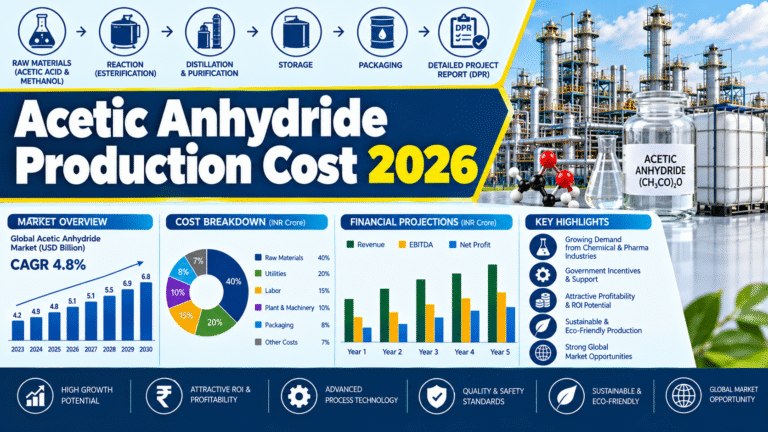
The global green hydrogen market, valued at USD 2,477.8 Million in 2025, is projected to reach USD 68,257.40 Million by 2034 at a CAGR of 44.6%. A green hydrogen manufacturing plant in India, backed by the National Green Hydrogen Mission and INR 8 Lakh Crore in committed investments, combines policy momentum, falling renewable energy costs, and durable industrial demand into one of the most forward-looking investment opportunities available.
What is Green Hydrogen?
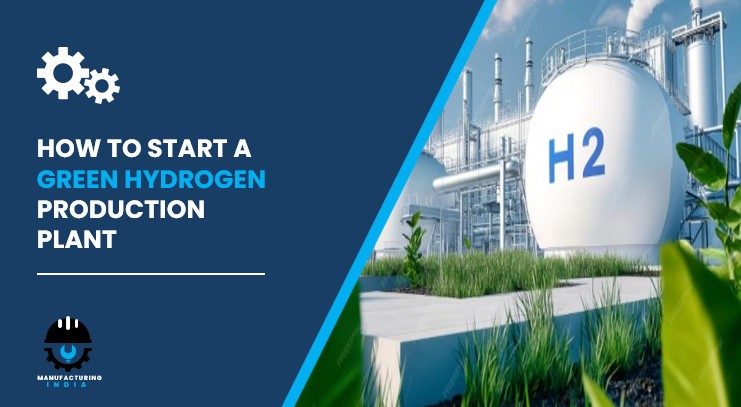
Green hydrogen is produced when water is electrolyzed into hydrogen and oxygen using electricity sourced entirely from renewable energy solar, wind, or hydropower. Unlike grey or blue hydrogen derived from fossil fuels, it carries zero carbon emissions, making it a clean and sustainable energy carrier. It can be stored for long periods, transported over long distances, and reconverted to electricity or used directly as fuel, giving it unique applicability across global decarbonization strategies and net-zero pathways.
The primary production method is water electrolysis. The complete process involves water purification and treatment, renewable power integration, electrolysis using alkaline, PEM (Proton Exchange Membrane), or SOEC (Solid Oxide Electrolyzer Cell) technologies, hydrogen drying and purification, compression or liquefaction, storage, and dispatch. End-use sectors include refining, chemicals and fertilizers, steel manufacturing, power generation, transportation, and energy storage. The product also serves as feedstock for green ammonia, methanol, and synthetic fuels.
Cost of Setting Up a Green Hydrogen Manufacturing Plant in India
The cost of establishing a green hydrogen manufacturing plant in India depends on plant capacity, electrolysis technology, site location, automation level, and regulatory compliance. A rigorous feasibility study is an essential prerequisite before committing capital.
1. Capital Expenditure (CapEx)
Land and site development covering land registration, boundary work, and utility infrastructure represent a substantial share of total capital investment. Siting the facility within a Special Economic Zone (SEZ) or renewable energy industrial estate can reduce costs and provide regulatory advantages. Civil works, including the production shed, quality laboratory, raw material storage, and administrative block, form the next major investment layer. Machinery costs account for the largest individual component of total CapEx.
Key machinery required includes:
- Electrolyzers (alkaline, PEM, or SOEC)
- Rectifiers
- Compressors
- Storage tanks
- Safety valves
- Monitoring systems
- Water purification systems
- Renewable energy integration equipment (solar or wind)
- Hydrogen compressors
- Gas purification units
- Cooling systems
- Safety and control infrastructure
Other capital costs include the effluent treatment plant (ETP), pre-operative and commissioning expenses, and import duties on specialized electrolyzer components.
Request a Sample Report for In-Depth Market Insights: https://www.imarcgroup.com/green-hydrogen-manufacturing-plant-project-report/requestsample
2. Operational Expenditure (OpEx)
Raw material costs are the dominant driver of operating expenses. Deionized water, renewable electricity (solar/wind), electrolyzer stacks, and catalysts including those containing platinum, iridium, nickel, and specialized ceramic oxide membranes account for 60–70% of total OpEx. Long-term supplier contracts are essential to stabilize costs and guard against supply chain disruptions. Utility costs covering electricity, water, and cooling represent a further 10–15% of OpEx. Additional costs include transportation, packaging, salaries, maintenance, depreciation, and taxes. Total operational costs are projected to increase substantially by the fifth year of operations, driven by inflation, market fluctuations, and rising input costs.
3. Plant Capacity
The production facility is designed for annual output between 10,000 and 50,000 MT, enabling economies of scale while preserving operational flexibility. Capacity can be customized to match investor requirements and available renewable energy supply. Profitability improves significantly with higher capacity utilisation, making facility sizing a critical strategic decision.
4. Profit Margins and Financial Projections
This type of production facility demonstrates strong profitability potential under normal operating conditions. Gross profit margins typically range between 30–50%, supported by stable industrial demand and value-added downstream applications, while net profit margins range between 10–20%. A comprehensive financial plan should incorporate NPV, IRR, and payback period analysis. Break-even timelines typically range from 5 to 10 years, influenced by plant size, energy costs, capital investment, government incentives, and market demand.
Why Set Up a Green Hydrogen Plant in India?
Net-Zero Commitments and National Policy Support. India’s National Green Hydrogen Mission targets 5 MMT of annual production by 2030, has attracted INR 8 Lakh Crore in investments, launched mobility and port-based pilots, and aims to cut fossil fuel import dependency providing a comprehensive and uniquely supportive policy environment for investors entering domestic production.
Demand from Hard-to-Abate Industrial Sectors. Refining, chemicals and fertilizers, steel manufacturing, and heavy transport are industries that cannot be decarbonized through electrification alone. These sectors are actively transitioning to low-carbon feedstocks, creating durable, long-term domestic demand for green hydrogen producers at every production scale.
Cost-Competitive Renewable Energy Foundation. Declining solar and wind costs are directly improving the economics of the green hydrogen manufacturing process. According to IRENA, renewable energy costs fell in 2024, with solar PV power averaging 41% lower than the cheapest fossil fuel alternatives and onshore wind 53% cheaper conditions particularly favourable across India’s renewable-rich states.
Active Global Investment Signaling Industry Maturity. In July 2025, China’s Envision Energy inaugurated the world’s largest green hydrogen and ammonia plant in Chifeng, Inner Mongolia entirely renewable-powered, AI-operated, and producing 320,000 tonnes annually demonstrating the rapid commercial scaling of the sector. India’s Mission positions domestic investors to benefit from this global momentum.
Expanding Downstream and Export Opportunities. Rapid integration with applications such as green ammonia, e-methanol, and sustainable aviation fuels is widening the addressable revenue base significantly. The emergence of cross-border hydrogen supply chains and export-oriented production hubs creates additional high-value revenue pathways for Indian producers.
Manufacturing Process Step by Step
The green hydrogen manufacturing process uses water electrolysis as the primary production method, with all electricity sourced from renewable energy. The process follows these unit operations:
- Water Purification and Treatment: Raw water is processed to produce deionized water of the quality required for electrolysis input.
- Renewable Power Integration: Electricity generated from solar, wind, or hydropower is integrated to power the electrolyzer stacks.
- Electrolysis: Purified water is split into hydrogen and oxygen inside electrolyzers operating on alkaline, PEM, or SOEC technology.
- Hydrogen Drying and Purification: Raw hydrogen is processed through gas purification units and drying systems to reach target purity specifications.
- Compression or Liquefaction: Purified hydrogen is compressed using hydrogen compressors or liquefied, depending on storage and transport requirements.
- Storage: Compressed or liquefied hydrogen is held in storage tanks under controlled pressure and temperature conditions.
- Quality Assurance and Testing: Product purity, concentration, and stability are verified by analytical instruments before dispatch.
- Dispatch: Finished product is distributed to customers in refining, steel manufacturing, chemicals, power generation, and transportation sectors.
Key Applications
Green hydrogen serves industries requiring clean energy and low-carbon feedstock solutions:
- Industrial Decarbonization: Direct substitute for grey hydrogen in refineries and chemical plants.
- Steel Manufacturing: Applied in direct reduced iron (DRI) processes to replace coal-based reduction and lower steelmaking emissions.
- Power and Energy Storage: Long-duration storage medium enabling dispatchable power supply for renewable grids.
- Transportation: Fuel for hydrogen fuel cell vehicles, trains, and shipping.
- Chemicals and Fertilizers: Clean feedstock for green ammonia and nitrogen-based fertilizer production.
- Synthetic Fuels: Enables production of methanol and sustainable aviation fuels for industrial and export markets.
Leading Manufacturers
The global market is served by major multinational producers with large-scale production capacity and diverse end-use portfolios. Key players include:
- Air Liquide
- Air Products and Chemicals, Inc.
- ENGIE
- Uniper SE
- Siemens Energy
- LHYFE
- Toshiba Energy Systems & Solutions Corporation
- Nel
Timeline to Start the Plant
Establishing a green hydrogen production unit in India typically requires 18 to 36 months, structured across these phases:
- Feasibility study and project report preparation
- Land acquisition and site development
- Regulatory approvals and environmental clearances
- Factory licence and fire safety compliance
- Machinery procurement and installation
- Raw material supplier agreements and supply chain setup
- Trial production and quality testing
- Commercial production launch
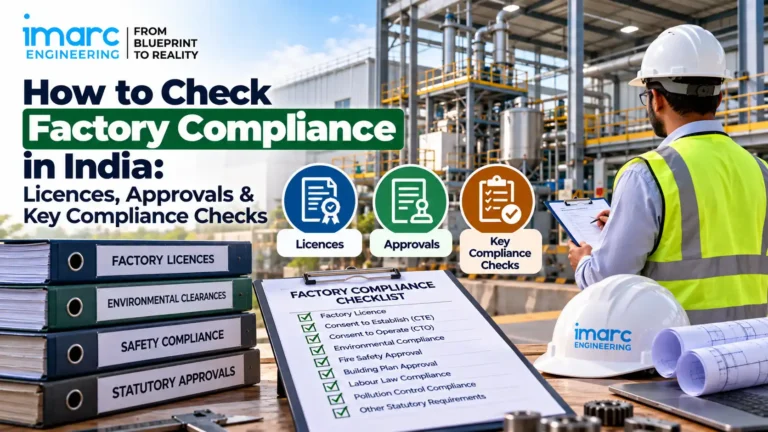
Licences and Regulatory Requirements
Starting a green hydrogen manufacturing unit in India requires several approvals:
- Business registration (Proprietorship, LLP, or Pvt Ltd)
- Factory Licence under the Factories Act
- Environmental Clearance from State Pollution Control Board
- GST Registration
- Fire Safety NOC
- Hazardous/Chemical compliance under applicable chemical handling regulations
- Effluent Treatment Plant (ETP) operational clearance
- Occupational Health and Safety compliance
Key Challenges to Consider
High Capital Requirements. Electrolyzers, renewable energy assets, compression infrastructure, and civil works demand substantial upfront investment. Project financing or equity partnerships are typically necessary to fund this type of facility.
Raw Material Price Volatility. Costs for deionized water, renewable electricity, electrolyzer stacks, and catalysts containing platinum, iridium, and nickel are subject to global commodity and supply chain price fluctuations, requiring proactive procurement management.
Regulatory Compliance. Hydrogen is a high-pressure, flammable gas. Strict safety certifications, environmental clearances, and continuous compliance with hazardous chemical handling regulations are non-negotiable operational requirements throughout the plant’s life.
Technology and Innovation Pressure. Electrolyzer technology is advancing rapidly in efficiency and scalability. Technology selection at project inception has significant long-term implications for operating costs and competitive positioning.
Competition. Global players including Air Liquide, Air Products and Chemicals, Inc., ENGIE, Siemens Energy, and Nel are scaling production capacity at pace, intensifying competition as the market matures commercially.
Skilled Manpower. Operating electrolyzer-based facilities requires specialized expertise in electrochemical engineering, process control, and safety management skills that remain relatively scarce in India’s current industrial workforce.
Frequently Asked Questions
1. How much does it cost to set up a green hydrogen manufacturing plant in India?
Costs depend on capacity, technology, location, and automation; a detailed project report provides plant-specific estimates covering land, civil works, electrolyzers, compressors, and pre-operative expenses.
2. Is green hydrogen manufacturing profitable in India in 2026?
Yes, gross margins of 30–50% and net margins of 10–20%, supported by the National Green Hydrogen Mission and falling renewable energy costs, make this a viable commercial investment in 2026.
3. What machinery is required for a green hydrogen plant in India?
Essential equipment includes electrolyzers, rectifiers, compressors, storage tanks, safety valves, monitoring systems, water purification systems, gas purification units, hydrogen compressors, cooling systems, and renewable energy integration infrastructure.
4. What licences and approvals are required to start a green hydrogen plant in India?
Required approvals include business registration, Factory Licence, Environmental Clearance, GST Registration, Fire Safety NOC, hazardous chemical compliance, ETP clearance, and Occupational Health and Safety certification.
5. What raw materials are needed for green hydrogen manufacturing?
Primary inputs are deionized water, renewable electricity (solar or wind), electrolyzer stacks, and catalysts including platinum, iridium, nickel, and ceramic oxide membranes.
6. What are the environmental compliance requirements for a green hydrogen plant in India?
Requirements include Environmental Clearance from the State Pollution Control Board, ETP operation, high-pressure gas safety protocols, and hazardous chemical and emissions regulation compliance.
7. What is the best location to set up a green hydrogen plant in India?
States with high renewable energy availability Gujarat, Rajasthan, Tamil Nadu, and Andhra Pradesh combined with industrial cluster proximity and port access for export are strategically optimal.
8. What is the break-even period for this type of plant in India?
Break-even typically ranges from 5 to 10 years, influenced by plant size, energy costs, capital investment, government incentives, and demand; supportive policies and technological advances can shorten this period.
9. What government incentives are available for manufacturers in India?
India’s National Green Hydrogen Mission provides capital subsidies, domestic manufacturing support, and pilot programs; additional national and state incentives may include tax exemptions, reduced utility tariffs, and export benefits.
Key Takeaways for Investors
A green hydrogen manufacturing plant in India represents a structurally sound, long-term investment anchored in durable demand from refining, steel manufacturing, chemicals and fertilizers, power generation, and transportation sectors irreversibly committed to decarbonization. The financial profile is compelling across capacity scales, with gross margins of 30–50%, net margins of 10–20%, and break-even achievable within 5 to 10 years. The global green hydrogen market, valued at USD 2,477.8 Million in 2025, is on course to reach USD 68,257.40 Million by 2034 at a CAGR of 44.6%, with India backed by the National Green Hydrogen Mission and INR 8 Lakh Crore in committed investments well-positioned to capture a significant share. With hard-to-abate industries increasingly locked into green hydrogen adoption and renewable energy costs continuing their decline, the long-term demand sustainability of this investment is among the strongest available in the clean energy landscape.
About the Author