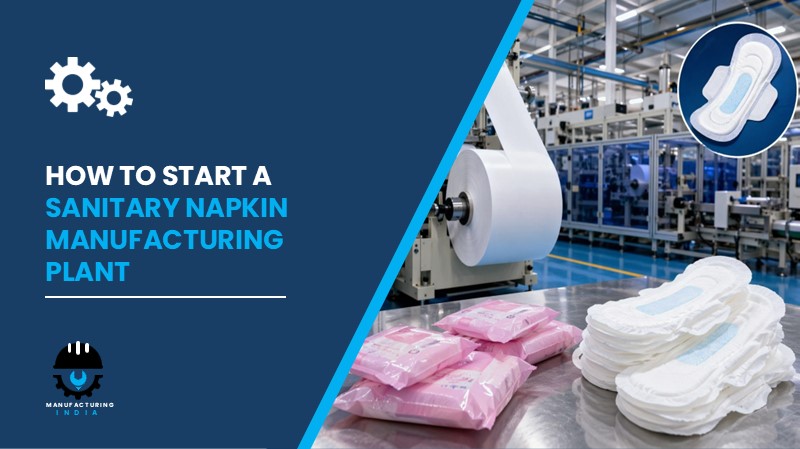
Setting up a sanitary napkin manufacturing plant in India presents a compelling investment case driven by surging demand across feminine hygiene, healthcare, personal wellness, and retail sectors. As menstrual hygiene awareness deepens across urban and rural India alike, sanitary napkins have become critical daily-use consumer essentials with non-cyclical demand. The growing female population, rising female workforce participation, and government-led sanitation initiatives are creating a structurally robust and expanding domestic market for well-positioned local producers.
India’s cost-competitive land and labour, developing raw material supply chains, and strong policy support under the Make in India initiative make it strategically sound for this category of manufacturing investment. States such as Gujarat, Maharashtra, and Uttar Pradesh offer established industrial estate infrastructure, reliable utilities, and logistical connectivity that reduce both capital and operational costs meaningfully. With penetration levels in rural and semi-urban India still comparatively low, establishing a domestic production unit offers a compelling long-term growth runway for investors at every scale.
India is witnessing a decisive shift in menstrual hygiene adoption, underpinned by government-led awareness programs and rising female literacy — creating a sustained demand horizon for domestic sanitary napkin producers. With gross profit margins of 45–55% and a scalable annual capacity of 100–300 million pieces, this investment delivers strong financial viability across plant scales. Policy frameworks including Make in India and MSME support, combined with active institutional procurement, further reinforce the break-even viability of a well-positioned domestic unit.
What is a Sanitary Napkin?
Sanitary napkins are absorbent materials used during menstruation for personal and hygiene purposes. Each product is composed of several functional layers: a non-woven cloth layer that provides comfort, an absorbent core made from cellulose pulp and super absorbent polymers (SAP), and a polyethylene backing sheet that ensures leak-proofing. Adhesive strips keep the pad securely in place during use. Advanced product variants include ultra-thin pads, maxi pads, organic cotton-based pads, biodegradable pads, and night protection pads — catering to diverse consumer preferences across price points and usage occasions.
The sanitary napkin manufacturing process uses air-laid forming, thermal bonding, and ultrasonic sealing as its primary production methods, delivering consistent absorbency performance, structural integrity, and dermatological safety. End-use industries include feminine hygiene, healthcare, personal wellness, retail, and personal care packaging — making this a product category with multiple commercial and institutional demand channels.
Cost of Setting Up a Sanitary Napkin Manufacturing Plant in India
The total investment required for this type of facility depends on plant capacity, technology level, location, degree of automation, and regulatory compliance requirements.
1. Capital Expenditure (CapEx)
Land and site development — covering land registration, boundary development, and related statutory charges — forms a substantial part of the total investment for the sanitary napkin manufacturing plant. Investors may explore SEZ locations or state-designated industrial estates in Gujarat, Maharashtra, or Uttar Pradesh to benefit from reduced land costs, streamlined approvals, and established infrastructure. Civil works include the production shed, quality control laboratory, raw material and finished goods storage, and the administrative block, all sized to planned production capacity and expansion requirements.
Machinery and equipment represent the largest single CapEx component for this production setup. Key machinery required includes:
- Pulp-forming machines
- Core-forming units
- SAP dosing systems
- Embossing presses
- Wing-sealing units
- Individual wrapping machines
- Sterilization units
- Final packaging lines
Other capital costs include an effluent treatment plant (ETP), pre-operative expenses, commissioning charges, and applicable import duties on specialised equipment sourced internationally.
Request a Sample Report for In-Depth Market Insights: https://www.imarcgroup.com/sanitary-napkin-manufacturing-plant-project-report/requestsample
2. Operational Expenditure (OpEx)
Raw materials — principally nonwoven fabric and super absorbent polymers (SAP), alongside cellulose pulp, polyethylene backing sheet, and adhesive material — account for 50–60% of total operating expenditure. Securing long-term supply contracts with reliable domestic and international suppliers is essential to manage price volatility and maintain consistent production quality. Utility costs covering electricity, water, and steam represent 10–15% of OpEx and vary with plant location and automation level. Other ongoing costs include transportation, packaging, salaries and wages, routine maintenance, depreciation, and taxes. By the fifth year, total operational costs are expected to increase substantially due to inflation, rising input prices, and expanding consumer demand — factors that must be incorporated into long-term financial planning.
3. Plant Capacity
The proposed facility is designed with an annual production capacity of 100–300 million pieces, enabling economies of scale while maintaining operational flexibility. Capacity can be customised per investor requirements and distribution network reach. Profitability improves meaningfully with higher capacity utilisation, making early ramp-up planning a critical element of the overall investment strategy.
4. Profit Margins and Financial Projections
The sanitary napkin manufacturing plant demonstrates strong profitability potential under normal operating conditions. Gross profit margins typically range between 45–55%, supported by stable non-cyclical demand and value-added product applications. Net profit margins are projected at 20–25%. Full financial projections covering NPV, IRR, payback period, income and expenditure schedules, and sensitivity analysis are developed based on realistic assumptions of capital investment, capacity utilisation, and pricing trends — providing investors with a comprehensive view of long-term ROI.
Why Set Up a Sanitary Napkin Plant in India?
Rising Menstrual Hygiene Adoption. National Family Health Survey-5 (NFHS-5) data shows that women aged 15–24 using hygienic menstrual methods rose from 57.6% in NFHS-4 to 77.3% in NFHS-5 — a clear indicator of structural demand growth that directly benefits manufacturers operating in this sector. This rising adoption rate signals a growing addressable market that is unlikely to reverse.
Growing Female Workforce Participation and Urbanisation. Rising female literacy and expanding workforce participation are accelerating adoption of modern hygiene products across India. Urbanisation is improving retail accessibility, while e-commerce platforms are extending market reach into Tier 2 and Tier 3 cities that remain underpenetrated in hygienic menstrual product usage.
Policy and Regulatory Tailwinds. Government menstrual hygiene programs, school distribution initiatives, rural health schemes, and frameworks including Make in India and MSME support drive institutional demand and reduce entry barriers for domestic sanitary napkin manufacturers — creating a structurally favourable operating environment for new investors.
Cost-Competitive Manufacturing. India offers competitive land costs, an abundant labour supply, and a growing domestic base for key inputs including nonwoven fabric and SAP — enabling producers to achieve healthy operating margins and competitive product pricing relative to imports.
Active Industry Investment. In May 2024, Amrutanjan Health Care Limited approved a new manufacturing plant with an estimated investment of INR 123 crore to address growing domestic and export demand. In January 2025, CSIR-IICT partnered with Aakar Innovations Pvt Ltd to launch the “Wealth out of Waste (WOW)” technology, converting agricultural waste including banana pseudostems into pulp for eco-friendly, compostable sanitary pads — signalling an active innovation pipeline within India’s hygiene manufacturing sector.
Local Supply Chain Preference. NGOs, healthcare organisations, and government agencies actively prefer local manufacturers for product affordability, rapid availability, and customisation to regional needs — creating structural procurement advantages for well-positioned Indian producers with sound quality and operational standards.
Manufacturing Process – Step by Step
The sanitary napkin manufacturing process uses air-laid forming, thermal bonding, and ultrasonic sealing as the primary production methods. The main production stages are:
- Pulp Forming: Cellulose pulp is processed through pulp-forming machines to create the absorbent core structure using air-laid forming.
- SAP Dosing: Super absorbent polymers are precisely dosed into the core layer using SAP dosing systems to achieve the target absorbency level.
- Core Formation: Core-forming units consolidate the pulp-SAP mixture into a uniform absorbent core with controlled weight and thickness.
- Thermal Bonding: The absorbent core undergoes thermal bonding to ensure structural integrity and prevent core migration during use.
- Embossing: Embossing presses imprint surface patterns that enhance comfort, fit, and product aesthetics.
- Wing Sealing: Wing-sealing units attach and seal the side wings for secure positioning during wear.
- Ultrasonic Sealing: Ultrasonic sealing bonds the non-woven top sheet, absorbent core, and polyethylene backing into a finished product.
- Sterilisation: Sterilization units process finished pads to the hygiene and safety standards required for personal care products.
- Wrapping and Packaging: Individual wrapping machines and final packaging lines prepare products for dispatch to feminine hygiene, healthcare, retail, and institutional buyers.
Key Applications
Sanitary napkins serve a broad range of industries with specific absorbency, comfort, and safety performance requirements:
- Feminine Hygiene: Absorbent cores and surface layers used in sanitary napkins for menstrual care and protection.
- Personal Care Packaging: Protective wraps and hygienic sealing components that maintain product sterility before use.
- Medical and Healthcare: Disposable absorbent products and hygiene-related materials for clinical and institutional settings.
- Consumer Goods: Comfort layers and moisture-control components incorporated into personal hygiene products for daily consumer use.
Leading Manufacturers
The global sanitary napkin market is served by several multinational companies with extensive production capacities and broad distribution networks across feminine hygiene, healthcare, personal wellness, and retail sectors. Key players include:
- Procter & Gamble
- Kimberly-Clark Corporation
- Unicharm Corporation
- Edgewell Personal Care
- Johnson & Johnson
- Kao Corporation
Timeline to Start the Plant
- Feasibility study and project report preparation
- Land acquisition and site development
- Regulatory approvals and environmental clearances
- Factory licence and fire safety compliance
- Machinery procurement and installation
- Raw material supplier agreements and supply chain setup
- Trial production and quality testing
- Commercial production launch
Licences and Regulatory Requirements
Starting a sanitary napkin manufacturing unit in India requires several approvals:
- Business registration (Proprietorship, LLP, or Pvt Ltd)
- Factory Licence under the Factories Act
- Environmental Clearance from State Pollution Control Board
- GST Registration
- Fire Safety NOC
- Effluent Treatment Plant (ETP) operational clearance
- Occupational Health and Safety compliance
Key Challenges to Consider
High Capital Requirements. Establishing this production facility demands meaningful upfront investment across land, civil works, and specialised machinery including SAP dosing systems, embossing presses, and sterilization units. Phased capital deployment and secure project financing are critical to managing early-stage investment risk.
Raw Material Price Volatility. Nonwoven fabric and SAP — accounting for 50–60% of total OpEx — are exposed to global price fluctuations linked to petrochemical supply chains and logistics disruptions. Long-term supplier contracts are the primary mitigation strategy available to plant operators.
Regulatory Compliance. Meeting hygiene, dermatological safety, and environmental standards, including operational ETP requirements and GMP compliance, adds ongoing management complexity and cost that must be planned for from project inception.
Technology and Innovation Pressure. The market is rapidly evolving toward eco-friendly product variants, with innovations such as the WOW technology from CSIR-IICT and Aakar Innovations creating competitive pressure for sustainable materials adoption among manufacturers.
Competition from Established Global Players. Multinational manufacturers including Procter & Gamble, Kimberly-Clark Corporation, Unicharm Corporation, Edgewell Personal Care, Johnson & Johnson, and Kao Corporation operate at significant production scale — requiring domestic entrants to differentiate through product quality, pricing strategy, and distribution reach.
Skilled Manpower. Recruiting and retaining trained operators for embossing presses, wing-sealing units, and ultrasonic sealing machinery remains a persistent challenge in India’s manufacturing environment, particularly outside major industrial clusters.
Frequently Asked Questions
1. How much does it cost to set up a sanitary napkin manufacturing plant in India?
Total investment varies by capacity, technology, location, and automation level. Detailed CapEx and OpEx breakdowns covering all cost heads are provided in the full project feasibility report.
2. Is sanitary napkin manufacturing profitable in India in 2026?
Yes. Gross margins of 45–55% and net margins of 20–25%, supported by rising domestic demand and institutional procurement, make this a financially sound investment in 2026.
3. What machinery is required for a sanitary napkin plant in India?
Essential equipment includes pulp-forming machines, core-forming units, SAP dosing systems, embossing presses, wing-sealing units, individual wrapping machines, sterilization units, and final packaging lines.
4. What licences and approvals are required to start a sanitary napkin plant in India?
Required approvals include business registration, Factory Licence under the Factories Act, Environmental Clearance, GST Registration, Fire Safety NOC, ETP clearance, and Occupational Health and Safety compliance.
5. What raw materials are needed for sanitary napkin manufacturing?
Key inputs are nonwoven fabric, super absorbent polymers (SAP), cellulose pulp, polyethylene backing sheet, and adhesive material.
6. What are the environmental compliance requirements for a sanitary napkin plant in India?
An operational ETP, Environmental Clearance from the State Pollution Control Board, and adherence to emission and waste management standards are mandatory for this type of plant.
7. What is the best location to set up a sanitary napkin plant in India?
Industrial estates and SEZ zones in Gujarat, Maharashtra, and Uttar Pradesh offer strong infrastructure, raw material proximity, and regulatory support for sanitary napkin production.
8. What is the break-even period for this type of plant in India?
Break-even depends on capacity utilisation, pricing strategy, and operating efficiency. Detailed payback period projections are included in the full project feasibility report.
9. What government incentives are available for manufacturers in India?
Manufacturers may access Make in India incentives, MSME schemes, women-welfare programs, state-level industrial subsidies, and institutional procurement channels through government health agencies and NGOs.
Key Takeaways for Investors
A sanitary napkin manufacturing plant in India represents a high-conviction investment anchored by robust demand from feminine hygiene, healthcare, personal wellness, and retail — all expanding in step with India’s rising female workforce participation and government-backed hygiene programs. The investment is financially viable across production capacities of 100–300 million pieces annually, with gross margins of 45–55% and net margins of 20–25% supporting strong return profiles at multiple plant scales. The global sanitary napkin market, valued at USD 28.97 billion in 2025, is projected to reach USD 39.34 billion by 2034 at a CAGR of 3.46% — providing a long-dated demand horizon for domestic Indian producers. Active capital deployment from Amrutanjan Health Care Limited and ongoing innovation by CSIR-IICT confirm that demand momentum in India’s sanitary napkin sector is structurally supported well into the next decade.
About the Author