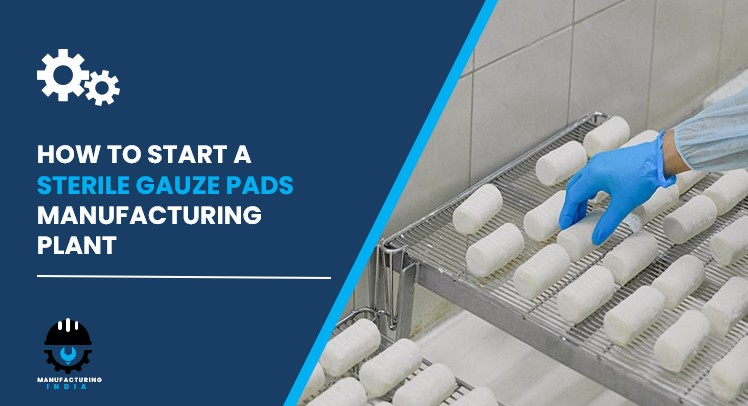
Setting up a sterile gauze pads manufacturing plant in India presents a compelling investment case for entrepreneurs and healthcare-focused industrialists seeking exposure to one of the world’s fastest-growing medical consumables segments. Demand for sterile gauze pads is driven by rising surgical volumes, expanding healthcare access, aging populations, increasing chronic wound cases such as diabetic ulcers and pressure sores, and sustained growth in home healthcare all critical pillars of a modernising healthcare ecosystem. As hospital infrastructure expands and infection-control standards tighten, sterile gauze pads have become indispensable for wound dressing, surgical preparation, exudate absorption, and post-operative care.
India’s growth trajectory makes the country one of the most strategically sound locations for this investment. Government investment in public health systems, hospital modernisation, emergency preparedness, and domestic medical device manufacturing reinforced by production-linked incentive (PLI) schemes and import substitution policies actively encourages indigenous production. Industrial states such as Gujarat, Himachal Pradesh, Telangana, and Maharashtra offer competitive land costs, medical device park infrastructure, and proximity to cotton textile supply chains, the primary raw material for gauze. With a large domestic healthcare market, a cost-competitive technical labour base, and strong linkages across pharmaceutical and hospital procurement networks, the unit offers an ideal environment to scale profitably.
This sterile gauze pads manufacturing investment benefits from essential healthcare consumable status, moderate but justifiable regulatory entry barriers that favour disciplined manufacturers, and sustained demand across hospitals, clinics, emergency services, and home healthcare. With gross margins in the 45–55% range, net profit of 22–32%, and robust market fundamentals, the sterile gauze pads manufacturing unit demonstrates credible break-even and long-term profitability potential.
What are Sterile Gauze Pads?
Sterile gauze pads are medical grade, woven or non-woven fabric pads made from cotton or synthetic materials, explicitly sterilised to eliminate bacteria and contaminants. They are individually wrapped and designed for direct application on open wounds, surgical incisions, or burns to absorb blood and exudate while providing a protective, breathable barrier. Unlike non-sterile alternatives, these pads are crucial for preventing infection. They are highly absorbent, available in standard sizes such as 2×2 and 4×4 inches, and are intended for single-use to maintain a clean healing environment.
The primary production method is carding, bleaching, sterilisation, cutting, and folding a multi-stage sequence that ensures biocompatibility, absorbency, and infection-control performance. End-use industries served include healthcare, pharmaceuticals, first aid, hospitals, clinical settings, and emergency services. Core applications include wound dressing, surgical preparation, absorption of exudate, cleaning and debridement, wound packing, and post-operative care.
Cost of Setting Up a Sterile Gauze Pads Manufacturing Plant in India
The cost of establishing this facility depends on production capacity, sterilisation technology, plant location, degree of automation, and cleanroom and regulatory compliance requirements.
1. Capital Expenditure (CapEx)
Land and Site Development costs form a substantial portion of the overall investment, covering land registration, boundary development, and site preparation. Investors may consider medical device parks or pharma clusters in Gujarat, Himachal Pradesh, or Telangana for tax concessions and cleanroom-ready infrastructure connectivity.
Civil Works and Construction cover the main production hall, cleanroom enclosures, quality control laboratory, raw material storage, finished goods warehouse, and administrative block. Adequate space is required for cleanroom-grade production lines, sterilisation chambers, and quarantine zones for sterility release testing.
Key machinery required includes:
- Slitting and rewinding machines
- Folding machines
- Cutting machines
- Gauze sponge-making machines
- Sterilisation units (ethylene oxide or gamma irradiation)
- Sealing and packaging machines
- Cleanroom HVAC and air handling units
- Quality inspection and leak-testing systems
Other Capital Costs include effluent treatment plant (ETP) setup, pre-operative expenses, sterilisation validation costs, commissioning charges, and import duties on specialised medical device equipment.
Request a Sample Report for In-Depth Market Insights: https://www.imarcgroup.com/sterile-gauze-pads-manufacturing-plant-project-report/requestsample
2. Operational Expenditure (OpEx)
Raw Material Cost is the dominant OpEx component at approximately 55–65% of total operating expenses, driven primarily by cotton gauze fabric procurement. Primary raw materials cotton gauze fabric, sterilisation supplies, and packaging should be procured under long-term supplier contracts to stabilise input costs and mitigate cotton price volatility.
Utility Cost accounts for 15–20% of operational expenses, covering electricity, water, and steam consumed by cleanroom HVAC systems, sterilisation chambers, and packaging lines. Site proximity to reliable industrial power grids is essential for uninterrupted sterilisation cycles and cleanroom environmental controls.
Other Operating Costs include transportation, packaging, salaries, maintenance, depreciation, and applicable taxes. By year five, total operating costs are expected to increase substantially due to inflation, raw material price movements, supply chain disruptions, and rising demand for sterile medical consumables.
3. Plant Capacity
The proposed facility is designed with an annual production capacity of 500 Million to 2 Billion Units, enabling economies of scale with operational flexibility. Capacity can be customised per investor requirements, and profitability improves with higher utilisation rates as fixed cleanroom and sterilisation costs are spread across greater output volumes.
4. Profit Margins and Financial Projections
The investment demonstrates healthy profitability under normal operating conditions. Gross profit margins range between 45–55%, supported by stable demand and essential-consumable status across hospitals, clinics, and emergency services. Net profit margins are projected at 22–32% on average. Financial analysis covers NPV, IRR, payback period, gross margin, and sensitivity projections providing a comprehensive view of long-term viability.
Why Set Up a Sterile Gauze Pads Manufacturing Plant in India?
Essential Healthcare Consumable Demand: Sterile gauze pads are fundamental components in wound care, surgical procedures, trauma management, and post-operative recovery across hospitals, clinics, ambulatory centres, and home healthcare positioning them as indispensable products for infection control and patient safety. This essential status generates consistent, non-cyclical demand that underpins stable plant utilisation.
Chronic Disease and Surgical Megatrend Alignment: Rising surgical volumes, expanding healthcare access, aging populations, and increasing chronic wound cases such as diabetes-related ulcers are driving sustained global demand for sterile wound-care consumables. According to the International Diabetes Federation, new cases of diabetes will continue to rise year after year, reaching approximately 853 million by 2050 underpinning long-term structural demand for sterile wound-care products.
Policy and Healthcare Infrastructure Push: Government investment in public health systems, hospital modernisation, emergency preparedness, and domestic medical device manufacturing initiatives such as production-linked incentive schemes and import substitution policies indirectly strengthens demand for locally produced sterile medical consumables and supports new capacity additions.
Moderate but Justifiable Entry Barriers: While not as capital-intensive as pharmaceutical manufacturing, stringent regulatory standards, sterilisation validation processes, cleanroom requirements, biocompatibility compliance, and hospital vendor approvals create meaningful entry barriers favouring disciplined manufacturers focused on quality assurance, certification, and consistent supply continuity.
Active Industry Investment: In November 2025, Lianyungang Baishun Medical Treatment Articles Co. Ltd. participated in the 137th China Import and Export Fair (Canton Fair) from October 31 to November 4, 2025, in Guangzhou. The company presented its latest range of products including cotton rolls, gauze rolls, non-sterile cotton balls, and dental cotton rolls, reflecting strong global capital commitment to the wound-care consumables sector.
Local Supply Chain Preference: Healthcare providers and procurement agencies increasingly prioritise dependable local suppliers to reduce import dependence, ensure uninterrupted emergency stock availability, manage cost volatility, and maintain regulatory traceability creating a competitive advantage for regionally positioned manufacturers with robust sterilisation and distribution capabilities.
Manufacturing Process Step by Step
The sterile gauze pads manufacturing process uses carding, bleaching, sterilisation, cutting, and folding as its primary production method. Understanding the process in detail is essential for equipment planning, sterilisation validation, and quality assurance. The sequence proceeds as follows:
- Raw cotton fibres are cleaned and carded to produce aligned, uniform-weight cotton webs ready for gauze formation.
- Carded cotton is woven or laid into gauze fabric at the required thread count, then passed through bleaching processes to achieve medical-grade whiteness, purity, and absorbency.
- Bleached gauze fabric is fed into slitting and rewinding machines where it is cut into predefined widths for downstream processing.
- Folding machines fold the gauze into standard pad dimensions such as 2×2 inches, 4×4 inches, and custom sizes per client requirements.
- Folded pads are cut to final dimensions using precision cutting machines, then inspected for uniformity, weight consistency, and absorbency.
- Pads are individually packaged in sealed pouches and loaded into sterilisation units for ethylene oxide (EO) or gamma irradiation treatment to eliminate bacteria and contaminants.
- Sterilised products are quarantined for sterility assurance testing and biocompatibility checks, then released for final secondary packaging via sealing and packaging machines.
- Finished sterile gauze pads are inspected using automated quality-control systems and dispatched to hospitals, clinics, pharmacies, emergency service providers, and medical distribution networks.
Key Applications
Sterile gauze pads produced at an India-based unit serve diverse healthcare settings across clinical, emergency, and consumer-facing environments:
- Wound dressing, post-surgical care, and general first aid across hospitals and clinics.
- Emergency services, including ambulances, trauma kits, and disaster response supplies.
- Home healthcare applications for minor cuts, burns, and personal wound care.
- Pharmaceutical and medical supply distribution, including inclusion in surgical packs, first aid kits, and medical inventory systems.
- Surgical preparation, absorption of exudate, cleaning and debridement, and wound packing for operating-theatre use.
- Post-operative care and chronic wound management in ambulatory and long-term care settings.
Leading Manufacturers
The global sterile gauze pads industry is served by multinational and regional manufacturers with extensive production capacities and diversified application portfolios. Key players include:
- 3S Corporation
- Future Medisurgico
- Micro Teknik
- Om Surgical Industries
- Sterikare
Timeline to Start the Plant
- Feasibility study and project report preparation
- Land acquisition and site development
- Regulatory approvals, medical device licensing, and environmental clearances
- Factory licence, cleanroom certification, and fire safety compliance
- Machinery procurement, cleanroom commissioning, and sterilisation unit installation
- Raw material supplier agreements and cotton gauze supply chain setup
- Sterilisation validation, microbial testing, and trial production
- Commercial production launch and regulatory batch release
Licences and Regulatory Requirements
Starting a sterile gauze pads manufacturing unit in India requires several approvals:
- Business registration (Proprietorship, LLP, or Pvt Ltd)
- Manufacturing licence under the Drugs and Cosmetics Act and Medical Devices Rules, 2017 (CDSCO)
- Factory Licence under the Factories Act
- ISO 13485 certification for medical device quality management systems
- Environmental Clearance from State Pollution Control Board
- GST Registration
- Fire Safety NOC
- Sterilisation validation and biocompatibility compliance documentation
- Effluent Treatment Plant (ETP) operational clearance
- Occupational Health and Safety compliance
Key Challenges to Consider
Regulatory Compliance: Sterile medical device manufacturing attracts stringent regulatory scrutiny. Continuous compliance with CDSCO requirements, sterilisation validation standards, cleanroom classifications, and biocompatibility testing demands dedicated quality-assurance investment and ongoing documentation discipline.
Raw Material Price Volatility: The cost of cotton gauze fabric is subject to commodity price fluctuations, global textile demand cycles, and supply chain disruptions that can affect unit economics. Diversified sourcing and long-term contracts with domestic textile mills help mitigate exposure.
Cleanroom and Sterilisation Infrastructure: Establishing validated cleanrooms and sterilisation facilities, whether ethylene oxide or gamma irradiation, demands significant upfront investment and operational discipline, requiring structured financing support for new entrants and careful equipment selection.
Quality Assurance and Hospital Vendor Approvals: Hospital and procurement agency onboarding involves rigorous product audits, sterility testing, and documentation review adding lead time to commercialisation and requiring robust QA systems, SOPs, traceability mechanisms, and audit-ready record keeping.
Competition from Established Players: 3S Corporation, Future Medisurgico, Micro Teknik, Om Surgical Industries, and Sterikare bring scale advantages that require new entrants to differentiate through quality, specialised pad sizes, sterilisation reliability, or integrated supply partnerships with healthcare networks.
Skilled Manpower: Operating cleanroom environments, sterilisation units, and quality-control laboratories demands a technically skilled workforce with medical device manufacturing experience, which can be challenging to recruit in Tier-2 and Tier-3 industrial locations without targeted training programmes.
Frequently Asked Questions
- How much does it cost to set up a sterile gauze pads manufacturing plant?
- Is sterile gauze pads manufacturing profitable in India in 2026?
- What machinery is required for a sterile gauze pads plant in India?
- What licences and approvals are required to start a sterile gauze pads plant in India?
- What raw materials are needed for sterile gauze pads manufacturing?
- What are the sterilisation and cleanroom compliance requirements for a sterile gauze pads plant in India?
- What is the best location to set up a sterile gauze pads plant in India?
- What is the break-even period for this type of plant in India?
- What government incentives are available for medical device manufacturers in India?
Key Takeaways for Investors
Establishing a sterile gauze pads manufacturing plant represents a robust opportunity backed by sustained demand from hospitals, clinics, emergency services, home healthcare, and pharmaceutical distribution networks in India. Across a range of plant capacities, the sterile gauze pads manufacturing investment delivers gross margins of 45–55% and net margins of 22–32%, supported by essential-consumable status and value-added sterile packaging. With favourable policy tailwinds, strong chronic-disease and surgical-volume growth drivers, and expanding healthcare access powered by hospital modernisation and aging populations, the long-term demand outlook for sterile gauze pads in India remains robust and sustainable.
About the Author