Setting up an instant ramen manufacturing plant in India presents a compelling investment case driven by surging demand from urban working households, the rapidly expanding organised retail and quick-commerce channels, the hostel and institutional food segment, and a fast-growing export corridor into South Asia, the Middle East, and Africa. As one of the fastest-growing economies in Asia-Pacific, India’s rising urbanisation, increasing workforce participation, and shifting meal preferences are creating sustained demand for convenient, affordable, and shelf-stable food products. Instant ramen a pre-cooked, dried noodle product designed for quick preparation sits at the heart of the convenience food value chain, making a dedicated manufacturing unit both strategically sound and commercially viable.
India’s structural advantages further strengthen the investment rationale. The country’s Make in India initiative and PLI (Production Linked Incentive) scheme for the food processing sector actively incentivise domestic food manufacturing, reducing import dependency and creating a competitive cost base. States like Uttar Pradesh, Madhya Pradesh, Punjab, Haryana, Gujarat, and Maharashtra, with their proximity to wheat-producing belts, well-developed food processing clusters, mega food park infrastructure, and robust logistics corridors, offer ideal locations for instant ramen production.
The instant ramen production sector sits at the intersection of policy support, a cost-competitive raw material environment, and multi-channel demand growth across retail, HoReCa, e-commerce, and institutional supply. With gross profit margins of 35–45% and a well-defined break-even trajectory, an instant ramen manufacturing plant represents a financially robust and strategically well-timed investment for entrepreneurs and institutional investors alike.
What is Instant Ramen?
Instant ramen is a pre-cooked and dried noodle product designed for quick preparation by adding hot water or cooking briefly. It typically consists of wheat-based noodles, seasoning powder or sauce sachets, dehydrated vegetables, and, in some formats, protein components such as meat, chicken, or seafood flavourings. The noodles are usually fried in palm oil or air-dried during processing, which enhances shelf stability and allows for rapid rehydration at the point of consumption. Instant ramen is widely available in multiple formats, including cup noodles, packet noodles, bowl noodles, and premium variants with enhanced ingredients, making it adaptable to a wide range of price points and consumer segments.
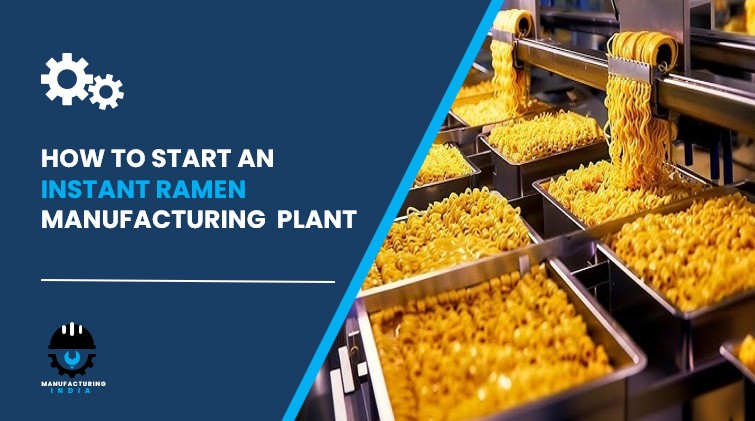
The production process involves dough mixing and sheeting, continuous noodle cutting and steaming, frying or air-drying, seasoning addition, cooling, and automated packaging. End-use segments served by instant ramen producers include the packaged food and beverage industry, retail and supermarket chains, the foodservice and HoReCa sector, institutional catering, and emergency and relief food supply. The diversity of channels gives instant ramen production a resilient, multi-channel revenue base with strong volume offtake and high consumer turnover.
Cost of Setting Up an Instant Ramen Manufacturing Plant in India
The total cost of establishing an instant ramen manufacturing plant in India depends on several variables including plant capacity, level of automation, product format mix (cup, packet, bowl), geographic location, and regulatory and food safety compliance requirements. A thorough feasibility assessment covering all CapEx and OpEx components is essential before committing capital.
1. Capital Expenditure (CapEx)
Capital investment for an instant ramen manufacturing plant covers several broad cost heads. Land and site development forms a substantial part of the overall investment, encompassing land registration charges, boundary development, and related site preparation expenses. Investors may consider locating the facility within a designated Mega Food Park, Agri-Export Zone, or established food processing cluster in states such as Uttar Pradesh, Madhya Pradesh, Punjab, Gujarat, or Maharashtra to benefit from land cost efficiencies, plug-and-play infrastructure, and central and state food processing incentives. Civil works and construction costs cover the food-grade manufacturing shed, quality control and microbiology laboratory, raw material and finished goods warehousing (with pest control and humidity control), effluent treatment infrastructure, and the administrative block.
Machinery and equipment costs represent the largest single portion of total capital expenditure for an instant ramen plant. Key machinery required includes:
- Dough mixers and automatic flour handling systems
- Continuous sheeting and rolling machines
- Noodle cutting and waving units
- Steaming tunnels and cooking conveyors
- Frying units (palm oil) or hot-air drying lines
- Cooling conveyors and seasoning dispensers
- Automatic weighing, filling, and packaging machines (packet and cup formats)
- Metal detectors, check-weighers, and in-line quality control systems
Other capital costs include the effluent treatment plant (ETP) and oil-water separation systems, pre-operative expenses, trial run and commissioning costs, cold storage for seasoning and dehydrated vegetables, and any applicable import duties on specialised machinery not manufactured domestically.
Request a Sample Report for In-Depth Market Insights: https://www.imarcgroup.com/instant-ramen-manufacturing-plant-project-report/requestsample
2. Operational Expenditure (OpEx)
The operating cost structure of an instant ramen manufacturing plant is heavily weighted towards raw materials. Raw material cost accounts for 60–70% of total OpEx, with the primary inputs being wheat flour (maida), palm oil (or alternative vegetable oils for air-dried variants), seasoning powders, dehydrated vegetables, starch, salt, and kansui (alkaline water). Entering long-term procurement contracts with reliable domestic wheat millers and palm oil suppliers is essential to mitigate price volatility and ensure supply continuity. Utility cost, covering electricity, water, and steam, accounts for 10–15% of OpEx. Additional operating costs include packaging materials (laminated pouches, cups, seasoning sachets), transportation and cold-chain logistics for seasoning, salaries and wages, quality assurance, maintenance, depreciation, and applicable taxes. Operational expenditure is projected to increase substantially by year five of operations, driven by food-grade input inflation, market fluctuations, and potential rises in palm oil and wheat prices.
3. Plant Capacity
The proposed instant ramen manufacturing facility is designed with an annual production capacity ranging between 10,000 and 50,000 tons, enabling meaningful economies of scale while preserving operational flexibility across packet and cup formats. Plant capacity can be customised based on the investor’s specific capital availability, target market scale, and chosen product mix between fried and non-fried variants. Profitability improves considerably at higher capacity utilisation levels, making early distribution tie-ups with modern trade, e-commerce, and general trade channels strategically important.
4. Profit Margins and Financial Projections
An instant ramen manufacturing plant demonstrates healthy profitability potential under normal operating conditions. Gross profit margins typically range between 35–45%, supported by stable year-round demand, high consumer repeat purchase rates, and the value-added nature of seasoning and cup-format premiumisation. Net profit margins range between 18–25%. Financial projections incorporate NPV analysis, IRR calculations, payback period modelling, and sensitivity analysis across production capacity, wheat and palm oil pricing, and SKU-mix scenarios. These projections are developed based on realistic assumptions related to capital investment, operating costs, capacity utilisation, and demand outlook, providing investors with a comprehensive view of long-term financial viability.
Why Set Up an Instant Ramen Plant in India?
Rising Demand for Convenience Foods:
Increasing urbanisation, longer commutes, and higher workforce participation rates, particularly among women and young professionals, are fuelling demand for quick, affordable, ready-to-cook meal options. India’s working-age population and expanding middle class represent a sustained long-term driver for packet and cup noodle consumption.
High Volume, All-Income-Group Consumption:
Instant ramen enjoys widespread consumption across income groups from students and bachelors to families and institutional buyers ensuring consistent and large-scale demand. Its compatibility with diverse regional palates enables broad product deployment through masala, schezwan, curry, and chicken flavour variants.
Strong Retail and E-Commerce Distribution:
Expansion of modern trade, quick-commerce platforms, and organised retail chains is significantly enhancing product accessibility and shelf visibility. The rise of 10-minute delivery platforms has created a new high-frequency purchase occasion for cup and single-serve noodle formats.
Product Innovation Opportunities:
Manufacturers can introduce healthier variants such as baked (non-fried) noodles, low-sodium, fortified (iron, vitamin), whole-wheat, millet-based, and protein-enriched formulations to address evolving consumer preferences and premium price points. Atta noodles and millet-based SKUs represent a particularly fast-growing sub-segment in India.
Export Opportunities:
Indian instant ramen producers with cost-competitive manufacturing and FSSAI-, HACCP-, and ISO-certified output are well positioned to serve export markets across South Asia, the Middle East, Africa, and the Indian diaspora in North America and Europe. Private-label export contracts offer an additional revenue stream alongside domestic branded sale.
Scalable, Highly Automated Production Process:
The continuous-line manufacturing process allows for large-scale production with efficient process optimisation and tight cost control. Indian plants that adopt modern air-drying, automated seasoning dispensing, and high-speed packaging technology will be able to address higher-value market niches including health-positioned and premium cup formats.
Active Industry Investment:
The global instant ramen industry continues to attract significant product development and channel expansion investment. In October 2025, Mr. Noodles, a popular brand in Bangladesh, introduced a new ramen range featuring four distinct flavours (Ramen Cheese, Carbonara, Hot Chicken, and Hot Chicken 2X Spicy), aimed at expanding its product portfolio and attracting younger consumers. In March 2025, General Mills introduced its first ramen noodle offerings through Old El Paso and Totino’s, targeting quick meal occasions and expanding its convenient foods portfolio. These developments illustrate the innovation momentum and growing consumer interest driving value across instant ramen end-use segments.
Manufacturing Process Step by Step
The instant ramen manufacturing process uses raw material preparation, dough mixing, sheeting, cutting, steaming, frying or air-drying, seasoning addition, cooling, and packaging as the core stages of production. Each stage involves specific unit operations, material handling protocols, and food safety quality assurance checkpoints aligned to FSSAI and HACCP standards.
- Preparation of Raw Materials: Wheat flour, palm oil, seasoning ingredients, starch, salt, and kansui are sourced, inspected, and approved against specification before entering the production sequence. Material quality, moisture content, gluten strength, and microbiological parameters are verified to ensure consistent processing performance.
- Dough Mixing and Maturation: Approved raw materials are combined in industrial dough mixers with water, salt, and kansui under controlled time, temperature, and hydration conditions to develop the required gluten network and produce a homogeneous, well-matured dough.
- Sheeting and Rolling: The dough is passed through a series of sheeting rollers that progressively reduce its thickness, producing a uniform, thin noodle sheet with the required mechanical properties and surface finish.
- Cutting and Waving: The dough sheet is passed through cutting rollers that form continuous noodle strands, which are then shaped into the characteristic wavy pattern through a controlled waving process before entering the steaming tunnel.
- Steaming and Pre-Cooking: Noodles are transported through a steaming tunnel, where they are gelatinised under controlled steam pressure and residence time to achieve the desired level of pre-cooking, enabling rapid rehydration at the point of consumption.
- Frying or Air-Drying: Pre-cooked noodles are either fried in palm oil at controlled temperature to reduce moisture and enhance shelf life, or passed through a hot-air drying tunnel to produce non-fried, healthier variants. Oil uptake, moisture content, and texture are monitored at this critical control point.
- Cooling and Seasoning Sachet Preparation: Dried noodle cakes are cooled on conveyors before packaging. In parallel, seasoning powders, dehydrated vegetables, and sauce sachets are prepared, weighed, and sealed on dedicated lines.
- Quality Testing: Analytical instruments, metal detectors, check-weighers, and sensory panels are used throughout production and at finished-goods stage to monitor noodle block weight, moisture, rehydration time, oil content, seasoning ratio, and compliance with FSSAI and applicable food safety standards.
- Packaging: Finished noodle cakes, seasoning sachets, and any additional components are automatically filled, sealed, coded, and cartoned in packet or cup formats prepared for dispatch in appropriate master cartons and shipper cases.
- Distribution: Packaged product is dispatched to end-use channels including general trade, modern retail, e-commerce and quick-commerce platforms, HoReCa clients, institutional buyers, and export partners.
Key Applications
Instant ramen produced at an Indian manufacturing facility serves a broad range of end-use channels, each with specific format, flavour, and regulatory requirements.
- Food and Beverage Industry: Instant ramen is one of the largest staple convenience food categories, offering consistent taste, quick preparation, and scalable production for mass consumption markets across packet, cup, and bowl formats.
- Foodservice and HoReCa Sector: Restaurants, cafes, hostels, canteens, and institutional kitchens benefit from reduced preparation time, standardised flavour, and cost efficiency when using bulk or catering-pack instant ramen in menu offerings.
- Retail and Supermarket Chains: Packaged instant ramen dominates grocery shelf space and quick-commerce dashboards due to its affordability, long shelf life, impulse-purchase behaviour, and high consumer turnover across urban and semi-urban markets.
- E-Commerce and Quick-Commerce: Single-serve cups and multipacks are high-velocity SKUs on grocery apps and 10-minute delivery platforms, supporting repeat purchase behaviour and subscription-style consumption among urban consumers.
- Emergency and Institutional Food Supply: Instant ramen serves as a reliable food option in disaster relief operations, defence supplies, remote-area work camps, and institutional settings due to ease of storage, long shelf life, and simple preparation.
Leading Manufacturers
The global instant ramen industry is served by several multinational and large regional players with extensive production capacities and diverse brand portfolios across packet and cup formats. Key players active across retail, foodservice, e-commerce, and institutional channels include:
- Nissin Food Products Co., Ltd.
- Nestlé S.A. (Maggi)
- Master Kong (Shenyang) Instant Noodle Foodstuff Co., Ltd.
- Indofood Sukses Makmur Tbk
- Hebei Hualong Food Group
- Acecook Vietnam Joint Stock Company
- Toyo Suisan Kaisha, Ltd. (Maruchan)
- Nongshim Co., Ltd.
- ITC Limited (Sunfeast YiPPee!)
- CG Foods (Wai Wai)
Timeline to Start the Plant
Investors planning an instant ramen manufacturing plant in India should anticipate the following phased development timeline, typically ranging from 12 to 24 months:
- Feasibility study and detailed project report preparation
- Land acquisition and site development
- Regulatory approvals, FSSAI licensing, and environmental clearances
- Factory licence and fire safety compliance
- Machinery procurement and installation (mixers, sheeting lines, steamers, fryers/air dryers, packaging)
- Raw material and packaging supplier agreements and supply chain setup
- Trial production, product stabilisation, and shelf-life testing
- Distribution and retail tie-ups, brand launch, and commercial production ramp-up
Licences and Regulatory Requirements
Starting an instant ramen manufacturing unit in India requires several approvals:
- Business registration (Proprietorship, LLP, or Pvt Ltd)
- FSSAI Central Licence under the Food Safety and Standards Act
- Factory Licence under the Factories Act
- Environmental Clearance and Consent to Operate from the State Pollution Control Board
- GST Registration
- Fire Safety NOC
- Effluent Treatment Plant (ETP) operational clearance
- HACCP and ISO 22000 certification (recommended for exports and institutional contracts)
- BIS certification where applicable, and compliance with packaging and labelling regulations
- Occupational Health and Safety compliance
Key Challenges to Consider
High Capital Requirements:
The integrated machinery line, civil infrastructure, and packaging automation investment for an instant ramen plant represents a significant initial commitment, particularly for small and mid-scale entrepreneurs entering the packaged food manufacturing market for the first time.
Raw Material Price Volatility:
Key inputs wheat flour and palm oil are subject to global agricultural and commodity price cycles. Wheat prices are sensitive to domestic harvest outcomes, MSP policy, and export controls, while palm oil pricing tracks international Malaysian and Indonesian benchmarks and domestic import duty structures. Long-term supplier contracts and strategic inventory management can partially mitigate this risk.
Regulatory and Food Safety Compliance:
FSSAI regulatory requirements, food safety audits, labelling and nutritional disclosure norms, and ingredient-level compliance (particularly around MSG, sodium, and contaminant limits) add complexity and cost to the establishment and ongoing operation of the facility. Non-compliance carries both financial and reputational risk, as past industry episodes have shown.
Health Perception and Consumer Pressure:
Rising consumer awareness around sodium, saturated fat, palm oil usage, and overall processed-food consumption is creating pressure on traditional fried instant noodle formats. Manufacturers must invest continuously in reformulation, air-dried variants, fortification, and clean-label positioning to remain competitive in higher-margin segments.
Competition:
The Indian instant noodle market is served by well-capitalised players including Nestlé (Maggi), ITC (Sunfeast YiPPee!), CG Foods (Wai Wai), Nissin (Top Ramen), and Patanjali, along with growing regional and private-label brands. New entrants must establish clear differentiation on flavour, format, health positioning, pricing, or distribution to compete effectively.
Skilled Manpower:
Operating continuous noodle lines, frying and drying systems, and high-speed packaging machines at commercial scale requires technically trained personnel in food technology, mechanical maintenance, and quality assurance. Attracting and retaining talent in a growing food processing sector adds an ongoing cost and HR management dimension.
Frequently Asked Questions
1. How much does it cost to set up an instant ramen manufacturing plant in India?
Total setup cost depends on plant capacity, level of automation, product format mix (packet vs cup), location, and chosen technology (fried vs air-dried). The capital investment covers land and site development, civil works, machinery (mixers, sheeting lines, steamers, fryers/air dryers, cooling conveyors, packaging machines), and other pre-operative costs. A detailed project report provides capacity-specific cost estimates.
2. Is instant ramen manufacturing profitable in India in 2026?
Yes. Gross profit margins typically range between 35–45% and net margins between 18–25%, supported by stable year-round demand across retail, e-commerce, foodservice, and institutional channels, and high consumer repeat-purchase rates.
3. What machinery is required for an instant ramen manufacturing plant?
Essential machinery includes dough mixers, continuous sheeting and rolling machines, noodle cutters and waving units, steaming tunnels, frying units or hot-air dryers, cooling conveyors, seasoning dispensers, automatic filling and sealing machines (packet and cup), metal detectors, check-weighers, and carton packaging systems.
4. What licences and approvals are required to start an instant ramen plant in India?
Required approvals include business registration, FSSAI Central Licence, a Factory Licence, Environmental Clearance and Consent to Operate from the State Pollution Control Board, GST Registration, Fire Safety NOC, ETP operational clearance, and recommended certifications including HACCP, ISO 22000, and BIS compliance for packaging and labelling.
5. What raw materials are needed for instant ramen production?
Core raw materials are wheat flour (maida), palm oil (or alternative vegetable oils for air-dried variants), seasoning powders, dehydrated vegetables, starch, salt, and kansui. Wheat flour and palm oil together account for most of the raw material cost and are the primary drivers of production economics.
6. What are the food safety and environmental compliance requirements?
Operators must hold a valid FSSAI Central Licence, obtain Environmental Clearance and Consent to Operate from the State Pollution Control Board, install and maintain an operational Effluent Treatment Plant with oil-water separation, and ensure compliance with emission, packaging, labelling, and nutrition-disclosure standards. HACCP and ISO 22000 certification are recommended.
7. What is the best location to set up an instant ramen plant in India?
Ideal locations offer proximity to wheat-producing belts (for consistent flour supply) and major consumption markets, access to reliable transportation and utilities, robust waste management infrastructure, and compliance with local zoning regulations. Uttar Pradesh, Madhya Pradesh, Punjab, Haryana, Gujarat, and Maharashtra with their food processing clusters and Mega Food Parks are strong candidate states.
8. How long does it take to start an instant ramen production plant?
The timeline typically ranges from 12 to 24 months, depending on site development, machinery installation, FSSAI and environmental clearances, packaging and distribution setup, and trial production runs.
9. What government incentives are available for manufacturers in India?
The Make in India initiative, PLI Scheme for Food Processing, PMKSY (Pradhan Mantri Kisan Sampada Yojana) scheme, state-level food processing incentives, Mega Food Park benefits, and subsidies available through the Ministry of Food Processing Industries provide meaningful support to new investors in this sector.
10. What is the break-even period for an instant ramen plant in India?
Break-even typically ranges from 4 to 7 years, depending on scale, automation level, raw material pricing, brand-building investment, and distribution reach. Efficient production, strong channel partnerships, and export opportunities can help accelerate returns.
Key Takeaways for Investors
The instant ramen manufacturing plant opportunity in India is underpinned by sustained demand across retail, e-commerce, foodservice, institutional supply, and export channels all of which are on growth trajectories aligned with India’s broader urbanisation, workforce, and convenience-food expansion, With Asia-Pacific holding 43.6% of the global share confirming a long demand runway for domestic producers. With policy tailwinds from Make in India, the PLI Scheme for Food Processing, a cost-competitive manufacturing environment, and the shift towards non-fried, fortified, and millet-based noodle formulations creating new product opportunities, instant ramen production in India offers both near-term profitability and long-term demand sustainability.
About the Author