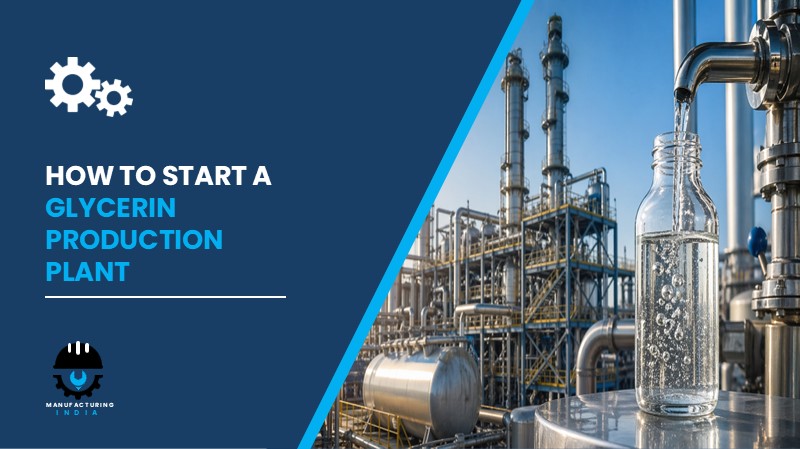
Setting up a glycerin production plant in India presents a compelling investment case driven by surging demand across cosmetics and personal care, pharmaceuticals, food and beverage, industrial applications, and biofuels. Glycerin is a colorless, odorless, and viscous liquid that functions as a humectant, solvent, emulsifier, preservative, and stabiliser — properties that make it indispensable to product formulations across nearly every consumer and industrial vertical. As Indian manufacturers in these sectors scale up to meet domestic consumption and export targets, reliable domestic glycerin supply has become a strategic priority.
India’s ongoing urbanisation, rapid growth in the personal care and packaged food sectors, and the government’s Make in India initiative together create an ideal environment for glycerin production. States such as Gujarat and Maharashtra, with their established chemical processing corridors, port connectivity, and mature oleochemical supply chains, offer strong locational advantages. Proximity to biodiesel plants — the primary source of crude glycerin feedstock — further reduces raw material logistics costs and supports a circular, sustainability-driven production model.
India offers a rare convergence of policy support, cost-competitive manufacturing, and multi-sector demand that makes a glycerin production unit financially viable at multiple capacity levels. With gross profit margins in the range of 20–35% and net margins of 10–20%, the facility demonstrates strong long-term profitability. Investors who move early stand to benefit from the growing preference for natural ingredients and the expanding biodiesel ecosystem.
What is Glycerin?
Glycerin is a colorless, odorless, and viscous liquid derived from natural sources such as vegetable oils — including soy, palm, and rapeseed — or through the hydrolysis of animal fats. It is a highly versatile compound characterised by hygroscopic properties, meaning it draws moisture from the air, which makes it an exceptionally valuable humectant in skincare and a reliable solvent in pharmaceutical preparations. Glycerin also demonstrates high solubility in water, is non-toxic, biodegradable, and considered safe for food-grade, cosmetic, and pharmaceutical use.
The primary production methods include transesterification, saponification, hydrolysis, purification, and refining — making the glycerin manufacturing process a multi-stage, precision-driven operation. End-use industries served include cosmetics and personal care, pharmaceuticals, food and beverage, industrial applications, and biofuels. Applications span creams and ointments, food additives and sweeteners, cough syrups, soaps, lubricants and antifreeze, and agricultural and livestock feed.
Cost of Setting Up a Glycerin Production Plant in India
The cost of establishing a glycerin production facility depends on plant capacity, technology selection, geographic location, level of automation, and regulatory compliance requirements. Investors must account for both one-time capital expenditure and recurring operating costs when building their financial model.
1. Capital Expenditure (CapEx)
Land and Site Development form a substantial part of overall CapEx. Costs include land acquisition, registration charges, boundary development, and site preparation. Locating the plant within a Special Economic Zone or a designated industrial estate in Gujarat or Maharashtra can reduce land costs while offering tax incentives and better infrastructure access.
Civil Works and Construction encompass the manufacturing shed, quality control laboratory, raw material storage warehouse, finished goods storage, effluent treatment plant area, and administrative block. Robust civil infrastructure is particularly important given glycerin’s liquid handling requirements and safety compliance obligations.
Machinery and Equipment represent the largest portion of total capital expenditure. Key machinery required includes:
- Refining units
- Transesterification reactors
- Distillation equipment
- Evaporation systems
- Blending and mixing equipment
Other Capital Costs include the Effluent Treatment Plant (ETP), pre-operative and commissioning expenses, import duties on specialised equipment if sourced internationally, and contingency provisions.
Request a Sample Report for In-Depth Market Insights: https://www.imarcgroup.com/glycerin-manufacturing-plant-project-report/requestsample
2. Operational Expenditure (OpEx)
Raw Material Cost is the dominant OpEx component, accounting for approximately 70–80% of total operating expenses. Core inputs include crude glycerin (sourced from biodiesel plants) and chemicals required for purification. Securing long-term supplier contracts with biodiesel processors and oleochemical refiners near the plant site is essential to stabilise input pricing and ensure supply continuity. Selecting nearby suppliers also minimises transportation costs on inbound raw materials.
Utility Cost — covering electricity, water, and steam — constitutes 10–15% of operating expenses. Glycerin refining and distillation are energy-intensive processes, so access to reliable and cost-competitive power through industrial connections or captive solar installations is a meaningful cost optimisation lever.
Other Operating Costs include transportation and logistics for outbound product dispatch, packaging materials, salaries and wages, routine maintenance, depreciation on plant and machinery, and applicable taxes. By the fifth year of operations, total operational cost is projected to increase substantially due to inflation, market fluctuations, and potential rises in the cost of key raw materials, along with supply chain disruptions and shifts in the global economy.
3. Plant Capacity
The glycerin production plant referenced in the IMARC Group project report is designed with an annual production capacity of 10,000 MT, which enables economies of scale while maintaining operational flexibility. Capacity can be customised per investor requirements depending on target markets and available capital. It is worth noting that profitability improves consistently with higher capacity utilisation, making ramp-up planning a critical element of the investment strategy.
4. Profit Margins and Financial Projections
A glycerin production facility demonstrates healthy profitability under normal operating conditions. Gross profit margins typically range between 20–35%, supported by stable multi-sector demand and value-added applications. Net profit margins are projected in the range of 10–20%. Detailed financial projections covering Net Present Value (NPV), Internal Rate of Return (IRR), payback period, liquidity analysis, sensitivity analysis, and a five-year profit and loss account are included in the full feasibility report, giving investors a transparent view of financial viability and break-even timelines.
Why Set Up a Glycerin Plant in India?
Rising Demand for Natural and Organic Products. A global survey by NSF revealed that 74% of consumers prefer organic ingredients in personal care products, and 65% of consumers demand clear ingredient labelling. India’s fast-expanding personal care industry is closely aligned with this trend, creating consistent volume demand for vegetable-derived glycerin.
Multi-Industry Application Base. Glycerin’s versatility across cosmetics and personal care, pharmaceuticals, food and beverage, industrial applications, and biofuels means demand is never concentrated in a single sector. This diversification reduces revenue risk for glycerin producers and supports stable offtake across market cycles.
Sustainability and Biodiesel Byproduct Linkage. With the increasing demand for biofuels, glycerin production is closely tied to the growth of India’s biodiesel industry. This byproduct utilisation model supports eco-friendly energy solutions and provides producers with a cost-advantaged, renewable feedstock supply chain that aligns with India’s net-zero transition targets.
Cost-Competitive Manufacturing. India offers significant advantages in land costs, labour, and chemical raw material supply chain depth. Gujarat and Maharashtra host mature oleochemical clusters with established supplier networks for vegetable oils and biodiesel byproducts, directly supporting the raw material needs of a glycerin manufacturing unit.
Active Industry Investment. In July 2025, Godrej Industries announced an investment of over INR 750 crore to expand capacities across its chemicals business, including glycerin, fatty alcohols, and uric acid, as part of its strategy to grow into a USD 1 billion global chemicals player by 2030. This signals strong institutional confidence in glycerin’s long-term demand trajectory in India.
Local Supply Chain Preference. Pharmaceutical formulators, personal care manufacturers, and food processing companies in India are increasingly prioritising domestic glycerin sourcing to reduce import dependency, shorten lead times, and align with the Make in India policy framework. Local production units are well-positioned to capture this preference shift.
Production Process – Step by Step
The glycerin manufacturing process uses transesterification, saponification, hydrolysis, purification, and refining as the primary production methods. The process is a multi-step operation involving several unit operations, material handling, and quality checks.
- Feedstock Intake: Crude glycerin from biodiesel plants and chemicals for purification are received, inspected, and stored in dedicated raw material zones.
- Transesterification / Hydrolysis: The crude feedstock undergoes transesterification or hydrolysis to break down triglycerides and release glycerin.
- Separation and Pre-treatment: Reaction by-products including methanol, soap, and fatty acids are separated from the crude glycerin stream using settling and centrifugation.
- Evaporation: Evaporation systems are used to remove excess water and volatile components, concentrating the glycerin to the required intermediate grade.
- Distillation: Distillation equipment processes the concentrated stream to achieve high-purity glycerin, separating residual impurities under controlled temperature and pressure conditions.
- Refining: Refining units apply activated carbon treatment and ion exchange to achieve pharmaceutical-grade or USP-grade product specifications.
- Quality Assurance and Testing: Analytical instruments monitor product concentration, purity, and stability. Documentation is maintained for traceability and regulatory compliance.
- Blending, Packaging, and Dispatch: Blending and mixing equipment is used for grade-specific formulation, followed by packaging and dispatch to cosmetics, pharmaceutical, food, industrial, and biofuel end-use industries.
Key Applications
Glycerin serves a broad base of industries, making the production unit’s offtake portfolio naturally diversified:
- Cosmetics and Personal Care: Used in lotions, creams, serums, soaps, shampoos, conditioners, and deodorants as a moisturiser, solvent, and emulsifier.
- Pharmaceuticals: Incorporated into oral solutions, syrups, medicinal creams, cough syrups, glycerin suppositories, and topical product bases as a humectant, solvent, and stabiliser.
- Food and Beverages: Applied as a sweetener, preservative, and humectant in baked goods, candies, and chewing gum to retain moisture.
- Industrial Applications: Used as a lubricant, solvent, and antifreeze agent in manufacturing of plastics, paints, coatings, and in textile and paper industries.
- Biofuels: Serves as a byproduct feedstock in biodiesel production, with refined glycerin finding use as a value-added input in higher-end biofuel applications.
Leading Producers:
The global glycerin industry is served by several multinational companies with extensive production capacities and diverse application portfolios. Key players include:
- Archer-Daniels-Midland Company
- Avril Group
- BASF SE
- Cargill Incorporated
- Croda International PLC
- Emery Oleochemicals
Timeline to Start the Plant
- Feasibility study and project report preparation
- Land acquisition and site development
- Regulatory approvals and environmental clearances
- Factory licence and fire safety compliance
- Machinery procurement and installation
- Raw material supplier agreements and supply chain setup
- Trial production and quality testing
- Commercial production launch
Licences and Regulatory Requirements
Starting a glycerin manufacturing unit in India requires several approvals:
- Business registration (Proprietorship, LLP, or Pvt Ltd)
- Factory Licence under the Factories Act
- Environmental Clearance from State Pollution Control Board
- GST Registration
- Fire Safety NOC
- Hazardous and chemical compliance under the Environment Protection Act and Hazardous Waste Management Rules, applicable given the use of purification chemicals
- Effluent Treatment Plant (ETP) operational clearance
- Occupational Health and Safety compliance under applicable state and central regulations
Key Challenges to Consider
High Capital Requirements. Establishing a glycerin production facility with industrial-grade refining, distillation, and evaporation equipment involves significant upfront investment, requiring careful project financing and phased CapEx planning.
Raw Material Price Volatility. Crude glycerin sourced from biodiesel plants and chemicals for purification are subject to commodity price fluctuations. Long-term supplier contracts and diversified sourcing strategies are essential to protect operating margins.
Regulatory Compliance. Meeting environmental clearance, ETP operational standards, and chemical handling regulations across different Indian states requires dedicated compliance resources and ongoing monitoring systems.
Technology and Innovation Pressure. As Louis Dreyfus Company demonstrated with its new 55,000 MT/year USP-grade glycerin refining plant in Indonesia inaugurated in May 2025, global competitors are rapidly scaling high-purity, pharmaceutical-grade production capacity, raising the quality bar for market participants.
Competition. Key global players such as BASF SE, Cargill Incorporated, Croda International PLC, Archer-Daniels-Midland Company, Avril Group, and Emery Oleochemicals maintain strong supply relationships with Indian buyers, representing competitive pressure for new entrants.
Skilled Manpower. Operating refining units, transesterification reactors, and distillation equipment requires trained chemical engineers and process technicians, making talent acquisition and retention a key operational consideration.
Frequently Asked Questions
1. How much does it cost to set up a glycerin production plant in India?
The total investment depends on plant capacity, machinery specifications, location, and technology level. CapEx covers land, civil works, machinery including refining units and distillation equipment, and pre-operative costs. A detailed cost breakdown is available in the IMARC Group feasibility report.
2. Is glycerin production profitable in India in 2026?
Yes. Gross profit margins range between 20–35% and net profit margins between 10–20%, supported by stable demand across cosmetics, pharmaceuticals, food and beverage, and industrial sectors.
3. What machinery is required for a glycerin plant in India?
Key equipment includes refining units, transesterification reactors, distillation equipment, evaporation systems, and blending and mixing equipment.
4. What licences and approvals are required to start a glycerin plant in India?
Required approvals include business registration, Factory Licence, Environmental Clearance from the State Pollution Control Board, GST Registration, Fire Safety NOC, ETP clearance, chemical compliance certification, and Occupational Health and Safety compliance.
5. What raw materials are needed for glycerin production?
The primary raw materials are crude glycerin sourced from biodiesel plants and chemicals used for purification and refining.
6. What are the environmental compliance requirements for a glycerin plant in India?
Operators must install and run an Effluent Treatment Plant, obtain Environmental Clearance, comply with Hazardous Waste Management Rules, and adhere to emission standards monitored by the State Pollution Control Board.
7. What is the best location to set up a glycerin plant in India?
Locations near biodiesel processing clusters in Gujarat or Maharashtra are strategically preferred due to raw material proximity, port access, mature chemical industry infrastructure, and skilled labour availability.
8. What is the break-even period for this type of plant in India?
The break-even timeline depends on plant capacity, utilisation rate, and pricing. A detailed payback period calculation using NPV and IRR analysis is covered in the full IMARC Group project report.
9. What government incentives are available for manufacturers in India?
Manufacturers may benefit from the Make in India initiative, Production Linked Incentive schemes, SEZ tax benefits, state-level industrial policies, and capital subsidy schemes offered by various state investment promotion boards.
Key Takeaways for Investors
A glycerin production plant in India represents a high-viability investment supported by multi-sector demand spanning cosmetics and personal care, pharmaceuticals, food and beverage, industrial applications, and biofuels. The facility demonstrates financial soundness across plant capacities, with gross margins of 20–35% and net margins of 10–20% affirming strong return potential at both small and mid-scale production levels. The global glycerin market was valued at USD 2.30 billion in 2025 and is projected to reach USD 3.48 billion by 2034, growing at a CAGR of 4.7% from 2026 to 2034, underscoring a long and well-supported demand runway. With consumer preference firmly shifting toward natural and organic ingredients and India’s biodiesel ecosystem expanding, domestic glycerin demand is positioned for sustained, structurally driven growth through the decade.
About the Author