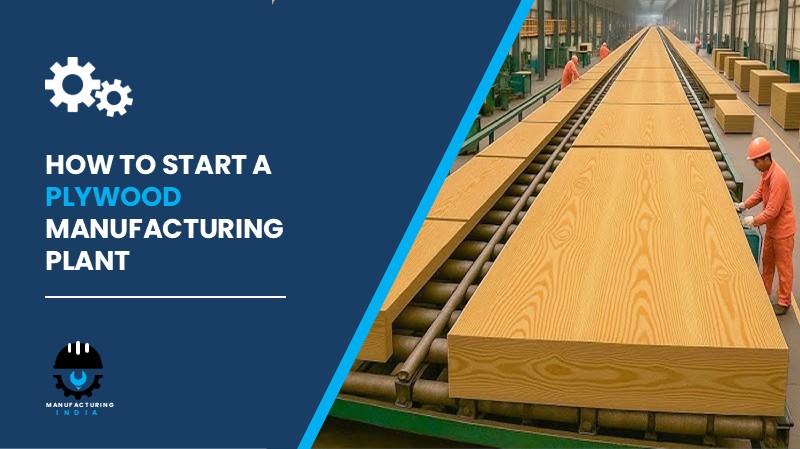
Setting up a plywood manufacturing plant in India presents a compelling investment case driven by accelerating demand across construction, furniture manufacturing, packaging, flooring, automotive, and marine industries. Plywood’s unique combination of durability, cost-effectiveness, and structural strength has made it indispensable to India’s rapidly expanding infrastructure and real estate sectors. As urbanisation continues to reshape Tier 1 and Tier 2 cities alike, the need for versatile, affordable, and lightweight building materials has never been stronger, placing plywood at the heart of the country’s growth story.
India’s manufacturing ecosystem offers a strategically sound environment for establishing this type of plant. The Make in India initiative, combined with robust industrial infrastructure in states such as Gujarat, Maharashtra, and Uttar Pradesh, reduces entry barriers and improves supply chain efficiency for wood-based product manufacturers. India’s large timber-growing regions, competitive land and labour costs, and proximity to a vast domestic market of residential and commercial construction buyers make the country one of the most attractive destinations globally for this investment.
India’s plywood sector sits at the intersection of infrastructure growth, sustainability, and industrial diversification. With gross profit margins typically ranging between 25–35% and a break-even horizon of three to five years, the investment is financially viable across a range of plant capacities. Backed by government policy support and sustained demand from construction, furniture, and packaging sectors, a well-structured plywood manufacturing unit in India offers strong returns and long-term production sustainability.
What is Plywood?
Plywood is a composite wood panel manufactured by bonding thin layers, or plies, of wood veneer with adhesive. The grain of each layer is arranged at right angles to the adjacent layer, which is what gives the final product its dimensional stability, strength, and resistance to warping and cracking. It is typically produced from a variety of wood species, including hardwoods such as oak and maple, and softwoods such as pine and spruce. The product is available in multiple thicknesses and grades depending on the intended application.
The production method – wood selection, veneer drying, veneer bonding, pressing, cutting and sizing, and finishing – results in a material that is lightweight, structurally strong, and suitable for a wide range of uses. Key end-use industries include construction, furniture manufacturing, packaging, flooring, automotive interiors, and marine applications. The versatility of plywood across these diverse sectors is a primary reason it continues to attract investor attention globally and within India specifically.
Cost of Setting Up a Plywood Manufacturing Plant in India
The total investment required to establish a plywood manufacturing plant in India depends on several factors: plant capacity, choice of technology, geographic location, level of automation, and regulatory compliance obligations.
1. Capital Expenditure (CapEx)
Capital investment in a plywood manufacturing plant covers several broad categories. Land and site development costs – including land registration, boundary development, and site grading – form a substantial part of the overall initial outlay. Investors may consider locating the facility within a Special Economic Zone (SEZ) or a state-designated industrial estate to benefit from streamlined approvals and potential fiscal incentives.
Civil works and construction expenditure covers the manufacturing shed, raw material storage areas, finished goods warehousing, a quality control laboratory, and administrative offices. These structures must comply with factory safety and fire prevention norms mandated under Indian law.
Machinery and equipment costs represent the largest single component of total capital expenditure. Key machinery required includes:
- Lathe machines (for veneer peeling)
- Hot presses (for bonding veneer layers under heat and pressure)
- Sanding machines (for surface finishing)
- Cutting machines (for trimming and sizing panels)
- Drying equipment (for veneer moisture reduction)
- Quality control machines (for dimensional and structural testing)
- Debarkers (for initial log preparation)
- Glue spreaders (for adhesive application)
- Cold press machines (for initial bonding before hot pressing)
- Conveyors and boilers (for material handling and steam supply)
Other capital costs include effluent treatment plant (ETP) installation, pre-operative expenses, commissioning costs, and import duties if specialised equipment is sourced internationally.
Request a Sample Report for In-Depth Market Insights: https://www.imarcgroup.com/plywood-manufacturing-plant-project-report/requestsample
2. Operational Expenditure (OpEx)
Raw material cost is the single largest driver of operating expenses, accounting for approximately 60–70% of total OpEx. The primary raw materials required for plywood production are logs and veneer (sourced from softwood or hardwood timber), adhesive resins – principally urea-formaldehyde and phenol-formaldehyde – and wood laminates for specialised product variants. Long-term supply contracts with regional timber suppliers and resin manufacturers are recommended to stabilise input costs and manage supply chain risk.
Utility costs, covering electricity, water, and steam, represent the next largest operating cost category at approximately 15–20% of total OpEx. These costs are particularly sensitive to plant scale, with larger units benefiting from economies of scale in energy consumption. Other operating costs include transportation and logistics, packaging materials, salaries and wages, routine maintenance, depreciation on fixed assets, and applicable taxes. By the fifth year of operations, total operational costs are projected to increase substantially due to inflation, market fluctuations, and potential rises in the cost of key raw materials, compounded by global supply chain dynamics.
3. Plant Capacity
The proposed manufacturing facility is designed with an annual production capacity ranging between 100,000 and 200,000 cubic meters, enabling economies of scale while maintaining operational flexibility. This capacity range can be customised to suit individual investor requirements, whether targeting regional supply or pan-India distribution. Profitability improves significantly with higher capacity utilisation rates, as fixed costs are spread across a larger volume of production, reducing per-unit cost and improving gross margins.
4. Profit Margins and Financial Projections
The financial projections for a plywood manufacturing plant are built on capital investment assumptions, operating cost modelling, production capacity utilisation rates, pricing trends, and medium-term demand outlook. The project demonstrates healthy profitability under normal operating conditions: gross profit margins typically range between 25–35%, while net profit margins average between 10–15%. Financial analysis covering NPV (Net Present Value), IRR (Internal Rate of Return), payback period, and a detailed profit and loss account is available in the full feasibility report. The break-even period for this type of plant typically ranges from three to five years depending on investment scale, market demand, and operational efficiency.
Why Set Up a Plywood Plant in India?
Rising Demand in Construction and Infrastructure: India’s rapid urbanisation and the sustained expansion of residential, commercial, and industrial construction have made plywood a critical building material. Plywood is increasingly used in permanent structures as well as temporary construction applications such as formwork, driving steady volume growth for domestic manufacturers.
Cost-Effectiveness and Versatility Driving Multi-Sector Adoption: The affordable cost and multi-industry applicability of plywood make it an attractive option for furniture manufacturers, automotive component makers, and packaging producers. Its lightweight nature and high strength-to-weight ratio simplify transportation and installation, reducing total project costs for end-users and widening the addressable market.
Sustainability and Environmental Tailwinds: As sustainability becomes a key focus in India’s construction and manufacturing sectors, plywood is increasingly positioned as a renewable and biodegradable alternative to plastics, steel, and synthetic composites. The growing focus on green building certifications and eco-friendly material sourcing is expanding demand for responsibly manufactured plywood across institutional buyers.
Policy and Regulatory Tailwinds: The Make in India initiative and various state-level industrial promotion schemes offer capital subsidies, tax exemptions, reduced utility tariffs, and interest subsidies to eligible manufacturers. These incentives reduce the effective cost of capital and improve project IRR for investors establishing domestic production facilities.
Cost-Competitive Manufacturing: India’s competitive land acquisition costs, relatively lower labour rates compared to Western markets, and the availability of timber from domestic forestry regions collectively reduce the cost base for a plywood manufacturing unit, improving margins versus imported alternatives.
Active Industry Investment: In May 2025, Koskisen introduced Zero ThinPly, a new thin plywood made entirely from bio-based materials with no added formaldehyde, phenolic compounds, or urea, responding to growing demand for sustainable building materials. In January 2025, Paged Plywood launched RockPly, which is twice as strong as traditional plywood and blends natural rock fibers with wood to deliver exceptional strength, thermal resistance, and environmental benefits. These innovations signal strong ongoing investment in the sector globally, validating the long-term commercial relevance of the product category.
Manufacturing Process – Step by Step
The plywood manufacturing process uses wood selection, veneer drying, veneer bonding, pressing, cutting and sizing, and finishing as the primary production method. Each stage involves distinct unit operations, material handling steps, and quality checks.
- Log Debarking and Cutting: Raw timber logs are stripped of bark using debarking machines, then cut to lengths suitable for veneer peeling.
- Veneer Peeling: Lathe machines peel continuous thin sheets of veneer from the prepared log cores.
- Veneer Drying: Drying equipment reduces moisture content in the veneer sheets to the specified level required for adhesive bonding.
- Veneer Clipping and Sorting: Veneer sheets are clipped to standard dimensions and sorted by quality grade for appropriate use in core or face layers.
- Glue Application: Glue spreaders apply urea-formaldehyde or phenol-formaldehyde adhesive resins uniformly across veneer surfaces.
- Layer Assembly: Veneer sheets are assembled in alternating grain orientations to build the required number of plies and panel thickness.
- Cold Pressing: Cold press machines apply initial pressure to bond the adhesive-coated layers prior to hot pressing.
- Hot Pressing: Hot presses cure the adhesive under controlled heat and pressure, creating the permanent bond between layers.
- Trimming and Sizing: Cutting machines trim panels to standard dimensions, removing irregular edges.
- Sanding and Finishing: Sanding machines smooth panel surfaces to the required finish grade, preparing them for dispatch.
- Quality Inspection and Packaging: Finished panels are inspected using quality control machines, graded, and packaged for distribution to construction, furniture, packaging, automotive, and marine end-use industries.
Key Applications
Plywood serves a broad range of industries across India and globally, each with distinct performance requirements:
- Construction: Used in structural applications including sheathing, wall panels, roofing, and formwork for concrete casting.
- Furniture Manufacturing: Applied in panelling, cabinetry, and shelving production due to its smooth surface and cost-effectiveness.
- Packaging: Used in the production of crates, boxes, and shipping pallets for the transport of heavy industrial goods.
- Flooring: Installed as plywood flooring in residential and commercial properties for its durability and dimensional stability.
- Automotive: Applied in vehicle interiors including flooring, door panels, and dashboards for its strength-to-weight balance.
- Marine: Used in boat construction and docking structures due to its water-resistant properties when treated with marine-grade adhesives.
Leading Manufacturers
The global plywood industry is served by several multinational companies with extensive production capacities and diverse application portfolios across construction, furniture, automotive, packaging, and marine sectors. Key players include:
- Weyerhaeuser Company
- Georgia-Pacific, LLC
- Boise Cascade Company
- Greenply Industries
- Uniply Industries Ltd.
- JAYA TIASA HOLDINGS BERHAD
- UPM Plywood
Timeline to Start the Plant
Establishing a plywood manufacturing plant in India typically requires 12 to 18 months from project initiation to commercial launch, covering the following phases:
- Feasibility study and project report preparation
- Land acquisition and site development
- Regulatory approvals and environmental clearances
- Factory licence and fire safety compliance
- Machinery procurement and installation
- Raw material supplier agreements and supply chain setup
- Trial production and quality testing
- Commercial production launch
Licences and Regulatory Requirements
Starting a plywood manufacturing unit in India requires several approvals:
- Business registration (Proprietorship, LLP, or Private Limited Company)
- Factory Licence under the Factories Act
- Environmental Clearance from the State Pollution Control Board
- GST Registration
- Fire Safety NOC
- Hazardous and chemical compliance (applicable for adhesive resin storage and handling)
- Effluent Treatment Plant (ETP) operational clearance
- Occupational Health and Safety compliance
Key Challenges to Consider
High Capital Requirements: Establishing a plywood manufacturing facility involves significant upfront investment in land, civil construction, and machinery – particularly hot presses, lathe machines, and drying equipment – which demands careful financial planning and access to adequate funding.
Raw Material Price Volatility: The cost of key inputs – including logs and veneer timber, urea-formaldehyde resin, and phenol-formaldehyde resin – is subject to fluctuation driven by global timber markets, chemical feedstock prices, and supply chain disruptions. Long-term procurement contracts are essential to managing this risk.
Regulatory Compliance: Meeting environmental clearance requirements, ETP operational standards, and factory safety certifications involves both time and recurring compliance expenditure, particularly for units handling adhesive resins classified as hazardous chemicals.
Technology and Innovation Pressure: The introduction of specialised product variants such as fire-resistant, moisture-resistant, zero-formaldehyde, and rock-fibre-reinforced plywood (as seen with Koskisen’s Zero ThinPly and Paged Plywood’s RockPly in 2025) means manufacturers must invest in product development to remain competitive.
Competition: The presence of established global players including Weyerhaeuser Company, Georgia-Pacific LLC, Boise Cascade Company, Greenply Industries, and UPM Plywood means that new entrants must differentiate on cost, product quality, or specialised applications.
Skilled Manpower: Operating lathe machines, hot presses, and quality control systems requires trained technical personnel. Recruitment and retention of skilled workers remains a challenge in many Indian manufacturing clusters.
Frequently Asked Questions
1. How much does it cost to set up a plywood manufacturing plant in India?
Capital requirements vary with plant capacity, technology, and location, covering land acquisition, construction, machinery procurement (including lathe machines, hot presses, and drying equipment), and initial working capital. A detailed cost breakdown is available in IMARC Group’s project report.
2. Is plywood manufacturing profitable in India in 2026?
Yes. Gross profit margins typically range between 25–35% and net profit margins between 10–15% under normal operating conditions, with profitability improving at higher capacity utilisation rates.
3. What machinery is required for a plywood plant in India?
Essential equipment includes lathe machines, hot presses, sanding machines, cutting machines, drying equipment, debarkers, glue spreaders, cold press machines, quality control machines, conveyors, and boilers.
4. What licences and approvals are required to start a plywood plant in India?
Key approvals include business registration, Factory Licence, Environmental Clearance, GST Registration, Fire Safety NOC, ETP operational clearance, hazardous chemical compliance, and Occupational Health and Safety certification.
5. What raw materials are needed for plywood manufacturing?
The primary raw materials are logs and veneer (softwood or hardwood timber), urea-formaldehyde resin, phenol-formaldehyde resin, and wood laminates for specialised variants. Raw materials account for 60–70% of total operating costs.
6. What are the environmental compliance requirements for a plywood plant in India?
Requirements include Environmental Clearance from the State Pollution Control Board, ETP installation and operational clearance, compliance with emission standards, and adherence to hazardous chemical handling norms for adhesive resins.
7. What is the best location to set up a plywood plant in India?
Ideal locations offer proximity to timber-growing regions for raw material access, good transport infrastructure, and industrial zoning compliance. States such as Gujarat, Maharashtra, and those with active SEZs and industrial estates are commonly preferred.
8. What is the break-even period for this type of plant in India?
The break-even period typically ranges from three to five years, depending on plant investment scale, market demand, production efficiency, and capacity utilisation rates.
9. What government incentives are available for manufacturers in India?
Governments may offer capital subsidies, tax exemptions, reduced utility tariffs, export benefits, and interest subsidies under national and state-level industrial promotion schemes including Make in India.
Key Takeaways for Investors
The plywood manufacturing plant opportunity in India is underpinned by robust and growing demand from construction, furniture manufacturing, packaging, flooring, automotive, and marine industries – sectors that collectively represent the most dynamic segments of India’s industrial economy. The production facility is financially viable across a wide range of plant capacities, with gross margins of 25–35% and net margins of 10–15% achievable under standard operating conditions, and a typical break-even horizon of three to five years. The global plywood market was valued at USD 52.46 Billion in 2025 and is projected to reach USD 77.96 Billion by 2034 at a CAGR of 4.5% from 2026 to 2034, signalling a sustained long-term demand trajectory for investors planning domestic production capacity in India. As sustainability requirements tighten and urbanisation continues to drive infrastructure spending, the demand outlook for plywood in India remains structurally supported well into the next decade.
About the Author