Setting up a millet-based food manufacturing plant in India presents a compelling investment case rooted in the country’s ancient tradition of millet cultivation, its position as one of the world’s largest producers of pearl millet, finger millet, sorghum, and foxtail millet, and the rapidly accelerating domestic and global demand for nutritious, gluten-free, and low-glycemic food products that millets uniquely deliver. Millet-based foods products derived from the processing of highly nutritious grains including pearl millet, finger millet, foxtail millet, sorghum, barnyard millet, and little millet have emerged as one of India’s most strategically supported agri-food manufacturing categories, driven simultaneously by rising consumer health awareness, an escalating global diabetes and obesity burden, government-led promotion of millets as a national superfood, and the growing appetite of mainstream food and beverage companies for traditional grain ingredients in modern product formats. Asia Pacific dominates the global millet-based food market with a revenue share of 42.8%, confirming India’s natural position at the epicentre of this growing market.
India’s structural advantages make it an unmatched location for establishing a millet-based food manufacturing facility. The country’s extensive millet cultivation base spread across Rajasthan, Maharashtra, Karnataka, Andhra Pradesh, Tamil Nadu, and Madhya Pradesh provides abundant and cost-competitive access to every major millet variety at competitive farm-gate prices. The government’s designation of 2023 as the International Year of Millets, the National Food Security Mission’s millet promotion component, and MoFPI’s active food processing infrastructure support collectively create a uniquely favourable policy environment for this investment. The rise of health-focused retail brands, institutional food programs, and organised foodservice channels across India is broadening the commercial addressable market for packaged millet products well beyond traditional household consumption creating multiple simultaneous revenue channels for a well-positioned millet-based food manufacturer.
A millet-based food manufacturing plant in India is positioned within Asia Pacific’s dominant 42.8% share of the global millet-based food market, driven by 589 million adults worldwide currently living with diabetes a number projected to reach 853 million by 2050 and India’s uniquely convergent advantage of world-class millet cultivation, strong government promotion, and rapidly growing health-conscious consumer demand. With gross profit margins of 40–50% and net margins of 15–20% achievable at 2,000–5,000 MT annual production capacity, this investment delivers exceptional agri-processing returns.
What is Millet-Based Food?
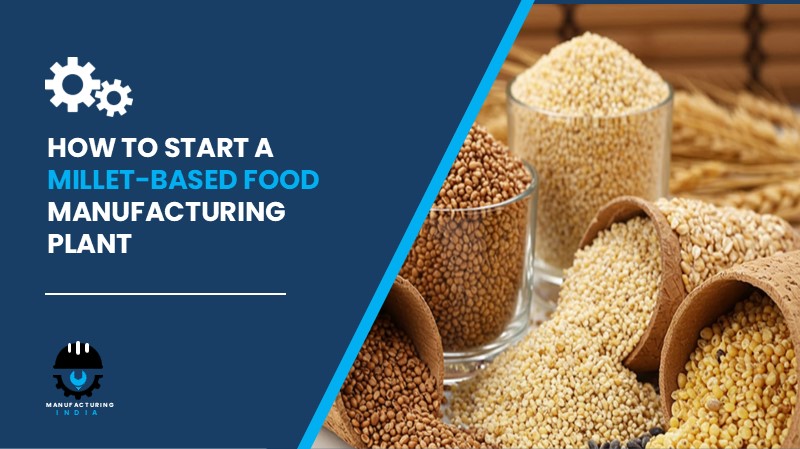
Millet-based foods are products made from highly nutritious grains including pearl millet, finger millet, foxtail millet, sorghum, barnyard millet, and little millet. The processing of these grains results in a diverse product portfolio consisting of various flours, ready-to-cook mixes, breakfast cereals, snacks, bakery items, noodles, and traditional staples rearranged for modern consumption. The natural wealth of millets in terms of dietary fibres, minerals, and proteins attracts not only health-conscious consumers but also those on gluten-free or diabetic diets.
Advanced processing techniques not only extend the shelf life but also improve the taste, texture, and convenience of millet products so that they can find their way into both home cooking and commercial food production. The multifunctionality of millet-based foods aligns perfectly with the rising consumer demand for nutritious, functional, and environmentally friendly substitutes for conventional cereals and grains. The primary production method involves cleaning and grading, dehusking and milling, blending and formulation, roasting or extrusion as applicable, cooling, quality inspection, and packaging and labelling. End-use industries served include the food and beverage industry, health and wellness segment, ready-to-cook and convenience food industry, foodservice sector, and retail household consumption.
Cost of Setting Up a Millet-Based Food Manufacturing Plant in India
The total investment required to establish a millet-based food manufacturing plant in India depends on plant capacity, product range complexity, geographic location, level of automation, and compliance with FSSAI food safety and export certification requirements. Investors must account comprehensively for both one-time capital expenditure and recurring operational costs when preparing a feasibility study or detailed project report (DPR).
1. Capital Expenditure (CapEx)
Land and Site Development constitutes a foundational investment. Costs for land registration, boundary development, internal road layout, drainage infrastructure, and site levelling vary based on whether the facility is located within a government-notified food processing cluster, a Mega Food Park under MoFPI, or on privately acquired agricultural or industrial land in millet-growing states. Agro-processing clusters in Rajasthan, Karnataka, and Maharashtra offer proximity to millet procurement networks, competitive land costs, and access to both domestic retail distribution and export logistics infrastructure.
Civil Works and Construction encompasses the main cleaning and grading hall, dehusking and milling facility, blending and formulation room, roasting or extrusion production area, quality control laboratory, packaging and despatch hall, finished goods warehouse, and administrative block. Food-grade construction requirements — including pest-proof design, hygienic surfaces, adequate ventilation for milling dust, and controlled-humidity storage for millet grain and finished products add to civil construction costs relative to standard industrial buildings.
Machinery and Equipment represent the single largest component of capital expenditure. Key machinery required for a millet-based food manufacturing plant includes:
- Cleaning and grading machines
- Dehuskers
- Mills
- Blenders
- Roasters or extruders
- Packaging systems
- Quality inspection tools
Other Capital Costs include the effluent treatment plant (ETP) for managing process water and organic waste streams, pre-operative expenses covering regulatory filings and feasibility study preparation, plant commissioning charges, utility connection fees, and import duties applicable to specialised extrusion or automated packaging equipment sourced internationally.
Request a Sample Report for In-Depth Market Insights: https://www.imarcgroup.com/millet-based-food-manufacturing-plant-project-report/requestsample
2. Operational Expenditure (OpEx)
Raw Material Cost is the dominant driver of operating expenditure, accounting for approximately 60–70% of total OpEx. The primary inputs are millets including pearl millet, finger millet, sorghum, foxtail millet, barnyard millet, and little millet along with additives such as salt, spices, and permitted flavourings depending on the product formulation. Millet grain prices are subject to seasonal harvest variability and agricultural commodity market dynamics. Investors are advised to establish long-term procurement contracts with millet farmers, farmer producer organisations (FPOs), and registered grain traders across key millet-producing states to stabilise input pricing and ensure production continuity. Proximity to established millet mandis in Rajasthan, Karnataka, and Andhra Pradesh reduces inbound transportation costs and procurement lead times.
Utility Costs – covering electricity for dehuskers, mills, extruders, roasters, packaging systems, and facility operations account for approximately 10–15% of total OpEx. Extrusion and roasting operations are the most energy-intensive process steps within the millet-based food production chain, and investors in regions with competitive industrial electricity tariffs and reliable power supply are better positioned to manage this cost component over the plant’s operational life.
Other Operating Costs include outbound transportation to supermarkets, health food retailers, e-commerce platforms, institutional food buyers, and export freight forwarders; packaging materials for retail pouches, boxes, and bulk institutional packs; employee salaries and wages for processing operators, quality technicians, blending specialists, and regulatory compliance personnel; equipment maintenance; quality assurance testing for FSSAI nutritional and safety standards; depreciation on civil and machinery assets; and applicable taxes. By the fifth year of operations, total operational costs are expected to increase substantially due to inflation, market fluctuations, potential rises in millet grain procurement prices, supply chain disruptions, rising consumer demand, and shifts in the global food economy.
3. Plant Capacity
The proposed millet-based food manufacturing facility is designed with an annual production capacity ranging between 2,000 and 5,000 MT, enabling economies of scale while maintaining operational flexibility across different millet varieties, product formats, and buyer specification requirements. This capacity range is well-aligned with the procurement requirements of health food brands, institutional food programs, foodservice distributors, and retail packaged food buyers across India and export markets. Capacity can be customised based on investor requirements and target market focus. Profitability improves consistently with higher capacity utilisation, and millet food manufacturing plants support phased capacity expansion through additional milling and extrusion lines with contained incremental investment.
4. Profit Margins and Financial Projections
The millet-based food manufacturing plant demonstrates among the strongest profitability profiles in India’s agri-processing investment category. Gross profit margins typically range between 40–50%, supported by the premium health-food market positioning and value-added, convenience-oriented nature of processed millet products relative to commodity grain outputs. Net profit margins range between 15–20%, reflecting the moderate utility intensity and contained labour cost of the milling and packaging production model. A comprehensive financial analysis should include income projections, expenditure forecasts, gross and net margin tracking across Years 1 through 5, net present value (NPV), internal rate of return (IRR), payback period, and a full profit and loss account. Sensitivity analysis covering millet grain price movements and branded product selling price variability is recommended for investment-grade financial planning.
Why Set Up a Millet-Based Food Manufacturing Plant in India?
Escalating Diabetes and Lifestyle Disease Burden Creating Structural Demand. The IDF Diabetes Atlas report states that approximately one in nine adults worldwide around 589 million people are currently living with diabetes, with an estimated 252 million remaining undiagnosed. The number of adults with diabetes is projected to rise to 853 million by 2050. This growing global diabetes burden is directly and powerfully driving demand for high-fibre, gluten-free, and low-glycemic-index foods like millet-based products making health-condition-driven consumption an increasingly dominant and structurally stable demand driver for millet food manufacturers.
Rising Consumer Awareness of Millets as a Nutritional Superfood. The millet-based food market is driven by increasing consumer awareness of health and nutrition, leading to a preference for traditional, nutrient-rich grains over refined cereals. Millets’ natural profile of dietary fibre, minerals, and protein combined with their gluten-free and low-glycemic properties positions them ideally within the rapidly expanding clean-label, plant-based nutrition market that is growing simultaneously in India, North America, and Europe.
Government Promotion and Policy Support Accelerating Domestic Adoption. India’s designation of 2023 as the International Year of Millets, backed by UN recognition at India’s proposal, has elevated millets from a regional crop to a nationally promoted superfood category. Policy initiatives and awareness campaigns have boosted millet cultivation and consumption across government food programs, school mid-day meal schemes, and institutional procurement channels creating large-volume, contract-based demand that benefits millet food manufacturers directly.
Mainstream Adoption by Large Consumer Brands Validating Commercial Viability. In November 2025, McDonald’s India, in collaboration with CFTRI, launched a Multi-Millet Burger Bun using five Indian millets bajra, ragi, jowar, proso, and kodo with 22% millet constitution, available for an additional INR 10 with any burger, marking a milestone in India’s Millet Movement. In September 2025, PepsiCo India launched Kurkure Jowar Puffs, entering the millet-based snacks segment with INR 10 and INR 20 packs across North, West, and East India through retail and e-commerce channels, targeting mindful snacking and a return to traditional foods. These landmark product launches by McDonald’s and PepsiCo India signal that millet-based food has crossed from niche health category into mainstream consumer adoption validating the large and growing commercial buyer market that millet food manufacturers can serve.
Institutional Food Programs and Foodservice Expansion Creating Stable B2B Demand. The expansion of institutional food programs including schools, hospitals, and corporate cafeterias is contributing to wider millet adoption at scale. These institutional channels provide millet food manufacturers with large-volume, contract-based procurement that anchors production planning and supports capacity utilisation targets particularly important during ramp-up phases when retail brand distribution is still being established.
Product Innovation Across Snacks, Breakfast Cereals, and Bakery Driving Premium Volumes. Ongoing product innovation in ready-to-eat meals, snacks, breakfast cereals, and bakery items is enhancing the convenience, taste, and appeal of millet-based products, encouraging regular consumption beyond traditional occasions. The growing range of packaged millet products available through supermarkets, convenience stores, and online grocery platforms is making millet-based foods more accessible to urban and health-conscious consumers creating a premium retail channel that delivers significantly higher per-kilogram revenue than bulk institutional supply.
Manufacturing Process – Step by Step
The millet-based food manufacturing process uses cleaning and grading, dehusking and milling, blending and formulation, roasting or extrusion, cooling, quality inspection, and packaging and labelling as the primary production method. Below are the main stages involved in the millet-based food manufacturing process flow:
- Raw Material Receipt and Inspection: Millet grains including pearl millet, finger millet, sorghum, foxtail millet, barnyard millet, and little millet are received from FPOs, grain traders, or direct farm procurement, weighed, and inspected for grain quality, moisture content, absence of foreign matter, and adulteration before being cleared for the processing line.
- Cleaning and Grading: Cleaning and grading machines remove foreign material including stones, soil, dust, husk fragments, and undersized or damaged grains using mechanical screens, aspiration channels, and gravity separators, delivering a clean and uniformly graded millet grain input to the dehusking stage.
- Dehusking: Dehuskers mechanically remove the outer husk layer from millet grains a critical step for improving digestibility, taste, and texture of the finished product. Dehusking efficiency and minimisation of bran loss are key quality parameters that directly affect product yield and nutritional profile.
- Milling: Mills process dehusked millet grain into flour or semolina at controlled particle size specifications from fine flour for baking applications through to coarser meal for porridge, dalia, or instant mix formulations. Milling temperature management is important for preserving the heat-sensitive nutrients that justify millet’s premium nutritional positioning.
- Blending and Formulation: Blenders combine millet flours or meals from different varieties such as ragi, jowar, bajra, and foxtail millet with permitted additives including salt, spices, leavening agents, or functional ingredients to achieve the target product formulation for each finished product variant. Multi-grain millet blend formulations targeting specific nutritional profiles are developed at this stage.
- Roasting or Extrusion (as applicable): For snack products, breakfast cereals, and puffed grain applications, roasters apply controlled dry heat to produce characteristic roasted flavour and expanded texture. Extruders process millet flour dough under high temperature and pressure to produce shaped, expanded snack products including jowar puffs, millet rings, and ready-to-eat breakfast shapes with controlled density, texture, and flavour.
- Cooling: Following roasting or extrusion, products are cooled under controlled conditions to achieve the required final moisture content, crispness, and structural stability before packaging preventing condensation, softening, or microbial risk during storage.
- Quality Inspection: Quality inspection tools verify product physical attributes including colour, texture, moisture content, and particle size, along with nutritional content, microbial safety, and absence of contaminants. Batch release is conditional on all parameters meeting FSSAI specifications and buyer acceptance criteria for the designated product.
- Packaging and Labelling: Packaging systems fill finished millet-based food products into retail pouches, zip-lock stand-up packs, cartons, or bulk institutional bags depending on the customer and channel requirement. Labels apply product name, nutritional information, ingredient list, net weight, FSSAI licence number, best-before date, batch code, and applicable certification marks including organic certification where applicable for full regulatory compliance and supply chain traceability.
- Dispatch to End-Use Channels: Finished millet-based food products are dispatched to health food retailers, supermarkets, e-commerce grocery platforms, institutional food buyers including schools and hospitals, foodservice distributors, and export buyers in international health food and nutrition markets.
Key Applications
Millet-based food products manufactured at this type of facility serve four primary end-use sectors across domestic and international markets:
- Food and Beverage Industry: Millet flours and blends are used as ingredients in bakery products, snacks, and traditional foods including the type of multi-millet burger bun launched by McDonald’s India in November 2025 providing food manufacturers with nutritionally differentiated grain ingredients for mainstream product reformulation.
- Ready-to-Cook and Convenience Food Segment: Instant mixes and meal solutions for dosas, idlis, upma, porridge, and millet khichdi meet modern urban lifestyle needs where time-constrained households seek convenient, nutritious alternatives to refined grain products.
- Health and Wellness Sector: Millet-based products support dietary requirements for fitness-focused consumers, diabetics, and individuals managing weight or cardiovascular health serving the rapidly expanding nutraceutical and functional food retail segment across urban India and international export markets.
- Household and Retail Segment: Packaged millet foods including flours, dalia, poha, and millet snacks cater to daily cooking and health-oriented household consumption across India’s growing organised retail and e-commerce grocery channels.
Leading Millet-Based Food Manufacturers
The global millet-based food industry is served by a range of specialist producers and emerging health food brands with growing domestic and export market presence. Key players include:
- 24 Mantra Organic
- True Elements
- Soulfull
- Manna Foods
- Pristine Organics
- Slurrp Farm
- Grami Superfoods
- Organic Tattva
- Terra Greens
- Arya Farm
- Navadarshanam
Timeline to Start the Plant
Investors planning to establish a millet-based food manufacturing plant in India should anticipate the following project development phases:
- Feasibility study and project report preparation
- Land acquisition and site development
- Regulatory approvals and environmental clearances
- Factory licence and fire safety compliance
- Machinery procurement and installation
- Raw material supplier agreements and supply chain setup
- Trial production and quality testing
- Commercial production launch
Licences and Regulatory Requirements
Starting a millet-based food manufacturing unit in India requires several approvals:
- Business registration (Proprietorship, LLP, or Private Limited Company)
- Factory Licence under the Factories Act
- FSSAI (Food Safety and Standards Authority of India) licence for food manufacturing and packaging of grain-based processed food products
- Environmental Clearance from the State Pollution Control Board
- GST Registration
- Fire Safety NOC
- Effluent Treatment Plant (ETP) operational clearance for process water and organic waste management
- NPOP or NOP organic certification from accredited certifying agencies where organic millet products are targeted for domestic or export premium markets
- APEDA registration and export certification for manufacturers targeting international health food and nutraceutical markets
- Occupational Health and Safety compliance covering milling dust management, extrusion equipment operations, and food-grade hygiene
Key Challenges to Consider
Millet Grain Price Seasonality and Supply Variability. Millet grains accounting for 60–70% of total OpEx are subject to seasonal harvest patterns and agricultural commodity market price fluctuations driven by monsoon variability, crop area changes, and government procurement policies. Establishing long-term FPO procurement contracts and maintaining strategic inventory buffers across harvest and lean seasons are essential for managing production continuity and input cost stability.
Consumer Taste Acceptance and Product Development Investment. While millet’s nutritional credentials are widely acknowledged, its distinctive earthy flavour, texture, and cooking behaviour differ from wheat or rice requiring ongoing product development investment to formulate millet-based products that deliver both the nutritional benefits consumers seek and the sensory experience they expect. Manufacturers must invest in test kitchen capabilities, consumer feedback loops, and flavour technology to build product ranges with broad consumer acceptance.
FSSAI Nutritional Claims and Labelling Compliance. Millet-based food products marketed on health and nutritional benefit platforms including gluten-free, low-GI, and diabetic-friendly claims are subject to FSSAI’s evolving standards for nutritional claims, health claims, and food labelling. Maintaining compliance with these standards as they are updated, and investing in third-party nutritional testing for each product SKU, adds ongoing regulatory overhead that must be built into the production economics from the outset.
Competition from Established Health Food Brands. The Indian millet food market is served by well-established brands including Soulfull, True Elements, Slurrp Farm, 24 Mantra Organic, and Manna Foods with strong retail distribution, consumer loyalty, and social media-driven brand equity. New entrants must differentiate through specific millet variety specialisation, regional traditional recipe formats, organic certification, or private-label manufacturing for retail chains and institutional buyers.
Distribution Network Development for Premium Retail Access. Reaching urban health-conscious consumers through modern trade, specialty health food stores, and e-commerce platforms requires distribution investment, shelf placement negotiation, and digital marketing that are additional to production infrastructure costs. Investors must plan for distribution network development timelines and working capital requirements for trade terms that are separate from the production plant investment.
Skilled Manpower for Food-Grade Grain Processing Operations. Operating dehuskers, grain mills, extruders, and automated packaging lines in a food-grade environment while maintaining FSSAI quality management documentation requires food processing technologists and quality assurance personnel trained in grain science, extrusion technology, and food safety management. Sourcing qualified staff for facilities located in millet-growing agricultural districts presents a recurring operational staffing challenge.
Frequently Asked Questions
1. How much does it cost to set up a millet-based food manufacturing plant in India?
The total cost depends on plant capacity (2,000–5,000 MT per annum), product range complexity, location, and automation level. CapEx covers land, food-grade civil construction, and machinery including cleaning and grading machines, dehuskers, mills, blenders, roasters or extruders, packaging systems, and quality inspection tools, along with pre-operative and regulatory costs.
2. Is millet-based food manufacturing profitable in India in 2026?
Yes. With gross margins of 40–50% and net margins of 15–20% among the highest in Indian agri-processing supported by Asia Pacific’s dominant 42.8% share of the global millet-based food market, rising diabetes and health consciousness driving structural demand, and landmark mainstream adoption by McDonald’s India and PepsiCo India in 2025, the investment presents an exceptional profitability and growth opportunity.
3. What machinery is required for a millet-based food manufacturing plant in India?
Key equipment includes cleaning and grading machines, dehuskers, mills, blenders, roasters or extruders, packaging systems, and quality inspection tools. Supporting equipment includes grain dryers, cooling conveyors, dust collection systems, and analytical testing laboratory instruments for nutritional and safety quality compliance.
4. What licences and approvals are required to start a millet-based food manufacturing plant in India?
Required approvals include business registration, FSSAI food manufacturing licence, Factory Licence, Environmental Clearance, GST Registration, Fire Safety NOC, ETP operational clearance, organic certification where applicable, and APEDA export registration for international market access.
5. What raw materials are needed for millet-based food manufacturing?
The primary raw materials are millets including pearl millet, finger millet, foxtail millet, sorghum, barnyard millet, and little millet along with additives such as salt, spices, and permitted flavourings or functional ingredients depending on product formulation requirements.
6. What are the environmental compliance requirements for a millet-based food manufacturing plant in India?
Environmental Clearance from the State Pollution Control Board is required, along with an operational ETP for managing process water and organic waste streams, compliance with ambient dust emission standards for milling operations, and adherence to organic solid waste composting or disposal rules for millet bran and processing by-products.
7. What is the best location to set up a millet-based food manufacturing plant in India?
States with established millet cultivation bases and mandi infrastructure — including Rajasthan for pearl millet, Karnataka and Andhra Pradesh for finger millet and sorghum, and Maharashtra for jowar — combined with proximity to urban health food retail markets and export logistics connectivity, offer the best combination of raw material access, processing infrastructure support, and market connectivity for millet-based food manufacturing investment.
8. What is the break-even period for this type of plant in India?
The break-even period depends on plant scale, product mix between commodity and premium branded millet products, capacity utilisation rate, and retail and export channel development speed. A full NPV and IRR analysis incorporating sensitivity testing for millet grain price movements and selling price variability across retail and institutional channels is recommended for investment-grade financial planning.
9. What government incentives are available for millet-based food manufacturers in India?
MoFPI food processing infrastructure grants, Pradhan Mantri Kisan Sampada Yojana agro-processing subsidies, PLI scheme for food processing, National Food Security Mission millet promotion funding, APEDA export development support, organic farming support under NMSA for organic millet sourcing, and state-level agro-industrial incentive schemes in Rajasthan and Karnataka all provide meaningful financial and market access support for qualifying millet-based food manufacturing investments.
Key Takeaways for Investors
A millet-based food manufacturing plant in India represents one of the most timely, nutritionally compelling, and financially rewarding agri-processing investment opportunities available today positioned within Asia Pacific’s dominant 42.8% revenue share of the global millet-based food market, driven by a global diabetes burden of 589 million adults projected to reach 853 million by 2050 that structurally anchors long-term demand for low-glycemic and gluten-free millet products. Financial viability is strongly demonstrated across a production capacity range of 2,000 to 5,000 MT per annum, with gross margins of 40–50% and net margins of 15–20% achievable under competitive millet grain procurement and efficient processing operations among the highest profitability levels in India’s entire agri-processing investment landscape. Landmark mainstream adoption events including McDonald’s India’s November 2025 launch of a Multi-Millet Burger Bun using five Indian millets, and PepsiCo India’s September 2025 entry into millet snacks with Kurkure Jowar Puffs confirm that millet-based food has successfully crossed from health niche into mass-market consumer acceptance. With India’s government promotion framework for millets, expanding institutional food programs, and growing urban health-food retail infrastructure all aligned in support of this product category, the long-term demand sustainability and investment returns for millet-based food manufacturing in India are comprehensively and multiply well-supported throughout the decade ahead.
About the Author