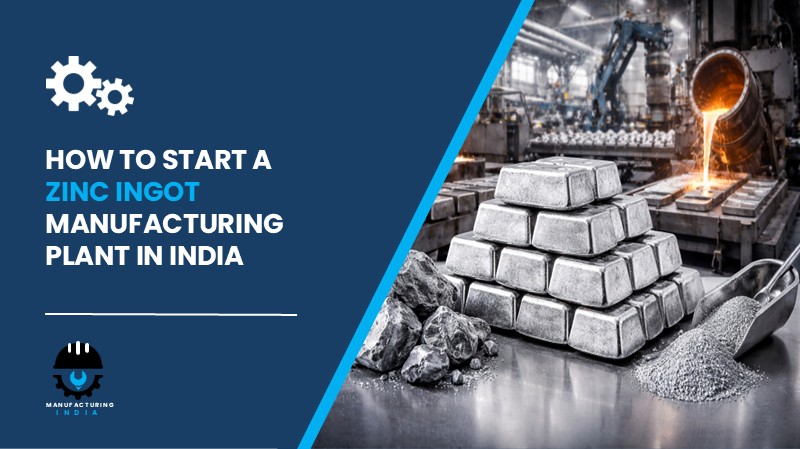
Setting up a zinc ingot manufacturing plant in India presents a compelling investment case, driven by surging demand from the automotive, construction, electronics, and energy storage industries. Zinc ingots are the foundational input for galvanization the process of coating steel and iron to prevent corrosion a requirement that is becoming increasingly critical as India accelerates its infrastructure and industrial expansion. With the global zinc ingot market volumed at 12.27 million tons in 2025 and projected to reach 15.63 million tons by 2034 at a CAGR of 2.7%, domestic producers stand to capture a growing share of both local and export demand.
India’s strategic advantages position it as a highly competitive location for this investment. The country offers cost-effective land and labour, a robust domestic supply chain for zinc concentrate, and proximity to high-consumption markets in construction and automotive manufacturing. States such as Gujarat, Rajasthan, and Maharashtra home to significant metallurgical and industrial clusters offer ready access to utilities, logistics, and regulatory infrastructure. Under the Make in India initiative, domestic metal production is actively encouraged, and setting up a zinc ingot facility within a Special Economic Zone or approved industrial estate can unlock additional fiscal incentives, making the financial case even stronger.
India’s combination of policy support, cost-competitive manufacturing, and rapidly expanding demand across construction, automotive, and renewable energy sectors makes a zinc ingot manufacturing unit a financially viable and strategically sound investment. With gross profit margins ranging from 15-25% and stable end-use sector demand, this investment offers strong ROI and a credible break-even timeline for investors of all scales.
What is a Zinc Ingot?
Zinc ingots are refined metal products produced by melting zinc ore, followed by purification and solidification into ingot forms. These ingots are a fundamental industrial commodity, valued primarily for zinc’s excellent corrosion resistance and good electrical conductivity. Zinc ingots are available in various grades depending on their intended use, enabling manufacturers to select the appropriate specification for each downstream application.
The primary production process involves mining and extraction of zinc ore, purification through roasting and electrolysis, melting and casting into ingots, cooling and solidification, quality control, and packaging. Zinc ingots serve as a key raw material in the manufacturing of die-casting alloys, brass, and other zinc-based products. They are also widely employed in the production of batteries, alloys, and chemicals.
The end-use industries served by zinc ingots include automotive, construction, electronics, manufacturing, and energy storage a diverse and resilient demand base that reduces single-sector exposure for investors.
Cost of Setting Up a Zinc Ingot Manufacturing Plant in India
The total cost of establishing a zinc ingot manufacturing plant depends on several variables, including plant capacity, technology selection, geographic location, level of automation, and regulatory compliance requirements. Below is a detailed breakdown of the key cost components.
1. Capital Expenditure (CapEx)
Capital expenditure covers all one-time investments required to build and commission the facility. Land and site development costs including land registration, boundary development, and site preparation form a substantial part of the overall investment, providing the physical and legal foundation for safe and efficient operations. Civil works encompass the construction of the main production shed, quality control laboratory, raw material and finished goods storage areas, and the administrative block.
Machinery costs account for the largest portion of total capital expenditure for a zinc ingot manufacturing plant. Key machinery required includes:
- Mining and extraction equipment
- Roasting and electrolysis furnaces
- Casting and moulding machines
- Quality control testing equipment
- Packaging machinery
Other capital costs include the installation of an Effluent Treatment Plant (ETP), pre-operative expenses such as feasibility studies and project report preparation, commissioning charges, and applicable import duties on specialised equipment.
Access the Detailed Feasibility Analysis: https://www.imarcgroup.com/zinc-ingot-manufacturing-plant-project-report/requestsample
2. Operational Expenditure (OpEx)
The operating cost structure of a zinc ingot manufacturing plant is primarily driven by raw material consumption. Raw materials — including zinc concentrate, coke/coal, and fluxes — account for approximately 70–80% of total operating expenses. Securing long-term contracts with reliable suppliers is essential to mitigate price volatility and ensure consistent production quality. Proximity to domestic zinc concentrate sources in Rajasthan, which holds some of India’s largest zinc reserves, offers a meaningful cost advantage for plants located in western India.
Utility costs, covering electricity, water, and steam requirements, represent approximately 10–15% of OpEx, making energy procurement strategy a critical operational consideration. Additional ongoing operating costs include transportation, packaging, salaries and wages, maintenance, depreciation, and applicable taxes and levies. By the fifth year of operations, total operational costs are expected to increase substantially due to inflation, market fluctuations, and potential rises in the cost of key input materials, as well as broader supply chain and global economic shifts.
3. Plant Capacity
The proposed zinc ingot manufacturing facility is designed with an annual production capacity ranging between 10,000 and 50,000 metric tonnes (MT), enabling economies of scale while maintaining operational flexibility. Capacity can be customised to suit individual investor requirements and market positioning. Importantly, profitability improves with higher capacity utilisation, making early offtake agreements with automotive, construction, and electronics buyers a recommended strategy from the outset.
4. Profit Margins and Financial Projections
The financial projections for a zinc ingot manufacturing plant reflect healthy profitability under normal operating conditions. Gross profit margins typically range between 15-25%, supported by stable demand and value-added applications. Net profit margins range from 5-12%. A detailed financial analysis covering NPV (Net Present Value), IRR (Internal Rate of Return), payback period, gross margin trajectory, and net margin evolution across a five-year horizon is available in the complete project report. These projections are based on realistic assumptions related to capital investment, operating costs, capacity utilisation, pricing trends, and demand outlook.
Why Set Up a Zinc Ingot Plant in India?
Growing Demand for Galvanization. As infrastructure development accelerates particularly in emerging markets including India the need for galvanized steel is rising sharply. Zinc ingots are the critical input for galvanization, widely used in the construction, automotive, and manufacturing sectors to protect steel and iron from corrosion, extending the lifespan of bridges, pipelines, roofing materials, and vehicle components.
Shift Toward Renewable Energy. Zinc is increasingly used in the production of batteries, particularly for energy storage in renewable energy systems. The growth of solar and wind energy is fueling demand for zinc in applications such as battery storage and solar panel production, creating an expanding and strategically important new demand vertical for domestic producers.
Cost-Effective and Sustainable Material. Zinc is relatively abundant, making it a cost-effective material for various industrial applications. Its recyclability and role in sustainable building practices further enhance its appeal in an eco-conscious market. India’s cost-competitive land, labour, and supply chain infrastructure amplify these inherent material advantages.
Technological Advancements in Zinc Production. New methods of producing and refining zinc are improving efficiency and reducing environmental impacts. The shift towards cleaner, more sustainable production processes is contributing to market growth and positioning zinc as a preferred material across numerous industries.
Active Industry Investment. In November 2025, Hindustan Zinc Limited’s product “Zinc base alloy ingots for Die Casting, Grade Zn Al 4” received approval from the Bureau of Indian Standards (BIS) to use the Standard Mark under IS 713:198, enhancing market credibility and boosting customer confidence in domestically produced zinc ingot products. This development signals growing institutional confidence in Indian zinc manufacturing quality.
Local Supply Chain Preference. Construction firms, automotive OEMs, and electronics manufacturers are increasingly prioritising local sourcing of zinc ingots to reduce lead times, manage import exposure, and align with national supply chain resilience objectives creating a structural tailwind for domestic producers.
Manufacturing Process – Step by Step
The zinc ingot manufacturing process uses mining and extraction of zinc ore, followed by purification through roasting and electrolysis, as the primary production method. The key stages are:
- Mining and Extraction: Zinc ore is extracted from mining sites and prepared for downstream processing through size reduction and concentration.
- Roasting: The concentrated zinc ore is roasted in a furnace to convert zinc sulphide into zinc oxide, removing sulphur compounds in the process.
- Electrolysis/Purification: Zinc oxide is dissolved in sulphuric acid and subjected to electrolysis using electrolysis furnaces to recover high-purity zinc metal.
- Melting and Casting: Purified zinc is melted and poured into casting and moulding machines to form ingots of the required shape and grade.
- Cooling and Solidification: Ingots are cooled in a controlled environment to achieve the required metallurgical properties and structural integrity.
- Quality Control Testing: Finished ingots undergo rigorous testing using quality control testing equipment for concentration, purity, and dimensional compliance.
- Packaging and Dispatch: Approved ingots are packaged using packaging machinery and dispatched to end-use industries including automotive manufacturers, construction firms, electronics producers, and energy storage system integrators.
Key Applications
Zinc ingots serve a broad range of industries, making demand diversification a core strength of this investment:
- Automotive Industry: Used for galvanizing steel components in vehicles to enhance durability and corrosion resistance; also employed in die-casting for parts such as engine blocks and transmission components.
- Construction Industry: Primarily used for galvanizing steel structures including bridges, pipelines, and roofing materials to extend their lifespan and prevent rust.
- Electronics Industry: Critical in producing batteries such as zinc-carbon and alkaline batteries, and used in electronic components and alloys for stability and improved device performance.
- Energy Storage: Increasingly important in energy storage systems, particularly in the production of zinc-based batteries and solar panel components, driven by the rise of renewable energy technologies.
- Manufacturing: Serves as a key raw material in the manufacturing of die-casting alloys, brass, and other zinc-based products used across industrial manufacturing applications.
Leading Manufacturers
The global zinc ingot market features several established multinational players with extensive production capacities and diverse application portfolios. Key players operating in this space include:
- RotoMetals
- Nyrstar
- Industrial Metal Supply Company
- Advameg Inc.
- Phoenix Industries Ltd.
- Focus Technology Co., Ltd.
Understanding the competitive positioning of these players is essential for Indian investors developing their market entry and pricing strategy.
Timeline to Start the Plant
Setting up a zinc ingot manufacturing plant in India involves a structured multi-phase process. Investors should plan for the following key stages:
- Feasibility study and project report preparation
- Land acquisition and site development
- Regulatory approvals and environmental clearances
- Factory licence and fire safety compliance
- Machinery procurement and installation
- Raw material supplier agreements and supply chain setup
- Trial production and quality testing
- Commercial production launch
Licences and Regulatory Requirements
Starting a zinc ingot manufacturing unit in India requires several approvals:
- Business registration (Proprietorship, LLP, or Private Limited Company)
- Factory Licence under the Factories Act
- Environmental Clearance from the State Pollution Control Board
- GST Registration
- Fire Safety NOC
- Hazardous/Chemical compliance (applicable given the use of zinc concentrate, coke/coal, and acid-based electrolysis processes)
- Effluent Treatment Plant (ETP) operational clearance
- Occupational Health and Safety compliance
Key Challenges to Consider
High Capital Requirements. The significant upfront investment in mining and extraction equipment, electrolysis furnaces, casting and moulding machines, and ETP infrastructure creates a high entry barrier that requires careful financial planning and access to institutional funding or investor capital.
Raw Material Price Volatility. Zinc concentrate, coke/coal, and fluxes the primary raw materials are subject to global commodity price cycles. Supply chain disruptions and shifts in the global economy can drive input costs higher, directly compressing margins if not managed through long-term supplier contracts.
Regulatory Compliance. Meeting environmental clearance requirements, ETP operational standards, and hazardous chemical handling norms in India requires dedicated compliance resources and adds to the pre-operative timeline and cost.
Technology and Innovation Pressure. New methods of producing and refining zinc are continuously improving efficiency and reducing environmental impacts. Plants that do not adopt cleaner, more sustainable production processes risk falling behind on both cost competitiveness and regulatory standing.
Competition from Global Players. Established manufacturers such as Nyrstar, RotoMetals, and Focus Technology Co., Ltd. bring significant scale advantages. Indian producers must invest in quality certification such as BIS Standard Mark compliance to compete credibly in the domestic and export markets.
Skilled Manpower. Operating electrolysis furnaces, managing quality control systems, and maintaining ETP infrastructure requires a trained technical workforce, which may need to be developed through in-house training programs or sourced from industrial hubs.
Frequently Asked Questions
1. How much does it cost to set up a zinc ingot manufacturing plant in India? The total setup cost depends on plant capacity (ranging from 10,000 to 50,000 MT annually), technology, location, and automation level. The cost covers land and site development, civil works, machinery (including roasting and electrolysis furnaces, casting machines, and quality control equipment), ETP, and pre-operative expenses. A detailed CapEx breakdown is available in the complete project report.
2. Is zinc ingot manufacturing profitable in India in 2026? Yes. The project demonstrates healthy profitability with gross profit margins of 15-25% and net profit margins of 5-12%, supported by stable demand from automotive, construction, electronics, and energy storage sectors.
3. What machinery is required for a zinc ingot plant in India? Key machinery includes mining and extraction equipment, roasting and electrolysis furnaces, casting and moulding machines, quality control testing equipment, and packaging machinery.
4. What licences and approvals are required to start a zinc ingot plant in India? Required approvals include business registration, Factory Licence, Environmental Clearance, GST Registration, Fire Safety NOC, hazardous chemical compliance, ETP operational clearance, and Occupational Health and Safety compliance.
5. What raw materials are needed for zinc ingot manufacturing? The primary raw materials are zinc concentrate, coke/coal, and fluxes, which together account for 70-80% of total operating expenses.
6. What are the environmental compliance requirements for a zinc ingot plant in India? Plants must obtain Environmental Clearance from the State Pollution Control Board, maintain an operational Effluent Treatment Plant, comply with emission standards, and implement advanced monitoring systems to detect process deviations and minimise environmental impact.
7. What is the best location to set up a zinc ingot plant in India? Ideal locations offer proximity to zinc concentrate sources, robust transport infrastructure, reliable utilities, and access to end-use markets. Rajasthan, Gujarat, and Maharashtra are among the strategically suitable states given their established metallurgical and industrial infrastructure.
8. What is the break-even period for this type of plant in India? The break-even period depends on plant capacity, utilisation rate, and market pricing. A detailed payback period analysis, including NPV and IRR calculations, is provided in the complete feasibility report.
9. What government incentives are available for manufacturers in India? Manufacturers can benefit from schemes under the Make in India initiative, SEZ fiscal incentives, state-level industrial promotion policies, and capital subsidy schemes available through various state investment promotion boards.
Key Takeaways for Investors
A zinc ingot manufacturing plant in India represents a strong investment opportunity, anchored by sustained demand from the automotive, construction, electronics, and energy storage industries all sectors experiencing long-term structural growth in the Indian market. The financial viability of the plant is well-supported across the 10,000-50,000 MT capacity range, with gross margins of 15-25% and net margins of 5-12% offering credible returns at multiple investment scales. With the global zinc ingot market projected to grow from 12.27 million tons in 2025 to 15.63 million tons by 2034 at a CAGR of 2.7%, the demand trajectory for zinc ingots is clearly upward. India’s cost-competitive manufacturing environment, expanding renewable energy sector, and policy-driven infrastructure spending create durable, multi-decade demand for domestically produced zinc ingots, making this a compelling long-term industrial investment.
About the Author