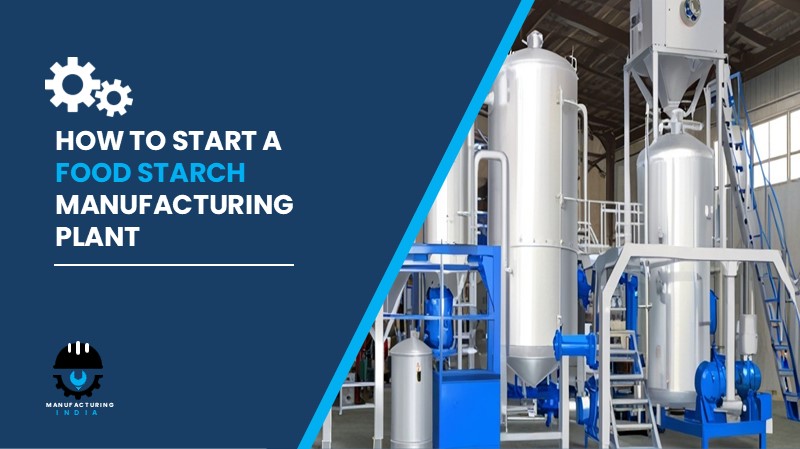
Setting up a food starch manufacturing plant in India presents a compelling investment case anchored in the country’s extensive agricultural base for starch-yielding crops, the rapidly expanding processed food and convenience food industry, and the broad-based and growing utilisation of starch as a functional ingredient across food processing, confectionery, bakery, dairy, pharmaceutical, and bio-plastics sectors. Food starch a carbohydrate polymer derived primarily from plant sources such as corn, wheat, potato, cassava, and rice, consisting mainly of amylose and amylopectin serves as an indispensable functional ingredient across modern food manufacturing operations, providing thickening, gelling, binding, stabilising, and moisture-retention capabilities that no cost-effective synthetic alternative can replicate across the same breadth of food applications. The global food starch market was valued at USD 28.27 billion in 2025 and is projected to reach USD 41.29 billion by 2034 at a CAGR of 4.3%, driven by rising demand from the processed food industry, expanding applications in convenience foods and bakery products, and increasing utilisation of modified starches in clean-label and gluten-free formulations.
India’s structural advantages make it a particularly strong location for establishing a food starch manufacturing plant. The country’s large and growing corn, wheat, cassava, and potato production base across Madhya Pradesh, Uttar Pradesh, Maharashtra, Bihar, and Gujarat provides direct, cost-competitive access to the primary raw materials reducing import dependency and inbound logistics costs relative to starch processors in import-dependent markets. India’s rapidly expanding processed food, packaged snacks, bakery, and dairy industries are growing their procurement of functional food starches as they scale production volumes, broaden product ranges, and adopt modified starch systems that improve shelf life and process stability. Active investment confidence is confirmed by the domestic market in March 2025, Cargill inaugurated a new corn milling plant in Gwalior, Madhya Pradesh, established by Saatvik Agro Processors, with an initial output capacity of 500 tons per day expandable to 1,000 tons per day and in December 2024, Auro Sundram International Pvt Ltd announced plans to invest approximately ₹250 crore in a starch manufacturing plant in Bihar’s Araria district with 500 tonnes per day annual capacity, targeting operational readiness by March 2027.
A food starch manufacturing plant in India is positioned within a global market growing at 4.3% CAGR from USD 28.27 billion in 2025 toward USD 41.29 billion by 2034, supported by processed food sector expansion, rising demand for clean-label and gluten-free formulations, and the pharmaceutical excipient market’s growing starch procurement requirements. With gross margins of 25–35% and net margins of 12–20% at 50,000–200,000 MT annual capacity, and active large-scale investment by Cargill and domestic players in India confirming market confidence, this investment delivers commercially sound and scalable returns.
What is Food Starch?
Food starch is a carbohydrate polymer derived primarily from plant sources such as corn, wheat, potato, cassava, and rice. It consists mainly of amylose and amylopectin, which determine its functional properties including thickening, gelling, binding, stabilising, and moisture-retention capabilities. In food applications, starch may be used in its native form or chemically or physically modified to enhance stability under varying pH, temperature, and shear conditions. Food-grade starch is odourless, tasteless, and typically appears as a fine white powder. It is widely utilised in soups, sauces, bakery products, confectionery, dairy products, snacks, and processed meats due to its versatility, cost-effectiveness, and functional adaptability.
The primary production method involves milling, wet separation, drying, and modification a multi-step processing operation integrating agricultural raw material handling, steep processing, mechanical and centrifugal separation, drying, and optional chemical or physical modification for specialty starch grades. End-use industries served include food processing, confectionery, baking, snack foods, pharmaceutical excipients, bio-plastics, and adhesives. Key applications include use as a viscosifier for gravies and sauces, a binding agent in confectionery, a dusting agent for baked goods, a texturiser in gluten-free products, a bulking agent in soups, and a base material for fermentable sugars providing manufacturers with a single production investment that addresses multiple high-volume, recurring-demand buyer markets across India’s growing food industrial base.
Cost of Setting Up a Food Starch Manufacturing Plant in India
The total investment required to establish a food starch manufacturing plant in India depends on plant capacity, raw material crop focus, geographic location, level of automation, and compliance with FSSAI food safety and environmental regulatory requirements. Investors must account comprehensively for both one-time capital expenditure and recurring operational costs when preparing a feasibility study or detailed project report (DPR).
1. Capital Expenditure (CapEx)
Land and Site Development constitutes a substantial foundational investment. Costs for land registration, boundary construction, internal road layout, drainage infrastructure, and site levelling vary based on whether the facility is within a government-notified agro-processing industrial estate, a Mega Food Park under MoFPI, a food processing SEZ, or on privately acquired agricultural or industrial land. Corn and cassava starch processing clusters in Madhya Pradesh, Uttar Pradesh, and Maharashtra proximate to primary crop procurement areas offer infrastructure-ready locations that minimise raw material inbound logistics costs and reduce procurement time.
Civil Works and Construction encompasses the main grain receiving and steep tank facility which requires large-volume stainless steel or concrete steep vessels for sulphur dioxide steeping along with the wet milling and separation hall, centrifugal separation and hydrocyclone area, flash dryer and air classifier building, modification reactor facility for specialty starch grades, quality control laboratory, finished starch storage and packaging hall, and administrative block. The large-scale wet processing infrastructure, water treatment systems, and effluent management requirements for corn wet milling operations add significantly to civil construction costs relative to dry agri-processing facilities.
Machinery and Equipment represent the single largest component of capital expenditure. Key machinery required for a food starch manufacturing plant includes:
- Cleaners
- Steep tanks
- Grinders
- Separators
- Hydrocyclones
- Centrifuges
- Driers
- Sifters
- Packaging machines
Other Capital Costs include the effluent treatment plant (ETP) which is mandatory and substantial for corn wet milling operations given the high organic load of steep water and process effluents pre-operative expenses covering regulatory filings and feasibility study preparation, plant commissioning charges, utility connection fees, and import duties applicable to specialised hydrocyclone systems or flash dryer technology sourced internationally.
Request a Sample Report for In-Depth Market Insights: https://www.imarcgroup.com/food-starch-manufacturing-plant-project-report/requestsample
2. Operational Expenditure (OpEx)
Raw Material Cost is the dominant driver of operating expenditure, accounting for approximately 70–80% of total OpEx. The primary and most cost-significant inputs are corn, wheat, or potato depending on the starch variety focus, along with water and sulphur dioxide for steep processing. Corn the preferred raw material for large-scale starch manufacturing due to its high starch yield, established wet milling process compatibility, and availability represents the largest single cost line. Corn prices are subject to seasonal monsoon-driven agricultural commodity market fluctuations and global supply dynamics. Investors are advised to establish long-term supply contracts with grain traders and agricultural cooperatives in proximity to major corn-growing districts in Madhya Pradesh, Rajasthan, and Karnataka to stabilise input pricing and ensure year-round production continuity. Water availability is also a critical site selection and operational cost factor, as corn wet milling is one of the most water-intensive food processing operations per tonne of output.
Utility Costs – covering electricity and steam for grinders, centrifuges, hydrocyclones, flash dryers, and facility operations account for approximately 15–20% of total OpEx, one of the highest utility cost proportions across food processing plant categories. Flash drying is the most energy-intensive production step, requiring sustained high-temperature airflow to reduce starch moisture from wet cake levels to the below-14% specification required for food-grade powder. Steam for steep tank heating and process water management adds further utility requirements. Investors in regions with competitive industrial electricity and steam tariffs, reliable grid supply, and access to renewable energy options are materially better positioned to manage this significant cost component.
Other Operating Costs include outbound transportation to food processing companies, bakery manufacturers, confectionery producers, dairy product companies, snack food manufacturers, pharmaceutical excipient buyers, and export buyers; packaging materials for 25 kg bags, bulk big bags, and bulk tanker vehicles; employee salaries and wages for chemical engineers, process operators, quality assurance technicians, and regulatory affairs personnel; equipment maintenance; quality assurance testing for starch purity, moisture content, viscosity, and FSSAI compliance; depreciation on civil and machinery assets; and applicable taxes. By the fifth year of operations, total operational costs are expected to increase substantially due to inflation, market fluctuations, potential rises in corn and other raw material prices, supply chain disruptions, rising consumer demand, and shifts in the global economy.
3. Plant Capacity
The proposed food starch manufacturing facility is designed with an annual production capacity ranging between 50,000 and 200,000 MT, enabling significant economies of scale while maintaining operational flexibility across different starch grades native starch, modified starch, and specialty starch variants and customer specification requirements. This capacity range is well-aligned with the procurement requirements of large food processing companies, pharmaceutical excipient buyers, bakery ingredient distributors, and export buyers in the Middle East, Southeast Asia, and Europe. Active domestic investment is validating these capacity levels Saatvik Agro Processors’ Cargill-supported Gwalior facility operates at an initial 500 tons per day, and Auro Sundram’s planned Bihar plant targets the same 500 tonnes per day capacity. Capacity can be customised based on investor requirements and raw material procurement network scale. Profitability improves consistently with higher capacity utilisation, and food starch plants support phased capacity expansion through additional steep tanks, centrifuge trains, and drying capacity with contained incremental investment.
4. Profit Margins and Financial Projections
The food starch manufacturing plant demonstrates healthy profitability potential under normal operating conditions. Gross profit margins typically range between 25–35%, supported by stable multi-channel demand and the value-added, functional nature of processed food starch relative to raw corn or cassava grain inputs. Net profit margins range between 12–20%, reflecting the high raw material and utility cost intensity of wet milling operations. Specialty modified starches command significantly higher margins than native starch grades, and product mix management toward modification-upgraded products is an important profitability lever for manufacturers with chemistry capability. A comprehensive financial analysis should include income projections, expenditure forecasts, gross and net margin tracking across Years 1 through 5, net present value (NPV), internal rate of return (IRR), payback period, and a full profit and loss account. Sensitivity analysis covering corn price movements and food starch selling price variability is recommended for investment-grade financial planning.
Why Set Up a Food Starch Manufacturing Plant in India?
Rising Processed Food Demand Driving Structural Starch Consumption. The expansion of the global processed food sector is a primary driver of the food starch market, supported by rising consumption of ready-to-eat meals and packaged foods. Urbanisation and changing dietary habits are increasing consumption of packaged and ready-to-eat foods in India, directly driving starch demand as a thickening and stabilising agent across sauces, soups, gravies, instant noodles, snack foods, and processed meats manufactured by India’s rapidly growing food processing companies.
Gluten-Free and Plant-Based Product Demand Expanding Application Scope. Increasing demand for gluten-free and plant-based products has strengthened starch utilisation, particularly from corn, potato, and cassava sources. As per the Plant Based Products Council, in 2025, 71% of Americans reported familiarity with plant-based products reflecting a multi-year increase signalling that plant-based materials have firmly entered mainstream consumption. This global trend translates directly into growing demand for gluten-free starch ingredients as texturisers, binders, and bulking agents in the rapidly expanding free-from and plant-based food categories.
Technological Advancement in Modified Starches Creating Premium Market Segments. Technological advancements in starch modification including cross-linking, substitution, and physical treatment processes have enabled improved thermal and shear stability, broadening application scope and supporting higher-margin specialty starch product development. Modified starches with enhanced freeze-thaw stability, acid resistance, and retort compatibility are increasingly demanded by food manufacturers producing long shelf-life products, canned foods, and frozen meals that require starch ingredients with performance characteristics beyond native starch capabilities.
Pharmaceutical Sector Growth Supporting Excipient Application Demand. Growth in the pharmaceutical sector supports starch demand for excipient applications including tablet binders, disintegrants, and fillers in solid dosage forms across India’s globally significant pharmaceutical manufacturing industry. India’s pharmaceutical sector provides starch manufacturers with a high-value, specification-intensive buyer segment that procures pharmaceutical-grade starch on long-term supply contracts, offering revenue diversification alongside food industry channel demand.
Active Domestic Investment Confirming India Market Confidence. In March 2025, Cargill the world’s largest agribusiness company inaugurated a new corn milling plant in Gwalior, Madhya Pradesh, established through its business arrangement with Saatvik Agro Processors, with an initial output capacity of 500 tons per day expandable to 1,000 tons per day. This landmark investment by the world’s largest grain processor directly validates both the commercial viability and the scale of India’s domestic starch market. In December 2024, Auro Sundram International Pvt Ltd announced plans to invest approximately ₹250 crore in a new starch manufacturing plant in Bihar’s Araria district targeting 500 tonnes per day capacity and March 2027 commissioning further confirming domestic investor confidence across multiple states and production scales.
Agricultural Availability of Corn and Cassava Ensuring Stable Raw Material Supply. Agricultural availability of corn and cassava in major producing countries further ensures stable raw material supply, contributing to sustained market development. India’s own corn production particularly in Madhya Pradesh, Karnataka, and Rajasthan and growing cassava cultivation in southern states provide domestic starch manufacturers with reliable access to starch-yielding crop feedstocks at competitive procurement costs relative to processors dependent on international commodity imports.
Manufacturing Process – Step by Step
The food starch manufacturing process uses milling, wet separation, drying, and modification as the primary production method. Below are the main stages involved in the food starch manufacturing process flow:
- Raw Material Receipt and Inspection: Corn, wheat, potato, or cassava is received at the facility, weighed, and inspected for moisture content, starch content, mycotoxin contamination, and absence of foreign matter before being cleared for production scheduling.
- Cleaning: Cleaners remove foreign matter including stones, dust, husks, and extraneous grain from the incoming crop lot using mechanical screens and aspiration systems, delivering a clean, uniformly graded raw material input to the steep tanks.
- Steeping: Steep tanks soak cleaned corn in warm water containing sulphur dioxide for 24–50 hours. The steeping process softens the kernel structure, partially hydrolyses the protein matrix binding starch granules, and produces steep water as a valuable protein-rich by-product. Steeping is the most critical unit operation determining the efficiency of subsequent starch separation.
- Coarse Grinding: Grinders process the steeped corn through an initial coarse milling stage that ruptures kernel structure and releases germ, fibre, gluten, and starch fractions in a mixed slurry while maintaining germ integrity for separate recovery and corn oil extraction.
- Germ Separation: Separators use hydrocyclone technology to separate the low-density germ fraction from the heavier starch, protein, and fibre fractions based on density differences in the aqueous slurry recovering germ for corn oil extraction and sale.
- Fine Grinding and Fibre Washing: Grinders process the de-germed slurry through fine grinding to fully release starch granules from the fibre matrix. Washing screens and sifters remove fibre (hull and bran) from the starch-protein slurry through counter-current washing to maximise starch yield and minimise fibre contamination.
- Starch-Gluten Separation: Centrifuges exploit the density difference between starch granules and dissolved gluten protein to separate the starch fraction from the gluten-rich phase. Gluten is recovered as corn gluten meal a high-protein animal feed ingredient providing additional revenue from the co-product stream.
- Hydrocyclone Washing and Starch Concentration: Hydrocyclones wash the separated starch fraction through counter-current water stages to remove residual soluble protein, solubles, and mineral contaminants, producing a high-purity starch milk at the target dry solids concentration.
- Drying: Driers flash-dry the concentrated starch milk into fine, white food-grade starch powder at controlled inlet air temperatures, achieving the specified final moisture content below 14% while preserving starch granule integrity and functional properties.
- Sifting and Classification: Sifters screen the dried starch powder to remove oversize particles and ensure the target particle size distribution for the designated product grade whether standard food starch, fine mesh pharmaceutical-grade starch, or coarser grades for specific food applications.
- Modification (for Modified Starch Products): For specialty modified starch grades, the native starch undergoes chemical treatment including cross-linking, esterification, etherification, or oxidation or physical treatment processes to achieve enhanced functional properties including improved thermal stability, freeze-thaw resistance, acid resistance, or gelling characteristics for specific food manufacturing applications.
- Quality Inspection and Testing: Analytical instruments monitor finished starch for moisture content, purity, viscosity profile, pH, microbial safety, residual sulphur dioxide, heavy metals, and mycotoxin levels against specification acceptance criteria for food-grade and pharmaceutical-grade product release.
- Packaging: Packaging machines fill finished food starch into 25 kg multi-wall bags, jumbo bags, or bulk delivery tanker vehicles depending on the customer and channel requirement, with batch coding and product labelling for full supply chain traceability and FSSAI compliance.
- Dispatch to End-Use Industries: Finished food starch is dispatched to food processing companies, bakery and confectionery manufacturers, dairy product producers, snack food manufacturers, pharmaceutical excipient buyers, bio-plastics producers, and export buyers.
Key Applications
Food starch produced at this type of facility serves four primary end-use sectors with specific functional grade, viscosity profile, and purity requirements for each:
- Food Processing: Used as thickening agents, stabilisers, and texture enhancers in sauces, soups, ready meals, and processed meats the largest single volume application for domestically manufactured food starch in India’s growing packaged food market.
- Bakery and Confectionery: Improves moisture retention, softness, and structure in bread, cakes, and confectionery products, and serves as a dusting agent to prevent sticking in sugar confectionery and pastry manufacturing.
- Dairy and Beverages: Provides stabilisation, viscosity control, and suspension in yogurt, flavoured milk, and drinks supporting the texture and mouthfeel requirements of dairy product formulations without affecting flavour profile.
- Snack and Convenience Foods: Serves as a binding, crispness-enhancement, and expansion control ingredient in extruded and fried snack products including the rapidly growing Indian extruded snack segment where starch functionality directly determines product texture and consumer acceptance.
Leading Food Starch Manufacturers
The global food starch industry is served by several large-scale multinational manufacturers with extensive production capacities and diversified end-use application portfolios. Key players include:
- Cargill, Incorporated
- Archer Daniels Midland Company
- Ingredion Incorporated
- Tate & Lyle PLC
- Roquette Frères
- AGRANA Beteiligungs-AG
Timeline to Start the Plant
Investors planning to establish a food starch manufacturing plant in India should anticipate the following project development phases:
- Feasibility study and project report preparation
- Land acquisition and site development
- Regulatory approvals and environmental clearances
- Factory licence and fire safety compliance
- Machinery procurement and installation
- Raw material supplier agreements and supply chain setup
- Trial production and quality testing
- Commercial production launch
Licences and Regulatory Requirements
Starting a food starch manufacturing unit in India requires several approvals:
- Business registration (Proprietorship, LLP, or Private Limited Company)
- Factory Licence under the Factories Act
- FSSAI (Food Safety and Standards Authority of India) Central Licence for food starch manufacturing applicable to manufacturers with annual turnover above ₹20 crore or supplying across multiple states
- Environmental Clearance from the State Pollution Control Board corn wet milling is classified as a high water-use and high effluent-load food processing operation
- Consent to Establish and Consent to Operate from the State Pollution Control Board
- GST Registration
- Fire Safety NOC
- Effluent Treatment Plant (ETP) operational clearance mandatory for corn wet milling operations generating steep water and high-BOD process effluents
- Occupational Health and Safety compliance covering grain dust management, sulphur dioxide handling in steep operations, and machinery safety
- APEDA export registration for manufacturers targeting international food ingredient and pharmaceutical excipient export markets
Key Challenges to Consider
Corn Price Volatility as the Dominant Cost Variable. Corn accounting for 70–80% of total OpEx is subject to significant seasonal and weather-related commodity price fluctuations driven by monsoon variability, government procurement policies, and global corn supply dynamics. Any significant increase in corn prices directly and materially compresses food starch gross margins. Long-term supply contracts with grain traders, multi-region procurement diversification, and strategic inventory management during price-advantageous procurement windows are essential operational disciplines.
High Water Consumption and Effluent Management. Corn wet milling is one of the most water-intensive food processing operations per tonne of output, generating steep water, fibre washing water, and starch washing effluent that must be fully treated before discharge. State Pollution Control Board requirements for food starch ETP performance including BOD, COD, and suspended solids discharge standards mandate substantial effluent treatment infrastructure investment and ongoing environmental management discipline that adds significantly to both CapEx and recurring OpEx.
Utility Cost Intensity of Drying Operations. Flash drying accounts for the majority of the 15–20% utility cost share in total OpEx, requiring continuous high-temperature steam-heated air for moisture removal across large production volumes. Managing drying energy cost through steam economy optimisation, heat recovery systems, and access to competitive industrial steam and electricity tariffs is a persistent operational priority for margin management.
Modified Starch Formulation Expertise for Premium Market Access. While native starch production is accessible to most investors with wet milling capability, the higher-margin modified starch segment requires chemistry expertise, regulatory documentation for FSSAI-permitted modification agents, and application engineering capability to develop and market specialty grades. Investing in modification chemistry and food technologist talent is essential to capturing the premium product mix that maximises returns from the installed production base.
Competition from Established Domestic and Multinational Producers. India’s starch market is served by Cargill which has just commissioned its Gwalior plant through Saatvik alongside other established domestic processors and global players including ADM, Ingredion, and Roquette. New entrants must differentiate through regional raw material cost advantages, specific starch grade specialisation for pharmaceutical or specialty food segments, or contract manufacturing relationships with large food processing buyer groups.
Skilled Engineering Workforce for Wet Processing Operations. Operating steep tanks, disc separators, hydrocyclone systems, centrifuges, and flash dryers requires chemical engineers and food processing technologists with specialised knowledge of starch separation chemistry, wet milling process control, and food-grade water management. Sourcing and retaining qualified personnel for facilities located in agricultural processing zones presents an ongoing operational staffing challenge.
Frequently Asked Questions
1. How much does it cost to set up a food starch manufacturing plant in India?
The total cost depends on plant capacity (50,000–200,000 MT per annum), raw material crop focus, location, and automation level. CapEx covers land, wet milling civil construction including large-scale effluent treatment infrastructure, and machinery including cleaners, steep tanks, grinders, separators, hydrocyclones, centrifuges, driers, sifters, and packaging machines, along with pre-operative and regulatory costs.
2. Is food starch manufacturing profitable in India in 2026?
Yes. With gross margins of 25–35% and net margins of 12–20%, supported by stable multi-sector demand across food processing, bakery, confectionery, dairy, snack foods, and pharmaceutical excipients, a global market growing at 4.3% CAGR toward USD 41.29 billion by 2034, and direct validation by Cargill’s March 2025 500 TPD plant inauguration in Gwalior and Auro Sundram’s December 2024 ₹250 crore Bihar plant announcement, the investment presents a well-grounded commercial profitability case.
3. What machinery is required for a food starch manufacturing plant in India?
Key equipment includes cleaners, steep tanks, grinders, separators, hydrocyclones, centrifuges, driers, sifters, and packaging machines. Supporting systems include water treatment infrastructure, ETP for process effluent management, sulphur dioxide dosing systems for steep processing, and analytical laboratory instruments for quality compliance.
4. What licences and approvals are required to start a food starch manufacturing plant in India?
Required approvals include business registration, FSSAI Central Licence for food starch manufacturing, Factory Licence, Environmental Clearance and Pollution Control Board Consent to Operate, GST Registration, Fire Safety NOC, ETP operational clearance, Occupational Health and Safety compliance, and APEDA export registration where international markets are targeted.
5. What raw materials are needed for food starch manufacturing?
The primary raw materials are corn, wheat, potato, or cassava depending on the starch variety focus, along with water and sulphur dioxide for steep processing. Additional inputs include packaging materials for bags and bulk containers, and modification chemicals for specialty modified starch grades.
6. What are the environmental compliance requirements for a food starch manufacturing plant in India?
Environmental Clearance and State Pollution Control Board Consent to Operate are mandatory, along with a comprehensive ETP for treating steep water and high-BOD wet milling effluents, compliance with BOD, COD, and suspended solids discharge standards, and adherence to water usage management and effluent volume monitoring requirements applicable to high-water-use food processing operations.
7. What is the best location to set up a food starch manufacturing plant in India?
Locations with direct proximity to large corn or cassava growing districts including Madhya Pradesh and Rajasthan for corn, Bihar and Uttar Pradesh for corn and wheat, and Maharashtra for corn and potato combined with reliable industrial water supply, strong power infrastructure for drying operations, and access to food ingredient distribution networks, offer the best combination of raw material cost, logistics efficiency, and market connectivity for food starch manufacturing investment.
8. What is the break-even period for this type of plant in India?
The break-even period depends on plant capacity utilisation, product mix between native and modified starch grades, corn procurement cost management, and buyer contract development. A full NPV and IRR analysis incorporating sensitivity testing for corn price movements and starch selling price variability is recommended for investment-grade financial planning.
9. What government incentives are available for food starch manufacturers in India?
MoFPI food processing infrastructure grants, Pradhan Mantri Kisan Sampada Yojana agro-processing subsidies, PLI scheme benefits for processed food manufacturing, Mega Food Park infrastructure access, APEDA export development and market promotion support, and state-level agro-industrial incentive schemes in Madhya Pradesh, Uttar Pradesh, and Maharashtra all provide meaningful financial and infrastructure support for qualifying food starch manufacturing investments.
Key Takeaways for Investors
A food starch manufacturing plant in India represents a commercially established and structurally demand-anchored investment opportunity backed by a global market valued at USD 28.27 billion in 2025 growing at 4.3% CAGR toward USD 41.29 billion by 2034, essential functional ingredient status across food processing, bakery, confectionery, dairy, snack foods, and pharmaceutical excipient sectors, and direct validation through Cargill’s March 2025 500 TPD Gwalior facility inauguration and Auro Sundram’s December 2024 ₹250 crore Bihar plant commitment. Financial viability is demonstrated across a production capacity range of 50,000 to 200,000 MT per annum, with gross margins of 25–35% and net margins of 12–20% achievable under competitive corn procurement and efficient wet milling operations with premium modified starch product development providing a margin-enhancement pathway beyond the native starch base business. In 2025, 71% of Americans reported familiarity with plant-based products a multi-year trend that is simultaneously driving demand for gluten-free starch ingredients globally, reinforcing the structural demand growth that makes food starch manufacturing one of the most commercially durable and scalable agri-processing investments available in India today.
About the Author