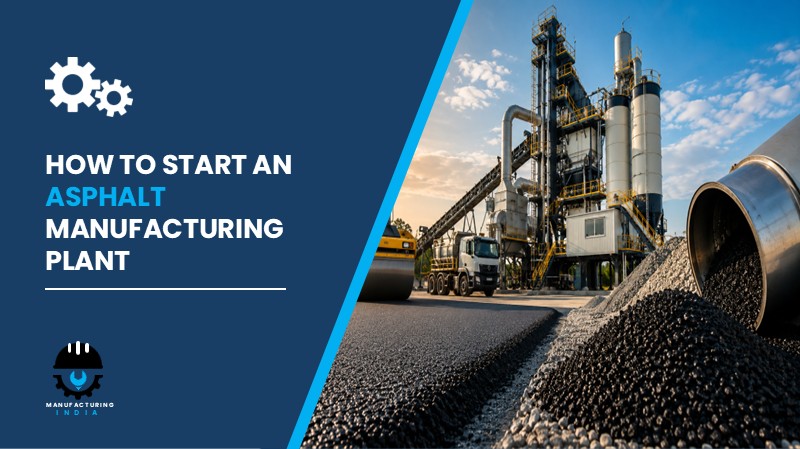
Setting up an asphalt manufacturing plant in India presents a compelling investment case for entrepreneurs and industrial investors looking to tap into one of the country’s most critical infrastructure sectors. India’s rapidly expanding road network, national highway development programmes, and urban infrastructure upgrades are driving sustained and growing demand for asphalt. As an essential material for road construction, infrastructure development, and industrial paving, asphalt underpins transportation connectivity that directly enables economic growth and regional integration. The end-use industries – from national highways and airport runways to logistics parks and commercial parking zones – represent a broad and resilient demand base that insulates investment from sector-specific downturns.
India’s advantages in this space are structural and long-term. The country’s ongoing urbanisation, its ambitious Make in India initiative, and substantial public and private investments in highway and infrastructure development create a policy-backed environment for domestic manufacturing. States such as Gujarat, Maharashtra, Rajasthan, and Tamil Nadu offer industrial estate access, proximity to aggregate quarries and bitumen refineries, and established construction supply chains that make plant siting both practical and cost-efficient. Locating production close to active construction zones also reduces transportation costs significantly, a critical consideration given that asphalt is a heavy, bulk commodity and distribution logistics directly affect margin performance.
Setting up an asphalt manufacturing plant in India offers a financially viable, policy-supported investment opportunity backed by strong demand across road construction, airports, and industrial paving. With gross profit margins of 25-35% and net margins of 10-15%, and with government-driven infrastructure spending sustaining long-term demand, investors at both small and large capacity scales can achieve credible break-even outcomes.
What is Asphalt?
Asphalt is a black, sticky substance produced when refined bitumen combines with crushed stone, sand, and mineral fillers. The manufacturing process uses controlled heating and mixing techniques to create a uniform bitumen coating on aggregates. Asphalt serves as an ideal material for surface paving because it provides waterproofing protection together with high load-bearing strength, long-lasting durability, and weather resistance.
The formulation and temperature of the material determine its production as three different types – hot mix, warm mix, and cold mix asphalt – each designed for specific construction and environmental conditions. The production process is centred on aggregate drying, heating, bitumen blending, and controlled mixing. End-use industries served include road construction, infrastructure development, and industrial paving, with applications spanning highways, urban roads, airport runways, parking lots, and industrial pavements.
Cost of Setting Up an Asphalt Manufacturing Plant in India
The total cost of establishing an asphalt manufacturing plant depends on capacity, technology, location, automation level, and regulatory compliance. Both capital expenditure (CapEx) and operational expenditure (OpEx) must be carefully modelled before committing to investment.
1. Capital Expenditure (CapEx)
The capital investment for an asphalt plant covers several major heads.
Land and site development cost – include land registration charges, boundary development, and site preparation. Investors may consider locating within a Special Economic Zone (SEZ) or notified industrial estate to benefit from reduced land costs, streamlined clearances, and infrastructure support.
Civil works and construction cost – cover shed construction, laboratory space, raw material and finished goods storage, administrative block, and internal roads. The scale of civil works correlates directly with the designed production capacity of the facility.
Machinery and equipment – represent the largest single component of capital expenditure. Key machinery required includes:
- Cold aggregate feeder
- Drying drum
- Hot elevator
- Vibrating screens
- Mixing unit
- Bitumen storage tanks
- Conveyor system for aggregate handling
- Dust collection and bag filter systems
- Central control system for plant operation
Other capital cost – include effluent treatment plant (ETP) installation, pre-operative expenses such as feasibility studies and licensing fees, commissioning charges, and import duties where applicable for specialised equipment.
Access the Detailed Feasibility Analysis, Request Sample: https://www.imarcgroup.com/asphalt-manufacturing-plant-project-report/requestsample
2. Operational Expenditure (OpEx)
The operating cost structure of an asphalt manufacturing plant is primarily driven by raw material consumption.
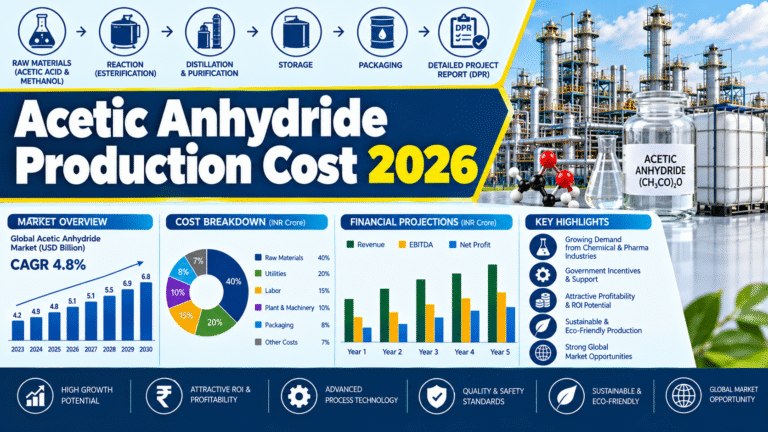
Raw material costs – comprising aggregates (crushed stone, gravel, sand, and filler materials) and bitumen (a black, viscous binder derived from crude oil) – account for approximately 70-80% of total OpEx. Additives such as polymers or anti-stripping agents may also be procured to enhance the properties of the final mixture. Securing long-term supplier contracts with nearby quarries and bitumen refineries is essential to stabilise input costs and manage price volatility.
Utility costs – covering electricity, water, and energy requirements for drying and heating operations, account for 15-20% of OpEx.
Other operating cost – include transportation and logistics to construction sites, packaging, salaries and wages for plant and administrative staff, routine maintenance, depreciation on plant and machinery, and applicable taxes. By the fifth year of operations, total operational costs are expected to increase substantially due to inflation, market fluctuations, and potential rises in the cost of key materials, including possible supply chain disruptions and shifts in global commodity markets.
3. Plant Capacity
The proposed manufacturing facility is designed with an annual production capacity ranging between 200,000-500,000 MT, enabling economies of scale while maintaining operational flexibility. Capacity can be customised per investor requirements, and profitability improves meaningfully with higher capacity utilisation rates over the first three to five years of commercial operation.
4. Profit Margins and Financial Projections
The project demonstrates healthy profitability potential under normal operating conditions. Gross profit margins typically range between 25-35%, supported by stable demand and value-added applications. Net profit margins are projected at 10-15% on average. A full financial analysis including net present value (NPV), internal rate of return (IRR), payback period, profit and loss account, liquidity analysis, and sensitivity analysis is covered in the detailed project report. Break-even in an asphalt manufacturing business typically ranges from 3 to 6 years, depending on scale, regulatory compliance costs, raw material pricing, and market demand.
Why Set Up an Asphalt Plant in India?
Backbone of Infrastructure Development: Asphalt serves as an essential material which creates road and pavement systems that support vital transportation networks driving economic development and regional connectivity. India’s national highway expansion, rural road connectivity programmes, and smart city infrastructure upgrades create a sustained domestic demand base that underpins long-term plant viability.
Rising Urbanisation and Traffic Volumes: Increasing vehicle ownership and traffic volumes are accelerating the need for durable and high-performance road surfaces, further strengthening asphalt demand. As Indian cities grow and urban mobility requirements intensify, demand for both new road construction and rehabilitation of existing surfaces continues to rise consistently.
Alignment with Global and Domestic Infrastructure Push: The world requires asphalt production as urban areas grow and smart cities develop while countries expand their highway systems and improve their airports. In India, this translates to large public-sector project pipelines with National Highways Authority of India (NHAI) and state Public Works Departments (PWDs) as anchor customers for domestic producers.
Policy and Regulatory Tailwinds: The government maintains infrastructure development through funding of public road, highway, and logistics corridor projects, as well as national infrastructure development support, which generates ongoing need for asphalt production. Make in India incentives, capital subsidies, reduced utility tariffs, and export benefits further support domestic plant economics.
Active Industry Investment: In December 2025, ArisInfra Solutions secured an asphalt supply order worth approximately ₹35 crore through its subsidiary, Buildmex-Infra. Awarded by Goswami Infra Projects, the contract includes material supply and execution-linked services to be completed over 12 months. In June 2025, Gainwell Commosales successfully delivered multiple Linnhoff DRX1500 DurableMix asphalt mixing plants manufactured in India, installed in West Bengal and Tamil Nadu, supporting major PWD and NHAI road projects. These developments underscore the expanding market driven by sustained highway construction and urban infrastructure upgrades.
Localized Production Advantage: Asphalt production requires specific locations as transportation expenses directly affect unit economics, enabling local producers to deliver materials to nearby construction sites at lower costs than distant competitors. This structural advantage makes proximity to active project corridors a key differentiator for the facility’s commercial success.
Manufacturing Process – Step by Step
The asphalt manufacturing process uses aggregate drying, heating, bitumen blending, and controlled mixing as the primary production method. The key steps are:
- Raw Material Sourcing: Source aggregates (crushed stone, gravel, sand, filler materials) and bitumen from reliable, nearby suppliers to ensure consistent quality and minimise logistics costs
- Aggregate Heating: Heat aggregates to the required mixing temperature using the drying drum to drive out moisture and prepare the surface for bitumen adhesion
- Bitumen Blending: Add and blend hot bitumen uniformly with the dried aggregates using the mixing unit to achieve complete and consistent coating
- Controlled Mixing: Mix all components to achieve the desired grade – hot mix, warm mix, or cold mix – per specifications for the target application
- Quality Testing: Conduct quality tests on the hot mixture using analytical instruments to monitor product concentration, purity, and stability before release
- Packing: Pack finished asphalt where required for specific delivery formats
- Storage and Dispatch: Store and distribute finished asphalt to road construction sites, airport projects, industrial zones, and commercial development projects
Key Applications
Asphalt serves a broad range of industries across construction, transportation, and industrial development. Applications include:
- Road Infrastructure: Employed in national highways, expressways, rural and urban roads for all-weather, durable surface paving
- Airports: Used in runways, taxiways, and aprons requiring high load-bearing and weather-resistant surface quality
- Industrial Zones: Utilised in heavy-duty pavements, logistics parks, and yards handling heavy machinery and freight traffic
- Commercial Projects: Employed in parking areas, access roads, and driveways for residential and commercial developments
Leading Manufacturers
The global asphalt market is served by a diverse set of multinational companies with extensive production capacities and diversified application portfolios. Key players in the industry include:
- Aggregate Industries Ltd.
- Anglo American Plc
- Atlas Roofing Corporation
- BP Plc
- Cemex
- Chevron Corporation
- Exxon Mobil Corporation
- Imperial Oil Limited
- Owens Corning
- Petroleos de Venezuela S.A
- Royal Dutch Shell plc
- Shell International
- Total SA
- United Refining Inc.
Timeline to Start the Plant
- Feasibility study and project report preparation
- Land acquisition and site development
- Regulatory approvals and environmental clearances
- Factory licence and fire safety compliance
- Machinery procurement and installation
- Raw material supplier agreements and supply chain setup
- Trial production and quality testing
- Commercial production launch
Licences and Regulatory Requirements
Starting an asphalt manufacturing unit in India requires several approvals:
- Business registration (Proprietorship, LLP, or Pvt Ltd)
- Factory Licence under the Factories Act
- Environmental Clearance from State Pollution Control Board
- GST Registration
- Fire Safety NOC
- Hazardous/Chemical compliance for bitumen and related chemical handling
- Effluent Treatment Plant (ETP) operational clearance
- Occupational Health and Safety compliance
Key Challenges to Consider
High Capital Requirements: Establishing an asphalt plant involves significant upfront investment across land, civil works, and specialised equipment such as drying drums, mixing units, and bitumen storage tanks. Securing adequate project financing and phasing capital deployment is critical to managing liquidity risk during ramp-up.
Raw Material Price Volatility: Key raw materials – aggregates (crushed stone, gravel, sand, filler materials) and bitumen – are subject to commodity price fluctuations tied to crude oil markets and quarrying costs. Long-term procurement contracts and diversified supplier networks are essential to stabilising OpEx margins.
Regulatory Compliance: Meeting environmental clearance, factory licence, ETP, and hazardous materials compliance requirements demands significant time and resource investment. Non-compliance can result in operational shutdowns that erode projected returns during critical early years.
Technology and Innovation Pressure: Technological advancements such as warm mix asphalt and recycled asphalt pavement (RAP) are gaining traction, enabling reduced energy consumption and lower emissions while improving sustainability. Investors must plan for equipment upgrades or technology adoption to remain competitive with evolving market standards.
Competition: The asphalt market includes large global players such as Exxon Mobil Corporation, BP Plc, Royal Dutch Shell plc, Chevron Corporation, and Cemex among others. Domestic producers must compete on proximity, service, and cost efficiency to protect market share against established suppliers.
Skilled Manpower: Operating aggregate dryers, mixing drums, control systems, and quality testing equipment requires trained technical staff. Attracting and retaining qualified plant operators and engineers in competitive labour markets requires ongoing investment in wages, training, and safety practices.
Key Takeaways for Investors
An asphalt manufacturing plant in India represents a well-grounded investment opportunity anchored by durable demand from road construction, highway development, airport infrastructure, and industrial paving – sectors that are central to India’s long-term economic agenda. The project demonstrates financial viability across a wide range of plant capacities, with gross margins of 25-35% and net margins of 10-15% achievable under realistic operating assumptions, and a break-even window of 3 to 6 years depending on scale and market conditions. The global asphalt market was valued at USD 271.8 million in 2025 and is projected to reach USD 409.30 million by 2034, reflecting a CAGR of 4.7% from 2026 to 2034 – a trajectory that points to sustained demand growth well beyond the typical payback horizon for a new Indian plant. With active supply contracts being awarded to domestic producers, policy support through infrastructure spending programmes, and the structural localization advantage that asphalt production inherently carries, the long-term demand sustainability case for a well-sited Indian facility is strong.
About the Author