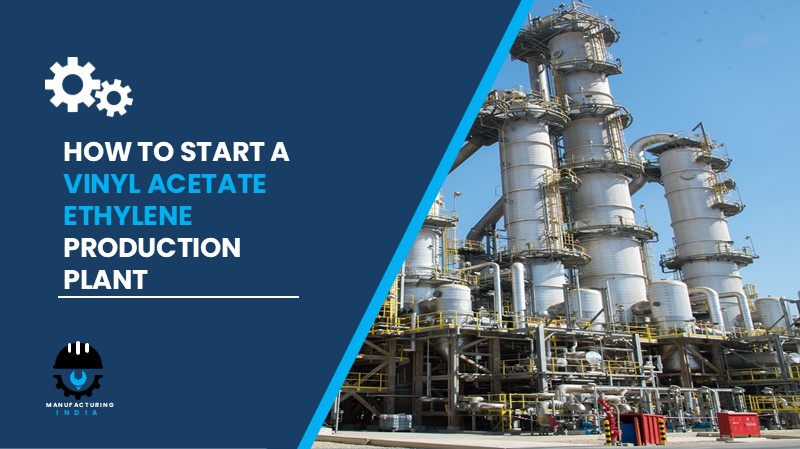
Setting up a vinyl acetate ethylene production plant in India presents a compelling investment case anchored in the country’s booming construction sector, the rapid expansion of tile adhesives and dry-mix mortar consumption, the accelerating regulatory shift toward waterborne and low-VOC binder systems in paints and coatings, and the growing use of flexible polymer binders across nonwoven textiles, paper coatings, and flexible packaging. Vinyl acetate ethylene (VAE) a copolymer produced by the emulsion polymerisation of vinyl acetate monomer and ethylene is a critical functional binder system that provides exceptional flexibility, low-temperature film formation, strong adhesion, impact resistance, and low VOC emissions across construction chemicals, adhesives, coatings, textiles, and packaging applications. These properties position VAE as an essential and growing ingredient wherever formulators require environmental compliance without sacrificing performance a dual requirement that is intensifying across every major end-use sector. The global vinyl acetate ethylene market was valued at USD 14,535.0 million in 2025 and is projected to reach USD 23,755.29 million by 2034 at a CAGR of 5.61%, driven by expanding construction activity, rising demand for high-performance dry-mix mortars, increasing use in paints and coatings, and the sustained global preference for flexible, low-VOC polymer binders.
India’s structural advantages make it an increasingly compelling location for establishing a VAE production facility. India’s real estate sector is expected to reach USD 1 trillion in market size by 2030, up from USD 200 billion in 2021, and is projected to contribute 13% to the country’s GDP by 2025 according to IBEF a trajectory that directly drives tile adhesive, repair mortar, and construction chemical consumption at scale. The government’s active push for green building construction, polymer-modified cementitious systems in infrastructure, and waterborne coating adoption in industrial and decorative paint markets provides a policy-aligned demand environment for VAE that is reinforced by both regulatory pressure and commercial buyer preference. Chemical manufacturing clusters in Gujarat, Maharashtra, and Andhra Pradesh offer access to vinyl acetate monomer supply chains, chemical engineering talent, and industrial infrastructure required for high-pressure emulsion polymerisation operations at commercial scale.
A vinyl acetate ethylene production plant in India is positioned within a global market valued at USD 14,535.0 million in 2025 growing at 5.61% CAGR toward USD 23,755.29 million by 2034, driven by construction sector expansion, dry-mix mortar demand, low-VOC coatings adoption, and flexible packaging growth. With gross margins of 25–35% and net margins of 10–20% at 50,000–100,000 MT annual capacity, and India’s real estate sector projected to reach USD 1 trillion by 2030 directly anchoring construction chemical demand, this investment delivers commercially sound multi-sector-backed returns.
What is Vinyl Acetate Ethylene?
Vinyl acetate ethylene (VAE) is a copolymer produced by the emulsion polymerisation of vinyl acetate monomer and ethylene. It is typically supplied as an aqueous emulsion or spray-dried to create redispersible polymer powder. At low temperatures, VAE has good film-forming qualities, strong adhesion, impact resistance, and exceptional flexibility. The polymer preserves low odour and low emissions of volatile organic compounds (VOCs) while giving formulations better workability, cohesiveness, and durability. Because of these characteristics, VAE is a crucial binder system for textile applications, coatings, adhesives, and construction chemicals, especially when environmental compliance and flexibility are needed.
The primary production method involves ethylene and vinyl acetate polymerisation, using high-pressure tubular or autoclave reactors, compounding and pelletisation a multi-step chemical manufacturing process integrating feedstock preparation, high-pressure emulsion polymerisation under controlled temperature and pressure conditions, polymer dispersion stabilisation, and quality verification at each stage. End-use industries served include adhesives, coatings, packaging, textiles, construction materials, and wire and cable. Key applications include use as binders in hot-melt adhesives, flexible films, paper coatings, wire and cable insulation, impact modifiers for PVC, and most significantly by volume as functional binders in tile adhesives, repair mortars, and dry-mix cementitious systems used across India’s expanding construction sector.
Cost of Setting Up a Vinyl Acetate Ethylene Production Plant in India
The total investment required to establish a vinyl acetate ethylene production plant in India depends on plant capacity, product form aqueous emulsion or redispersible polymer powder geographic location, level of automation, and compliance with chemical safety and environmental regulatory requirements. Investors must account comprehensively for both one-time capital expenditure and recurring operational costs when preparing a feasibility study or detailed project report (DPR).
1. Capital Expenditure (CapEx)
Land and Site Development constitutes a substantial foundational investment. Costs for land registration, boundary construction, internal road layout, drainage infrastructure, and site levelling vary based on whether the facility is within a government-notified chemical industrial zone, a specialty polymer processing estate, or on privately acquired industrial land. Chemical manufacturing clusters in Gujarat, Maharashtra, and Andhra Pradesh offer infrastructure-ready sites with reliable industrial power and steam supply essential for the high-pressure emulsion polymerisation process and proximity to construction chemical, coatings, and adhesive manufacturer buyer networks.
Civil Works and Construction encompasses the main polymerisation reactor building requiring pressure-rated, chemical-resistant construction for high-pressure ethylene and vinyl acetate monomer handling along with feedstock storage and preparation area, heat exchanger and separation system building, product storage tank farm, spray-drying facility where redispersible polymer powder is produced, quality control laboratory, packaging and despatch hall, effluent treatment facility, and administrative block. High-pressure ethylene handling requires explosion-proof electrical installations, specialised pressure vessel containment, and gas detection systems throughout the production area adding significantly to civil construction costs relative to ambient-pressure chemical manufacturing.
Machinery and Equipment represent the single largest component of capital expenditure. Key machinery required for a vinyl acetate ethylene manufacturing plant includes:
- Feedstock purification units
- Fixed-bed or tubular reactors (polymerisation reactors / stirred tanks / pressure vessels)
- High-pressure ethylene compressors
- Feed preparation and mixing systems
- Heat exchangers
- Separation units
- Azeotropic distillation systems
- Acetic acid recovery units
- Filtration units
- Drying units
- Storage tanks for monomers and finished product
- Packaging lines
Other Capital Costs include the effluent treatment plant (ETP) for managing process water and monomer-containing waste streams, pre-operative expenses covering regulatory filings and feasibility study preparation, plant commissioning charges, utility connection fees, and import duties applicable to specialised polymerisation reactor pressure vessels or spray-drying tower equipment sourced internationally.
Request a Sample Report for In-Depth Market Insights: https://www.imarcgroup.com/vinyl-acetate-ethylene-manufacturing-plant-project-report/requestsample
2. Operational Expenditure (OpEx)
Raw Material Cost is the dominant driver of operating expenditure, accounting for approximately 60–70% of total OpEx. The primary and most cost-significant inputs are vinyl acetate monomer (VAM), ethylene gas, initiators, and protective colloids. Vinyl acetate monomer derived from the reaction of acetic acid and ethylene in the presence of a palladium catalyst represents the overwhelmingly largest single cost line, with its price linked to acetic acid and ethylene commodity markets subject to global petrochemical cycle dynamics. Ethylene gas is the second-largest cost input, procured from domestic petrochemical crackers or through pipeline supply where available. Initiators including peroxides, persulfates, or azo compounds catalyse the polymerisation reaction in controlled proportions. Protective colloids typically polyvinyl alcohol (PVOH) and surfactants and emulsifiers stabilise the polymer dispersion during and after polymerisation. Investors are advised to secure long-term supply contracts with domestic VAM manufacturers and ethylene suppliers to stabilise the dominant input cost variables and ensure production continuity. Locating the plant with access to domestic VAM production or near ethylene pipeline infrastructure reduces both inbound logistics cost and supply chain disruption risk.
Utility Costs – covering electricity and steam for polymerisation reactors, high-pressure ethylene compressors, heat exchangers, separation units, distillation systems, spray drying towers, and facility operations account for approximately 20–25% of total OpEx, the second-highest utility cost proportion reviewed across chemical manufacturing categories in this series. High-pressure polymerisation and spray drying are the two most energy-intensive process steps. Investors must prioritise plant locations with access to competitive industrial electricity and steam tariffs, reliable utility supply, and captive energy generation potential to manage this structurally significant cost component over the plant’s operational life.
Other Operating Costs include outbound transportation to construction chemical manufacturers, tile adhesive formulators, paint and coatings producers, nonwoven textile manufacturers, paper coating companies, flexible packaging converters, and adhesive producers; packaging materials for IBC totes, drums, and bulk tankers for emulsion, and multi-wall bags for redispersible polymer powder; employee salaries and wages for chemical process engineers, reactor operators, quality assurance chemists, and safety compliance personnel; equipment maintenance; quality assurance testing for viscosity, solids content, glass transition temperature, film-forming performance, and VOC compliance; depreciation on civil and machinery assets; and applicable taxes. By the fifth year of operations, total operational costs are expected to increase substantially due to inflation, market fluctuations, potential rises in VAM and ethylene prices, supply chain disruptions, and rising consumer demand across construction and coatings sectors.
3. Plant Capacity
The proposed vinyl acetate ethylene production facility is designed with an annual production capacity ranging between 50,000 and 100,000 MT, enabling significant economies of scale while maintaining operational flexibility across different VAE emulsion grades, solid content specifications, and redispersible polymer powder products. This capacity range is well-aligned with the procurement requirements of large tile adhesive manufacturers, dry-mix mortar producers, architectural and industrial coating formulators, nonwoven binder buyers, and export buyers in Asia-Pacific, the Middle East, and Europe. The break-even period for a VAE production business typically ranges from 4 to 8 years, depending on plant capacity, market demand, and costs associated with safety, storage, and quality assurance for this highly reactive compound. Capacity can be customised based on investor requirements and ethylene and VAM supply contract availability. Profitability improves consistently with higher capacity utilisation, and VAE production plants support phased capacity expansion through additional reactor trains with contained incremental investment.
4. Profit Margins and Financial Projections
The vinyl acetate ethylene production plant demonstrates healthy profitability potential under normal operating conditions. Gross profit margins typically range between 25–35%, supported by stable multi-sector demand and the functional value-added nature of polymer emulsion products relative to commodity monomer feedstocks. Net profit margins range between 10–20%, reflecting the high raw material and utility cost intensity of the high-pressure emulsion polymerisation production model. A comprehensive financial analysis should include income projections, expenditure forecasts, gross and net margin tracking across Years 1 through 5, net present value (NPV), internal rate of return (IRR), payback period, and a full profit and loss account. Sensitivity analysis covering VAM and ethylene price movements and construction sector demand variability is recommended for investment-grade financial planning.
Why Set Up a Vinyl Acetate Ethylene Production Plant in India?
India’s Real Estate and Construction Sector Providing the Largest Demand Driver. India’s real estate sector is expected to reach USD 1 trillion in market size by 2030, up from USD 200 billion in 2021, and projected to contribute 13% to the country’s GDP by 2025 according to IBEF. This exceptional construction growth trajectory directly drives tile adhesive and dry-mix mortar consumption the primary application categories for VAE emulsions and redispersible polymer powders across residential, commercial, and infrastructure construction projects. Growth in dry-mix mortar consumption, especially for tile adhesives and repair materials, directly supports VAE demand at large and predictable procurement volumes.
Environmental Regulations Accelerating Low-VOC and Waterborne Binder Adoption. Environmental regulations promoting water-based and low-VOC products have accelerated the shift from solvent-based binders to VAE systems in coatings and adhesives globally and in India’s own evolving regulatory framework. VAE’s inherently low VOC emission profile makes it the specification-preferred binder system for architectural coatings, construction chemicals, and industrial adhesive formulations that must comply with tightening VOC standards providing manufacturers with a regulatory demand floor that cannot be displaced by conventional solvent-based alternatives regardless of relative cost.
Megatrend Alignment with Sustainable Construction, Flexible Packaging, and Waterborne Coatings. The high growth rates of the construction, packaging, textile, and sustainable coating markets are pushing demand for VAE-based emulsions at a compounding rate. The emerging trends of eco-adhesives, waterborne coatings, and flexible packaging are fuelling growth globally and India’s own urbanisation, organised retail expansion, and sustainability-driven consumer goods manufacturing sector are simultaneously amplifying domestic demand for VAE as the functional binder in each of these high-growth application categories.
Biomass-Derived VAE Technology Validating Sustainability Premium Potential. In September 2024, Dow-Mitsui Polychemicals started marketing biomass-derived EVA and low-density polyethylene after securing ISCC PLUS certification for its Chiba plant, aiming to provide carbon-reduced alternatives to conventional grades. This certification and commercialisation of bio-based VAE alternatives signals the direction of premium market segment development — where Indian producers with sustainable raw material sourcing capability and ISCC PLUS certification can access premium-priced specifications increasingly demanded by multinational construction chemical and coating formulators.
Sipchem’s USD 187 Million EVA Plant Expansion Confirming Global Capacity Investment Confidence. In July 2024, Sipchem awarded engineering, procurement, and construction contracts worth USD 187 million to expand its International Polymers Company EVA plant. This billion-dollar-scale EPC award for VAE/EVA capacity expansion in a major petrochemical producing country directly confirms the high commercial value that experienced polymer producers place on VAE production capacity investment validating the market growth trajectory that positions Indian domestic VAE production for strong returns.
Localisation and Supply Chain Reliability Creating Proximity Commercial Advantage. OEMs and brand owners in construction chemicals, paints and coatings, and adhesives increasingly find it attractive to deal with local and trusted VAE suppliers in their quest for faster lead times and mitigation of raw material cost volatility presenting an attractive commercial scenario for localised VAE production in India. Construction chemical companies, tile adhesive manufacturers, and architectural coating producers operating at scale in India prefer domestic supply for consistency, responsiveness, and supply chain resilience that import-dependent procurement cannot match.
Production Process – Step by Step
The vinyl acetate ethylene production process uses ethylene and vinyl acetate polymerisation, high-pressure tubular or autoclave reactors, compounding and pelletisation as the primary production method. Below are the main stages involved in the vinyl acetate ethylene manufacturing process flow:
- Raw Material Receipt and Quality Testing: Vinyl acetate monomer, ethylene gas, initiators, protective colloids, surfactants, and emulsifiers are received, tested for purity, composition, and conformance to process specification, and cleared for production scheduling following quality verification with VAM and ethylene stored under controlled conditions that prevent premature polymerisation.
- Feedstock Purification and Preparation: Feedstock purification units remove inhibitors, moisture, and catalyst-poisoning impurities from vinyl acetate monomer and ethylene gas to the specifications required for consistent polymerisation performance and product quality. Feed preparation and mixing systems charge the polymerisation reactor with the defined proportions of VAM, initiator, protective colloid, surfactant, and process water.
- Emulsion Polymerisation – Reactor Stage: Polymerisation reactors either stirred tank autoclave reactors or high-pressure tubular reactors depending on the process design conduct the emulsion copolymerisation reaction under controlled temperature, pressure, and ethylene partial pressure conditions. Ethylene gas is charged under high pressure using high-pressure ethylene compressors to achieve the target ethylene incorporation level in the VAE copolymer. The polymerisation reaction proceeds through controlled initiator addition and temperature management, building molecular weight and copolymer composition to the target specification. Heat exchangers manage the exothermic reaction heat to maintain temperature within the control range.
- Reaction Stabilisation and Completion: As conversion approaches the target level, initiator addition rates and temperature are adjusted to achieve maximum monomer conversion while maintaining emulsion stability. Protective colloids and additional surfactant additions stabilise the latex particle size distribution and prevent coagulation throughout the reaction and post-polymerisation processing.
- Monomer Stripping and Recovery: Separation units and distillation systems remove residual unreacted vinyl acetate monomer from the finished emulsion through vacuum stripping operations, achieving the residual monomer specification required for low-VOC product certification and end-use application safety compliance. Acetic acid recovery units process any acetic acid generated as a by-product of VAM decomposition side reactions.
- Product Adjustment and Standardisation: The stripped VAE emulsion is adjusted to the target solids content, pH, viscosity, and stabiliser package specifications for the designated commercial grade through controlled water addition, neutralisation, and final additive blending.
- Filtration: Filtration units remove any coagulum, oversized particles, or foreign matter from the finished emulsion before packaging ensuring the clean, smooth emulsion quality required by coatings, construction chemical, and adhesive formulators.
- Spray Drying (for Redispersible Polymer Powder): Where redispersible polymer powder is the target product, drying units typically spray drying towers convert the liquid VAE emulsion into free-flowing powder by co-drying with anti-caking additives, producing the thermally stable, water-redispersible powder format used in dry-mix mortar and tile adhesive applications.
- Quality Inspection and Testing: Analytical instruments monitor finished VAE emulsion or powder for solids content, viscosity, glass transition temperature (Tg), minimum film-forming temperature (MFFT), residual monomer content, VOC level, pH, particle size distribution, and film flexibility and adhesion performance. Batch release is conditional on all parameters meeting commercial grade specification acceptance criteria.
- Packaging: Packaging lines fill finished VAE emulsion into IBC totes, drums, or bulk road tankers for liquid emulsion buyers, and multi-wall kraft bags for redispersible polymer powder customers with batch coding and product documentation applied for full supply chain traceability and regulatory compliance.
- Dispatch to End-Use Industries: Finished vinyl acetate ethylene products are dispatched to tile adhesive and dry-mix mortar manufacturers, architectural and industrial paint and coating formulators, adhesive producers, nonwoven textile manufacturers, paper coating companies, flexible packaging converters, and wire and cable compound producers.
Key Applications
Vinyl acetate ethylene produced at this type of facility serves four primary end-use sectors with specific emulsion grade, solids content, Tg, and performance certification requirements for each:
- Adhesives and Coatings: Used in pressure-sensitive adhesives, wood glues, and architectural coatings delivering strong bonding, flexibility, and low-VOC compliance that solvent-based alternatives cannot achieve within the same regulatory framework.
- Textiles: Employed as binders for nonwoven fabrics, textile finishing, and fabric coatings providing the bonding strength and flexibility required for performance and hygiene nonwoven applications including wipes, filtration media, and geotextiles.
- Paints and Construction: Incorporated in emulsion paints, wall coatings, and polymer-modified cementitious binders including tile adhesives, dry-mix mortars, and repair compounds the largest and fastest-growing domestic application segment in India’s construction boom.
- Paper and Packaging: Used in coating and laminating applications, flexible packaging, and paper finishing providing strong film formation, heat-seal performance, and barrier enhancement in paper-based packaging and flexible packaging laminate structures.
Leading Vinyl Acetate Ethylene Producers
The global vinyl acetate ethylene industry is served by several large-scale multinational producers with extensive production capacities and diversified end-use application portfolios. Key players include:
- Wacker Chemie AG
- Celanese Corporation
- Dow Inc.
- Arkema S.A.
- DCC plc
Timeline to Start the Plant
Investors planning to establish a vinyl acetate ethylene production plant in India should anticipate the following project development phases, with an overall timeline typically ranging from 18 to 36 months:
- Feasibility study and project report preparation
- Land acquisition and site development
- Regulatory approvals and environmental clearances
- Factory licence and fire safety compliance
- Machinery procurement and installation
- Raw material supplier agreements and supply chain setup
- Trial production and quality testing
- Commercial production launch
Licences and Regulatory Requirements
Starting a vinyl acetate ethylene production unit in India requires several approvals:
- Business registration (Proprietorship, LLP, or Private Limited Company)
- Factory Licence under the Factories Act
- Environmental Clearance from the Ministry of Environment, Forest and Climate Change (MoEFCC) and State Pollution Control Board including Environmental Impact Assessment for high-pressure chemical manufacturing involving VAM and ethylene
- Hazardous chemical safety compliance under the Manufacture, Storage and Import of Hazardous Chemical (MSIHC) Rules for ethylene gas, vinyl acetate monomer, and initiator chemical storage and handling
- GST Registration
- Fire Safety NOC – including flammable gas and reactive monomer hazard compliance for high-pressure ethylene and VAM storage
- Effluent Treatment Plant (ETP) operational clearance for monomer-contaminated process water and polymer waste stream management
- Petroleum and Explosives Safety Organisation (PESO) approval for high-pressure ethylene vessels and pressure containment systems
- Occupational Health and Safety compliance covering high-pressure reactor operations, VAM vapour exposure monitoring, ethylene gas detection, and initiator chemical handling
- Bureau of Indian Standards (BIS) certification for applicable polymer emulsion and construction chemical product standards where required for institutional supply qualification
Key Challenges to Consider
VAM Price Volatility as the Dominant Cost Variable. Vinyl acetate monomer accounting for 60–70% of total OpEx is priced against acetic acid and ethylene feedstock markets subject to global petrochemical cycle dynamics. Any significant increase in VAM prices directly compresses gross margins. Long-term VAM supply contracts and domestic sourcing proximity are the primary risk mitigation strategies for managing this structurally dominant input cost.
High-Pressure Ethylene Handling Safety Complexity. Ethylene gas a highly flammable, reactive hydrocarbon requires comprehensive safety infrastructure including high-pressure vessel design to PESO standards, continuous gas detection systems, explosion-proof electrical installations, pressure relief and flare systems, and rigorous operational safety management protocols. Managing ethylene safety compliance is a continuous discipline requirement that adds substantially to facility CapEx, ongoing safety management overhead, and regulatory interaction complexity beyond standard chemical plant requirements.
Utility Cost Intensity of High-Pressure Polymerisation and Spray Drying. Utility costs at 20–25% of total OpEx driven by energy-intensive high-pressure polymerisation and spray drying operations represent the second-largest operating cost category. Managing electricity and steam costs through energy efficiency optimisation, captive power generation, and competitive utility contract terms is a critical ongoing operational priority for protecting gross margins.
OEM Customer Formulation Qualification and Technical Service Requirements. Supplying tile adhesive manufacturers, construction chemical formulators, and architectural coating producers with VAE emulsions requires passing formulation compatibility testing, performance validation, and in some cases customer qualification audits before production volume approval. Building and maintaining technical service capability including application engineering support, formulation development assistance, and regulatory compliance documentation is essential to winning and retaining these specification-sensitive industrial buyers.
Competition from Established Global VAE Producers. The global VAE market is served by large-scale, technology-rich producers including Wacker Chemie, Celanese, Dow, and Arkema — all of which operate at scales and with technology capabilities significantly larger than new entrants can match from the outset. Indian domestic producers must leverage proximity advantages to the Indian construction chemical buyer market, competitive VAM and utility procurement, and localisation-driven supply reliability to build competitive positioning against import supply chains.
MSIHC Regulatory and Environmental Compliance Management. VAE production involves multiple hazardous chemical classifications including flammable gas (ethylene), flammable liquid and skin sensitiser (vinyl acetate monomer), and oxidising chemical (initiators) requiring multi-category MSIHC compliance, separate risk assessments, and emergency response planning for each hazard class. Maintaining continuous compliance across this multi-hazard framework adds ongoing regulatory management overhead that must be resourced from the plant commissioning date.
Frequently Asked Questions
1. How much does it cost to set up a vinyl acetate ethylene production plant in India?
The total cost depends on plant capacity (50,000–100,000 MT per annum), product form (emulsion or redispersible powder), location, and automation level. CapEx covers land, high-pressure chemical plant civil construction, and machinery including feedstock purification units, polymerisation reactors, high-pressure ethylene compressors, heat exchangers, separation and distillation units, drying units, storage tanks, and packaging lines, along with pre-operative and regulatory costs.
2. Is vinyl acetate ethylene production profitable in India in 2026?
Yes. With gross margins of 25–35% and net margins of 10–20%, supported by India’s real estate sector projected to reach USD 1 trillion by 2030 anchoring construction chemical demand, environmental regulations accelerating low-VOC binder adoption, and a global market growing at 5.61% CAGR toward USD 23,755.29 million by 2034, the investment presents a commercially sound and policy-aligned profitability case.
3. What machinery is required for a vinyl acetate ethylene production plant in India?
Key equipment includes feedstock purification units, polymerisation reactors (stirred tank autoclave or high-pressure tubular), high-pressure ethylene compressors, feed preparation and mixing systems, heat exchangers, separation units, azeotropic distillation systems, acetic acid recovery units, filtration units, drying units, storage tanks, and packaging lines.
4. What licences and approvals are required to start a vinyl acetate ethylene production plant in India?
Required approvals include business registration, Factory Licence, Environmental Clearance including EIA, MSIHC hazardous chemical compliance for ethylene and VAM, GST Registration, Fire Safety NOC, ETP operational clearance, PESO approval for high-pressure ethylene vessels, Occupational Health and Safety compliance, and BIS certification where applicable for construction chemical applications.
5. What raw materials are needed for vinyl acetate ethylene production?
The primary raw materials are vinyl acetate monomer (VAM), ethylene gas, water, surfactants and emulsifiers, initiators (peroxides, persulfates, or azo compounds), and additives including protective colloids, stabilisers, and pH regulators.
6. What are the environmental compliance requirements for a vinyl acetate ethylene production plant in India?
Environmental Clearance including EIA is mandatory, along with MSIHC compliance for multiple hazardous chemical classifications, ETP for monomer-contaminated process water management, continuous VAM and ethylene vapour emission monitoring against CPCB ambient air standards, and flare or scrubber systems for vent gas management.
7. What is the best location to set up a vinyl acetate ethylene production plant in India?
States with established petrochemical and specialty chemical manufacturing infrastructure, access to domestic VAM supply chains, reliable high-capacity industrial power and steam supply, and proximity to construction chemical, coatings, and adhesive manufacturer buyer concentrations such as Gujarat, Maharashtra, and Andhra Pradesh offer the best combination of feedstock access, utility reliability, regulatory infrastructure, and market connectivity.
8. What is the break-even period for this type of plant in India?
The break-even period typically ranges from 4 to 8 years, depending on plant capacity, market demand, and costs associated with safety, storage, and quality assurance. Efficient production, competitive VAM procurement, and strong buyer relationships in the growing Indian construction chemical market can help accelerate returns within this range.
Key Takeaways for Investors
A vinyl acetate ethylene production plant in India represents a commercially well-supported investment opportunity anchored by a global market valued at USD 14,535.0 million in 2025 growing at 5.61% CAGR toward USD 23,755.29 million by 2034, the structural alignment of VAE with India’s construction sector growth, low-VOC regulatory transition, flexible packaging expansion, and nonwoven textile market development, and India’s real estate sector trajectory toward USD 1 trillion by 2030 directly driving tile adhesive and dry-mix mortar demand at scale. Financial viability is demonstrated across a production capacity range of 50,000 to 100,000 MT per annum, with gross margins of 25–35% and net margins of 10–20% achievable under competitive VAM procurement and efficient high-pressure polymerisation operations with a break-even horizon of 4 to 8 years. Major global investment confidence signals including Sipchem’s USD 187 million EVA plant expansion EPC award in July 2024 and Dow-Mitsui’s bio-based EVA commercialisation with ISCC PLUS certification in September 2024 confirm the sustained strategic and technology investment that global industry leaders are placing on VAE/EVA production capacity development, directly validating the commercial opportunity that Indian domestic production can capture in its own rapidly expanding application markets throughout the decade ahead.
About the Author