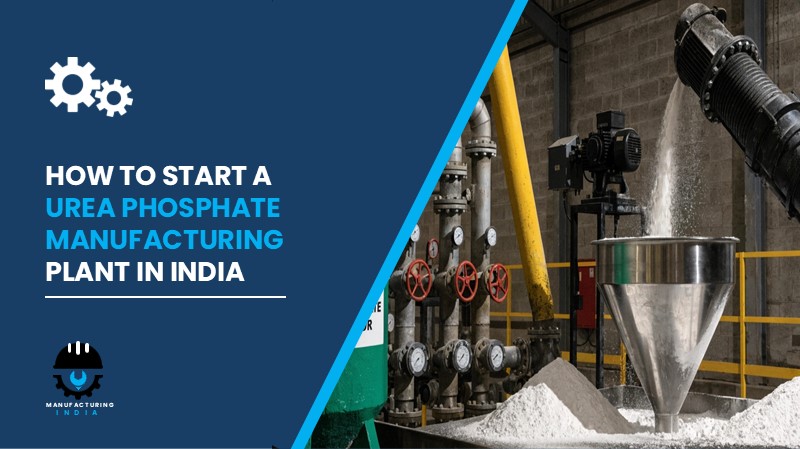
Setting up a urea phosphate manufacturing plant in India presents a compelling investment case driven by robust and growing demand from the agriculture, horticulture, water treatment, industrial cleaning, and flame retardant sectors. As Indian farming transitions rapidly toward precision irrigation, fertigation, and greenhouse cultivation, urea phosphate has emerged as a critical dual-nutrient fertilizer that delivers both nitrogen and phosphorus in a single water-soluble compound. Its unique ability to acidify irrigation water, prevent clogging in drip-irrigation emitters, and integrate seamlessly with other soluble fertilizers makes it indispensable to the high-efficiency agriculture systems that India’s food security strategy increasingly depends upon.
India’s structural advantages make it a strategically sound destination for this type of production. According to the Economic Survey 2024–25, agriculture and allied sectors contribute nearly 16% to India’s GDP and support over 46% of the population — a base that ensures sustained and growing fertilizer demand. Government-led modernisation initiatives such as Make in India, subsidies for micro-irrigation systems, and soil fertility enhancement programs create a highly supportive policy environment. States such as Gujarat and Maharashtra, with their developed chemical manufacturing corridors, port connectivity, and established raw material supply chains, are among the most viable locations for greenfield investment.
Establishing a urea phosphate manufacturing plant in India offers investors a rare combination of policy support, cost-competitive production, and structural demand from a rapidly modernising agriculture sector. With gross margins in the 20–30% range and net profit margins of 10–15%, the investment case is backed by strong financial fundamentals. Growing adoption of precision agriculture and fertigation across South Asia, combined with India’s ambition to reduce dependence on imported specialty fertilizers, makes domestic production both viable and strategically timely.
What is Urea Phosphate?
Urea phosphate is a water-soluble, acidic nitrogen–phosphorus fertilizer produced by reacting urea with phosphoric acid. It appears as a white crystalline compound with high purity and rapid dissolution properties, combining two essential crop nutrients — nitrogen (N) and phosphorus (P) — in a single formulation. This dual-nutrient composition makes it a highly efficient option for modern precision agriculture systems, particularly drip irrigation and fertigation setups where nutrients must be delivered in dissolved form directly to plant root zones.
The product’s strong acidifying nature is a key functional advantage: it lowers irrigation water pH and prevents mineral precipitation in micro-irrigation lines, a critical benefit in alkaline soil regions. Its stable crystalline form, minimal caking tendency, non-hygroscopic structure, and compatibility with other soluble fertilizers further enhance its commercial appeal. End-use industries served include agriculture, horticulture, water treatment, industrial cleaning, and flame retardant manufacturing. The production route follows an acid–urea reaction process involving controlled neutralisation, crystallisation, filtration, drying, milling, and packaging stages.
Cost of Setting Up a Urea Phosphate Manufacturing Plant in India
The total cost of establishing this facility depends on several interconnected variables, including production capacity, technology selection, geographic location, level of automation, and regulatory compliance requirements. Investors should account for both upfront capital expenditure and ongoing operational costs when building a detailed project economics model.
1. Capital Expenditure (CapEx)
Capital investment encompasses all upfront expenditures required to establish the facility. Machinery costs represent the largest single component of total CapEx, followed by land acquisition and civil construction.
Land and Site Development costs include land registration charges, boundary development, drainage systems, and site levelling. Investors can reduce land cost significantly by locating the unit within a Special Economic Zone (SEZ) or designated industrial estate, which also offers additional tax and regulatory benefits. Civil Works and Construction covers the erection of all physical structures, including the main production shed, laboratory building, raw material storage sheds, finished goods warehouse, utility block, effluent treatment area, and administrative block.
Key machinery required includes:
- Controlled reaction vessels for acid–urea synthesis
- Cooling systems for the crystallisation unit
- Solid-liquid separation filtration systems
- Drying equipment for moisture reduction and product stabilisation
- Milling and sieving machinery for particle size uniformity
- Quality control laboratory instruments for nutrient and purity testing
- Packaging machinery for filling moisture-resistant HDPE or polypropylene bags
- Boilers, water systems, and power distribution infrastructure (utility block)
- Effluent treatment plant (ETP) for acidic effluent management
Other capital costs include pre-operative expenses, commissioning charges, import duties on specialised equipment where applicable, and contingency provisions.
Request a Sample Report for In-Depth Market Insights: https://www.imarcgroup.com/urea-phosphate-manufacturing-plant-project-report/requestsample
2. Operational Expenditure (OpEx)
Raw Material Cost is the dominant operational driver. Primary inputs — phosphoric acid, urea, and ammonia — collectively account for 70–75% of total operating expenses, making phosphoric acid price fluctuations the most significant ongoing cost variable. Long-term supplier contracts with volume pricing are strongly advisable to manage this exposure and ensure uninterrupted production continuity.
Utility Cost — covering electricity for machinery operation, water for cooling and processing, and steam for heating — accounts for 4–6% of total OpEx. Other significant operating costs include transportation of raw materials and finished goods, moisture-resistant packaging materials (25–50 kg laminated HDPE or polypropylene bags, or 1,000 kg jumbo bags for industrial buyers), salaries and wages across production, maintenance, quality control, and administration, as well as depreciation charges and applicable taxes. By the fifth year of operations, total operational costs are expected to increase substantially due to inflation, market fluctuations, supply chain dynamics, and potential rises in the cost of key raw materials.
3. Plant Capacity
A large-scale urea phosphate production facility typically operates at a capacity of 30,000 to 60,000 Metric Tons per year. Capacity can be customised based on investor requirements, available capital, and target market geography, with smaller modular setups offering a lower entry point for first-time investors. Profitability improves progressively with higher capacity utilisation, as fixed costs are spread across a larger production volume, driving down per-unit cost and improving overall return on investment.
4. Profit Margins and Financial Projections
The financial profile of this investment is attractive relative to many specialty chemical ventures. Gross profit margins are estimated at 20–30% of revenue, while net profit margins settle in the 10–15% range after accounting for depreciation, taxes, and full operating costs. A comprehensive financial analysis covers liquidity assessment, profitability ratios, payback period calculation, net present value (NPV) determination, internal rate of return (IRR) analysis, and sensitivity analysis to stress-test projections against raw material price variability.
Why Set Up a Urea Phosphate Plant in India?
Rapidly Expanding Agriculture Sector. Agriculture and allied sectors contribute nearly 16% to India’s GDP and directly support over 46% of the population, according to the Economic Survey 2024–25. This foundational scale creates structural and sustained demand for high-efficiency fertilizers that traditional products cannot adequately meet, making specialty fertilizers a long-term growth category in the Indian market.
Rising Adoption of Fertigation and Precision Irrigation. Agricultural regions across India are transitioning toward controlled nutrient delivery systems — particularly drip irrigation, greenhouse farming, and hydroponics. The product’s ability to prevent emitter clogging and enhance nutrient absorption positions it as the fertilizer of choice in water-scarce regions, directly aligning with India’s national push toward micro-irrigation expansion.
Policy and Regulatory Tailwinds. Government-led agricultural modernisation programs, subsidies for micro-irrigation systems, and soil fertility enhancement initiatives strengthen demand for precision fertilizers. The Make in India initiative simultaneously incentivises domestic specialty chemical manufacturing, reducing import dependence and creating fiscal advantages for producers.
Cost-Competitive Manufacturing Base. India offers a compelling combination of lower land acquisition costs, competitive industrial labour rates, and an established chemical raw material supply chain. Locating the facility in an industrial estate or SEZ further reduces setup costs and provides access to pre-approved utilities and logistics infrastructure.
Active Industry Investment. In June 2024, Paradeep Phosphates Ltd launched India’s first biogenic Nano Urea and Nano DAP under the “Jai Kisaan Navratna Nano Shakti” brand, designed to increase nutrient use efficiency to over 90% compared to traditional urea. This signals strong domestic investment momentum in the high-efficiency fertilizer segment and validates India as an innovation-driven hub for specialty nutrient solutions.
Local Supply Chain Preference. India’s agri-input distribution sector — spanning cooperatives, agri-retailers, and direct farm networks across Gujarat, Maharashtra, Rajasthan, and Punjab — increasingly favours locally manufactured specialty fertilizers for supply reliability, pricing consistency, and faster delivery, giving domestic producers a structural advantage over importers.
Manufacturing Process – Step by Step
The urea phosphate manufacturing process uses the acid–urea reaction as the primary production method, transforming phosphoric acid and urea into a high-purity crystalline fertilizer product through a series of controlled unit operations.
- Raw Material Charging: Urea and phosphoric acid are measured and fed into a controlled reaction vessel in precise quantities.
- Acid–Urea Reaction: A chemical reaction between urea and phosphoric acid occurs under controlled temperature conditions, forming a urea phosphate slurry.
- Crystallisation: The reaction mixture is cooled through dedicated cooling systems to promote the formation of product crystals.
- Filtration: Crystals are separated from the mother liquor through solid-liquid separation filtration systems.
- Drying: Filtered crystals are passed through drying equipment to achieve the required moisture content for a stable, market-ready product.
- Milling and Sieving: Dried material is processed through milling and sieving machinery to achieve uniform particle size distribution meeting commercial specifications.
- Packaging and Dispatch: The finished product is filled into moisture-resistant bags and dispatched to end-use industries across agriculture, horticulture, water treatment, industrial cleaning, and flame retardant manufacturing.
Key Applications
Urea phosphate serves a diverse range of industries, with its value proposition centred on nutrient efficiency, solubility, and acidifying properties.
- Agriculture: Used in drip irrigation and fertigation systems as a high-efficiency dual-nutrient (N+P) fertilizer for field crops and commercial farming operations.
- Horticulture: Applied in nutrient solutions for fruits, vegetables, flowers, and greenhouse crops requiring precise, soluble nutrient delivery.
- Water Treatment: Employed for pH correction and prevention of mineral scaling in irrigation infrastructure and water distribution systems.
- Industrial Cleaning: Incorporated into metal cleaning agents and detergent formulations requiring effective acidic action.
- Flame Retardants: Used as a component in fire-resistant material formulations across industrial and construction applications.
Leading Manufacturers
The global market is served by several multinational chemical manufacturers with extensive production capacities and diversified application portfolios. Key players include:
- Prayon
- EuroChem Group
- Taurus Chemicals
- Haifa Group
- Lianyungang Mupro Fiine Chemical
Timeline to Start the Plant
- Feasibility study and project report preparation
- Land acquisition and site development
- Regulatory approvals and environmental clearances
- Factory licence and fire safety compliance
- Machinery procurement and installation
- Raw material supplier agreements and supply chain setup
- Trial production and quality testing
- Commercial production launch
Licences and Regulatory Requirements
Starting a urea phosphate manufacturing unit in India requires several approvals across business registration, environmental compliance, and occupational safety:
- Business registration (Proprietorship, LLP, or Pvt Ltd)
- Factory Licence under the Factories Act
- Environmental Clearance from the State Pollution Control Board
- GST Registration
- Fire Safety NOC
- Hazardous/Chemical storage and handling compliance (relevant given phosphoric acid use)
- Effluent Treatment Plant (ETP) operational clearance
- Occupational Health and Safety compliance
Key Challenges to Consider
High Capital Requirements. Establishing the facility at the 30,000–60,000 MT/year scale demands substantial upfront investment across land, civil construction, specialised reaction and crystallisation machinery, and utilities, creating a meaningful entry barrier for undercapitalised investors.
Raw Material Price Volatility. Phosphoric acid, urea, and ammonia are globally traded commodities subject to price swings driven by energy costs and geopolitical factors. Given that raw materials constitute 70–75% of total OpEx, even moderate price increases can materially compress margins without effective hedging or long-term supply contracts.
Regulatory Compliance. Operating a chemical manufacturing unit in India involves multiple layers of environmental, safety, and factory-level regulations. Continuous compliance with State Pollution Control Board standards and ETP operational requirements demands ongoing investment in monitoring systems and trained compliance personnel.
Technology and Innovation Pressure. The June 2024 launch of biogenic Nano Urea and Nano DAP by Paradeep Phosphates Ltd — with nutrient use efficiency claimed above 90% — signals that the specialty fertilizer segment is evolving rapidly, requiring producers to monitor technological developments to remain competitive.
Competition from Global Players. Established multinationals including Prayon, EuroChem Group, Haifa Group, and Lianyungang Mupro Fiine Chemical command significant scale, technology, and brand advantages in export markets, requiring domestic Indian producers to compete primarily on supply reliability, localisation, and cost efficiency.
Skilled Manpower. Operating reaction vessels, crystallisation systems, and quality control laboratories requires trained technical personnel with expertise in specialty chemical production, which may require investment in recruitment, onboarding, and ongoing skills development.
Frequently Asked Questions
1. How much does it cost to set up a urea phosphate manufacturing plant in India?
Total setup cost depends on plant capacity, location, automation level, and technology. A large-scale facility producing 30,000–60,000 MT/year involves significant capital investment covering land, civil construction, specialised machinery, utilities, and working capital. A detailed DPR provides precise cost breakdowns for your specific parameters.
2. Is urea phosphate manufacturing profitable in India in 2026?
Yes. Gross profit margins are estimated at 20–30% and net profit margins at 10–15%, supported by strong structural demand from India’s rapidly expanding precision agriculture and fertigation sectors.
3. What machinery is required for a urea phosphate plant in India?
Key equipment includes controlled reaction vessels, crystallisation cooling systems, filtration systems, drying equipment, milling and sieving machinery, quality control laboratory instruments, packaging machinery, and an effluent treatment plant.
4. What licences and approvals are required to start a urea phosphate plant in India?
Required approvals include business registration, Factory Licence, Environmental Clearance from the State Pollution Control Board, GST Registration, Fire Safety NOC, hazardous chemical compliance, ETP operational clearance, and occupational health and safety compliance.
5. What raw materials are needed for urea phosphate manufacturing?
Primary inputs are phosphoric acid, urea, and ammonia. Raw materials account for 70–75% of total OpEx, with phosphoric acid being the most cost-sensitive component.
6. What are the environmental compliance requirements for a urea phosphate plant in India?
The unit must obtain Environmental Clearance from the State Pollution Control Board, operate a functional ETP to manage acidic effluents, comply with chemical handling regulations, and maintain continuous environmental monitoring documentation for regulatory traceability.
7. What is the best location to set up a urea phosphate plant in India?
States such as Gujarat and Maharashtra are well-suited due to established chemical manufacturing corridors, port access for raw material imports, developed logistics networks, and proximity to large agricultural markets. Industrial estates and SEZs in these states offer additional cost and regulatory advantages.
8. What is the break-even period for this type of plant in India?
The break-even period depends on capacity utilisation, raw material costs, and market pricing. A full financial analysis including payback period, NPV, and IRR is provided in the IMARC Group project report covering this facility type.
9. What government incentives are available for manufacturers in India?
Eligible manufacturers can benefit from Make in India incentives, state-level industrial subsidies, capital investment benefits in SEZs and industrial estates, and schemes tied to micro-irrigation and precision agriculture promotion programs.
Key Takeaways for Investors
A urea phosphate manufacturing plant in India represents a well-grounded investment opportunity anchored by structural demand from agriculture, horticulture, water treatment, industrial cleaning, and flame retardant sectors — all growing in India’s expanding economy. The investment is financially viable across a range of production scales, with gross margins of 20–30% and net profit margins of 10–15% providing a credible return profile even at conservative utilisation rates. The global market was valued at USD 598.2 Million in 2025 and is projected to reach USD 985.2 Million by 2034 at a CAGR of 5.7% from 2026 to 2034, indicating a decade-long growth runway that rewards early movers in domestic Indian production. With precision agriculture, fertigation adoption, and food security investment all accelerating across India and broader South Asia, long-term demand sustainability for this facility type remains robust and underpinned by policy, demographics, and agri-infrastructure spending.
About the Author