Setting up a soya milk manufacturing plant in India presents a compelling investment case driven by the country’s rapid shift toward plant-based nutrition and the surging demand among health-conscious, lactose-intolerant, and vegan consumers. Soya milk serves as a versatile ingredient across direct consumption, food service, institutional diets, and processed food applications – sectors that are expanding at a significant pace across India’s urban and semi-urban markets. As awareness of dairy sensitivity deepens and the functional food segment grows, soya milk has transitioned from a niche alternative into a mainstream beverage consumed widely across households, offices, and food processing units.
India’s demographic strengths, expanding urban population, and infrastructure-led growth make this an ideal geography for soya milk production. The government’s Make in India initiative, coupled with active food processing promotion policies and proximity to soybean-growing belts in states like Madhya Pradesh and Maharashtra, provides a natural supply chain advantage for entrepreneurs and institutional investors looking to establish a cost-competitive, scalable facility. States such as Gujarat and Uttar Pradesh also offer well-developed industrial estates, SEZ zones, and agro-processing clusters that reduce land and utility setup timelines considerably.
Soya milk manufacturing in India combines strong policy tailwinds, a cost-competitive raw material ecosystem, and growing demand from food processing, institutional catering, and direct consumer segments. With gross profit margins of 25-30% and net profit margins of 10-15%, the investment presents viable returns, particularly when production scales toward or beyond 2 million litres annually.
What is Soya Milk?
Soya milk is a plant-based beverage made from whole soybeans that have been soaked, ground, and their liquid extracted, then cooked and filtered. It is completely devoid of elements originating from animals and is designed to replicate the nutritional function and appearance of dairy milk. In addition to naturally existing proteins, carbohydrates, and healthy fats sourced from soybeans, soya milk is frequently supplemented with vitamins and minerals to enhance its nutritional profile. Its flavor is neutral and mild, though it may vary based on formulation and processing method.
Because of its high protein content, functional properties, and suitability for vegan and lactose-intolerant consumers, soya milk is considered one of the most nutritionally complete plant-based beverages available. The production process – known as wet grinding or solvent-free aqueous extraction – converts cleaned and soaked soybeans into a smooth, stable, drinkable fluid through a sequence of regulated food processing steps. End-use industries served by soya milk include direct consumption (plain or flavored), breakfast and cereal diets, cooking and culinary applications (sauces, curries, baking), hot beverages such as tea and coffee, and food processing for value-added goods including flavored drinks, fermented beverages, yogurt substitutes, tofu, and ice creams.
Cost of Setting Up a Soya Milk Manufacturing Plant in India
The total cost of establishing a soya milk manufacturing plant in India depends on several critical variables, including production capacity, technology level, geographic location, degree of automation, and regulatory compliance requirements.
1. Capital Expenditure (CapEx)
Capital expenditure in a soya milk manufacturing plant encompasses all investments necessary for its establishment and long-term operational readiness. Land and site development form the first significant cost element; investors can optimize this outlay by evaluating options within Special Economic Zones (SEZs), agro-processing parks, or designated industrial estates where land prices are regulated and utility connections are pre-established. Civil works and construction – covering factory shed development, quality control laboratory, raw material and finished goods storage, and administrative block – represent the next major CapEx block.
Machinery and equipment procurement, installation, and commissioning constitute the most significant portion of capital investment. Key machinery required includes:
- Cleaning line
- Soaking system
- Grinding unit
- Filtering/separation equipment (centrifugal separators or filters)
- Homogenization unit
- Pasteurization system (including UHT treatment equipment)
- Filling machine
- Packing line
Additional capital costs include effluent treatment plant (ETP) setup, power and water supply infrastructure (including HVAC systems), material handling systems, automation and process control, IT infrastructure, security systems, and pre-operative expenses such as feasibility studies, licensing, and plant commissioning costs. Import duties on specialized food-grade processing equipment should be factored in where applicable.
Request a Sample Report for In-Depth Market Insights: https://www.imarcgroup.com/soya-milk-manufacturing-plant-project-report/requestsample
2. Operational Expenditure (OpEx)
Operating expenditure covers all costs incurred to run the soya milk manufacturing plant effectively on a day-to-day and annual basis. Raw material cost is the dominant operating expense, accounting for 60-70% of total OpEx in a typical facility. The basic raw materials required include soybeans, water, sweeteners, flavors, and packaging materials. Establishing long-term supplier contracts with soybean-growing regions and maintaining a 30-45 day raw material buffer stock are prudent strategies to manage price volatility and supply disruption.
Utility costs – comprising electricity, water supply, steam generation, and HVAC operation – form the second major OpEx category. Labor costs, covering production operators, quality control technicians, supervisors, and administrative personnel, account for 10-15% of total operating expenses. Other operating costs include transportation and logistics, primary and secondary packaging, repairs and maintenance, equipment depreciation, insurance, and applicable taxes. Investors should model a 5-year cost escalation projection that factors in raw material inflation, electricity tariff revisions, and wage increments to ensure conservative financial planning.
3. Plant Capacity
IMARC Group’s case study for this type of facility was modeled around a medium-scale plant designed to manufacture 2 million litres of soya milk annually. This capacity benchmark serves as a practical reference point for investors evaluating entry-level commercial-scale production. Plant capacity is fully customizable based on investor requirements, available capital, and target market size. Financial viability and return on investment improve progressively with higher capacity utilization, as fixed costs are distributed over a larger production volume, reducing per-unit cost and improving gross margin contribution.
4. Profit Margins and Financial Projections
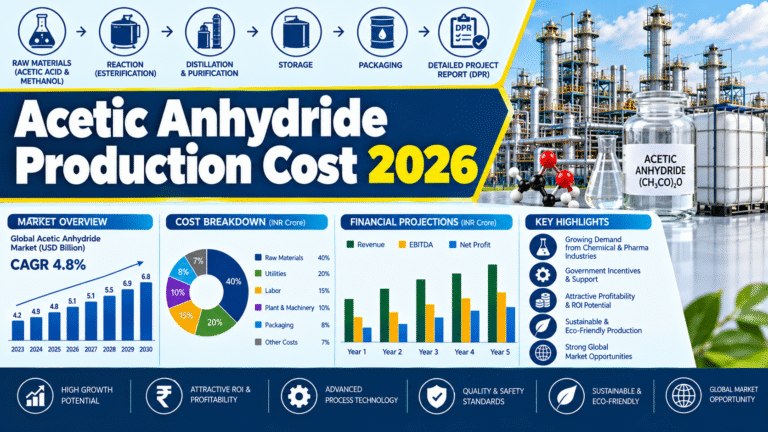
IMARC Group’s financial modeling for a soya milk manufacturing plant in India projects steady year-on-year revenue growth through the projected income period. Gross profit margins are estimated to lie within a range of 25-30%, while net profit margins are projected within the range of 10-15% during the income projection years. These figures indicate strong financial viability and profitability for well-structured investments. Full financial modeling for this type of plant includes analysis of Net Present Value (NPV), Internal Rate of Return (IRR), payback period, capital recovery timeline, fixed versus variable cost ratios, and profit and loss account projections – all calibrated to actual market pricing and operational benchmarks for the Indian context.
Why Set Up a Soya Milk Plant in India?
Rising Lactose Intolerance and Dairy Sensitivity Awareness: The most significant demand driver for soya milk in India is the growing awareness of lactose intolerance and dairy sensitivity. As consumers increasingly seek alternative milk sources that can be consumed without digestive discomfort, soya milk – one of the oldest and most established plant-based milk options – benefits from high familiarity and wide consumer acceptance across age groups.
Health and Nutritional Demand from Conscious Consumers: Soya milk is recognized as a nutritionally strong plant-based beverage due to its high protein content and functional properties. Health-conscious Indian consumers who are reducing saturated fat intake and seeking vegan and vegetarian food sources are actively including soya milk in daily diets, driving sustained retail and institutional demand.
Sustainability and Environmental Shift: As awareness of the environmental impact of animal farming increases among Indian consumers and corporate food buyers, plant-based beverages such as soya milk benefit from an accelerating shift toward sustainable food choices. Existing soybean supply chains and the scalability of production make soya milk one of the more practical sustainable alternatives in the Indian market.
Urbanization and Convenience-Led Lifestyle Trends: India’s rapid urbanization and growth of dual-income households have increased demand for packaged, shelf-stable, and ready-to-consume food and beverage products. Soya milk in its packaged format – bottles, cartons, or pouches – aligns well with urban consumer preferences for convenience, hygiene, and product consistency. Improved access through modern retail and online channels further supports market penetration.
Active Industry Investment and Product Launches: In September 2025, ITC’s flagship brand Aashirvaad announced an expansion into the plant-based protein market with the introduction of Aashirvaad Soya Milk in Bihar and Jharkhand, building on a successful earlier launch in West Bengal and Odisha. In January 2026, Califia Farms announced the launch of its inaugural Soymilk under the Simple & Organic platform, signaling global premium brand confidence in the soya milk segment.
Local Supply Chain Preference in Institutional Food Service: Institutional food service operators – schools, hospitals, corporate canteens, and catering companies – increasingly source soya milk locally as a component of balanced meal programs, particularly in regions where dairy consumption is traditionally lower. Local production reduces logistics cost and delivery lead times, making India-based plants highly competitive against imported or centrally produced alternatives.
Manufacturing Process – Step by Step
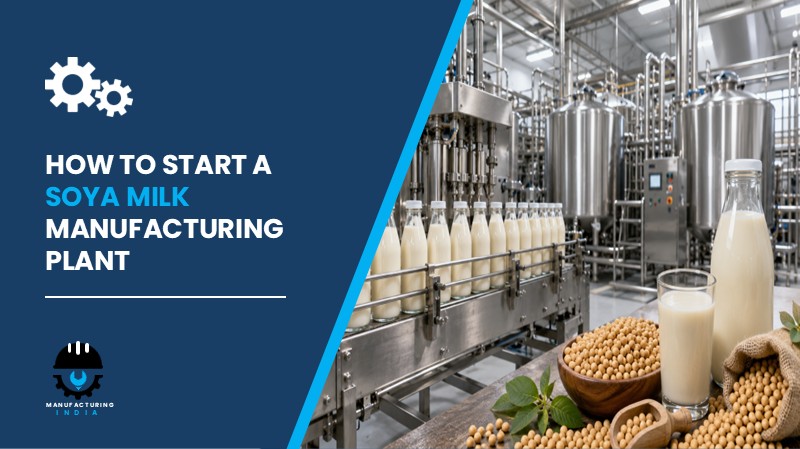
The soya milk manufacturing process uses wet grinding and aqueous extraction as the primary production method, supported by heat treatment, homogenization, and aseptic packaging to ensure a safe, stable, and commercially acceptable final product.
- Raw Soybean Selection and Cleaning: High-quality soybeans are screened using the cleaning line to eliminate contaminants such as stones, dust, and defective beans.
- Soaking: Cleaned soybeans are immersed in water for several hours using the soaking system to rehydrate, soften texture, and reduce anti-nutritional compounds.
- Wet Grinding: Soaked soybeans are washed and processed through the grinding unit with water to produce a fine slurry, releasing proteins, lipids, and soluble carbohydrates into the liquid phase.
- Filtering and Separation: The slurry passes through centrifugal separators or filters to separate the insoluble fiber residue (okara), yielding raw soya milk.
- Heat Treatment / Cooking: The extracted liquid is heat-treated to inactivate enzymes, remove beany flavors, ensure microbiological safety, and improve protein functionality.
- Homogenization: The heat-treated milk passes through the homogenization unit to distribute fat and protein particles evenly, producing a smooth, stable texture.
- Formulation and Fortification: Sweeteners, flavors, stabilizers, and micronutrients such as calcium and vitamins are added per product specification at this stage.
- Pasteurization / UHT Sterilization: The formulated product undergoes pasteurization or Ultra-High Temperature (UHT) treatment to achieve the required shelf life.
- Aseptic Filling and Packing: The final product is filled into bottles, cartons, or pouches using the filling machine and packing line, then dispatched to retail, institutional food service, and food processing end-users after quality control clearance.
Key Applications
Soya milk serves a wide range of domestic, institutional, and industrial end-use sectors:
- Direct Consumption: Plain or flavored soya milk consumed as a healthy, protein-rich dairy substitute for health-conscious and lactose-intolerant individuals.
- Breakfast and Cereal Diets: Widely used alongside cereals, oats, and granola as a nutritious morning meal base.
- Smoothies and Shakes: Used as a high-protein liquid base for blended health beverages.
- Cooking and Culinary Use: Applied as a dairy substitute in sauces, soups, curries, pancakes, cakes, and bread recipes.
- Hot Beverages: Compatible with tea and coffee as a plant-based milk alternative, particularly valued in café and food service applications.
- Food Processing: Used as a raw material for producing flavored drinks, fermented beverages, yogurt substitutes, ice creams, tofu, and other soy-derived products.
- Institutional Food Service: Incorporated into balanced meal programs in schools, hospitals, and corporate dining facilities.
- Specialized and Health-Conscious Diets: Integral to vegan, lactose-free, and cholesterol-conscious dietary regimens.
Leading Manufacturers
The global soya milk market is served by a mix of large multinational players and regional brands expanding into emerging markets. Based on recent industry developments referenced in IMARC Group’s source data:
- Califia Farms – a well-known, high-end plant-based beverage brand, active in soymilk product innovation including its Simple & Organic platform
- ITC’s Aashirvaad – an established Indian FMCG brand that has entered the soya milk segment, targeting key Hindi heartland markets including Bihar, Jharkhand, West Bengal, and Odisha
Timeline to Start the Plant
Investors should plan for a structured, phased project execution timeline covering the following stages:
- Feasibility study and project report preparation
- Land acquisition and site development
- Regulatory approvals and environmental clearances
- Factory licence and fire safety compliance
- Machinery procurement and installation
- Raw material supplier agreements and supply chain setup
- Trial production and quality testing
- Commercial production launch
Licences and Regulatory Requirements
Starting a soya milk manufacturing unit in India requires several approvals:
- Business registration (Proprietorship, LLP, or Pvt Ltd)
- Factory Licence under the Factories Act
- Environmental Clearance from State Pollution Control Board
- GST Registration
- Fire Safety NOC
- FSSAI (Food Safety and Standards Authority of India) licence for food-grade manufacturing
- Effluent Treatment Plant (ETP) operational clearance
- Occupational Health and Safety compliance
Key Challenges to Consider
High Capital Requirements: Establishing a commercial-scale soya milk manufacturing plant with full processing, pasteurization, UHT treatment, and aseptic packaging lines requires significant upfront investment in machinery, civil works, and utility infrastructure, making access to project finance or institutional credit a key prerequisite.
Raw Material Price Volatility: The primary input – soybeans – is an agricultural commodity subject to seasonal availability and price fluctuation. Sweeteners, flavors, and packaging materials also face cost variability, collectively impacting the 60-70% raw material cost share of OpEx.
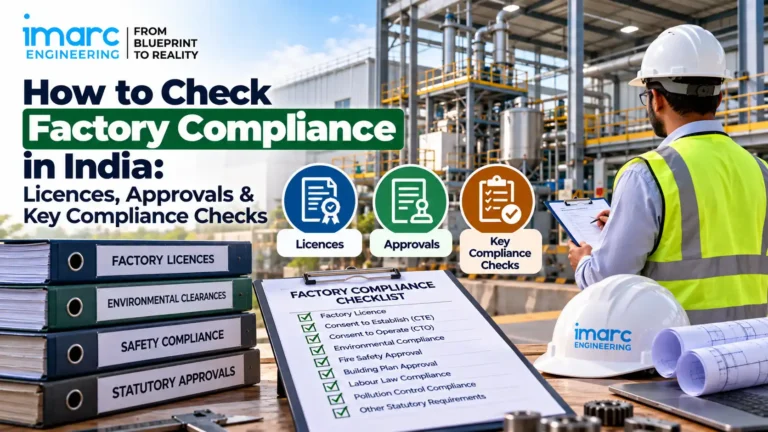
Regulatory Compliance: Food-grade manufacturing in India involves layered compliance across FSSAI food safety standards, environmental clearances, ETP operation, and factory licensing. Non-compliance at any stage can result in production delays or regulatory penalties.
Technology and Processing Standards: Maintaining consistent product quality – particularly in terms of taste, shelf life, protein stability, and UHT treatment efficacy – requires ongoing investment in food processing technology, quality control infrastructure, and skilled technical personnel.
Competition from Established Brands: With players such as ITC’s Aashirvaad actively entering and expanding in the Indian soya milk market, new entrants must invest in brand building, product differentiation, and distribution network development to compete effectively.
Skilled Manpower: Operating food-grade processing lines, quality laboratories, and regulatory compliance functions requires trained food technologists and process engineers, which may be a constraint in certain Tier-2 or Tier-3 industrial locations.
Key Takeaways for Investors
A soya milk manufacturing plant in India represents a strong investment opportunity at the intersection of multiple high-growth demand sectors – direct consumer retail, institutional food service, food processing, and the rapidly expanding plant-based nutrition segment. The investment delivers sound financial viability across medium to large plant capacities, with gross margins of 25-30% and net margins of 10-15% achievable even at the 2-million-litre annual production benchmark modeled by IMARC Group. The global soya milk market, valued at USD 5.79 Billion in 2025 and projected to reach USD 9.08 Billion by 2034 at a CAGR of 5.1%, provides a robust long-term commercial foundation for India-based production. With active industry entries from established brands, improving processing technology, and sustained consumer transition toward plant-based beverages, demand for domestically manufactured soya milk in India is positioned for durable growth through the decade.
About the Author