Grease Manufacturing Plant in India
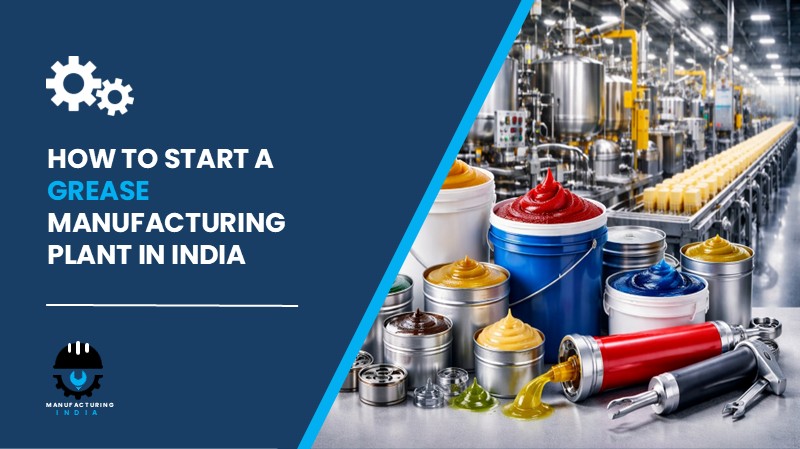
Setting up a grease manufacturing plant in India presents a compelling investment case for entrepreneurs, industrial investors, and chemical sector stakeholders seeking stable, long-term returns. Lubricating grease is an indispensable product across high-growth industries including automotive, construction, mining, aerospace, marine, agriculture, and renewable energy all sectors expanding at an accelerated pace within the Indian economy. With industrial machinery, heavy equipment, and vehicle fleets requiring consistent lubrication for performance and longevity, domestic demand for high-quality grease formulations continues to intensify, creating a durable and growing market opportunity for local producers.
India’s strategic advantages reinforce the investment rationale for this production category. Rapid urbanisation, large-scale infrastructure development, and the Government of India’s Make in India initiative are collectively driving industrial output, vehicle production, and heavy equipment deployment across states such as Gujarat, Maharashtra, Rajasthan, and Tamil Nadu all of which host established chemical and lubricant manufacturing ecosystems. With cost-competitive land and labour, access to petrochemical raw material supply chains, and a growing base of OEM and industrial customers preferring locally sourced lubricants, India is strategically positioned as one of the most viable locations globally for establishing a grease production facility.
A grease manufacturing plant in India offers investors a combination of policy support, cost-competitive production, and steady demand from automotive, industrial, and infrastructure sectors. With the global grease market projected to grow from USD 4.01 Billion in 2025 to USD 5.14 Billion by 2034, domestic production capacity can capture both import substitution and export opportunities, delivering viable margins and a clear path to break-even.
What is Grease?
Grease is a semi-solid lubricant composed of three primary components: base oil, a thickener, and performance additives, all formulated to reduce friction and wear between mechanical surfaces. Unlike liquid lubricants, grease remains in place under extreme conditions including high pressure, significant temperature variations, and contamination making it ideal for applications where liquid lubricants are impractical or insufficient. The base oil, which may be mineral or synthetic, determines the core lubrication performance, while thickeners such as lithium, calcium, or aluminum soaps govern the grease’s texture, structural integrity, and temperature resistance. Additives including antioxidants, corrosion inhibitors, rust inhibitors, and extreme pressure (EP) agents are incorporated to enhance specific performance properties such as oxidation stability, load-carrying capacity, and longevity.
Grease is produced in several distinct variants including lithium grease, calcium grease, aluminum complex grease, synthetic grease, lithium-complex grease, and bio-based grease each optimised for operating environments. The primary production method is the soap-thickening process, which involves saponification of fatty acids with metallic hydroxides to form the thickener structure within the base oil. The finished product serves a wide spectrum of end-use industries: automotive, industrial machinery, construction, mining, aerospace, marine, renewable energy, agriculture, and power generation making it one of the most broadly applied specialty chemical products in modern industrial economies.
Cost of Setting Up a Grease Manufacturing Plant in India
The total investment required for establishing a grease manufacturing plant in India depends on several interdependent variables including plant capacity, the level of automation selected (automatic, semi-automatic, or manual), geographic location, technology choices, and the scope of regulatory compliance infrastructure. A detailed project report and feasibility study are essential first steps for any investor to accurately assess total outlay and financial viability.
1. Capital Expenditure (CapEx)
Capital expenditure covers all one-time investments made before commercial production begins. Land and site development constitute a significant portion of CapEx, covering land registration charges, boundary development, levelling, drainage, and road access. Investors can reduce land costs by locating within designated Special Economic Zones (SEZs) or state-notified industrial estates in chemical manufacturing hubs such as Dahej (Gujarat), Patalganga (Maharashtra), or Manesar (Haryana), which also provide utility infrastructure and logistical connectivity.
Civil works and construction investment covers the manufacturing shed, quality control laboratory, raw material and finished goods storage, effluent treatment area, and the administrative block. These structures must comply with factory safety norms and local building regulations. Machinery and equipment account for the largest component of total capital expenditure in a grease manufacturing plant setup. Key machinery required includes:
- Saponification kettles/reactors
- Blending and homogenisation units
- Mixing vessels
- Heat exchangers
- Heating and cooling systems
- Milling equipment (including high-shear milling lines)
- Filters
- Filling machines
- Quality control laboratory equipment and instruments
Other capital costs include the Effluent Treatment Plant (ETP), pre-operative expenses, commissioning charges, and import duties applicable on specialised equipment not domestically available. Investors opting for fully automatic setups will face higher initial outlay but benefit from lower per-unit operating costs and better consistency.
Request a Sample Report for In-Depth Market Insights: https://www.imarcgroup.com/grease-manufacturing-plant-project-report/requestsample
2. Operational Expenditure (OpEx)
In the first year of operations, operating costs for a grease manufacturing plant are projected to be significant, covering raw materials, utilities, labour, packaging, and logistics. Raw material costs form the dominant share of OpEx and include base oils (mineral or synthetic), thickeners (lithium soaps, calcium soaps, aluminum soaps, metallic hydroxides), fatty acids, and performance additives (antioxidants, extreme pressure agents, corrosion inhibitors, rust inhibitors, and oxidation stabilisers). Investors should establish long-term supplier contracts for base oils and metallic soaps to hedge against petrochemical price cycles and ensure supply continuity.
Utility costs covering electricity for mixing, heating, and cooling systems, water, steam, and fuel — represent an additional ongoing expense that scales with production volume. Other operating costs include inbound and outbound transportation, packaging materials (drums, pails, and cartridges), employee salaries across production, quality control, maintenance, and management functions, routine equipment maintenance, asset depreciation, and applicable taxes. Investors should factor in a 5-year cost increase projection across raw materials and energy to stress-test financial models under realistic market scenarios.
3. Plant Capacity
The proposed grease manufacturing facility is designed with an annual production capacity ranging between 10,000 and 20,000 MT, enabling economies of scale while maintaining operational flexibility to serve diverse market segments. This production range allows the facility to supply automotive OEMs and aftermarket distributors, industrial maintenance operations, construction and mining equipment operators, renewable energy installations, and infrastructure projects across India. Capacity can be customised per investor requirements, and profitability improves materially as capacity utilisation approaches and exceeds the 70–80% threshold.
4. Profit Margins and Financial Projections
A comprehensive financial analysis for this investment includes evaluation of Net Present Value (NPV), Internal Rate of Return (IRR), payback period, gross profit margin, and net profit margin. The grease manufacturing plant project report covers detailed income projections, expenditure forecasts, break-even analysis, taxation, and depreciation schedules to support investor decision-making. Sensitivity analysis further assesses profitability under fluctuating raw material prices and varying demand scenarios, ensuring investors understand both the upside potential and the risk parameters of this business.
Why Set Up a Grease Plant in India?
Rising Automotive and Industrial Demand. India’s expanding vehicle fleet spanning passenger vehicles, commercial trucks, two-wheelers, and agricultural equipment drives consistent demand for automotive greases used in wheel bearings, chassis joints, and suspension components. Simultaneously, industrial automation and manufacturing expansion across sectors increase the consumption of greases for conveyor belts, pumps, electric motors, and production machinery.
Growth in Construction, Mining, and Infrastructure. Large-scale infrastructure development, including roads, ports, metro rail, and energy projects, deploys heavy equipment that requires reliable lubrication for bearings, gears, and joints. The construction and mining sectors are key and growing consumers of specialty greases in the Indian market.
Renewable Energy as an Emerging Demand Driver. Wind turbine installations and power generation plants are increasingly significant consumers of high-performance greases. With India aggressively scaling its renewable energy capacity, demand for specialty greases that provide superior wear protection for turbines, generators, and mechanical systems is set to grow substantially over the coming decade.
Cost-Competitive Manufacturing Advantage. India offers lower land acquisition and development costs compared to Western manufacturing locations, combined with a large, skilled, and cost-competitive labour pool. Proximity to petrochemical supply chains in Gujarat and Maharashtra further reduces raw material logistics costs, improving overall operating margins for domestic producers.
Active Global Industry Investment. The global grease industry continues to attract significant capital. In January 2026, ExxonMobil Corporation announced a strategic capacity expansion at its Mobil grease manufacturing facility, adding new high-shear milling lines to meet growing demand for specialty electric vehicle (EV) component greases. In February 2026, Shell plc launched a new range of bio-based lithium-complex greases for wind turbine applications, targeting the renewable energy sector with improved biodegradability. These investments signal robust long-term confidence in grease market fundamentals.
Local Supply Chain Preference. Automotive OEMs, industrial equipment manufacturers, and infrastructure contractors operating in India increasingly prefer locally sourced lubricants to reduce lead times, manage supply chain risk, and align with government procurement preferences. A domestic grease manufacturing facility is well-positioned to capture this preference-driven demand shift.
Manufacturing Process Step by Step
The grease manufacturing process uses the soap-thickening process (saponification) as the primary production method, combining chemical reaction, precision temperature control, and mechanical processing to produce grease formulations with consistent performance characteristics.
- Base Oil Preparation: Mineral or synthetic base oils are measured, transferred into mixing vessels, and heated to controlled temperatures to prepare them for blending with thickening agents.
- Saponification: Fatty acids react with metallic hydroxides (lithium, calcium, or aluminum) in the heated base oil inside saponification kettles or reactors, forming soap thickeners through a controlled chemical reaction.
- Cooling and Milling: The hot grease mixture is gradually cooled and passed through milling equipment to achieve the desired consistency, texture, and homogeneity.
- Additive Incorporation: Performance additives including antioxidants, extreme pressure (EP) agents, rust inhibitors, and corrosion inhibitors are blended into the grease in blending and homogenisation units to meet specific application requirements.
- Quality Control Testing: Samples are tested in the on-site laboratory for viscosity, penetration value, drop point, oxidation stability, rheological properties, and thermal stability to ensure compliance with product specifications.
- Packaging and Dispatch: Finished grease is filled into drums, pails, and cartridges using filling machines, then labelled, stored, and dispatched to automotive OEMs, industrial distributors, construction contractors, and end-use customers.
Key Applications
Grease manufactured at this facility serves a broad base of industries requiring reliable mechanical lubrication:
- Automotive: Lubrication of wheel bearings, chassis joints, and suspension components in passenger vehicles, commercial vehicles, and two-wheelers.
- Industrial Machinery: Applied to conveyor belts, pumps, electric motors, and manufacturing equipment to reduce friction and extend operational life.
- Construction and Mining: Used in bearings, gears, and joints of heavy construction and mining equipment operating under high-load, high-contamination conditions.
- Aerospace and Defence: High-performance lubricants formulated to endure extreme temperatures and frictional conditions in aerospace components.
- Marine: Lubrication of winches, pulleys, and other shipboard equipment exposed to water and salt-laden environments.
- Renewable Energy: Specialty greases for wind turbine components, supporting extended relubrication intervals and superior wear protection.
- Agriculture: Equipment lubrication for tractors, harvesters, and irrigation machinery operating in demanding field conditions.
- Power Generation: High-performance greases for turbines, generators, and mechanical systems in power plants to maintain operational efficiency.
Leading Manufacturers
The global grease industry is led by established chemical and lubricant manufacturers with significant production infrastructure and formulation expertise. Key players operating in this market include:
- NYCO
- Battenfeld-Grease & Oil Corporation of New York
- RichardsApex, Inc.
- Shell plc
- ExxonMobil Corporation
Timeline to Start the Plant
Establishing a grease manufacturing plant in India from planning to commercial production typically follows these eight phases:
- Feasibility study and project report preparation
- Land acquisition and site development
- Regulatory approvals and environmental clearances
- Factory licence and fire safety compliance
- Machinery procurement and installation
- Raw material supplier agreements and supply chain setup
- Trial production and quality testing
- Commercial production launch
Licences and Regulatory Requirements
Starting a grease manufacturing unit in India requires several approvals from central and state authorities:
- Business registration (Proprietorship, LLP, or Private Limited Company)
- Factory Licence under the Factories Act, 1948
- Environmental Clearance from the State Pollution Control Board
- GST Registration
- Fire Safety NOC from the local fire authority
- Hazardous and chemical handling compliance under applicable environmental and safety regulations (relevant given the use of metallic hydroxides and petroleum-derived base oils)
- Effluent Treatment Plant (ETP) operational clearance
- Occupational Health and Safety compliance under applicable central and state labour laws
Key Challenges to Consider
High Capital Requirements. The initial investment in reactors, milling equipment, heating and cooling systems, and laboratory infrastructure is substantial, and investors must secure adequate funding and project financing before committing to site development.
Raw Material Price Volatility. Base oils (mineral and synthetic), metallic hydroxides, and fatty acids are petrochemical and commodity derivatives subject to global price cycles. Sudden increases in input costs can compress margins significantly if not hedged through supplier contracts.
Regulatory Compliance. Operating a grease manufacturing plant involves ongoing obligations under environmental, chemical handling, factory safety, and effluent treatment regulations, requiring dedicated compliance management resources.
Technology and Innovation Pressure. The shift towards bio-based greases, synthetic lubricants, and nanotechnology-enhanced formulations as demonstrated by Shell plc’s February 2026 bio-lubricant launch — requires manufacturers to invest in R&D and formulation upgrades to remain competitive.
Competition from Established Players. Global majors including Shell plc and ExxonMobil Corporation, alongside domestic lubricant manufacturers, represent significant competitive forces in the Indian market. New entrants must differentiate through pricing, product quality, or niche segment focus.
Skilled Manpower. Grease manufacturing requires trained chemical engineers, quality control technicians, and equipment operators familiar with saponification processes and lubrication chemistry. Recruiting and retaining this talent in tier-2 industrial locations can be challenging.
Frequently Asked Questions
1. How much does it cost to set up a grease manufacturing plant in India? The total cost varies based on plant capacity (10,000–20,000 MT per annum range), automation level (automatic, semi-automatic, or manual), location, and infrastructure requirements. A detailed feasibility study and project report is essential to arrive at accurate CapEx and OpEx figures for your specific investment parameters.
2. Is grease manufacturing profitable in India in 2026? Yes, grease manufacturing is financially viable in India in 2026, supported by growing demand from automotive, industrial, construction, and renewable energy sectors. Financial analysis including NPV, IRR, and break-even assessment confirms viability across a range of production capacities.
3. What machinery is required for a grease plant in India? Core machinery includes saponification kettles/reactors, blending and homogenisation units, mixing vessels, heat exchangers, heating and cooling systems, milling equipment, filters, filling machines, and quality control laboratory instruments.
4. What licences and approvals are required to start a grease plant in India? Required approvals include business registration, Factory Licence under the Factories Act, Environmental Clearance from the State Pollution Control Board, GST Registration, Fire Safety NOC, hazardous chemical compliance, ETP operational clearance, and occupational health and safety compliance.
5. What raw materials are needed for grease manufacturing? Key raw materials are base oils (mineral or synthetic), thickeners (lithium, calcium, or aluminum soaps and metallic hydroxides), fatty acids, and performance additives including antioxidants, extreme pressure agents, corrosion inhibitors, and rust inhibitors.
6. What are the environmental compliance requirements for a grease plant in India? Plants must obtain Environmental Clearance from the State Pollution Control Board, operate an approved Effluent Treatment Plant, comply with hazardous chemical storage and handling regulations, and meet occupational health and safety standards applicable to chemical manufacturing operations.
7. What is the best location to set up a grease plant in India? Industrial estates and chemical manufacturing hubs in Gujarat (Dahej, Ankleshwar), Maharashtra (Patalganga, Taloja), Rajasthan, and Tamil Nadu offer strong infrastructure, raw material access, and logistical connectivity suitable for a grease production facility.
8. What is the break-even period for this type of plant in India? Break-even timelines depend on capacity utilisation, raw material costs, and selling price realisation. The project report provides detailed break-even analysis, IRR, and payback period projections to guide investor planning.
9. What government incentives are available for manufacturers in India? Investors can benefit from Make in India policy support, state government industrial promotion schemes, SEZ-related tax and duty concessions, and central government capital subsidy programmes available to chemical and lubricant manufacturers under eligible MSME and industrial categories.
Key Takeaways for Investors
A grease manufacturing plant in India represents a strategically sound investment opportunity, with sustained demand from automotive OEMs, industrial machinery operators, construction contractors, mining companies, renewable energy developers, and power generation plants ensuring a broad and diversified customer base. Financial viability is demonstrable across the 10,000–20,000 MT annual capacity range, with detailed NPV, IRR, and break-even analysis confirming strong investment credentials for both new entrants and existing lubricant manufacturers scaling their operations. The global grease market, valued at USD 4.01 Billion in 2025, is projected to reach USD 5.14 Billion by 2034 at a CAGR of 2.8%, with the Asia-Pacific region including India identified as a key growth engine driven by rapid industrialisation and expanding automotive production. As India’s infrastructure, manufacturing, and energy sectors continue to scale, domestic demand for high-performance grease formulations is positioned for sustained, long-term growth.
About the Author