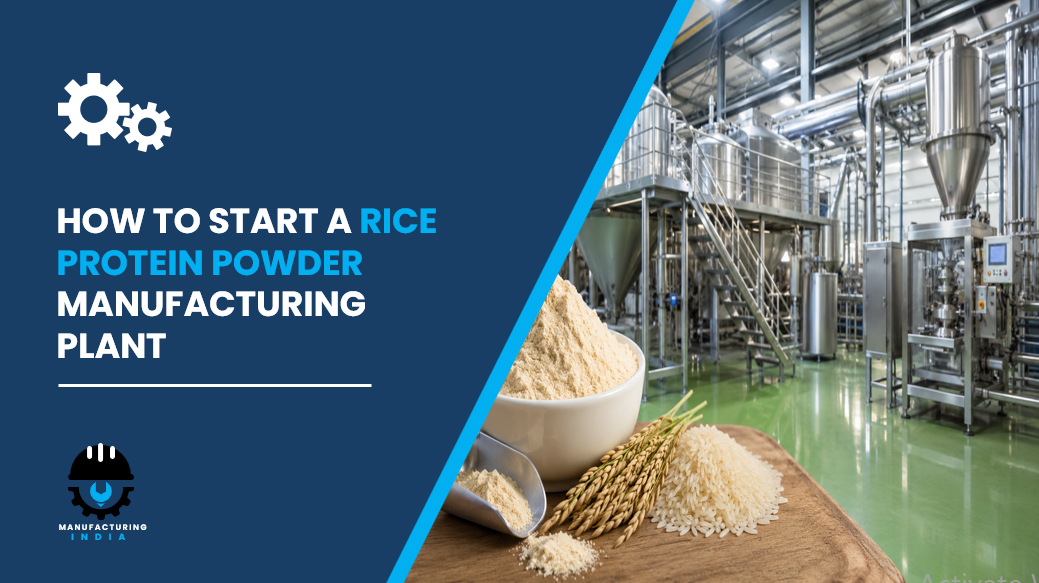
Setting up a rice protein powder manufacturing plant in India presents a compelling investment case grounded in the country’s vast rice production base, rapidly expanding plant-based nutrition market, growing consumer awareness of lactose intolerance and gluten sensitivity, and the accelerating global shift toward clean-label, hypoallergenic protein ingredients across functional foods, nutraceuticals, sports nutrition, and pharmaceutical formulations. Rice protein powder – a plant-derived protein ingredient obtained from brown or white rice through enzymatic processing and filtration – delivers a balanced amino acid profile, excellent digestibility, neutral taste, and outstanding compatibility with clean-label formulations, making it one of the most commercially versatile and rapidly growing plant protein ingredients globally. As India’s health-conscious urban consumer base expands and its functional food and dietary supplement industries scale up, the demand for domestically produced rice protein powder is growing at a structural and sustained pace that rewards early-mover investment in this segment.
India’s strategic advantages for this investment are clearly established. The country’s position as one of the world’s largest rice producers – with major cultivation across Uttar Pradesh, West Bengal, Andhra Pradesh, Punjab, and Odisha – provides a cost-competitive and abundantly available raw material base for rice protein extraction. North America currently holds the largest share at 43.1% of the global rice protein powder market, demonstrating the commercial maturity of the segment in developed markets and the growth opportunity available to Indian producers targeting both domestic and export channels. States such as Punjab, Uttar Pradesh, Maharashtra, and Tamil Nadu offer established food processing infrastructure, enzyme and chemical supplier networks, and strong logistics connectivity to nutraceutical, sports nutrition, and food and beverage manufacturer buyer clusters. The Make in India initiative and PLI scheme for food processing further reinforce the policy environment for this investment.
A rice protein powder manufacturing plant in India combines the world’s largest rice agricultural base with one of the fastest-growing plant protein demand curves – driven by vegan diets, hypoallergenic formulation needs, and expanding sports nutrition markets – to deliver gross margins of 35–45% and net margins of 18-25%. With North America holding 43.1% of global market share and plant-based nutrition adoption accelerating globally, this investment offers premium financial returns and multi-decade demand visibility for quality-focused Indian producers.
What is Rice Protein Powder?
Rice protein powder is a plant-derived protein ingredient obtained from brown or white rice through enzymatic processing and filtration techniques that isolate protein from carbohydrates and fibres. It is widely recognised for its hypoallergenic properties, making it suitable for individuals with dairy, soy, or gluten sensitivities – a growing consumer population driving strong demand for rice protein as a preferred alternative to whey and soy protein concentrates.
The powder typically contains a balanced amino acid profile with a relatively high concentration of essential amino acids, and is often blended with other plant proteins to enhance nutritional completeness. It is available in concentrate and isolate forms offering varying protein content levels. Rice protein powder is easily digestible, has a neutral taste, and integrates well into beverages, protein bars, bakery products, and dietary supplements. Its long shelf life and compatibility with clean-label formulations make it highly suitable for large-scale food processing and health-focused product development. The primary production method spans rice milling and flour preparation, enzymatic hydrolysis and protein extraction, filtration and concentration, spray drying, and packaging and labelling. The product serves end-use industries including the nutraceutical and dietary supplements industry, functional food and beverage industry, sports nutrition sector, and pharmaceutical applications.
Cost of Setting Up a Rice Protein Powder Manufacturing Plant in India
The total cost of establishing a rice protein powder manufacturing plant in India depends on production capacity, extraction technology, plant location, degree of automation, and regulatory compliance requirements.
1. Capital Expenditure (CapEx)
The capital investment required to set up this facility covers several major cost heads. Land and site development – including land registration, boundary development, food-grade facility preparation, and related site works – forms a substantial portion of total CapEx. Investors should consider locating the unit within food processing zones or agro-industrial estates in Punjab (for direct proximity to rice supply), Uttar Pradesh, West Bengal, or Maharashtra, where access to rice, enzymes, and food-grade water sources, combined with established food processing infrastructure and state investment incentives, creates a commercially favourable operating environment. Proximity to farmgate rice supply is essential to minimise raw material transportation costs and ensure feedstock freshness and consistent starch and protein content.
Civil works and construction costs cover the rice receiving and milling area, enzymatic hydrolysis and extraction hall, filtration and concentration section, spray drying building, quality control laboratory, packaging and finished goods warehouse, effluent treatment zone, and administrative block. All food processing areas must be constructed to FSSAI Good Manufacturing Practice (GMP) standards, with food-grade flooring, wall cladding, drainage, and ventilation systems throughout the production environment.
Machinery and equipment represent the largest component of total capital expenditure for this rice protein powder manufacturing plant. Key machinery required includes:
- Milling units
- Enzymatic reactors
- Filtration systems
- Centrifuges
- Evaporators
- Spray dryers
- Packaging machines
Other capital costs include effluent treatment plant (ETP) installation for enzymatic processing wastewater, pre-operative and commissioning expenses, and any applicable import duties on specialised spray drying and filtration equipment not manufactured domestically.
Request a Sample Report for In-Depth Market Insights: https://www.imarcgroup.com/rice-protein-powder-manufacturing-plant-project-report/requestsample
2. Operational Expenditure (OpEx)
The operating cost structure of a rice protein powder manufacturing plant is primarily driven by raw material procurement. Raw material cost – covering rice as the dominant feedstock input, along with enzymes used in the hydrolysis and protein extraction stage, and water – accounts for approximately 60–70% of total OpEx, making rice procurement the single most critical cost management lever for plant-level profitability. Investors should establish long-term supply agreements with rice mills and paddy aggregators in the surrounding agricultural zone to stabilise procurement costs and ensure consistent feedstock quality across production cycles.
Utility costs, covering electricity, water, and steam required for milling, enzymatic hydrolysis, evaporation, and spray drying operations, account for 20–25% of OpEx – a notably high share reflecting the energy-intensive nature of spray drying, which is the most thermally demanding unit operation in the rice protein powder process. Other operating costs include transportation and logistics for raw material procurement and finished powder dispatch to nutraceutical manufacturers, sports nutrition brands, food and beverage companies, and pharmaceutical formulators, packaging materials, salaries and wages, maintenance and calibration of spray drying and filtration equipment, depreciation of fixed assets, and applicable taxes. By the fifth year of operations, total operational costs are projected to increase substantially due to inflation, rice price escalation, enzyme cost dynamics, market fluctuations, supply chain disruptions, and rising demand for plant-based nutrition ingredients.
3. Plant Capacity
The proposed manufacturing facility is designed with an annual production capacity ranging between 1,000–5,000 MT, enabling economies of scale while maintaining operational flexibility. Capacity can be customised based on specific investor requirements, target market mix between concentrate and isolate grades, domestic and export channel strategy, and available capital. Profitability and unit economics improve with higher capacity utilisation, and advanced extraction and spray drying technologies enable efficient and scalable production well-suited to incremental capacity expansion as market demand grows.
4. Profit Margins and Financial Projections
The rice protein powder manufacturing plant demonstrates exceptionally strong profitability potential – among the highest in the plant-based ingredient manufacturing sector. Gross profit margins typically range between 35–45%, supported by the premium pricing commanded by hypoallergenic, clean-label plant protein ingredients and the high value-add of the enzymatic extraction and spray drying process relative to the rice raw material input cost. Net profit margins are projected in the range of 18–25%. Key financial indicators including NPV, IRR, payback period, liquidity analysis, and sensitivity analysis are covered comprehensively in the full project report.
Why Set Up a Rice Protein Powder Manufacturing Plant in India?
Rising Plant-Based Nutrition Demand Driving Structural Market Growth. The growing shift toward vegan and clean-label diets is significantly increasing demand for rice protein powder globally and in India. Research from the University of Oxford in 2025 indicated that widespread adoption of plant-based diets could lower agricultural labour demand by 5% to 28%, equal to 18 to 106 million jobs, as livestock reliance declines — directly signalling the scale of the global transition to plant-based nutrition that is driving demand for rice protein powder as a sustainable protein alternative.
Hypoallergenic and Versatile Ingredient Widening Consumer Acceptance. Its compatibility with multiple dietary requirements — including dairy-free, soy-free, and gluten-free formulation needs — enhances rice protein powder’s market acceptance across diverse consumer groups. As consumer awareness of food sensitivities and allergies grows, the addressable market for hypoallergenic protein ingredients expands in parallel, making rice protein powder one of the most broadly accepted plant proteins in the global nutrition industry.
Expanding Functional Food and Sports Nutrition Industries. The expanding functional food industry and sports nutrition sector continue to be major growth drivers, with manufacturers focusing on plant-based formulations to cater to evolving dietary preferences across both everyday wellness and performance nutrition applications. Rice protein powder’s neutral taste and compatibility with beverages, bars, and fortified food products make it a preferred formulation ingredient for product developers targeting health-conscious and vegan athlete consumer segments.
Premium Pricing Potential Supporting Attractive Margins. High-quality plant protein products command better margins in global markets, and rice protein powder — particularly the isolate grade and infant-nutrition-grade variants — commands significant price premiums over commodity grain-based ingredients. This premium pricing dynamic, combined with the relatively competitive cost of Indian rice as a feedstock, creates an unusually attractive margin structure for well-positioned domestic producers.
Active Industry Innovation Expanding Applications. In March 2026, a research study by Future Foods and other researchers highlighted rice proteins as a viable base for allergen-free, plant-based cheese, demonstrating improved texture, meltability, and nutritional profile — reinforcing growing commercial interest in rice protein powder for next-generation dairy alternative formulations. In January 2025, Axiom Foods’ next-generation Oryzatein 2.0 introduced a white, grit-free profile with ultra-low heavy metal content targeting infant nutrition applications, demonstrating that rice protein powder is actively evolving toward the highest-purity, highest-value formulation categories available in the plant protein ingredient market.
Scalable Processing Technology Reducing Operational Risk. Advanced extraction and spray drying technologies enable efficient and scalable production, with proven enzymatic hydrolysis and centrifugal separation processes available from established equipment manufacturers. This technological maturity reduces process innovation risk for new entrants and allows investment focus to be directed toward feedstock quality, product consistency, and market development rather than technology development.
Manufacturing Process — Step by Step
The rice protein powder manufacturing process uses rice milling and flour preparation, enzymatic hydrolysis and protein extraction, filtration and concentration, spray drying, and packaging and labelling as the primary production method. The process involves multiple unit operations, material handling stages, and quality verification checkpoints throughout.
- Rice Receipt and Quality Inspection: Brown or white rice is received from mill suppliers and aggregators, inspected for moisture content, protein content, heavy metal levels, and microbiological quality, and stored in food-grade raw material areas before entering the processing line.
- Rice Milling and Flour Preparation: Rice is milled using milling units to produce fine rice flour with a consistent particle size distribution suitable for efficient enzymatic hydrolysis. Milling parameters are controlled to maximise starch and protein accessibility in the downstream extraction stage.
- Enzymatic Hydrolysis and Protein Extraction: Rice flour is slurried with water and treated with protease and amylase enzyme cocktails in enzymatic reactors under controlled temperature, pH, and time conditions. Amylase enzymes break down starch into soluble sugars, while protease enzymes solubilise and extract rice protein from the flour matrix, producing a protein-rich liquid hydrolysate.
- Separation and Filtration: The hydrolysate slurry is processed through centrifuges and filtration systems to separate the protein-rich liquid fraction from insoluble fibre, starch residues, and unhydrolysed solids. Multiple stages of washing and filtration improve protein recovery and purity.
- Concentration and Purification: The protein-rich filtrate is concentrated using evaporators to reduce water content and increase protein concentration, producing a concentrated protein solution suitable for spray drying.
- Spray Drying: The concentrated protein solution is atomised and spray dried using spray dryers to produce a fine, free-flowing rice protein powder with the specified moisture content, protein purity, and particle size distribution. Spray drying conditions — inlet and outlet temperature, atomisation rate — are controlled to preserve protein functionality and colour.
- Quality Control and Testing: Finished rice protein powder is tested for protein content, amino acid profile, moisture, pH, heavy metal content — including arsenic, cadmium, lead, and mercury — microbiological parameters, and organoleptic properties against applicable FSSAI, USP, and customer-specific specifications. Ultra-low heavy metal content is particularly critical for infant nutrition-grade product compliance.
- Packaging and Labelling: Approved rice protein powder is packaged in food-grade bags or containers using packaging machines and labelled with protein content, amino acid profile, allergen-free status, and applicable certifications before dispatch to nutraceutical manufacturers, sports nutrition brands, food and beverage companies, and pharmaceutical formulators.
Key Applications
The rice protein powder manufacturing plant serves multiple high-growth end-use industries with consistent and expanding demand for hypoallergenic, clean-label plant protein ingredients:
- Nutritional Supplements Industry: Widely used in protein powders and capsules, offering a plant-based alternative with high digestibility and clean-label appeal for vegan, dairy-free, and allergen-sensitive consumers.
- Food and Beverage Industry: Supports product fortification in beverages, dairy alternatives, and bakery products by enhancing protein content without significantly altering taste — a critical formulation advantage over many competing plant proteins.
- Sports Nutrition Sector: Incorporated into performance nutrition products — including protein shakes, bars, and recovery formulas — due to its amino acid profile and suitability for vegan athletes seeking plant-based alternatives to whey protein.
- Pharmaceutical and Nutraceutical Industry: Enables the formulation of specialised dietary supplements aimed at addressing protein deficiencies and lifestyle-related health concerns, including infant nutrition formulations targeting ultra-low heavy metal and ultra-high purity specifications.
Leading Manufacturers
The global rice protein powder industry is served by several companies with extensive production capacities and diverse application portfolios. Key players include:
- Axiom Foods, Inc.
- RiceBran Technologies
- Bioway Organic Group Limited
- Golden Grain Group Limited
- Shafi Gluco Chem Pvt. Ltd.
- The Green Labs LLC
Timeline to Start the Plant
- Feasibility study and project report preparation
- Land acquisition and site development
- Regulatory approvals and environmental clearances
- Factory licence and fire safety compliance
- Machinery procurement and installation
- Raw material supplier agreements and supply chain setup
- Trial production and quality testing
- Commercial production launch
Licences and Regulatory Requirements
Starting a rice protein powder manufacturing unit in India requires several approvals:
- Business registration (Proprietorship, LLP, or Pvt Ltd)
- Factory Licence under the Factories Act
- Environmental Clearance from State Pollution Control Board
- GST Registration
- Fire Safety NOC
- FSSAI (Food Safety and Standards Authority of India) food manufacturing licence — mandatory for all protein ingredient production and supply to food, beverage, and nutraceutical manufacturers
- Heavy metal testing and certification compliance — particularly for arsenic, cadmium, lead, and mercury — required for export and infant nutrition-grade supply
- Export quality certifications including USFDA registration and EU food establishment approval for international market supply
- Effluent Treatment Plant (ETP) operational clearance for enzymatic processing wastewater
- Occupational Health and Safety compliance
Key Challenges to Consider
Raw Material Price Volatility and Paddy Quality Consistency. Rice — accounting for 60–70% of total OpEx — is subject to seasonal price movements, monsoon-dependent yield variability, and government minimum support price revisions. Heavy metal content in rice — particularly arsenic — varies by cultivation region and growing conditions, making careful supplier selection and incoming quality testing a non-negotiable operational discipline for producers supplying infant nutrition and export-grade markets.
High Utility Costs for Spray Drying Operations. Utility costs at 20–25% of OpEx — driven primarily by the thermal energy demands of spray drying — are higher than most food processing segments. Investing in energy-efficient spray dryer technology and heat recovery systems is essential to managing utility costs and protecting net margin over the plant’s operating life.
Regulatory Compliance for Food and Export Grade Standards. Meeting FSSAI food manufacturing standards, heavy metal compliance for infant nutrition-grade supply, USFDA and EU food establishment requirements for export, and ongoing microbiological and nutritional testing obligations requires a robust quality management system investment and ongoing third-party audit compliance.
Technology and Innovation Pressure. Rapidly evolving formulation requirements — including white, grit-free, ultra-low heavy metal profiles as demonstrated by Axiom Foods’ Oryzatein 2.0 launch in January 2025 — and expanding applications in dairy alternatives as highlighted by the March 2026 plant-based cheese research require producers to continuously invest in process refinement and product development to maintain premium product positioning.
Competition. Global players such as Axiom Foods, Inc. and RiceBran Technologies, along with domestic producer Shafi Gluco Chem Pvt. Ltd., maintain established market positions with certified product portfolios. New entrants must differentiate on product purity, heavy metal compliance, amino acid profile optimisation, and supply reliability to win institutional accounts with nutraceutical and sports nutrition manufacturers.
Skilled Manpower for Food-Grade Bioprocessing. Operating enzymatic reactors, centrifugal separation systems, and spray dryers to FSSAI and export-grade quality specifications requires food technologists and bioprocess engineers — a skilled workforce category that requires targeted recruitment and ongoing training investment.
Frequently Asked Questions
1. How much does it cost to set up a rice protein powder manufacturing plant in India? Total investment depends on production capacity (1,000–5,000 MT annually), extraction technology, location relative to rice supply zones, and automation level. Key cost components include land and food-grade facility construction, machinery (milling units, enzymatic reactors, filtration systems, centrifuges, evaporators, spray dryers, packaging machines), ETP, quality control laboratory, and working capital for rice and enzyme procurement. A detailed project report provides capacity-specific CapEx and OpEx estimates.
2. Is rice protein powder manufacturing profitable in India in 2026? Yes — it is among the most financially attractive plant protein manufacturing opportunities available. The facility demonstrates gross profit margins of 35–45% and net profit margins of 18–25% under normal operating conditions, supported by premium clean-label positioning, growing vegan diet adoption, and expanding sports nutrition and nutraceutical market demand.
3. What machinery is required for a rice protein powder manufacturing plant in India? Key equipment includes milling units, enzymatic reactors, filtration systems, centrifuges, evaporators, spray dryers, and packaging machines.
4. What licences and approvals are required to start a rice protein powder manufacturing plant in India? Required approvals include business registration, Factory Licence under the Factories Act, Environmental Clearance from the State Pollution Control Board, GST registration, FSSAI food manufacturing licence, heavy metal compliance certification, USFDA and EU food establishment approvals for export, ETP operational clearance, Fire Safety NOC, and Occupational Health and Safety certification.
5. What raw materials are needed for rice protein powder manufacturing? Key raw materials are brown or white rice as the primary protein source and feedstock, food-grade protease and amylase enzymes used in the enzymatic hydrolysis and protein extraction stage, and water consumed in large volumes across milling, hydrolysis, and washing stages.
6. What are the environmental compliance requirements for a rice protein powder manufacturing plant in India? Operators must obtain Environmental Clearance, maintain an operational ETP for enzymatic processing wastewater — which carries high organic load from starch hydrolysis by-products — comply with State Pollution Control Board guidelines on effluent quality before discharge, and implement responsible disposal pathways for rice starch and fibre by-products generated during protein separation.
7. What is the best location to set up a rice protein powder manufacturing plant in India? Ideal locations offer maximum proximity to rice supply sources, food-grade water infrastructure, established food processing industrial zones, and access to nutraceutical and sports nutrition manufacturer buyer clusters. Punjab and Haryana — India’s largest paddy-producing states — along with Uttar Pradesh, West Bengal, and Andhra Pradesh are the strongest options, offering abundant rice availability, established milling infrastructure, and proximity to food and nutraceutical industry hubs.
8. What is the break-even period for this type of plant in India? Break-even depends on production scale, rice procurement costs, enzyme sourcing efficiency, capacity utilisation, and the product mix between concentrate and premium isolate grades. The strong margin profile of 35–45% gross and 18–25% net supports a relatively rapid payback timeline, accelerated by export market penetration into North America — which holds 43.1% of global market share. A detailed feasibility study provides project-specific break-even, NPV, and IRR projections.
9. What government incentives are available for manufacturers in India? Rice protein powder manufacturers in India can benefit from PLI scheme incentives for food processing, capital subsidies under state-level agro-processing investment schemes in Punjab and Uttar Pradesh, tax exemptions under state industrial promotion policies, reduced utility tariffs in food processing industrial estates, and export-linked benefits for plant protein ingredients supplied to international nutraceutical and food manufacturers. APEDA export development support and MSME development scheme funding may provide additional incentives for producers targeting international markets.
Key Takeaways for Investors
The rice protein powder manufacturing plant opportunity in India is underpinned by the powerful convergence of India’s world-class rice production base, accelerating global adoption of plant-based and vegan diets — with University of Oxford 2025 research confirming the scale of the structural shift away from animal protein — and expanding institutional demand from nutraceutical, sports nutrition, functional food, and pharmaceutical sectors across both domestic and international markets. The financial profile is among the strongest in the plant protein ingredient manufacturing sector, with gross margins of 35–45% and net margins of 18–25%, supported by premium clean-label positioning, hypoallergenic product differentiation, and the high value-added transformation of rice into pharmaceutical and nutrition-grade protein isolate. North America’s 43.1% global market share confirms the commercial maturity and export revenue potential available to Indian producers achieving the required quality and certification standards. As rice protein innovation accelerates — with Axiom Foods’ Oryzatein 2.0 targeting infant nutrition in January 2025 and March 2026 research confirming dairy alternative applications — India-based manufacturers positioned at the quality end of the market are set for durable, multi-decade demand growth across every tier of the global plant-based nutrition industry.
About the Author