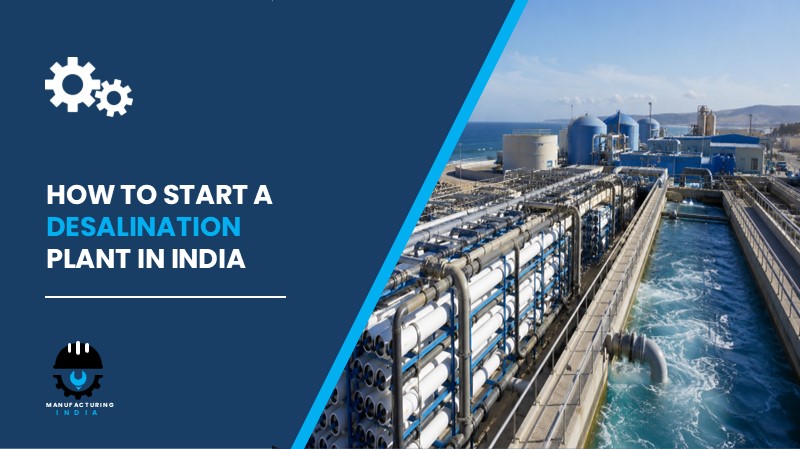
Setting up a desalination plant in India presents a compelling investment case driven by accelerating freshwater scarcity, rapid population growth, and surging demand from the municipal water supply industry, industrial processing segment, power generation industry, oil and gas industry, and agriculture and irrigation segment. As surface water bodies come under mounting pressure, this technology is transitioning from niche infrastructure to a mainstream solution across the country.
India’s structural advantages make this one of the most strategically sound locations for desalination investment. Rapid coastal urbanisation is pushing demand for non-conventional water sources in states from Gujarat and Maharashtra to Tamil Nadu and Andhra Pradesh. The government’s Make in India initiative, combined with dedicated spending on water security infrastructure, creates a policy environment that actively rewards domestic production capacity.
This investment opportunity combines policy tailwinds, cost-competitive coastal sites, and structural demand from municipal, industrial, and agricultural users. With gross profit margins of 30–45% and net margins of 10–20%, establishing a desalination production facility here offers a financially viable return underpinned by government-led water security spending.
What is Desalination?
A desalination plant is an industrial setup designed to remove dissolved salts, minerals, and other impurities from saline water sources such as seawater or brackish groundwater. These facilities function on principles of separation — primarily reverse osmosis or thermal distillation — to produce water meeting defined specifications for drinking, agricultural, or industrial use. Performance depends on the salinity of the raw input, the technology deployed, and the extent of pretreatment applied upstream.
The core desalination manufacturing process is a multi-stage operation: intake and screening, pretreatment through filtration and chemical dosing, the separation stage using either a membrane or thermal method, post-treatment and remineralization, disinfection, and storage and distribution. Raw materials central to the process include seawater or brackish water, pretreatment chemicals, RO membranes, cartridge and multimedia filters, and CIP cleaning chemicals.
End-use industries served include the municipal water supply industry, the industrial processing segment, the power generation industry, the oil and gas industry, and the agriculture and irrigation segment — spanning applications from drinking water and industrial process water to boiler feedwater, cooling water systems, and agricultural irrigation.
Cost of Setting Up a Desalination Plant in India
The total cost of establishing this production unit depends on capacity, technology, site location, degree of automation, and regulatory compliance. A thorough feasibility study is essential before committing capital, as each variable can materially shift the CapEx and long-term OpEx profile.
1. Capital Expenditure (CapEx)
Land and site development costs — including registration, boundary development, and access infrastructure — form a substantial portion of the total investment. Investors should evaluate Special Economic Zones and industrial estates in coastal states where land costs are lower and regulatory pathways more efficient. Civil works cover the process shed, laboratory, raw material storage, administrative block, and safety infrastructure.
Machinery and equipment represent the largest single capital cost. Key machinery required includes:
- Intake pumps and screens
- Pretreatment filtration units
- High-pressure pumps
- Reverse osmosis membrane systems
- Energy recovery devices
- Post-treatment and dosing systems
Other capital costs include the effluent treatment plant (ETP), pre-operative engineering fees, commissioning costs, and import duties on specialised membrane and energy recovery equipment.
Request a Sample Report for In-Depth Market Insights: https://www.imarcgroup.com/desalination-plant-project-report/requestsample
2. Operational Expenditure (OpEx)
The operating cost structure is primarily driven by raw material consumption at approximately 20–35% of total OpEx, and utilities at 40–50% of OpEx — reflecting the energy-intensive nature of high-pressure membrane separation. Raw inputs include seawater or brackish water, pretreatment chemicals, RO membranes, cartridge and multimedia filters, and CIP cleaning chemicals. Long-term supply contracts with regional vendors are recommended to stabilise the cost base.
Utility costs — predominantly electricity for high-pressure pumps and energy recovery systems — represent the largest single operating outlay. Other recurring costs include transportation, packaging, staff salaries, maintenance, depreciation, and taxes. By the fifth year, total operational costs are projected to increase substantially due to inflation, market fluctuations, and rising input material prices.
3. Plant Capacity
The proposed facility is designed with an annual production capacity ranging between 36 and 55 million m³ per year, enabling economies of scale while preserving operational flexibility. Capacity can be customised to match investor requirements, and profitability improves materially with higher utilisation rates.
4. Profit Margins and Financial Projections
The desalination plant demonstrates healthy profitability under normal operating conditions. Gross profit margins typically range between 30–45%, supported by stable end-use demand across multiple sectors. Net profit margins range between 10–20%. Comprehensive projections covering NPV, IRR, and payback period are built on assumptions around capital investment, capacity utilisation, pricing trends, and demand outlook.
Why Set Up a Desalination Plant in India?
Rising Freshwater Scarcity. India faces a structural freshwater deficit driven by population growth, groundwater depletion, and erratic monsoon patterns. The Aqueduct Water Risk Atlas by the World Resources Institute reports that 25 nations — housing a quarter of the global population — experience extreme water scarcity annually, and nearly 4 billion people face the highest level of water scarcity for at least one month per year. These conditions create sustained, non-cyclical demand for desalination capacity.
Coastal Urbanisation. Rapid urban growth along India’s coastline is driving demand for supplemental water sources independent of rainfall. Municipal authorities increasingly view desalination as a dependable baseload supply source to complement traditional water infrastructure and reduce dependence on overstressed surface reservoirs.
Industrial Growth in Arid Zones. Rising industrial activity in arid and semi-arid regions creates direct demand for consistent water supply across manufacturing, power generation, and oil and gas sectors. The industrial processing segment requires controlled water quality that desalination output reliably delivers.
Technological Advancements. In December 2025, DuPont introduced the FilmTec SW30XLE-400/34, a low-energy, fouling-resistant element offering up to 25% recovery in initial pressure drop — directly improving plant economics and reducing energy intensity.
Active Global Investment. In May 2025, SUEZ and partners launched a EUR 508 million project in Hsinchu, Taiwan — the country’s first large-scale municipal reverse osmosis plant — producing 100,000 cubic metres of water daily using energy-efficient, low-carbon technologies. This scale of institutional investment confirms the commercial maturity of the sector.
Cost-Competitive Manufacturing. India’s cost-competitive land, large engineering workforce, and developing coastal supply chains strengthen the investment case. Desalination is an explicit priority in national and state water security plans, creating policy momentum for private investors.
Manufacturing Process – Step by Step
The desalination manufacturing process uses intake and screening followed by multi-stage treatment as the primary production method:
- Intake and Screening: Raw seawater or brackish groundwater is drawn through intake structures and passed through screens to remove large particulates.
- Pretreatment — Filtration and Chemical Dosing: Screened water passes through pretreatment filtration units and receives coagulants and antiscalants via cartridge and multimedia filters.
- Desalination — Separation Stage: High-pressure pumps force pretreated water through RO membrane systems to separate dissolved salts from product water. A thermal distillation process is applied as an alternative based on feed water salinity and technology selection.
- Energy Recovery: Energy recovery devices capture pressure from the reject brine stream and return it to the feed side of the pump, materially reducing energy consumption per unit of output.
- Post-Treatment and Remineralization: Permeate undergoes pH correction, remineralization, and dosing via post-treatment and dosing systems to meet application-specific quality standards.
- Disinfection: Treated water is disinfected using chlorination or ultraviolet systems to meet potable or industrial specifications.
- Storage and Distribution: Finished desalinated water is dispatched to municipal networks, industrial consumers, power plants, oil and gas users, and agricultural irrigation systems.
Key Applications
Desalination serves a broad range of industries where conventional freshwater is insufficient:
- Municipal Water Supply: Supplements drinking water in water-scarce urban and coastal regions independent of rainfall.
- Industrial Sector: Used for processing, cleaning, and manufacturing operations requiring consistent, controlled water quality.
- Power Generation: Provides boiler feedwater and cooling water for thermal and nuclear power plants.
- Oil and Gas Industry: Supports enhanced oil recovery and refinery processes in arid producing regions.
- Agriculture and Irrigation: Applied in precision irrigation systems where freshwater availability is structurally limited.
Leading Manufacturers
The global desalination industry is served by multinational technology companies with extensive production portfolios. Key players include:
- Xylem, Inc.
- Veolia
- Aquatech
- Doosan Corporation
- IDE
- Applied Membranes, Inc.
- DuPont
- Toyobo Co., Ltd.
- Pure Aqua, Inc.
- Ovivo
- Guangzhou KangYang Seawater Desalination Equipment Co., Ltd.
- Genesis Water Technologies
- Biwater Holdings Limited
Timeline to Start the Plant
- Feasibility study and project report preparation
- Land acquisition and site development
- Regulatory approvals and environmental clearances
- Factory licence and fire safety compliance
- Machinery procurement and installation
- Raw material supplier agreements and supply chain setup
- Trial production and quality testing
- Commercial production launch
Licences and Regulatory Requirements
Starting a desalination manufacturing unit in India requires several approvals:
- Business registration (Proprietorship, LLP, or Pvt Ltd)
- Factory Licence under the Factories Act
- Environmental Clearance from State Pollution Control Board
- GST Registration
- Fire Safety NOC
- Hazardous/Chemical compliance for pretreatment and CIP chemicals
- Effluent Treatment Plant (ETP) operational clearance for brine discharge
- Occupational Health and Safety compliance
Key Challenges to Consider
High Capital Requirements. Establishing this production unit involves significant outlay across land, civil works, and specialised machinery including high-pressure pumps, RO membrane systems, and energy recovery devices. Robust project financing is essential before committing to construction.
Raw Material Price Volatility. Key inputs — RO membranes, pretreatment chemicals, cartridge and multimedia filters, and CIP chemicals — are subject to global supply chain price fluctuations. Long-term supplier contracts are essential to protect the OpEx base.
Regulatory Compliance. Desalination facilities require Environmental clearances, brine discharge management, and ETP operational standards that impose ongoing obligations requiring dedicated monitoring resources throughout the plant’s operational life.
Technology and Innovation Pressure. Rapid improvements in membrane efficiency, as demonstrated by DuPont’s December 2025 FilmTec SW30XLE-400/34 launch, require operators to plan for technology refresh cycles and periodic capital reinvestment to remain cost-competitive.
Competition from Established Global Players. The sector features well-capitalised multinationals including Veolia, Xylem, IDE, Aquatech, and Doosan Corporation. New entrants must differentiate on location advantage, government relationships, or niche market positioning.
Skilled Manpower. Operating membrane systems, energy recovery devices, and dosing systems requires trained process engineers and maintenance technicians. Workforce development in coastal industrial locations remains an ongoing challenge.
Frequently Asked Questions
1. How much does it cost to set up a desalination plant in India?
Total cost varies based on capacity, technology selection, site, and automation level — covering land, civil works, high-pressure pumps, membrane systems, and pre-operative expenses. Request a customised project report for specific CapEx and OpEx figures.
2. Is desalination manufacturing profitable in India in 2026?
Yes. The production unit demonstrates gross margins of 30–45% and net margins of 10–20%, supported by stable demand from municipal, industrial, and agricultural end-users.
3. What machinery is required for a desalination plant in India?
Key equipment: intake pumps and screens, pretreatment filtration units, high-pressure pumps, reverse osmosis membrane systems, energy recovery devices, and post-treatment and dosing systems.
4. What licences and approvals are required to start a desalination plant in India?
Business registration, Factory Licence, Environmental Clearance, GST Registration, Fire Safety NOC, chemical compliance, ETP clearance, and Occupational Health and Safety compliance.
5. What raw materials are needed for desalination manufacturing?
Seawater or brackish water, pretreatment chemicals, RO membranes, cartridge and multimedia filters, and CIP cleaning chemicals.
6. What are the environmental compliance requirements for a desalination plant in India?
Environmental Clearance from the State Pollution Control Board, an operational ETP for brine discharge, and ongoing adherence to emission and discharge standards.
7. What is the best location to set up a desalination plant in India?
Coastal states — Gujarat, Maharashtra, Tamil Nadu, and Andhra Pradesh — offer seawater access, industrial zone proximity, and port access for equipment procurement.
8. What is the break-even period for this type of plant in India?
The payback period depends on capacity, utilisation rate, financing structure, and prevailing water tariffs. A full financial analysis including NPV and IRR is detailed in the comprehensive project report.
9. What government incentives are available for manufacturers in India?
Capital subsidies under state industrial promotion schemes, concessional land in SEZs, customs duty exemptions on specialised equipment, and support under national water security infrastructure programmes.
Key Takeaways for Investors
A desalination plant investment in India addresses a structural, long-term demand gap across the municipal water supply industry, industrial processing segment, power generation industry, oil and gas industry, and agriculture and irrigation segment. The financial structure is viable across a range of production capacities, with gross margins of 30–45% and net margins of 10–20% demonstrating strong profitability even under conservative utilisation assumptions. The global desalination market is shaped by freshwater scarcity affecting 4 billion people annually and 25 nations experiencing extreme water stress year-round — conditions that make desalination demand structurally resilient rather than cyclically dependent. For investors entering India’s water infrastructure space, policy support, coastal site availability, and irreversible demand growth position this desalination segment as one of the most defensible long-term manufacturing investments in the country today.
About the Author