Setting up a cigarette manufacturing plant in India presents a compelling investment case driven by established consumer demand, population growth, brand loyalty, and the continued consumption of tobacco products despite regulatory controls. Cigarettes – small, cylindrical tobacco products consisting of finely cut tobacco leaves wrapped in thin paper with a filter at one end – remain one of the most widely consumed FMCG products globally, with deeply entrenched consumer habits that sustain consistent volume even under elevated taxation and public health regulatory pressures. India is one of the world’s most significant tobacco consumption markets: according to the Global Adult Tobacco Survey (GATS) conducted in 2016–17, the overall prevalence of smoking tobacco use is 10.38% and smokeless tobacco use is 21.38% in India – a scale of domestic tobacco consumption that creates a large and institutionally supported demand base for domestically manufactured cigarettes across the country’s retail, hospitality, and distribution channels.
India’s structural advantages make this investment strategically compelling. Cigarette manufacturing involves significant regulatory compliance, licensing, excise controls, taxation complexity, brand loyalty, and distribution approvals – barriers that favour experienced and compliant manufacturers over informal producers and create durable competitive moats once operational approvals are obtained. In several countries, domestic manufacturing is encouraged to reduce illicit trade and ensure tax compliance – a policy rationale that is highly relevant to India, where government excise revenues from the tobacco sector are a significant fiscal input. The global cigarette market was valued at USD 1,165.12 billion in 2025 and is expected to reach USD 1,380.19 billion by 2034 at a CAGR of 1.9% from 2026 to 2034 according to IMARC Group estimates – positioning a domestic cigarette manufacturing plant in India within one of the world’s largest and most commercially established consumer goods categories.
India’s 10.38% smoking tobacco prevalence confirmed by GATS 2016–17, a global cigarette market growing from USD 1,165.12 billion in 2025 to USD 1,380.19 billion by 2034, and the strong entry barriers and brand moats of the organised tobacco sector make a cigarette manufacturing plant a high-margin, structurally stable investment. With gross margins of 55–60% and net margins of 20–30% across a capacity of 10–20 billion sticks annually, this is among the most financially productive manufacturing categories available to Indian investors.
What is a Cigarette?
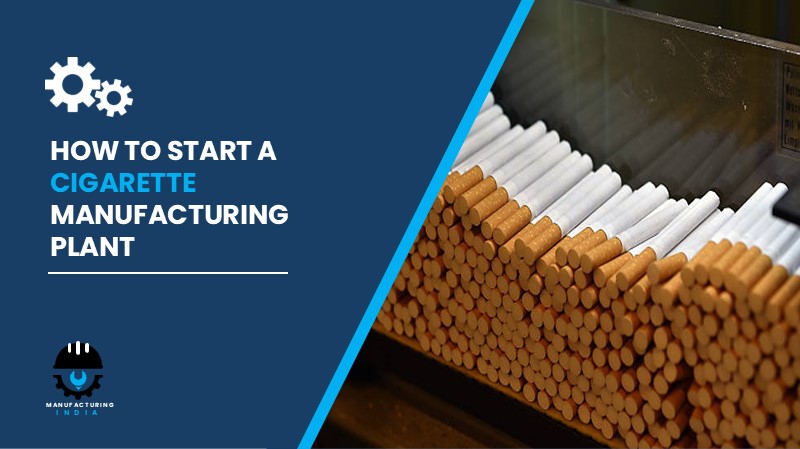
A cigarette is a small, cylindrical tobacco product designed for smoking. It typically consists of finely cut tobacco leaves wrapped in thin paper, with a filter at one end to reduce the inhalation of tar and other particles. When lit, the smoker inhales the smoke produced by the burning tobacco, which delivers nicotine into the bloodstream. Cigarettes often contain additives to enhance flavour and control burning. While widely consumed across the world, cigarette smoking is associated with serious health risks, including lung cancer, heart disease, respiratory disorders, and reduced overall life expectancy.
Cigarettes represent a consistently consumed FMCG product with stable, repeat demand driven by a large existing consumer base. Despite regulatory oversight, consumption remains resilient across many markets – sustained by established smoking habits in specific demographic segments, brand loyalty, and the availability of low-cost cigarette variants. The product category spans applications including king-size filters, menthol capsules, low-ignition propensity paper, fine-cut rolling tobacco, and duty-free packaging.
The primary production method is tobacco curing, blending, cutting, conditioning, cigarette making, filter attachment, packaging – a multi-stage, high-speed automated manufacturing process. End-use industries served include tobacco retail, hospitality, and distribution.
Cost of Setting Up a Cigarette Manufacturing Plant in India
The cost of establishing this facility depends on capacity, technology selection, plant location, degree of automation, and regulatory compliance requirements.
1. Capital Expenditure (CapEx)
Total capital investment for a cigarette manufacturing plant in India covers land acquisition, site preparation, civil construction, machinery, and pre-operative expenses. The cost of land and site development – including charges for land registration, boundary development, and other related expenses – forms a substantial part of the overall investment. This allocation ensures a solid foundation for safe and efficient plant operations. Investors can reduce land acquisition costs by locating the unit in an industrial estate or Special Economic Zone (SEZ) with established FMCG or tobacco manufacturing infrastructure, which also provide shared utilities and potential state-level fiscal incentives.
Civil works and construction encompass the main primary processing, cigarette making, and packaging production buildings, raw material storage areas for tobacco leaf and cut tobacco, cigarette paper, and filters, a quality control laboratory, a finished goods warehouse, and an administrative block. Given that cigarette manufacturing involves handling tobacco leaf, which is subject to moisture-sensitive storage requirements, civil infrastructure must incorporate appropriate humidity-controlled storage and ventilation throughout the facility.
Machinery costs account for the largest portion of total capital expenditure. Key machinery required includes:
- Primary processors
- Threshers and destemmers
- Cutters and dryers
- Blending silos
- Cigarette making machines
- Filter assemblers
- Packing units
- Cartoning systems
All machinery must be high-quality and corrosion-resistant, tailored for cigarette production, and must comply with industry standards for safety, efficiency, and reliability. Other capital costs include the effluent treatment plant (ETP), advanced process monitoring systems, pre-operative expenses, trial production costs, and commissioning charges.
Request a Sample Report for In-Depth Market Insights: https://www.imarcgroup.com/cigarette-manufacturing-plant-project-report/requestsample
2. Operational Expenditure (OpEx)
The operating cost structure of a cigarette manufacturing plant is primarily driven by raw material consumption, particularly tobacco, which accounts for approximately 40–50% of total operating expenses (OpEx). Cigarette paper and filters are the secondary raw material inputs. Securing long-term supply agreements with reliable tobacco leaf and cut tobacco suppliers – preferably located in proximity to India’s major tobacco growing regions in Andhra Pradesh, Telangana, Karnataka, and Gujarat – is essential for cost stability and production continuity. Sustainability and supply chain risks must be assessed, and long-term contracts should be negotiated to stabilise pricing and ensure a steady supply.
Utility costs – comprising electricity for primary processors, cutters and dryers, blending silos, cigarette making machines, and packaging equipment, as well as water – account for 5–10% of total OpEx, reflecting the relatively lower energy intensity of cigarette manufacturing compared to chemical or food processing operations. Other ongoing operating costs include transportation, packaging, salaries and wages, depreciation, taxes, equipment repairs and maintenance, and other miscellaneous expenses.
In the first year of operations, the operating cost for the cigarette manufacturing plant is projected to be significant, covering raw materials, utilities, depreciation, taxes, packing, transportation, and repairs and maintenance. By the fifth year, the total operational cost is expected to increase substantially due to factors such as inflation, market fluctuations, and potential rises in the cost of key materials. Additional factors, including supply chain disruptions, rising consumer demand, and shifts in the global economy, are expected to contribute to this increase.
3. Plant Capacity
The proposed manufacturing facility is designed with an annual production capacity ranging between 10 billion and 20 billion sticks, enabling economies of scale while maintaining operational flexibility. Modern cigarette manufacturing benefits from high-speed automated machinery, standardised raw materials, and economies of scale – once capacity is established, marginal production costs are low, enabling attractive operating margins. Capacity can be customised per investor requirements based on target domestic retail, duty-free, or export distribution segments, available capital, and degree of automation.
4. Profit Margins and Financial Projections
The project demonstrates exceptional profitability potential under normal operating conditions. Gross profit margins typically range between 55–60% – among the highest in India’s FMCG manufacturing sector – supported by stable demand and value-added applications including branded product premiums. Net profit margins range between 20–30%. A comprehensive financial model covering NPV (net present value), IRR (internal rate of return), payback period, liquidity analysis, uncertainty analysis, sensitivity analysis, and a full five-year profit and loss account provides investors with a rigorous analytical framework for assessing financial viability and long-term sustainability across different capacity and pricing scenarios.
Why Set Up a Cigarette Manufacturing Plant in India?
Sustained Domestic Consumption Anchoring Structural Volume Demand. The cigarette market is primarily driven by sustained tobacco consumption in emerging economies, population growth, and established smoking habits in specific demographic segments. According to the Global Adult Tobacco Survey (GATS) conducted in 2016–17, the overall prevalence of smoking tobacco use is 10.38% and smokeless tobacco use is 21.38% in India – confirming a very large existing consumer base that generates predictable and recurring demand for organised cigarette manufacturers operating within India’s legal tobacco distribution channels.
Essential Consumer Staple with Resilient Repeat Demand. Cigarettes represent a consistently consumed FMCG product with stable, repeat demand driven by a large existing consumer base. Despite regulatory oversight, consumption remains resilient across many markets – making cigarette manufacturing a cash-generating and volume-driven industry where revenue visibility is supported by habitual consumption behaviour and established brand-consumer relationships that are difficult for new entrants to displace.
High Entry Barriers and Brand Moats Protecting Margins. Cigarette manufacturing involves significant regulatory compliance, licensing, excise controls, taxation complexity, brand loyalty, and distribution approvals. Established brand equity, flavour consistency, and long-term distributor relationships create strong barriers that favour experienced and compliant manufacturers. These structural barriers protect the gross margin profile – 55–60% – from erosion by new or informal competition, creating a durable and defendable commercial position for licensed domestic producers.
Operational Efficiency and Scale Advantages Supporting Cost Competitiveness. Modern cigarette manufacturing benefits from high-speed automated machinery, standardised raw materials including tobacco, paper, and filters, and economies of scale across the 10–20 billion stick annual capacity range. Once capacity is established, marginal production costs are low, enabling attractive operating margins. Dependable supply chains and proximity to tobacco sourcing regions in Andhra Pradesh, Telangana, and Karnataka further enhance competitiveness and cost control for Indian manufacturers.
Policy and Tax Structure Supporting Organised Manufacturers. While heavily regulated, clear government frameworks for excise duty, packaging norms, and production licensing provide predictability for organised cigarette manufacturers. Structured taxation and legal manufacturing channels support organised players over unregulated or illicit alternatives – creating a commercially valuable competitive dynamic where compliance-investing manufacturers benefit from market protection relative to unlicensed producers. Export demand from regions with limited local production further supports domestic manufacturing activity.
Active Global Industry Developments Confirming Category Evolution. In May 2025, Japan Tobacco Inc. launched Ploom AURA, its next generation heated tobacco device, in Japan, primarily in its Ploom stores and CLUB JT online shop – marking a continued strategic investment by a major tobacco player in next-generation product formats that complement the core cigarette business. In March 2025, Philip Morris International began selling its IQOS heated tobacco device in Austin, Texas for USD 60 a piece – demonstrating that global tobacco majors are actively investing in product innovation to maintain consumer relevance alongside their conventional cigarette portfolios. These developments confirm that the global cigarette and tobacco manufacturing industry is actively evolving through complementary innovation while maintaining its core commercial base.
Manufacturing Process – Step by Step
The cigarette manufacturing process uses tobacco curing, blending, cutting, conditioning, cigarette making, filter attachment, packaging as the primary production method. Each stage is precision-controlled to ensure tobacco moisture, cut quality, blend consistency, cigarette weight, and compliance with the quality and regulatory standards required by retail, hospitality, duty-free, and distribution customers.
- Raw Material Receipt and Inspection: Tobacco leaf, cigarette paper, and filters are received at the facility and subjected to incoming quality checks for tobacco grade, moisture content, paper specification, and filter dimensional compliance before entering the production line.
- Primary Processing: Raw tobacco leaf is processed through primary processors to prepare the tobacco for downstream blending and cutting operations. This stage includes initial leaf separation, cleaning, and conditioning to the required moisture specification.
- Threshing and Destemming: Tobacco leaf is processed through threshers and destemmers to separate the lamina (blade) from the midrib stem, producing clean tobacco lamina strips suitable for cutting.
- Cutting and Drying: Tobacco lamina is cut to the required strand width specification using cutters operating at controlled speed and blade settings. Cut tobacco is dried through dryers to achieve the target moisture content for blending and cigarette making.
- Blending: Cut tobacco from different leaf grades, origins, and flavour profiles is combined in blending silos in the proportions specified by the proprietary brand blend recipe, producing the consistent tobacco blend that defines each cigarette brand’s characteristic flavour profile.
- Conditioning: Blended cut tobacco is conditioned to the precise moisture content and temperature specification required for optimal cigarette making machine performance – preventing both dry-fragmentation waste and overly moist rod formation defects.
- Cigarette Making: Conditioned tobacco blend is fed into high-speed cigarette making machines that form the tobacco rod, wrap it in cigarette paper, cut the continuous rod into individual cigarette lengths, and attach the filter at the specified ventilation level and rod length.
- Filter Assembly: Filters are formed and assembled using filter assemblers that produce acetate or other filter material rods at the required pressure drop, diameter, and length specification for the target brand’s smoking characteristics.
- Quality Inspection: Finished cigarettes are evaluated on inspection systems for rod weight, circumference, pressure drop, filter ventilation, and visual appearance before release for packaging.
- Packaging and Cartoning: Approved cigarettes are packed into branded packs – soft pack or hard box – at the specified stick count using packing units, and packed into cartons for retail distribution using cartoning systems, with all outer packaging meeting applicable tobacco graphic health warning and plain packaging regulatory requirements.
- Dispatch: Packaged and cartoned cigarettes are dispatched to end-use customers across tobacco retail channels, hospitality, duty-free outlets, and regional distribution networks.
Key Applications
The cigarette manufacturing plant serves a diverse set of end-use channels across India’s tobacco retail and distribution economy.
- Cigarette Production: Tobacco feeding and distribution systems forming the core mass-production process for branded cigarette stick output across regular, king-size, and menthol variants.
- Filter Manufacturing: Filter rod forming and handling equipment producing the acetate-based filter assemblies attached to each cigarette stick – a key component determining the smoking experience and regulatory compliance characteristics of each brand.
- Packaging: Cigarette wrapping, labelling, and carton packing machines producing the retail-compliant branded pack and outer carton that carry graphic health warnings, brand identity, and regulatory tracking information.
- Quality Control: Inspection systems, testing devices, and monitoring equipment ensuring consistency of cigarette weight, pressure drop, filter ventilation, and compliance with applicable excise and quality standards across every production batch.
- King-Size Filter Cigarettes: The primary product format for India’s urban retail market – characterised by a 84mm rod length, standard acetate filter, and conventional tobacco blend positioned at regular or premium price points.
- Specialty Variants: Menthol capsule cigarettes, low-ignition propensity paper cigarettes, fine-cut rolling tobacco, and duty-free packaging variants serving specific consumer preference and distribution channel requirements.
Leading Manufacturers
The global cigarette industry is served by several established multinational manufacturers with extensive production capacities and diverse application portfolios. Key players operating in this market include:
- Philip Morris International
- British American Tobacco
- Japan Tobacco International
- Imperial Brands
- China National Tobacco Corporation
All of these manufacturers serve end-use sectors including tobacco retail, hospitality, and distribution – the same markets that a domestic Indian cigarette manufacturing plant can target, with India’s large domestic consumption base and the government’s interest in formalising tobacco tax compliance through organised domestic production providing a commercially and policy-supported demand foundation.
Timeline to Start the Plant
Investors should plan for a structured pre-production and commissioning phase covering the following key stages:
- Feasibility study and project report preparation
- Land acquisition and site development
- Regulatory approvals and environmental clearances
- Factory licence and fire safety compliance
- Machinery procurement and installation
- Raw material supplier agreements and supply chain setup
- Trial production and quality testing
- Commercial production launch
Licences and Regulatory Requirements
Starting a cigarette manufacturing unit in India requires several approvals:
- Business registration (Proprietorship, LLP, or Private Limited Company)
- Factory Licence under the Factories Act
- Environmental Clearance from the State Pollution Control Board
- GST Registration
- Fire Safety NOC
- Central Excise registration and compliance under the applicable tobacco excise duty framework administered by the Central Board of Indirect Taxes and Customs (CBIC)
- Effluent Treatment Plant (ETP) operational clearance
- Occupational Health and Safety compliance
Key Challenges to Consider
High Capital Requirements. Establishing a fully equipped cigarette manufacturing plant – with primary processors, threshers and destemmers, cutters and dryers, blending silos, high-speed cigarette making machines, filter assemblers, packing units, and cartoning systems – at the 10–20 billion stick annual capacity range requires significant upfront capital investment. Access to MSME credit-linked schemes, tobacco industry financing, and state government investment promotion grants can help manage this requirement.
Raw Material Price Volatility. Tobacco – accounting for 40–50% of total OpEx – is an agricultural commodity subject to crop-year harvest variability, leaf grade availability, and global tobacco leaf trade dynamics. Cigarette paper and filter prices are linked to global wood pulp and acetate tow commodity cycles. Long-term procurement contracts with reliable tobacco suppliers, leaf blending flexibility, and diversified sourcing across Indian growing regions are the primary risk mitigation strategies for protecting the 55–60% gross margin profile.
Regulatory and Excise Compliance Complexity. Cigarette manufacturing in India is subject to detailed Central Excise framework compliance, periodic graphic health warning update mandates under India’s Cigarettes and Other Tobacco Products Act (COTPA), and potential plain packaging regulatory developments. The complexity of excise duty structure, pack track-and-trace requirements, and export permit compliance necessitates dedicated regulatory affairs and excise management personnel throughout operations.
Technology and Product Innovation Pressure. The global tobacco industry is actively investing in next-generation product formats including heated tobacco devices and reduced-risk products – as demonstrated by Japan Tobacco Inc.’s May 2025 Ploom AURA launch and Philip Morris International’s March 2025 IQOS launch in Austin. While these formats are complementary rather than immediately substitutive for conventional cigarette volumes, Indian manufacturers must monitor the pace of consumer transition to next-generation tobacco formats in their target demographic and distribution channels.
Competition from Established Global and Domestic Players. Established multinational manufacturers – including Philip Morris International, British American Tobacco, Japan Tobacco International, and Imperial Brands – alongside India’s established domestic tobacco companies hold strong brand equity, distribution networks, and regulatory compliance infrastructure. New entrants must compete through brand development, retail distribution depth, competitive pricing, and the ability to secure excise compliance at scale.
Skilled Manpower. Operating high-speed cigarette making machines, filter assemblers, packing units, and quality inspection systems requires trained tobacco manufacturing technicians and quality control personnel. Recruiting, training, and retaining qualified cigarette manufacturing staff – particularly for tobacco blending process control and high-speed machine maintenance – is a recurring operational challenge in India’s tobacco manufacturing labour market.
Frequently Asked Questions
1. How much does it cost to set up a cigarette manufacturing plant in India?
Total setup cost depends on plant capacity, location, machinery selection, and automation level. Key cost components include land and site development, civil construction with humidity-controlled tobacco storage, machinery (primary processors, threshers and destemmers, cutters and dryers, blending silos, cigarette making machines, filter assemblers, packing units, cartoning systems), and pre-operative expenses. A detailed feasibility study is recommended to generate accurate project-specific cost estimates.
2. Is cigarette manufacturing profitable in India in 2026?
Yes. The project delivers exceptional financial performance, with gross margins of 55–60% and net profit margins of 20–30% under normal operating conditions. The global cigarette market was valued at USD 1,165.12 billion in 2025 and is projected to reach USD 1,380.19 billion by 2034 at a CAGR of 1.9% according to IMARC Group, with India’s 10.38% smoking tobacco prevalence per GATS 2016–17 confirming a large and structurally resilient domestic demand base.
3. What machinery is required for a cigarette manufacturing plant in India?
Essential equipment includes primary processors, threshers and destemmers, cutters and dryers, blending silos, cigarette making machines, filter assemblers, packing units, and cartoning systems.
4. What licences and approvals are required to start a cigarette manufacturing plant in India?
Required approvals include business registration, Factory Licence, Environmental Clearance from the State Pollution Control Board, GST Registration, Fire Safety NOC, Central Excise registration under CBIC’s tobacco excise framework, ETP operational clearance, and Occupational Health and Safety compliance.
5. What raw materials are needed for cigarette manufacturing?
The primary raw materials are tobacco, cigarette paper, and filters. Tobacco is the dominant cost driver, accounting for 40–50% of total operating expenses, and must be sourced from suppliers meeting the leaf grade, moisture, and flavour profile specifications required by the target brand blend.
6. What are the environmental compliance requirements for a cigarette manufacturing plant in India?
The facility must obtain Environmental Clearance from the State Pollution Control Board, operate an approved ETP, and install advanced monitoring systems to detect leaks or deviations in the process. Effluent treatment systems are necessary to minimise environmental impact and ensure compliance with emission standards applicable to tobacco manufacturing operations.
7. What is the best location to set up a cigarette manufacturing plant in India?
The location must offer easy access to key raw materials – particularly tobacco leaf from India’s major growing regions in Andhra Pradesh, Telangana, Karnataka, and Gujarat – while proximity to major urban retail consumption markets minimises distribution costs. The site must have robust infrastructure including reliable transportation, utilities, and waste management systems. Industrial estates in Andhra Pradesh, Karnataka, Maharashtra, and Gujarat offer strong tobacco supply chain access and established FMCG distribution infrastructure.
8. What is the break-even period for this type of plant in India?
The break-even period depends on plant capacity, total capital investment, product selling price, and capacity utilisation rate. A comprehensive financial analysis covering NPV, IRR, payback period, and uncertainty and sensitivity analysis is the most reliable method for generating project-specific break-even timelines.
9. What government incentives are available for manufacturers in India?
Cigarette manufacturers in India can access MSME credit-linked capital subsidy schemes and state government investment promotion subsidies available within industrial estate clusters. The structured Central Excise and GST framework provides fiscal predictability, and organised domestic manufacturers benefit from policy support that channels legal tobacco consumption through licensed manufacturing rather than informal or illicit production channels.
Key Takeaways for Investors
A cigarette manufacturing plant in India offers a high-margin and structurally stable investment opportunity anchored by one of the world’s most established and consumption-resilient FMCG categories – serving tobacco retail, hospitality, and distribution channels across a country where GATS data confirms a smoking tobacco prevalence of 10.38% and smokeless tobacco prevalence of 21.38% as of 2016–17. The project delivers exceptional financial performance at the 10–20 billion stick annual capacity range, with gross margins of 55–60% and net margins of 20–30% representing among the strongest return profiles across India’s entire FMCG manufacturing landscape. According to IMARC Group estimates, the global cigarette market is set to grow from USD 1,165.12 billion in 2025 to USD 1,380.19 billion by 2034 at a CAGR of 1.9%, and the high entry barriers created by regulatory compliance, excise licensing, brand loyalty, and distribution approval requirements protect established, compliant manufacturers from informal competition in ways that most other consumer goods categories cannot match. With global tobacco majors continuing to invest in both conventional and next-generation tobacco product formats – as confirmed by Japan Tobacco Inc.’s May 2025 Ploom AURA launch and PMI’s March 2025 IQOS expansion in Texas – the long-term demand sustainability for domestically produced cigarettes in India is structurally sound across all investment planning horizons.
About the Author