Setting up a cheese manufacturing plant in India represents a highly attractive investment proposition underpinned by robust and structurally growing demand from the food service and quick-service restaurant (QSR) sector, the expanding packaged and ready-to-eat food industry, rising urbanisation, and increasing consumer preference for convenient, protein-rich dairy products. As disposable incomes rise, foodservice channels expand, and consumer awareness of specialty, low-fat, organic, and plant-based cheese variants grows, cheese available in natural and processed forms across cheddar, mozzarella, parmesan, and feta varieties occupies an increasingly important position across household retail, foodservice, and industrial food processing applications. This growth trajectory, combined with a well-established global dairy supply base and strong potential for value-added and innovative product lines, creates a highly favourable manufacturing environment for new entrants with efficient processing, quality, and cold-chain systems.
What is Cheese?
Cheese is a milk product obtained by curdling milk and separating the solid curds from the liquid whey. It is produced through a coagulation process using enzymes such as rennet or acidification with starter cultures, followed by curd cutting, cooking, draining, pressing, and in many cases, aging. Cheese is available in a wide range of flavours, textures, and shapes depending on the milk source, aging period, and manufacturing process, with commonly consumed varieties including cheddar, mozzarella, brie, feta, and parmesan.
Cheese is dense with calcium, protein, and fats, and is widely regarded as a nutritious yet calorie-rich food. It is extensively utilised in cooking, as a snack item, and as an accompaniment to bread, wine, and fruits, and serves as a primary ingredient across a wide range of foodservice offerings including pizzas, burgers, sandwiches, and pasta dishes.
A cheese manufacturing plant is a facility designed for the large-scale production of cheese through processes such as milk pasteurisation, coagulation, curd processing, and aging. Key components include pasteurisers, coagulation vats, curd cutting equipment, whey separators, cheese presses, and aging rooms. The plant maintains strict hygiene standards using automated Clean-in-Place (CIP) systems and temperature-controlled environments, with efficient handling, sanitation, and waste management systems critical to ensuring product quality and food safety.
Cost of Setting Up a Cheese Manufacturing Plant
The total capital investment required to establish a cheese manufacturing plant is shaped by several key parameters: annual production capacity (typically ranging from 5,000 to 25,000 MT per annum), the product mix adopted (natural cheese such as cheddar and mozzarella versus processed cheese in slices, spreads, or blocks), the level of automation across pasteurisation, coagulation, and packaging sections, facility specification, raw milk sourcing strategy, and applicable food safety and regulatory compliance requirements. Below is a structured breakdown of the major cost components.
1. Capital Expenditure (CapEx)
Total capital investment in a cheese manufacturing plant covers the following major heads:
Land and Site Development
This encompasses land acquisition or lease, site preparation, boundary development, and utilities connectivity. Site selection should prioritise proximity to milk-producing clusters and organised dairy cooperatives to ensure a steady, low-transport-cost supply of fresh milk, which is highly perishable and requires prompt chilling and processing. Access to reliable power, chilled water, and steam generation infrastructure, strong road logistics for inbound milk tankers and outbound finished products, availability of process water of suitable quality, and a trained workforce for plant operations and quality control are critical site selection criteria. Compliance with industrial zoning regulations, food safety manufacturing standards, and effluent and emission compliance frameworks must be assessed from project initiation.
Civil Works and Construction
Building costs cover the main processing facility including the milk reception and chilling section, pasteurisation and standardisation area, coagulation and curd processing hall, whey handling and drying section, pressing and moulding area, brining and salting section, temperature-controlled aging and ripening rooms, automated packaging and dispatch infrastructure, quality control laboratory, administrative block, and utility infrastructure including boiler house, refrigeration and cold storage systems, power backup, and effluent treatment plant. Construction must comply with applicable factory act requirements, food safety manufacturing standards, and dairy plant infrastructure guidelines.
Machinery and Equipment
Machinery represents the single largest CapEx component. Key equipment required for a cheese manufacturing plant includes:
- Milk Reception and Chilling Systems: Raw milk reception docks, milk testing equipment, filtration units, and rapid chilling systems to bring incoming milk to safe holding temperature immediately on receipt
- Pasteurisation and Standardisation Units: High Temperature Short Time (HTST) pasteurisers and cream separators to standardise fat and protein content and eliminate pathogenic micro-organisms prior to cheesemaking
- Coagulation Vats and Cheese Vats: Jacketed, temperature-controlled cheese vats for culture addition, rennet coagulation, and curd formation, available in batch or continuous formats depending on plant scale
- Curd Cutting and Cooking Equipment: Automated curd knives, cutting harps, and cooking systems to cut the coagulum and cook the curd to the desired moisture and texture specification
- Whey Separation and Handling Systems: Whey drainage tables, whey pumps, and separators to remove liquid whey from the curd mass, with whey processing or whey powder drying systems for by-product recovery
- Cheddaring and Texturing Equipment: Cheddaring belts and mechanical texturing systems for cheddar-style cheese, and stretching and kneading systems for pasta filata varieties such as mozzarella
- Moulding, Pressing and Brining Systems: Cheese moulds, hydraulic or pneumatic presses, and brine tanks for shaping, pressing whey from the curd mass, and salting formed cheese blocks or wheels
- Aging and Ripening Room Systems: Temperature and humidity-controlled ripening chambers with racking systems for maturing cheese varieties requiring extended aging periods
- Clean-in-Place (CIP) Systems: Automated CIP systems for sanitising vats, pipelines, and processing equipment between production cycles to maintain hygiene and food safety standards
- Automated Packaging Lines: Vacuum packaging, shrink-wrap, slicing, shredding, and portion-control packaging lines for retail blocks, slices, and shredded formats, along with bulk packaging for foodservice and industrial customers
- Quality Control Laboratory Equipment: Equipment for moisture, fat, protein, pH, and microbiological testing to verify compliance with food safety and quality standards at each production stage
- Material Handling and Cold Storage: Conveyors, forklifts, and refrigerated warehousing with FIFO stock management for raw materials, work-in-progress, and finished goods
Other Capital Costs
These include pre-operative expenses, commissioning charges, import duties on specialised processing and refrigeration equipment, staff training and competency development, initial raw material and consumable inventory for production commissioning, regulatory compliance setup including FSSAI licensing, BIS certification for dairy products, and ISO 22000 / HACCP food safety management system establishment costs.
Request a Sample Report for In-Depth Market Insights: https://www.imarcgroup.com/cheese-manufacturing-plant-project-report/requestsample
2. Operational Expenditure (OpEx)
Raw materials principally raw milk procured from dairy farmers and cooperatives, along with rennet, starter cultures, salt, and packaging consumables constitute the dominant operating cost, typically representing 60–70% of total OpEx. Utility costs, driven primarily by refrigeration, steam generation for pasteurisation, and electricity consumption of processing equipment, account for 10–12% of OpEx. Labour, maintenance, quality control, packaging, transportation, depreciation, taxes, and overhead costs constitute the remainder of the operating cost base.
3. Plant Capacity
The proposed cheese manufacturing facility is designed with an annual production capacity ranging between 5,000–25,000 MT, enabling economies of scale while maintaining operational flexibility. This capacity range supports a diversified product portfolio of natural cheese varieties such as cheddar and mozzarella, processed cheese in slices, blocks, and spreads, and value-added by-products including whey powder and whey protein concentrate, serving domestic retail markets, foodservice customers, and export channels.
4. Profit Margins and Financial Projections
The project demonstrates healthy profitability potential under normal operating conditions. Financial projections encompass capital investment, operating costs, capacity utilisation ramp-up schedule, product mix between natural and processed cheese varieties, and forward demand outlook underpinned by rising foodservice consumption and packaged food sector growth. A comprehensive feasibility analysis includes sensitivity analysis, Net Present Value (NPV), Internal Rate of Return (IRR), and Payback Period calculations. Gross profit margins for cheese manufacturing typically range from 15–25%, supported by stable demand, value-added product recovery, and efficient raw milk utilisation. Net profit margins of 6–12% are achievable with disciplined cost management, optimal capacity utilisation, and effective by-product monetisation.
Why Set Up a Cheese Manufacturing Plant?
Rising Demand from the Foodservice and QSR Sector
The food services industry is a critical driver of growth for the global cheese market. According to estimates from the India Brand Equity Foundation (IBEF), the food services industry in India alone is projected to grow at a CAGR of 8.1% from 2024 to 2028. This growth is part of a much larger trend, with increased frequency of dining out, expanding fast-food ownership, and the growth of quick-service restaurant (QSR) chains all leading to increased cheese consumption. Cheese is the primary ingredient in a considerable share of foodservice offerings, including pizzas, burgers, sandwiches, and pasta, positioning cheese manufacturers favourably as the foodservice sector continues to expand, particularly in emerging economies.
Growing Preference for Convenience and Ready-to-Eat Foods
Growing consumer demand for convenience and ready-to-eat food products, supported by rising disposable incomes and shifting dietary patterns, is a significant driver of cheese consumption growth. Improvements in cold chain technology and packaging have extended shelf life and improved refrigeration reliability, allowing cheese products to reach a wider retail and foodservice footprint. Growing demand for snacking and food-on-the-go formats has further broadened the everyday use of cheese in slices, sticks, and portion-controlled packs.
Innovation in Plant-Based and Specialty Cheese
Innovation in plant-based cheese is expected to be one of the largest growth contributors to the broader cheese category. Plant-based brands have announced investment in advanced fermentation technology to develop plant-based cheese products with a taste and texture closer to traditional dairy cheese, while other manufacturers have introduced vegan cheese spreads, shreds, and snack formats using natural fermentation processes to achieve dairy-like flavour. These innovations address the needs of a growing group of health-conscious, vegan, and lactose-intolerant consumers seeking alternatives without sacrificing taste or quality, expanding the addressable market for integrated cheese manufacturers able to diversify into plant-based lines.
Health-Conscious Consumer Trends
Health-conscious consumers are increasingly demanding low-fat, organic, and lactose-free cheese variants. Manufacturers introducing reduced-fat and clean-label cheese formulations are well positioned to capture this growing segment, particularly across urban retail channels where consumers are more attentive to nutritional labelling and ingredient transparency.
Urbanisation and Rising Disposable Incomes
According to the World Bank, more than 4 billion people over half of the global population currently live in cities, a figure expected to continue growing. Urbanisation and city residents increasingly have greater influence on food choices and a greater stated interest in processed and value-added dairy products such as cheese. Rising urban lifestyles, increasing reliance on packaged and convenient foods, and growing disposable incomes among urban consumers are supporting higher consumption of branded cheese products in city-based households and foodservice channels, providing a structural demand tailwind for processors with strong retail and institutional distribution.
Strong Raw Material Base and Integrated Dairy Value Chain
Established dairy farming infrastructure in major milk-producing regions provides processors with reliable access to raw milk, the primary input for cheese production. This well-developed supply base allows new entrants to establish plants in proximity to milk-producing clusters, minimising transportation costs and ensuring consistent raw material availability, a key structural advantage supporting stable, predictable production planning.
Favourable Investment and Policy Environment for Dairy Processing
Continued investment by established dairy players in expanding cheese processing capacity, alongside supportive government schemes for food processing infrastructure and dairy cooperative development in several major producing countries, reflects a favourable and increasingly supportive policy and investment landscape for new entrants seeking to establish integrated cheese manufacturing operations.
Manufacturing Process Overview
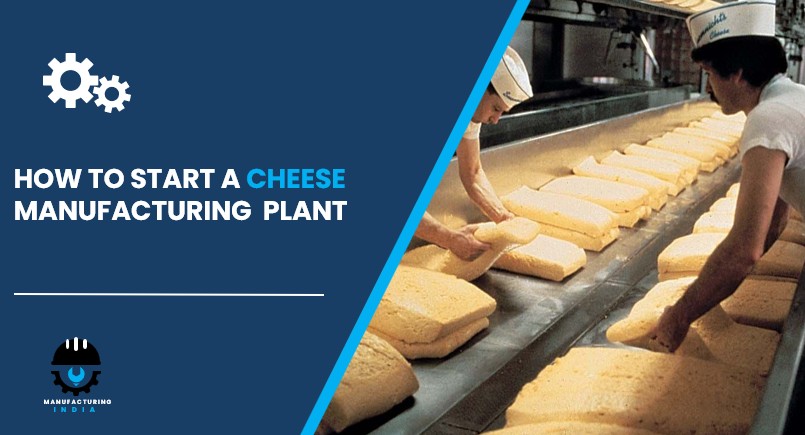
The cheese manufacturing operation transforms raw milk into finished cheese products through a sequence of pasteurisation, coagulation, curd processing, and aging operations. The key process stages are:
- Raw Milk Reception and Testing: Fresh milk received from farms or dairy cooperatives is tested for fat content, protein, adulteration, and microbial load, then filtered and rapidly chilled to preserve quality prior to processing.
- Standardisation: Milk fat and protein content is standardised using cream separators to achieve the target composition for the specific cheese variety being produced.
- Pasteurisation: Standardised milk is pasteurised, typically using the High Temperature Short Time (HTST) method, to eliminate pathogenic micro-organisms while preserving the milk’s cheesemaking properties.
- Cooling and Culture Addition: Pasteurised milk is cooled to the optimal temperature for the addition of starter cultures, which initiate acidification and develop the characteristic flavour of the cheese variety.
- Coagulation: Rennet or an alternative coagulant is added to the cultured milk, causing it to set into a semi-solid coagulum through the coagulation of casein proteins.
- Curd Cutting and Cooking: The coagulum is cut into uniform pieces using curd knives and gently cooked and stirred to expel whey and achieve the desired curd texture and moisture level.
- Whey Draining: Liquid whey is drained from the curd mass, with the recovered whey processed further into whey powder or whey protein concentrate as a value-added by-product.
- Cheddaring, Stretching or Texturing: Depending on the cheese variety, curd may undergo cheddaring for cheddar-style cheese or stretching and kneading in hot water for pasta filata varieties such as mozzarella.
- Salting: Curd is salted either by dry salting, brining in a salt solution, or surface application, contributing to flavour development, moisture control, and preservation.
- Moulding and Pressing: Salted curd is packed into moulds and pressed to expel residual whey and form the characteristic shape and texture of the finished cheese block or wheel.
- Aging and Ripening: Pressed cheese requiring maturation is transferred to temperature and humidity-controlled ripening rooms for a period ranging from a few weeks to several months, depending on the variety, to develop flavour, texture, and aroma.
- Quality Control: Finished cheese is tested for moisture, fat, protein, pH, and microbiological parameters to verify compliance with food safety and applicable quality standards before release for packaging.
- Packaging and Dispatch: Cheese is packed in vacuum-sealed blocks, slices, shreds, or portion packs for retail and foodservice sale, or dispatched in bulk formats to industrial food processing customers, with by-products such as whey powder separately packed and dispatched to feed and food ingredient buyers.
Key Applications of Cheese
The cheese market serves several major end-use segments across food and beverage, foodservice, and retail sectors:
- Food and Beverage, Hospitality, and Fast Food Industries: Cheese is a primary ingredient in a wide range of foodservice offerings including pizzas, burgers, sandwiches, sauces, and snacks, with the quick-service restaurant sector driving substantial industrial demand.
- Bakery and Confectionery Applications: Cheese is widely used in bakery products, including cheese-filled pastries and baked snacks, where its melting properties and flavour profile are valued by commercial bakeries.
- Household Retail Segment: Consumers increasingly purchase cheese for daily cooking, snacking, and as an accompaniment to bread, wine, and fruit, supported by growing availability of convenient retail formats such as slices, shreds, and portion packs.
- Catering and Institutional Foodservice: Cheese is used extensively across catering operations and institutional foodservice channels for large-scale meal preparation, benefiting from bulk packaging formats and extended shelf life.
- Snacking and Ready-to-Eat Products: Growing demand for on-the-go snacking has driven the development of cheese sticks, portion packs, and cheese-based ready-to-eat products across retail and convenience channels.
Global Cheese Market Outlook
The global cheese market reached approximately USD 98.0 Billion in 2025. According to IMARC Group estimates, the market is expected to reach USD 154.4 Billion by 2034, exhibiting a CAGR of 5.00% from 2026 to 2034. The cheese market benefits from multiple structural demand drivers:
- Rising consumer demand for diverse dairy-based products and increasing applications of cheese across the foodservice sector
- Growing popularity of ready-to-eat (RTE) and convenience foods, supported by busy urban lifestyles and rising disposable incomes
- Expanding food services and quick-service restaurant sectors creating sustained industrial demand for cheese as a core ingredient
- Continued urbanisation, with more than half of the global population residing in urban areas, supporting higher consumption of packaged and branded dairy products
- Health-conscious consumer trends favouring protein-rich diets and driving demand for low-fat, organic, and lactose-free cheese variants
- Innovation and investment in plant-based and specialty cheese products, expanding the addressable market for integrated manufacturers
- Significant development of the organised retail sector and easy availability of cheese in convenient packaging formats, including slices, spreads, and squeeze tubes
- Continued investment by established dairy players in expanding cheese processing capacity, reflecting confidence in long-term category growth
Leading manufacturers in the global cheese industry include major dairy companies with large-scale cheese production facilities and advanced processing technologies. Key players include Arla Foods Group, Fonterra Co-operative Group Ltd., Glanbia Plc, Saputo Cheese USA Inc., Bel Brands USA, Inc., and FrieslandCampina, all of which operate large-scale facilities and serve end-use sectors including the food and beverage, hospitality, fast food, bakery, and catering industries.
Latest Industry Developments
- March 2025: Paras Dairy, under its parent company VRS Foods, introduced a new cheese brand called Galacia, including mozzarella-based products such as cheese blocks, shredded cheese, and cheese dips, rolled out across key regions including North, West, and South India.
- March 2025: U.S.-based cheese producer Sargento unveiled a new line of sliced American cheese and shredded cheese, accompanied by snack crackers, launched through a collaboration with Mondelēz International to enhance the product’s visibility in the snacking segment.
- September 2024: RELCO, part of the Kovalus group, announced a strategic alliance with Milky Mist Dairy Food Private Limited, a significant player in India’s dairy space, aiming to establish the country’s largest production facility for Cheddar cheese.
- May 2024: Atalanta launched a premium cheese label, Cracking Good, celebrating traditional British Isles cheeses, with an inaugural collection featuring Mature Irish Cheddar, Extra Mature Scottish Cheddar, and Vintage English Cheddar crafted using milk from grass-fed cows.
Licenses and Regulatory Requirements
Establishing a cheese manufacturing unit requires a range of approvals and certifications, which may vary by country and jurisdiction, including:
- Business registration and company incorporation under applicable company law
- Factory License under applicable state Factories Act provisions for manufacturing operations
- FSSAI (Food Safety and Standards Authority of India) License for manufacturing and sale of dairy products
- BIS (Bureau of Indian Standards) certification for cheese and processed dairy products under applicable quality standards
- AGMARK certification, where applicable, for grading and quality assurance of dairy products
- Milk and Milk Products Order (MMPO) registration for dairy processing units, where applicable
- Pollution Control Board Clearances Consent to Establish (CTE) and Consent to Operate (CTO) for manufacturing operations and effluent generation
- ISO 22000 / HACCP Food Safety Management System Certification for food safety infrastructure compliance
- ISO 9001:2015 Quality Management System Certification for quality management infrastructure compliance
- Weights and Measures (Legal Metrology) registration for packaged commodity labelling and net quantity declaration
- Export-Import Code (IEC) for international market access
- Trademark and Brand Registration for proprietary branded product launch
- Occupational Health and Safety management compliance (ISO 45001 / Factories Act provisions) for manufacturing worker safety
Key Challenges to Consider
Raw Milk Supply Consistency and Quality
Raw milk, which accounts for 60–70% of total operating costs, is a highly perishable input whose availability, fat and protein content, and microbial quality can vary depending on seasonality, farm-level practices, and the time elapsed between milking and chilling. Inconsistent milk supply or delayed chilling can materially affect cheese yield and quality. Securing long-term supply arrangements with dairy farmers and cooperatives located in close proximity to the processing facility, and investing in efficient chilling and reception capacity, are critical operational priorities.
Cold Chain and Refrigeration Infrastructure
Cheese manufacturing and distribution are heavily dependent on robust cold chain infrastructure, from raw milk chilling through aging room temperature control to finished goods cold storage and refrigerated transportation. Any lapse in refrigeration reliability can compromise product quality and shelf life, making continuous investment in cold chain equipment maintenance and backup power systems a non-negotiable operational requirement.
Price Volatility of Milk and Dairy Inputs
Cheese prices and margins are influenced by the pricing of raw milk and other dairy inputs, which are subject to seasonal supply fluctuations, feed cost cycles, and broader agricultural commodity trends. Periods of elevated milk prices can compress processor margins, requiring processors to manage cost structures and product mix to maintain profitability through commodity price cycles.
Competition from Plant-Based Alternatives
The growing popularity of plant-based cheese alternatives, driven by health, environmental, and lactose-intolerance considerations, introduces a competitive dynamic for traditional dairy cheese manufacturers. Processors must evaluate whether to compete directly, diversify into plant-based product lines, or focus on differentiated natural and specialty cheese positioning to maintain market share.
Quality Certification and Food Safety Compliance Maintenance
Maintaining FSSAI licensing, BIS certification where applicable, and food safety management system certifications requires ongoing investment in quality laboratory infrastructure, process monitoring, and surveillance audit preparedness. Producing cheese that consistently meets moisture, fat, and microbiological specifications across all production batches requires disciplined process control and incoming raw material quality management, as any food safety compliance lapse can disrupt market access and damage brand reputation.
Capital Intensity of Aging and Ripening Infrastructure
While fresh cheese varieties can be produced with relatively moderate capital investment, aged and matured cheese varieties requiring extended ripening periods represent a substantial incremental capital commitment in temperature and humidity-controlled ripening room infrastructure. New entrants must carefully evaluate the phasing of investment between fresh cheese operations and aged cheese portfolios based on available capital, target markets, and long-term strategic positioning.
Frequently Asked Questions (FAQs)
1. How much does it cost to set up a cheese manufacturing plant?
The total investment depends on plant capacity (5,000–25,000 MT per annum), the product mix adopted (natural cheese, processed cheese, or an integrated portfolio), automation level, facility specification, location, and target market certifications. Costs cover land, civil construction (processing hall, aging and ripening rooms, storage tank farm, quality laboratory, utilities), machinery (pasteurisers, coagulation vats, pressing and moulding equipment, packaging lines), quality certifications, working capital, and regulatory compliance. A comprehensive feasibility study from IMARC Group provides detailed, capacity-specific cost estimates covering all CapEx and OpEx components.
2. Is cheese manufacturing a profitable business in 2026?
Yes. Sustained demand from the foodservice and QSR sector, the expanding packaged and ready-to-eat food industry, and growing health-conscious consumption combined with gross margins of 15–25% and net profit margins of 6–12% make cheese manufacturing financially attractive. Effective recovery and monetisation of by-products such as whey powder offers meaningful margin enhancement opportunities above what cheese sales alone would generate.
3. What machinery and equipment are required for a cheese manufacturing plant?
Key equipment includes milk reception and chilling systems, pasteurisers and standardisation units, coagulation and cheese vats, curd cutting and cooking equipment, whey separation systems, cheddaring or stretching equipment, moulding and pressing systems, brining tanks, temperature-controlled aging and ripening rooms, CIP systems, quality control laboratory equipment, and automated packaging lines for retail and bulk dispatch.
4. What licenses and approvals are required?
Required approvals include company registration, Factory License, FSSAI License for dairy manufacturing, BIS certification for cheese products where applicable, Pollution Control Board clearances, and ISO 22000/HACCP food safety management system certification. FSSAI licensing is a mandatory legal prerequisite for manufacturing and selling dairy products in India.
5. How long does it take to commission a cheese manufacturing plant?
Typically, 12–18 months from project initiation to commercial production launch, depending on project scale, facility construction timeline, equipment procurement lead times for processing and refrigeration systems, regulatory approvals, and FSSAI licensing and food safety certification timelines, which should be initiated early in the project to avoid delays to commercial launch.
6. What are the key raw materials for cheese manufacturing?
The primary raw material is raw milk sourced from dairy farms and cooperatives, which must be chilled promptly after milking to preserve quality. Other key inputs include rennet or alternative coagulants, starter cultures, salt, and packaging materials including vacuum packaging film, cartons, and bulk containers for finished cheese and by-products such as whey powder.
7. What is the break-even period for a cheese manufacturing plant?
The break-even period generally depends on capacity utilisation ramp-up trajectory, the product mix between fresh, processed, and aged cheese varieties, raw milk supply consistency, and by-product offtake arrangements. Securing long-term milk supply agreements with dairy farmers or cooperatives and stable offtake arrangements for finished cheese and by-products such as whey powder significantly improves revenue predictability and supports faster break-even achievement.
8. What are the main forms of cheese and their applications?
The two principal categories are natural cheese, such as cheddar, mozzarella, feta, and parmesan, prized for authenticity and minimal processing, and processed cheese, sold in slices, cubes, spreads, and shredded formats, valued for convenience and extended shelf life. Natural cheese serves retail, foodservice, and gourmet applications, while processed cheese is widely used in snacking, quick-service restaurants, and packaged food manufacturing.
9. What government incentives are available for cheese manufacturers?
Processors may benefit from food processing sector incentive schemes, state-level industrial investment incentives and capital subsidies for dairy processing units, infrastructure support under food parks and mega food park schemes, and export promotion benefits for dairy product exports. Dairy cooperative development schemes in several major producing countries also support new entrants seeking to establish integrated processing operations.
10. How does cheese manufacturing compare to other dairy processing in terms of setup?
Compared to other dairy processing operations such as liquid milk packaging or yoghurt manufacturing, cheese manufacturing requires more specialised coagulation, pressing, and aging infrastructure and involves longer production cycles for matured varieties. The core pasteurisation and quality control technology employed is broadly similar to other dairy processing, allowing processors with experience in dairy operations to adapt existing technical capabilities to cheese manufacturing with targeted investment in coagulation, pressing, and ripening infrastructure.
Key Takeaways for Investors
The cheese manufacturing industry represents a structurally resilient and financially attractive investment opportunity positioned at the intersection of rising global foodservice demand, expanding packaged and ready-to-eat food consumption, and evolving consumer preferences for convenience and specialty dairy products. Stable demand from household retail, foodservice, QSR, and institutional catering channels provides resilience against single-segment demand volatility, while innovation in plant-based and specialty cheese offers meaningful avenues for portfolio diversification and margin enhancement. Well-established dairy farming infrastructure in major milk-producing regions provides processors with reliable, cost-competitive access to feedstock, while continued investment by established dairy players in expanding cheese processing capacity reflects strong confidence in the long-term growth and profitability of the category. The scalable nature of the value chain from fresh cheese operations to fully integrated aged-cheese portfolios allows investors to phase capital deployment according to risk appetite and target market positioning.
About the Author