Setting up a smart speaker manufacturing plant in India represents a highly attractive investment proposition underpinned by robust and structurally growing demand from smart-home adopters, the expanding consumer electronics and IoT ecosystem, voice-commerce platforms, and the broader connected-devices industry. As artificial intelligence and voice-recognition technology continue to mature, disposable incomes rise, and consumer awareness of hands-free, voice-controlled home automation grows, smart speakers integrated with virtual assistants such as Alexa, Google Assistant, or Siri occupy an increasingly important position across household retail, enterprise communication, and connected-device ecosystems. This growth trajectory, combined with supportive electronics manufacturing policy, expanding component supply chains, and strong integration potential with other smart-home devices, creates a highly favourable manufacturing environment for new entrants with efficient assembly, testing, and quality systems.
What is a Smart Speaker?
A smart speaker is a wireless, voice-activated device that combines a conventional loudspeaker with an internet-connected, AI-powered virtual assistant. Unlike a standard speaker, it is built to continuously listen for a wake word, enabling hands-free interaction such as playing music, setting reminders, checking the weather, or answering everyday questions. Beyond audio playback, smart speakers commonly function as smart-home hubs, using Wi-Fi and Bluetooth connectivity to control compatible lighting, thermostats, and locks, or to place voice-activated calls. Most units draw power from a standard plug socket and depend on an active internet connection to process voice commands through cloud-based AI services. More advanced models can recognise individual user voices, while premium variants add a display screen and are marketed as smart displays.
Smart speakers are manufactured and assembled using processes such as wire drawing, insulation coating, cable stranding, and connector assembly, alongside surface-mount electronics assembly, acoustic driver integration, and firmware flashing. Beyond household entertainment, the devices are used extensively across consumer electronics, smart-home device ecosystems, audio equipment lines, IoT deployments, and communication electronics, serving internal speaker wiring, power-supply connections, inter-board signal transmission, antenna connections for Wi-Fi/Bluetooth modules, and grounding requirements within the finished unit.
The global smart speaker market was valued at approximately USD 12.3 Billion in 2025 and is expected to reach USD 65.3 Billion by 2034, exhibiting a CAGR of 20.41% from 2026 to 2034, supported by advances in voice-recognition technology, rising smart-home penetration, and growing integration with other connected devices.
Cost of Setting Up a Smart Speaker Manufacturing Plant
The total capital investment required to establish a smart speaker manufacturing plant is shaped by several key parameters: annual production capacity (typically ranging from 1 to 10 million units per annum), the degree of vertical integration adopted (component sub-assembly versus fully outsourced module procurement, with or without in-house acoustic tuning and firmware calibration), the level of automation across SMT assembly, final assembly, and testing lines, facility specification, component sourcing strategy, and applicable regulatory, safety, and wireless-certification compliance requirements. Below is a structured breakdown of the major cost components.
1. Capital Expenditure (CapEx)
Total capital investment in a smart speaker manufacturing plant covers the following major heads:
Land and Site Development
This encompasses land acquisition or lease, site preparation, boundary development, and utilities connectivity. Site selection should prioritise proximity to electronics component clusters and PCB, speaker-driver, and plastic-housing suppliers to ensure a steady, low-transport-cost supply of inbound parts. Access to reliable power, cleanroom-grade conditions for sensitive SMT lines, strong road and air logistics for inbound components and outbound finished units, availability of a skilled electronics-assembly workforce, and proximity to test-and-certification laboratories are critical site selection criteria. Compliance with industrial zoning regulations, electronics manufacturing standards, electrical and fire safety norms, and effluent and e-waste compliance frameworks must be assessed from project initiation.
Civil Works and Construction
Building costs cover the main assembly facility including the incoming component inspection and warehousing area, SMT (surface-mount technology) line, final assembly and firmware-flashing section, acoustic and functional testing area, packaging and dispatch infrastructure, quality control and RF/wireless testing laboratory, administrative block, and utility infrastructure including power backup, HVAC and cleanroom systems, compressed-air supply, and effluent and e-waste handling systems. Construction must comply with applicable factory act requirements, electronics manufacturing standards, fire and electrical safety norms, and electrostatic-discharge (ESD) control guidelines for sensitive electronic assembly areas.
Machinery and Equipment
Machinery represents the single largest CapEx component. Key equipment required for a smart speaker manufacturing plant includes:
- Component Reception and Inspection Systems: Incoming quality inspection stations, automated optical inspection (AOI) equipment, and material handling and conveying systems to verify PCBs, speaker drivers, microphones, and wireless chips prior to assembly
- Internal Wiring and Cable Assembly Units: Wire drawing, insulation coating, cable stranding, and connector assembly equipment used for internal power and signal wiring, voice-coil connections, and grounding straps
- SMT Assembly Lines: Solder-paste printers, pick-and-place machines, and reflow ovens for populating printed circuit assemblies with wireless chips, processors, and passive components
- Voice Coil and Speaker Driver Assembly Systems: Precision winding and assembly equipment for integrating speaker drivers, voice-coil connections, and acoustic chambers into the housing
- Flexible Circuit Jumper and EMI Shielding Equipment: Equipment for fitting flexible connectors between amplifier boards, power boards, and control boards, along with EMI-shielding application systems to minimise signal interference
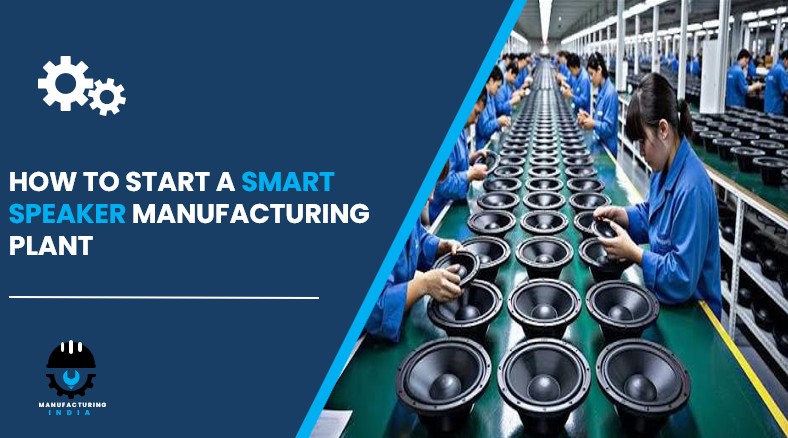
- Final Assembly and Housing Integration Lines: Automated and semi-automated stations for integrating plastic housing, internal wiring, PCBs, and speaker drivers into the finished unit
- Firmware Flashing and Calibration Stations: Equipment for loading firmware, calibrating microphones and voice-recognition modules, and validating wake-word and connectivity functions
- Acoustic and Functional Testing Equipment: Anechoic or semi-anechoic test chambers, audio quality analysers, and RF/wireless (Wi-Fi/Bluetooth) test benches to verify sound performance and connectivity compliance
- Quality Control Laboratory Equipment: Equipment for electrical safety testing, drop and durability testing, EMI/EMC compliance testing, and other analytical tests to verify compliance with applicable product-safety and quality standards
- Automated Packaging Lines: Filling, labelling, and cartoning lines for retail packaging, along with bulk palletising facilities for distributor and export dispatch
- Material Handling and Warehousing: Conveyors, automated storage and retrieval systems, and finished-goods warehousing with FIFO stock management
Other Capital Costs
These include pre-operative expenses, commissioning charges, import duties on specialised SMT and testing equipment, staff training and competency development, initial raw material and consumable inventory for production commissioning, regulatory compliance setup including electrical safety certification, wireless (Wi-Fi/Bluetooth) type-approval, RoHS and e-waste compliance, and ISO 9001 quality management system establishment costs.
Request a Sample Report for In-Depth Market Insights: https://www.imarcgroup.com/smart-speaker-manufacturing-plant-project-report/requestsample
2. Operational Expenditure (OpEx)
Raw materials principally speaker drivers, printed circuit boards, microphones, plastic housing, and wireless chips constitute the dominant operating cost, typically representing 60–70% of total OpEx. Utility costs, driven primarily by electricity consumption of SMT lines, testing equipment, and HVAC systems, account for 5–10% of OpEx. Labour, maintenance, quality control, packaging, transportation, depreciation, taxes, and overhead costs constitute the remainder of the operating cost base.
3. Plant Capacity
The proposed smart speaker manufacturing facility is designed with an annual production capacity ranging between 1–10 million units, enabling economies of scale while maintaining operational flexibility. This capacity range supports a diversified product portfolio spanning entry-level voice-controlled speakers, mid-range smart-home hub devices, and premium smart-display variants, serving domestic consumer electronics markets, smart-home device ecosystems, and export channels.
4. Profit Margins and Financial Projections
The project demonstrates healthy profitability potential under normal operating conditions. Financial projections encompass capital investment, operating costs, capacity utilisation ramp-up schedule, product mix between entry-level, mid-range, and premium units, and forward demand outlook underpinned by rising smart-home adoption and voice-commerce growth. A comprehensive feasibility analysis includes sensitivity analysis, Net Present Value (NPV), Internal Rate of Return (IRR), and Payback Period calculations. Gross profit margins for smart speaker manufacturing typically range from 30–40%, supported by stable demand, value-added connectivity features, and efficient component utilisation. Net profit margins of 15–22% are achievable with disciplined cost management, optimal capacity utilisation, and effective supply-chain management.
Why Set Up a Smart Speaker Manufacturing Plant?
Rapidly Expanding Consumer Technology Segment
Smart speakers serve as the central interface for voice-controlled digital ecosystems, enabling music streaming, home automation, information access, and AI-driven assistance across households and workplaces. As urban, technology-conscious consumers increasingly seek seamless integration between voice assistants and other connected devices, smart speakers are transitioning from a niche gadget category toward a mainstream household and workplace fixture, supporting steady volume growth across retail and enterprise channels.
Strong Integration Potential with Smart-Home and IoT Ecosystems
Smart speaker manufacturing benefits from close integration with the broader smart-home and IoT device landscape, including connected lighting, thermostats, locks, and security systems. Effective positioning of a smart speaker as the control hub for these ecosystems materially enhances overall project economics, improving customer retention and enabling bundled hardware and subscription-service revenue streams beyond hardware sales alone.
Expanding Voice-Commerce and AI-Assistant Adoption
Growth in voice-commerce transactions, streaming subscriptions, and AI-assistant usage is driving consistent industrial demand for smart speakers. Continued advancement in natural-language processing and voice recognition makes these devices increasingly central to everyday digital interaction, positioning smart speaker manufacturing favourably against alternative smart-home control interfaces in high-volume consumer channels.
Moderate but Strategic Entry Barriers Favouring Technically Capable Manufacturers
While less capital-intensive than semiconductor fabrication, smart speaker manufacturing requires expertise in acoustic engineering, embedded electronics, firmware integration, AI-voice compatibility, and rigorous product certification. Established relationships with chipset vendors, ODM partners, and distribution networks create meaningful entry barriers that favour manufacturers with strong technical and supply-chain capabilities, supporting sustainable competitive positioning for well-prepared new entrants.
Scalable and Integrated Operations
The smart speaker value chain spanning component sourcing, SMT assembly, acoustic integration, and firmware calibration allows manufacturers to begin operations at a moderate scale and expand capacity or add integrated testing and certification capability as volumes grow. This phased investment approach allows new entrants to manage capital deployment while building operational expertise, with subsequent integration of in-house testing and certification improving margin capture and reducing time-to-market for new product variants.
Policy and Electronics Manufacturing Push
Government initiatives promoting domestic electronics manufacturing, such as production-linked incentives, electronics manufacturing clusters, and supply-chain localisation programmes, encourage local assembly and component manufacturing for consumer electronics, including smart devices. Combined with continued investment interest from established consumer electronics players in expanding regional assembly capacity, the policy and investment landscape supports new entrants seeking to establish integrated manufacturing operations.
Localisation and Supply Chain Efficiency
Global technology brands increasingly seek regional manufacturing partners to reduce logistics costs, mitigate supply-chain disruptions, and respond faster to market demand. Localised smart speaker production enables quicker customisation, improved inventory management, and stronger collaboration with domestic distribution networks, providing a structural advantage for manufacturers located close to target consumer markets.
Manufacturing Process Overview
The smart speaker manufacturing operation transforms electronic components, speaker drivers, and plastic housings into fully assembled, tested, and certified voice-controlled devices through a sequence of assembly, integration, testing, and packaging operations. The key process stages are:
- Component Reception and Inspection: Incoming printed circuit boards, speaker drivers, microphones, plastic housing components, and wireless chips received from suppliers are screened and inspected using automated optical inspection and manual sampling to verify conformance to specification. Component quality parameters are verified on receipt, as defective components can compromise downstream assembly yield and finished-unit reliability.
- Internal Wiring and Cable Assembly: Wire drawing, insulation coating, cable stranding, and connector assembly processes prepare the internal power and signal wiring, voice-coil connections, and grounding straps required for the finished unit. Careful process control at this stage is critical to preserving signal integrity and preventing electrical faults in the assembled device.
- Surface-Mount Assembly (SMT): Printed circuit assemblies pass through solder-paste printing, automated pick-and-place placement, and reflow soldering to populate boards with wireless chips, processors, and passive components. Automated optical inspection and, where required, X-ray inspection verify solder-joint quality before boards proceed to final assembly.
- Speaker Driver and Voice-Coil Integration: Acoustic speaker drivers and voice-coil assemblies are integrated into the housing using precision winding and assembly equipment, forming the audio-output subsystem that determines the sound quality and performance of the finished device.
- Flexible Circuit Jumper and EMI Shielding Fitment: Flexible connectors linking amplifier boards, power boards, and control boards are fitted, and EMI-shielding measures are applied to minimise signal interference between the wireless communication module and other internal electronics.
- Final Assembly and Housing Integration: Internal wiring, populated circuit boards, speaker drivers, and antenna assemblies are integrated into the plastic housing on automated or semi-automated assembly lines, forming the complete mechanical and electronic unit ahead of firmware loading.
- Firmware Flashing and Calibration: Each unit undergoes firmware flashing and calibration of microphones and voice-recognition modules, with wake-word detection, connectivity, and cloud-communication functions validated prior to release for testing.
- Acoustic and Functional Testing: Assembled units are tested in anechoic or semi-anechoic chambers for audio quality and subjected to RF and wireless (Wi-Fi/Bluetooth) test benches to verify connectivity performance and compliance with applicable wireless-certification standards.
- Quality Control: Finished units are tested for electrical safety, drop and durability performance, EMI/EMC compliance, and other applicable parameters to verify compliance with product-safety and quality standards before release for packaging.
- Packaging and Dispatch: Finished smart speakers are packed in retail cartons for household and institutional sale or dispatched in bulk pallets to distributors and export customers. Accessories such as power adapters and quick-start guides are packed alongside the unit as applicable.
Key Applications of Smart Speakers
Smart speaker components and finished units serve several major end-use segments across consumer electronics, connectivity, and communication sectors:
- Audio Electronics: Smart speaker components and sub-assemblies are widely utilised for internal wiring, speaker-driver connections, and signal transmission, supporting the core audio-output function of the device.
- Printed Circuit Assemblies: Flexible connectors link amplifier boards, power boards, and control boards within the device, enabling reliable signal and power transmission between internal sub-assemblies.
- Power Systems: Battery or power-supply grounding straps and power-distribution cables ensure stable and safe power delivery across the internal electronics of the smart speaker.
- Connectivity and Communication Modules: Wi-Fi/Bluetooth antenna connections and signal cables within the smart speaker enable reliable wireless communication with home networks, cloud services, and other connected devices.
Global Smart Speaker Market Outlook
The global smart speaker market was valued at approximately USD 12.3 Billion in 2025. According to IMARC Group estimates, the market is expected to reach USD 65.3 Billion by 2034, exhibiting a CAGR of 20.41% from 2026 to 2034. The smart speaker market benefits from multiple structural demand drivers:
- Continued advancement in artificial intelligence and voice-recognition technology, improving accuracy, personalisation, and multi-functional capability of smart speakers across urban populations globally
- Rising smart-home penetration and growing consumer preference for hands-free, voice-controlled home automation in city-based households and workplaces
- Expanding voice-commerce adoption, positioning smart speakers as an increasingly important platform for e-commerce transactions and consumer engagement
- Intensifying competition among major technology players introducing enhanced sound quality, improved voice recognition, and seamless integration with other IoT devices
- Growing domestic AI talent base supporting continued innovation in voice-assistant and embedded AI capability within the broader consumer electronics sector
- Favourable electronics manufacturing policy, including production incentives and supply-chain localisation programmes, supporting expanded regional assembly capacity
- Continued investment by established consumer electronics players in expanding smart speaker and smart-display product portfolios, reflecting confidence in long-term category growth
Major players in the global smart speaker manufacturing industry include Amazon, Google, Apple, Sonos, and Xiaomi/Baidu, serving end-use sectors including consumer electronics, smart-home devices, audio equipment, IoT devices, and communication electronics.
Latest Industry Developments
- 2024: Industry skills research highlighted continued expansion of the domestic AI talent base supporting voice-assistant and embedded AI development, with the professional talent pool projected to more than double by 2027 at a strong compound annual growth rate, reflecting the deepening technical ecosystem supporting smart speaker innovation.
- 2021: A specialised audio technology company unveiled the final design of a flagship smart speaker featuring a built-in virtual assistant and proprietary spatial-audio technology, illustrating continued product innovation focused on personalised, immersive sound experiences without headphones.
Licenses and Regulatory Requirements
Establishing a smart speaker manufacturing unit requires a range of approvals and certifications, which may vary by country and jurisdiction, including:
- Business registration and company incorporation under applicable company law
- Factory License under applicable state Factories Act provisions for manufacturing operations
- Electrical safety certification for consumer electronics products under applicable national product-safety standards
- Wireless (Wi-Fi/Bluetooth) type-approval and telecom equipment certification for wireless modules used within the device
- RoHS (Restriction of Hazardous Substances) compliance for electronic components and finished units
- E-waste management authorisation and extended producer responsibility (EPR) registration for electronic product manufacturers
- Pollution Control Board Clearances Consent to Establish (CTE) and Consent to Operate (CTO) for manufacturing operations
- ISO 9001:2015 Quality Management System Certification for quality management infrastructure compliance
- Weights and Measures (Legal Metrology) registration for packaged commodity labelling and net quantity declaration
- Export-Import Code (IEC) for international market access
- Trademark and Brand Registration for proprietary branded product launch
- Occupational Health and Safety management compliance (ISO 45001 / Factories Act provisions) for manufacturing worker safety
Key Challenges to Consider
Component Supply Consistency and Semiconductor Availability
Wireless chips, processors, and other electronic components, which account for a significant share of total operating costs, are subject to global semiconductor supply-chain cycles, and their availability and pricing can vary significantly depending on demand fluctuations and geopolitical trade conditions. Inconsistent component supply can materially affect production schedules and unit costs. Securing long-term supply arrangements with component vendors and diversifying the supplier base are critical operational priorities.
Acoustic and Firmware Quality Consistency
Consistent acoustic performance and reliable firmware behaviour across all production units require rigorous testing protocols and disciplined process control at the SMT, assembly, and calibration stages. Any lapse in testing efficiency increases the risk of product returns and reputational exposure, making continuous investment in test-equipment maintenance and calibration accuracy a non-negotiable operational requirement.
Consumer Electronics Price Volatility and Substitution Competition
Smart speaker prices and demand are influenced by the relative pricing and feature sets of substitute smart-home control devices such as smartphones, smart displays, and dedicated home-automation hubs, which are subject to rapid technology cycles and competitive pricing pressure. Periods of aggressive pricing by large incumbent players can compress smart speaker demand and margins, requiring manufacturers to manage cost structures and differentiate on features to maintain profitability.
Platform and Ecosystem Dependence
A meaningful share of project economics depends on continued access to and compatibility with major virtual-assistant platforms and cloud-service ecosystems. Changes in platform licensing terms, API access, or ecosystem partnership arrangements can materially affect product roadmaps and blended project profitability, making diversified platform and partnership arrangements an important risk mitigation measure.
Certification and Regulatory Compliance Maintenance
Maintaining wireless type-approval, electrical safety certification, and e-waste compliance requires ongoing investment in test-laboratory infrastructure, process monitoring, and surveillance audit preparedness. Producing units that consistently meet connectivity, safety, and durability specifications across all production batches requires disciplined process control and incoming component quality management, as any compliance lapse can disrupt market access and damage brand reputation.
Capital Intensity of In-House Testing and Certification Infrastructure
While final assembly can be established at relatively moderate capital investment, integrated in-house acoustic, RF, and durability testing infrastructure represents a substantial incremental capital commitment. New entrants must carefully evaluate the phasing of investment between assembly-only operations relying on third-party test laboratories, versus integrated operations with in-house testing capability, based on available capital, target markets, and long-term strategic positioning.
Frequently Asked Questions (FAQs)
1. How much does it cost to set up a smart speaker manufacturing plant?
The total investment depends on plant capacity (1–10 million units per annum), the degree of vertical integration adopted (assembly-only versus integrated testing and certification), automation level, facility specification, location, and target market certifications. Costs cover land, civil construction (SMT line, final assembly section, testing laboratory, warehousing, utilities), machinery (wiring and cable assembly equipment, SMT lines, speaker-driver assembly systems, testing equipment, packaging lines), quality certifications, working capital, and regulatory compliance. A comprehensive feasibility study from IMARC Group provides detailed, capacity-specific cost estimates covering all CapEx and OpEx components.
2. Is smart speaker manufacturing a profitable business in 2026?
Yes. Sustained demand from smart-home adopters, the expanding IoT and voice-commerce sectors, and continued innovation in AI and voice-recognition technology combined with gross margins of 30–40% and net profit margins of 15–22% make smart speaker manufacturing financially attractive. Effective integration with smart-home ecosystems and value-added connectivity features offers meaningful margin enhancement opportunities above what hardware sales alone would generate.
3. What machinery and equipment are required for a smart speaker manufacturing plant?
Key equipment includes component reception and inspection systems, internal wiring and cable assembly units, SMT assembly lines, voice-coil and speaker-driver assembly systems, flexible circuit jumper and EMI-shielding equipment, final assembly and housing-integration lines, firmware flashing and calibration stations, acoustic and RF/wireless testing equipment, quality control laboratory equipment, and automated packaging lines for retail and bulk dispatch.
4. What licenses and approvals are required?
Required approvals include company registration, Factory License, electrical safety certification for consumer electronics, wireless (Wi-Fi/Bluetooth) type-approval, RoHS compliance, e-waste management authorisation and EPR registration, Pollution Control Board clearances, and ISO 9001 quality management system certification. Wireless type-approval and electrical safety certification are mandatory legal prerequisites for manufacturing and selling smart speakers in most jurisdictions.
5. How long does it take to commission a smart speaker manufacturing plant?
Typically, 9–18 months from project initiation to commercial production launch, depending on project scale, facility construction timeline, equipment procurement lead times for SMT and testing systems, regulatory approvals, and wireless certification timelines, which should be initiated early in the project to avoid delays to commercial launch.
6. What are the key raw materials for smart speaker manufacturing?
The primary raw materials are printed circuit boards, speaker drivers, microphones, plastic housing, and wireless chips sourced from electronics component suppliers. Other key inputs include internal wiring and cable assemblies, EMI-shielding materials, and packaging materials including retail cartons and protective inserts for finished units.
7. What is the break-even period for a smart speaker manufacturing plant?
The break-even period generally depends on capacity utilisation ramp-up trajectory, the product mix between entry-level, mid-range, and premium units, component supply consistency, and distribution and platform partnership arrangements. Securing long-term component supply agreements and stable offtake arrangements with distributors and retail partners significantly improves revenue predictability and supports faster break-even achievement.
8. What are the main product variants of smart speakers and their applications?
The principal variants are entry-level voice-controlled speakers (basic music playback and voice-assistant functions), mid-range smart-home hub devices (enhanced connectivity and home-automation control), and premium smart-display variants (added screen interface for visual interaction). All variants serve household retail, workplace, and smart-home ecosystem applications, with premium variants also serving light commercial and hospitality use cases.
9. What government incentives are available for smart speaker manufacturers?
Manufacturers may benefit from electronics manufacturing sector incentive schemes, production-linked incentive (PLI) programmes, state-level industrial investment incentives and capital subsidies for electronics-assembly units, infrastructure support under electronics manufacturing clusters, and export promotion benefits for consumer electronics exports. Evolving trade and tariff policy on semiconductor and component imports also affects the economics of local assembly for manufacturers.
10. How does smart speaker manufacture compare to other consumer electronics manufacturing in terms of setup?
Compared to more capital-intensive segments such as semiconductor fabrication, smart speaker manufacturing benefits from moderate capital intensity centred on SMT assembly and final integration, but requires specialised expertise in acoustic engineering, firmware integration, and wireless certification. The assembly and testing technology employed is broadly similar to other connected consumer-electronics categories, allowing manufacturers with experience in electronics assembly to adapt existing technical capabilities to smart speaker production with targeted investment in acoustic and RF testing infrastructure.
Key Takeaways for Investors
The smart speaker manufacturing industry represents a structurally resilient and financially attractive investment opportunity positioned at the intersection of rising global smart-home adoption, expanding IoT ecosystems, and continued advancement in AI-driven voice recognition. Stable demand from household retail, workplace, and smart-home ecosystem channels provides resilience against single-segment demand volatility, while strong integration potential with connected devices and voice-commerce platforms offers meaningful margin enhancement beyond hardware sales alone. Favourable electronics manufacturing policy and supply-chain localisation programmes provide manufacturers with cost-competitive access to components through proximity to electronics manufacturing clusters, while continued investment by established technology players in expanding smart speaker and smart-display product portfolios reflects strong confidence in the long-term growth and profitability of the category. The scalable nature of the value chain from assembly-only operations to fully integrated testing and certification capability allows investors to phase capital deployment according to risk appetite and target market positioning.
About the Author