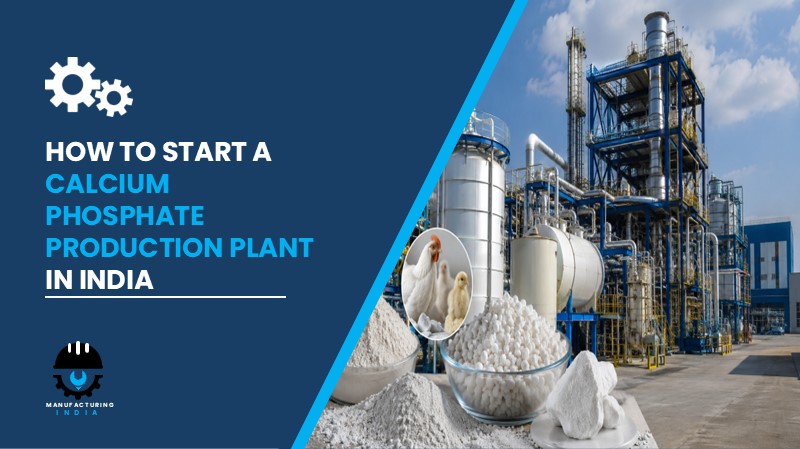
Setting up a calcium phosphate production plant in India presents a compelling investment case, backed by rising demand from the food & beverages, pharmaceuticals, animal feed, and agriculture sectors. It is a vital inorganic compound used for nutrition, healthcare, and agriculture, playing a critical role in fortifying food products, supporting livestock health, and enhancing soil productivity through phosphate fertilizers. Rising demand for mineral-rich feed additives is strengthening consumption of monocalcium and dicalcium phosphate, as livestock producers focus on bone development, productivity, and nutritional efficiency, reinforcing why this compound matters to India’s broader nutrition and agriculture economy.
India’s expanding food processing and pharmaceutical base adds further weight to the case for a calcium phosphate production plant. According to FICCI, the Indian food and beverage packaged industry is expected to grow from USD 33.7 Billion in 2023 to USD 46.3 Billion in 2028, supporting higher consumption of the compound as a fortifier, anti-caking agent, and acidity regulator. Government initiatives promoting food fortification, agricultural productivity, domestic pharmaceutical production, and healthcare infrastructure are indirectly strengthening this demand, making India a strategically sound base for this production and long-term capacity expansion.
This investment benefits from supportive government policy, moderate capital intensity compared to advanced specialty chemicals, and consistent demand from food, pharmaceutical, feed, and agriculture sectors. With gross margins of 22–30% and net margins of 12–18%, the project demonstrates healthy profitability and break-even viability under normal operating conditions.
What is Calcium Phosphate?
Calcium phosphate is a family of naturally occurring inorganic minerals and compounds made of calcium and phosphate ions. It is the primary structural component of bones and teeth, providing rigidity, and it is widely used in nutritional supplements, antacids, and medical implants. Beyond human biology, this essential salt of phosphoric acid plays a vital role in agriculture as a key ingredient in fertilizers, and it also appears in several other mineral forms used across nutritional and industrial applications, acting as a buffering agent in dairy products and food.
The calcium phosphate production process relies on neutralization of phosphoric acid with calcium hydroxide, followed by precipitation, filtration, drying, milling, and packaging. This production method serves end-use industries including food & beverages, pharmaceuticals, animal feed, agriculture, chemicals, and dental care, supplying food additives, dietary calcium supplements, fertilizer ingredients, animal feed supplements, pharmaceutical excipients, and dental polishing agents.
Cost of Setting Up a Calcium Phosphate Production Plant in India
Cost depends on capacity, technology, location, automation level, and regulatory compliance.
1. Capital Expenditure (CapEx)
Land and site development costs form a substantial part of the overall investment for this type of plant. Site selection must offer easy access to phosphoric acid, calcium hydroxide, and water, while minimizing distribution costs through proximity to target markets. The location must have robust transportation, utilities, and waste management infrastructure, along with compliance with zoning and environmental regulations. Civil works costs, covering sheds, storage areas, and administrative infrastructure, form a distinct line item within the CapEx breakdown for the facility.
Machinery and equipment represent the largest share of capital expenditure, since corrosion-resistant equipment is essential for consistent product quality. Key machinery required includes:
- Reaction vessels
- Raw material storage tanks
- Dosing systems
- Agitators
- Filtration units
- Centrifuges
- Drying systems
- Milling machines
- Sieving equipment
- Storage silos
- Packaging machines
Other capital costs cover effluent treatment systems and additional infrastructure needed for safety and environmental compliance across the unit.
Request a Sample Report for In-Depth Market Insights: https://www.imarcgroup.com/calcium-phosphate-manufacturing-plant-project-report/requestsample
2. Operational Expenditure (OpEx)
Raw material cost is the largest OpEx component, with phosphoric acid, calcium hydroxide, and water accounting for approximately 55–65% of total operating expenditure. Long-term supplier contracts help mitigate price volatility and ensure a consistent, uninterrupted supply of these materials for production.
Utility cost, covering electricity, water, and steam, accounts for approximately 7–11% of OpEx. Other operating costs include transportation, packaging, salaries and wages, repairs and maintenance, depreciation, and taxes, all of which must be factored into the financial plan for the unit. By the fifth year of operations, total operational cost is expected to rise substantially due to inflation, market fluctuations, potential rises in the cost of key raw materials, supply chain disruptions, rising consumer demand, and shifts in the global economy.
3. Plant Capacity
The proposed facility is designed with an annual production capacity of 20,000 MT, enabling economies of scale while maintaining operational flexibility. Capacity can be customized per investor requirements, and profitability generally improves with higher capacity utilization as fixed costs are spread across greater output.
4. Profit Margins and Financial Projections
Financial projections include net present value (NPV), internal rate of return (IRR), payback period, liquidity analysis, and profit and loss accounting, developed on realistic assumptions related to capital investment, operating costs, capacity utilization, pricing trends, and demand outlook. Gross profit margins typically range between 22–30%, while net profit margins range between 12–18%, supported by stable demand and value-added applications across end-use sectors.
Why Set Up a Calcium Phosphate Plant in India?
Essential Functional Material Across Multiple Industries: It is extensively used in food and beverages, pharmaceuticals, animal feed, fertilizers, dental care products, and biomedical applications, positioning it as a critical ingredient for nutrition, healthcare, and agriculture.
Moderate but Justifiable Entry Barriers: Production is less capital-intensive than advanced specialty chemicals, though stringent purity standards, controlled precipitation processes, and application-specific quality requirements create meaningful entry barriers favoring experienced manufacturers capable of consistent product performance.
Megatrend Alignment: Growing demand for nutritional supplements, fortified foods, livestock nutrition, sustainable agriculture, and biocompatible medical materials is driving steady consumption, supported by expanding healthcare, food processing, and agricultural sectors worldwide.
Policy and Regulatory Tailwinds: Government initiatives promoting food fortification, agricultural productivity, domestic pharmaceutical production, and healthcare infrastructure indirectly strengthen demand, while programs supporting specialty chemical and value-added production further encourage investment in this type of plant.
Active Industry Investment: The broader calcium phosphate industry continues to see innovation activity, such as the July 2024 patent granted to Secada Medical, LLC (dba Ventris Medical) by the United States Patent and Trademark Office for producing an osteoinductive calcium phosphate for bone grafting, reflecting continued technological progress in the sector.
Local Supply Chain Preference: Food, pharmaceutical, and feed manufacturers increasingly prioritize reliable regional suppliers for uninterrupted availability, regulatory compliance, and stable sourcing, creating opportunities for a domestically operated facility with strong quality assurance systems.
Calcium Phosphate Production Process – Step by Step
The calcium phosphate production process uses neutralization of phosphoric acid with calcium hydroxide as the primary production method. The key steps involved are:
- Neutralization: Phosphoric acid is neutralized with calcium hydroxide inside reaction vessels.
- Precipitation: The reaction mixture undergoes precipitation using agitators and dosing systems to control reaction conditions.
- Filtration: Filtration units and centrifuges separate the precipitated solids from the remaining liquid.
- Drying: Drying systems remove residual moisture from the filtered solids.
- Milling: Milling machines and sieving equipment ensure uniform particle size and consistency.
- Quality Testing: Technical tests and quality assurance checks confirm the product meets purity and performance requirements.
- Packaging and Dispatch: The finished product is stored in storage silos, packaged using packaging machines, and dispatched to food & beverages, pharmaceuticals, animal feed, and agriculture industries.
Key Applications
It serves a wide range of industries due to its nutritional and functional properties:
- Food & Beverage: Mineral fortification in dairy products, bakery products, beverages, infant formula, and nutritional supplements.
- Pharmaceuticals: Tablet and capsule excipients, calcium supplements, antacids, and controlled drug formulations.
- Animal Feed: Mineral supplementation in livestock, poultry, aquaculture, and pet nutrition.
- Agriculture: Phosphate fertilizers, soil nutrient enhancement, and specialty fertilizer formulations.
Leading Producers
Leading producers in the global calcium phosphate industry operate extensive production capacities and diverse application portfolios. Key players include:
- ICL Group Ltd.
- Innophos
- Budenheim
- Phosphea
- OCP Group
Timeline to Start the Plant
- Feasibility study and project report preparation
- Land acquisition and site development
- Regulatory approvals and environmental clearances
- Factory licence and fire safety compliance
- Machinery procurement and installation
- Raw material supplier agreements and supply chain setup
- Trial production and quality testing
- Commercial production launch
Licences and Regulatory Requirements
Starting a calcium phosphate production unit in India requires several approvals:
- Business registration (Proprietorship, LLP, or Pvt Ltd)
- Factory Licence under the Factories Act
- Environmental Clearance from State Pollution Control Board
- GST Registration
- Fire Safety NOC
- Hazardous/Chemical compliance for phosphoric acid and calcium hydroxide handling
- Effluent Treatment Plant (ETP) operational clearance
- Occupational Health and Safety compliance
Key Challenges to Consider
High Capital Requirements: Machinery costs, especially for reaction vessels, filtration units, centrifuges, and drying systems, account for the largest share of total capital expenditure required to establish the facility.
Raw Material Price Volatility: Phosphoric acid, which accounts for approximately 55–65% of OpEx, along with calcium hydroxide, exposes operations to price fluctuations managed through long-term supplier contracts.
Regulatory Compliance: Stringent purity standards, environmental clearances, and application-specific quality requirements for food, pharmaceutical, and feed-grade output add operational complexity throughout production.
Technology and Quality Pressure: Controlled precipitation processes and consistent performance requirements create meaningful entry barriers favoring manufacturers with strong technical capabilities.
Competition: Established players such as ICL Group Ltd., Innophos, Budenheim, Phosphea, and OCP Group hold significant production capacities and diverse portfolios, creating competitive pressure for new entrants.
Skilled Manpower: Recruiting and retaining trained personnel for quality assurance, operations, and regulatory compliance remains an ongoing operational challenge for the unit.
Frequently Asked Questions
1. How much does it cost to set up a calcium phosphate production plant in India?
Cost depends on capacity, technology, and automation level, with machinery representing the largest CapEx share alongside land, civil works, and other capital costs.
2. Is calcium phosphate production profitable in India in 2026?
Yes, gross profit margins of 22–30% and net profit margins of 12–18% reflect healthy profitability supported by stable, multi-sector demand.
3. What machinery is required for a calcium phosphate plant in India?
Key machinery includes reaction vessels, storage tanks, dosing systems, agitators, filtration units, centrifuges, drying systems, milling machines, sieving equipment, storage silos, and packaging machines.
4. What licences and approvals are required to start a calcium phosphate plant in India?
Requirements include business registration, Factory Licence, Environmental Clearance, GST Registration, Fire Safety NOC, hazardous/chemical compliance, ETP clearance, and occupational health and safety compliance.
5. What raw materials are needed for calcium phosphate production?
The primary raw materials are phosphoric acid, calcium hydroxide, and water, with phosphoric acid accounting for approximately 55–65% of OpEx.
6. What are the environmental compliance requirements for a calcium phosphate plant in India?
Requirements include Environmental Clearance from the State Pollution Control Board, an operational ETP, and monitoring systems to detect leaks or process deviations.
7. What is the best location to set up a calcium phosphate plant in India?
The location should offer access to phosphoric acid, calcium hydroxide, and water, proximity to target markets, robust infrastructure, and compliance with zoning and environmental regulations.
8. What is the break-even period for this type of plant in India?
The break-even period depends on capacity utilization, pricing trends, and cost structure, and is assessed through payback period, NPV, and IRR calculations as part of the financial analysis.
9. What government incentives are available for manufacturers in India?
Initiatives promoting food fortification, agricultural productivity, domestic pharmaceutical production, and healthcare infrastructure indirectly support manufacturers, alongside programs encouraging specialty chemical and value-added production.
Key Takeaways for Investors
This investment in a calcium phosphate production plant taps into consistent demand from food & beverages, pharmaceuticals, animal feed, and agriculture, sectors that rely on it for fortification, supplementation, and fertilizer applications. Financial viability holds across capacity levels, with gross margins of 22–30% and net margins of 12–18%, while the 20,000 MT annual capacity example illustrates a scalable path to production. With the global calcium phosphate market valued at USD 8.50 Billion in 2025 and projected to reach USD 12.85 Billion by 2034 at a CAGR of 4.7%, alongside India’s food and beverage packaged industry expanding from USD 33.7 Billion in 2023 to USD 46.3 Billion in 2028, demand for this essential ingredient across nutrition, healthcare, and agriculture is set to remain sustained well into the next decade.
About the Author