Disposable Plastic Syringes Manufacturing Plant Setup in India
Setting up a disposable plastic syringes manufacturing plant in India presents a compelling investment case, driven by rising healthcare demands, increased vaccination programs, growth in outpatient and home healthcare services, heightened hygiene awareness, and the prevalence of chronic diseases, an aging population, and ongoing injectable medication needs. Disposable plastic syringes are critical to India’s economy as they form the backbone of modern healthcare delivery, ensuring safe and hygienic administration of medications, vaccines, and other injectable solutions across hospitals, clinics, and community health programs.
India’s expanding healthcare infrastructure, government initiatives like Ayushman Bharat and the Make in India program, and the country’s emergence as a global hub for medical device manufacturing provide strong tailwinds for domestic production. Key manufacturing states such as Gujarat, Maharashtra, Tamil Nadu, and Karnataka offer established industrial ecosystems, skilled labor, and access to raw material supply chains. With plastic syringes accounting for 91.56% of the total disposable syringes market by material in 2024, India offers a strategically sound environment for establishing a disposable plastic syringes manufacturing facility.
India’s disposable plastic syringes market presents strong investment potential, bolstered by policy support like Make in India, rising healthcare expenditure, and expanding vaccination programs. With gross margins typically ranging between 45-55% and net margins of 20-25%, investors can achieve healthy profitability and a viable break-even timeline.
What are Disposable Plastic Syringes?
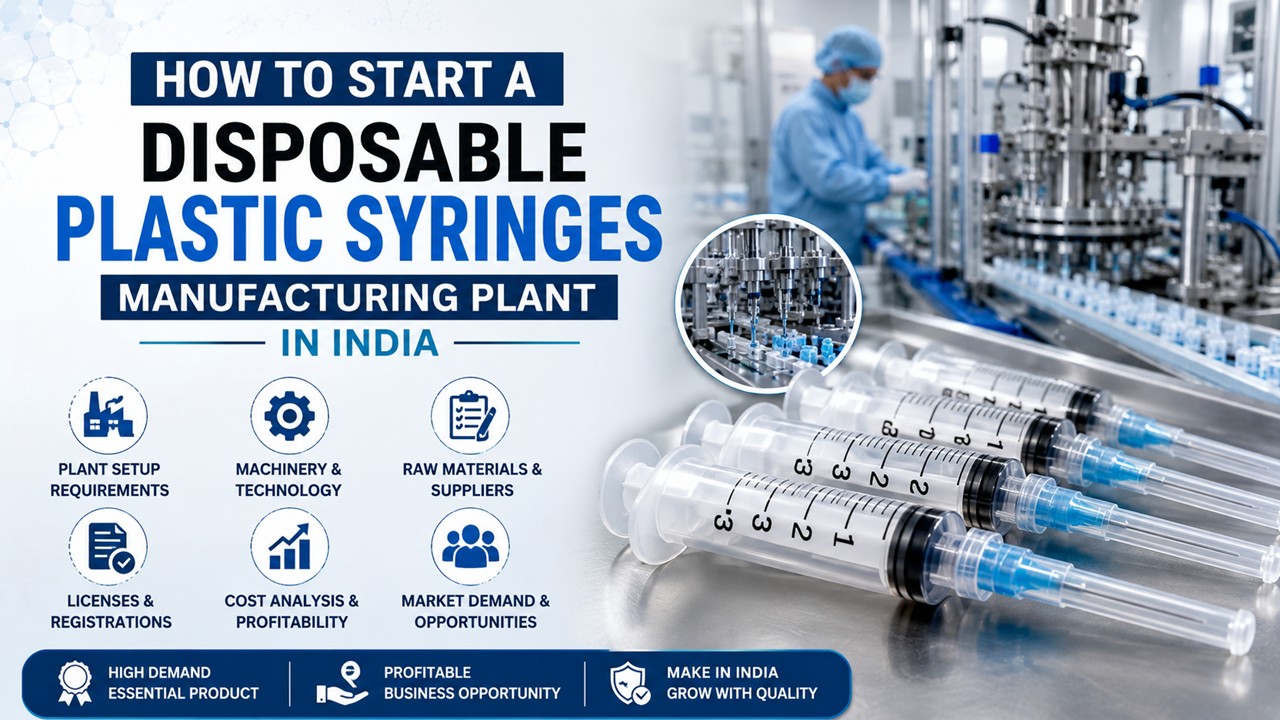
Disposable plastic syringes are single-use medical devices principally manufactured from medical-grade plastic, the most common being polypropylene, aimed at the safe and sound administration of fluids like medicaments, vaccines, or other solutions that are injectable. A normal syringe consists of three components: a barrel where the liquid is stored, a plunger for controlled dispensing, and a needle for precise delivery. These syringes are very much used in medical, veterinary, and cosmetic practices, for example, in immunizations, diagnostic tests, and minor procedures. Being single-use, they adhere to the highest standards of hygiene, thus the chances of cross-contamination and infections are very low. Disposable plastic syringes are among the most affordable, easy-to-use, and trustworthy products; hence, they are an integral part of hospital and clinic settings, home care and emergency, large-scale vaccination campaigns, and outpatient healthcare services. The disposable plastic syringes manufacturing process uses selecting and preparing medical-grade plastics, injection molding of barrels and plungers, needle attachment, quality control checks, sterilization, and final packaging and labeling for distribution as the primary production method. Key end-use industries served include healthcare, veterinary, pharmaceutical, biotechnology, home healthcare, and cosmetic industries.
Cost of Setting Up a Disposable Plastic Syringes Manufacturing Plant in India
The total cost of setting up a disposable plastic syringes manufacturing plant in India depends on several critical factors, including plant capacity, technology, location, automation levels, and regulatory compliance requirements.
1. Capital Expenditure (CapEx)
The total capital investment required for establishing a disposable plastic syringes manufacturing plant covers land acquisition, site preparation, and necessary infrastructure. The location must offer easy access to key raw materials such as polypropylene, rubber stoppers, needles, and sterile packaging, with proximity to target markets to minimize distribution costs. The site must have robust infrastructure, including reliable transportation, utilities, and waste management systems. Machinery costs account for the largest portion of the total capital expenditure. The cost of land and site development, including charges for land registration, boundary development, and other related expenses, forms a substantial part of the overall investment.
Key machinery required includes:
- Injection molding machines for barrels and plungers
- Needle insertion machines
- Automatic assembly lines for plunger-barrel fitting
- Sterilization chambers using ethylene oxide or gamma radiation
- Packaging and labeling machines
Other capital costs include civil works (production shed, quality control lab, raw material and finished goods storage, administrative block), effluent treatment systems, and pre-operative and commissioning expenses.
Request a Sample Report for In-Depth Market Insights: https://www.imarcgroup.com/disposable-plastic-syringes-manufacturing-plant-project-report/requestsample
2. Operational Expenditure (OpEx)
The operating cost structure of a disposable plastic syringes manufacturing plant is primarily driven by raw material consumption, particularly polypropylene, which accounts for approximately 45-55% of total operating expenses (OpEx). Raw materials required include polypropylene, rubber stoppers, needles, and sterile packaging. Implementing long-term contracts with reliable suppliers helps mitigate price volatility and ensure a consistent supply of materials. Utilities (electricity, water, steam) account for 10-15% of OpEx. Other OpEx components include transportation costs, packaging costs, salaries and wages, repairs and maintenance, depreciation, and taxes. By the fifth year, the total operational cost is expected to increase substantially due to factors such as inflation, market fluctuations, and potential rises in the cost of key materials.
3. Plant Capacity
The proposed manufacturing facility is designed with an annual production capacity ranging between 400–600 million units, enabling economies of scale while maintaining operational flexibility. Plant capacity can be customized per investor requirements. Profitability improves significantly with higher capacity utilization.
4. Profit Margins and Financial Projections
The project demonstrates healthy profitability potential under normal operating conditions. Gross profit margins typically range between 45-55%, supported by stable demand and value-added applications. Net profit margins are projected at 20-25%. Financial analysis includes comprehensive projections of net present value (NPV), internal rate of return (IRR), payback period, income projections, expenditure projections, and profit and loss accounts.
Why Set Up a Disposable Plastic Syringes Plant in India?
Rising Demand for Injectable Medications and Vaccines: The increasing global focus on immunization and the treatment of chronic diseases through injectables is driving the demand for disposable syringes. According to the US Centers for Disease Control and Prevention (CDC), close to 129 million Americans are afflicted with at least one major chronic condition, and the number of such cases has been rising almost unbroken for the last twenty years. As a consequence, the gradual rise in the number of patients with assorted chronic diseases has become an issue that more people have to face.
Hygienic and Safe Solutions: Disposable plastic syringes eliminate the risk of cross-contamination, ensuring patient safety and reducing the risk of needle-borne infections, which is crucial in healthcare. Stringent regulatory standards for medical devices ensure the need for high-quality disposable syringes that comply with safety, sterilization, and biocompatibility regulations.
Growing Home Healthcare Market: As healthcare services shift towards home-based care, the need for self-administered injectable products, such as insulin syringes, is increasing. The trend of home healthcare is gradually but surely securing its position, mainly for the elderly and chronically ill patients, thus increasing the demand for disposable syringes.
Cost-Effective Production: The mass production and high demand for disposable syringes make it a cost-effective option compared to reusable syringes. The medical syringe market is also assisted by strict regulatory measures that are aimed at preventing the occurrence of infections through the reuse of medical devices.
Policy and Regulatory Tailwinds: The “Make in India” initiative and state-level industrial policies encourage domestic manufacturing of medical devices. Increased healthcare budgets, more hospital stays, and strong public health awareness programs have received support from both the government and the private sector as factors driving market growth.
Active Industry Investment: In February 2025, JUMBOMED launched a disposable insulin syringe with needle, featuring pre-assembled, latex-free, high-quality materials, precise dosing, and a safety mechanism to prevent needle sticks, with plans for global distribution. In March 2024, HMD launched Dispojekt single-use syringes with safety needles to reduce needle stick injuries (NSIs) among healthcare workers, preventing blood-borne infections like Hepatitis and HIV. Affordable, clinically tested, and domestically manufactured, these syringes enhance safety, lower healthcare costs, and strengthen India’s position in global medical device manufacturing.
Manufacturing Process – Step by Step
The disposable plastic syringes manufacturing process uses selecting and preparing medical-grade plastics, injection molding of barrels and plungers, needle attachment, quality control checks, sterilization, and final packaging and labeling for distribution as the primary production method.
- Raw Material Sourcing: Reliable suppliers must be secured for raw materials like polypropylene, rubber stoppers, needles, and sterile packaging to ensure consistent production quality. Sustainability and supply chain risks must be assessed, and long-term contracts should be negotiated to stabilize pricing and ensure a steady supply.
- Injection Molding of Barrels and Plungers: Medical-grade polypropylene is processed using injection molding machines to form the barrel and plunger components.
- Needle Attachment: Needles are attached to the syringe barrels using needle insertion machines.
- Automatic Assembly: Plunger and barrel are fitted together using automatic assembly lines.
- Quality Control Checks: A comprehensive quality control system is established throughout production. Analytical instruments must be used to monitor product concentration, purity, and stability.
- Sterilization: Assembled syringes undergo sterilization using sterilization chambers with ethylene oxide or gamma radiation.
- Packaging and Labeling: Sterilized syringes are packaged and labeled using packaging and labeling machines.
- Dispatch: Finished disposable plastic syringes are dispatched to end-use industries including healthcare, veterinary, pharmaceutical, biotechnology, home healthcare, and cosmetic industries.
Key Applications
Disposable plastic syringes serve a diverse range of industries and applications:
- Healthcare and Medical Industry: Predominantly used for injections in hospitals, clinics, and other healthcare settings to administer medications, vaccines, and anesthesia. They play a crucial role in ensuring patient safety and preventing infections.
- Veterinary Healthcare: Used in veterinary practices for administering vaccines, medications, and fluids to animals, ensuring proper treatment while minimizing cross-contamination risks.
- Pharmaceuticals and Biotechnology: Used for precise delivery of biologics, vaccines, and other injectable drugs during clinical trials or manufacturing processes.
- Home Healthcare: With increasing adoption of home healthcare services, disposable syringes are used for self-administered injections (e.g., insulin injections), offering convenience and safety for patients.
- Cosmetic and Beauty Industries: Widely used in cosmetic dermatology and aesthetics for injectable treatments such as dermal fillers and botulinum toxin (Botox) injections.
Leading Manufacturers
Leading manufacturers in the global disposable plastic syringes industry include several multinational companies with extensive production capacities and diverse application portfolios. Key players include:
- Hindustan Syringes & Medical Devices Ltd
- NIPRO
- B.Braun SE
- BD
- Cardinal Health
- Vita Needle Company
- Terumo Europe NV
- ulti med Products
- Henke Sass Wolf GmbH
These key players serve end-use sectors such as healthcare, veterinary, pharmaceutical, biotechnology, home healthcare, and cosmetic industries.
Timeline to Start the Plant
- Feasibility study and project report preparation
- Land acquisition and site development
- Regulatory approvals and environmental clearances
- Factory licence and fire safety compliance
- Machinery procurement and installation
- Raw material supplier agreements and supply chain setup
- Trial production and quality testing
- Commercial production launch
Licences and Regulatory Requirements
Starting a disposable plastic syringes manufacturing unit in India requires several approvals:
- Business registration (Proprietorship, LLP, or Pvt Ltd)
- Factory Licence under the Factories Act
- Environmental Clearance from State Pollution Control Board
- GST Registration
- Fire Safety NOC
- Effluent Treatment Plant (ETP) operational clearance
- Occupational Health and Safety compliance
- Medical device manufacturing license under the Drugs and Cosmetics Act (as syringes are classified as medical devices)
Key Challenges to Consider
- High Capital Requirements: Machinery costs for injection molding machines, needle insertion machines, automatic assembly lines, sterilization chambers, and packaging and labeling machines represent a significant portion of capital expenditure.
- Raw Material Price Volatility: Fluctuations in prices of polypropylene, rubber stoppers, needles, and sterile packaging directly impact margins. Raw materials account for 45-55% of operating expenses.
- Regulatory Compliance: Navigating environmental clearances, factory licences, and medical device regulations requires careful planning. Effluent treatment systems are necessary to minimize environmental impact and ensure compliance with emission standards.
- Competition: The market includes established global players such as Hindustan Syringes & Medical Devices Ltd, NIPRO, B.Braun SE, BD, Cardinal Health, Vita Needle Company, Terumo Europe NV, ulti med Products, and Henke Sass Wolf GmbH.
- Skilled Manpower: Access to skilled workers for operating injection molding, assembly, and sterilization equipment is essential.
- Technology and Innovation Pressure: Continuous advancements in safety syringe technology and automation require ongoing capital reinvestment to remain competitive.
Frequently Asked Questions
- How much does it cost to set up a disposable plastic syringes manufacturing plant in India?
The total capital investment depends on plant capacity, technology, and location, covering land acquisition, site preparation, infrastructure, and machinery costs. - Is disposable plastic syringes manufacturing profitable in India in 2026?
Yes, gross profit margins typically range between 45-55%, with net profit margins of 20-25%, indicating healthy profitability potential. - What machinery is required for a disposable plastic syringes plant in India?
Essential equipment includes injection molding machines for barrels and plungers, needle insertion machines, automatic assembly lines for plunger-barrel fitting, sterilization chambers using ethylene oxide or gamma radiation, and packaging and labeling machines. - What licences and approvals are required to start a disposable plastic syringes plant in India?
Required approvals include business registration, Factory Licence under the Factories Act, Environmental Clearance from State Pollution Control Board, GST Registration, Fire Safety NOC, ETP operational clearance, and medical device manufacturing license under the Drugs and Cosmetics Act. - What raw materials are needed for disposable plastic syringes manufacturing?
Raw materials required include polypropylene, rubber stoppers, needles, and sterile packaging. - What are the environmental compliance requirements for a disposable plastic syringes plant in India?
Facilities must implement effluent treatment systems, obtain environmental clearance from the State Pollution Control Board, and comply with emission standards. - What is the best location to set up a disposable plastic syringes plant in India?
The location must offer easy access to key raw materials such as polypropylene, rubber stoppers, needles, and sterile packaging, with proximity to target markets to minimize distribution costs. - What is the break-even period for this type of plant in India?
Financial projections including break-even analysis are provided in detailed feasibility reports, with timelines varying based on capacity, utilization rates, and operating efficiencies. - What government incentives are available for manufacturers in India?
Investors benefit from the “Make in India” initiative, state-level industrial policies, and increased healthcare budgets supported by both government and private sectors.
Key Takeaways for Investors
Setting up a disposable plastic syringes manufacturing plant in India offers a compelling investment opportunity, driven by strong demand from healthcare, veterinary, pharmaceutical, biotechnology, home healthcare, and cosmetic end-use sectors. The project demonstrates healthy financial viability across various plant capacities (400–600 million units annually), with gross profit margins ranging between 45-55% and net margins of 20-25%. Plastic syringes accounted for 91.56% of the total disposable syringes market by material in 2024, reflecting sustained long-term demand for safe, hygienic injection devices. With rising healthcare demands, increased vaccination programs, growth in home healthcare services, and ongoing injectable medication needs, the disposable plastic syringes industry is poised for continued expansion, making now an opportune time for investors to enter this dynamic market.
About the Author