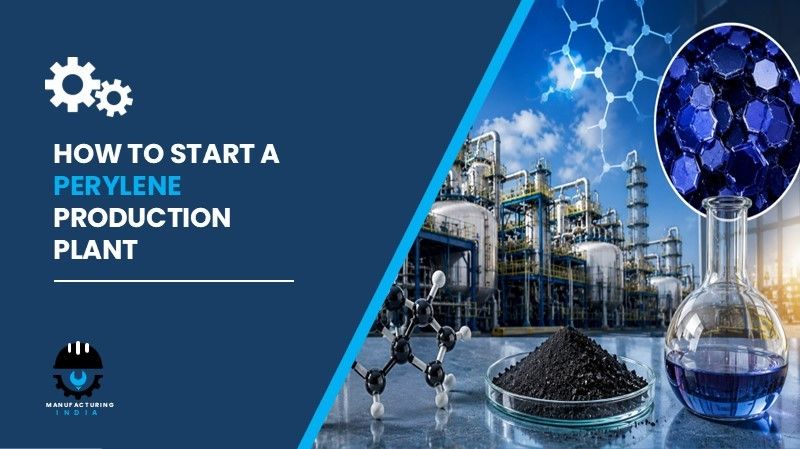
A perylene production plant setup in India presents a compelling investment case for entrepreneurs eyeing the specialty pigments and organic electronics space. Demand is driven by the pigments and dyes industry, coatings and paints, plastics, printing inks, organic electronics, solar energy, and specialty chemicals sectors, all of which rely on perylene derivatives for their exceptional thermal stability, chemical resistance, and light-absorption properties. As electronics and coatings manufacturers scale up in India, durable colorants and semiconductor-grade materials make this a strategically important production category.
India’s growing urbanisation, expanding infrastructure investment, and the Make in India initiative continue to strengthen the case for domestic specialty chemical production, with states such as Gujarat and Maharashtra offering established chemical manufacturing ecosystems, port access, and skilled labour pools. A perylene production plant set up in one of these industrial corridors can tap into existing raw material supply chains while serving both domestic coatings and ink producers and export markets, making India a strategically sound location for this type of production.
A perylene production plant combines strong policy support under Make in India, cost-competitive land and labour, and steady demand from pigments, coatings, and organic electronics manufacturers. With gross margins in the 40-50% range and net margins of 25-35%, the investment offers a credible path to healthy break-even viability within a reasonable payback window.
What is Perylene?
Perylene is a polycyclic aromatic hydrocarbon widely utilized as a key building block in high-performance organic pigments, dyes, and electronic materials. It is generally synthesized through controlled condensation and oxidation of naphthalene derivatives. Perylene is valued for its exceptional thermal stability, chemical resistance, and strong light absorption, which enhance its performance in demanding applications. Its derivatives are extensively used in the production of durable pigments for coatings, plastics, and specialty inks, providing long-lasting colour and resistance to fading. Perylene also finds application in advanced electronic technologies, including organic photovoltaic cells, organic light-emitting diodes (OLEDs), and photoconductors.
The perylene production process involves raw material preparation, a controlled chemical reaction and condensation, purification, filtration, drying, milling, quality inspection, and packaging. The resulting material serves the pigments and dyes industry, coatings and paints, plastics, printing inks, organic electronics, solar energy, and specialty chemicals industries.
Cost of Setting Up a Perylene Production Plant in India
The cost of setting up a perylene production plant depends on capacity, technology, automation level, location, and regulatory compliance requirements.
1. Capital Expenditure (CapEx)
Land and site development costs cover registration, boundary development, and related charges; investors can evaluate SEZs or established chemical industrial estates for ready infrastructure and faster approvals. Civil works cover the production shed, quality control laboratory, storage, and the administrative block. Machinery costs account for the largest share of total capital expenditure for the plant.
Key machinery required includes:
- Reactors
- Filtration systems
- Dryers
- Milling equipment
- Dust control units
- Packaging machinery
Other capital costs include effluent treatment plant (ETP) installation, pre-operative expenses, commissioning costs, and applicable import duties on specialised equipment.
Request a Sample Report for In-Depth Market Insights: https://www.imarcgroup.com/perylene-manufacturing-plant-project-report/requestsample
2. Operational Expenditure (OpEx)
Raw material cost is the largest component of operating expenditure, at approximately 50-70% of total OpEx. Core raw materials include naphthalene derivatives, oxidizing agents, and solvents; long-term supplier contracts help stabilise pricing and reduce volatility risk.
Utility costs, covering electricity, water, and steam, account for around 20-30% of OpEx. Other operating costs include transportation, packaging, salaries and wages, maintenance, depreciation, and taxes. By the fifth year, total operational cost is expected to rise due to inflation, market fluctuations, and increases in raw material costs, alongside supply chain disruptions and rising demand.
3. Plant Capacity
The proposed perylene production plant is designed with an annual capacity ranging between 300-500 tons/year, enabling economies of scale while maintaining flexibility. This range suits both mid-sized and larger investors, and capacity can be customized per requirement, with profitability generally improving as utilisation rises.
4. Profit Margins and Financial Projections
The project demonstrates healthy profitability potential under normal operating conditions. Gross profit margins typically range between 40-50%, while net profit margins range between 25-35%. Financial projections for the plant are developed around capital investment, operating costs, capacity utilisation, pricing trends, and demand outlook, and include payback period, net present value (NPV), and internal rate of return (IRR) analysis to establish long-term financial viability.
Why Set Up a Perylene Plant in India?
Rising Demand for High-Performance Pigments: Automotive, coatings, and plastics sectors increasingly require durable and lightfast pigments, and perylene-based colorants meet this need with strong weather resistance and colour stability.
Growth in Organic Electronics: Expansion of OLED displays and solar technologies is boosting consumption of perylene derivatives, opening a value-added, higher-margin segment for producers.
Superior Material Properties: High thermal stability, chemical resistance, and optical performance support premium applications, giving Indian producers a quality basis to compete in both domestic and export markets.
Cost-Competitive Manufacturing: India’s land, labour, and chemical supply chain infrastructure keep a perylene production plant cost-competitive against global peers, aided by the Make in India push for domestic specialty chemical output.
Active Industry Investment: In November 2025, Sun Chemical expanded high-performance perylene pigment manufacturing at its Ludwigshafen, Germany facility, adding up to 200 metric tons of capacity to strengthen supply reliability for coatings, plastics, and automotive applications, signalling continued global investment momentum in this category.
Local Supply Chain Preference: India’s packaging sector, now the fifth-largest sector in the economy per IBEF and supported by over 22,000 packaging units and more than 850 paper mills (526 operational, producing nearly 25 million tons annually), reflects the scale of downstream demand a domestic perylene production plant could serve for printing inks and packaging applications.
Manufacturing Process – Step by Step
The perylene production process uses controlled condensation and oxidation of naphthalene derivatives as the primary production method.
- Raw Material Preparation: Naphthalene derivatives, oxidizing agents, and solvents are prepared and measured for the reaction stage.
- Controlled Chemical Reaction and Condensation: The prepared materials undergo a controlled reaction and condensation process inside reactors to form perylene.
- Purification: The reaction output is purified to remove impurities and by-products.
- Filtration: Filtration systems separate the purified perylene from residual liquids.
- Drying: The filtered material is dried using dryers to achieve the required moisture content.
- Milling: Milling equipment reduces the dried perylene to the required particle size.
- Quality Inspection: Analytical checks confirm concentration, purity, and stability before release.
- Packaging: The finished perylene is packaged using dedicated packaging machinery and dispatched to pigment, coatings, ink, and electronics manufacturers.
Key Applications
Perylene produced at the plant serves a range of downstream industries that depend on its stability and colour performance.
- Pigments and Dyes Industry: Used in high-performance red and black pigments with excellent light and weather resistance.
- Coatings and Paints: Applied in automotive and industrial coatings requiring durability and colour stability.
- Printing Inks and Plastics: Used for high-quality coloration and long service life.
- Organic Electronics: Utilized in OLEDs, organic solar cells, and photoconductive materials.
Leading Manufacturers
Leading producers in the global perylene industry operate extensive production capacities and diverse application portfolios. Key players include:
- Clariant AG
- Mitsubishi Chemical Corporation
- DIC Corporation
- Huntsman Corporation
- Lanxess AG
- BASF SE
- Ferro Corporation
Timeline to Start the Plant
- Feasibility study and project report preparation
- Land acquisition and site development
- Regulatory approvals and environmental clearances
- Factory licence and fire safety compliance
- Machinery procurement and installation
- Raw material supplier agreements and supply chain setup
- Trial production and quality testing
- Commercial production launch
Licences and Regulatory Requirements
Starting a perylene production unit in India requires several approvals:
- Business registration (Proprietorship, LLP, or Pvt Ltd)
- Factory Licence under the Factories Act
- Environmental Clearance from State Pollution Control Board
- GST Registration
- Fire Safety NOC
- Hazardous/Chemical compliance for oxidizing agents and solvents handling
- Effluent Treatment Plant (ETP) operational clearance
- Occupational Health and Safety compliance
Key Challenges to Consider
High Capital Requirements: Reactors, filtration systems, dryers, and milling equipment represent a significant upfront investment.
Raw Material Price Volatility: Naphthalene derivatives, oxidizing agents, and solvents are subject to price fluctuations, making long-term supplier contracts important for cost stability.
Regulatory Compliance: Environmental clearances and hazardous chemical handling norms require careful planning and ongoing monitoring.
Competition: Established global players including Clariant AG, BASF SE, and Mitsubishi Chemical Corporation set a high bar on quality and scale.
Skilled Manpower: Operating reactors and analytical instrumentation requires trained technical staff, which can be a constraint in some locations.
Frequently Asked Questions
1. How much does it cost to set up a perylene production plant in India?
Total capital investment depends on plant capacity, technology, automation level, and location, covering land, civil works, machinery, and other capital costs.
2. Is perylene production profitable in India in 2026?
Yes, the project demonstrates healthy profitability, with gross margins of 40-50% and net margins of 25-35% under normal operating conditions.
3. What machinery is required for a perylene plant in India?
Key machinery includes reactors, filtration systems, dryers, milling equipment, dust control units, and packaging machinery.
4. What licences and approvals are required to start a perylene plant in India?
Requirements include business registration, factory licence, environmental clearance, GST registration, fire safety NOC, and ETP operational clearance.
5. What raw materials are needed for perylene manufacturing?
Core raw materials include naphthalene derivatives, oxidizing agents, and solvents.
6. What are the environmental compliance requirements for a perylene plant in India?
Plants require environmental clearance from the State Pollution Control Board, effluent treatment plant clearance, and hazardous chemical handling compliance.
7. What is the best location to set up a perylene plant in India?
States with established chemical manufacturing ecosystems, such as Gujarat and Maharashtra, offer infrastructure, raw material access, and skilled labour suited to this type of production.
8. What is the break-even period for this type of plant in India?
Break-even depends on capacity utilisation, pricing trends, and cost structure; payback period and NPV should be assessed per project scale.
9. What government incentives are available for manufacturers in India?
The Make in India initiative supports domestic specialty chemical production, alongside state-level industrial and infrastructure incentives.
Key Takeaways for Investors
A perylene production plant stands to benefit from consistent demand across pigments and dyes, coatings and paints, printing inks, plastics, and organic electronics such as OLEDs and solar cells. Financial viability holds across capacities from 300-500 tons/year, supported by gross margins of 40-50% and net margins of 25-35%. The global perylene market, valued at USD 1.02 Billion in 2025 and projected to reach USD 1.96 Billion by 2034 at a CAGR of 7.5%, points to sustained demand growth that a well-planned Indian facility is positioned to capture.
About the Author