Setting up an epoxy flooring manufacturing plant in India represents a highly attractive investment proposition underpinned by robust and structurally growing demand from industrial manufacturing, warehousing and logistics, food and beverage processing, healthcare and pharmaceuticals, and the broader commercial construction sector. As industrial floor space expands, hygiene and safety regulations tighten, and facility owners increasingly prioritise durable, low-maintenance, and chemical-resistant surfacing systems, epoxy flooring available in primer, self-leveling, mortar, and topcoat formats occupies an increasingly important position across production halls, distribution centres, cleanrooms, and public-facing commercial buildings. This growth trajectory, combined with steady access to key petrochemical-derived raw materials and strong customisation potential across performance grades, creates a highly favourable manufacturing environment for new entrants with efficient formulation, blending, and quality systems.
What is Epoxy Flooring?
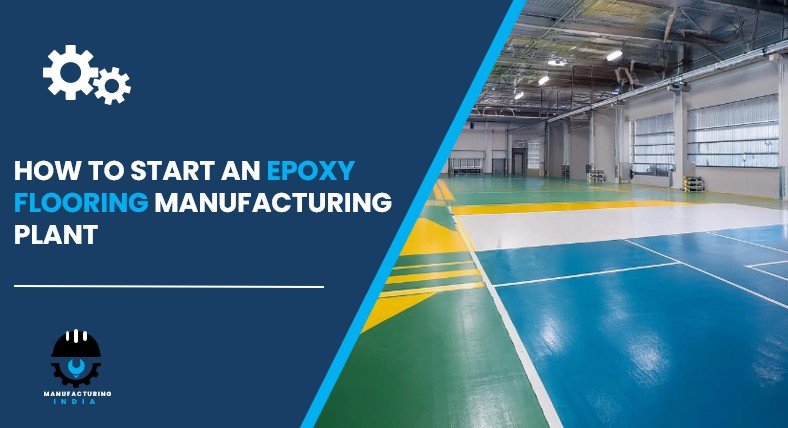
Epoxy flooring is a resin-based floor surfacing system formed by curing an epoxy resin with a hardener to create a dense, seamless, and high-performance protective layer over concrete or other substrates. The cured film provides strong adhesion, low porosity, and resistance to abrasion, chemicals, oils, and impact, supporting long service life in demanding environments. Epoxy flooring is supplied in multiple formats such as primers, self-leveling toppings, mortar systems, and topcoats, with optional anti-slip aggregates, pigments, and functional additives such as ESD (electrostatic discharge) control agents. Key performance attributes include bond strength, chemical resistance, wear resistance, and application-dependent thickness and texture.
Epoxy flooring is manufactured and sold across several principal product formats primers, self-leveling systems, mortar systems, and topcoats depending on the substrate condition, load requirements, and end-use environment. Beyond industrial manufacturing, the product is used extensively in warehousing and logistics for hard-wearing, low-dust floors, in food and beverage processing for seamless and cleanable surfaces, in healthcare and pharmaceutical facilities for low-porosity and easy-clean flooring, and in commercial buildings including transit hubs and airports for durable, aesthetic, and stain-resistant floors.
The global epoxy flooring market was valued at approximately USD 5.11 Billion in 2025 and is expected to reach USD 8.93 Billion by 2034, exhibiting a CAGR of 6.4% from 2026 to 2034, supported by rising demand for durable industrial floors, stricter hygiene and cleanability requirements, and expanding warehousing and logistics infrastructure.
Cost of Setting Up an Epoxy Flooring Manufacturing Plant
The total capital investment required to establish an epoxy flooring manufacturing plant is shaped by several key parameters: annual production capacity (typically ranging from 5,000 to 20,000 MT per annum), the level of automation across dispersion, blending, and filling sections, facility specification, raw material sourcing strategy, and applicable regulatory and safety compliance requirements. Below is a structured breakdown of the major cost components.
1. Capital Expenditure (CapEx)
Total capital investment in an epoxy flooring manufacturing plant covers the following major heads:
Land and Site Development
This encompasses land acquisition or lease, site preparation, boundary development, and utilities connectivity. Site selection should prioritise proximity to key raw material suppliers of epoxy resin, hardener, aggregates, and pigments, ensuring a steady, low-transport-cost supply of formulation inputs. Access to reliable power and utility infrastructure, strong road logistics for inbound raw materials and outbound finished goods, availability of process water of suitable quality, and a trained workforce for plant operations and quality control are critical site selection criteria. Compliance with industrial zoning regulations, chemical manufacturing and storage safety norms, and effluent and emission compliance frameworks must be assessed from project initiation.
Civil Works and Construction
Building costs cover the main processing facility including raw material reception and storage areas, pre-weighing and batch formulation section, pigment dispersion and let-down blending house, filtration and filling lines, packaging and dispatch infrastructure, quality control laboratory, administrative block, and utility infrastructure including power backup, compressed air systems, and effluent treatment plant. Construction must comply with applicable factory act requirements, chemical storage safety norms, fire-safety provisions for solvent and resin handling areas, and relevant industrial infrastructure guidelines.
Machinery and Equipment
Machinery represents the single largest CapEx component. Key equipment required for an epoxy flooring manufacturing plant includes:
- Raw Material Reception and Storage Systems: Storage tanks, drum handling equipment, and conveying systems for receiving and storing epoxy resin, hardener, aggregates, and pigments prior to processing
- Pre-Weighing and Batch Formulation Units: Weighing systems and batching equipment to accurately dose resin, hardener, fillers, and additives according to formulation specifications
- Pigment Dispersion Systems: High-speed dispersers and mixers to achieve uniform dispersion of pigments and functional additives into the resin base
- Let-Down Blending Equipment: Mixers and blenders for combining dispersed pigment pastes with the balance of resin and additives to achieve the final formulation
- Ball Mills: Grinding equipment used to achieve the required fineness of pigment and filler particles within the formulation
- Vacuum Deaeration Systems: Equipment to remove entrapped air from formulated batches, ensuring a smooth, bubble-free finish in the cured flooring system
- Filtration Machines: Filtration equipment to remove oversized particles and contaminants prior to filling, ensuring consistent product quality
- Filling and Packaging Machines: Automated filling lines for dispensing formulated resin and hardener components into pails, drums, and kits, along with capping, labelling, and cartoning equipment
- Quality Control Laboratory Equipment: Equipment for viscosity, pot life, cure time, adhesion, chemical resistance, and abrasion resistance testing to verify compliance with performance specifications
- Material Handling and Warehousing: Conveyors, drum handling equipment, and finished goods warehousing with FIFO stock management
Other Capital Costs
These include pre-operative expenses, commissioning charges, import duties on specialised dispersion and filling equipment, staff training and competency development, initial raw material and consumable inventory for production commissioning, regulatory compliance setup including chemical storage licensing, and ISO 9001 quality management system establishment costs.
Request a Sample Report for In-Depth Market Insights: https://www.imarcgroup.com/epoxy-flooring-manufacturing-plant-project-report/requestsample
2. Operational Expenditure (OpEx)
Raw materials principally epoxy resin, along with hardener, aggregates, pigments, and other formulation additives constitute the dominant operating cost, typically representing 65–75% of total OpEx. Utility costs, driven primarily by electricity consumption of dispersion, blending, and filling equipment, account for 5–10% of OpEx. Labour, maintenance, quality control, packaging, transportation, depreciation, taxes, and overhead costs constitute the remainder of the operating cost base.
3. Plant Capacity
The proposed epoxy flooring manufacturing facility is designed with an annual production capacity ranging between 5,000–20,000 MT, enabling economies of scale while maintaining operational flexibility. This capacity range supports a diversified product portfolio of primers, self-leveling toppings, mortar systems, and topcoats, serving industrial manufacturing, warehousing and logistics, food and beverage processing, healthcare and pharmaceutical, and commercial building customers.
4. Profit Margins and Financial Projections
The project demonstrates healthy profitability potential under normal operating conditions. Financial projections encompass capital investment, operating costs, capacity utilisation ramp-up schedule, product mix across primers, self-leveling systems, mortar systems, and topcoats, and forward demand outlook underpinned by rising industrial construction and hygiene-driven flooring upgrades. A comprehensive feasibility analysis includes sensitivity analysis, Net Present Value (NPV), Internal Rate of Return (IRR), and Payback Period calculations. Gross profit margins for epoxy flooring manufacturing typically range from 35–45%, supported by stable demand, value-added applications, and efficient raw material utilisation. Net profit margins of 15–25% are achievable with disciplined cost management, optimal capacity utilisation, and effective product-mix management.
Why Set Up an Epoxy Flooring Manufacturing Plant?
Essential Protective Layer for Concrete Floors
Epoxy systems protect concrete from wear, chemicals, and contamination, extending floor life and reducing maintenance cycles in industrial and institutional facilities. As facility owners increasingly seek to minimise downtime and lifecycle maintenance costs, epoxy flooring is transitioning from a specialty solution toward a mainstream specification choice across new-build and retrofit projects, supporting steady volume growth across industrial and commercial channels.
High Customisation Potential Across Industries
Formulations can be tuned for self-levelling, mortar build, anti-slip, chemical resistance, and ESD performance, enabling differentiated SKUs for varied site needs. Effective formulation development and application-specific product tuning materially enhance overall project economics, improving blended margins beyond what a single generic product line would generate, and provide additional revenue diversification for manufacturers.
Expanding Warehousing, Logistics, and Data Centre Demand
Growth in distribution centres, logistics hubs, and data centre construction is driving consistent demand for hard-wearing, low-dust epoxy flooring systems. Over 10,500 data centres are operating across 174 countries, with global demand projected to nearly triple by 2030, driving an estimated USD 7 trillion in investments toward new builds and upgrades a trend that is materially accelerating adoption of high-performance resinous flooring in industrial and technical facilities.
Regulated and Spec-Driven Demand Supports Quality-Focused Suppliers
Institutional specifications, such as chemical-resistant resinous flooring requirements in food, healthcare, and pharmaceutical facilities, increase preference for validated systems and documented quality processes. This regulatory and specification-driven demand environment favours manufacturers with strong quality assurance systems, analytical testing capability, and documented traceability, positioning well-invested new entrants favourably relative to unorganised suppliers.
Scalable Batch Manufacturing with Repeatable Controls
Standard unit operations dispersion, blending, filtration, and filling scale well with automation and in-process quality control, supporting consistent performance and batch traceability. This scalable and modular value chain allows new entrants to begin operations at a moderate scale and expand capacity or automation as volumes grow, enabling a phased investment approach that manages capital deployment while building operational and formulation expertise.
Downstream Pull from Construction Chemicals Ecosystems
Integration with primers, repair mortars, sealers, and jointing systems enables bundled solutions and stronger contractor and installer networks. Manufacturers able to offer a complete resinous flooring system alongside complementary construction chemical products are well positioned to capture a larger share of project value and build durable relationships with applicators and specifiers.
Rising Renovation and Retrofit Activity
Increasing renovation and retrofit activity in aging industrial and commercial buildings is supporting replacement demand for epoxy flooring systems, as facility owners upgrade worn or damaged concrete floors to modern, durable, and easy-to-maintain resinous surfaces, providing a structural demand tailwind independent of new-build construction cycles.
Manufacturing Process Overview
The epoxy flooring manufacturing operation transforms raw epoxy resin, hardener, aggregates, and pigments into finished, packaged flooring systems through a sequence of formulation, dispersion, blending, filtration, and packaging operations. The key process stages are:
- Raw Material Collection: Epoxy resin, hardener, aggregates, and pigments received from suppliers are inspected and verified against incoming quality specifications before being released for production.
- Pre-Weighing and Batch Formulation: Raw materials are accurately weighed and dosed according to the target formulation, ensuring consistent resin-to-hardener ratios and additive loadings across production batches.
- Pigment Dispersion: Pigments and functional additives are dispersed into the resin base using high-speed dispersers, achieving uniform colour and property distribution throughout the batch.
- Let-Down Blending: The dispersed pigment paste is blended with the remaining resin and additives under controlled mixing conditions to achieve the final formulated product.
- Filtration: The blended formulation is filtered to remove oversized particles and contaminants, ensuring a smooth, defect-free finish in the cured flooring system.
- Filling and Packaging: Formulated resin and hardener components are filled into pails, drums, or kit packaging, along with capping, labelling, and cartoning for retail and bulk dispatch.
- Quality Control: Finished batches are tested for viscosity, pot life, cure time, adhesion, chemical resistance, and abrasion resistance to verify compliance with performance specifications before release for dispatch.
- Dispatch: Packaged epoxy flooring products are dispatched to distributors, contractors, and bulk industrial customers via appropriate transportation arrangements.
Key Applications of Epoxy Flooring
The epoxy flooring market serves several major end-use segments across industrial, commercial, and institutional sectors:
- Industrial Manufacturing: Used for abrasion- and impact-resistant floors in production halls, assembly lines, and maintenance bays; selected systems address chemical splash, oil exposure, and heavy traffic.
- Warehousing and Logistics: Applied for hard-wearing, low-dust floors in distribution centres, aisles, and loading zones to support forklift traffic, visibility through line marking, and easier maintenance.
- Food and Beverage Processing: Used as seamless, cleanable flooring with chemical resistance to cleaning agents and wet-process conditions, typically with anti-slip textures where required.
- Healthcare and Pharmaceuticals: Used in corridors, labs, and controlled areas for low-porosity, easy-clean floors that support hygiene protocols and controlled maintenance.
- Commercial Buildings, including Transit and Airports: Used for durable, aesthetic floors in public-facing zones where maintenance downtime and stain resistance matter, such as airport terminal upgrades.
Global Epoxy Flooring Market Outlook
The global epoxy flooring market was valued at approximately USD 5.11 Billion in 2025. According to IMARC Group estimates, the market is expected to reach USD 8.93 Billion by 2034, exhibiting a CAGR of 6.4% from 2026 to 2034. The epoxy flooring market benefits from multiple structural demand drivers:
- Rising demand for durable, seamless, and high-performance flooring systems across industrial, commercial, and institutional facilities
- Rapid expansion of data centres, manufacturing plants, warehouses, and logistics hubs, accelerating adoption of flooring that offers high resistance to abrasion, chemicals, and heavy loads while lowering long-term maintenance needs
- Growing emphasis on hygiene, safety, and regulatory compliance in food processing, healthcare, and pharmaceutical environments, where low-porosity and easy-to-clean surfaces are critical
- Rising renovation and retrofit activity in aging industrial and commercial buildings, supporting replacement demand
- Increasing preference for chemical- and abrasion-resistant flooring systems in manufacturing plants and commercial buildings
- Growing adoption of anti-slip and anti-static flooring formats across specialised industrial and institutional environments
- Continued expansion of warehousing and logistics infrastructure globally, supporting hard-wearing floor demand for high-traffic distribution operations
- Strengthening specification and regulatory frameworks favouring validated, quality-assured resinous flooring systems over unorganised alternatives
Major players in the global epoxy flooring manufacturing industry include Sika AG, BASF SE, RPM International Inc., The Sherwin-Williams Company, PPG Industries, Inc., Huntsman Corporation, and 3M Company, serving end-use sectors including industrial manufacturing, warehousing and logistics, food and beverage processing, healthcare and pharmaceuticals, and commercial buildings.
Latest Industry Developments
- February 2026: Epoxy Floors NJ expanded its industrial-grade epoxy flooring services across New Jersey to meet growing commercial and industrial demand, aimed at offering high-performance resinous systems such as decorative flakes and heavy-duty epoxies designed to withstand chemical exposure and rigorous operating conditions for warehouses, manufacturing plants, and other facilities.
- January 2026: High Performance Systems introduced advanced commercial kitchen epoxy flooring solutions tailored for New Jersey’s food service and culinary industry, aimed at emphasising durable, seamless resinous floors that resist impact, abrasion, slips, heat, and harsh cleaning chemicals to improve the safety and hygiene of high-traffic kitchen environments.
Licenses and Regulatory Requirements
Establishing an epoxy flooring manufacturing unit requires a range of approvals and certifications, which may vary by country and jurisdiction, including:
- Business registration and company incorporation under applicable company law
- Factory License under applicable state Factories Act provisions for manufacturing operations
- Chemical storage and handling licenses for epoxy resin, hardener, and related formulation inputs
- Pollution Control Board Clearances Consent to Establish (CTE) and Consent to Operate (CTO) for manufacturing operations involving chemical processing and effluent generation
- Fire safety and hazardous materials storage clearances for resin and solvent-based raw material handling
- ISO 9001:2015 Quality Management System Certification for quality management infrastructure compliance
- ISO 14001 Environmental Management System Certification, where applicable, for environmental compliance infrastructure
- Weights and Measures (Legal Metrology) registration for packaged commodity labelling and net quantity declaration
- Export-Import Code (IEC) for international market access
- Trademark and Brand Registration for proprietary branded product launch
- Occupational Health and Safety management compliance (ISO 45001 / Factories Act provisions) for manufacturing worker safety, particularly in resin and chemical handling areas
Key Challenges to Consider
Raw Material Price Volatility
Epoxy resin, which accounts for 65–75% of total operating costs, is a petrochemical-derived product subject to crude oil price movements and global supply-demand cycles. Fluctuations in resin and hardener pricing can materially affect production costs and margins, making long-term supplier contracts and price-hedging strategies important operational priorities for new entrants.
Formulation Consistency and Quality Control
Achieving consistent viscosity, pot life, cure time, and performance characteristics such as adhesion, chemical resistance, and abrasion resistance across production batches requires disciplined process control and skilled formulation expertise. Any lapse in formulation consistency can result in product performance failures on site, damaging customer relationships and brand reputation.
Chemical Handling and Process Safety
Manufacturing operations involving epoxy resin, hardener, and solvent-based additives introduce fire, health, and environmental hazards that must be managed through appropriate storage infrastructure, ventilation systems, and rigorous safety protocols compliant with hazardous chemical handling regulations. Continuous investment in safety systems and regulatory compliance is a non-negotiable operational requirement.
Competitive Intensity from Established Multinational Players
The global epoxy flooring industry includes several well-established multinational manufacturers with extensive production capacities, diverse application portfolios, and strong distribution networks. New entrants must differentiate through formulation innovation, application-specific product development, competitive pricing, and responsive technical support to gain traction against incumbent suppliers.
End-Use Demand Cyclicality Tied to Construction Activity
Demand for epoxy flooring is closely linked to industrial and commercial construction activity, which can be cyclical and sensitive to broader economic conditions. Periods of subdued construction and capital expenditure activity across industrial, warehousing, and commercial building segments can affect volume growth, requiring manufacturers to diversify across end-use segments and geographies to manage demand cyclicality.
Distribution and Applicator Network Development
Effective market access for epoxy flooring manufacturers depends significantly on building and maintaining relationships with distributors, contractors, and flooring applicators who specify and install the finished product. Developing a reliable network of trained applicators and responsive technical support capability is an important, and often underestimated, element of long-term commercial success.
Frequently Asked Questions (FAQs)
1. How much does it cost to set up an epoxy flooring manufacturing plant?
The total investment depends on plant capacity (5,000–20,000 MT per annum), automation level, facility specification, location, and target market certifications. Costs cover land, civil construction (formulation and blending section, filtration and filling lines, storage, quality laboratory, utilities), machinery (dispersers, blenders, ball mills, vacuum deaeration systems, filtration and filling equipment), quality certifications, working capital, and regulatory compliance. A comprehensive feasibility study from IMARC Group provides detailed, capacity-specific cost estimates covering all CapEx and OpEx components.
2. Is epoxy flooring manufacturing a profitable business in 2026?
Yes. Sustained demand from industrial manufacturing, warehousing and logistics, food and beverage processing, healthcare and pharmaceuticals, and commercial construction combined with gross margins of 35–45% and net profit margins of 15–25% make epoxy flooring manufacturing financially attractive. Effective formulation development and application-specific product differentiation offer meaningful margin enhancement opportunities above what a single generic product line would generate.
3. What machinery and equipment are required for an epoxy flooring manufacturing plant?
Key equipment includes raw material reception and storage systems, pre-weighing and batch formulation units, high-speed pigment dispersers, let-down blending mixers, ball mills, vacuum deaeration systems, filtration machines, quality control laboratory equipment, and automated filling and packaging machines for pails, drums, and kits.
4. What licenses and approvals are required?
Required approvals include company registration, Factory License, chemical storage and handling licenses, Pollution Control Board clearances, fire safety and hazardous materials storage clearances, and ISO 9001 quality management system certification. Chemical storage licensing is a mandatory legal prerequisite for manufacturing and storing epoxy resin and hardener at scale.
5. How long does it take to commission an epoxy flooring manufacturing plant?
Typically, 12–18 months from project initiation to commercial production launch, depending on project scale, facility construction timeline, equipment procurement lead times for dispersion and filling systems, regulatory approvals, and quality certification timelines, which should be initiated early in the project to avoid delays to commercial launch.
6. What are the key raw materials for epoxy flooring manufacturing?
The primary raw material is epoxy resin, which must be paired with an appropriate hardener to achieve the desired cure characteristics. Other key inputs include aggregates for mortar and self-levelling systems, pigments for colour formulation, functional additives such as ESD control agents, and packaging materials including pails, drums, and kit packaging for finished product dispatch.
7. What is the break-even period for an epoxy flooring manufacturing plant?
The break-even period generally depends on capacity utilisation ramp-up trajectory, the product mix across primers, self-levelling systems, mortar systems, and topcoats, raw material price stability, and distributor and applicator network development. Securing long-term raw material supply agreements and stable offtake arrangements with distributors and contractors significantly improves revenue predictability and supports faster break-even achievement.
8. What are the main forms of epoxy flooring and their applications?
The principal formats are primers (for substrate preparation and adhesion), self-levelling toppings (for smooth, high-build floors), mortar systems (for heavy-duty, high-build applications), and topcoats (for surface finish, chemical resistance, and aesthetics). These formats serve industrial manufacturing, warehousing and logistics, food and beverage processing, healthcare, and commercial building applications, often combined as part of a complete multi-layer flooring system.
9. What government incentives are available for epoxy flooring manufacturers?
Manufacturers may benefit from industrial and manufacturing sector incentive schemes, state-level industrial investment incentives and capital subsidies for chemical and construction materials units, infrastructure support under industrial park schemes, and export promotion benefits for construction chemical exports. Availability and structure of such incentives vary significantly by country and jurisdiction.
10. How does epoxy flooring manufacturing compare to other resinous flooring processing in terms of setup?
Compared to other resinous flooring systems such as polyurethane or methyl methacrylate (MMA) flooring, epoxy flooring manufacturing benefits from well-established, widely available raw material supply chains and relatively straightforward batch-formulation technology, though it requires careful control of resin-to-hardener ratios and cure characteristics. The dispersion, blending, and filling technology employed is broadly similar to other coatings and construction chemicals manufacturing, allowing processors with experience in resin-based coatings to adapt existing technical capabilities to epoxy flooring with targeted investment in formulation development and quality testing infrastructure.
Key Takeaways for Investors
The epoxy flooring manufacturing industry represents a structurally resilient and financially attractive investment opportunity positioned at the intersection of expanding industrial and warehousing infrastructure, tightening hygiene and safety regulations, and the ongoing global data centre and logistics construction boom. Stable demand from industrial manufacturing, warehousing and logistics, food and beverage processing, healthcare and pharmaceuticals, and commercial building channels provides resilience against single-segment demand volatility, while high customisation potential across performance grades offers meaningful margin enhancement beyond generic product sales alone. The regulated and specification-driven nature of institutional demand favours quality-focused manufacturers with strong validation and documentation capability, while continued renovation and retrofit activity in aging facilities provides a structural demand tailwind independent of new-build construction cycles. The scalable nature of the batch-manufacturing value chain from moderate-scale operations to fully automated, multi-line facilities allows investors to phase capital deployment according to risk appetite and target market positioning, while continued investment by established coatings and construction chemicals players in expanding resinous flooring capacity reflects strong confidence in the long-term growth and profitability of the category.
About the Author