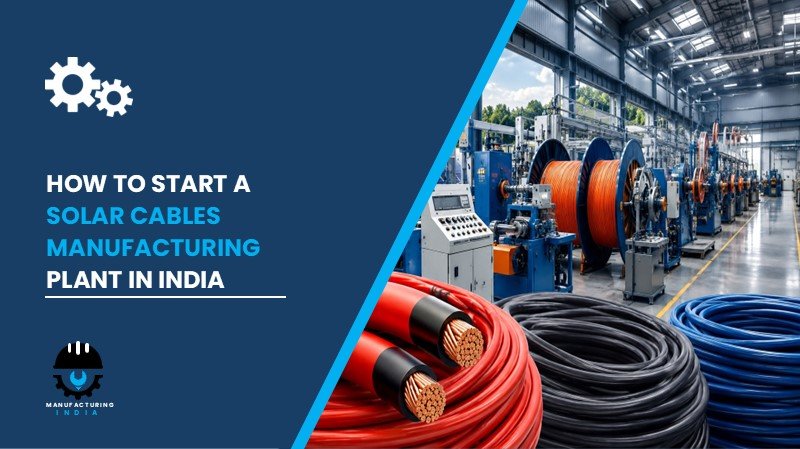
Setting up a solar cables manufacturing plant in India presents a compelling investment case for entrepreneurs seeking exposure to the renewable energy components sector. Demand is driven by solar energy, renewable energy, power generation, electrical infrastructure, commercial & industrial, utility-scale solar, and residential energy systems industries. Because solar cables must withstand extreme UV rays, severe weather, and temperatures from -40°C to 90°C for over 25 years, this production is critical to India’s solar and renewable energy economy.
India’s rapid renewable energy capacity additions, expanding rooftop solar programs, and growing utility-scale solar farms make the country a strategically sound base. As per the Ministry of New and Renewable Energy, India added a record 44.5 GW of renewable energy capacity in 2025, strengthening demand for solar cables. Initiatives such as India’s National Solar Mission and PM Surya Ghar further support this venture.
This investment case rests on strong policy support through India’s National Solar Mission and PM Surya Ghar, cost-competitive access to tinned copper conductor, XLPE/EPR insulation compound, and LSZH outer sheath compound feedstock, and consistent demand from solar, utility, and residential sectors. With gross profit margins of 14-22% and net profit margins of 5-10%, the project demonstrates a viable path to break-even and long-term profitability across a range of plant capacities.
What are Solar Cables?
Solar cables are specialized photovoltaic (PV) wires used to interconnect solar panels, inverters, and batteries, transmitting direct current (DC) safely. Unlike normal household wires, they feature double-layer, electron-beam cross-linked insulation engineered to withstand extreme UV rays, severe weather, and temperatures from -40°C to 90°C for over 25 years.
The solar cables manufacturing process relies on conductor stranding, insulation extrusion, curing/cross-linking, outer sheath extrusion, cooling, marking, testing, and coiling as its core production stages. The end products serve solar energy, renewable energy, power generation, electrical infrastructure, commercial & industrial, utility-scale solar, and residential energy systems industries.
Cost of Setting Up a Solar Cables Manufacturing Plant in India
The total cost of setting up the facility depends on capacity, technology, location, automation level, and regulatory compliance.
1. Capital Expenditure (CapEx)
Capital investment covers land acquisition, site preparation, and infrastructure, and can be planned around an industrial estate or SEZ location. Civil works costs cover the processing shed, laboratory, storage areas, and administrative block. Machinery costs account for the largest portion of total capital expenditure for a solar cables manufacturing plant, and equipment must be corrosion-resistant and tailored for this operation.
Key machinery required includes:
- Conductor stranding machines
- Wire drawing machines
- Extrusion lines
- Cross-linking/curing systems
- Cooling tanks
- Spark testers
- Diameter gauges
- Marking machines
- Cable testing equipment
- Take-up machines
- Coiling/packaging machines
Other capital costs include land registration, boundary development charges, pre-operative expenses, and commissioning costs.
Request a Sample Report for In-Depth Market Insights: https://www.imarcgroup.com/solar-cables-manufacturing-plant-project-report/requestsample
2. Operational Expenditure (OpEx)
Raw material cost is the largest component of operating expenditure, with tinned copper conductor, XLPE/EPR insulation compound, and LSZH outer sheath compound together accounting for approximately 68-75% of OpEx. Long-term supplier contracts are recommended to mitigate price volatility.
Utility costs account for approximately 8-12% of OpEx. Other operating costs include transportation, packaging, salaries, maintenance, depreciation, and taxes, which rise by the fifth year due to inflation.
3. Plant Capacity
The proposed unit is designed with an annual manufacturing capacity of 5,000-20,000 MT, enabling economies of scale while maintaining operational flexibility. Capacity can be customized per investor requirements, and profitability improves with higher capacity utilisation.
4. Profit Margins and Financial Projections
Financial projections cover capital investment, operating costs, capacity utilisation, pricing trends, and demand outlook, including NPV, IRR, and payback period. Gross profit margins typically range between 14-22%, while net margins range between 5-10%.
Why Set Up a Solar Cables Plant in India?
Crucial Renewable Energy Component. Solar cables serve as fundamental components for connecting photovoltaic modules, inverters, combiner boxes, and other balance-of-system equipment, providing reliable DC power transmission, UV resistance, and long-term electrical safety across residential, commercial, utility-scale, and off-grid solar installations.
Moderate but Justifiable Entry Barriers. While requiring lower capital investment compared to semiconductor or module manufacturing, stringent insulation requirements, flame-retardant properties, and compliance with international standards create entry hurdles favouring experienced producers.
Megatrend Alignment. The rapid expansion of solar power generation, rooftop PV systems, utility-scale solar farms, and battery energy storage is driving consistent demand for durable, high-performance solar cables, with global investments in renewable energy continuing to support long-term market growth.
Policy and Infrastructure Push. Government investments in renewable power generation, solar parks, rooftop solar programs, and domestic clean-energy manufacturing indirectly support demand for solar cables. Initiatives such as India’s National Solar Mission and PM Surya Ghar further strengthen installation activity.
Active Industry Investment. In July 2026, HYPSET presented its latest cable-structure PV mounting technologies, highlighting new opportunities for commercial & industrial, aquavoltaic, and complex-terrain solar applications across Southeast Asia.
Localization and Dependability in Supply Chains. Solar module manufacturers, EPC contractors, and renewable energy developers increasingly favour local, dependable cable suppliers to shorten lead times, reduce logistics costs, and maintain uninterrupted supply.
Manufacturing Process – Step by Step
The solar cables manufacturing process uses conductor stranding, insulation extrusion, curing/cross-linking, outer sheath extrusion, cooling, marking, testing, and coiling as the primary production method.
- Conductor Stranding: Tinned copper conductor is stranded using conductor stranding machines and wire drawing machines.
- Insulation Extrusion: The conductor is coated with XLPE/EPR insulation compound using extrusion lines.
- Curing/Cross-Linking: Insulated conductor is processed through cross-linking/curing systems to achieve the required electron-beam cross-linked structure.
- Outer Sheath Extrusion: LSZH outer sheath compound is applied over the insulated conductor using extrusion lines.
- Cooling: Sheathed cable is cooled using cooling tanks to stabilize its structure.
- Marking and Testing: Cooled cable is checked using spark testers and diameter gauges, then marked and verified with cable testing equipment.
- Coiling: Finished cable is wound using take-up machines and processed through coiling/packaging machines for dispatch to end-use industries.
Key Applications
Solar cables serve downstream industries.
- Solar Energy: Used in photovoltaic panels, solar power systems, and DC connections.
- Commercial & Industrial: Used in rooftop solar installations, solar farms, and power distribution systems.
- Residential: Used in rooftop photovoltaic systems, battery storage connections, and home solar installations.
- Utility-Scale Power: Used in large-scale solar farms, inverter connections, and grid-connected solar power systems.
Leading Manufacturers
Leading manufacturers in the global solar cables industry include:
- Leader Solar
- Danyang Winpower Wire & Cable
- Service Wire Company
Timeline to Start the Plant
- Feasibility study and project report preparation
- Land acquisition and site development
- Regulatory approvals and environmental clearances
- Factory licence and fire safety compliance
- Machinery procurement and installation
- Raw material supplier agreements and supply chain setup
- Trial production and quality testing
- Commercial production launch
Licences and Regulatory Requirements
Starting a solar cables manufacturing unit in India requires several approvals:
- Business registration (Proprietorship, LLP, or Pvt Ltd)
- Factory Licence under the Factories Act
- Environmental Clearance from State Pollution Control Board
- GST Registration
- Fire Safety NOC
- Effluent Treatment Plant (ETP) operational clearance
- Occupational Health and Safety compliance
Key Challenges to Consider
High Capital Requirements. Machinery costs, including extrusion lines, cross-linking/curing systems, and cable testing equipment, account for the largest share of capital expenditure.
Raw Material Price Volatility. Tinned copper conductor, XLPE/EPR insulation compound, and LSZH outer sheath compound prices can fluctuate, and since raw materials account for 68-75% of OpEx, long-term supplier contracts are essential.
Regulatory Compliance. Safety protocols, effluent treatment, and emission standards must be maintained throughout operations.
Competition. Established players such as Leader Solar, Danyang Winpower Wire & Cable, and Service Wire Company operate with extensive capacities, so new entrants must compete on quality and cost-effectiveness.
Skilled Manpower. The plant requires trained personnel across stranding, extrusion, curing, and quality assurance functions.
Site Selection Constraints. The location must offer easy access to tinned copper conductor and insulation compound feedstock, proximity to target markets, and compliance with zoning regulations.
Frequently Asked Questions
1. How much does it cost to set up a solar cables manufacturing plant in India?
Cost depends on capacity, technology, location, automation, and regulatory compliance, covering land, civil works, machinery, and other capital costs.
2. Is solar cables manufacturing profitable in India in 2026?
Yes, the project shows healthy profitability, with gross profit margins of 14-22% and net profit margins of 5-10% under normal operating conditions.
3. What machinery is required for a solar cables plant in India?
Key machinery includes conductor stranding machines, wire drawing machines, extrusion lines, cross-linking/curing systems, cooling tanks, spark testers, diameter gauges, marking machines, cable testing equipment, take-up machines, and coiling/packaging machines.
4. What licences and approvals are required to start a solar cables plant in India?
Requirements include business registration, a Factory Licence, Environmental Clearance, GST Registration, Fire Safety NOC, ETP clearance, and Occupational Health and Safety compliance.
5. What raw materials are needed for solar cables manufacturing?
The primary raw materials are tinned copper conductor, XLPE/EPR insulation compound, and LSZH outer sheath compound, together accounting for approximately 68-75% of operating expenditure.
6. What are the environmental compliance requirements for a solar cables plant in India?
Facilities require Environmental Clearance from the State Pollution Control Board, an operational Effluent Treatment Plant, and advanced monitoring systems for emission compliance.
7. What is the best location to set up a solar cables plant in India?
The site should offer easy access to tinned copper conductor, XLPE/EPR insulation compound, and LSZH outer sheath compound, proximity to target markets, robust infrastructure, and compliance with zoning and environmental regulations.
8. What is the break-even period for this type of plant in India?
Break-even depends on capital investment, operating costs, and capacity utilisation, assessed through payback period, NPV, and IRR calculations.
9. What government incentives are available for manufacturers in India?
Initiatives such as India’s National Solar Mission, PM Surya Ghar, and broader renewable energy targets support solar cables manufacturers by strengthening rooftop and utility-scale installation activity.
Key Takeaways for Investors
This investment offers a compelling opportunity backed by consistent demand from the solar energy, renewable energy, power generation, electrical infrastructure, commercial & industrial, utility-scale solar, and residential energy sectors. Financial viability holds across capacities from 5,000 MT to 20,000 MT, with gross margins of 14-22% and net margins of 5-10%. The global solar cables market, valued at USD 1.2 Billion in 2025 and projected to reach USD 3.9 Billion by 2034 at a CAGR of 14.0%, alongside India’s record 44.5 GW of renewable energy capacity added in 2025, reflects the scale of long-term demand this investment can capture. As rooftop solar, utility-scale farms, and battery storage demand expand, solar cables demand is set to remain sustainable for years to come.
About the Author