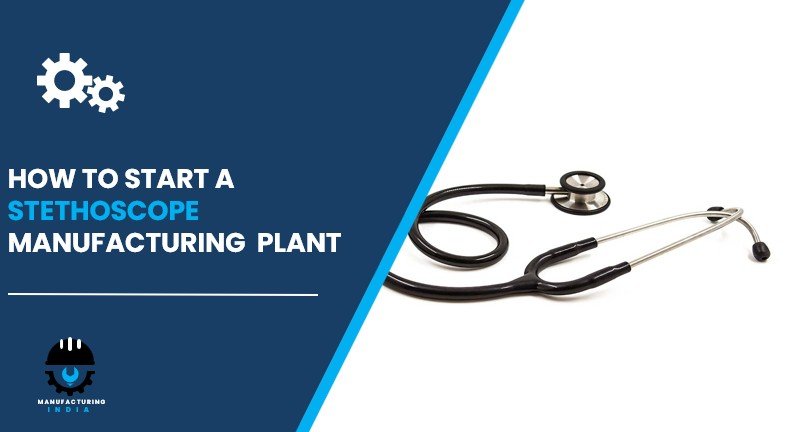
Setting up a stethoscope manufacturing plant in India represents a highly attractive investment proposition underpinned by robust and structurally growing demand from expanding healthcare infrastructure, rising hospital and clinic networks, the increasing burden of cardiovascular and respiratory disease, and the accelerating adoption of digital diagnostic technologies. As global healthcare systems expand access to primary and emergency care, and as clinicians, nurses, paramedics, and medical students continue to rely on auscultation as a first-line diagnostic technique, the stethoscope remains an indispensable, universally used medical instrument across hospitals, clinics, ambulatory care centres, and medical education institutions. This growth trajectory, combined with rising demand for AI-enabled and Bluetooth-connected digital stethoscopes for telemedicine and remote patient monitoring, creates a highly favourable manufacturing environment for new entrants with precision engineering, acoustic calibration, and quality assurance capabilities.
What is a Stethoscope?
A stethoscope is a medical diagnostic instrument used to auscultate internal body sounds, including the heart, lungs, and gastrointestinal system, assisting healthcare professionals in diagnosing and monitoring a wide range of medical conditions. Traditional acoustic stethoscopes are made up of a chestpiece, diaphragm, bell, tubing, headset, and ear tips, while contemporary digital stethoscopes add electronic sound amplification, active noise cancellation, Bluetooth connectivity, sound visualisation, and AI-assisted diagnostic capabilities.
Commercial stethoscope manufacturing involves the production of metal and polymer components, diaphragm moulding, precision machining, tubing extrusion, sub-assembly, acoustic calibration, quality testing, sterilisation, inspection, and packaging. Because of their accuracy, portability, and dependability, stethoscopes are widely used across hospitals, clinics, ambulatory care facilities, emergency medical services, medical education institutions, and home healthcare settings.
The India stethoscope market was valued at approximately USD 641.90 Million in 2025 and is expected to reach USD 1,039.6 Million by 2034, exhibiting a CAGR of 5.3% from 2026 to 2034, supported by expanding healthcare infrastructure, the rising prevalence of cardiovascular and respiratory illness, and the growing adoption of digital and AI-enabled auscultation devices.
Cost of Setting Up a Stethoscope Manufacturing Plant
The total capital investment required to establish a stethoscope manufacturing plant is shaped by several key parameters: annual production capacity (typically ranging from 5 to 20 lakh units per annum), product mix between acoustic and digital stethoscopes, the level of automation across machining, moulding, and assembly sections, facility specification, raw material sourcing strategy, and applicable medical device regulatory and quality compliance requirements. Below is a structured breakdown of the major cost components.
1. Capital Expenditure (CapEx)
Total capital investment in a stethoscope manufacturing plant covers the following major heads:
Land and Site Development
This encompasses land acquisition or lease, site preparation, boundary development, and utilities connectivity. Site selection should prioritise proximity to precision engineering and polymer component supplier clusters, reliable power and compressed air infrastructure for CNC machining and moulding operations, strong road logistics for inbound components and outbound finished goods, availability of a skilled technical workforce for precision assembly and quality control, and compliance with industrial zoning regulations and medical device manufacturing standards from project initiation.
Civil Works and Construction
Building costs cover the main production facility including the machining and metal fabrication section, plastic injection moulding and tubing extrusion area, precision assembly and acoustic calibration cleanroom-grade section, sterilisation and quality testing laboratory, automated packaging and dispatch infrastructure, administrative block, and utility infrastructure including power backup, compressed air systems, and effluent handling for surface finishing operations. Construction must comply with applicable factory act requirements and medical device manufacturing infrastructure guidelines.
Machinery and Equipment
Machinery represents the single largest CapEx component. Key equipment required for a stethoscope manufacturing plant includes:
- CNC Machining Centers: Precision lathes and CNC machining centres for producing chestpiece, binaural, and headset components from stainless steel, chrome-plated brass, or aluminium
- Metal Stamping Presses: Presses for forming metal components used in the chestpiece and binaural assembly with consistent dimensional accuracy
- Diaphragm Moulding Machines: Compression or injection moulding equipment for producing epoxy fiberglass or Bakelite diaphragms with precise acoustic properties
- Plastic Injection Moulding Machines: Equipment for producing eartips, chestpiece housings, and other polymer components from Delrin, silicone, and engineering plastics
- Silicone Tubing Extrusion Lines: Extrusion systems for producing PVC or latex rubber acoustic tubing to precise internal-diameter and wall-thickness tolerances
- Polishing and Surface Finishing Machines: Buffing, polishing, and plating lines to achieve corrosion-resistant, medical-grade metal surface finishes
- Ultrasonic Welding Equipment: Welding systems for bonding polymer housings and sub-assemblies without adhesives, ensuring airtight acoustic pathways
- Precision Assembly Stations: Manual and semi-automated assembly stations for fitting chestpieces, tubing, headsets, and eartips to finished product specification
- Acoustic Calibration and Testing Systems: Specialised equipment to verify sound transmission fidelity, frequency response, and acoustic seal quality of finished stethoscopes
- Leak Testing Equipment: Systems to verify airtight integrity of tubing and chestpiece assemblies critical to acoustic performance
- Sterilisation Units: Sterilisation and disinfection equipment for components and finished goods intended for clinical and hospital use
- Quality Inspection Instruments: Dimensional gauges, acoustic test benches, and visual inspection systems to verify compliance with medical device quality standards
- Automated Packaging Machines: Filling, labelling, and cartoning lines for retail and bulk institutional packaging of finished stethoscopes
- Material Handling and Computerised Production Control Systems: Conveyors, component storage systems, and production control software for traceability and inventory management
Other Capital Costs
These include pre-operative expenses, commissioning charges, import duties on specialised machining and moulding equipment, staff training and competency development, initial raw material and consumable inventory for production commissioning, and regulatory compliance setup including medical device registration, quality management system certification, and applicable in-country licensing costs.
Request a Sample Report for In-Depth Market Insights: https://www.imarcgroup.com/stethoscope-manufacturing-plant-project-report/requestsample
2. Operational Expenditure (OpEx)
Raw materials principally stainless steel, chrome-plated brass, or aluminium for the chestpiece and binaural pieces, PVC or latex rubber tubing, Delrin or silicone eartips, epoxy fiberglass or Bakelite diaphragm material, and steel springs and ball bearings constitute the dominant operating cost, typically representing 45–55% of total OpEx. Utility costs, driven primarily by electricity consumption of CNC machining, moulding, and testing equipment, account for 8–12% of OpEx. Labour, maintenance, quality control, packaging, transportation, depreciation, taxes, and overhead costs constitute the remainder of the operating cost base.
3. Plant Capacity
The proposed stethoscope manufacturing facility is designed with an annual production capacity ranging between 5–20 lakh units, enabling economies of scale while maintaining operational flexibility. This capacity range supports a diversified product portfolio spanning traditional acoustic stethoscopes, cardiology-grade stethoscopes, and digital stethoscopes with Bluetooth and AI-enabled features, serving hospitals, clinics, medical education institutions, and export markets.
4. Profit Margins and Financial Projections
The project demonstrates healthy profitability potential under normal operating conditions. Financial projections encompass capital investment, operating costs, capacity utilisation ramp-up schedule, product mix between acoustic and digital stethoscopes, and forward demand outlook underpinned by expanding healthcare infrastructure and rising diagnostic equipment adoption. A comprehensive feasibility analysis includes sensitivity analysis, Net Present Value (NPV), Internal Rate of Return (IRR), and Payback Period calculations. Gross profit margins for stethoscope manufacturing typically range from 20–28%, supported by stable institutional demand and value-added digital product lines. Net profit margins of 7–14% are achievable with disciplined cost management, optimal capacity utilisation, and effective product-mix management.
Why Set Up a Stethoscope Manufacturing Plant?
Growing Healthcare Infrastructure
Expansion of hospitals, clinics, and diagnostic centres worldwide is increasing demand for reliable diagnostic instruments. As healthcare access broadens across both developed and emerging markets, the base of clinicians, nurses, and paramedics requiring stethoscopes for routine and emergency care continues to expand, supporting sustained volume demand for manufacturers.
Rising Burden of Cardiovascular and Respiratory Disease
Cardiovascular illnesses are the world’s leading cause of death, accounting for an estimated 17.9 million deaths annually, according to the World Health Organization. The increasing prevalence of chronic cardiovascular and respiratory conditions continues to drive the need for routine auscultation, early diagnosis, and ongoing patient monitoring, sustaining structural demand for stethoscopes across clinical settings.
Advancements in Digital Healthcare
Integration of artificial intelligence, wireless connectivity, and digital sound amplification is creating opportunities for high-value stethoscope manufacturing. Digital stethoscopes with electronic sound amplification, active noise cancellation, and AI-assisted diagnostic support are transitioning from a niche category toward mainstream clinical use, offering manufacturers a premium, higher-margin product segment alongside traditional acoustic devices.
Expansion of Telemedicine and Remote Patient Monitoring
The increasing adoption of remote healthcare delivery and digital diagnostics is accelerating demand for smart, connected stethoscopes capable of transmitting auscultation data for virtual consultations. This structural shift toward decentralised healthcare delivery creates a growing addressable market for Bluetooth-enabled and cloud-connected diagnostic devices beyond traditional hospital and clinic channels.
Growing Medical Workforce and Medical Education Demand
Growth in the number of physicians, nurses, paramedics, and other healthcare professionals globally is supporting long-term unit demand for stethoscopes, both for professional clinical use and as standard equipment issued to medical, nursing, and paramedical students during clinical training.
Scalable Manufacturing with Differentiated Product Tiers
The stethoscope value chain, spanning precision component manufacturing, moulding, assembly, and acoustic calibration, allows processors to begin operations with entry-level acoustic stethoscopes and progressively expand into cardiology-grade and digital product tiers as technical capability and quality certifications mature, enabling a phased investment approach that improves margin capture over time.
Manufacturing Process Overview
The stethoscope manufacturing operation transforms raw metal, polymer, and rubber inputs into a calibrated, quality-tested diagnostic instrument through a sequence of machining, moulding, assembly, and testing operations. The key process stages are:
- Raw Material Reception and Inspection: Incoming stainless steel, chrome-plated brass or aluminium stock, PVC or latex rubber tubing, Delrin or silicone resin, and diaphragm materials are inspected against dimensional and material-grade specifications prior to release for production.
- Precision Machining: Chestpiece, binaural pieces, and other metal components are machined on CNC lathes and machining centres to tight dimensional tolerances required for correct acoustic pathway geometry.
- Metal Stamping and Fabrication: Metal stamping presses form structural components of the chestpiece and binaural assembly, which are then deburred and prepared for surface finishing.
- Diaphragm and Component Moulding: Epoxy fiberglass or Bakelite diaphragms and Delrin or silicone eartips are produced using compression or injection moulding processes calibrated for consistent acoustic and ergonomic performance.
- Tubing Extrusion: PVC or latex rubber acoustic tubing is extruded to precise internal-diameter and wall-thickness specifications that directly influence sound transmission quality.
- Surface Finishing and Plating: Machined metal components undergo polishing, buffing, and chrome or other protective plating to achieve corrosion-resistant, medical-grade surface finishes.
- Precision Assembly: Chestpiece, diaphragm, tubing, headset, and eartip components are assembled using ultrasonic welding and mechanical fastening at dedicated assembly stations, with a steel spring and ball-bearing mechanism fitted in the headset for consistent ear-tip tension.
- Acoustic Calibration and Leak Testing: Assembled units undergo acoustic calibration to verify sound transmission fidelity and frequency response, along with leak testing to confirm airtight integrity of the tubing and chestpiece assembly.
- Quality Testing and Inspection: Finished units are subjected to dimensional inspection, visual inspection, and acoustic performance testing to verify compliance with applicable medical device quality standards before release.
- Sterilisation: Units intended for clinical and hospital use undergo sterilisation or disinfection processing in line with applicable medical device hygiene requirements.
- Packaging and Dispatch: Finished stethoscopes are packed in retail cartons or bulk institutional packaging with product documentation, and dispatched to hospitals, distributors, medical education institutions, and export customers.
Key Applications of Stethoscopes
The stethoscope market serves several major end-use segments across clinical, educational, and telehealth channels:
- Hospitals and Clinics: Doctors, nurses, and other medical workers frequently use stethoscopes for routine physical examinations, patient monitoring, and the diagnosis of gastrointestinal, respiratory, and cardiovascular conditions.
- Cardiology and Pulmonology: Used to promote early diagnosis and therapy planning through thorough auscultation of heart murmurs, irregular heart rhythms, lung sounds, and respiratory disorders.
- Medical Education: Used in medical colleges, nursing schools, and healthcare training institutions to teach clinical examination techniques and auscultation skills to students.
- Telemedicine and Digital Healthcare: Digital stethoscopes with Bluetooth connectivity, electronic sound amplification, and AI-enabled diagnostic support are being used increasingly in remote healthcare services to enhance virtual patient consultations.
- Emergency Medical Services and Intensive Care: Portable, durable stethoscopes are essential equipment for paramedics and emergency responders assessing patients in time-critical and high-noise field environments.
- Home Healthcare: Growing home-based patient monitoring is expanding demand for compact, easy-to-use, and increasingly digital stethoscopes for caregivers and visiting healthcare professionals.
Global Stethoscope Market Outlook
The India stethoscope market was valued at approximately USD 641.90 Million in 2025. According to IMARC Group estimates, the market is expected to reach USD 1,039.6 Million by 2034, exhibiting a CAGR of 5.3% from 2026 to 2034. The stethoscope market benefits from multiple structural demand drivers:
- Expanding hospital, clinic, and diagnostic centre infrastructure globally, increasing the installed base of clinicians requiring diagnostic instruments
- Rising prevalence of cardiovascular and respiratory illnesses, with cardiovascular disease alone accounting for an estimated 17.9 million deaths annually according to the World Health Organization
- Growing adoption of digital stethoscopes with Bluetooth connectivity, electronic sound amplification, active noise cancellation, and AI-assisted diagnostic capabilities
- Expansion of telemedicine and remote patient monitoring, creating new demand for cloud-connected auscultation devices
- Increasing size of the global medical workforce, including physicians, nurses, and paramedics, supporting sustained replacement and new-unit demand
- Continued investment in medical education infrastructure, generating consistent demand for stethoscopes among medical, nursing, and paramedical students
- Rising healthcare expenditure and insurance penetration in emerging markets, improving affordability of diagnostic equipment across hospital and clinic networks
Leading producers in the global stethoscope industry include 3M, Medline Industries, LP., Welch Allyn (Hill-Rom Holdings, Inc.), Eko Health, Inc., GF Health Products, Inc., and Rudolf Riester GmbH (Halma plc), serving end-use sectors including hospitals, clinics, emergency medical services, educational institutions, home healthcare, and medical device manufacturing.
Latest Industry Developments
- June 2024: Digital stethoscope maker Eko Health closed a $41 million Series D funding round at a $325 million valuation, with participation from Artis Ventures and NTT Venture Capital among other investors, reflecting continued investor confidence in AI-enabled cardiopulmonary diagnostic devices.
- Ongoing: Established stethoscope manufacturers and digital health entrants continue to expand product lines combining traditional acoustic engineering with Bluetooth connectivity, active noise cancellation, and AI-assisted murmur and arrhythmia detection, reflecting the broader industry shift toward connected diagnostic instruments for hospital, telemedicine, and home healthcare use.
Licenses and Regulatory Requirements
Establishing a stethoscope manufacturing unit requires a range of approvals and certifications, which may vary by country and jurisdiction, including:
- Business registration and company incorporation under applicable company law
- Factory License under applicable state Factories Act provisions for manufacturing operations
- Medical device manufacturing license from the applicable national regulatory authority (for example, CDSCO in India or FDA 510(k) clearance in the United States) covering the manual and electronic stethoscope product codes
- ISO 13485 Quality Management System Certification specific to medical device manufacturing
- CE marking or other applicable regional conformity marking for stethoscopes intended for export to regulated medical device markets
- BIS (Bureau of Indian Standards) certification, where applicable, for relevant component materials and finished product standards
- Pollution Control Board Clearances Consent to Establish (CTE) and Consent to Operate (CTO) for manufacturing operations involving surface finishing and plating processes
- ISO 9001:2015 Quality Management System Certification for general quality management infrastructure compliance
- Weights and Measures (Legal Metrology) registration for packaged product labelling where applicable
- Export-Import Code (IEC) for international market access
- Trademark and Brand Registration for proprietary branded product launch
- Occupational Health and Safety management compliance (ISO 45001 / Factories Act provisions) for manufacturing worker safety in machining and plating areas
Key Challenges to Consider
Precision Component Supply and Machining Tolerances
Stethoscope acoustic performance is highly sensitive to dimensional tolerances in the chestpiece, tubing, and diaphragm assembly. Inconsistent machining quality, tubing extrusion tolerances, or diaphragm material properties can materially affect sound transmission fidelity, requiring rigorous incoming inspection and in-process quality control across all precision component suppliers.
Medical Device Regulatory and Quality Certification Burden
Maintaining medical device manufacturing licensing, ISO 13485 quality management certification, and applicable regional conformity marking requires ongoing investment in quality laboratory infrastructure, process validation, and surveillance audit preparedness. Any lapse in quality certification maintenance can disrupt market access and delay product launches, particularly for export markets with stringent regulatory regimes.
Competition from Low-Cost Manufacturers
The traditional acoustic stethoscope segment faces intense price competition from high-volume, low-cost manufacturers, compressing margins for entry-level product tiers. New entrants must differentiate through quality consistency, brand positioning, or a shift toward higher-margin cardiology-grade and digital product segments to sustain profitability.
Technology Investment for Digital Product Lines
Entering the digital stethoscope segment requires meaningful investment in electronics integration, software development, Bluetooth connectivity, and AI-assisted diagnostic algorithms, along with additional regulatory clearance pathways for software-embedded medical devices. This raises the capital and technical capability threshold relative to traditional acoustic stethoscope manufacturing.
Acoustic Calibration and Quality Consistency at Scale
Maintaining consistent acoustic calibration across high-volume production runs requires disciplined process control and dedicated testing infrastructure. Variability in diaphragm tension, tubing dimensions, or assembly quality across production batches can affect product consistency and increase warranty or return rates if not tightly controlled.
Frequently Asked Questions (FAQs)
1. How much does it cost to set up a stethoscope manufacturing plant?
The total investment depends on plant capacity (5–20 lakh units per annum), product mix between acoustic and digital stethoscopes, automation level, facility specification, location, and target market certifications. Costs cover land, civil construction, machinery (CNC machining centres, moulding and extrusion lines, assembly stations, acoustic testing equipment, packaging lines), quality certifications, working capital, and regulatory compliance. A comprehensive feasibility study from IMARC Group provides detailed, capacity-specific cost estimates covering all CapEx and OpEx components.
2. Is stethoscope manufacturing a profitable business in 2026?
Yes. Sustained demand from expanding healthcare infrastructure, the rising burden of cardiovascular and respiratory disease, and growing adoption of digital diagnostic technologies, combined with gross margins of 20–28% and net profit margins of 7–14%, make stethoscope manufacturing financially attractive. Expansion into higher-margin cardiology-grade and digital product segments offers meaningful margin enhancement opportunities beyond entry-level acoustic stethoscope sales.
3. What machinery and equipment are required for a stethoscope manufacturing plant?
Key equipment includes CNC machining centres, metal stamping presses, diaphragm moulding machines, plastic injection moulding machines, silicone tubing extrusion lines, polishing and surface finishing machines, ultrasonic welding equipment, precision assembly stations, acoustic calibration and leak testing systems, sterilisation units, quality inspection instruments, and automated packaging lines.
4. What licenses and approvals are required?
Required approvals include company registration, Factory License, a medical device manufacturing license from the applicable national regulatory authority, ISO 13485 quality management system certification, and applicable regional conformity marking for export markets. ISO 13485 certification and medical device registration are mandatory legal prerequisites for manufacturing and selling stethoscopes for clinical use in most jurisdictions.
5. How long does it take to commission a stethoscope manufacturing plant?
Typically, 10–18 months from project initiation to commercial production launch, depending on project scale, facility construction timeline, equipment procurement lead times for precision machining and moulding systems, and medical device regulatory approval and quality certification timelines, which should be initiated early in the project to avoid delays to commercial launch.
6. What are the key raw materials for stethoscope manufacturing?
The primary raw materials are stainless steel, chrome-plated brass, or aluminium for the chestpiece and binaural pieces, PVC or latex rubber for acoustic tubing, Delrin or silicone for eartips, epoxy fiberglass or Bakelite for the diaphragm, and steel springs and ball bearings for the headset mechanism, along with packaging materials for retail and institutional dispatch.
7. What is the break-even period for a stethoscope manufacturing plant?
The break-even period generally depends on capacity utilisation ramp-up trajectory, the product mix between acoustic and digital stethoscopes, quality certification timelines, and institutional offtake arrangements with hospitals, distributors, and medical education institutions. Securing long-term supply agreements with hospital networks and distributors significantly improves revenue predictability and supports faster break-even achievement.
8. What are the main product tiers of stethoscopes and their applications?
The three principal product tiers are entry-level acoustic stethoscopes for general physical examination, cardiology-grade acoustic stethoscopes offering enhanced sound amplification and tunable diaphragms for specialist auscultation, and digital stethoscopes with Bluetooth connectivity, electronic sound amplification, and AI-assisted diagnostic capabilities for telemedicine and advanced clinical use.
9. What government incentives are available for stethoscope manufacturers?
Manufacturers may benefit from medical device sector incentive schemes, state-level industrial investment incentives and capital subsidies for medical device manufacturing units, infrastructure support under medical device manufacturing parks and cluster schemes, and export promotion benefits for medical device exports. Evolving medical device regulatory policy also affects the market access economics for manufacturers targeting export markets.
10. How does stethoscope manufacturing compare to other medical device manufacturing in terms of setup?
Compared to broader medical device manufacturing categories, stethoscope manufacturing benefits from relatively lower capital intensity and simpler component supply chains for the acoustic segment, but requires precision machining, tubing extrusion, and acoustic calibration capabilities specific to the product. The digital stethoscope segment adds electronics integration and software regulatory pathways broadly similar to other connected medical devices, allowing manufacturers with electronics manufacturing experience to adapt existing technical capabilities with targeted investment in acoustic engineering.
Key Takeaways for Investors
The stethoscope manufacturing industry represents a structurally resilient and financially attractive investment opportunity positioned at the intersection of expanding global healthcare infrastructure, rising cardiovascular and respiratory disease burden, and the accelerating shift toward digital and AI-enabled diagnostics. Stable demand from hospitals, clinics, emergency medical services, medical education institutions, and home healthcare channels provides resilience against single-segment demand volatility, while the growing digital stethoscope category offers meaningful margin enhancement beyond traditional acoustic product sales. The relatively moderate capital intensity of entry-level acoustic stethoscope manufacturing allows new entrants to establish operations with manageable investment, while the scalable nature of the value chain, from precision component machining through acoustic calibration and digital integration, allows investors to phase capital deployment according to risk appetite and target market positioning. Continued investment by established medical device players and digital health entrants in AI-enabled auscultation technology reflects strong confidence in the long-term growth and profitability of the category.
About the Author