Setting up an agarbatti manufacturing plant in India represents a highly attractive investment proposition underpinned by robust and structurally growing demand from religious institutions, households, the hospitality and wellness sector, and export markets. As urbanisation accelerates, disposable incomes rise, and consumer awareness of natural, low-smoke, and premium fragrance formulations grows, agarbatti available in hand-rolled, machine-extruded, and charcoal-free forms occupies an increasingly important position across daily worship, meditation, aromatherapy, and gifting applications. This growth trajectory, combined with a low capital and technology entry barrier, strong linkages to rural and cottage-sector employment, and rising export demand for Indian incense, creates a highly favourable manufacturing environment for new entrants with efficient blending, rolling, and quality systems.
What is Agarbatti?
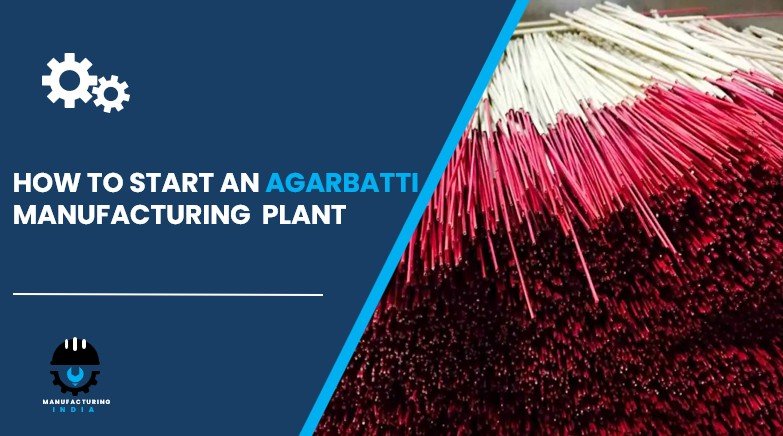
Agarbatti, or incense sticks, are fragrant products traditionally used for religious rituals, meditation, aromatherapy, and simply for airing the house. These sticks typically consist of a thin bamboo core dipped or rolled in a mixture of aromatic powders, herbal substances, natural resins, essential oils, and binding agents. Agarbatti is valued for its pleasant, soothing fragrance, constant burning rate, good fragrance diffusion, low ash residue, and its ability to be stored well even under adverse conditions.
Agarbatti is manufactured and sold in several principal forms hand-rolled masala sticks, machine-extruded sticks, bamboo-core (santoor-style) sticks, and dipped or charcoal-free sticks depending on the production process and formulation adopted. Formulations can be varied according to fragrance strength, burning time, and smoke intensity, making agarbatti suitable for a wide range of consumers and cultural practices, from daily household worship to premium wellness and aromatherapy use.
The India incense sticks (agarbatti & dhoop) market was valued at approximately USD 1.26 Billion in 2025 and is expected to reach USD 2.01 Billion by 2034, exhibiting a CAGR of 5.3% from 2026 to 2034, supported by sustained religious and cultural consumption, rising household usage, and growing demand from aromatherapy and export markets.
Cost of Setting Up an Agarbatti Manufacturing Plant
The total capital investment required to establish an agarbatti manufacturing plant is shaped by several key parameters: annual production capacity (typically ranging from 500 to 1,000 MT per annum), the level of automation adopted (manual and hand-rolling versus semi-automated or fully automated extrusion and packaging lines), facility specification, raw material sourcing strategy, and applicable regulatory and quality compliance requirements. Below is a structured breakdown of the major cost components.
1. Capital Expenditure (CapEx)
Total capital investment in an agarbatti manufacturing plant covers the following major heads:
Land and Site Development
This encompasses land acquisition or lease, site preparation, boundary development, and utilities connectivity. Site selection should prioritise proximity to key raw material sources such as bamboo stick suppliers, charcoal and wood powder units, and perfume and essential oil suppliers, to ensure a steady, low-transport-cost supply chain. Access to reliable power, adequate open space for drying yards or drying chambers, strong road logistics for inbound materials and outbound finished goods, and availability of a trained, semi-skilled and skilled workforce for rolling, perfuming, and packaging operations are critical site selection criteria. Compliance with local zoning regulations, factory licensing norms, and fire safety requirements must be assessed from project initiation.
Civil Works and Construction
Building costs cover the main production facility including the raw material storage area, powder mixing and masala preparation section, rolling or extrusion hall, drying yard or drying chambers, perfuming and scenting section, quality control laboratory, packaging and finished goods warehousing, administrative block, and utility infrastructure including power backup and ventilation systems. Construction must comply with applicable factory act requirements, fire safety norms, and local building and environmental regulations.
Machinery and Equipment
Machinery represents a significant CapEx component, though agarbatti production can be scaled from largely manual, labour-intensive operations to semi-automated and fully automated lines. Key equipment required for an agarbatti manufacturing plant includes:
- Bamboo Stick Cutting Machine: Systems for cutting and sizing raw bamboo into uniform sticks, along with cleaning equipment to remove splinters and foreign matter prior to processing
- Powder Mixing Machine: Equipment for blending charcoal powder, wood (joss) powder, gum powder, and other masala ingredients into a homogeneous paste used as the base coating for the bamboo core
- Agarbatti Rolling or Extrusion Machine: Manual rolling tables and trays for hand-rolled masala sticks, or automatic extrusion and rolling machines that apply the masala paste evenly onto bamboo sticks at higher throughput for semi-automated and automated operations
- Drying Racks or Drying Chambers: Open-air drying yards or enclosed, climate-controlled drying chambers used to reduce moisture content in rolled sticks prior to perfuming and packaging, ensuring consistent burning quality
- Perfuming Drums or Spray Units: Rotating drums or spray-based application systems used to uniformly apply essential oils and fragrance compounds onto dried, unscented sticks (raw or “round” sticks)
- Packaging and Sealing Machines: Automated or semi-automated equipment for counting, bundling, wrapping, labelling, and sealing finished agarbatti packs and cartons for retail and bulk dispatch
- Quality Control and Testing Equipment: Weighing scales, moisture meters, and burn-rate testing equipment used to verify stick weight consistency, moisture content, and fragrance and burning performance prior to release
Other Capital Costs
These include pre-operative expenses, commissioning charges, staff training, initial raw material and consumable inventory for production commissioning, and regulatory compliance setup including business registration, factory licensing, fire safety clearance, and quality certification under the applicable Bureau of Indian Standards framework.
Request a Sample Report for In-Depth Market Insights: https://www.imarcgroup.com/agarbatti-manufacturing-plant-project-report/requestsample
2. Operational Expenditure (OpEx)
Raw materials principally bamboo sticks, along with charcoal powder, wood (joss) powder, essential oils and fragrance compounds, binding gums, and packaging materials constitute the dominant operating cost, typically representing 40-50% of total OpEx. Utility costs, driven primarily by electricity for mixing, extrusion, and drying operations, account for 10-15% of OpEx. Labour, transportation, packaging, depreciation, taxes, and overhead costs constitute the remainder of the operating cost base.
3. Plant Capacity
The proposed agarbatti manufacturing facility is designed with an annual production capacity ranging between 500-1,000 MT, enabling economies of scale while maintaining operational flexibility. This capacity range supports a diversified product portfolio spanning masala sticks, charcoal-free and low-smoke variants, and premium fragrance ranges, serving household retail, religious institutions, hospitality and wellness channels, and export markets.
4. Profit Margins and Financial Projections
The project demonstrates healthy profitability potential under normal operating conditions. Financial projections encompass capital investment, operating costs, capacity utilisation ramp-up schedule, product mix between standard and premium fragrance variants, and forward demand outlook underpinned by stable religious consumption and rising wellness-driven demand. A comprehensive feasibility analysis includes sensitivity analysis, Net Present Value (NPV), Internal Rate of Return (IRR), and Payback Period calculations. Gross profit margins for agarbatti manufacturing typically range from 40-50%, supported by stable demand and value-added premium fragrance applications. Net profit margins of 15-25% are achievable with disciplined cost management, optimal capacity utilisation, and effective branding and distribution.
Why Set Up an Agarbatti Manufacturing Plant?
Strong Cultural and Religious Demand
Agarbatti is a vital product used in day-to-day religious and spiritual practices across households, temples, and other institutions, guaranteeing stable and recurring demand. This deep-rooted cultural and ritual usage provides a resilient demand base that is far less exposed to discretionary spending cycles than many other consumer categories.
Low Capital and Technology Requirement
The production process is straightforward, scalable, and applicable across the full range from manual, hand-rolled cottage operations to semi-automated and fully automated production units. This allows entrepreneurs to enter the industry with a comparatively modest initial investment and scale up automation and capacity as the business grows and market access improves.
Employment Generation Potential
Agarbatti production is closely linked to the cottage and small-scale manufacturing sector, and rural and women workers account for a significant share of the job opportunities created, particularly in hand-rolling, perfuming, and packaging operations. This makes the industry an important contributor to rural livelihoods and inclusive employment generation.
Export and Branding Opportunities
Rising international demand for Indian incense provides a meaningful opportunity for both value-added branding and export-oriented production. India remains the largest producer and exporter of agarbatti globally, and manufacturers with consistent quality and distinctive fragrance portfolios are well positioned to capture growing overseas demand across Asia, the Middle East, Europe, and North America.
Product Diversification Scope
Producers can develop herbal, organic, low-smoke, and premium fragrance variants to cater to different consumer segments, from traditional temple and household use to modern wellness, aromatherapy, and gifting applications, supporting premiumisation and margin expansion over time.
Regulatory Tailwinds from New Quality Standards
India introduced a new national quality benchmark for incense sticks with the release of IS 19412:2025 by the Bureau of Indian Standards in December 2025. The standard restricts harmful chemicals, improves indoor air safety, and sets clear quality norms, strengthening consumer confidence while supporting sustainable, organised manufacturing. Compliant manufacturers are expected to benefit from improved market access and consumer trust as the standard is implemented across the industry.
Rising Wellness and Aromatherapy Demand
Growing interest in aromatherapy, meditation, and mindfulness practices is expanding agarbatti’s use beyond traditional religious contexts into everyday household ambience and personal wellness routines, creating an additional, fast-growing demand channel alongside the core devotional and ritual use case.
Manufacturing Process Overview
The agarbatti manufacturing operation transforms raw bamboo sticks and aromatic powders into finished, fragranced incense sticks through a sequence of preparation, rolling, drying, perfuming, and packaging operations. The key process stages are:
- Raw Material Reception and Cleaning: Raw bamboo is cut and sized into uniform sticks, cleaned to remove splinters and foreign matter, and inspected for consistent thickness and length prior to processing
- Masala Preparation and Mixing: Charcoal powder, wood (joss) powder, gum binder, and water are blended into a homogeneous masala paste, with formulation adjusted to control burning rate, smoke intensity, and ash characteristics
- Rolling or Extrusion: The masala paste is applied evenly onto the bamboo core either by hand-rolling on trays or through automatic extrusion and rolling machines, producing uniform, unscented “round” sticks
- Drying: Rolled sticks are dried in open-air yards or enclosed drying chambers to reduce moisture content to the level required for stable storage and consistent, even burning
- Perfuming and Scenting: Dried round sticks are dipped in or sprayed with essential oils and fragrance compounds in perfuming drums or spray units, with formulations varied to create different fragrance profiles and product lines
- Quality Control: Scented sticks are tested for weight consistency, moisture content, fragrance strength, and burning performance to verify compliance with quality specifications before release for packaging
- Packaging and Dispatch: Finished sticks are counted, bundled, wrapped, and packed into retail packs, boxes, or bulk cartons, labelled, and dispatched to retail, institutional, or export customers
Key Applications of Agarbatti
The agarbatti market serves several major end-use segments across household, religious, hospitality, and export channels:
- Household: Used for prayer, meditation, and creating a pleasant indoor ambience in daily household routines
- Religious Institutions: Used in temples, churches, mosques, and other spiritual centres for daily and festival-related rituals
- Hospitality and Wellness: Used by hotels, spas, yoga centres, and meditation halls to create a calming, aromatic environment for guests and practitioners
- Export and Retail Markets: Available through retail stores, e-commerce platforms, and international distributors, supporting both domestic branded sales and cross-border trade
- Aromatherapy and Personal Care: Growing use in aromatherapy and personal care routines, leveraging natural fragrance blends for relaxation and stress relief
Global Agarbatti Market Outlook
The India incense sticks (agarbatti & dhoop) market was valued at approximately USD 1.26 Billion in 2025. According to IMARC Group estimates, the market is expected to reach USD 2.01 Billion by 2034, exhibiting a CAGR of 5.3% from 2026 to 2034. The agarbatti market benefits from multiple structural demand drivers:
- Consistent religious and ritual consumption across households, temples, and other institutions, providing a stable demand base largely insulated from discretionary spending cycles
- Rising household usage and growing popularity of wellness, meditation, and aromatherapy products among urban, health-conscious consumers
- Rapid urbanisation and rising disposable income, encouraging demand for premium and customised fragrance variants
- India’s position as the largest producer and exporter of agarbatti, supplying markets across Asia, the Middle East, Europe, and North America
- Government initiatives promoting domestic manufacturing and exports, strengthening organised, export-oriented production
- Implementation of the new IS 19412:2025 national quality standard, enhancing product safety, consumer trust, and global market competitiveness
- Advancements in fragrance blending, automation in rolling and drying processes, and eco-friendly packaging reshaping the industry landscape
Major players in the global agarbatti industry include ITC Limited, B. V. Aswathiah and Bros, Hari Darshan Sevashram Private Limited, Hem Corporation Private Limited, Moksh Agarbattis Company, Mysore Deep Perfumery House (MDPH), N. Ranga Rao and Sons Private Limited, Patanjali Ayurved Limited, and Shree Kalpana Perfumery Works Private Limited, serving end-use sectors including religious institutions, households, hospitality and wellness centres, and retail.
Latest Industry Developments
- November 2025: Dheepam, the heritage brand from Kaleesuwari, expanded its spiritual wellness portfolio with the launch of premium charcoal-free agarbattis, featuring multiple fragrances including five fresh variants offering cleaner burning, minimal smoke, and long-lasting aroma for daily prayers, meditation, and home ambience.
- September 2025: ITC Mangaldeep introduced its new incense range, Mangaldeep Nature, at a trade meet in Chennai attended by over 300 distributors and wholesalers. The charcoal-free agarbatti line features nature-inspired fragrances, including Flower Valley and Green Forest, designed to bring a sense of calm, purity, and mindfulness to everyday prayer and meditation rituals.
- May 2025: Mysore Deep Perfumery House (MDPH), one of India’s leading incense stick manufacturers, launched its new Gauved product portfolio made using cow dung as a key raw material, beginning with sambrani cups and followed by agarbattis, dhoop, and dhoop cones, marking MDPH’s entry into eco-conscious, traditional incense offerings.
Licenses and Regulatory Requirements
Establishing an agarbatti manufacturing unit requires a range of approvals and certifications, which may vary by country and jurisdiction, including:
- Business registration and company incorporation under applicable company law
- Udyam (MSME) registration for small and medium manufacturing units
- Factory License or Shops and Establishment registration under applicable state provisions for manufacturing operations
- BIS (Bureau of Indian Standards) certification under IS 19412:2025 for incense stick quality and safety compliance
- Fire Safety No-Objection Certificate (NOC) from the local fire department for the manufacturing and storage facility
- Pollution Control Board clearances, where applicable, for manufacturing operations involving dust and emission generation
- GST (Goods and Services Tax) registration for manufacturing and sale of finished goods
- Weights and Measures (Legal Metrology) registration for packaged commodity labelling and net quantity declaration
- Export-Import Code (IEC) for international market access
- Trademark and Brand Registration for proprietary branded product launch
- ISO 9001:2015 Quality Management System Certification, where applicable, for quality management infrastructure compliance
Key Challenges to Consider
Raw Material Price and Quality Volatility
Bamboo sticks, charcoal powder, wood powder, and essential oils together account for a significant share of total operating costs, and their availability, quality, and pricing can vary depending on seasonality, regional supply conditions, and fragrance ingredient sourcing. Securing reliable, long-term supply arrangements with raw material suppliers is a critical operational priority.
Compliance with the New BIS Quality Standard
The introduction of IS 19412:2025 requires manufacturers to reformulate products where necessary to restrict harmful chemicals and meet defined quality and safety benchmarks. Achieving and maintaining certification requires investment in quality testing infrastructure and disciplined formulation control, and non-compliant producers risk reduced market access as the standard is adopted more widely.
Competition from the Unorganised and Cottage Sector
A large share of agarbatti production in India continues to come from small, unorganised, and cottage-scale manufacturers, creating intense price competition, particularly in the mass-market segment. New entrants must differentiate through consistent quality, branding, and distribution reach to compete effectively against low-cost, informal producers.
Fragrance and Formulation Differentiation
With numerous established and emerging brands offering a wide range of fragrances, sustained investment in fragrance innovation, formulation research, and consumer preference testing is necessary to build brand loyalty and command premium pricing in an increasingly crowded marketplace.
Smoke and Emission Sensitivity
Rising consumer and regulatory sensitivity toward indoor air quality is driving demand for low-smoke and charcoal-free variants. Manufacturers relying primarily on traditional charcoal-based formulations may face gradual demand erosion unless they invest in reformulation and diversify their product portfolio to include cleaner-burning alternatives.
Export Market Access and Branding
While export demand for Indian incense is growing, capturing higher-value export and branded retail opportunities requires investment in packaging, certification, and international distribution relationships, which can represent a meaningful additional capital and marketing commitment for new entrants focused primarily on domestic markets.
Frequently Asked Questions (FAQs)
1. How much does it cost to set up an agarbatti manufacturing plant?
The total investment depends on plant capacity (500-1,000 MT per annum), the level of automation adopted (manual hand-rolling versus semi-automated or fully automated extrusion and packaging lines), facility specification, location, and target market certifications. Costs cover land, civil construction (mixing section, rolling hall, drying yard, perfuming section, storage, quality laboratory), machinery (cutting, mixing, rolling or extrusion, drying, perfuming, and packaging equipment), quality certifications, working capital, and regulatory compliance. A comprehensive feasibility study from IMARC Group provides detailed, capacity-specific cost estimates covering all CapEx and OpEx components.
2. Is agarbatti manufacturing a profitable business in 2026?
Yes. Sustained demand from religious institutions, households, and the hospitality and wellness sector combined with gross margins of 40-50% and net profit margins of 15-25% make agarbatti manufacturing financially attractive. Low capital entry requirements and strong rural employment linkages further support the business case, while premium and export-oriented product lines offer meaningful margin enhancement opportunities.
3. What machinery and equipment are required for an agarbatti manufacturing plant?
Key equipment includes a bamboo stick cutting machine, powder mixing machine, agarbatti rolling or extrusion machine, drying racks or drying chambers, perfuming drums or spray units, packaging and sealing machines, and quality control and testing equipment. Production can be scaled from manual, labour-intensive hand-rolling operations to semi-automated and fully automated lines depending on target capacity and investment appetite.
4. What licenses and approvals are required?
Required approvals include company registration, Udyam (MSME) registration, Factory License or Shops and Establishment registration, BIS certification under IS 19412:2025, Fire Safety NOC, GST registration, and Legal Metrology registration. BIS certification under the new national quality standard is an increasingly important compliance requirement for manufacturing and selling agarbatti products in India.
5. How long does it take to commission an agarbatti manufacturing plant?
Typically, 4-8 months from project initiation to commercial production launch, depending on project scale, facility construction timeline, equipment procurement lead times, and regulatory approval and licensing timelines, which should be initiated early in the project to avoid delays to commercial launch.
6. What are the key raw materials for agarbatti manufacturing?
The primary raw materials are bamboo sticks, charcoal powder, wood (joss) powder, gum binder, and essential oils and fragrance compounds. Other key inputs include packaging materials such as wrappers, boxes, and cartons for finished sticks. Reliable, long-term supplier relationships help stabilise pricing and ensure a steady supply of consistent-quality inputs.
7. What is the break-even period for an agarbatti manufacturing plant?
The break-even period generally depends on capacity utilisation ramp-up trajectory, the product mix between standard and premium fragrance variants, raw material supply consistency, and distribution and branding effectiveness. Securing stable retail, institutional, and export offtake arrangements significantly improves revenue predictability and supports faster break-even achievement.
8. What are the main forms of agarbatti and their applications?
The principal forms are hand-rolled masala sticks, machine-extruded sticks, bamboo-core (santoor-style) sticks, and charcoal-free or low-smoke variants. Standard masala sticks serve mass-market household and religious use, while charcoal-free and premium fragrance variants increasingly serve wellness, aromatherapy, and export-oriented retail applications.
9. What government incentives are available for agarbatti manufacturers?
Manufacturers may benefit from MSME sector incentive schemes, state-level industrial investment incentives and capital subsidies for cottage and small-scale manufacturing units, and export promotion benefits for incense products, given India’s position as a leading global exporter of agarbatti.
10. How does agarbatti manufacturing compare to other cottage-scale manufacturing in terms of setup?
Compared to many other cottage and small-scale manufacturing categories, agarbatti production benefits from a well-established, low-capital technology base and strong linkages to rural and women’s employment, but faces intense price competition from the large unorganised sector. Producers able to invest in consistent quality, branding, and compliance with the new BIS quality standard are best positioned to differentiate and capture premium and export-oriented demand.
Key Takeaways for Investors
The agarbatti manufacturing industry represents an accessible and structurally resilient investment opportunity positioned at the intersection of deep-rooted religious and cultural demand, low capital and technology entry barriers, and rising global interest in wellness and aromatherapy products. Stable demand from households, religious institutions, and the hospitality and wellness sector provides resilience against single-segment demand volatility, while India’s position as the world’s largest producer and exporter of agarbatti offers meaningful export and branding opportunities. The introduction of the new IS 19412:2025 national quality standard is expected to strengthen consumer confidence and support organised, compliant manufacturers over time, while the scalable nature of the production process from manual hand-rolling to fully automated lines allows investors to phase capital deployment according to risk appetite and target market positioning. Continued product innovation in charcoal-free, low-smoke, and premium fragrance variants reflects strong confidence in the long-term growth and profitability of the category.
About the Author