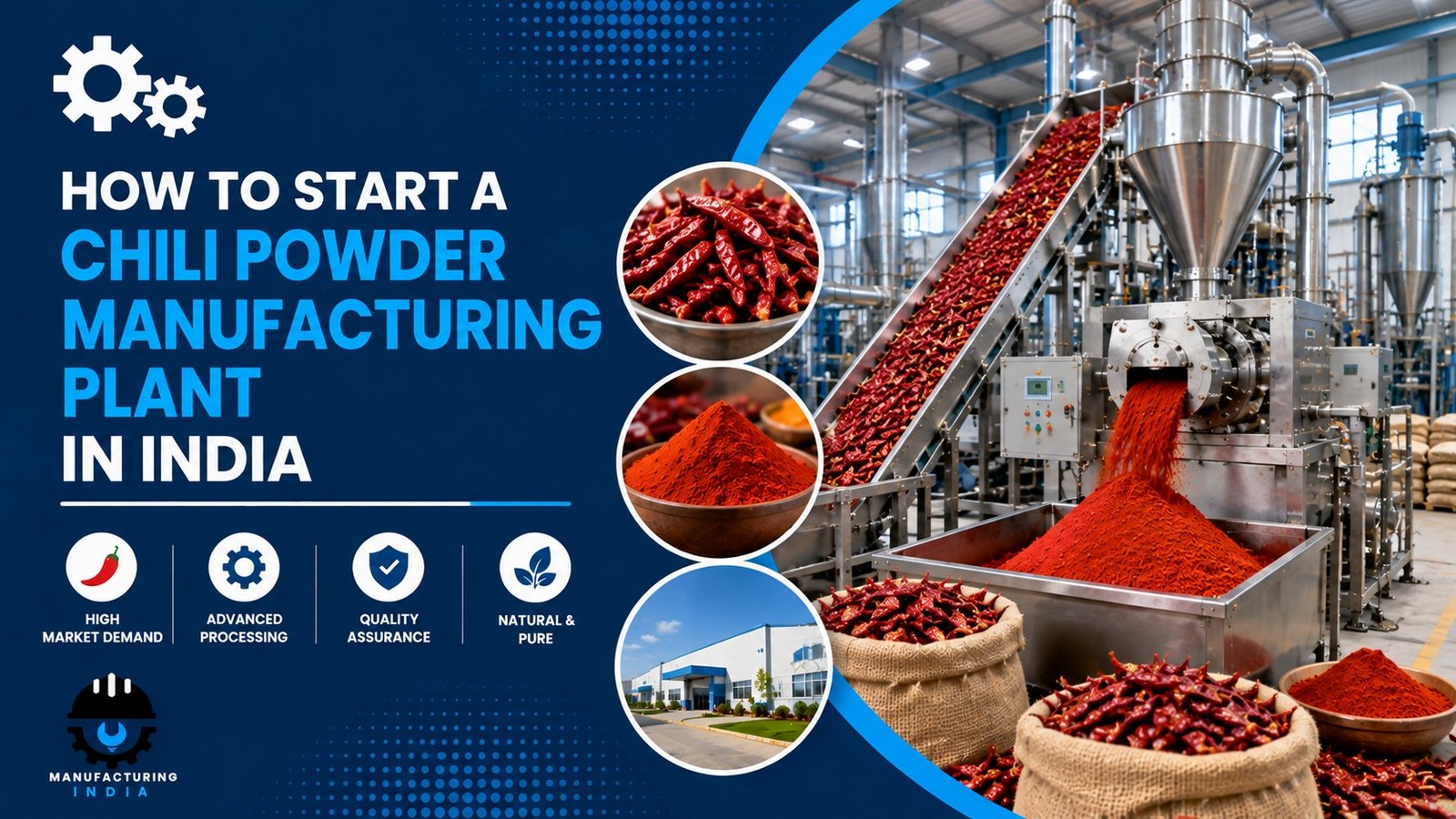
Setting up a chili powder manufacturing plant in India presents a compelling investment case, driven by demand from food processing, restaurants and food service, ready-to-eat foods, snacks, spice blends, sauces and condiments, and household consumption. Chili powder is a rich spice made by grinding dried peppers into a fine powder, valued for its vibrant reddish-brown hue, flavor range from mild to hot, and its role as a coloring and flavoring ingredient across curries, sauces, pickles, snacks, and ready-to-cook foods.
India’s food processing sector gives this investment real scale: the Indian food processing market reached Rs. 30,49,800 crore (USD 354.5 Billion) in 2024 and is expected to grow to Rs. 4,584,415 crore (USD 535 Billion) by the end of FY26, according to IBEF. APAC is already the largest regional market, accounting for 46% of global share, and rising demand for ready-to-eat meals, snacks, and spice blends is creating additional avenues for expansion.
This plant’s investment case is anchored in India’s fast-growing food processing market, gross margins of 20–30%, and a capacity range of 2,000–10,000 MT that lets the facility scale to demand while targeting a break-even window of 3 to 6 years.
What is Chili Powder?
Chili powder is a rich spice made by grinding dried peppers into a fine powder, forming an essential part of various cuisines around the world. Characterized by its vibrant reddish-brown hue, it can range in flavor from mild to hot, and is often blended with other spices like cumin, garlic powder, and oregano. It is integral to the culinary arts, especially in dishes like chili con carne and Tex-Mex sauces, and is known for health benefits linked to its capsaicin content, which may aid metabolism and pain relief.
The chili powder manufacturing process flow involves cleaning and sorting of dried chilies, destemming, grinding/milling, sieving, blending with salt if required, and packaging. Output serves food processing, restaurants and food service, ready-to-eat foods, snacks, spice blends, sauces and condiments, and household consumption.
Cost of Setting Up a Chili Powder Manufacturing Plant in India
Cost depends on capacity, technology, location, automation, and regulatory compliance.
1. Capital Expenditure (CapEx)
CapEx begins with land acquisition and site preparation, including registration, boundary development, and necessary infrastructure. Civil works cover raw material storage, the manufacturing area, quality control, and finished goods storage.
Machinery costs account for the largest portion of total capital expenditure. Key machinery required includes:
- Chili cleaners
- Destemming machines
- Sorting and grading units
- Pulverizers/grinding mills
- Sieving machines
- Blending units
- Dust collection systems
- Weighing machines
- Packaging machines
Other capital costs include equipment installation, pre-operative expenses, and initial working capital.
Request a Sample Report for In-Depth Market Insights: https://www.imarcgroup.com/chili-powder-manufacturing-plant-project-report/requestsample
2. Operational Expenditure (OpEx)
OpEx is driven primarily by raw material consumption. Dried chilies and salt account for approximately 65-75% of operating expenses, making long-term supplier contracts important for stable pricing. Utility cost — electricity, water, and steam – accounts for 8-12% of OpEx. Other costs include transportation, packaging, salaries, depreciation, and taxes, with total operational cost expected to rise from year one to year five due to inflation and market fluctuations.
3. Plant Capacity
The facility is designed for an annual production capacity ranging between 2,000-10,000 MT, enabling economies of scale while maintaining operational flexibility. Capacity can be customised to individual investor requirements, and profit margins usually improve with capacity expansion and increased capacity utilisation.
4. Profit Margins and Financial Projections
Financial projections are developed based on realistic assumptions related to capital investment, operating costs, manufacturing capacity utilisation, pricing trends, and demand outlook, covering ROI, NPV, and long-term sustainability. Gross profit margins typically range between 20-30%, supported by stable demand and value-added applications, while net profit margins range between 7-13%.
Why Set Up a Chili Powder Manufacturing Plant in India?
High Year-Round Demand in Cuisine. Chili powder is a staple in several dishes globally, making it a key ingredient with high demand year-round across household, foodservice, and packaged food applications.
India’s Expanding Food Processing Market. The Indian food processing market reached Rs. 30,49,800 crore (USD 354.5 Billion) in 2024 and is expected to grow to Rs. 4,584,415 crore (USD 535 Billion) by the end of FY26, according to IBEF, giving processed-spice manufacturers a rapidly expanding domestic base.
APAC’s Regional Market Leadership. APAC is already the largest regional chili powder market, accounting for 46% of global share, supported by favourable climatic conditions and expanding export opportunities.
Versatile, Multi-Sector Application. Usage spans food services, retail, and food processing, increasing market scope and profitability across curries, sauces, pickles, snacks, seasoning blends, and ready-to-cook foods.
Ongoing Research and Quality Focus. In September 2025, a study published in European Food Research and Technology investigated how varietal diversity influences the volatile composition, physicochemical attributes, and functional properties of prominent Indian red chilli powder varieties, reflecting active scientific interest in Indian chili quality.
Clean-Label and Sustainability Demand. Consumers are showing greater interest in clean-label, natural, and additive-free spices, prompting manufacturers to invest in premium-quality, organic, and sustainably sourced chili products.
Manufacturing Process – Step by Step
The chili powder manufacturing process uses cleaning, drying, grinding, and sieving as its primary production method.
- Selecting and Sorting: High-quality dried red chili peppers are selected and sorted.
- Cleaning: Chili cleaners remove dust and impurities from the chilies.
- Destemming: Destemming machines remove stems before further processing.
- Drying: Chilies are dried to reduce moisture content using a drying unit.
- Crushing and Grinding: Pulverizers and grinding mills reduce chilies into fine powder.
- Sieving: Sieving machines ensure uniform particle size.
- Blending: Blending units mix in salt or other spices such as cumin, garlic powder, or onion powder if required.
- Dust Collection: Dust collection systems maintain a clean processing environment.
- Weighing and Packaging: Weighing machines and packaging machines prepare the powder in airtight, moisture-proof containers.
- Storage and Distribution: Finished chili powder is stored in cool, dry conditions before distribution to food processing, foodservice, and retail customers.
Key Applications
Chili powder output serves a wide range of downstream industries.
- Food Processing Industry: Chili powder is essential in manufacturing ready-to-eat meals, offering enhanced flavor and vibrant color to various dishes.
- Culinary Arts: In professional kitchens and home cooking, chili powder elevates the taste profile of sauces, stews, and spice blends.
- Retail Spice Blends: Chili powder is a key ingredient in packaged spice mixes, providing essential heat and flavor balance.
- Preservation: It is used in meat curing processes, aiding in flavor enhancement and preservation due to its antimicrobial properties.
Leading Manufacturers
Leading manufacturers in the global chili powder industry include several companies with extensive manufacturing capacities, including:
- New Baba Trading Company
- Everest Spices
- MDH Spices
- Catch Spices
Timeline to Start the Plant
- Feasibility study and project report preparation
- Land acquisition and site development
- Regulatory approvals and environmental clearances
- Factory licence and fire safety compliance
- Machinery procurement and installation
- Raw material supplier agreements and supply chain setup
- Trial production and quality testing
- Commercial production launch
Licences and Regulatory Requirements
Starting a chili powder manufacturing unit in India requires several approvals:
- Business registration (Proprietorship, LLP, or Pvt Ltd)
- Factory Licence under the Factories Act
- Environmental Clearance from State Pollution Control Board
- GST Registration
- Fire Safety NOC
- Industry-specific food safety permits and certifications
- Effluent Treatment Plant (ETP) operational clearance
- Occupational Health and Safety compliance
Key Challenges to Consider
High Capital Requirements. Land acquisition, construction, equipment procurement, installation, pre-operative expenses, and initial working capital all contribute to significant upfront investment.
Raw Material Price Volatility. Dried red chilies and salt account for 65-75% of OpEx, so price swings directly affect profitability and require long-term supplier contracts to manage.
Regulatory Compliance. Securing required licenses, environmental clearances, and factory approvals requires ongoing attention and resourcing.
Skilled Manpower Availability. Recruiting skilled labor across production, maintenance, and quality control is essential for efficient plant operations.
Competition from Established Players. Producers such as Everest Spices, MDH Spices, and Catch Spices operate extensive manufacturing capacities, creating a competitive landscape.
Operational Risk Management. Ensuring raw material supply, managing operational risks, and maintaining consistent product quality are ongoing considerations for new entrants.
Frequently Asked Questions
1. How much does it cost to set up a chili powder manufacturing plant in India?
Capital requirements generally include land acquisition, construction, equipment procurement, installation, pre-operative expenses, and initial working capital, with the total amount varying by capacity, technology, and location.
2. Is chili powder manufacturing profitable in India in 2026?
Gross profit margins of 20-30% and net profit margins of 7-13% are achievable, with profitability improving through capacity expansion and higher capacity utilisation.
3. What machinery is required for a chili powder plant in India?
A chili cleaning machine, drying unit, crushing and grinding mill, pulverizer, sieving machine, conveyors, packaging machines, dust collectors, and weighing scales.
4. What licences and approvals are required to start a chili powder plant in India?
Business registration, environmental clearances, factory licenses, fire safety certifications, and industry-specific permits, which may vary by local, state, or national regulations.
5. What raw materials are needed for chili powder manufacturing?
Dried red chili peppers, the ground pods of the Capsicum genus, along with salt and, for some blends, spices like cumin, garlic powder, and onion powder.
6. What are the environmental compliance requirements for a chili powder plant in India?
Environmental clearances, effluent treatment systems, and monitoring systems to detect leaks or deviations in the manufacturing process.
7. What is the best location to set up a chili powder plant in India?
Sites offering easy access to dried red chilies and salt, proximity to target markets, and robust transportation, utility, and waste management infrastructure.
8. What is the break-even period for this type of plant in India?
Break-even typically ranges from 3 to 6 years, depending on scale, regulatory compliance costs, raw material pricing, and market demand.
9. What government incentives are available for manufacturers in India?
Governments may offer capital subsidies, tax exemptions, reduced utility tariffs, export benefits, or interest subsidies to promote manufacturing under national or regional industrial policies.
Key Takeaways for Investors
This plant taps into consistent demand from food processing, restaurants and food service, ready-to-eat foods, snacks, spice blends, sauces and condiments, and household consumption. Financial viability holds across the 2,000-10,000 MT capacity range, with gross margins of 20-30% and net margins of 7-13% supporting a scalable investment. India’s food processing market, valued at USD 354.5 Billion in 2024 and projected to reach USD 535 Billion by the end of FY26, underscores sustained demand that should remain durable well beyond the current investment cycle.
About the Author