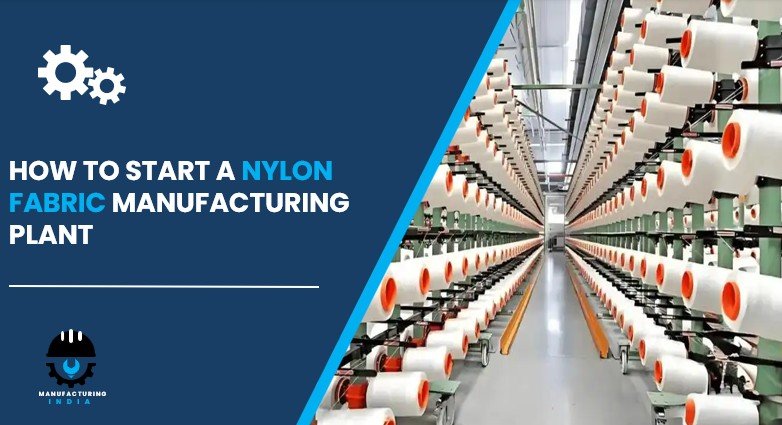
Setting up a nylon fabric manufacturing plant in India represents a highly attractive investment proposition underpinned by robust and structurally growing demand for durable, versatile, and high-performance textiles from the apparel, automotive, and industrial sectors. As demand for activewear and performance clothing rises, automotive manufacturers seek robust upholstery and safety fabrics, and industrial users seek high-tensile-strength materials for geotextiles, ropes, and filtration applications, nylon fabric available in plain weave, satin, and velvet forms occupies an increasingly important position across apparel, automotive, industrial, medical, home furnishing, and sports end-use segments. This growth trajectory, combined with continuous technological advancements in polymerization and finishing processes and strong regional demand concentration in Asia Pacific, creates a highly favourable manufacturing environment for new entrants with efficient extrusion, spinning, and fabric formation systems.
What is Nylon Fabric?
Nylon fabric is a synthetic textile made from polymerised nylon fibres derived from petroleum-based feedstocks. It is recognised for its exceptional durability, strength, elasticity, and resistance to abrasion, making it well suited to applications spanning clothing, industrial use, and automotive fabrics. The fabric is lightweight, moisture-wicking, and has a smooth texture that enhances comfort and performance, while its resistance to mildew, mould, and UV light makes it suitable for outdoor applications.
Nylon fabric is manufactured and sold in several principal forms plain weave, satin, and velvet depending on the target application and finishing route adopted. Beyond apparel, the fabric is used extensively in automotive interiors, industrial geotextiles and filtration media, medical textiles, home furnishings, and sportswear, with its adaptability supporting a wide range of specialised end-use requirements.
Asia Pacific holds the largest share of the global nylon fabric market, accounting for approximately 45.8% of total market share, reflecting the region’s concentrated textile manufacturing base, growing apparel and automotive production, and expanding industrial application demand.
Cost of Setting Up a Nylon Fabric Manufacturing Plant
The total capital investment required to establish a nylon fabric manufacturing plant is shaped by several key parameters: annual production capacity (typically ranging from 10 to 30 million meters per annum), the level of automation across polymerisation, spinning, weaving, and finishing sections, facility specification, raw material sourcing strategy, and applicable regulatory and environmental compliance requirements. Below is a structured breakdown of the major cost components.
1. Capital Expenditure (CapEx)
Total capital investment in a nylon fabric manufacturing plant covers the following major heads:
Land and Site Development
This encompasses land acquisition or lease, site preparation, boundary development, and utilities connectivity. Site selection should prioritise proximity to nylon chip/polymer suppliers and target apparel, automotive, and industrial markets to minimise inbound raw material and outbound distribution costs. Access to reliable power and steam generation infrastructure for polymerisation, extrusion, and finishing operations, strong road and rail logistics, availability of process water of suitable quality, and a trained workforce for plant operations and quality control are critical site selection criteria. Compliance with industrial zoning regulations, textile manufacturing standards, and effluent and emission compliance frameworks must be assessed from project initiation.
Civil Works and Construction
Building costs cover the main processing facility including the polymer reception and storage section, extrusion and spinning house, drawing and texturising area, weaving/knitting floor, dyeing and finishing section, quality control laboratory, administrative block, and utility infrastructure including boiler house, power backup, cooling water systems, and effluent treatment plant. Construction must comply with applicable factory act requirements, textile manufacturing standards, and environmental infrastructure guidelines.
Machinery and Equipment
Machinery represents the single largest CapEx component. Key equipment required for a nylon fabric manufacturing plant includes:
- Polymer Reception and Handling Systems: Storage silos, conveying systems, and drying equipment for incoming nylon chips/polymer prior to processing
- Polymerisation Units: Reactors and associated equipment for polymerising nylon precursors into nylon chips or polymer melt where backward-integrated production is undertaken
- Extrusion and Melt Spinning Machines: Extruders and spinnerets that melt and extrude nylon polymer into continuous filament yarn through precision spinneret assemblies
- Drawing and Texturising Units: Equipment that stretches spun filaments to align polymer chains and increase tensile strength, and texturising machines that impart bulk, stretch, and softness to filament yarn
- Weaving and Knitting Machines: High-speed weaving looms and circular or warp knitting machines that convert nylon yarn into fabric of the required weave or knit construction
- Dyeing and Finishing Equipment: Continuous or batch dyeing systems, heat-setting stenters, and coating and lamination equipment for colour application, dimensional stability, and functional finishing
- Quality Control Laboratory Equipment: Equipment for tensile strength, abrasion resistance, colourfastness, moisture-wicking, and other analytical tests to verify compliance with textile quality standards
- Boiler and Utility Systems: Steam boilers, cooling towers, and compressed air systems to support polymerisation, extrusion, dyeing, and finishing operations
- Automated Packaging Lines: Fabric inspection, rolling, and packaging lines for retail rolls, bulk bales, and export-ready consignments
- Material Handling and Warehousing: Conveyors, yarn and fabric storage racking, and finished goods warehousing with FIFO stock management
Other Capital Costs
These include pre-operative expenses, commissioning charges, import duties on specialised extrusion, weaving, and finishing equipment, staff training and competency development, initial raw material and consumable inventory for production commissioning, regulatory compliance setup, and environmental management system establishment costs.
Request a Sample Report for In-Depth Market Insights: https://www.imarcgroup.com/nylon-fabric-manufacturing-plant-project-report/requestsample
2. Operational Expenditure (OpEx)
Raw materials principally nylon chips/polymer, along with dyes and finishing chemicals constitute the dominant operating cost, typically representing 70–80% of total OpEx. Utility costs, driven primarily by electricity consumption of extrusion, spinning, and finishing equipment and steam generation for dyeing and heat-setting operations, account for 10–15% of OpEx. Labour, maintenance, quality control, packaging, transportation, depreciation, taxes, and overhead costs constitute the remainder of the operating cost base.
3. Plant Capacity
The proposed nylon fabric manufacturing facility is designed with an annual production capacity ranging between 10–30 million meters, enabling economies of scale while maintaining operational flexibility. This capacity range supports a diversified product portfolio spanning plain weave, satin, and velvet nylon fabrics, serving apparel, automotive, industrial, medical, home furnishing, and sports end-use markets, as well as export channels.
4. Profit Margins and Financial Projections
The project demonstrates healthy profitability potential under normal operating conditions. Financial projections encompass capital investment, operating costs, capacity utilisation ramp-up schedule, product mix across weave types and end-use segments, and forward demand outlook underpinned by rising activewear demand and industrial sector expansion. A comprehensive feasibility analysis includes sensitivity analysis, Net Present Value (NPV), Internal Rate of Return (IRR), and Payback Period calculations. Gross profit margins for nylon fabric manufacturing typically range from 30–40%, supported by stable demand and value-added applications. Net profit margins of 15–22% are achievable with disciplined cost management, optimal capacity utilisation, and effective product mix management.
Why Set Up a Nylon Fabric Manufacturing Plant?
Durability and Versatility Across End-Use Segments
Nylon fabric is highly valued for its strength, durability, and resistance to wear, making it suitable for applications ranging from clothing to industrial use. This broad versatility across apparel, automotive, industrial, medical, home furnishing, and sports segments provides resilience against single-segment demand volatility and supports diversified revenue streams for processors.
Cost-Effective and Efficient Production
The production of nylon fabric has become increasingly efficient with improvements in polymerisation and extrusion technology, lowering the effective cost of production. This improved process efficiency allows manufacturers to maintain competitive pricing while preserving healthy margins across product categories.
Growing Demand for Activewear and Performance Fabrics
The growing trend toward fitness and outdoor activities has fuelled sustained demand for high-performance fabrics such as nylon, valued for its strength, flexibility, and moisture-wicking properties. This structural shift toward performance apparel supports steady volume growth across retail and sportswear distribution channels.
Sustainability and Recyclability
Although nylon fabric is a man-made material, growing recyclability initiatives and demand for sustainable production methods are making it increasingly environmentally attractive. Innovations such as marine-recycled nylon fabrics demonstrate the category’s evolving sustainability credentials, supporting demand from environmentally conscious apparel and industrial buyers.
Technological Advancements in Finishing and Treatment
Improvements in fabric treatment, finishes, and coatings have made it possible to customise nylon fabric for specialised uses, expanding its suitability for medical, automotive, and sports applications. This continuous innovation pipeline supports premiumisation and margin enhancement beyond commodity-grade fabric sales.
Concentrated Regional Demand and Manufacturing Base
Asia Pacific’s position as the largest regional market, accounting for approximately 45.8% of global share, reflects a concentrated textile manufacturing base, growing apparel and automotive production, and expanding industrial application demand. This geographic concentration supports processors seeking proximity to established supply chains, skilled labour, and end-use markets.
Manufacturing Process Overview
The nylon fabric manufacturing operation transforms nylon chips or polymer into finished fabric through a sequence of polymerisation, spinning, drawing, weaving or knitting, and finishing operations. The key process stages are:
- Raw Material Reception and Handling: Incoming nylon chips or polymer is received, screened, and dried to the target moisture level prior to processing, as residual moisture can adversely affect melt spinning quality.
- Polymerisation: Where backward-integrated production is undertaken, nylon precursors are polymerised under controlled temperature and pressure conditions to form nylon chips or polymer melt of the target molecular weight.
- Extrusion and Melt Spinning: Nylon polymer is melted and extruded through precision spinneret assemblies to form continuous filament yarn, with filament diameter and cross-section controlled to achieve target yarn characteristics.
- Drawing: Spun filaments are stretched under controlled tension and temperature to align polymer chains, increasing tensile strength and imparting the mechanical properties required for downstream fabric formation.
- Texturising: Drawn filament yarn may undergo texturising to impart bulk, stretch, and softness, tailoring yarn characteristics to specific apparel, automotive, or industrial end-use requirements.
- Weaving or Knitting: Textured or flat yarn is fed into high-speed weaving looms or knitting machines to form fabric of the required weave or knit construction, including plain weave, satin, and velvet variants.
- Dyeing and Finishing: Woven or knitted fabric undergoes dyeing, heat-setting, and functional finishing treatments including water repellent, UV-resistant, or antimicrobial coatings depending on target application.
- Quality Control: Finished fabric is tested for tensile strength, abrasion resistance, colourfastness, and moisture-wicking performance to verify compliance with applicable textile quality standards before release for packaging.
- Packaging and Dispatch: Finished nylon fabric is inspected, rolled, and packed for retail and industrial distribution, or dispatched in bulk to apparel, automotive, and industrial converters and bulk buyers.
Key Applications of Nylon Fabric
The nylon fabric market serves several major end-use segments across apparel, automotive, industrial, medical, home furnishing, and sports sectors:
- Apparel: Nylon fabric is used for activewear, outerwear, and performance clothing including jackets and stockings, offering durability, flexibility, and moisture-wicking properties valued by consumers.
- Automotive: Nylon fabric is employed for seat covers, airbags, and interior upholstery, providing strength, heat resistance, and durability suited to demanding automotive interior applications.
- Industrial: Nylon fabric is utilised in geotextiles, ropes, belts, and filters, offering high tensile strength and resistance to abrasion for demanding industrial and infrastructure applications.
- Medical: Nylon fabric is used in surgical gowns, bandages, and compression garments, valued for its lightweight, durable, and hygienic properties in clinical and healthcare settings.
- Home Furnishing: Nylon fabric is applied in upholstery, curtains, and carpets, valued for its durability, ease of maintenance, and resistance to stains and fading in household applications.
- Sports: Nylon fabric is used for uniforms, athletic gear, and outdoor equipment, providing strength, flexibility, and weather resistance for various physical activities.
Global Nylon Fabric Market Outlook
The key driver for the global nylon fabric market is growing demand for high-performance fabrics across the clothing, automotive, and industrial segments. Asia Pacific holds the largest share of the global market, accounting for approximately 45.8% of total share, reflecting the region’s concentrated textile manufacturing base and expanding end-use demand. The nylon fabric market benefits from multiple structural demand drivers:
- Rising demand for activewear and performance wear in the clothing industry, fuelling demand for robust and lightweight fabrics like nylon
- Growing automotive segment need for robust fabrics used in seat covers, airbags, and upholstery, boosting industrial nylon fabric demand
- Expanding industrial applications including geotextiles, ropes, and filtration fabrics, leveraging nylon’s strength, flexibility, and resistance to wear and tear
- Continued growth in India’s manufacturing sector, with the Index of Industrial Production growing 4.0% year-over-year in September 2025 on 4.8% manufacturing sector growth, according to the Indian Ministry of Statistics & Programme Implementation
- Rising consumer demand for long-lasting and functional materials across apparel and home furnishing applications
- Growing recyclability initiatives and sustainable production methods enhancing the environmental profile of nylon fabric
- Continued investment by established fibre and fabric manufacturers in expanding nylon 6 and nylon 6,6 production capacity, reflecting confidence in long-term category growth
Leading manufacturers in the global nylon fabric industry include Toray Industries, Inc., DuPont de Nemours, Inc., Kolon Industries, Inc., Hyosung Corporation, BASF SE, and Lanxess AG, serving end-use sectors including apparel, automotive, industrial, medical, home furnishing, and sports.
Latest Industry Developments
- August 2025: Invista announced major investments in its nylon textile range, primarily for fibres and fabrics under its Cordura brand, committing over USD 500 million over five years to expand nylon 6,6 and nylon 6 production capacity and strengthen its position across the automotive, clothing, and industrial sectors.
- March 2025: DeepBlu Textiles received a Global Sustainability Award for its Ocean Recycled Nylon Fabric, a fabric incorporating marine-recycled nylon sourced from discarded fishing nets, aiming to reduce environmental impact while supplying high-quality fabric to the fashion and textile industries.
Licenses and Regulatory Requirements
Establishing a nylon fabric manufacturing unit requires a range of approvals and certifications, which may vary by country and jurisdiction, including:
- Business registration and company incorporation under applicable company law
- Factory License under applicable state Factories Act provisions for manufacturing operations
- Pollution Control Board Clearances Consent to Establish (CTE) and Consent to Operate (CTO) for manufacturing operations involving dyeing, finishing, and effluent generation
- Hazardous chemical handling and storage compliance for dyes, finishing chemicals, and process solvents
- ISO 9001:2015 Quality Management System Certification for quality management infrastructure compliance
- ISO 14001 Environmental Management System Certification for environmental compliance
- OEKO-TEX or equivalent textile safety certification for chemical safety and product stewardship, where targeting export or premium apparel markets
- Weights and Measures (Legal Metrology) registration for packaged goods labelling where applicable
- Export-Import Code (IEC) for international market access
- Trademark and Brand Registration for proprietary branded product launch
- Occupational Health and Safety management compliance (ISO 45001 / Factories Act provisions) for manufacturing worker safety
Key Challenges to Consider
Raw Material Price Volatility
Nylon chips and polymer, which account for 70–80% of total operating costs, are petroleum-derived and therefore subject to crude oil price cycles and global petrochemical supply-demand dynamics. Fluctuations in raw material pricing can materially affect margins, requiring processors to secure long-term supply arrangements and consider price-hedging strategies to stabilise input costs.
Intense Competitive Landscape
The nylon fabric market features established multinational players with strong brand equity, extensive production capacities, and diverse application portfolios. New entrants must differentiate through product innovation, competitive pricing, specialised finishing capabilities, or targeted positioning in high-value automotive, medical, or performance apparel segments to build sustainable market share.
Quality Certification and Environmental Compliance
Maintaining quality management, environmental management, and textile safety certifications requires ongoing investment in quality laboratory infrastructure, effluent treatment systems, and process monitoring. Producing fabric that consistently meets tensile strength, colourfastness, and finishing specifications across all production batches requires disciplined process control, as any compliance lapse can disrupt market access and damage brand reputation, particularly in export and premium apparel markets.
Sustainability and Recyclability Pressures
Growing consumer and regulatory pressure for sustainable, recyclable textile materials requires manufacturers to invest in recycled feedstock sourcing, closed-loop recycling capabilities, and sustainability certifications. Manufacturers that fail to adapt to evolving sustainability expectations risk losing market share to competitors offering recycled or bio-based alternatives, particularly in environmentally conscious apparel and home furnishing segments.
Capital Intensity of Integrated Production
While fabric weaving and finishing operations can be established at relatively moderate capital investment, backward integration into polymerisation and filament spinning represents a substantial incremental capital commitment. New entrants must carefully evaluate the phasing of investment between yarn-purchasing weaving operations and fully integrated polymer-to-fabric operations, based on available capital, target markets, and long-term strategic positioning.
Frequently Asked Questions (FAQs)
1. How much does it cost to set up a nylon fabric manufacturing plant?
The total investment depends on plant capacity (10–30 million meters per annum), the level of automation across polymerisation, spinning, weaving, and finishing sections, facility specification, location, and target market certifications. Costs cover land, civil construction (extrusion, weaving, dyeing and finishing sections, storage, quality laboratory, utilities), machinery (extruders, spinning and drawing units, weaving/knitting machines, finishing equipment, packaging lines), quality certifications, working capital, and regulatory compliance. A comprehensive feasibility study from IMARC Group provides detailed, capacity-specific cost estimates covering all CapEx and OpEx components.
2. Is nylon fabric manufacturing a profitable business in 2026?
Yes. Sustained demand from the apparel, automotive, and industrial sectors, combined with gross margins of 30–40% and net profit margins of 15–22%, make nylon fabric manufacturing financially attractive. Effective product mix management across weave types and specialised finishing applications offers meaningful margin enhancement opportunities.
3. What machinery and equipment are required for a nylon fabric manufacturing plant?
Key equipment includes polymer reception and handling systems, extrusion and melt spinning machines, drawing and texturising units, weaving or knitting machines, dyeing and finishing equipment, quality control laboratory equipment, boiler and utility systems, and automated packaging lines for retail and bulk dispatch.
4. What licenses and approvals are required?
Required approvals include company registration, Factory License, Pollution Control Board clearances, hazardous chemical handling compliance for dyes and finishing chemicals, ISO 9001 and ISO 14001 certification, and OEKO-TEX or equivalent textile safety certification for export and premium apparel markets. Regulatory requirements vary by jurisdiction and target export market.
5. How long does it take to commission a nylon fabric manufacturing plant?
Typically, 12–24 months from project initiation to commercial production launch, depending on project scale, facility construction timeline, equipment procurement lead times for extrusion, weaving, and finishing systems, and regulatory approval timelines, which should be initiated early in the project to avoid delays to commercial launch.
6. What are the key raw materials for nylon fabric manufacturing?
The primary raw material is nylon chips or polymer, typically nylon 6 or nylon 6,6, derived from petroleum-based feedstocks. Other key inputs include dyes and finishing chemicals for colour application and functional treatments, along with packaging materials for finished fabric rolls and bulk consignments.
7. What is the break-even period for a nylon fabric manufacturing plant?
The break-even period generally depends on capacity utilisation ramp-up trajectory, the product mix across apparel, automotive, industrial, and other end-use segments, raw material supply consistency, and distribution reach. Securing long-term polymer supply agreements and stable offtake arrangements with apparel, automotive, and industrial converters significantly improves revenue predictability and supports faster break-even achievement.
8. What are the main forms of nylon fabric and their applications?
The principal forms are plain weave, satin, and velvet nylon fabric. These serve applications spanning jackets and stockings, automotive seating and airbags, ropes and belts, surgical gowns and compression garments, upholstery and carpets, and sportswear and uniforms, reflecting the fabric’s adaptability across apparel, automotive, industrial, medical, home furnishing, and sports segments.
9. What government incentives are available for nylon fabric manufacturers?
Processors may benefit from textile sector incentive schemes, state-level industrial investment incentives and capital subsidies for manufacturing units, infrastructure support under textile park schemes, and export promotion benefits for textile and apparel exports. Manufacturing sector growth initiatives in major producing countries also support favourable conditions for capacity expansion.
10. How does nylon fabric manufacturing compare to other synthetic fabric processing in terms of setup?
Compared to other synthetic fibre-based fabric processing such as polyester, nylon fabric manufacturing follows a broadly similar process flow of polymerisation, spinning, drawing, weaving or knitting, and finishing, but requires precision-engineered spinneret and drawing systems to achieve nylon’s characteristic strength and elasticity properties. The core processing technology is transferable across synthetic fabric categories, allowing processors with experience in synthetic textile manufacturing to adapt existing technical capabilities to nylon fabric with targeted investment in polymerisation and finishing infrastructure.
Key Takeaways for Investors
The nylon fabric manufacturing industry represents a structurally resilient and financially attractive investment opportunity positioned at the intersection of rising global demand for high-performance apparel, expanding automotive and industrial textile applications, and continuous technological advancement in fibre and fabric processing. Stable demand from apparel, automotive, industrial, medical, home furnishing, and sports channels provides resilience against single-segment demand volatility, while ongoing innovation in finishes, coatings, and recycled feedstocks offers meaningful margin enhancement beyond commodity-grade fabric sales alone. Asia Pacific’s position as the largest regional market, combined with continued large-scale investment by established fibre manufacturers in expanding nylon 6 and nylon 6,6 capacity, reflects strong confidence in the long-term growth and profitability of the category. The scalable nature of the value chain from weaving-only operations to fully integrated polymer-to-fabric production allows investors to phase capital deployment according to risk appetite and target market positioning, while growing sustainability and recyclability initiatives position well-prepared processors to capture demand from environmentally conscious apparel and industrial buyers.
About the Author