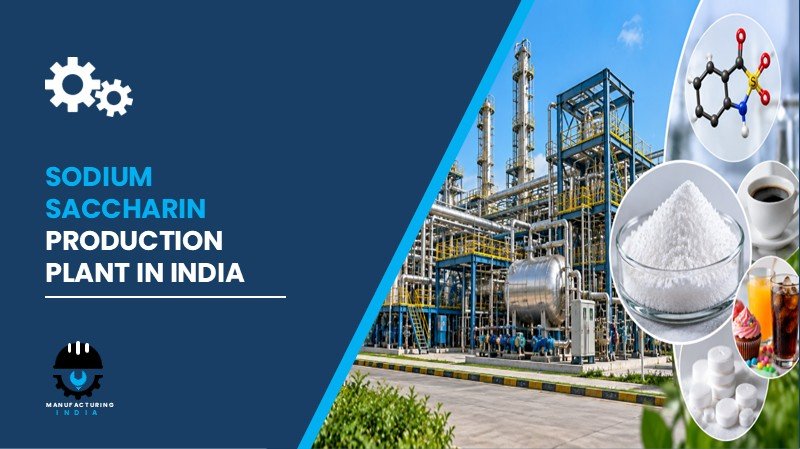
Setting up a sodium saccharin production plant in India presents a compelling investment case at a time when the country’s food and beverage industry is scaling rapidly toward USD 700 Billion by 2030, its pharmaceutical sector is growing 7–9% in FY26, its oral care and personal care markets are expanding with rising disposable incomes, and the global megatrend toward sugar reduction, low-calorie diets, and diabetes management is driving sustained institutional and consumer demand for the world’s most cost-effective artificial sweetener. Sodium saccharin — the highly potent, calorie-free synthetic sweetener that is approximately 300 to 500 times sweeter than table sugar and passes through the human digestive system without metabolic conversion — is simultaneously a food additive, pharmaceutical excipient, oral care ingredient, and electroplating chemical whose value is directly tied to the health-consciousness megatrend that is reshaping consumer product formulations across every category. As India’s urban middle class deepens its engagement with sugar-free and reduced-calorie products, its pharmaceutical formulation industry expands, and its personal care sector modernises, the domestic case for sodium saccharin production capacity is commercially sound and policy-supported across multiple institutional customer segments.
India’s food processing and pharmaceutical sectors directly validate the commercial environment for sodium saccharin producers. India’s food processing sector is set to more than double from USD 307 Billion in 2023 to USD 700 Billion by 2030, creating enormous institutional demand growth for food additives and sweeteners as organised food manufacturing deepens. India’s pharmaceutical market is slated to grow 7–9% in FY26 fuelled by robust domestic demand, new product innovation and expansion into Europe, as IBEF confirms — creating a parallel institutional pharmaceutical-grade sodium saccharin demand stream for syrups, chewable tablets, and medicinal formulations. APAC holds the largest share, accounting for about 46.4% of the global sodium saccharin market — a regional dominance reflecting the concentration of food manufacturing, pharmaceutical production, and personal care industries across the region that India is an increasingly significant participant in. India’s specialty chemical manufacturing estates in Gujarat, Andhra Pradesh, and Maharashtra offer the toluene supply chain access, corrosion-resistant reactor infrastructure, chemical synthesis expertise, and FSSAI regulatory compliance ecosystems that a sodium saccharin production facility requires.
Investing in a sodium saccharin production plant in India today aligns India’s food processing sector doubling to USD 700 Billion by 2030, pharmaceutical market growing 7–9% in FY26, oral care expansion, and APAC’s dominant 46.4% global market share with a rising health-consciousness megatrend driving consistent demand for low-calorie sweeteners. With gross profit margins of 26–34% and net profit margins of 15–21% at an annual production capacity of 5,000 MT, the unit economics are highly attractive, and the investment’s positioning across food, pharmaceutical, and personal care supply chains creates multi-sector revenue resilience.
What is Sodium Saccharin?
Sodium saccharin is a highly potent, artificially synthesised sugar substitute that is roughly 300 to 500 times sweeter than regular table sugar. Because it passes through the human digestive system without being broken down, it provides intense sweetness without adding any calories or carbohydrates. This makes it a popular ingredient in diet beverages, baked goods, medications, and dental products like toothpaste.
Sodium saccharin is produced through a multi-step chemical synthesis involving esterification, amidation, and crystallisation. The primary synthesis routes — the Remsen-Fahlberg process from toluene, or the Maumee process from anthranilic acid — convert petrochemical starting materials through sulfonation, cyclisation, oxidation, and neutralisation stages to produce saccharin, which is then reacted with sodium hydroxide to yield the sodium salt form preferred for most food, pharmaceutical, and personal care applications. Its high sweetness intensity, cost-effectiveness, excellent stability under heat and acidic conditions, and long shelf life make sodium saccharin uniquely suited for processed food manufacturing, pharmaceutical syrup and tablet formulation, and oral care product development — a combination of functional properties that maintains its commercial relevance even as newer sweeteners have entered the market.
The primary production process covers esterification, amidation, and crystallisation. End-use industries served include food and beverage, pharmaceuticals, personal care, animal feed, tabletop sweeteners, and dietary supplements. Applications span low-calorie sweeteners, sugar-free formulations, pharmaceutical excipients, toothpaste and mouthwash, nutritional products, and beverage blends.
Cost of Setting Up a Sodium Saccharin Production Plant in India
The cost of establishing a sodium saccharin production plant in India depends on production capacity, process route selection between the toluene-based Remsen-Fahlberg process and the anthranilic acid-based Maumee process, product grade mix across food-grade and pharmaceutical-grade sodium saccharin, geographic location — particularly proximity to toluene or anthranilic acid supply and pharmaceutical customer clusters — degree of automation, and the FSSAI food safety and pharmaceutical GMP compliance requirements applicable to sodium saccharin supplied across regulated food, pharmaceutical, and personal care market segments.
1. Capital Expenditure (CapEx)
Land and Site Development forms a foundational component of total capital investment, covering land acquisition charges, site registration, boundary development, acid-resistant drainage and chemical containment infrastructure, and site utilities. The location must offer easy access to key raw materials such as saccharin, sodium hydroxide, and water. Proximity to target markets will help minimise distribution costs. The site must have robust infrastructure, including reliable transportation, utilities, and waste management systems. Compliance with local zoning laws and environmental regulations must also be ensured. Specialty chemical industrial estates in Gujarat — particularly Ankleshwar and Dahej — and Andhra Pradesh’s Hyderabad Pharma City offer the established petrochemical supply chain access, pharmaceutical regulatory expertise, and food additive customer proximity that a sodium saccharin producer requires for commercially advantaged operations.
Plant Layout Optimisation is critical for a sodium saccharin production facility integrating multi-stage chemical synthesis, purification, neutralisation, and pharmaceutical-grade or food-grade crystallisation in a safely managed and hygienically compliant workflow. The layout should be optimised to enhance workflow efficiency, safety, and minimise material handling. Separate areas for raw material storage for toluene or anthranilic acid, sulfuric acid and chlorine, ammonia, and sodium hydroxide, the synthesis reaction zones, neutralisation and pH adjustment operations, crystallisation vessels, filtration areas, vacuum drying, milling, quality control laboratory, and segregated pharmaceutical-grade and food-grade finished goods storage must be designated. Space for future expansion should be incorporated to accommodate business growth.
Machinery and Equipment represent the largest single component of total CapEx for a sodium saccharin production plant. Essential equipment includes:
- Reactors (glass-lined or stainless steel)
- Chlorosulfonators
- Neutralisers
- Crystallisers
- Filtration units
- Vacuum dryers
- Milling machines
- Packaging systems
Other Capital Costs include effluent treatment systems to minimise environmental impact and ensure compliance with emission standards for acid-containing and chlorine-compound process effluents, fume scrubbing systems for sulfonation and chlorination reaction off-gases, advanced monitoring systems to detect leaks or deviations in the process, pre-operative expenses, FSSAI and drug licence application costs, GMP certification infrastructure, commissioning charges, and import duties on specialised glass-lined reactor systems or pharmaceutical-grade vacuum dryers not available domestically.
Request a Sample Report for In-Depth Market Insights: https://www.imarcgroup.com/sodium-saccharin-manufacturing-plant-project-report/requestsample
2. Operational Expenditure (OpEx)
Raw Material Cost is the dominant operational expense, accounting for approximately 58–68% of total OpEx. The primary raw materials are saccharin (or the starting materials toluene or anthranilic acid for integrated synthesis), sodium hydroxide, and water. Where the plant is configured as a salt conversion facility — converting purchased saccharin intermediate to sodium saccharin through neutralisation and crystallisation — saccharin intermediate accounts for the dominant share of raw material cost. Where the plant integrates the full synthesis from toluene, the starting material and sulfonation/chlorination reagents jointly determine raw material cost. Long-term contracts with reliable suppliers will help mitigate price volatility and ensure a consistent supply of materials, with nearby suppliers selected wherever possible to minimise transportation costs.
Utility Cost is the second-largest OpEx component, representing approximately 6–10% of total operating expenses — a notably low utility proportion reflecting the moderate energy requirements of the chemical synthesis, neutralisation, crystallisation, and vacuum drying operations at the 5,000 MT annual capacity scale. This low utility cost is a favourable financial characteristic that distinguishes sodium saccharin production from energy-intensive chemical manufacturing categories. Electricity for reactors, vacuum dryers, milling machines, and packaging systems constitutes the primary utility input.
Other Operating Costs include transportation and distribution to food and beverage manufacturers, pharmaceutical API producers, personal care ingredient formulators, animal feed companies, tabletop sweetener producers, and export buyers, specialised food-grade and pharmaceutical-grade packaging materials, salaries and wages for chemical process engineers and quality control analysts, routine machinery maintenance including reactor lining inspection and crystalliser cleaning, FSSAI and GMP audit costs, depreciation on production equipment, and applicable taxes. By the fifth year, the total operational cost is expected to increase substantially due to factors such as inflation, market fluctuations, and potential rises in the cost of key materials. Additional factors, including supply chain disruptions, rising consumer demand, and shifts in the global economy, are expected to contribute to this increase.
3. Plant Capacity
The proposed production facility for sodium saccharin is designed with an annual production capacity of 5,000 MT, enabling economies of scale while maintaining operational flexibility across pharmaceutical-grade sodium saccharin for medicinal syrups, chewable tablets, and pharmaceutical formulations, food-grade sodium saccharin for beverage, confectionery, and processed food applications, personal care grade for toothpaste and mouthwash, and technical grade for electroplating and chemical industry applications. Plant capacity can be customised per investor requirements and phased in line with secured customer qualification approvals across the food, pharmaceutical, and personal care market segments.
4. Profit Margins and Financial Projections
The financial projections for a sodium saccharin production plant demonstrate healthy profitability potential under normal operating conditions. Gross profit margins typically range between 26–34%, supported by stable demand and value-added applications across food and beverage, pharmaceuticals, personal care, and chemical industry customer segments. Net profit margins are projected at 15–21% — among the strongest net margin profiles in the food additive and specialty chemical manufacturing segment — reflecting the meaningful value-added chemical synthesis conversion of petrochemical or purchased saccharin feedstock into a precisely specified, multi-grade specialty sweetener that commands significant pricing premiums. A comprehensive financial analysis covering NPV, IRR, payback period, and five-year projections is essential before committing capital, with break-even typically ranging from 3 to 6 years depending on production scale, raw material costs, plant efficiency, and compliance costs.
Why Set Up a Sodium Saccharin Production Plant in India?
Crucial Food and Pharmaceutical Additive with Multi-Sector Demand. Sodium saccharin serves as a widely used non-nutritive sweetener in food and beverages, pharmaceuticals, personal care products, tabletop sweeteners, and oral care formulations — positioning it as an essential ingredient for sugar reduction and low-calorie product manufacturing across India’s most rapidly growing consumer and institutional market segments. This multi-sector demand profile provides commercial resilience and revenue diversification that single-application specialty chemical investments cannot match.
Megatrend Alignment with Health Consciousness, Diabetes Management, and Sugar Reduction. Rising health awareness, increasing diabetes and obesity concerns, expanding demand for low-calorie and sugar-free products, and growth in processed foods, nutraceuticals, and pharmaceutical formulations are driving steady global demand for artificial sweeteners — with emerging markets including India witnessing strong consumption growth. India’s growing diabetes patient population — estimated at over 100 million — creates direct, recurring demand for sugar-free food and beverage formulations that use sodium saccharin as a calorie-free sucrose substitute, making diabetic nutrition one of the fastest-growing domestic application segments.
India’s Food Processing and Pharmaceutical Growth Driving Institutional Demand. India’s food processing sector’s trajectory to USD 700 Billion by 2030 creates enormous institutional demand for food additives including sodium saccharin as an acidulant, preservative, and flavour enhancer in processed foods. India’s pharmaceutical market growing 7–9% in FY26 fuelled by robust domestic demand, new product innovation and expansion into Europe directly expands the institutional demand for pharmaceutical-grade sodium saccharin as an excipient in syrups, chewable tablets, and medicinal formulations. These twin demand drivers — food processing doubling and pharmaceuticals growing 7–9% — together create a structurally growing multi-sector domestic customer base.
Scientific Research Confirming Safety Profile Under Normal Exposure Conditions. In May 2026, a study published in Sage Journals integrated computational toxicology and Mendelian randomization to explore potential biological responses associated with sodium saccharin across multiple cancer outcomes. The study found that sodium saccharin may interact with cancer-related molecular networks; however, population-level evidence indicated heterogeneous and context-dependent associations rather than a generalised carcinogenic effect under low-level exposure conditions — confirming sodium saccharin’s established regulatory safety profile under normal food and pharmaceutical use conditions, and supporting its continued approved status as a food additive and pharmaceutical excipient.
Policy and Healthcare Push Supporting Sugar Reduction Demand. Government initiatives promoting reduced sugar consumption, growing healthcare spending on diabetes management, food safety regulations mandating ingredient transparency, and the expansion of the pharmaceutical and FMCG sectors are indirectly supporting demand for sodium saccharin across domestic and export markets. India’s national health mission focus on non-communicable disease prevention — particularly diabetes and obesity — aligns with consumer and institutional preference for reduced-sugar product formulations that sodium saccharin enables at the most cost-effective sweetness-to-cost ratio available.
Localisation and Supply Chain Dependability Creating Commercial Opportunity. Food, pharmaceutical, and FMCG companies are increasingly preferring reliable domestic suppliers to reduce import dependence, ensure regulatory compliance, maintain supply continuity, and better manage raw material volatility — creating opportunities for regional manufacturers with efficient operations and consistent product quality. India currently imports a significant share of its sodium saccharin requirements from China, creating a direct import substitution commercial opportunity for domestically produced, FSSAI-certified sodium saccharin that food and pharmaceutical buyers prefer for supply security and regulatory compliance confidence.
Production Process — Step by Step
The sodium saccharin production process uses esterification, amidation, and crystallisation as the primary production stages, covering sourcing of toluene or anthranilic acid starting material, sulfonation or preparation of intermediate, cyclisation and oxidation to saccharin, neutralisation with sodium hydroxide to form sodium saccharin, crystallisation, vacuum drying, milling, and packaging. Each stage requires precisely controlled reaction conditions, pH management, purification parameters, and crystallisation conditions to produce sodium saccharin of the target purity, crystal form, and trace impurity profile required by food, pharmaceutical, and personal care customers.
- Raw Material Preparation: Toluene or anthranilic acid is received from certified suppliers, quality-checked for purity and specification compliance, and prepared for controlled feed into the synthesis reaction sequence. Sodium hydroxide, sulfuric acid, and chlorine gas or ammonia are also prepared in metered quantities for the respective reaction stages.
- Sulfonation or Intermediate Preparation: In the toluene-based route, toluene is sulfonated with chlorosulfonators to produce toluene-2-sulfonamide as the key intermediate through controlled chlorosulfonation conditions. In the anthranilic acid route, anthranilic acid is converted through diazotisation and reaction steps to produce the appropriate saccharin precursor.
- Cyclisation and Oxidation: The sulfonamide or precursor intermediate undergoes controlled cyclisation in reactors under acidic conditions to form the saccharin ring structure — the benzisothiazolone dioxide that defines saccharin’s molecular architecture — followed by oxidation to produce crude saccharin at the target purity and yield.
- Neutralisation: Crude saccharin is reacted with sodium hydroxide in neutralisers under controlled pH and temperature conditions to convert saccharin to its sodium salt form — sodium saccharin — producing a sodium saccharin solution that is then processed through purification and crystallisation.
- Purification and Decolourisation: The sodium saccharin solution is treated with activated carbon for colour removal and filtered through filtration units to remove impurities, producing a clear, colourless sodium saccharin solution of the target purity suitable for high-quality crystallisation.
- Crystallisation: Purified sodium saccharin solution is processed through crystallisers under controlled cooling and evaporation conditions to produce sodium saccharin dihydrate crystals of the specified purity and crystal morphology required for food-grade, pharmaceutical-grade, or technical-grade product specifications.
- Vacuum Drying: Crystallised sodium saccharin is processed through vacuum dryers at controlled temperature and pressure to reduce moisture content to specification levels while preventing crystal structure changes or discolouration that would affect product quality.
- Milling and Classification: Dried sodium saccharin crystals are processed through milling machines to achieve the target particle size distribution — fine powder for pharmaceutical tablet and syrup formulations and for personal care applications, standard crystal size for food and beverage applications.
- Quality Testing: Finished sodium saccharin undergoes comprehensive quality testing covering assay purity by titrimetric or HPLC analysis, moisture content, heavy metal content, clarity of solution, colour, and specific impurity profiles, verifying compliance with FSSAI food additive specifications, pharmacopoeial standards (IP/BP/USP) for pharmaceutical-grade product, and food-contact regulatory requirements before packaging.
- Packaging and Dispatch: Specification-compliant sodium saccharin is packaged in food-grade or pharmaceutical-grade sealed containers using packaging systems and dispatched to food and beverage manufacturers, pharmaceutical API producers, personal care ingredient formulators, animal feed companies, tabletop sweetener producers, electroplating chemical suppliers, and export buyers.
Key Applications
Sodium saccharin produced in India serves a commercially diverse and growing range of food, pharmaceutical, personal care, and industrial applications:
- Food and Beverage Industry: Used as a non-nutritive sweetener in sugar-free foods, diet beverages, confectionery, tabletop sweeteners, and processed food products — the largest application segment consuming the majority of global sodium saccharin production.
- Pharmaceutical Industry: Applied in syrups, chewable tablets, liquid formulations, and medicinal products to improve palatability and enable sugar-free dosage forms for diabetic and calorie-conscious patient populations.
- Personal Care Products: Incorporated in toothpaste, mouthwash, cosmetics, and oral hygiene products as a sweetening agent that provides pleasant taste without calories or cariogenic properties.
- Chemical Industry: Used in electroplating solutions as a brightening agent, in specialty chemicals, and as a laboratory reagent across India’s industrial chemical sector.
Leading Producers
The global sodium saccharin industry is dominated by a group of large Chinese producers alongside established specialty chemical companies serving food, pharmaceutical, and personal care market segments. Key players in the global market include:
- Kaifeng Xinghua Fine Chemical Co., Ltd
- Tianjin North Food Co., Ltd
- Tianjin Changjie Chemical Co., Ltd
- Hebei Yunsheng Biotechnology Co., Ltd
- Tianjin Meide Biotechnology Co., Ltd
- JMC Fine Chemicals
- PMC Specialties Group Inc.
- Salvi Chemical Industries Ltd.
- Shanghai Fortune Chemical Co. Ltd.
Timeline to Start the Plant
Establishing a sodium saccharin production plant in India involves a structured multi-phase development sequence. The timeline can range from 12 to 36 months depending on plant complexity, technology selection, availability of specialised equipment, regulatory approvals, and trial runs. Investors should plan for the following phases:
- Feasibility study and project report preparation
- Land acquisition and site development
- Regulatory approvals and environmental clearances
- Factory licence and fire safety compliance
- Machinery procurement and installation
- Raw material supplier agreements and supply chain setup
- Trial production and quality testing
- Commercial production launch
Licences and Regulatory Requirements
Starting a sodium saccharin production unit in India requires several approvals spanning business registration, food safety, pharmaceutical compliance, environmental, and chemical safety domains:
- Business registration (Proprietorship, LLP, or Pvt Ltd)
- Factory Licence under the Factories Act
- Environmental Clearance from the State Pollution Control Board
- GST Registration
- Fire Safety NOC
- FSSAI (Food Safety and Standards Authority of India) Central licence mandatory for commercial manufacture of sodium saccharin as a food additive
- Drug licence under the Drugs and Cosmetics Act and GMP certification under Schedule M for pharmaceutical-grade sodium saccharin supply to drug manufacturers
- Hazardous/Chemical compliance under the Manufacture, Storage and Import of Hazardous Chemical (MSIHC) Rules applicable to toluene, sulfuric acid, and chlorine handling in the synthesis process
- Effluent treatment systems operational clearance to minimise environmental impact and ensure compliance with emission standards
- Occupational Health and Safety compliance including toluene vapour and chlorine gas exposure monitoring
Key Challenges to Consider
Multi-Step Chemical Synthesis Complexity and Raw Material Hazard Management. The toluene-based saccharin synthesis involves toluene — a flammable and neurotoxic solvent — alongside sulfuric acid, chlorosulfonation, and ammonia or ammoniation chemistry across multiple reaction steps, each requiring precisely controlled conditions and comprehensive chemical safety management. Managing these concurrent hazards across a multi-stage synthesis plant requires dedicated process safety engineering, comprehensive fume scrubbing infrastructure, and rigorous operator training that adds both capital cost and ongoing operational management complexity.
Saccharin Raw Material Cost Concentration and Price Management. Where the plant is configured as a conversion facility purchasing saccharin intermediate rather than synthesising from toluene, saccharin accounts for approximately 58–68% of total OpEx — requiring long-term supply contracts with saccharin producers and customer contract pricing mechanisms that allow appropriate feedstock cost pass-through. Where the full toluene-to-sodium-saccharin synthesis is integrated, toluene and sulfonation reagents drive the majority of raw material cost with price exposure to petrochemical market cycles.
Multi-Sector Regulatory Compliance — FSSAI, GMP, and Export Standards. Serving food, pharmaceutical, and personal care customers simultaneously requires maintaining separate FSSAI-compliant food-grade production protocols, GMP-certified pharmaceutical manufacturing standards, and export market compliance with importing country food additive and pharmaceutical regulations. Managing this multi-regulatory environment requires dedicated quality management systems investment, experienced regulatory affairs professionals, and ongoing compliance audit management.
Competition from Established Chinese Import Supply. India’s sodium saccharin market is heavily supplied by large Chinese producers — Kaifeng Xinghua, Tianjin North Food, and Tianjin Changjie among them — with long-established production scale, technology optimisation, and competitive pricing built over decades. New Indian producers must compete through domestic supply chain proximity, import cost elimination, FSSAI-certified local quality assurance, shorter lead times, and the strategic supply security value that domestic production provides to buyers seeking to reduce import dependence on Chinese supply.
Consumer Perception and Regulatory Safety Communication. Despite regulatory approval of sodium saccharin in India and major international markets, some consumers retain perception concerns about artificial sweeteners that require active communication management by food and pharmaceutical manufacturers. Staying current with regulatory safety evaluations — such as the May 2026 Sage Journals study confirming no generalised carcinogenic effect under low-level exposure — and supporting customers’ safety communication efforts is an important dimension of the commercial relationship that a quality-focused Indian producer can leverage to build trust-based supply relationships.
Customer Qualification Cycles for Pharmaceutical and Export Markets. Supplying sodium saccharin to pharmaceutical manufacturers requires passage through ingredient qualification processes verifying pharmacopoeial specification compliance, GMP certification, and batch-to-batch consistency. Export market qualification — particularly for food additive supply to European and North American markets — requires compliance with importing country specifications, maximum use levels, and labelling requirements, adding 6–12 months of qualification investment before commercial export revenue is realised.
Frequently Asked Questions
1. How much does it cost to set up a sodium saccharin production plant in India?
Capital requirements generally include land acquisition, construction, equipment procurement, installation, pre-operative expenses, and initial working capital. Equipment costs — for reactors, chlorosulfonators, neutralisers, crystallisers, filtration units, vacuum dryers, milling machines, and packaging systems — represent a significant portion of capital expenditure. The total amount varies with capacity, technology, and location. A detailed project report with full CapEx and OpEx breakdowns is available on request.
2. Is sodium saccharin production profitable in India in 2026?
Yes. The project demonstrates gross profit margins of 26–34% and net profit margins of 15–21% under normal operating conditions — among the strongest net margin profiles in the food additive manufacturing segment. India’s food processing sector doubling to USD 700 Billion by 2030, pharmaceutical market growing 7–9% in FY26, and APAC’s dominant 46.4% global market share confirm the robust commercial opportunity. Break-even typically ranges from 3 to 6 years.
3. What machinery is required for a sodium saccharin production plant in India?
Key machinery includes reactors (glass-lined or stainless steel), chlorosulfonators, neutralisers, crystallisers, filtration units, vacuum dryers, milling machines, and packaging systems. All equipment must comply with industry standards for safety, efficiency, and reliability, with reactors fabricated from materials compatible with toluene, sulfuric acid, and chlorine chemistry throughout the synthesis sequence.
4. What licences and approvals are required to start a sodium saccharin production plant in India?
Required approvals include business registration, a Factory Licence under the Factories Act, Environmental Clearance from the State Pollution Control Board, GST registration, a Fire Safety NOC, FSSAI Central licence for food-grade additive manufacture, drug licence and GMP certification for pharmaceutical-grade supply, MSIHC Rules compliance for toluene and chlorine handling, effluent treatment systems clearance, and Occupational Health and Safety compliance.
5. What raw materials are needed for sodium saccharin production?
The primary raw materials are saccharin (or toluene/anthranilic acid for integrated synthesis), sodium hydroxide, and water. Saccharin or the primary petrochemical starting material accounts for approximately 58–68% of total operating expenses, making raw material procurement strategy, supplier contracts, and price risk management the most critical cost management levers for the investment.
6. What are the environmental compliance requirements for a sodium saccharin production plant in India?
The unit must obtain Environmental Clearance from the State Pollution Control Board, operate effluent treatment systems to minimise environmental impact and ensure compliance with emission standards for acid-containing process effluents, install fume scrubbers for toluene vapour and chlorine/sulfonation gas emissions, implement advanced monitoring systems to detect leaks or deviations in the process, and maintain continuous environmental compliance monitoring.
7. What is the best location to set up a sodium saccharin production plant in India?
Optimal locations offer proximity to petrochemical raw material supply chains for toluene or anthranilic acid, sodium hydroxide supply from domestic chemical producers, access to pharmaceutical and food manufacturer customer clusters, reliable utilities, and regulatory environments with FSSAI and pharmaceutical GMP compliance expertise. Specialty chemical industrial estates in Gujarat’s Ankleshwar and Dahej corridors and Andhra Pradesh’s Hyderabad Pharma City are among the most strategically relevant options.
8. What is the break-even period for this type of plant in India?
Break-even in a sodium saccharin production business typically ranges from 3 to 6 years, depending on production scale, raw material costs, plant efficiency, market pricing, and compliance costs. Export opportunities to regional markets and value-added pharmaceutical-grade product lines can help shorten the payback period. A detailed financial analysis is available via the sample request link.
9. What government incentives are available for manufacturers in India?
Governments may offer incentives such as capital subsidies, tax exemptions, reduced utility tariffs, export benefits, or interest subsidies to promote manufacturing under various national or regional industrial policies. The Make in India initiative, PLI scheme for pharmaceuticals and food processing supporting downstream sodium saccharin demand, and state-level specialty chemical manufacturing incentives in Gujarat and Andhra Pradesh provide financial and regulatory support for sodium saccharin production investments.
Key Takeaways for Investors
A sodium saccharin production plant in India represents a commercially well-positioned and multi-sector diversified investment in the world’s most cost-effective artificial sweetener — one that simultaneously serves India’s food processing sector doubling to USD 700 Billion by 2030, its pharmaceutical market growing 7–9% in FY26, its personal care and oral care sector expansion, and its growing diabetic and health-conscious consumer population that is systematically migrating toward sugar-free product formulations. The project demonstrates strong financial viability at an annual production capacity of 5,000 MT, with gross profit margins of 26–34% and net profit margins of 15–21% confirming highly attractive unit economics that reflect the meaningful value-added synthesis and crystallisation conversion of petrochemical starting materials into a precisely specified, multi-grade specialty sweetener commanding significant pricing premiums across food, pharmaceutical, and personal care applications. APAC’s dominant 46.4% global market share confirms India’s strategic positioning within the world’s largest sodium saccharin consumption region, while the May 2026 Sage Journals computational toxicology study confirming sodium saccharin’s established safety profile under normal exposure conditions provides continued regulatory confidence that supports its sustained use across approved food and pharmaceutical applications globally. With India currently importing a significant share of its sodium saccharin requirements from Chinese producers, domestic production capacity creates an import substitution opportunity with decisive supply security, lead time, and regulatory compliance advantages that food and pharmaceutical buyers are actively seeking — making demand sustainability for India-based sodium saccharin production structurally robust, health-megatrend-driven, and commercially compelling across the full investment horizon.
About the Author