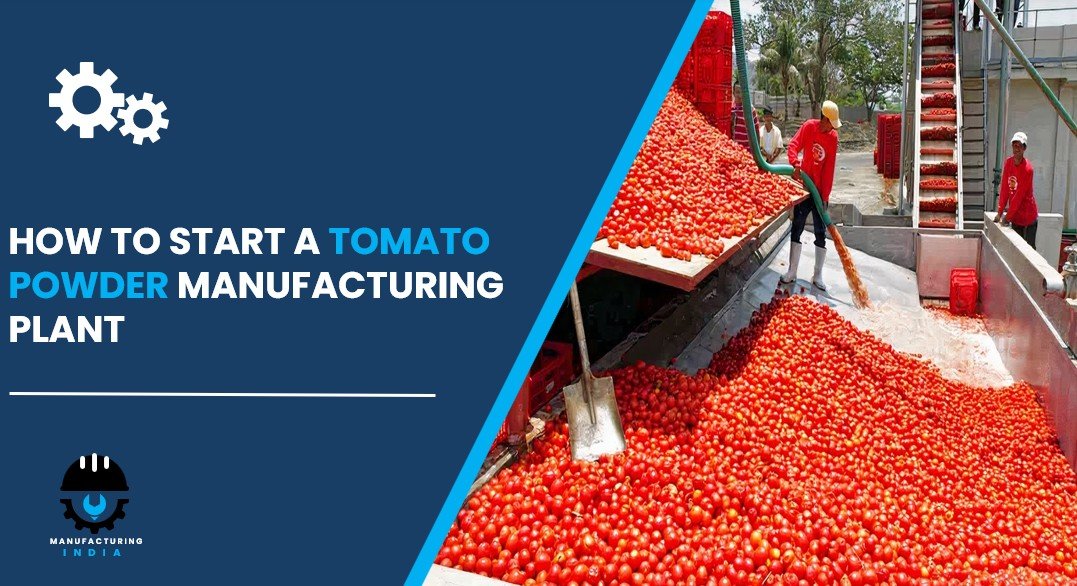
Setting up a tomato powder manufacturing plant in India represents an attractive investment opportunity underpinned by steady and structurally growing demand from the processed food, beverage, and seasoning industries. As consumers increasingly favor convenient, ready-to-use food ingredients, and as food processors continue expanding tomato-based product formulations across sauces, soups, ketchup, and seasoning blends, tomato powder occupies an increasingly important position across household retail, foodservice, and industrial food processing applications. This growth trajectory, combined with the ability to utilize surplus and lower-grade tomatoes that would otherwise spoil after harvest, creates a favorable manufacturing environment for new entrants with efficient dehydration and processing systems.
What is Tomato Powder?
Tomato powder is a dehydrated tomato product manufactured by washing, pulping, heating, drying, and milling fresh tomatoes into a fine, shelf-stable powder. The product retains high concentrations of vitamins, minerals, lycopene, and other bioactive compounds, providing both nutritional value and concentrated tomato flavor. Its extended shelf life, ease of storage, and consistent quality make it an essential ingredient across sauces, soups, ketchup, seasonings, snacks, coatings, and ready-to-eat food products. The production process also enables processors to maximize utilization of fresh tomato harvests while minimizing post-harvest spoilage losses.
The global tomato powder market was valued at approximately USD 1.35 Billion in 2025 and is expected to reach USD 1.86 Billion by 2034, exhibiting a CAGR of 3.6% from 2026 to 2034, supported by rising demand for convenient food ingredients, expanding processed food and seasoning industries, and growing health consciousness among consumers.
Cost of Setting Up a Tomato Powder Manufacturing Plant
The total capital investment required to establish a tomato powder manufacturing plant is shaped by several key parameters: annual production capacity (typically ranging from 2,000 to 10,000 MT per annum), the drying technology adopted (spray drying, drum drying, or hot-air/tray drying), the level of automation across washing, pulping, and drying sections, facility specification, raw material sourcing strategy, and applicable food safety compliance requirements. Below is a structured breakdown of the major cost components.
1. Capital Expenditure (CapEx)
Total capital investment in a tomato powder manufacturing plant covers the following major heads:
Land and Site Development
This encompasses land acquisition or lease, site preparation, boundary development, and utilities connectivity. Site selection should prioritize proximity to tomato-growing regions to ensure a steady, low-transport-cost supply of fresh tomatoes, which are highly perishable and must be processed promptly after harvest. Access to reliable power and steam generation infrastructure for the pulping and drying processes, strong road logistics for inbound tomatoes and outbound finished powder, availability of process water of suitable quality, and a trained workforce for plant operations and quality control are critical site selection criteria. Compliance with industrial zoning regulations, food safety manufacturing standards, and effluent and emission compliance frameworks must be assessed from project initiation.
Civil Works and Construction
Building costs cover the main processing facility including the tomato reception and washing section, pulping and heating area, drying section (spray or drum drying), grinding and sieving house, packaging and dispatch infrastructure, quality control laboratory, administrative block, and utility infrastructure including boiler house, power backup, cooling systems, and effluent treatment plant. Construction must comply with applicable factory act requirements, food safety manufacturing standards, and food-grade infrastructure guidelines.
Machinery and Equipment
Machinery represents the single largest CapEx component. Key equipment required for a tomato powder manufacturing plant includes:
- Reception and Washing Systems: Intake bins, sorting conveyors, and washing tanks to remove soil, debris, and foreign matter from incoming fresh tomatoes prior to processing
- Crushing and Pulping Units: Crushers, pulpers, and refiners to break down washed tomatoes into pulp while separating seeds and skins
- Heating and Pre-Concentration Systems: Continuous heat exchangers and evaporators used to reduce moisture content and pasteurize the pulp prior to drying, improving downstream drying efficiency
- Drying Systems: Spray dryers, drum dryers, or hot-air tray dryers that convert concentrated tomato pulp into powder, with the choice of technology affecting product characteristics such as solubility, color, and flavor retention
- Grinding and Sieving Equipment: Pulverizers and vibrating sieves to achieve a uniform particle size and remove oversized or clumped material from the dried product
- Cooling and Conditioning Systems: Fluid-bed coolers and conditioning equipment to bring the powder to ambient temperature and stable moisture content prior to packaging
- Automated Packaging Lines: Filling, sealing, and labelling equipment for retail pouches, multi-layer bags, and bulk drums, along with bulk loading facilities for institutional dispatch
- Quality Control Laboratory Equipment: Equipment to test moisture content, lycopene retention, color, particle size, and microbial parameters to verify compliance with food safety and quality standards
- Material Handling and Warehousing: Conveyors, elevators, and finished goods warehousing with climate control and FIFO stock management
Other Capital Costs
These include pre-operative expenses, commissioning charges, import duties on specialized drying and processing equipment, staff training and competency development, initial raw material and consumable inventory for production commissioning, and regulatory compliance setup including food safety licensing, quality certification, and food safety management system establishment costs.
Request a Sample Report for In-Depth Market Insights: https://www.imarcgroup.com/tomato-powder-manufacturing-plant-project-report/requestsample
2. Operational Expenditure (OpEx)
Raw materials principally fresh tomatoes procured from growers, along with packaging materials and consumables constitute the dominant operating cost, typically representing 65-75% of total OpEx. Utility costs, driven primarily by steam generation and electricity consumption of drying and processing equipment, account for 20-25% of OpEx. Labour, maintenance, quality control, packaging, transportation, depreciation, taxes, and overhead costs constitute the remainder of the operating cost base.
3. Plant Capacity
The proposed tomato powder manufacturing facility is designed with an annual production capacity ranging between 2,000-10,000 MT, enabling economies of scale while maintaining operational flexibility. This capacity range supports a diversified product offering serving food processing customers, seasoning and spice blenders, and export channels.
4. Profit Margins and Financial Projections
The project demonstrates healthy profitability potential under normal operating conditions. Financial projections encompass capital investment, operating costs, capacity utilization ramp-up schedule, product mix, and forward demand outlook underpinned by rising consumption of processed food ingredients. A comprehensive feasibility analysis includes sensitivity analysis, Net Present Value (NPV), Internal Rate of Return (IRR), and Payback Period calculations. Gross profit margins for tomato powder manufacturing typically range from 35-45%, supported by stable demand and value-added applications. Net profit margins of 18-25% are achievable with disciplined cost management, optimal capacity utilization, and efficient raw material sourcing.
Why Set Up a Tomato Powder Manufacturing Plant?
High and Growing Market Demand
Tomato powder is increasingly popular across processed food and beverage markets as it provides convenient storage while delivering concentrated tomato flavor and essential nutrients. Its long shelf life and ease of transport make it a preferred ingredient over fresh tomato pulp for manufacturers seeking consistent year-round supply.
Value Addition and Waste Reduction
The dehydration process allows processors to transform surplus, off-grade, and cosmetically imperfect tomatoes that would otherwise be discarded into a valuable, saleable product. This value addition improves overall returns for growers and processors alike while reducing post-harvest wastage.
Expanding Processed Food and Seasoning Industry Demand
Growth in packaged soups, sauces, ketchup, ready-to-eat meals, and seasoning blends is driving consistent industrial demand for tomato powder. Its consistent flavor profile and ease of formulation make it well suited to large-scale food manufacturing, where ingredient reliability directly affects product quality and shelf life.
Moderate Investment with Attractive Returns
The business requires comparatively moderate capital investment relative to other food processing categories, while stable market demand and healthy margins provide attractive returns for producers with industry expertise and reliable raw material access.
Supply Chain and Localization Opportunities
Establishing processing facilities in proximity to tomato-growing regions allows processors to reduce raw material transportation costs, minimize post-harvest quality loss, and maintain consistent product quality, while also strengthening local agricultural value chains.
Urbanization and Rising Disposable Incomes
Approximately 45% of the world’s 8.2 billion people resided in urban areas in 2025, according to the United Nations World Urbanization Prospects 2025 report by UN DESA. Rising urban lifestyles, increasing reliance on packaged and convenient foods, and growing disposable incomes among urban consumers are supporting higher consumption of processed tomato-based products in city-based households and foodservice channels, providing a structural demand tailwind for processors with strong distribution networks.
Manufacturing Process Overview
The tomato powder manufacturing operation transforms fresh tomatoes into a shelf-stable, fine powder through a sequence of washing, pulping, heating, drying, grinding, and packaging operations. The key process stages are:
- Raw Material Reception and Washing: Fresh tomatoes received from growers are sorted to remove damaged or unripe fruit, then washed to eliminate soil, debris, and surface contaminants prior to processing.
- Crushing and Pulping: Washed tomatoes are crushed and passed through pulpers and refiners to separate skins and seeds, producing a smooth tomato pulp.
- Heating and Pre-Concentration: The pulp is heated to pasteurize the product and partially reduce moisture content, improving downstream drying efficiency and product stability.
- Drying: Concentrated pulp is dried using spray drying, drum drying, or hot-air tray drying methods to remove remaining moisture and convert the product into powder form. The choice of drying technology affects solubility, color retention, and flavor characteristics of the final product.
- Grinding and Sieving: Dried material is pulverized and passed through vibrating sieves to achieve a uniform particle size and remove any oversized or clumped material.
- Cooling and Conditioning: The powder is cooled and conditioned to a stable moisture content to prevent caking and preserve shelf life prior to packaging.
- Quality Control: Finished powder is tested for moisture content, lycopene retention, color, particle size, and microbial parameters to verify compliance with food safety and quality standards before release for packaging.
- Packaging and Dispatch: Tomato powder is packed in retail pouches, multi-layer bags, and bulk drums for household, foodservice, and industrial customers, or dispatched in bulk to food processing and seasoning manufacturers.
Key Applications of Tomato Powder
- Food Processing: Used in soups, sauces, ketchup, pasta products, and snacks as a convenient, concentrated flavor and color ingredient.
- Beverage Industry: Utilized in tomato-based drinks and concentrates requiring consistent flavor and easy reconstitution.
- Seasoning and Spices: Employed in powdered seasoning mixes, spice blends, and flavor enhancers across packaged and foodservice applications.
- Ready-to-Eat Foods and Coatings: Used as a flavoring and coating ingredient in snack foods and convenience meals requiring long shelf life.
Global Tomato Powder Market Outlook
The global tomato powder market was valued at approximately USD 1.35 Billion in 2025. According to IMARC Group estimates, the market is expected to reach USD 1.86 Billion by 2034, exhibiting a CAGR of 3.6% from 2026 to 2034. The tomato powder market benefits from multiple structural demand drivers:
- Rising demand for ready-to-use, convenient food ingredients with long shelf life and consistent quality across urban populations globally
- Continued urbanization, with approximately 45% of the world’s population residing in urban areas as of 2025, supporting higher consumption of packaged and processed foods
- Expanding processed food, sauce, and seasoning manufacturing sectors creating sustained industrial demand for stable, easy-to-formulate tomato ingredients
- Asia-Pacific leadership in tomato production and consumption, with India, China, and Thailand possessing extensive tomato farming capacity and developing food processing industries
- Growth of the broader food processing sector, with initiatives from India’s Ministry of Food Processing Industries, per the India Brand Equity Foundation (IBEF), forecasting the sector to reach ₹65.2 lakh crore by 2028
- Ongoing improvements in drying and processing technologies improving product quality, yield, and cost efficiency for processors
- Growing use of tomato powder in value-added and functional food formulations leveraging its lycopene and nutrient content
Major players in the global tomato powder industry include Olam International, Kerry Group, Synthite Industries Ltd., GNT Group, A.E. Staley Manufacturing Company, E.I.D. Parry (India) Limited, Lycored Ltd., Ruchi Soya Industries Limited, and Bright Food Group Co., Ltd., serving end-use sectors including beverages, food processing, and seasonings.
Latest Industry Developments
- July 2024: Kagome Co., Ltd. introduced LycoFibre Tomato Powder, an all-natural dietary fiber derived from tomato skins generated during processing. The product functions as a sustainable pet food solution, enabling manufacturers to use natural fiber from tomato production waste to enhance pet digestive health.
Licenses and Regulatory Requirements
Establishing a tomato powder manufacturing unit requires a range of approvals and certifications, which may vary by country and jurisdiction, including:
- Business registration and company incorporation under applicable company law
- Factory License under applicable state Factories Act provisions for manufacturing operations
- Food safety authority license for manufacturing and sale of processed food products (e.g., FSSAI License in India)
- Bureau of standards certification for processed food products under applicable quality standards, where required
- Pollution Control Board Clearances – Consent to Establish (CTE) and Consent to Operate (CTO) for manufacturing operations involving effluent generation
- ISO 22000 / HACCP Food Safety Management System Certification for food safety infrastructure compliance
- ISO 9001:2015 Quality Management System Certification for quality management infrastructure compliance
- Weights and Measures (Legal Metrology) registration for packaged commodity labelling and net quantity declaration
- Export-Import Code (IEC) for international market access
- Trademark and Brand Registration for proprietary branded product launch
- Occupational Health and Safety management compliance for manufacturing worker safety
Key Challenges to Consider
Raw Material Seasonality and Supply Consistency
Fresh tomatoes, which account for 65-75% of total operating costs, are a seasonal agricultural crop subject to weather-related yield variability. Securing long-term supply arrangements with growers located in close proximity to the processing facility, and investing in efficient processing capacity to manage peak-season volumes, are critical operational priorities.
Perishability and Post-Harvest Handling
Fresh tomatoes deteriorate rapidly after harvest, requiring prompt transportation and processing to preserve quality and yield. Delays between harvest and processing can materially affect product color, flavor, and lycopene retention in the finished powder.
Price Volatility and Substitution Competition
Tomato powder prices and demand are influenced by the relative pricing and availability of alternative tomato-based ingredients such as tomato paste and puree, which are subject to seasonal crop yields and commodity price cycles. Processors must manage cost structures and product mix to maintain margins through these cycles.
Quality Certification and Food Safety Compliance Maintenance
Maintaining food safety licensing and quality management system certifications requires ongoing investment in quality laboratory infrastructure, process monitoring, and surveillance audit preparedness. Producing powder that consistently meets moisture, color, and microbial specifications across all production batches requires disciplined process control.
Energy Intensity of Drying Operations
Drying is the most energy-intensive stage of tomato powder production, with utility costs representing 20-25% of OpEx. Rising energy costs can materially affect operating margins, making efficient dryer selection and energy management important considerations for new entrants.
Frequently Asked Questions (FAQs)
1. How much does it cost to set up a tomato powder manufacturing plant?
The total investment depends on plant capacity (2,000-10,000 MT per annum), the drying technology adopted (spray drying, drum drying, or hot-air tray drying), automation level, facility specification, location, and target market certifications. Costs cover land, civil construction, machinery (washing, pulping, drying, grinding, and packaging equipment), quality certifications, working capital, and regulatory compliance. A comprehensive feasibility study from IMARC Group provides detailed, capacity-specific cost estimates covering all CapEx and OpEx components.
2. Is tomato powder manufacturing a profitable business in 2026?
Yes. Sustained demand from processed food, beverage, and seasoning industries, combined with gross margins of 35-45% and net profit margins of 18-25%, make tomato powder manufacturing financially attractive. Effective sourcing of raw materials and efficient drying operations offer meaningful margin enhancement opportunities.
3. What machinery and equipment are required for a tomato powder manufacturing plant?
Key equipment includes reception and washing systems, crushers and pulpers, heating and pre-concentration systems, spray or drum dryers, grinding and sieving equipment, cooling and conditioning systems, quality control laboratory equipment, and automated packaging lines for retail and bulk dispatch.
4. What licenses and approvals are required?
Required approvals include company registration, Factory License, food safety authority licensing for manufacturing and selling processed food products, Pollution Control Board clearances, and ISO 22000/HACCP food safety management system certification. Food safety licensing is a mandatory legal prerequisite for manufacturing and selling food products in most jurisdictions.
5. How long does it take to commission a tomato powder manufacturing plant?
Typically, 9-18 months from project initiation to commercial production launch, depending on project scale, facility construction timeline, equipment procurement lead times, regulatory approvals, and food safety certification timelines, which should be initiated early in the project to avoid delays to commercial launch.
6. What are the key raw materials for tomato powder manufacturing?
The primary raw material is fresh tomatoes sourced from growers, which must be processed promptly after harvest to preserve quality. Other key inputs include packaging materials such as retail pouches, multi-layer bags, and bulk drums for finished powder.
7. What is the break-even period for a tomato powder manufacturing plant?
The break-even period generally depends on capacity utilization ramp-up trajectory, raw material supply consistency, and offtake arrangements with food processing and seasoning customers. Securing long-term supply agreements with growers and stable offtake arrangements significantly improves revenue predictability and supports faster break-even achievement.
8. What drying technologies are used in tomato powder production?
The three principal drying technologies are spray drying (producing fine, highly soluble powder suited to beverage applications), drum drying (offering lower energy costs and suited to bulk food processing use), and hot-air tray drying (suited to smaller-scale operations). The choice of technology affects product characteristics such as solubility, color, and flavor retention.
9. What government incentives are available for tomato powder processors?
Processors may benefit from food processing sector incentive schemes, state-level industrial investment incentives and capital subsidies for agro-processing units, infrastructure support under food parks and mega food park schemes, and export promotion benefits for processed food exports.
10. How does tomato powder processing compare to other dehydrated food processing in terms of setup?
Compared to other dehydrated fruit and vegetable powder processing, tomato powder processing benefits from well-established, widely available drying technology and strong existing demand across food processing categories, but requires careful management of raw material seasonality and rapid post-harvest handling. Processors with experience in fruit or vegetable dehydration can generally adapt existing technical capabilities to tomato powder with targeted investment in pulping and drying infrastructure.
Key Takeaways for Investors
The tomato powder manufacturing industry represents a structurally resilient and financially attractive investment opportunity positioned at the intersection of rising demand for convenient food ingredients, expanding processed food and seasoning sectors, and growing consumer preference for shelf-stable, nutrient-rich products. Stable demand from food processing, beverage, and seasoning channels provides resilience against single-segment demand volatility, while the ability to utilize surplus and off-grade tomatoes offers meaningful value addition beyond fresh produce sales alone. Asia-Pacific’s position as a leading tomato-producing region provides geographically concentrated, cost-competitive access to feedstock, while continued growth in the broader food processing sector supports sustained long-term demand. The moderate capital intensity of the business relative to other food processing categories allows investors to enter the market with manageable upfront investment while capturing healthy margins, making tomato powder manufacturing an attractive proposition for both new entrants and existing food processors seeking to diversify their product portfolios.
About the Author