A methyl urea manufacturing plant setup in India presents a compelling investment case for entrepreneurs looking to enter the specialty chemicals space. Methyl urea is an organic compound used primarily as an intermediate in resins, pharmaceuticals, and agrochemicals, and it plays a meaningful role in herbicides and insecticides that support sustainable agriculture. Its chemical properties also benefit adhesives and coatings, making it relevant across pharmaceuticals, agrochemicals, specialty chemicals, dyes and pigments, chemical synthesis, and industrial manufacturing – sectors expanding as India’s chemical and pharmaceutical base grows.
India’s push toward domestic chemical manufacturing, combined with rising demand from agrochemical and pharmaceutical producers, makes the country a strategically sound base for the plant. Growing industrialization and rising agricultural productivity requirements are creating steady opportunities for producers of high-purity methyl urea. With Asia Pacific already accounting for a large share of global demand, an India-based facility is well positioned to serve domestic and regional demand.
This investment benefits from strong end-use demand across agrochemicals, pharmaceuticals, and specialty chemicals, supported by a cost-competitive raw material and labour base. With gross margins projected between 22-32% and net margins between 10-16%, the case is grounded in steady demand and manageable break-even economics.
What is Methyl Urea?
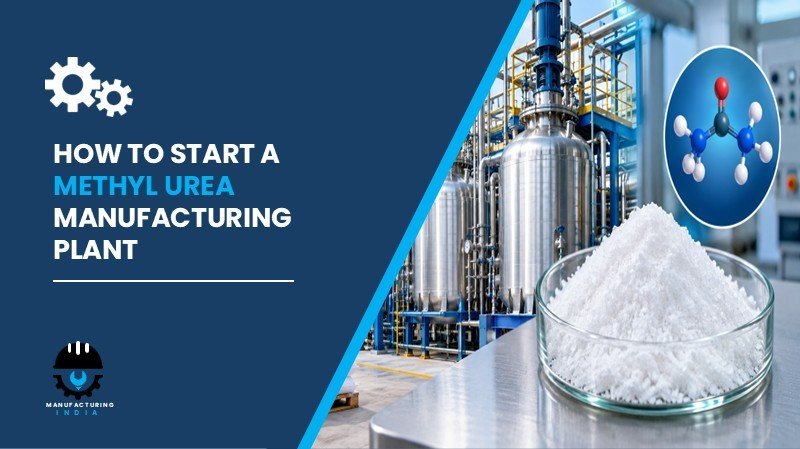
Methyl urea is an organic compound valued for its extensive industrial applications. It is used as an intermediate in manufacturing resins, pharmaceuticals, and agrochemicals, and plays a significant role in creating herbicides and insecticides that support sustainable agriculture. Its chemical properties benefit the development of adhesives and coatings, pivotal across various industries, making it a key building block in chemical manufacturing and product innovation.
The methyl urea manufacturing process uses the reaction of ammonia, carbon dioxide, and monomethylamine under controlled temperature and pressure, followed by crystallization, separation, drying, and packaging. The resulting product primarily serves pharmaceuticals, agrochemicals, specialty chemicals, dyes & pigments, chemical synthesis, and industrial manufacturing as end-use sectors, where it functions as a methylating agent in the production of pharmaceuticals, agrochemicals, dyes, specialty chemicals, and other organic compounds.
Cost of Setting Up a Methyl Urea Manufacturing Plant in India
The overall cost of the plant depends on capacity, technology, location, automation level, and regulatory compliance requirements.
1. Capital Expenditure (CapEx)
Capital investment for a methyl urea manufacturing plant covers land acquisition, site preparation, and necessary infrastructure. Land and site development costs form a considerable portion of overall investment, and investors can evaluate industrial estates or SEZ-linked chemical zones to reduce upfront land and approval costs. Civil works costs cover the manufacturing shed, quality control laboratory, storage, and administrative block, all designed for safe handling of ammonia, carbon dioxide, and monomethylamine.
Machinery is a significant share of total CapEx. Key machinery required includes:
- Ammonia and carbon dioxide storage systems
- Monomethylamine handling units
- Reaction vessels and pressure reactors
- Heat exchangers
- Crystallizers
- Filtration or centrifugation units
- Vacuum dryers
- Milling systems
- Packaging machines
Other capital costs include effluent treatment plant installation, pre-operative expenses, commissioning, and import duties on specialized equipment sourced overseas.
Request a Sample Report for In-Depth Market Insights: https://www.imarcgroup.com/methyl-urea-manufacturing-plant-project-report/requestsample
2. Operational Expenditure (OpEx)
Raw material cost is the largest component of operating expenditure, accounting for 55-65% of OpEx. The main raw materials are ammonia, carbon dioxide, and monomethylamine, and investors are advised to secure long-term supplier agreements to stabilize pricing rather than relying on spot purchases. Utility cost, covering electricity, water, and steam for the reaction, crystallization, and drying stages, accounts for 12-18% of OpEx.
Other operating costs include transportation, packaging, salaries and wages, repairs and maintenance, depreciation, and taxes. By the fifth year of operation, these costs are expected to rise due to inflation, market trends, and potential increases in raw material pricing, along with possible supply chain disruptions and demand-side changes.
3. Plant Capacity
The proposed plant is designed with an annual capacity range of 2,000-5,000 MT, allowing flexible operations aligned with market demand. Capacity can be customized to suit individual investor requirements, and profitability generally improves as utilisation increases, given the largely fixed nature of infrastructure and machinery costs.
4. Profit Margins and Financial Projections
Financial projections for the project are based on capital investment, operating costs, capacity, pricing trends, and demand, and are further assessed through payback period, net present value (NPV), and internal rate of return (IRR) calculations. Gross margins are estimated at 22-32% and net margins at 10-16%, supported by consistent demand and competitive pricing.
Why Set Up a Methyl Urea Plant in India?
Growing Demand in Fertilizers: Demand for cost-effective fertilizers like methyl urea is increasing due to global agricultural activity, and it serves as an effective nitrogen source that promotes productivity, making agriculture a consistent demand anchor.
Rising Pharmaceutical and Agrochemical Consumption: Methyl urea’s role in pharmaceuticals and agrochemicals benefits from broader sector growth; the Indian pharmaceutical market is expected to grow 7-9% in FY26 according to IBEF, driven by domestic demand, new product innovation, and expansion into Europe.
Versatile Applications Across Industries: Diverse applications in chemical synthesis, resin manufacturing, and textiles enhance market potential, reducing dependence on any single end-use industry.
Energy-Efficient Manufacturing Methods: Advanced synthesis methods contribute to energy efficiency, which can help control utility costs over the operating life of the facility.
Active Research and Development Activity: Growing R&D investment is exploring innovative uses in emerging industries, supporting long-term demand visibility for new capacity.
Regional Industrial Momentum: Rapid industrialization and expanding chemical capacities across Asia-Pacific, particularly China and India, are expected to strengthen regional consumption; Asia Pacific already accounts for approximately 43% of the global market.
Methyl Urea Manufacturing Process – Step by Step
The methyl urea manufacturing process uses the reaction of ammonia, carbon dioxide, and monomethylamine as the primary production method, carried out under controlled temperature and pressure conditions.
- Raw Material Handling: Ammonia and carbon dioxide are held in dedicated storage systems; monomethylamine is managed through specialized handling units.
- Reaction: Ammonia, carbon dioxide, and monomethylamine are combined in reaction vessels and pressure reactors under controlled temperature and pressure.
- Heat Exchange: Heat exchangers manage the thermal load from the reaction stage.
- Crystallization: The reacted mixture passes through crystallizers to form crystals.
- Separation: Filtration or centrifugation units separate the crystals from the liquid.
- Drying: Vacuum dryers remove residual moisture.
- Milling: Milling systems process the dried material to size.
- Packaging and Dispatch: Packaging machines prepare the product for dispatch to pharmaceutical, agrochemical, specialty chemical, dyes & pigments, chemical synthesis, and industrial manufacturing customers.
Key Applications
Output from a methyl urea manufacturing plant serves a range of industries as a methylating agent and process reagent.
- Agricultural Sector: Used in fertilizers that enhance crop yields and support sustainable farming.
- Pharmaceutical Industry: A chemical intermediate for drug synthesis, supporting pharmaceutical advancements.
- Industrial Coatings: Used in creating durable, resistant coatings for materials.
- Chemical Applications: Acts as a reagent in chemical processes to improve product efficiency and quality.
Leading Manufacturers
Any new methyl urea manufacturing plant will compete alongside established global players serving pharmaceuticals, agrochemicals, specialty chemicals, dyes & pigments, chemical synthesis, and industrial manufacturing. Key players include:
- Hebei Chuanghai Biotechnology Co., Ltd
- Amadis Chemical Company Limited
Timeline to Start the Plant
- Feasibility study and project report preparation
- Land acquisition and site development
- Regulatory approvals and environmental clearances
- Factory licence and fire safety compliance
- Machinery procurement and installation
- Raw material supplier agreements and supply chain setup
- Trial production and quality testing
- Commercial production launch
Licences and Regulatory Requirements
Starting a methyl urea manufacturing unit in India requires approvals such as:
- Business registration (Proprietorship, LLP, or Pvt Ltd)
- Factory Licence under the Factories Act
- Environmental Clearance from State Pollution Control Board
- GST Registration
- Fire Safety NOC
- Hazardous/Chemical compliance for ammonia, carbon dioxide, and monomethylamine
- Effluent Treatment Plant (ETP) operational clearance
- Occupational Health and Safety compliance
Together, these approvals form the regulatory backbone any methyl urea manufacturing plant must satisfy before production begins.
Key Challenges to Consider
High Capital Requirements: Machinery such as pressure reactors, crystallizers, and vacuum dryers represents a significant share of the total investment needed.
Raw Material Price Volatility: Ammonia, carbon dioxide, and monomethylamine prices can fluctuate, and since raw materials account for 55-65% of OpEx, price swings directly affect profitability.
Regulatory Compliance: Meeting factory licensing, environmental clearance, and hazardous-chemical handling requirements demands ongoing attention.
Technology and Process Optimization Pressure: Continuous advancements in chemical synthesis and process optimization are needed to maintain higher-purity production and efficiency.
Competition from Established Players: Companies such as Hebei Chuanghai Biotechnology Co., Ltd and Amadis Chemical Company Limited already operate with extensive capacities, requiring new entrants to compete on quality and cost.
Skilled Manpower: Operating reaction vessels, crystallizers, and quality assurance systems that meet international standards requires trained technical staff.
Frequently Asked Questions
1. How much does it cost to set up a methyl urea manufacturing plant in India?
Costs depend on plant capacity, technology, location, and automation level, covering land and site development, civil works, machinery, and other capital costs.
2. Is methyl urea manufacturing profitable in India in 2026?
Gross profit margins of 22-32% and net profit margins of 10-16% are anticipated, supported by consistent demand from pharmaceuticals, agrochemicals, and specialty chemicals.
3. What machinery is required for a methyl urea plant in India?
Key machinery includes storage systems for ammonia and carbon dioxide, monomethylamine handling units, reaction vessels, pressure reactors, heat exchangers, crystallizers, filtration/centrifugation units, vacuum dryers, milling systems, and packaging machines.
4. What licences and approvals are required to start a methyl urea plant in India?
Requirements include business registration, a Factory Licence, Environmental Clearance, GST Registration, Fire Safety NOC, hazardous-chemical compliance, ETP operational clearance, and Occupational Health and Safety compliance.
5. What raw materials are needed for methyl urea manufacturing?
Ammonia, carbon dioxide, and monomethylamine are the primary raw materials, together accounting for 55-65% of operating expenditure.
6. What are the environmental compliance requirements for a methyl urea plant in India?
Plants need Environmental Clearance from the State Pollution Control Board, an operational Effluent Treatment Plant, and monitoring systems to detect leaks during production.
7. What is the best location to set up a methyl urea plant in India?
The chosen location must offer easy access to ammonia, carbon dioxide, and monomethylamine, proximity to target markets, and robust infrastructure including transportation, utilities, and waste management.
8. What is the break-even period for this type of plant in India?
Break-even depends on capital investment, operating costs, and capacity utilisation, and is assessed through payback period, NPV, and IRR analysis within the project’s financial planning.
9. What government incentives are available for manufacturers in India?
Investors should evaluate regulatory and compliance frameworks alongside site selection, including industrial estate and zoning options, as part of overall project planning.
Key Takeaways for Investors
This investment opportunity taps into steady demand from pharmaceuticals, agrochemicals, specialty chemicals, dyes & pigments, chemical synthesis, and industrial manufacturing. Financial viability holds across the proposed 2,000-5,000 MT capacity range, with gross margins of 22-32% and net margins of 10-16%. With Asia Pacific accounting for approximately 43% of the global market and the Indian pharmaceutical sector projected to grow 7-9% in FY26, demand fundamentals remain supportive. As chemical manufacturing capacity expands across India, a well-planned methyl urea manufacturing plant is positioned to serve domestic and regional demand sustainably.
About the Author