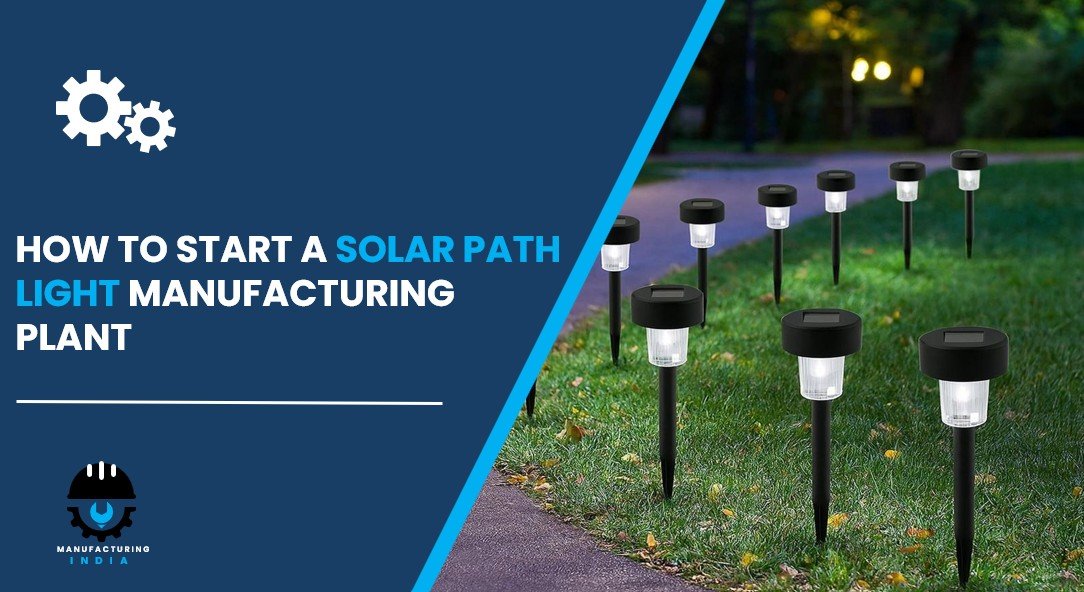
Setting up a solar path light manufacturing plant in India represents a highly attractive investment proposition underpinned by robust and structurally growing demand from residential, commercial, and public infrastructure end users, the accelerating shift toward renewable energy-based outdoor lighting, and the expanding smart cities and urban infrastructure development trend. As governments and municipalities prioritise sustainable, low-maintenance lighting solutions, and as homeowners and commercial property developers increasingly favour off-grid, cost-effective illumination for pathways, gardens, and driveways, solar path lights are becoming a mainstream fixture across residential, commercial, public infrastructure, and landscaping applications. This growth trajectory, combined with continuous improvements in photovoltaic cell efficiency, battery technology, and LED performance, creates a highly favourable manufacturing environment for new entrants with efficient assembly, integration, and quality testing systems.
What is a Solar Path Light?
Solar path light is a kind of outdoor lighting solution technology that relies on solar energy. Solar path lights are solar-powered lights that have solar panels fixed to them, which convert sunlight into electrical energy that is stored in batteries to power the lights during nighttime. These lights are designed to illuminate pathways, gardens, and driveways without the need for any external electrical wiring. A normal solar path light consists of an LED light source, a photovoltaic (PV) solar panel, a battery pack for energy storage, and a light sensor.
Solar path lights are manufactured and sold across a range of formats stake lights, in-ground lights, bollard lights, and disc lights depending on the mounting style and application adopted. Beyond household garden and driveway use, the lights are used extensively in commercial landscaping, public infrastructure such as street and park pathway lighting, and decorative and security lighting applications owing to their low operational cost and minimal environmental impact.
As an eco-friendly and energy-efficient lighting solution technology, solar path lights are increasingly being adopted in residential, commercial, and public outdoor sectors, driven by the increasing adoption of renewable energy solutions, the need for energy-efficient outdoor lighting, and the growing trend toward smart cities. Asia Pacific holds over 37% share in the global solar path light market.
Cost of Setting Up a Solar Path Light Manufacturing Plant
The total capital investment required to establish a solar path light manufacturing plant is shaped by several key parameters: annual production capacity (typically ranging from 500,000 to 2 million units per annum), the level of automation across solar panel assembly, battery manufacturing, LED assembly, and housing & casing sections, facility specification, raw material sourcing strategy, and applicable regulatory and quality compliance requirements. Below is a structured breakdown of the major cost components.
1. Capital Expenditure (CapEx)
Total capital investment in a solar path light manufacturing plant covers the following major heads:
Land and Site Development
This encompasses land acquisition or lease, site preparation, boundary development, and utilities connectivity. Site selection should prioritise proximity to key raw materials such as solar panels, LED, battery, and plastic/metal housing to ensure a steady, cost-effective supply chain. Access to reliable power infrastructure, strong road and logistics connectivity for inbound components and outbound finished goods, and a trained workforce for assembly, testing, and quality control operations are critical site selection criteria. Compliance with local zoning laws and environmental regulations must also be assessed from project initiation.
Civil Works and Construction
Building costs cover the main manufacturing facility including the raw material and component receiving area, solar panel and battery assembly sections, LED assembly and circuit integration lines, injection moulding and housing fabrication area, testing and quality control laboratory, finished goods packaging and warehousing, administrative block, and utility infrastructure including power backup and compressed air systems. Construction must comply with applicable factory act requirements and relevant electrical and product safety standards.
Machinery and Equipment
Machinery represents the single largest CapEx component. Key equipment required for a solar path light manufacturing plant includes:
- Injection Moulding Machines: Machines for manufacturing plastic and polycarbonate housings, stake bodies, and lens covers used in solar path light fixtures
- Solar Panel Assembly and Lamination Line: Equipment for cutting, soldering, and laminating photovoltaic cells into finished solar panel modules sized for path light fixtures
- Battery Pack Assembly Machines: Automated equipment for assembling and sealing rechargeable battery cells, typically lithium-ion or NiMH, into protective battery packs
- LED Assembly and SMT Mounting Equipment: Surface-mount technology machines for placing and soldering LED chips onto printed circuit boards with precision and consistency
- Soldering and Circuit Integration Equipment: Reflow soldering ovens and wave soldering machines for connecting solar panels, batteries, LEDs, and light sensors into a functioning circuit
- Housing and Casing Fabrication Machines: Moulding and finishing equipment for producing weatherproof plastic, aluminium, or stainless-steel housings and stake mounts
- Light Sensor and Photocell Integration Equipment: Precision assembly equipment for fitting dusk-to-dawn photocell sensors that automatically activate the light at nightfall
- Waterproofing and IP Rating Test Equipment: Ingress protection testing chambers to verify weatherproofing and dust/water resistance of finished fixtures
- Battery Charge-Discharge Testing Equipment: Equipment for verifying battery capacity, charge cycles, and solar charging efficiency under simulated sunlight conditions
- UV and Weatherproofing Coating Equipment: Coating and curing systems to apply UV-resistant finishes that protect housings and lenses from prolonged outdoor exposure
- Power Backup and Utility Equipment: Diesel generator sets, compressed air systems, and electrical infrastructure to support uninterrupted plant operations
- Automated Packaging Lines: Filling, labelling, and cartoning lines for retail packaging as well as bulk packaging for institutional and export orders
- Quality Control Laboratory Equipment: Equipment for testing solar panel output, battery life, LED lumen output, and other parameters to verify compliance with product quality and safety standards
- Material Handling and Warehousing: Conveyors, storage racks for components and raw materials, and finished goods warehousing with FIFO stock management
Other Capital Costs
These include pre-operative expenses, commissioning charges, import duties on specialised solar panel and battery assembly equipment, staff training and competency development, initial raw material and consumable inventory for production commissioning, regulatory compliance setup including BIS certification for solar products, electrical safety certifications, and ISO 9001 quality management system establishment costs.
Request a Sample Report for In-Depth Market Insights: https://www.imarcgroup.com/solar-path-light-manufacturing-plant-project-report/requestsample
2. Operational Expenditure (OpEx)
Raw materials principally solar panels, along with LED components, battery cells, and plastic/metal housing constitute the dominant operating cost, typically representing 70–80% of total OpEx. Utility costs, driven primarily by electricity consumption of assembly, soldering, and testing equipment, account for 5–10% of OpEx. Labour, maintenance, quality control, packaging, transportation, depreciation, taxes, and overhead costs constitute the remainder of the operating cost base.
3. Plant Capacity
The proposed solar path light manufacturing facility is designed with an annual production capacity ranging between 500,000–2 million units, enabling economies of scale while maintaining operational flexibility. This capacity range supports a diversified product portfolio spanning stake lights, in-ground lights, bollard lights, and decorative path lights, serving residential, commercial, public infrastructure, and landscaping customers.
4. Profit Margins and Financial Projections
The project demonstrates healthy profitability potential under normal operating conditions. Financial projections encompass capital investment, operating costs, capacity utilisation ramp-up schedule, product mix across fixture types, and forward demand outlook underpinned by rising renewable energy adoption and smart cities growth. A comprehensive feasibility analysis includes sensitivity analysis, Net Present Value (NPV), Internal Rate of Return (IRR), and Payback Period calculations. Gross profit margins for solar path light manufacturing typically range from 30–40%, supported by stable demand and value-added applications. Net profit margins of 12–20% are achievable with disciplined cost management, optimal capacity utilisation, and effective supply chain management.
Why Set Up a Solar Path Light Manufacturing Plant?
Sustainability and Energy Efficiency
The use of solar-powered path lights is an effective way to decrease dependence on conventional electricity grids and, hence, is a step towards lowering carbon emissions. As governments and consumers increasingly prioritise sustainable infrastructure, solar path lights are transitioning from a niche outdoor lighting option toward a mainstream choice across residential, commercial, and public sectors.
Low Maintenance and Cost-Effective Operation
Solar-powered path lights require very little maintenance, as they do not require any connection to an electricity grid. With long-life batteries and LEDs, they are an effective and economical lighting solution that cuts down on energy costs in the long run, supporting sustained demand from cost-conscious residential and commercial end users.
Technological Innovation in Solar and Battery Systems
Technological advancements in solar technology, such as improved photovoltaic cells, improved battery life, and the use of smart technology, provide an opportunity for manufacturers to produce more advanced and efficient products. Continued innovation in component efficiency and smart lighting features positions manufacturers to capture premium pricing and differentiate their product portfolios in an increasingly competitive market.
Government Incentives for Renewable Energy Adoption
Governments around the world are providing incentives and subsidies to switch to renewable energy sources, thus fueling the growth of the solar lighting market. These incentives lower the effective cost of solar path light installations for end users, supporting sustained volume demand and providing a favourable policy backdrop for manufacturers scaling up production capacity.
Urbanisation and Infrastructure Development
The increasing trend of urbanisation and the growing number of outdoor public areas have led to a growing demand for sustainable and economical lighting solutions. Municipalities and infrastructure developers are increasingly specifying solar path lights for park pathways, pedestrian walkways, and street lighting projects, creating a steady institutional demand channel alongside residential and commercial sales.
Scalable and Integrated Assembly Operations
The solar path light value chain spanning solar panel assembly, battery pack manufacturing, LED assembly, and housing fabrication allows manufacturers to begin operations at a moderate scale and expand capacity or add integrated component manufacturing as volumes grow. This phased investment approach allows new entrants to manage capital deployment while building operational expertise, with subsequent backward integration into solar panel or battery cell manufacturing improving margin capture over time.
Growing Adoption in Smart Cities and Public Infrastructure
Increasing investment in smart city infrastructure and public safety lighting is expanding the addressable market for solar path lights beyond traditional residential and landscaping applications, as illustrated by continued municipal adoption of solar-powered streetlights and pathway lighting for public safety and visibility improvement initiatives.
Manufacturing Process Overview
The solar path light manufacturing operation transforms raw components including photovoltaic cells, battery cells, LED chips, and housing materials into finished, tested lighting fixtures through a sequence of component assembly, integration, and quality testing operations. The key process stages are:
- Raw Material and Component Reception: Solar panels, LED components, battery cells, and plastic/metal housing materials received from suppliers are inspected and verified against quality and specification requirements before being released to the production line.
- Solar Panel Assembly: Photovoltaic cells are cut, soldered, and laminated into finished solar panel modules sized and rated to match the power and charging requirements of each path light fixture.
- Battery Pack Assembly: Rechargeable battery cells, typically lithium-ion or NiMH, are assembled and sealed into protective battery packs designed to store energy generated by the solar panel during daylight hours.
- LED Assembly: LED chips are mounted onto printed circuit boards using surface-mount technology to form the light-emitting module that provides illumination once the fixture activates at dusk.
- Circuit Integration: The solar panel, battery pack, LED board, and light sensor are wired together into a complete lighting circuit, with soldering and connection quality verified at each interface point.
- Housing and Casing Fabrication: Plastic, polycarbonate, aluminium, or stainless-steel housings and stake mounts are moulded or fabricated to provide weatherproof protection for the internal components.
- Sub-Assembly and Integration: The assembled solar panel, battery pack, circuit assembly, and light sensor are fitted into the finished housing, with all internal wiring routed and secured.
- Waterproofing and Sealing: Assembled units undergo sealing and gasket-fitting processes to achieve the required ingress protection rating, ensuring durability under outdoor exposure to rain, dust, and temperature variation.
- Functional and Performance Testing: Finished units are tested for solar charging efficiency, battery charge-discharge performance, LED lumen output, and light sensor activation under simulated day-night cycles.
- Quality Control: Finished solar path lights are inspected for compliance with applicable electrical safety, IP rating, and product quality standards before release for packaging.
- Packaging and Dispatch: Finished solar path lights are packed in retail-ready cartons for household and institutional sale, or dispatched in bulk packaging to commercial distributors, government procurement agencies, and export customers.
Key Applications of Solar Path Light
The solar path light market serves several major end-use segments across residential, commercial, public infrastructure, and landscaping sectors:
- Residential: Solar path lights are widely used in gardens, pathways, and driveways. They provide homeowners with a highly efficient and maintenance-free lighting solution for their outdoor space.
- Commercial: In commercial properties, solar path lights are used for illuminating parking lots, pathways, and outdoor recreational areas, reducing dependence on grid electricity and lowering ongoing operating costs for property owners.
- Public Infrastructure: Solar path lights are increasingly used by municipalities for street lighting, park pathways, and along pedestrian walkways, supporting public safety and visibility improvement initiatives with minimal ongoing maintenance requirements.
- Landscaping: Solar path lights are widely used in the landscaping industry for outdoor decorative lighting, enhancing the visual appeal of gardens, walkways, and outdoor living spaces without the need for wired electrical installation.
- Security and Safety: Solar path lights are deployed for perimeter and pathway illumination in residential and commercial settings, improving visibility and deterring unauthorised access during nighttime hours.
Global Solar Path Light Market Outlook
The solar path light market is driven by the growing demand for renewable energy-based solutions, as solar path lights are energy-efficient and environmentally friendly. Asia Pacific holds over 37% share in the global solar path light market. According to a report by the World Bank, more than half of the world’s population, i.e., over 4 billion people, are living in urban areas, and this is expected to double by 2050. This is a major factor driving the demand for sustainable and cost-effective outdoor lighting solutions. Technological advancements in the efficiency of solar panels, batteries, and LEDs are making these solutions more attractive to consumers and businesses. In addition, government policies and initiatives that support green energy solutions and the reduction of carbon footprints are also contributing to the adoption of solar lighting solutions.
- Rising adoption of renewable energy solutions and growing preference for energy-efficient outdoor lighting across urban populations globally
- Continued urbanisation, with the World Bank estimating that over half of the world’s population resides in urban areas, supporting sustained demand for sustainable and cost-effective outdoor lighting infrastructure
- Expanding smart cities initiatives and public infrastructure development creating sustained institutional demand for low-maintenance, off-grid pathway and street lighting
- Technological advancements in photovoltaic cell efficiency, battery storage capacity, and LED performance improving product performance and value proposition
- Growing government incentives and subsidies supporting the transition to renewable energy-based lighting solutions across residential, commercial, and public sectors
- Favourable regulatory environment for solar-powered products, reducing barriers to market entry and supporting sustained category growth
- Continued investment by established lighting and electronics manufacturers in expanding solar lighting product portfolios, reflecting confidence in long-term category growth
- Increasing consumer and institutional preference for maintenance-free, cost-effective lighting solutions that reduce dependence on grid electricity
Major players in the global solar path light manufacturing industry include Philips Lighting (Signify), Havells, Panasonic, Wipro Lighting, Bajaj Electricals, Syska LED, and Crompton Greaves, serving end-use sectors including residential, commercial, public infrastructure, and landscaping.
Latest Industry Developments
- October 2025: Lumena Lights launched two new solar-powered path lights, Arc and Bastion, as part of its Pro Solar Home & Garden range. The products use integrated solar technology to deliver reliable dusk-to-dawn lighting without mains power, offering robust weather-resistant finishes and aesthetic appeal for residential and commercial outdoor spaces.
- December 2024: Dana India completed a set of Corporate Social Responsibility (CSR) initiatives in Pune, India, to enhance road safety and infrastructure. The company installed 30 solar-powered streetlights to improve visibility and reduce accident risks for around 3,600 locals and travelers.
Licenses and Regulatory Requirements
Establishing a solar path light manufacturing unit requires a range of approvals and certifications, which may vary by country and jurisdiction, including:
- Business registration and company incorporation under applicable company law
- Factory License under applicable state Factories Act provisions for manufacturing operations
- BIS (Bureau of Indian Standards) certification for solar photovoltaic products and LED lighting products under applicable quality standards
- Electrical safety certification for battery-operated and photovoltaic lighting products
- IP (Ingress Protection) rating certification for weatherproofing and outdoor durability compliance
- Compliance with battery handling and disposal regulations applicable to lithium-ion and other rechargeable battery cells
- Environmental clearances for waste management and effluent compliance, where applicable
- Pollution Control Board Clearances Consent to Establish (CTE) and Consent to Operate (CTO) for manufacturing operations
- ISO 9001:2015 Quality Management System Certification for quality management infrastructure compliance
- ISO 14001 Environmental Management System Certification, where applicable, for sustainable manufacturing practices
- Weights and Measures (Legal Metrology) registration for packaged commodity labelling and net quantity declaration
- Export-Import Code (IEC) for international market access
- Trademark and Brand Registration for proprietary branded product launch
- Occupational Health and Safety management compliance (ISO 45001 / Factories Act provisions) for manufacturing worker safety
Key Challenges to Consider
Raw Material Cost Volatility and Supply Consistency
Solar panels, which account for 70–80% of total operating costs, are subject to fluctuations in raw material pricing, and their availability and quality can vary depending on supplier reliability and global supply chain conditions. Securing long-term supply arrangements with reliable component suppliers and diversifying the vendor base are critical operational priorities.
Battery Technology and Performance Consistency
Battery performance directly affects product reliability and customer satisfaction, as inconsistent battery quality can result in reduced operating life, unreliable nighttime illumination, and increased warranty and return costs. Rigorous incoming quality inspection and battery testing protocols are essential to managing this risk.
Price Competition and Substitution from Conventional Lighting
Solar path light prices and demand are influenced by the relative pricing of conventional grid-powered outdoor lighting and low-cost imported alternatives, which are subject to global commodity price cycles and import competition. Manufacturers must manage cost structures and product differentiation to maintain margins amid this competitive pressure.
Weather Durability and Product Lifespan
A meaningful share of customer satisfaction and repeat purchase depends on the long-term weatherproofing performance and durability of housings, seals, and internal components under prolonged outdoor exposure to rain, dust, UV radiation, and temperature variation. Product design and testing rigor materially affect warranty costs and brand reputation.
Quality Certification and Compliance Maintenance
Maintaining BIS certification, IP rating compliance, and applicable electrical safety certifications requires ongoing investment in quality laboratory infrastructure, process monitoring, and surveillance audit preparedness. Producing units that consistently meet performance specifications across all production batches requires disciplined process control and incoming raw material quality management, as any compliance lapse can disrupt market access and damage brand reputation.
Capital Intensity of Backward Integration
While assembly-focused manufacturing can be established at relatively moderate capital investment, backward integration into solar cell or battery cell manufacturing represents a substantial incremental capital commitment. New entrants must carefully evaluate the phasing of investment between assembly-only operations sourcing components from third-party suppliers, versus integrated operations capturing higher component-level margins, based on available capital, target markets, and long-term strategic positioning.
Frequently Asked Questions (FAQs)
1. How much does it cost to set up a solar path light manufacturing plant?
The total investment depends on plant capacity (500,000–2 million units per annum), automation level, facility specification, location, and target market certifications. Costs cover land, civil construction (assembly sections, testing laboratory, warehousing, utilities), machinery (solar panel assembly line, battery pack assembly, LED assembly, injection moulding, testing equipment), quality certifications, working capital, and regulatory compliance. A comprehensive feasibility study from IMARC Group provides detailed, capacity-specific cost estimates covering all CapEx and OpEx components.
2. Is solar path light manufacturing a profitable business in 2026?
Yes. Sustained demand from residential, commercial, and public infrastructure end users, the expanding smart cities and renewable energy adoption trend, combined with gross margins of 30–40% and net profit margins of 12–20% make solar path light manufacturing financially attractive.
3. What machinery and equipment are required for a solar path light manufacturing plant?
Key equipment includes injection moulding machines, solar panel assembly and lamination lines, battery pack assembly machines, LED assembly and SMT mounting equipment, soldering and circuit integration equipment, waterproofing and IP rating test equipment, quality control laboratory equipment, and automated packaging lines for retail and bulk dispatch.
4. What licenses and approvals are required?
Required approvals include company registration, Factory License, BIS certification for solar and LED products, electrical safety certification, IP rating certification, Pollution Control Board clearances, and ISO 9001 quality management system certification. BIS certification is an important compliance requirement for manufacturing and selling solar-powered lighting products in India.
5. How long does it take to commission a solar path light manufacturing plant?
Typically, 6–12 months from project initiation to commercial production launch, depending on project scale, facility construction timeline, equipment procurement lead times for assembly and testing systems, and regulatory approvals and certification timelines, which should be initiated early in the project to avoid delays to commercial launch.
6. What are the key raw materials for solar path light manufacturing?
The primary raw material is the solar panel (photovoltaic module), which must be sourced from reliable suppliers to ensure consistent charging performance. Other key inputs include LED chips, rechargeable battery cells, light sensors, and plastic/metal housing materials, along with packaging materials for finished units.
7. What is the break-even period for a solar path light manufacturing plant?
The break-even period generally depends on capacity utilisation ramp-up trajectory, the product mix across fixture types, raw material supply consistency, and distribution and offtake arrangements. Securing long-term component supply agreements and stable offtake arrangements with commercial distributors and institutional buyers significantly improves revenue predictability and supports faster break-even achievement.
8. What are the main types of solar path lights and their applications?
The principal types are stake lights (inserted directly into the ground for garden and pathway use), in-ground lights (flush-mounted for driveways and walkways), bollard lights (post-mounted for commercial and public spaces), and disc lights (decorative, surface-mounted lights). These types serve residential, commercial, public infrastructure, and landscaping applications respectively.
9. What government incentives are available for solar path light manufacturers?
Manufacturers may benefit from renewable energy sector incentive schemes, state-level industrial investment incentives and capital subsidies for electronics and solar manufacturing units, infrastructure support under electronics manufacturing clusters, and export promotion benefits for solar lighting products. Evolving policy support for renewable energy adoption also affects the demand-side economics for manufacturers.
10. How does solar path light manufacturing compare to other lighting product manufacturing in terms of setup?
Compared to conventional grid-powered lighting product manufacturing, solar path light manufacturing requires additional investment in solar panel assembly, battery pack assembly, and weatherproofing infrastructure specific to off-grid, outdoor-rated products. The LED and circuit assembly technology employed is broadly similar to other lighting product manufacturing, allowing manufacturers with experience in electronics assembly to adapt existing technical capabilities to solar path lights with targeted investment in solar and battery integration expertise.
Key Takeaways for Investors
The solar path light manufacturing industry represents a structurally resilient and financially attractive investment opportunity positioned at the intersection of rising renewable energy adoption, expanding smart cities and public infrastructure development, and growing consumer preference for low-maintenance, cost-effective outdoor lighting. Stable demand from residential, commercial, public infrastructure, and landscaping channels provides resilience against single-segment demand volatility, while continued technological innovation in photovoltaic cells, battery storage, and LED efficiency offers meaningful opportunities for product differentiation and margin enhancement. Asia Pacific’s leading position in the global market, combined with a supportive government policy environment for renewable energy adoption, provides a favourable backdrop for new entrants. The scalable nature of the value chain from assembly-only operations to fully integrated component manufacturing allows investors to phase capital deployment according to risk appetite and target market positioning, while continued investment by established lighting and electronics manufacturers in expanding solar lighting product portfolios reflects strong confidence in the long-term growth and profitability of the category.
About the Author