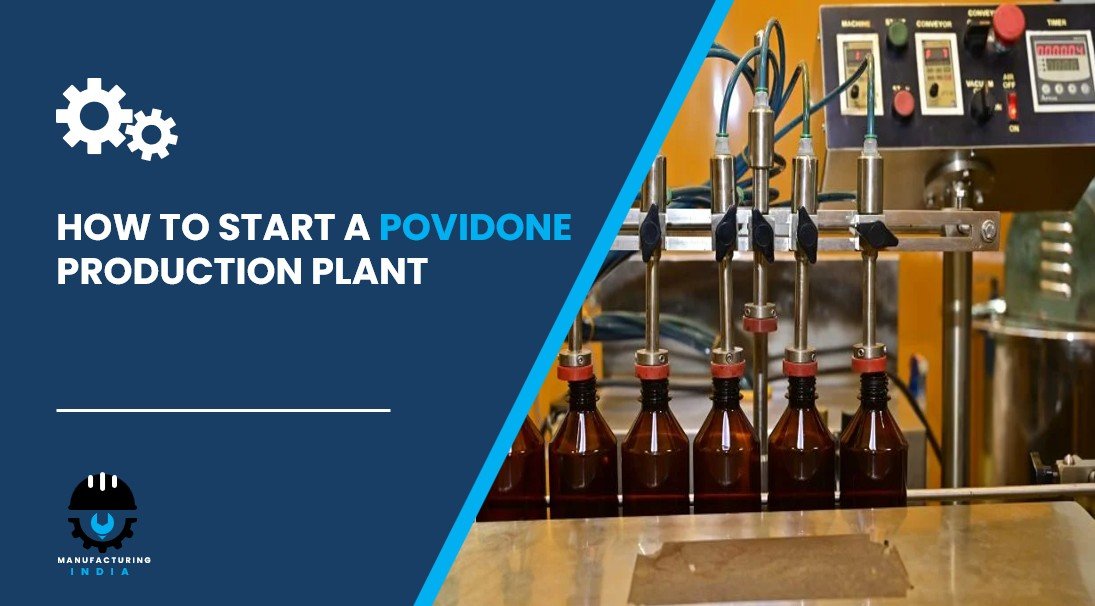
Setting up a povidone production plant cost in india is driven by the rising focus on sustainable and eco-friendly manufacturing processes, which offers opportunities for the industry to innovate in production methods while meeting both regulatory and consumer demands. The global povidone market size was volumed at 96.67 thousand tons in 2025. According to IMARC Group estimates, the market is expected to reach 161.94 thousand tons by 2034, exhibiting a CAGR of 5.9% from 2026 to 2034. This feasibility report covers a comprehensive market overview to micro-level information such as unit operations involved, raw material requirements, utility requirements, infrastructure requirements, machinery and technology requirements, manpower requirements, packaging requirements, and transportation requirements, along with a detailed setup cost covering project economics, capital investments (CapEx), operating expenses (OpEx), income and expenditure projections, and financial analysis.
Minimum Cost Required to Set Up a Povidone Production Plant:
Industry cost benchmarking for povidone production indicates a minimum entry investment of approximately USD 8–12 million for a smaller-scale facility with a capacity of around 5,000 MT/year, covering polymerization reactors, solvent recovery systems, filtration units, drying equipment, milling machines, quality-control systems, and packaging lines. Capital requirements can increase to around USD 15–25 million for mid-sized plants with capacities of approximately 7,500–10,000 MT/year, while larger and highly automated facilities can require USD 30–40 million or more at the upper end of the capacity range of 15,000 MT/year, particularly where advanced process controls, pharmaceutical-grade quality systems, utilities, environmental controls, and expanded infrastructure are incorporated. IMARC’s 2026 report specifies a proposed production capacity of 5,000–15,000 tons annually and identifies vinylpyrrolidone polymerization, purification, and spray drying as key stages of production
Request Sample: https://www.imarcgroup.com/povidone-manufacturing-plant-project-report/requestsample
What is Povidone?
Povidone, also known as polyvinylpyrrolidone (PVP), is a synthetic, water-soluble polymer widely used in pharmaceutical, cosmetic, and industrial applications. In medicines, it functions mainly as a binder that helps hold tablet ingredients together, as well as a solubilizing and stabilizing agent for active compounds. It is valued for its non-toxic nature, biocompatibility, and ability to dissolve in both water and alcohol. In healthcare, it is also used in antiseptic formulations such as povidone-iodine. Beyond pharmaceuticals, povidone is found in personal care products like hair sprays and skin creams, and in industrial uses such as adhesives and coatings. Its versatility and safety profile make it an essential ingredient across multiple sectors.
Key Investment Highlights:
- Process Used: Vinylpyrrolidone polymerization, purification, and spray drying.
- End-use Industries: Pharmaceuticals, personal care, food & beverage, agricultural chemicals, adhesives, water treatment.
- Applications: Used for tablet binders, hair styling products, wine clarification, crop protection formulations, adhesive intermediates, membrane filtration aids.
Povidone Plant Capacity:
The proposed production facility is designed with an annual production capacity ranging between 5,000–15,000 tons, enabling economies of scale while maintaining operational flexibility.
Povidone Plant Profit Margins:
The project demonstrates healthy profitability potential under normal operating conditions. Gross profit margins typically range between 30–40%, supported by stable demand and value-added applications.
- Gross Profit: 30–40%
- Net Profit: 15–22%
Povidone Plant Cost Analysis:
The operating cost structure of a povidone production plant is primarily driven by raw material consumption, particularly vinyl pyrrolidone monomer, which accounts for approximately 60–70% of total operating expenses (OpEx).
- Raw Materials: 60–70% of OpEx
- Utilities: 15–20% of OpEx
Financial Projection:
The financial projections for the proposed project have been developed based on realistic assumptions related to capital investment, operating costs, production capacity utilization, pricing trends, and demand outlook. These projections provide a comprehensive view of the project’s financial viability, ROI, profitability, and long-term sustainability.
Major Applications:
- Pharmaceutical Industry: Used as a binder in tablets, a film-forming agent, and a drug solubilizer in formulations.
- Personal Care Products: Used in hair sprays, styling gels, shampoos, and skin creams as a stabilizer and film former.
- Food Industry: Used as a stabilizer, thickening agent, and dispersant in processed foods and beverages.
- Industrial Uses: Used in adhesives, coatings, and as a dispersing agent in inks and detergents.
Regional Insights:
The regional economics of a povidone production plant are influenced by the availability and pricing of vinylpyrrolidone monomer and initiators, pharmaceutical and personal-care manufacturing activity, utilities, skilled labour, logistics, quality-control infrastructure, and regulatory compliance. Povidone is widely used as a pharmaceutical excipient, solubiliser, stabiliser and binder, as well as in personal care, food and beverage, agricultural chemicals, adhesives, and water treatment. IMARC estimates a proposed plant capacity of 5,000–15,000 tons annually.
- Asia Pacific (China, India, Japan, South Korea, Australia, Indonesia, Thailand, Malaysia, Vietnam, Philippines, Singapore): Asia Pacific offers strong opportunities for povidone manufacturing due to its expanding pharmaceutical, generic-drug, personal-care, and chemical-processing industries. China and India provide large pharmaceutical manufacturing bases and established chemical supply chains, while Japan and South Korea offer advanced production technologies and quality-control capabilities. Plant economics are influenced by the availability and import costs of vinylpyrrolidone monomer, electricity and steam requirements, skilled technical labour, automation, wastewater treatment, and proximity to pharmaceutical and personal-care manufacturers.
- North America (U.S., Canada, Mexico): Demand is supported by the region’s sophisticated pharmaceutical, healthcare, cosmetics, personal-care, and specialty-chemical industries. The U.S. provides advanced chemical-processing and pharmaceutical infrastructure, while Canada and Mexico contribute established manufacturing and distribution networks. Investment costs are affected by higher labour and utility expenses, stringent pharmaceutical-quality and environmental requirements, advanced polymerisation and drying equipment, quality-control systems, and the need for reliable raw-material supply.
- Europe (Germany, U.K., France, Italy, Spain, Netherlands, Belgium, Poland, Sweden, Norway, Denmark, Switzerland): Europe represents an important market for pharmaceutical-grade povidone owing to its established pharmaceutical, cosmetics, healthcare, and specialty-chemicals sectors. Germany, France, Italy, the U.K., Belgium, and the Netherlands provide strong downstream demand and sophisticated industrial infrastructure. Plant development costs are shaped by energy prices, skilled labour, stringent GMP and quality requirements, environmental compliance, advanced process-control systems, and efficient access to road, rail, and port infrastructure.
- Latin America (Brazil, Argentina, Mexico, Colombia, Chile, Peru, Paraguay, Uruguay, Ecuador): Growing pharmaceutical production, healthcare expenditure, personal-care consumption, and specialty-chemical demand are creating opportunities for povidone manufacturing. Brazil and Mexico offer sizeable pharmaceutical and consumer markets, with Mexico additionally benefiting from its integration with North American supply chains. Projects must consider the availability and import dependence of vinylpyrrolidone monomer, transportation infrastructure, utility costs, skilled manpower, equipment sourcing, quality assurance, and environmental-management systems.
- Middle East & Africa (Saudi Arabia, UAE, Qatar, Kuwait, Oman, Israel, Egypt, South Africa, Nigeria, Morocco, Algeria, Kenya, Ethiopia, Tanzania, Ghana): Expanding pharmaceutical manufacturing, healthcare infrastructure, cosmetics, and specialty-chemical applications can support regional demand for povidone. Saudi Arabia and the UAE offer developed industrial zones, logistics networks, and investment infrastructure, while South Africa and Egypt provide established manufacturing bases. Plant economics are influenced by imported raw materials and equipment, energy and water availability, technical labour, storage requirements, transportation, and compliance with pharmaceutical, environmental, and occupational-safety standards. IMARC also highlights the importance of locating facilities close to vinylpyrrolidone monomer and initiator suppliers, target markets, reliable utilities, transportation networks, and waste-management infrastructure.
Why Povidone Production?
- Critical Pharmaceutical & Industrial Excipient: Povidone serves as a vital ingredient in pharmaceuticals, acting as a binder, solubilizer, and stabilizer in tablets, syrups, and injectables. It is also widely used in personal care, cosmetics, food processing, and industrial applications — making it an essential material for healthcare and specialty formulations.
- Moderate but Defensible Entry Barriers: While not as capital-intensive as advanced chemical manufacturing, povidone production requires controlled polymerization processes, stringent quality standards (pharma-grade compliance), and regulatory approvals. Consistent molecular weight control and purity levels create entry barriers that favor experienced and quality-focused manufacturers.
- Megatrend Alignment: The global expansion of pharmaceuticals, nutraceuticals, personal care products, and healthcare access is driving steady demand for excipients like povidone. Rising generic drug production, aging populations, and increased healthcare spending are contributing to long-term, stable growth.
- Policy & Healthcare Infrastructure Push: Government initiatives supporting domestic pharmaceutical manufacturing, healthcare accessibility, and self-reliance (such as bulk drug parks and production-linked incentives) indirectly boost demand for key excipients like povidone.
- Localization & Supply Chain Reliability: Pharmaceutical companies increasingly prefer reliable, locally available excipient suppliers to ensure regulatory compliance, reduce import dependency, and maintain supply continuity — creating opportunities for regional producers with strong quality assurance and backward integration.
Povidone Industry Outlook 2026:
The povidone market is poised for steady growth, driven by its diverse applications in pharmaceuticals, cosmetics, and industrial sectors. Povidone, a water-soluble polymer, is primarily used as a binder in oral tablets and a stabilizer for vaccines and other injectable drugs, enhancing its demand in the pharmaceutical industry. The increasing global healthcare needs, especially in developing markets, are contributing to the rising demand for povidone-based formulations. Additionally, the cosmetics industry relies on povidone for its use in hair care, skin care, and as a dispersing agent in various beauty products. Povidone’s role in wound care and antiseptic formulations further boosts its market potential. The growing demand for personal care products, combined with advancements in pharmaceutical research, is expected to fuel the expansion of the povidone market. In 2024, consumers across the U.S. spent about USD 74 Billion on personal care products (Maine DECD).
Leading Povidone Producers:
Leading producers in the global povidone industry include several multinational companies with extensive production capacities and diverse application portfolios. Key players include:
- BASF SE
- Ashland Global Holdings Inc.
- Boai NKY Pharmaceuticals Ltd.
- Nippon Shokubai Co., Ltd.
- JH Nanhang Life Sciences Co., Ltd.
All the above serve end-use sectors such as pharmaceuticals, personal care, food & beverage, agricultural chemicals, adhesives, and water treatment.
Speak to an Analyst: https://www.imarcgroup.com/request?type=report&id=9477&flag=C
How to Setup a Povidone Production Plant?
Setting up a povidone production plant requires evaluating several key factors, including technological requirements and quality assurance. Some of the critical considerations include:
Detailed Process Flow:
The production process is a multi-step operation that involves several unit operations, material handling, and quality checks. Below are the main stages involved in the povidone production process flow:
- Unit Operations Involved
- Mass Balance and Raw Material Requirements
- Quality Assurance Criteria
- Technical Tests
- Site Selection: The location must offer easy access to key raw materials such as vinyl pyrrolidone monomer and initiators. Proximity to target markets will help minimize distribution costs. The site must have robust infrastructure, including reliable transportation, utilities, and waste management systems. Compliance with local zoning laws and environmental regulations must also be ensured.
- Plant Layout Optimization: The layout should be optimized to enhance workflow efficiency, safety, and minimize material handling. Separate areas for raw material storage, production, quality control, and finished goods storage must be designated. Space for future expansion should be incorporated to accommodate business growth.
- Equipment Selection: High-quality, corrosion-resistant machinery tailored for povidone production must be selected. Essential equipment includes polymerization reactors, solvent recovery units, filtration systems, drying ovens, milling machines, quality control analyzers, and packaging lines. All machinery must comply with industry standards for safety, efficiency, and reliability.
- Raw Material Sourcing: Reliable suppliers must be secured for raw materials like vinyl pyrrolidone monomer and initiators to ensure consistent production quality. Minimizing transportation costs by selecting nearby suppliers is essential. Sustainability and supply chain risks must be assessed, and long-term contracts should be negotiated to stabilize pricing and ensure a steady supply.
- Safety and Environmental Compliance: Safety protocols must be implemented throughout the production process of povidone. Advanced monitoring systems should be installed to detect leaks or deviations in the process. Effluent treatment systems are necessary to minimize environmental impact and ensure compliance with emission standards.
- Quality Assurance Systems: A comprehensive quality management system should be implemented across all stages of operations to ensure consistent product and service standards. Appropriate testing, monitoring, and validation processes must be established to evaluate performance, safety, reliability, and compliance with applicable regulatory and industry requirements. Standard operating procedures (SOPs), documentation protocols, and traceability mechanisms should be maintained to support transparency, risk management, and continuous improvement. Regular audits, inspections, and corrective action frameworks should also be integrated to enhance overall operational excellence.
Project Economics:
Establishing and operating a povidone production plant involves various cost components, including:
- Capital Investment: The total capital investment depends on plant capacity, technology, and location. This investment covers land acquisition, site preparation, and necessary infrastructure.
- Equipment Costs: Equipment costs, such as those for polymerization reactors, solvent recovery units, filtration systems, drying ovens, milling machines, quality control analyzers, and packaging lines, represent a significant portion of capital expenditure. The scale of production and automation level will determine the total cost of machinery.
- Raw Material Expenses: Raw materials, including vinyl pyrrolidone monomer and initiators, are a major part of operating costs. Long-term contracts with reliable suppliers will help mitigate price volatility and ensure a consistent supply of materials.
- Infrastructure and Utilities: Costs associated with land acquisition, construction, and utilities (electricity, water, steam) must be considered in the financial plan.
- Operational Costs: Ongoing expenses for labor, maintenance, quality control, and environmental compliance must be accounted for. Optimizing processes and providing staff training can help control these operational costs.
- Financial Planning: A detailed financial analysis, including income projections, expenditures, and break-even points, must be conducted. This analysis aids in securing funding and formulating a clear financial strategy.
Capital Expenditure (CapEx) and Operational Expenditure (OpEx) Analysis:
Capital Investment (CapEx): Machinery costs account for the largest portion of the total capital expenditure. The cost of land and site development, including charges for land registration, boundary development, and other related expenses, forms a substantial part of the overall investment. This allocation ensures a solid foundation for safe and efficient plant operations.
Operating Expenditure (OpEx): In the first year of operations, the operating cost for the povidone production plant is projected to be significant, covering raw materials, utilities, depreciation, taxes, packing, transportation, and repairs and maintenance. By the fifth year, the total operational cost is expected to increase substantially due to factors such as inflation, market fluctuations, and potential rises in the cost of key materials. Additional factors, including supply chain disruptions, rising consumer demand, and shifts in the global economy, are expected to contribute to this increase.
Frequently Asked Questions:
1. How much capital is required to start a povidone production plant?
The capital investment generally includes land acquisition, site development, civil construction, production machinery, utilities, storage facilities, quality control equipment, installation, environmental management systems, pre-operative expenses, and initial working capital. The total investment varies depending on production capacity, manufacturing technology, automation level, and plant location.
2. How do I start a povidone manufacturing business?
Starting a povidone manufacturing business requires conducting a market and feasibility study, selecting a suitable plant location, arranging financing, obtaining the necessary licenses and regulatory approvals, procuring and installing production equipment, recruiting skilled personnel, establishing reliable raw material supplies, and developing sales and distribution networks. Appropriate quality assurance, safety, and environmental management systems should also be implemented.
3. What raw materials are required for povidone production?
The primary raw material for povidone production is vinylpyrrolidone monomer, along with suitable initiators used during polymerization. Additional processing materials, solvents, and packaging materials may be required depending on the manufacturing process and product grade. The IMARC Group report notes that raw materials account for approximately 60–70% of total operating expenses.
4. What machinery and equipment are required to start a povidone production plant?
A povidone production plant typically requires polymerization reactors, solvent recovery units, filtration systems, drying ovens or spray-drying systems, milling machines, storage and material-handling equipment, quality control analyzers, and packaging lines. Supporting utilities and environmental-control systems are also required for efficient and compliant plant operations.
5. What are the biggest challenges in starting a povidone manufacturing business?
Key challenges may include high initial capital requirements, securing a consistent supply of vinylpyrrolidone monomer and initiators, maintaining precise polymerization conditions, achieving consistent molecular weight and product purity, controlling raw material and utility costs, meeting pharmaceutical-grade quality requirements, and complying with safety and environmental regulations. Raw material costs are particularly significant because they account for around 60–70% of operating expenses.
6. Who are the top povidone producers in the world?
Leading companies identified in the global povidone industry include BASF SE, Ashland Global Holdings Inc., Boai NKY Pharmaceuticals Ltd., Nippon Shokubai Co., Ltd., and JH Nanhang Life Sciences Co., Ltd. These companies serve end-use sectors including pharmaceuticals, personal care, food and beverages, agricultural chemicals, adhesives, and water treatment.
Buy Report: https://www.imarcgroup.com/checkout?id=9477&method=2175
About Us:
IMARC Group is a global management consulting firm that helps the world’s most ambitious changemakers to create a lasting impact. The company excels in understanding its client’s business priorities and delivering tailored solutions that drive meaningful outcomes. We provide a comprehensive suite of market entry and expansion services. Our offerings include thorough market assessment, feasibility studies, company incorporation assistance, factory setup support, regulatory approvals and licensing navigation, branding, marketing and sales strategies, competitive landscape, and benchmarking analyses, pricing and cost research, and procurement research.
Contact Us:
IMARC Group
134 N 4th St. Brooklyn, NY 11249, USA
Email: sales@imarcgroup.com
Tel No: (D) +91 120 433 0800
United States: (+1-201-971-6302)
About the Author