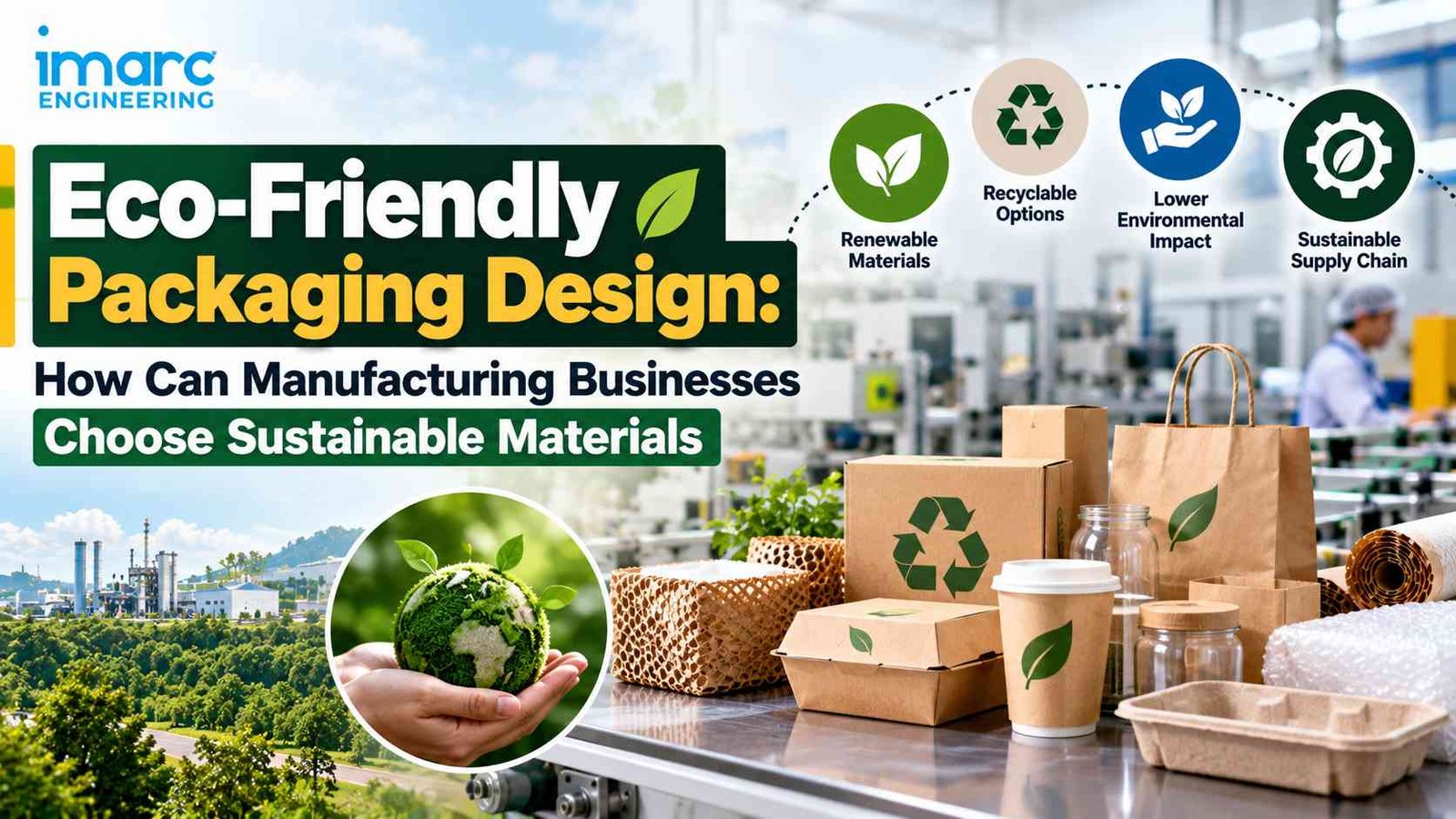
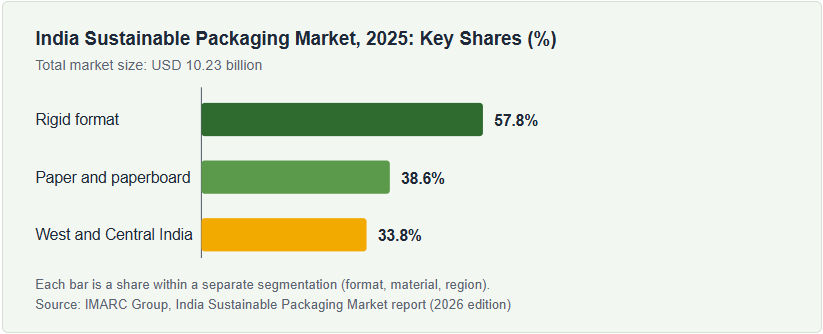
Sustainable packaging has moved from a branding choice to a regulatory and commercial requirement. India’s sustainable packaging market reached USD 10.23 billion in 2025, and paper and paperboard alone hold 38.6% of it.
Regulation is tightening in step. The Plastic Waste Management (Amendment) Rules, 2026, notified on 31 March 2026, require rigid plastic packaging to carry 30% recycled content in 2026-27, rising to 60% by 2028-29. A material that looks green but fails these rules becomes a liability.
Choosing well means testing protection, compliance, recyclability and cost together before tooling is committed. Manufacturers that use specialist packaging design and labelling services usually avoid late redesigns, because the material decision is checked against artwork, statutory labelling and testing from the start.
How can manufacturers choose sustainable packaging materials?
- Define product protection needs first: fragility, shelf life and temperature sensitivity.
- Shortlist materials that are recyclable, recycled-content compliant or certified compostable.
- Check regulatory fit under the 2026 plastic rules, FSSAI food-contact norms or CDSCO rules.
- Validate through prototypes, transit tests and a documented life cycle assessment before launch.
Why Is Material Choice Now a Compliance Issue?
The 2026 amendment changes what “sustainable” means in practice. Material decisions now carry direct legal consequences for brand owners, producers and importers.
- Recycled content targets: rigid plastic packaging must reach 30% recycled content in 2026-27 and 60% by 2028-29.
- Compostables: compostable plastic must be CPCB certified, so an uncertified “biodegradable” claim is not enough.
- Imports: recycled content in imported plastic packaging does not count toward obligations, and importers must buy certificates from surplus producers, importers and brand owners (PIBOs).
- Traceability: QR codes or barcodes are required on plastic packaging to verify origin and recycled content.
What Does India’s Sustainable Packaging Market Look Like in 2025?
The market is dominated by fibre-based materials and rigid formats, which shapes supplier availability and pricing. The chart below shows where capacity is concentrated, and IMARC Group projects the market to reach USD 17.73 billion by 2034.
Which Criteria Should Drive the Material Decision?
- Product protection: match the material to fragility, shelf life and temperature sensitivity, then to stacking and transport demands.
- Regulatory fit: food contact falls under FSSAI Packaging Regulations 2018, with overall migration assessed against IS 9845. Recycled plastic in direct food contact is restricted, and pharmaceutical packs follow CDSCO rules.
- Recyclability by design: prefer mono-material construction, removable labels and closures, optical-sorting-friendly colours and compatible adhesives. Mark plastics per IS 14535.
- Right-sizing: reduced material intensity and minimal void space lower both cost and waste.
- Substantiated claims: use FSC for paper, EU Ecolabel or ISO 14040/14044 life cycle assessment, and follow ASCI guidelines to avoid greenwashing risk.
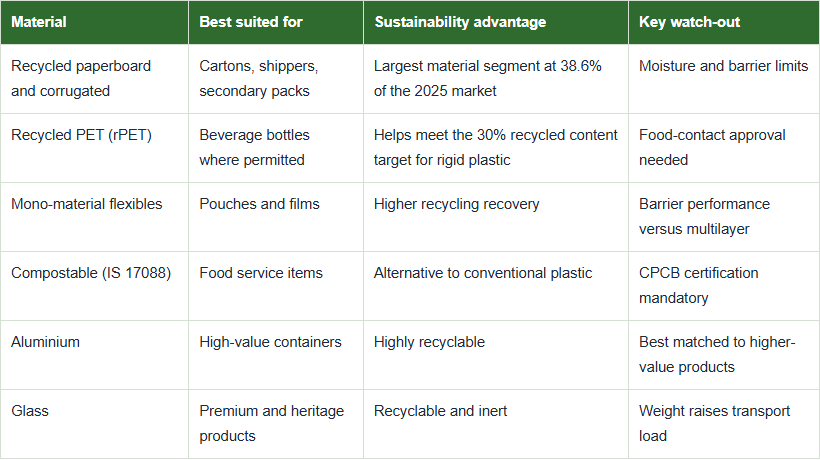
How Do the Main Sustainable Materials Compare?
Sustainable packaging material comparison for manufacturers
How Long Does Sustainable Packaging Design Take, and What Does It Cost?
Material selection sits inside a structured development roadmap. Stage durations from IMARC Engineering’s packaging guide (August 2026) show where time is spent:
- Product and market brief: 2-4 weeks, including a regulatory scan.
- Structural design and material selection: 3-6 weeks.
- Artwork development: 3-8 weeks.
- Regulatory compliance and labelling checks: 2-4 weeks.
- Prototyping and testing: 4-8 weeks, including drop tests per ISTA protocols and shelf-life validation.
- Production and launch: 4-8 weeks.
Run end to end, the roadmap takes about 18-38 weeks. Indicative professional fees are INR 3-25 lakh for structural design with testing, INR 5-30 lakh for regulatory advisory and INR 5-50 lakh for a comprehensive packaging design programme. Basic label design starts at INR 25,000-3 lakh, while a full brand identity plus packaging programme can reach INR 25 lakh-2 crore, so scope should be fixed before sourcing begins.
How Does the Right Material Differ by Sector?
No single material suits every product. Sector rules narrow the shortlist before sustainability goals are applied.
- Food and beverage: packaging must meet FSSAI Packaging Regulations 2018 and Labelling Regulations 2020, with BIS-referenced migration limits. Recycled plastic in direct food contact is restricted, so food-grade documentation matters as much as recycled content.
- Pharmaceuticals and cosmetics: CDSCO labelling elements such as batch number, expiry date and storage instructions must stay legible on the chosen substrate. Cosmetics also need INCI ingredient declarations and net content.
- E-commerce and transit packs: corrugated and right-sized formats cut void space, and ISTA drop tests confirm that lighter designs still protect the product.
- Exports: destination-country rules sit on top of Indian requirements, so a single unified pack often needs multilingual panels and QR links to market-specific information.
How Can Manufacturers Back Up Environmental Claims?
A sustainable material only creates value if the claim can be defended. Comparative claims need evidence, and a structured assessment keeps the decision objective.
- Measure what matters: compare pack weight per unit, recycled content percentage, recyclability and end-of-life route for each shortlisted material.
- Use a recognised method: life cycle assessment under ISO 14040 and 14044 supports comparative statements across options.
- Hold certificates: FSC for paper, CPCB certification for compostables and EU Ecolabel where relevant.
- Control the wording: ASCI guidelines cover environmental claims, so avoid vague terms such as “eco-friendly” without substantiation.
- Plan for audits: the 2026 rules add enhanced audit mechanisms and verification guidelines for reuse obligations, so keep supplier declarations and test records on file.
What Mistakes Should Manufacturers Avoid?
- Selecting materials after product development is complete, which leaves no time for testing.
- Relying on a partial regulatory scan that misses Legal Metrology, EPR or export-market rules.
- Deferring sustainability planning, which forces a retrofit as obligations expand.
- Skipping prototypes and transit simulation, which raises damage and complaint rates after launch.
Read our detailed analysis here: How Packaging Design and Labelling Services in India Help Manufacturers Reduce Compliance Risks and Improve Product Marketability: https://www.imarcengineering.com/blog/packaging-design-labelling-services-in-india
How IMARC Engineering’s Expertise Can Help in Sustainable Packaging Design
- Regulatory scan: Legal Metrology, FSSAI, CDSCO, BIS and plastic EPR checks across domestic and export markets.
- Material strategy: structured trade-off analysis across protection, recyclability, compliance and cost.
- Design and artwork: structural design, multilingual artwork and barcode integration.
- Testing coordination: prototyping, transit simulation and shelf-life validation.
- Sustainability substantiation: certification guidance and life cycle assessment support.
Consult With Our Experts: https://www.imarcengineering.com/contact?service=packaging-design-labelling
Conclusion
Sustainable packaging succeeds when material choice is treated as an engineering and compliance decision, not a marketing label. With recycled content mandates rising and fibre-based formats leading the market, manufacturers need early regulatory screening, tested prototypes and documented claims. Businesses that integrate these steps into packaging design from the first brief will avoid rework, protect brand credibility and stay ahead of tightening obligations. The strongest results combine material science, regulatory discipline and credible evidence.
Contact Us:
IMARC Engineering
Phone: +91-120-433-0800
Email: sales@imarcengineering.com
India: C-130, Sector 2, Noida, Uttar Pradesh 201301
LinkedIn: https://www.linkedin.com/showcase/imarc-engineering/
About the Author