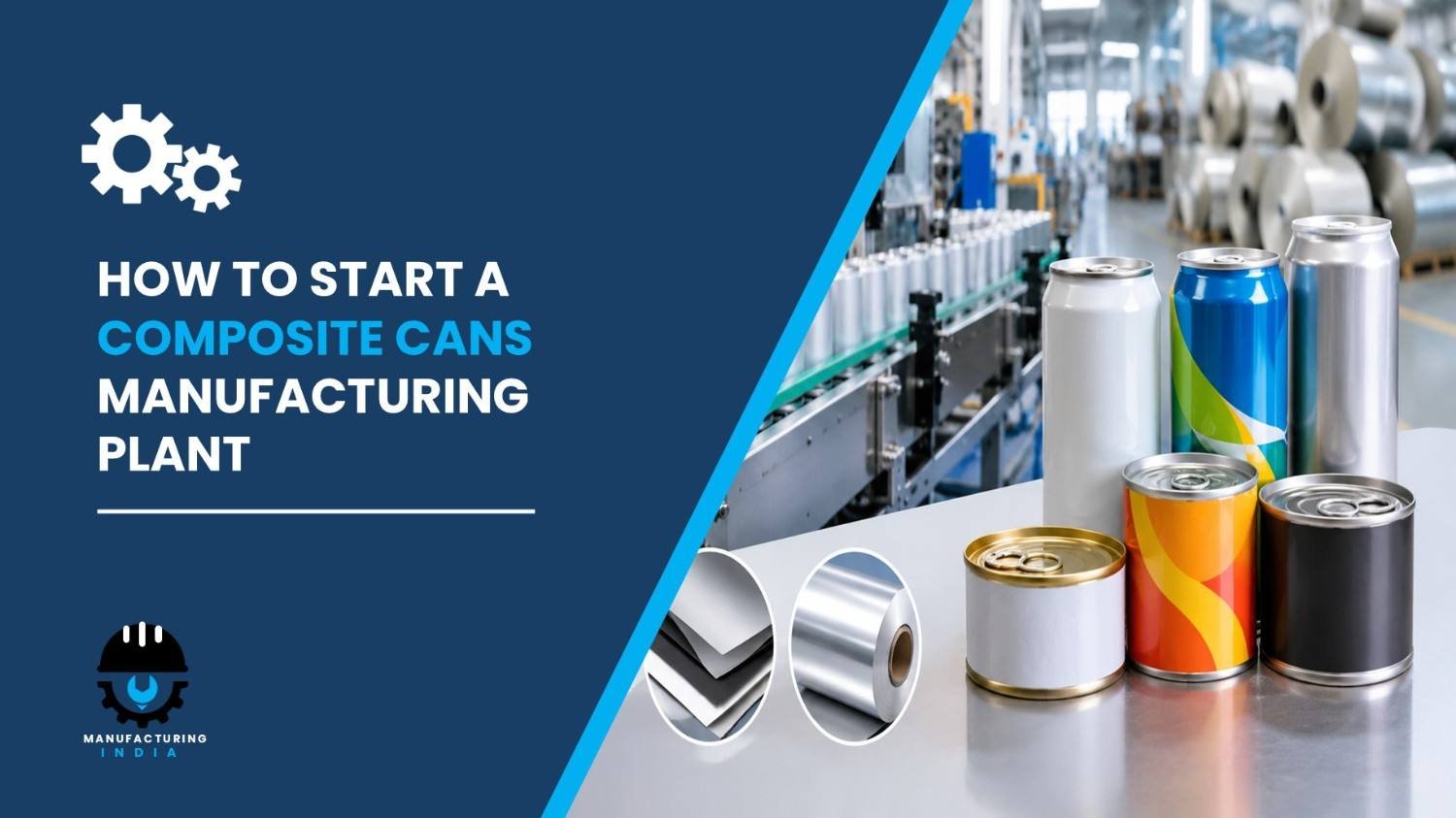
A composite cans manufacturing plant setup in India presents a compelling investment case for entrepreneurs targeting the packaging value chain. Demand comes from the food and beverage, consumer goods, pharmaceuticals, household products, and cosmetics industries, where these multi-layered containers protect contents, preserve freshness, and keep transport weight low. Their durability, moisture resistance, recyclability, and cost-effectiveness make them critical to modern packaging and to the retail and e-commerce supply chains that depend on it.
India offers clear advantages for this production. Rapid urbanisation, steady infrastructure growth, and the Make in India initiative encourage domestic manufacturing, while industrial states such as Gujarat and Maharashtra provide established clusters, utilities, and logistics. For a unit serving packaged food, household, pharmaceutical, and personal care brands, India is a strategically sound base.
With supportive manufacturing policy, cost-competitive production, broad demand sectors, gross margins of 25-35%, and a break-even period of 3 to 6 years, this investment offers a balanced risk-reward profile. Sustainability-led packaging demand strengthens the case further.
What are Composite Cans?
Composite cans are multi-layered packaging containers made from a combination of paperboard, metal, and plastic, designed to offer durability, protection, and versatility. The outer layer is typically paperboard, which provides strength and structure, while the inner layer is often aluminum or steel, offering a barrier against moisture and oxygen. A plastic liner is added for sealing, enhancing product protection.
These containers are lightweight, cost-effective, and eco-friendly, and they are recyclable, which makes them an attractive alternative to traditional glass and plastic containers. The production process covers raw material selection, lamination and coating, shaping and forming, sealing and packaging, and quality control. The end-use industries served are food and beverage, consumer goods, pharmaceuticals, household products, and cosmetics. Growing demand for sustainable packaging and lightweight, durable containers is driving steady growth in the composite can market.
Cost of Setting Up a Composite Cans Manufacturing Plant in India
The cost of setting up this type of facility depends on capacity, technology, location, automation level, and regulatory compliance.
1. Capital Expenditure (CapEx)
Land and Site Development: Land and site development, including land registration, boundary development, and related charges, forms a substantial part of the total investment. Investors can evaluate industrial estates or SEZ locations, with access to paperboard, aluminum foil/PE lining, adhesives, metal ends, and printing inks being the key site criterion.
Civil Works and Construction: Civil works cover the production shed, separate areas for raw material storage, quality control, and finished goods storage, and space for future expansion.
Machinery and Equipment: Machinery costs account for the largest portion of total CapEx. Key machinery required includes:
- Paper slitting machines
- Extrusion machines
- Lamination units and lamination equipment
- Winding machines
- Forming machines
- Cutting machines
- End-seaming and curling machines
- Sealing and packaging machines
- Labeling units
- Drying ovens
- Air compressors
- Gluing systems
- Quality testing instruments
Other Capital Costs: These include effluent treatment systems, pre-operative expenses, installation, and commissioning of the composite cans manufacturing plant.
Request a Sample Report for In-Depth Market Insights: https://www.imarcgroup.com/composite-cans-manufacturing-plant-project-report/requestsample
2. Operational Expenditure (OpEx)
Raw Material Cost: Raw materials account for approximately 70-80% of OpEx, with paperboard the largest contributor. The full list covers paperboard (recycled or virgin), aluminum foil/PE lining, plastic, adhesives, metal ends, printing inks, and printed paper labels. Long-term supplier contracts help stabilise pricing and secure steady supply.
Utility Cost: Utilities such as electricity, water, and steam account for roughly 10-15% of OpEx.
Other Operating Costs: Other expenses include transportation, packaging, salaries and wages, repairs and maintenance, depreciation, and taxes. By the fifth year, total operating cost is expected to rise substantially because of inflation, market fluctuations, and higher prices of key materials.
3. Plant Capacity
The proposed facility is designed for an annual capacity of 50-100 million cans, enabling economies of scale while maintaining operational flexibility. Capacity can be customised to investor requirements, and profitability improves with higher capacity utilisation.
4. Profit Margins and Financial Projections
Under normal operating conditions, gross profit margins typically range between 25-35%, while net profit margins range between 10-15%. Financial projections cover NPV, IRR, payback period, income and expenditure, and profit and loss, built on assumptions about capital investment, operating costs, capacity utilisation, pricing trends, and demand outlook. Break-even typically ranges from 3 to 6 years.
Why Set Up a Composite Cans Plant in India?
Rising demand for sustainable packaging: Environmental concerns are pushing brands toward eco-friendlier alternatives to plastic and glass. The page notes that 51% of millennials check sustainability claims and 82% are willing to pay more for eco-friendly options, which supports adoption.
Growing e-commerce and retail demand: As e-commerce expands, packaging must be functional and visually appealing. These containers stand out on shelves and protect products during shipping, serving retail and online markets alike.
Policy and regulatory tailwinds: Governments may offer capital subsidies, tax exemptions, reduced utility tariffs, export benefits, or interest subsidies under industrial policies, which can improve project economics.
Cost-competitive manufacturing: The manufacturing process is cost-effective compared with other packaging types, helping businesses balance cost with performance. Lightweight design also reduces transportation costs.
Active industry investment: In October 2025, Gilpin acquired AMCLO, a producer of metal closures for composite cans, cores, and tubes, including its production equipment, inventory, and customer base. The deal signals continued consolidation and investor interest in this segment.
Local supply chain preference: Sites near paperboard, foil, adhesive, and ink suppliers, and near target markets, lower inward freight and distribution costs, favouring locally based producers.
Manufacturing Process: Step by Step
The composite cans manufacturing process uses a multi-step sequence of raw material selection, lamination and coating, shaping and forming, sealing and packaging, and quality control as the primary production method.
- Slitting: paper, aluminum foil, or plastic materials are slit to width.
- Lamination: layers are laminated to form composite sheets.
- Winding: laminated sheets are wound into cylindrical bodies.
- Cutting: tubes are cut to the desired can lengths.
- Seaming or curling: ends are seamed or curled for closure.
- Labeling and decorating: finished bodies are labeled and decorated.
- Inspection and testing: finished units are inspected, tested, and packaged.
- Storage and dispatch: cans are stored and dispatched to food and beverage, consumer goods, pharmaceutical, household, and cosmetics customers.
Key Applications
Composite cans serve several industries that need durable, protective, lightweight packaging.
- Food and Beverage: powdered beverages, snack foods, and seasoning products, where freshness and contamination protection matter.
- Consumer Goods: household items such as detergents, cleaning supplies, and pet food.
- Pharmaceuticals: pharmaceuticals and nutritional supplements such as protein powders and vitamins.
- Cosmetics: aerosol sprays, body care products, and other personal care items.
Leading Manufacturers
The global industry includes multinational companies with extensive production capacity and diverse application portfolios.
- Sonoco Products Company
- Smurfit Kappa Group plc
- Mondi Group plc
- Amcor plc
- Crown Holdings, Inc.
- WestRock Company
- Irwin Packaging Pty Ltd
- Ace Paper Tube
- Greif
- Ball Corporation
- Valk Industries, Inc.
Timeline to Start the Plant
Launching a facility typically takes 12 to 24 months, depending on site development, machinery installation, environmental clearances, safety measures, and trial runs.
- Feasibility study and project report preparation
- Land acquisition and site development
- Regulatory approvals and environmental clearances
- Factory licence and fire safety compliance
- Machinery procurement and installation
- Raw material supplier agreements and supply chain setup
- Trial production and quality testing
- Commercial production launch
Licences and Regulatory Requirements
Starting a composite cans manufacturing unit in India requires several approvals:
- Business registration (Proprietorship, LLP, or Pvt Ltd)
- Factory Licence under the Factories Act
- Environmental Clearance from State Pollution Control Board
- GST Registration
- Fire Safety NOC
- Effluent Treatment Plant (ETP) operational clearance
- Occupational Health and Safety compliance
Key Challenges to Consider
- High Capital Requirements: Land, civil works, machinery, and working capital demand significant funding, and machinery is the largest share.
- Raw Material Price Volatility: Paperboard, aluminum foil/PE lining, adhesives, metal ends, and printing inks drive 70-80% of OpEx, so price swings affect margins.
- Regulatory Compliance: Environmental clearances, factory licences, fire safety certification, and industry-specific permits must be secured.
- Competition: Established players such as Sonoco Products Company, Amcor plc, WestRock Company, and Crown Holdings, Inc. compete for the same customers.
- Skilled Manpower: Running the composite cans manufacturing process, from forming and lamination to quality testing, needs trained labour.
Frequently Asked Questions
How much does it cost to set up a composite cans manufacturing plant in India?
Capital requirements cover land acquisition, construction, equipment procurement, installation, pre-operative expenses, and initial working capital. The total varies with capacity, technology, and location.
Is composite cans manufacturing profitable in India in 2026?
Yes, under normal operating conditions, gross margins range between 25-35% and net margins between 10-15%, and returns improve with higher capacity utilisation.
What machinery is required for a composite cans plant in India?
The plant needs paper slitting machines, lamination units, winding machines, cutting machines, end-seaming and curling machines, labeling units, and drying ovens, supported by air compressors, gluing systems, and quality testing instruments.
What licences and approvals are required to start a composite cans plant in India?
Business registration, environmental clearances, factory licences, fire safety certification, and industry-specific permits.
What raw materials are needed for composite cans manufacturing?
Paperboard (recycled or virgin), aluminum foil/PE lining, plastic, adhesives, metal ends, printing inks, and printed paper labels.
What are the environmental compliance requirements for a composite cans plant in India?
Effluent treatment systems, monitoring systems to detect leaks or deviations, and compliance with emission standards and local environmental regulations.
What is the best location to set up a composite cans plant in India?
One with easy access to raw materials, proximity to target markets, robust infrastructure and utilities, waste management, and compliance with zoning laws.
What is the break-even period for this type of plant in India?
Typically 3 to 6 years, depending on scale, compliance costs, raw material pricing, and demand.
What government incentives are available for manufacturers in India?
Capital subsidies, tax exemptions, reduced utility tariffs, export benefits, and interest subsidies may be available under industrial policies.
Key Takeaways for Investors
The opportunity spans food and beverage, consumer goods, pharmaceuticals, household products, and cosmetics demand. Financial viability holds across the 50-100 million can capacity range, with 25-35% gross and 10-15% net margins. The global market was valued at USD 5.40 Billion in 2025 and is expected to reach USD 8.75 Billion by 2034, at a CAGR of 5.1% from 2026 to 2034. Sustainability-led demand and e-commerce growth should keep this packaging relevant for years.
About the Author