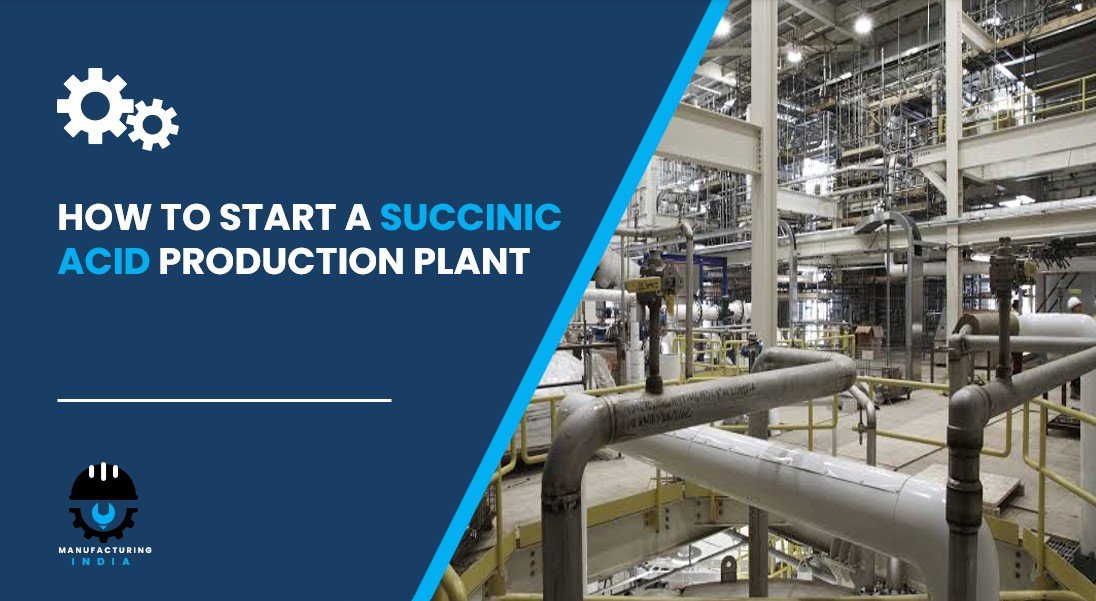
Setting up a succinic acid production plant cost in india represents a highly attractive investment proposition underpinned by robust and structurally growing demand from the global shift toward bio-based platform chemicals, the expanding biodegradable polymer industry, and rising consumption across pharmaceuticals, food and beverage, personal care, and industrial formulations. As regulators and brand owners intensify their focus on sustainable materials, and as fermentation and downstream purification technologies continue to improve, succinic acid occupies an increasingly important position as a versatile dicarboxylic acid used in polymers, solvents, coatings, and fine chemical synthesis. This growth trajectory, combined with India’s abundant agricultural feedstock base, strong chemical and pharmaceutical manufacturing ecosystem, and a supportive national bio-manufacturing policy framework, creates a highly favourable environment for new entrants with efficient fermentation, purification, and crystallisation systems.
What is Succinic Acid?
Succinic acid (C₄H₆O₄) is a colourless, odourless, crystalline dicarboxylic acid used as an intermediate in chemical synthesis and as an acidity regulator in formulations. It is soluble in water and polar solvents, exhibits mild acidity, and participates readily in esterification and hydrogenation reactions, enabling conversion into derivatives such as succinate salts, esters, and 1,4-butanediol (BDO) intermediates.
Commercial grades are produced either through petrochemical routes, most commonly the hydrogenation of maleic anhydride, or through the fermentation of renewable sugars using specialised microorganisms. Bio-based succinic acid is widely regarded as a sustainable platform chemical because it is derived from renewable feedstocks such as glucose and corn syrup, supports circular economy objectives, and is compatible with polymer, coating, and formulation systems. This combination of reactivity, versatility, and sustainability credentials underpins its adoption across bioplastics, food and beverage, pharmaceutical, agricultural, and specialty chemical applications.
The global succinic acid market was valued at approximately USD 294.3 Million in 2025 and is expected to reach USD 677.10 Million by 2034, exhibiting a CAGR of 9.7% from 2026 to 2034, supported by rising demand for bio-based platform chemicals, increasing use in biodegradable polymers, and growing adoption in personal care, food, and industrial formulations.
Minimum Cost Required to Set Up a Succinic Acid Plant:
Industry cost benchmarking indicates that setting up a succinic acid production plant may require an initial investment of approximately USD 15–25 million for a smaller-scale facility producing around 20,000 MT annually, covering essential equipment such as fermentation reactors, biomass pretreatment systems, hydrolysis tanks, centrifugal separators, ion-exchange purification units, evaporators, crystallizers, drying systems, and packaging machinery. Capital requirements can increase to approximately USD 30–45 million for mid-sized plants producing around 30,000–40,000 MT per year, while larger and highly automated facilities may require USD 50–75 million or more for capacities approaching 50,000 MT annually, particularly where advanced fermentation technology, integrated purification systems, wastewater treatment, and automated process controls are installed. The key production stages include feedstock preparation, fermentation or chemical synthesis, separation, purification, crystallization, drying, and packaging. IMARC Group’s 2026 report identifies a proposed annual production capacity of 20,000–50,000 MT and highlights glucose or corn syrup, fermentation nutrients, and purification chemicals among the key raw materials.
Succinic Acid Plant Setup Cost in India
The total capital investment required to establish a succinic acid production plant in India is shaped by several key parameters: annual production capacity (typically ranging from 20,000 to 50,000 MT per annum), the production route adopted (fermentation of glucose or corn syrup versus petrochemical synthesis), the level of automation across fermentation, purification, and crystallisation sections, the target product grade and quality specification, feedstock sourcing strategy, and applicable regulatory and environmental compliance requirements. Below is a structured breakdown of the major cost components.
1. Capital Expenditure (CapEx)
Total capital investment in a succinic acid production plant covers the following major heads:
Land and Site Development
This encompasses land acquisition or lease, land registration, site preparation, boundary development, and utilities connectivity. Site selection should prioritise proximity to reliable supplies of glucose or corn syrup, fermentation nutrients, and purification chemicals, as well as access to target markets to minimise distribution costs. Dependable supplies of process water, steam, and power, strong road and port connectivity, availability of a trained technical workforce, and access to effluent treatment and waste management infrastructure are critical site selection criteria. Compliance with industrial zoning regulations, environmental clearance frameworks, and applicable safety norms must be assessed from project initiation, and space for future capacity expansion should be incorporated into the master plan.
Civil Works and Construction
Building costs cover the main production facility including the feedstock preparation and hydrolysis section, fermentation hall, downstream purification and crystallisation area, drying and packaging section, raw material and finished goods warehouses, quality control laboratory, administrative block, and utility infrastructure including boiler and steam systems, cooling water circuits, and the effluent treatment plant. Construction must comply with applicable factory act requirements, fire and electrical safety codes, and environmental clearance conditions, with separate zones designated for raw material storage, production, quality control, and finished goods storage.
Machinery and Equipment
Machinery represents the single largest CapEx component. Key equipment required for a succinic acid production plant includes:
- Biomass Pretreatment Reactors: Reactors that prepare sugar-bearing feedstock for conversion, enabling efficient release of fermentable sugars where biomass-derived feedstocks are used
- Hydrolysis Tanks: Tanks in which starch or biomass is converted into glucose under controlled temperature, pH, and enzyme dosing conditions to supply the fermentation section
- Fermentation Systems: Corrosion-resistant bioreactors and seed fermenters in which microorganisms convert glucose into succinic acid under controlled conditions, forming the core production technology of the plant
- Centrifugal Separators: Separation equipment that removes microbial biomass and suspended solids from the fermentation broth, delivering a clarified stream to downstream purification
- Ion-Exchange Purification Units: Ion-exchange columns that remove residual salts, organic acid by-products, and colour bodies to raise the purity of the succinic acid stream to the required specification
- Evaporators: Concentration systems that remove water from the purified succinic acid solution ahead of crystallisation, with heat recovery designed to control energy consumption
- Crystallisation Columns: Crystallisers that precipitate succinic acid from the concentrated solution under controlled cooling profiles, determining crystal size, purity, and yield
- Drying Systems: Dryers that reduce the moisture content of separated crystals to meet product specifications for industrial, food, or pharmaceutical use
- Packaging Machinery: Weighing, filling, and sealing equipment for packing finished succinic acid into bags, drums, or bulk containers for dispatch
- Utility and Effluent Treatment Systems: Boilers, cooling towers, compressed air, water treatment, and effluent treatment systems that support process operations and ensure compliance with discharge norms
- Quality Control and Monitoring Instruments: Analytical instruments for continuous monitoring of product concentration, purity, and stability, together with process control systems supporting traceability and regulatory documentation
Other Capital Costs
These include pre-operative expenses, commissioning charges, import duties on specialised fermentation and purification equipment, staff training and competency development, initial working capital for production commissioning, regulatory compliance setup including environmental clearances and applicable product-grade approvals, and ISO 9001 / ISO 45001 quality and safety management system establishment costs.
Request a Sample Report for In-Depth Market Insights: https://www.imarcgroup.com/succinic-acid-manufacturing-plant-project-report/requestsample
2. Operational Expenditure (OpEx)
Raw materials, principally glucose or corn syrup along with yeast or bacterial strains, fermentation nutrients, and purification chemicals, constitute the dominant operating cost, typically representing 40–50% of total OpEx. Utility costs, driven primarily by steam, electricity, and cooling water consumed in fermentation, evaporation, crystallisation, and drying, account for 25–35% of OpEx. Labour, maintenance, quality control, depreciation, taxes, packaging, transportation, and overhead costs constitute the remainder of the operating cost base.
3. Plant Capacity
The proposed succinic acid production facility is designed with an annual production capacity ranging between 20,000–50,000 MT, enabling economies of scale while maintaining operational flexibility. This capacity range supports a diversified offtake portfolio spanning biodegradable polymer manufacturers, food and beverage formulators, pharmaceutical and nutraceutical producers, and specialty chemical processors, serving domestic customers and export markets under both spot and long-term supply arrangements.
4. Profit Margins and Financial Projections
The project demonstrates healthy profitability potential under normal operating conditions. Financial projections encompass capital investment, operating costs, capacity utilisation ramp-up schedule, pricing trends, and forward demand outlook underpinned by the shift toward bio-based chemicals and biodegradable materials. A comprehensive feasibility analysis includes sensitivity analysis, Net Present Value (NPV), Internal Rate of Return (IRR), and Payback Period calculations. Gross profit margins for succinic acid production typically range from 30–40%, supported by stable demand and value-added applications. Net profit margins of 10–20% are achievable with disciplined cost management, optimal capacity utilisation, and effective feedstock procurement.
Why Set Up a Succinic Acid Production Plant?
Strong Demand from Bioplastics and Biodegradable Polymers
Succinic acid is a key precursor for polybutylene succinate (PBS) and other biodegradable polymers, positioning it at the centre of the global transition away from conventional single-use plastics. Demand from biodegradable polymer manufacturing continues to support capacity expansion, giving new entrants a clear and growing offtake channel anchored in sustainability-driven regulation and brand owner commitments.
Policy Support for Bio-Based Manufacturing in India
India’s BioE3 (Biotechnology for Economy, Environment and Employment) Policy, approved by the Union Cabinet on 24 August 2024, identifies high-value bio-based chemicals, enzymes, and biopolymers as one of its priority thematic sectors, with an emphasis on replacing petrochemical derivatives and promoting import substitution in specialty chemicals. By April 2026, India had operationalised six biofoundries and 21 bio-enabler facilities under the National Biofoundry Network, strengthening the technology and scale-up ecosystem available to bio-manufacturing project developers.
Diversified End-Use Applications
Succinic acid serves as a building block across bioplastics, food and beverage, pharmaceuticals, agriculture, and specialty chemicals. This versatility allows producers to diversify offtake across multiple demand channels, reducing dependence on any single end-use segment and improving overall project resilience, while value-added grades for food and pharmaceutical use support stronger margins.
Moderate but Defensible Entry Barriers
While production requires fermentation or chemical synthesis infrastructure, strict quality standards, regulatory approvals, and consistency in feedstock conversion create barriers that favour experienced producers capable of delivering reliable, high-purity succinic acid at scale. These barriers help protect the margins of well-run plants once qualification with key customers is achieved.
Megatrend Alignment
The global push for biodegradable plastics, green chemicals, sustainable packaging, and renewable-based chemical feedstocks is driving strong and growing demand for bio-based succinic acid. Markets such as bio-based polymers, eco-friendly solvents, and nutraceuticals are expanding rapidly, creating opportunities for producers aligned with circular economy trends.
Localisation and Dependability in Supply Chains
Manufacturers increasingly prefer local, dependable suppliers to reduce lead times, ensure consistent quality, and stabilise feedstock costs. India’s extensive agricultural base and established sugar, starch, and fermentation industries support access to glucose and corn syrup feedstocks, creating opportunities for domestic producers with robust supply chain management and, where feasible, vertical integration.
Scalable and Phased Investment Approach
The succinic acid value chain, spanning feedstock preparation, fermentation, purification, and crystallisation, allows processors to begin operations at a moderate scale and expand capacity or add downstream integration, such as derivative production, as volumes and offtake commitments grow. This phased approach allows new entrants to manage capital deployment while building operational expertise and securing incremental customer qualifications.
Major States Driving Succinic Acid Manufacturing Plant Demand in India
Demand for succinic acid manufacturing capacity in India is concentrated in states that combine access to agricultural feedstocks, established chemical and pharmaceutical clusters, and port and industrial infrastructure. The following states represent leading hubs for succinic acid plant investment:
Gujarat
Gujarat hosts one of India’s largest chemical manufacturing bases, with well-developed industrial estates and chemical clusters in the Dahej, Bharuch, and Vadodara belt, strong port connectivity for import of inputs and export of finished product, and a deep ecosystem of specialty chemical, pharmaceutical, and polymer consumers. Established utilities, effluent handling infrastructure, and an experienced technical workforce make the state a natural location for fermentation-based and chemical-route succinic acid facilities.
Maharashtra
Maharashtra combines a large sugar and molasses-producing agricultural belt with major chemical, pharmaceutical, and consumer products clusters around Mumbai and Pune, together with access to the ports of Mumbai and Nhava Sheva. Proximity to both fermentable feedstock and a diversified industrial customer base supports sustained demand for bio-based chemical manufacturing capacity in the state.
Uttar Pradesh
Uttar Pradesh is India’s leading sugarcane-producing state and hosts a large sugar and distillery industry that supplies sugar-derived feedstocks and offers established fermentation know-how. Its proximity to large industrial demand centres in northern India, combined with a supportive state investment promotion framework, makes it an attractive location for feedstock-linked bio-based chemical projects.
Karnataka
Karnataka combines a significant sugar industry with Bengaluru’s strong biotechnology research and talent ecosystem, supporting fermentation process development, strain engineering, and scale-up activity. The state’s industrial base and logistics connectivity through southern ports support both domestic supply and export-oriented manufacturing.
Telangana and Andhra Pradesh
Telangana and Andhra Pradesh host extensive pharmaceutical and bulk drug manufacturing clusters around Hyderabad and Visakhapatnam, representing a major end-use market for pharmaceutical and nutraceutical grade succinic acid. Coastal port access in Andhra Pradesh and a strong industrial infrastructure base support both domestic offtake and export-oriented production.
Collectively, these states offer new entrants a choice of locations aligned to their feedstock, customer, and logistics priorities, with the final site decision best supported by a detailed site selection analysis covering feedstock proximity, utilities, incentives, and regulatory timelines.
Ask An Analyst -Succinic Acid Production Plant Cost and DPR 2026
Manufacturing Process Overview
The fermentation-based succinic acid production operation transforms renewable sugar feedstock into purified, crystalline succinic acid through a sequence of feedstock preparation, fermentation, separation, purification, crystallisation, and drying operations. The key process stages are:
- Feedstock Preparation and Hydrolysis: Glucose, corn syrup, or biomass-derived sugars are prepared and, where required, pretreated and hydrolysed to deliver a consistent stream of fermentable sugars to the fermentation section.
- Fermentation: Selected yeast or bacterial strains convert the sugar feed into succinic acid in controlled bioreactors, with pH, temperature, and nutrient supply carefully managed to maximise yield and productivity.
- Biomass Separation: Microbial cells and suspended solids are removed from the fermentation broth using centrifugal separators and related clarification equipment to produce a clear succinic acid–bearing stream.
- Ion-Exchange Purification: The clarified broth passes through ion-exchange purification units that remove residual salts, organic acid by-products, and colour, raising the purity of the stream to the required specification.
- Concentration: Evaporators remove water from the purified solution, concentrating succinic acid to the level required for efficient crystallisation while recovering heat to control energy costs.
- Crystallisation: Concentrated solution is cooled under controlled conditions in crystallisation columns, causing succinic acid to crystallise and enabling separation of high-purity crystals from the mother liquor.
- Drying: Separated crystals are dried to the target moisture content and, where required, sized and screened to meet customer specifications.
- Quality Control, Packaging and Dispatch: Product concentration, purity, and stability are tested against specifications before the finished succinic acid is packed and dispatched with full batch traceability documentation.
Key Applications of Succinic Acid
The succinic acid market serves several major end-use segments across polymers, food, pharmaceuticals, agriculture, and chemicals:
- Bioplastics: Succinic acid serves as a precursor for biodegradable polymers such as polybutylene succinate (PBS), supporting the shift toward compostable and bio-based materials in packaging and consumer goods.
- Food and Beverage: Succinic acid is used as an acidulant, flavour enhancer, and pH regulator in formulated foods and beverages.
- Pharmaceuticals: Succinic acid is applied as an intermediate for drug synthesis and as a precursor for active pharmaceutical ingredients and nutraceuticals.
- Chemical Industry: Succinic acid is used in the production of solvents, surfactants, plasticisers, polyester polyols, and other specialty chemicals, including conversion into 1,4-butanediol intermediates.
- Agriculture: Succinic acid is used in crop protection products and related agricultural formulations.
Global Succinic Acid Market Outlook
The global succinic acid market was valued at approximately USD 294.3 Million in 2025. According to IMARC Group estimates, the market is expected to reach USD 677.10 Million by 2034, exhibiting a CAGR of 9.7% from 2026 to 2034. The succinic acid market benefits from multiple structural demand drivers:
- Rising demand for bio-based platform chemicals as manufacturers seek renewable alternatives to petrochemical-derived intermediates
- Increasing use in biodegradable polymers, particularly PBS-linked applications, supporting steady capacity expansion
- Growing adoption in personal care, food, and industrial formulations that rely on succinic acid and its derivatives
- Increasing regulatory focus on sustainable materials, encouraging the adoption of fermentation-based production routes
- Technological improvements in fermentation efficiency and downstream purification that have enhanced the commercial feasibility of new plants
- Public funding support for sustainable materials innovation, such as the U.S. Department of Energy’s USD 13.4 Million funding announcement for next-generation plastics technologies that reduce energy consumption and carbon emissions
- Rising consumption of formulated foods, cosmetics, and pharmaceutical products increasing demand for succinic acid and its derivatives
- Growing preference for local, dependable suppliers, creating opportunities for regional producers with integrated operations and robust supply chains
Leading producers in the global succinic acid industry include Roquette, DSM, Mitsubishi Chemical Group, BioAmber, Myriant, and PTT MCC Biochem, serving end-use sectors including pharmaceuticals, food and beverage, biodegradable plastics, chemicals, and agriculture.
Licenses and Regulatory Requirements
Establishing a succinic acid production unit requires a range of approvals and certifications, which may vary by country and jurisdiction, including:
- Business registration and company incorporation under applicable company law
- Factory License under applicable state Factories Act provisions for manufacturing operations
- Environmental Clearance from the applicable State or Central Pollution Control Board for fermentation and chemical manufacturing operations
- Pollution Control Board Clearances – Consent to Establish (CTE) and Consent to Operate (CTO) for manufacturing operations involving effluent and emission generation
- Effluent treatment and discharge compliance approvals for fermentation broth and process wastewater
- Boiler registration and inspection approvals for steam generation facilities, where applicable
- Biosafety approvals for the use of genetically modified microorganisms, where engineered production strains are used
- FSSAI licensing for food-grade succinic acid, and applicable GMP compliance for pharmaceutical-grade production
- ISO 9001:2015 Quality Management System Certification for quality management infrastructure compliance
- ISO 45001 Occupational Health and Safety Management System Certification for manufacturing worker safety
- Fire Safety Certification from the applicable state fire department for plant and storage infrastructure
- Compliance with hazardous chemical storage and handling rules for process chemicals used in purification, where applicable
- Export-Import Code (IEC) for international market access
Key Challenges to Consider
Feedstock Cost and Price Volatility
Glucose and corn syrup, which account for approximately 40–50% of total operating expenses, are subject to agricultural cycles, crop yields, and wider commodity price movements. Securing reliable suppliers, negotiating long-term contracts, selecting nearby sources to minimise transportation costs, and assessing sustainability and supply chain risks are critical project development priorities.
Competition from Petrochemical-Based Succinic Acid
Bio-based succinic acid competes with petrochemical-derived product, and cost competitiveness remains a central consideration for new entrants. Movements in petroleum and maleic anhydride prices can narrow or widen the cost gap, making a clear view of target segments, premium sustainable positioning, and differentiated high-purity grades important for protecting margins.
Fermentation Performance and Downstream Purification
Fermentation yield, productivity, and by-product formation directly influence both feedstock consumption and purification burden, while evaporation, crystallisation, and drying operations drive utility costs that represent 25–35% of OpEx. Strain selection, process optimisation, heat integration, and robust quality assurance systems are essential to achieve consistent, high-purity output at commercial scale.
Market Adoption and Offtake Development
Demand from biodegradable polymers and other bio-based applications is growing, but customer qualification cycles can be lengthy, particularly for food, pharmaceutical, and polymer applications. Securing anchor customers, long-term supply agreements, and early qualification of product grades is an important risk mitigation measure for new project developers.
Capital Intensity and Financing
Succinic acid production requires substantial upfront investment in fermentation systems, purification and crystallisation equipment, and utility and effluent treatment infrastructure. New entrants must carefully evaluate financing structures, including term loans and available government-backed or policy-linked support for bio-manufacturing, to manage capital deployment while working toward long-term project profitability.
Regulatory and Quality Compliance
Strict quality standards, product-grade approvals, effluent compliance, and, where engineered strains are used, biosafety requirements add complexity to project development. Early engagement with regulators, a documented quality system with full traceability, and continuous monitoring of product concentration, purity, and stability are essential to maintaining licence to operate and customer confidence.
Frequently Asked Questions (FAQs)
1. How much does it cost to set up a succinic acid production plant in India?
The total investment depends on plant capacity (20,000–50,000 MT per annum), the production route adopted, the level of automation, product grade, and location. Costs cover land, civil construction (fermentation hall, purification and crystallisation section, drying and packaging area, quality laboratory, utilities, effluent treatment), machinery (fermentation systems, separators, ion-exchange units, evaporators, crystallisers, dryers), regulatory compliance, and working capital. A comprehensive feasibility study from IMARC Group provides detailed, capacity-specific cost estimates covering all CapEx and OpEx components.
2. Is succinic acid production a profitable business in 2026?
Yes. Sustained demand from bioplastics, food and beverage, pharmaceuticals, and specialty chemicals, combined with gross margins of 30–40% and net profit margins of 10–20%, make succinic acid production financially attractive, particularly for projects that secure competitive feedstock supply and long-term customer agreements.
3. What machinery and equipment are required for a succinic acid production plant?
Key equipment includes biomass pretreatment reactors, hydrolysis tanks, fermentation systems, centrifugal separators, ion-exchange purification units, evaporators, crystallisation columns, drying systems, packaging machinery, and supporting utility, effluent treatment, and quality control infrastructure. All machinery should be corrosion-resistant and compliant with industry standards for safety, efficiency, and reliability.
4. What licenses and approvals are required?
Required approvals include company registration, Factory License, Environmental Clearance, Pollution Control Board consents (CTE and CTO), effluent compliance approvals, Fire Safety Certification, and ISO 9001/ISO 45001 certification. Depending on the product grade and production strain, FSSAI licensing, pharmaceutical GMP compliance, and biosafety approvals for genetically modified microorganisms may also apply.
5. How long does it take to commission a succinic acid production plant?
The timeline from project initiation to commercial production depends on project scale, site selection and land acquisition, equipment procurement lead times for fermentation and purification systems, regulatory approvals, and construction progress. Environmental and other statutory approvals should be initiated early in the project to avoid delays to commercial launch.
6. What are the key raw materials for succinic acid production?
The primary inputs are glucose or corn syrup, yeast or bacterial strains, fermentation nutrients, and purification chemicals. Reliable supplier relationships and long-term contracts are important for stabilising pricing and ensuring consistent production quality.
7. What is the break-even period for a succinic acid production plant?
The break-even period depends on plant size, capital investment, feedstock and utility costs, product mix, and the pace of customer qualification and capacity utilisation ramp-up. IMARC Group’s feasibility study provides a detailed payback period, NPV, and IRR analysis tailored to the selected capacity and location.
8. Which Indian states offer the strongest demand and advantages for succinic acid manufacturing plants?
Gujarat, Maharashtra, Uttar Pradesh, Karnataka, Telangana, and Andhra Pradesh are leading locations, combining access to agricultural feedstocks, established chemical and pharmaceutical clusters, port and industrial infrastructure, and skilled technical workforces.
9. What government support is available for bio-based chemical producers in India?
India’s BioE3 Policy prioritises high-value bio-based chemicals, enzymes, and biopolymers, and is supported by the National Biofoundry Network of biofoundries and bio-enabler facilities. Project developers should also review applicable central and state-level industrial policies and incentive schemes at the time of investment.
10. How does bio-based succinic acid production compare to the petrochemical route in terms of setup?
Fermentation-based production requires investment in bioreactors, separation, and purification systems and depends on agricultural feedstock pricing, while the petrochemical route is linked to maleic anhydride and hydrogenation infrastructure and to petroleum price movements. Bio-based production offers stronger sustainability credentials and alignment with bio-manufacturing policy, whereas the preferred route for a given project depends on feedstock access, target applications, and cost position.
Key Takeaways for Investors
The succinic acid production industry represents a structurally resilient and financially attractive investment opportunity positioned at the intersection of the global shift toward bio-based chemicals, expanding biodegradable polymer demand, and diversified end-use consumption across food, pharmaceutical, and specialty chemical applications. Strong policy momentum under India’s BioE3 Policy, combined with access to agricultural feedstocks and established chemical and pharmaceutical clusters across states such as Gujarat, Maharashtra, Uttar Pradesh, Karnataka, Telangana, and Andhra Pradesh, provides a favourable environment for new entrants.
Gross margins of 30–40% and net margins of 10–20%, supported by a market expected to grow at a CAGR of 9.7% through 2034, underline the commercial potential of the category. The scalable nature of the succinic acid value chain, from a single fermentation line to integrated operations with downstream derivatives, allows investors to phase capital deployment according to risk appetite and target market positioning, while continued technology improvements in fermentation and purification are expected to further strengthen long-term project economics.
About Us:
IMARC Group is a global management consulting firm that helps the world’s most ambitious changemakers to create a lasting impact. The company excels in understanding its client’s business priorities and delivering tailored solutions that drive meaningful outcomes. We provide a comprehensive suite of market entry and expansion services. Our offerings include thorough market assessment, feasibility studies, company incorporation assistance, factory setup support, regulatory approvals and licensing navigation, branding, marketing and sales strategies, competitive landscape, and benchmarking analyses, pricing and cost research, and procurement research.
Contact Us:
IMARC Group
134 N 4th St. Brooklyn, NY 11249, USA
Email: sales@imarcgroup.com
Tel No: (D) +91 120 433 0800
United States: (+1-201-971-6302)
About the Author