Missed Manufacturing Incentives Deadline
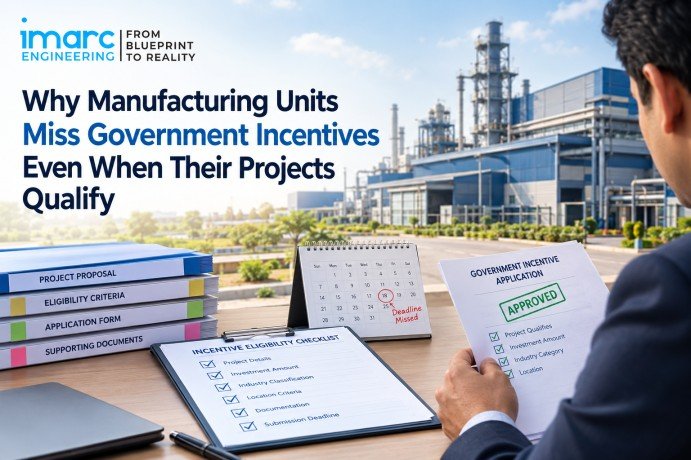
A factory can meet every headline criterion of an incentive scheme and still never receive the benefit. The sector is right, the investment is large enough, and the location is acceptable, yet the money arrives late, arrives reduced, or does not arrive at all.
This is not usually a story of bureaucracy or ignorance. Government incentives for manufacturing units in India include central programmes such as Production Linked Incentive (PLI) schemes and a range of state policies, each with its own investment, performance, documentation and claim rules. According to a Ministry of Commerce and Industry release of 20 February 2026, the PLI programme had 836 approved applications across 14 sectors and ₹28,748 crore in cumulative disbursements as of 31 December 2025. That shows the scale of the opportunity. It does not show how many qualifying applicants fell short, and no reliable public figure does.
This article explains where qualifying projects break down, using the published rules of schemes, and what factory owners, project directors, CFOs and investors can do about it. The aim is practical: to help you recognise the warning signs while there is time to act on them, and to treat securing incentives for manufacturing units as part of project delivery instead of paperwork after commissioning.
Eligibility, Admissibility and Realisation Are Different Tests
Most disappointments come from treating three separate questions as one:
- Eligibility: Does the company and its proposed activity qualify under the scheme?
- Admissibility: Do the actual investments, products, assets and performance satisfy the detailed conditions?
- Realisation: Has the company completed the application, verification, claim and disbursement process?
A project can pass the first test comfortably and still fail the second or third. Initial eligibility is assessed against the scheme’s entry conditions, but continued compliance may depend on investment, production, sales, documentation and reporting requirements throughout the project lifecycle. A scheme that looks generous on paper may therefore deliver very different outcomes for two companies with identical projects, depending on how carefully each managed the stages after approval.
Ten Reasons Manufacturing Units Miss Government Incentives
1. The application window is missing. Some schemes run fixed windows, competitive rounds or prior-approval stages. Assuming a scheme stays open indefinitely is a costly mistake. Check the application calendar before the investment decision, not after.
2. Eligible investment is defined narrowly. Schemes recognise specified categories of expenditure within an approved period. Land, civil works, consumables or pre-existing assets may be excluded. Map each planned cost to the relevant scheme clause before purchase orders are issued.
3. Documents are incomplete or inconsistent. If company names, asset descriptions, invoice values, payment records or commissioning dates differ across files, reviewers may seek clarification or decline the expenditure. Reconcile records as the project progresses, because assembling them retrospectively invites errors.
4. Commercial production starts late. Installation, trial runs, commercial production and threshold output are separate milestones. A delay can postpone a claim or reduce the time available to meet production and sales milestones, depending on the scheme’s approved timeline and applicable conditions. Build incentive milestones into the project schedule, not only the commissioning date.
5. Sales or output fall below thresholds. Customer delays, slow ramp-up, product qualification issues and raw-material shortages can all keep a running plant below the required level. Test incentive forecasts against conservative production and sales scenarios as well as the best-case plan.
6. Product or value-addition conditions are not met. Eligibility can depend on the exact product, the manufacturing activity and domestic value added. Imported components, outsourcing and group-company transactions can change the calculation. Validate the eligible product list and calculation method before finalising sourcing arrangements.
7. Teams work in silos. Engineering tracks equipment, procurement holds supplier records, finance records payments, production monitors output and compliance holds approvals. Without a shared register, nobody can assemble the claim in the prescribed format. Assign one incentive owner and keep a common evidence register with deadlines and review points.
8. Claim deadlines and post-approval duties are overlooked. Approval is rarely the end. Annual claims, audited certifications and periodic reporting can carry strict deadlines. Treat compliance as a recurring operating obligation, with a calendar that outlives the project team.
9. Statutory approvals remain unresolved. Land use, factory permissions, environmental consents, power connections and fire safety can delay the milestones that incentives depend on. Build a scheme-linked approval matrix and resolve critical-path permissions early.
10. The announced benefit is treated as guaranteed cash. Actual payment depends on eligible expenditure, performance, approved limits, verification and the calculation formula. Government reporting itself distinguishes investment and production outcomes from incentives actually disbursed. Plan the project so it remains financially sound even if the benefit is delayed or reduced.
View Related Insight: https://www.imarcengineering.com/blog/how-manufacturers-identify-industrial-licences-approvals-incentives-india
What Published Scheme Rules Reveal
Official scheme documents show how different the failure points are.
Electronics Component Manufacturing Scheme. The operational guidelines distinguish total project expenditure from expenditure eligible under the scheme, and restrict overlapping benefits as the applicable provision specifies. Total capital spend is therefore not the same as eligible investment.
PLI for automobiles and auto components. Cumulative investment, eligible sales, domestic value addition and claim deadlines all matter. A company that fails to meet an applicable annual investment or sales condition may not qualify for the corresponding year’s incentive, even if it satisfies another condition.
Madhya Pradesh Industrial Promotion Policy 2025. State policies add their own conditions. This one involves registration through the state single-window system, timing rules on commercial production, and conditions on combining benefits, so investors should confirm the exact clauses in the policy text.
These are illustrations, not universal rules. Each one shows a different way a project that looks qualified can fall short of detailed conditions. Every reader should check the current notification, amendments, operating guidelines and state policy for their own project, and should confirm whether a scheme is currently open, amended or closed before describing it as an available opportunity. Central and state incentives can also differ on stacking, overlapping expenditure and registration, so combining them requires careful reading.
How Incentive Gaps Affect Project Economics
Incentive failures are rarely discovered at the end. They usually begin during planning, when incentives are counted in projected returns before conditions are validated. Excluded assets get mixed with eligible costs during procurement. Commissioning is scheduled without regard to scheme milestones. Evidence is assembled only when the claim is due.
The financial consequence is real. A shortfall can erode returns, strain financing and leave essential obligations dependent on a payment that has not been received. Unless the benefit has been approved and its payment conditions are satisfied, it should not be treated as assured cash available to meet immediate project obligations. It also helps to separate two problems that look similar from the outside: an application that is rejected, and a claim that is approved but still awaiting verification or disbursement. They need different responses, and confusing them leads to wasted effort.
An Illustrative Example
This hypothetical example uses no real company and no assumed incentive rate. A manufacturer plans a ₹20 crore project covering land, factory construction, production machinery and utilities, and assumes the whole amount will qualify under an investment-based incentive. During claim preparation, it finds that some expenditure is excluded under the scheme’s rules. Total project investment remains ₹20 crore, but the investment eligible for incentive calculation is lower, and so is the benefit.
Building Incentives Into Project Planning
Incentive compliance works best as a project-control discipline running alongside engineering, procurement and finance. For greenfield, brownfield and capacity-upgrade projects, a practical approach includes:
- Confirm the scheme and current policy version, including eligible product, entity, location, investment band and application window.
- Obtain a written eligibility assessment before committing expenditure, separating entry conditions from implementation and claim conditions.
- Maintain an eligible-investment register that classifies every cost by scheme category, with invoices, payment proof and asset records.
- Build an incentive milestone schedule covering application, approval, installation, commercial production, performance thresholds and claim deadlines.
- Assign one incentive owner and define who holds technical certificates, approvals, supplier records, reconciliations and production data.
- Track performance against the actual scheme formula, such as incremental sales, domestic value addition, investment, employment and capacity utilisation.
- Audit claims before submission, reconciling applications, accounts, invoices, asset registers and certifications.
- Model a delayed, reduced or zero-incentive scenario so the project stays viable regardless.
None of these steps is complicated on its own. The difficulty lies in doing them consistently, across functions and over several years, while the project is also dealing with construction pressure, supplier delays and changing market conditions. Starting early and keeping records current is what separates an incentive that is earned from one that is merely expected.
A Quick Incentive-Readiness Check
Before your next investment decision, ask candidly whether you can answer yes to each of these questions:
- Have we confirmed the current version of the scheme and its application window?
- Does every major cost item map to a scheme-defined eligible category?
- Do our schedule and approvals plan include incentive milestones?
- Can finance, engineering and production produce matching evidence on demand?
- Would the project still work if the incentive were reduced or delayed?
Any honest answer of no marks the point where an avoidable gap is most likely to appear, and where early attention costs least.
How IMARC Engineering Can Help
IMARC Engineering supports manufacturers with feasibility studies, industrial licensing and incentive advisory, regulatory compliance and EPCM project management. Our teams help identify applicable central and state programmes, link incentive milestones to engineering and commissioning schedules, and organise supporting evidence as the project progresses. Advisory support can reduce avoidable compliance and documentation risk, but it cannot guarantee approval or payment, which depend on the scheme, your actual performance and the competent authority’s assessment. Speak with us early in your project planning.
Speak With An Expert: https://www.imarcengineering.com/contact?service=industrial-licensing-incentive-advisory
Conclusion
Qualifying for an incentive is only the first step. Admissibility and realisation depend on how investments are classified, how milestones are scheduled, how evidence is maintained and how performance is tracked. Manufacturers that validate eligibility before committing expenditure, assign clear ownership and maintain evidence throughout execution are better positioned to claim the benefits for which they qualify. Test your next project carefully against the readiness questions above, and revisit them at every major milestone, not only at the application stage.
Contact Us:
IMARC Engineering
Phone: +91-120-433-0800
Email: sales@imarcengineering.com
India: C-130, Sector 2, Noida, Uttar Pradesh 201301
LinkedIn: https://www.linkedin.com/showcase/imarc-engineering/
About the Author