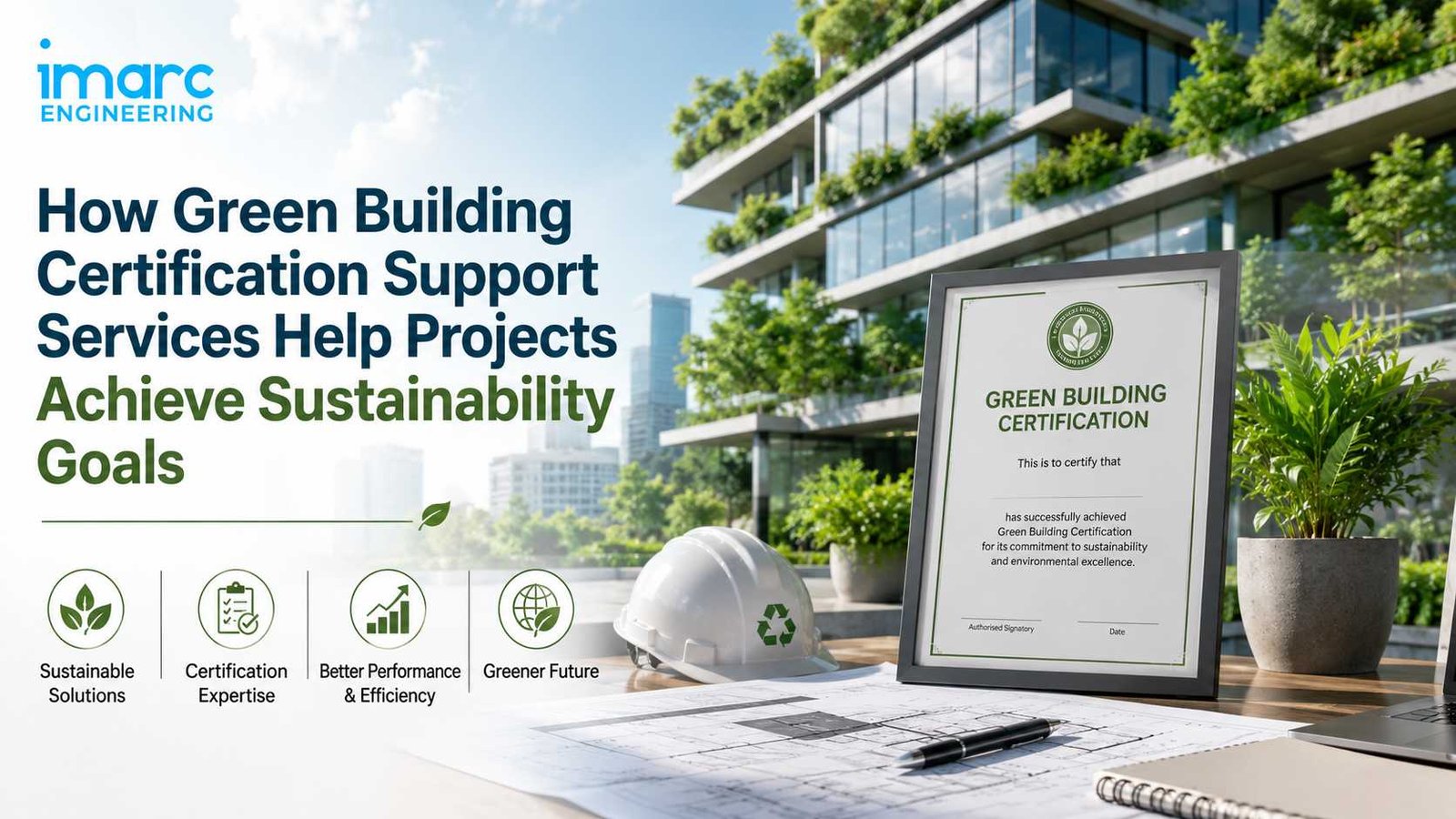
India’s construction sector is under growing pressure to deliver buildings that use less energy, consume less water, and generate a smaller carbon footprint. Regulators, investors, and occupants are all asking the same question of a new project: is it certified green, and if not, why not.
This is where Green Building Certification Support Services come in. These services guide a project through the technical, documentation, and compliance requirements of rating systems such as LEED, IGBC, GRIHA, and EDGE, turning sustainability intent into a certified, verifiable outcome.
In short: Green building certification support services help project teams select the right rating system, design to meet its technical credits, compile the documentation regulators and certifying bodies require, and secure the certification that unlocks incentives such as additional Floor Area Ratio, tax rebates, and faster clearances.
Why Certification Support Has Become a Project Necessity
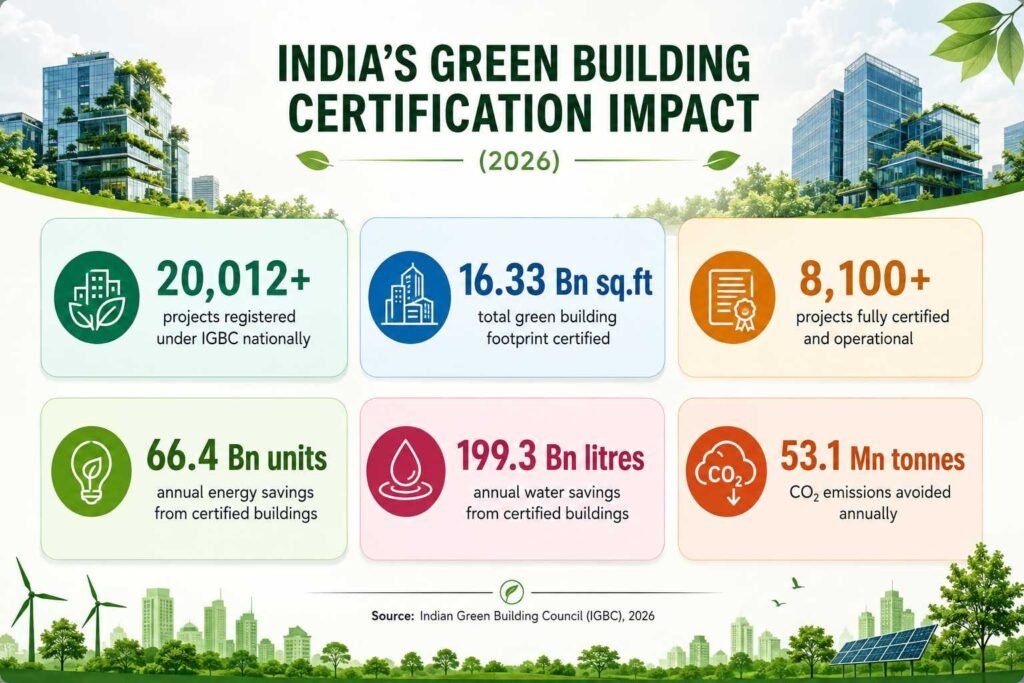
Green certification is no longer a niche add-on for flagship corporate campuses. As of 2026, the Indian Green Building Council (IGBC) has registered over 20,012 projects covering a green footprint of 16.33 billion square feet, making India the world’s second-largest green building market after the United States. Of these, more than 8,100 projects are fully certified and operational.
That scale creates two problems for project teams:
- Certification requirements have become more technical and layered across multiple rating versions (IGBC’s Green New Buildings framework alone moved from Version 3.0 to Version 4.0 in November 2025, with mandatory migration from May 2026).
- State and municipal authorities are now tying real incentives, not just recognition, to certification outcomes, which raises the cost of getting it wrong.
Green building certification support services exist to absorb this complexity so architects, developers, and EPCM teams do not have to become certification specialists themselves.
What These Services Typically Cover
A structured certification support engagement generally includes the following:
- Rating system selection: Comparing LEED, IGBC, GRIHA, and EDGE against the project type, location, and client objectives before design freezes.
- Credit mapping and gap analysis: Identifying which credits are achievable within the existing design and budget, and which require early intervention.
- Energy and water modelling: Simulating building performance to demonstrate compliance with ECBC and rating-specific thresholds.
- Documentation and submission management: Preparing the drawings, calculations, and vendor declarations that certifying bodies require at each project stage.
- Site and construction audits: Verifying that construction practices, materials procurement, and waste handling match what was submitted on paper.
- Post-occupancy support: Managing the operational data and renewal documentation needed to retain certification once the building is in use.
The Numbers Behind Green Certification in India
Certification is not a paper exercise. IGBC-certified and operational projects have collectively delivered annual savings of 66.4 billion units of energy, 199.3 billion litres of water, and a reduction of 53.1 million tonnes of CO2 emissions. These are not projected figures, they reflect buildings that are already running and being measured.
Regional adoption is uneven but accelerating. North India alone now accounts for 2,475 IGBC-registered projects covering 2.8 billion square feet, a scale significant enough that IGBC dedicated its 2026 GreenTech Summit to spotlighting the region separately. This regional density matters for support services because local incentive structures differ sharply. The Greater Noida Industrial Development Authority (GNIDA), for instance, offers an additional 5% Floor Area Ratio free of cost to projects achieving IGBC Gold rating or above, on top of the base FAR incentive already available for pre-certified or provisionally certified projects.
Individual buildings illustrate what full compliance can achieve. Suzlon One Earth in Pune, the only Indian building to hold both LEED Platinum and GRIHA 5-Star certification simultaneously, sources 92% of its energy from renewables, combining on-site solar with off-site wind power. That outcome was not incidental, it was the product of certification-driven design decisions made at the planning stage, which is exactly the phase where support services add the most value.
Comparing the Major Certification Systems
Project teams frequently ask which certification path fits their building type and budget. The table below summarises the four systems most active in the Indian market.
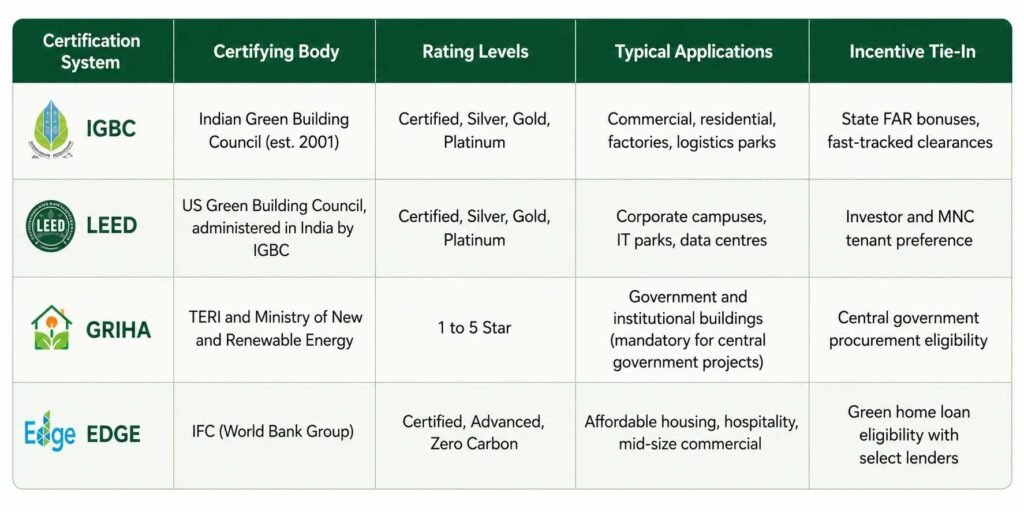
No single system is universally superior. IGBC and LEED dominate large commercial and industrial projects, GRIHA is effectively mandatory for government-funded buildings, and EDGE has found traction where affordable housing developers need a lower-cost entry point into certification.
Where Projects Typically Go Wrong Without Support
Certification failures rarely come from a lack of intent. They come from process gaps that surface too late to fix cheaply:
- Design teams targeting credits that later prove incompatible with the approved building plan, forcing costly redesign.
- Energy modelling done after design freeze instead of during it, leaving no room to adjust glazing, HVAC sizing, or orientation.
- Incomplete vendor documentation for materials claimed as low-emission or recycled, which certifying bodies reject at final review.
- Construction site practices drifting from the certified design, jeopardising the final audit even when the drawings were compliant.
Each of these is preventable with structured, stage-wise oversight, which is the core function certification support services perform.
How IMARC Engineering’s Expertise Can Help in Green Building Certification
IMARC Engineering works with developers and industrial clients across the certification lifecycle, from rating system selection at concept stage through to final documentation and post-occupancy compliance. The team’s familiarity with IGBC, LEED, GRIHA, and EDGE requirements, combined with hands-on EPCM project experience, allows it to flag design conflicts before they become site-level rework. This includes energy and water modelling, coordination with certifying bodies, and structuring the documentation trail that state authorities and lenders increasingly ask for when incentives are tied to a project’s green rating.
Get in Touch With Our Team: https://www.imarcengineering.com/contact?service=green-building-certification-support
Conclusion
Green building certification is shifting from a reputational advantage to a structural requirement, backed by measurable energy, water, and emissions outcomes at national scale. Projects that bring in structured certification support early avoid the redesign costs and documentation failures that derail applications late in the process, positioning themselves to capture the regulatory and financial incentives now attached to verified sustainability performance.
FAQs
What is the difference between IGBC and LEED certification in India?
IGBC is India’s own rating system, while LEED is a US-origin system administered locally through IGBC. Both use similar Certified to Platinum tiers, but IGBC ratings are more closely tied to state-level incentives such as additional FAR.
How long does green building certification typically take?
Timelines vary by rating system and project complexity, but certification support services generally begin at the design stage and continue through construction audits and final documentation, running in parallel with the broader project schedule rather than as a separate phase.
Is green building certification mandatory in India?
It is not universally mandatory, except for central government buildings under GRIHA. However, several states now link certification to Floor Area Ratio bonuses and faster environmental clearances, making it commercially advantageous even where it is not legally required.
What data do certifying bodies require during the audit stage?
Certifying bodies typically require energy and water simulation reports, vendor declarations for materials, waste management records, and site inspection evidence confirming that construction matches the certified design submission.
Contact Us:
IMARC Engineering
Phone: +91-120-433-0800
Email: sales@imarcengineering.com
India: C-130, Sector 2, Noida, Uttar Pradesh 201301
LinkedIn: https://www.linkedin.com/showcase/imarc-engineering/
About the Author