Setting up a float glass manufacturing plant in India presents a highly compelling investment opportunity, driven by rapid urbanisation, large-scale infrastructure development, expanding construction and real estate activity, rising automotive production, and the accelerating adoption of energy-efficient glazing solutions across residential, commercial, and industrial buildings. As one of the most strategically important and capital-intensive segments of the global building materials industry, float glass manufacturing combines precision raw material batching, high-temperature melting, float bath forming, controlled annealing, and automated cutting operations to serve a broad range of construction, automotive, renewable energy, furniture, interior design, and electronics end-use markets.
The global float glass market is propelled by sustained construction sector growth, accelerating urban infrastructure expansion in emerging economies, rising consumer preference for energy-efficient buildings, and the increasing penetration of advanced glazing products across residential, commercial, and automotive applications. The global float glass market size was valued at USD 52.28 Billion in 2025. According to IMARC Group estimates, the market is expected to reach USD 84.03 Billion by 2034, exhibiting a CAGR of 5.4% from 2026 to 2034.
Expanding adoption of low-emissivity (Low-E), solar control, and laminated safety glass, growing demand for value-added architectural glazing in green buildings, and the increasing use of float glass across automotive, solar photovoltaic, and consumer electronics applications continue to elevate demand for high-quality processed float glass. The shift from conventional sheet and rolled glass toward optically superior, dimensionally precise, and processable float glass formats integrates float glass manufacturing as a core operation in modern construction and industrial supply chains.
Float glass manufacturing sits at the intersection of mineral processing, high-temperature engineering, and downstream construction and automotive value chains, supported by a structurally growing global building materials industry. With gross profit margins typically ranging between 25 to 35% and a well-defined break-even trajectory at scale, a dedicated float glass manufacturing plant represents both a financially sound and strategically well-timed investment for industrial groups, building products companies, and institutional investors targeting the evolving global construction, automotive, solar, and architectural glazing markets.
What is Float Glass?
Float glass is a high-quality flat glass product manufactured by floating a continuous ribbon of molten glass on a bath of molten tin, allowing the glass to spread under gravity and surface tension to form a sheet of uniform thickness with exceptionally smooth and parallel surfaces. The process eliminates the need for grinding and polishing operations that were essential in earlier sheet glass technologies. Float glass is produced primarily from silica sand, soda ash, limestone, dolomite, and minor stabilising additives, supplemented by recycled cullet to improve melting efficiency and reduce energy consumption. The resulting product offers outstanding optical clarity, distortion-free light transmission, high mechanical strength, and excellent thermal stability, making it ideal for downstream processing such as tempering, laminating, coating, and insulating glass unit fabrication.
Standard float glass product types include clear float glass, tinted (body-coloured) float glass, low-iron ultra-clear float glass, reflective glass, low-emissivity (Low-E) coated glass, solar control glass, mirror-grade float glass, and patterned and processed value-added variants targeted at architectural, automotive, and solar photovoltaic end-use segments.
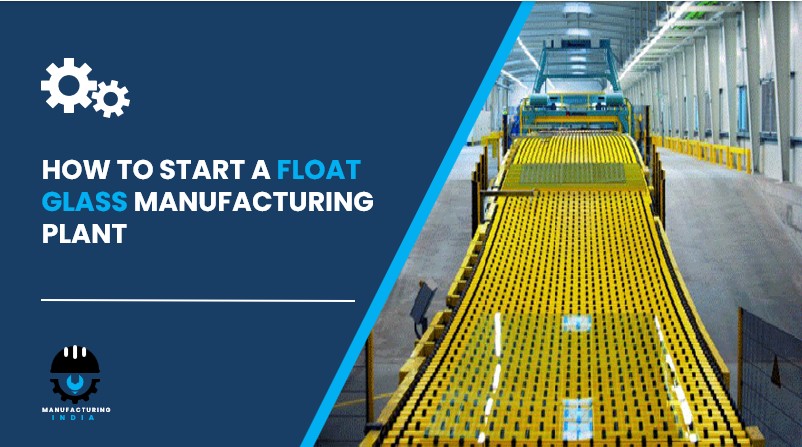
The float glass manufacturing sequence broadly involves raw material reception and quality inspection, batch weighing and mixing, glass melting in regenerative or oxy-fuel furnaces, float bath forming on molten tin, controlled annealing in a lehr, on-line quality inspection, automated cutting, and stacking and packaging. End-use segments served include residential and commercial construction, automotive original equipment and aftermarket, solar photovoltaic module manufacturing, furniture and interior design, mirror manufacturing, and consumer electronics and appliance industries.
Cost of Setting Up a Float Glass Manufacturing Plant
The total cost of establishing a float glass manufacturing plant depends on several variables including plant capacity, level of automation, chosen melting and forming technology (regenerative versus oxy-fuel furnaces, float bath dimensions, lehr length, and downstream coating capability), geographic location, raw material sourcing strategy, and applicable regulatory compliance requirements. A thorough feasibility assessment covering all CapEx and OpEx components is essential before committing capital, given the capital-intensive and continuous-operation nature of float glass manufacturing.
1. Capital Expenditure (CapEx)
Capital investment for a float glass manufacturing plant covers several broad cost heads. Land and site development forms a substantial part of the overall investment, encompassing land registration charges, boundary development, drainage, site grading, and related civil infrastructure expenses. A typical float glass facility requires a large land parcel to accommodate the float line, raw material storage silos, finished goods warehousing, and on-site utility installations. Investors may consider locating the facility in proximity to silica sand and soda ash sources, natural gas pipeline corridors, automotive and construction industrial clusters, or port-connected logistics hubs for export-oriented strategies.
Civil works and construction costs cover the float line shed (typically 400 metres long), raw material storage silos, batch house, furnace foundation, tin bath enclosure, annealing lehr building, cutting and stacking hall, finished goods warehousing, quality control laboratory, water treatment systems, and the administrative block. Machinery and equipment costs represent the largest single portion of total capital expenditure, with the glass melting furnace, tin bath, and annealing lehr together accounting for the majority of equipment investment. Key machinery and equipment required includes:
- Raw material handling and storage systems (silica sand, soda ash, limestone, dolomite, and cullet silos with weigh hoppers, dust collection, pneumatic conveying systems, and intermediate storage bunkers)
- Batch mixing systems (gravimetric weigh batching units, computerised dosing systems, ribbon blenders, and batch transfer conveyors for accurately formulated glass batches)
- Glass melting furnaces (regenerative cross-fired or end-port furnaces, or oxy-fuel furnaces, refractory-lined melting tanks, throat and waist sections, and bubblers and stirrers for homogenisation of molten glass at temperatures up to 1,600 degrees Celsius)
- Float bath forming sections (sealed tin bath chambers with controlled atmosphere, top rollers, edge rollers, electric heaters, and tweel and lip systems for delivering and shaping the molten glass ribbon on the surface of molten tin)
- Annealing lehrs (long, multi-zone electrically or gas-heated annealing tunnels with precise temperature gradient control to relieve internal stresses and prevent thermal breakage in the cooled glass ribbon)
- On-line inspection and quality control systems (laser-based optical scanners, defect detection cameras, thickness gauges, and stress polariscopes for real-time identification of bubbles, inclusions, distortion, and dimensional deviations)
- Cutting and snapping lines (automated diamond-wheel cross cutters, longitudinal cutters, edge trimming systems, and snap stations for producing finished glass sheets to specified dimensions)
- Stacking and handling systems (robotic vacuum lifters, automatic stacking machines, interleaving paper or powder application systems, and pallet handling units for damage-free finished goods stacking)
- Cullet handling and recycling systems (cullet crushers, magnetic separators, cullet conveyors, and storage bins for recovering and reintroducing edge trim and broken glass into the batch for energy savings)
- Coating lines (optional online or offline pyrolytic and magnetron sputtering coating units for producing Low-E, solar control, and reflective architectural glass variants)
- Utility systems (natural gas distribution and pressure regulation, oxygen plants for oxy-fuel furnaces, electrical substations and transformers, water cooling and recirculation systems, compressed air systems, and nitrogen and hydrogen generation for tin bath atmosphere control)
- Effluent and emission control equipment (electrostatic precipitators, bag filters, flue gas desulphurisation units, NOx reduction systems such as SCR or SNCR, and wastewater treatment plants to comply with applicable air and water quality regulations)
- Quality control and testing equipment (refractometers, optical distortion testers, fragmentation testers, weathering chambers, and laboratory furnaces for finished glass certification and customer technical qualification)
- Material handling and transport equipment (overhead cranes, forklifts, A-frame transport racks, container handling systems, and on-site logistics infrastructure)
Other capital costs include utility connections (high-pressure natural gas, electricity, water, and oxygen supply), pre-operative expenses, furnace heat-up and commissioning costs, product qualification and trial production runs, and applicable import duties on specialised float bath and refractory equipment not manufactured domestically.
Request a Sample Report for In-Depth Market Insights: https://www.imarcgroup.com/float-glass-manufacturing-plant-project-report/requestsample
2. Operational Expenditure (OpEx)
The operating cost structure of a float glass manufacturing plant is heavily weighted toward raw materials and energy. Raw material costs (encompassing silica sand, soda ash, limestone, dolomite, cullet, and minor refining and colouring additives) account for approximately 30 to 40% of total OpEx, with soda ash typically representing the single largest raw material cost component due to its high price relative to the other batch materials. Entering long-term supply agreements with reliable silica sand miners, soda ash producers, and limestone and dolomite suppliers is essential to mitigate input price volatility and maintain melting furnace continuity.
Utility costs, particularly natural gas for the melting furnace, electricity for the float bath, lehr, and downstream auxiliaries, oxygen for oxy-fuel combustion (where applicable), and water for cooling, account for 40 to 50% of OpEx given the highly energy-intensive nature of glass melting at temperatures of 1,500 to 1,600 degrees Celsius. Additional operating costs include packaging materials (interleaving paper, polythene, A-frames, wooden crates, corner protectors, and shrink wrap), transportation and distribution logistics, salaries and wages for furnace operators, process engineers, quality assurance technicians, and sales personnel, periodic furnace cold repair reserves, refractory replacement, maintenance of forming and downstream equipment, effluent and emission control system servicing, quality testing consumables, and applicable regulatory and product certification costs. Operational expenditure is projected to increase substantially by year five of operations, driven by raw material cost inflation, natural gas and electricity tariff escalation, and potential increases in carbon compliance and logistics costs.
3. Plant Capacity
The proposed float glass manufacturing facility is designed with an annual production capacity of 100,000 to 200,000 MT, enabling meaningful economies of scale while preserving operational flexibility across the full product range, from clear and tinted standard float glass to low-iron ultra-clear, Low-E coated, solar control, and reflective architectural variants. Plant capacity can be customised based on the investor’s specific capital availability, target market scale, and chosen product mix across end-use segments such as architectural construction, automotive, solar photovoltaic, mirror manufacturing, and consumer electronics. Profitability improves considerably at higher capacity utilisation levels, given the continuous and largely fixed-cost nature of float glass operations, making early off-take agreements with construction groups, automotive OEMs, solar module manufacturers, and processed glass converters strategically important.
4. Profit Margins and Financial Projections
A float glass manufacturing plant demonstrates healthy profitability potential under normal operating conditions. Gross profit margins typically range between 25 to 35%, supported by stable and growing demand across construction, automotive, solar, furniture, and electronics markets; the structural shift toward energy-efficient glazing and value-added coated products; growing infrastructure spending across emerging economies; and differentiation opportunities through Low-E, solar control, ultra-clear, and tinted product variants. Net profit margins range between 10 to 20%.
Financial projections incorporate NPV analysis, IRR calculations, payback period modelling, and sensitivity analysis across furnace capacity utilisation, raw material pricing, natural gas and electricity costs, and end-market demand scenarios. These projections are developed based on realistic assumptions related to capital investment, operating costs, capacity utilisation, and demand outlook, providing investors with a comprehensive view of long-term financial viability across the typical 10-to-15-year furnace campaign.
Why Set Up a Float Glass Manufacturing Plant?
- Foundation of Modern Construction: Float glass is the backbone of modern architectural and infrastructure construction, serving as the base substrate for windows, façades, curtain walls, partitions, skylights, and energy-efficient glazing systems across residential, commercial, hospitality, and institutional buildings worldwide.
- Urbanisation and Infrastructure Megatrend: Rapid urban population expansion across India, Southeast Asia, the Middle East, and Africa is driving large-scale residential and commercial construction, public infrastructure projects, and metro and airport development, creating sustained demand for high-quality float glass across emerging economies.
- Energy-Efficient Building Codes Driving Demand: Tightening building energy efficiency codes and green building rating systems are driving rapid adoption of Low-E, solar control, and laminated insulating glass solutions, creating attractive value-added margin opportunities for float glass manufacturers integrated with downstream coating and processing capabilities.
- Solar Photovoltaic Sector Expansion: The accelerating global rollout of solar photovoltaic capacity is creating a structurally growing demand stream for ultra-clear, low-iron float glass used as PV module substrates and rear cover glass, opening a fast-growing diversification channel for float glass producers.
- Automotive Industry Off-Take: Continued growth in global vehicle production, including electric vehicles with larger glass surface areas and panoramic glazing, supports stable automotive float glass demand for windshields, side and rear windows, and sunroof applications.
- High-Capital, High-Volume Competitive Moat: Float glass manufacturing is highly capital-intensive and technically complex, creating significant entry barriers and supporting structurally protected margins for established and well-capitalised producers operating at scale.
- Value-Addition and Premiumisation Opportunities: Float glass producers can capture meaningful margin uplift through downstream tempering, lamination, insulating glass unit fabrication, decorative processing, and specialty coating, transforming a commodity substrate into engineered architectural and automotive products.
- Government Policy and Infrastructure Support: Public sector investment in housing, transport infrastructure, smart city development, renewable energy, and domestic manufacturing incentive schemes such as India’s Production Linked Incentive (PLI) initiatives indirectly support sustained float glass consumption growth.
- Import Substitution and Export Potential: Many emerging markets continue to rely on imported float glass for premium and value-added grades, creating attractive import substitution opportunities for new domestic capacity, while strategically located plants near port logistics can also serve regional export markets.
- Continuous Production Economics: Once commissioned, a float line operates on a continuous, 24-hour, multi-year basis with high asset utilisation, delivering predictable output and supporting efficient working capital management when paired with a stable customer off-take portfolio.
Manufacturing Process: How Float Glass is Manufactured
The float glass manufacturing sequence encompasses raw material reception and quality inspection, batch weighing and mixing, glass melting in a regenerative or oxy-fuel furnace, float bath forming on molten tin, annealing in a lehr, on-line inspection and cutting, and stacking and packaging as the core stages of production. Each stage involves specific unit operations, quality assurance checkpoints, and process control protocols aligned to product specifications and applicable building, automotive, and safety standards.
- Raw Material Reception and Quality Inspection: Silica sand, soda ash, limestone, dolomite, and cullet are received from suppliers, sampled, and tested for chemical composition, moisture content, particle size distribution, and contaminant levels before being conveyed to dedicated storage silos. Strict raw material quality control is critical because trace iron, organic, and refractory contamination significantly impact finished glass colour, optical quality, and melting efficiency.
- Batch Weighing and Mixing: Raw materials are accurately weighed in computerised gravimetric batchers according to the target glass formulation and discharged into a ribbon blender, where they are homogenised with cullet to produce a uniform batch ready for melting. Consistent batch composition is essential for stable furnace operation and finished glass quality.
- Glass Melting: The homogenised batch is charged into the regenerative or oxy-fuel melting furnace, where it is heated to 1,500 to 1,600 degrees Celsius. Raw materials decompose, react, and fuse into molten glass, with subsequent fining and homogenisation stages eliminating gaseous inclusions and producing optically pure molten glass at the throat exit.
- Float Bath Forming: Molten glass flows through the canal and tweel onto the float bath, a sealed chamber containing molten tin under a controlled nitrogen-hydrogen atmosphere. The glass spreads laterally on the tin surface, forming a continuous ribbon of uniform thickness, which is gradually cooled and dimensionally controlled by edge rollers and top heaters as it traverses the bath.
- Annealing: The formed glass ribbon exits the tin bath at approximately 600 degrees Celsius and enters the annealing lehr, a long electrically or gas-heated tunnel with carefully controlled cooling zones. Gradual, programmed temperature reduction relieves internal stresses and prevents thermal breakage, producing a flat, dimensionally stable, and stress-free finished ribbon at ambient temperature.
- On-Line Inspection: The cooled glass ribbon passes through automated optical inspection stations equipped with laser scanners and high-resolution cameras that identify and map bubbles, inclusions, distortion, scratches, and edge defects in real time. Inspection data feeds into the cutting optimisation system to maximise yield of saleable glass.
- Cutting and Snapping: Diamond-wheel cross cutters and longitudinal cutters score the glass ribbon to specified dimensions, after which automated snap stations break the ribbon into individual sheets. Edge trim and rejected glass are routed back to the cullet system for reuse in the batch.
- Stacking and Packaging: Finished glass sheets are stacked using robotic vacuum lifters onto A-frames or pallets, with interleaving powder or paper applied between sheets to prevent surface damage. Stacks are corner protected, banded, and shrink-wrapped, then transferred to finished goods warehousing for dispatch to construction, automotive, and processing customers.
- Optional Coating: For value-added Low-E, solar control, and reflective glass variants, finished sheets may be transferred to offline magnetron sputtering coating lines, or coatings may be applied online via pyrolytic deposition immediately after the float bath, prior to annealing.
- Quality Control Testing: Production samples undergo dimensional verification, optical distortion testing, fragmentation testing where applicable, weathering and accelerated ageing assessment, coating performance evaluation, and certification against applicable BIS, EN, or ASTM standards. Each production campaign is released only upon passing all specified quality parameters.
Key Applications
Float glass manufactured at a dedicated processing facility serves a broad range of end-use channels, each with specific product quality, format, and performance requirements.
- Construction and Infrastructure: Float glass is widely used in residential and commercial construction as windows, curtain walls, façades, skylights, balustrades, partitions, doors, and energy-efficient insulating glass units, supplied through architectural glass processors and large construction supply chains.
- Automotive Industry: Automotive original equipment and aftermarket channels use float glass as the base substrate for windshields, side windows, rear windows, and sunroofs, processed downstream through tempering, lamination, and bending operations to meet automotive safety and aerodynamic specifications.
- Solar Photovoltaic Industry: Ultra-clear, low-iron float glass serves as the front cover and rear substrate in crystalline silicon and thin-film solar photovoltaic modules, where high light transmission, durability, and dimensional stability are essential performance requirements.
- Furniture and Interior Design: Float glass is used in tabletops, glass shelves, decorative mirrors, cabinets, shower enclosures, and decorative interior elements supplied to furniture manufacturers, hospitality projects, and architectural interior fitters.
- Mirror Manufacturing: High-quality float glass is the foundation substrate for silvered mirrors used in residential, commercial, automotive, and specialty optical applications, with particular emphasis on optical flatness and surface quality.
- Electronics and Appliances: Float glass with strict flatness and clarity specifications is used in appliance doors, oven and microwave front panels, display panel substrates, and protective covers in consumer electronics and white goods manufacturing.
- Industrial and Specialty Applications: Float glass is also supplied to greenhouse construction, refrigeration display units, specialty industrial equipment, scientific glassware, and protective glazing for transport infrastructure such as railway and metro stations.
Leading Float Glass Manufacturers
The global float glass manufacturing industry is served by several multinational and large regional companies with extensive production capacities and diverse product portfolios across architectural, automotive, solar, and specialty markets. Key players active across institutional supply, export channels, and downstream processed glass networks include:
- AGC Inc.
- Saint-Gobain S.A.
- SCHOTT Group
- Şişecam Group
- Guardian Industries
- Taiwan Glass Ind. Corp.
- Asahi India Glass Limited
- Cardinal Glass Industries, Inc.
- Central Glass Co., Ltd.
- Fuyao Glass Industry Group Co., Ltd.
- Nippon Sheet Glass Co., Ltd.
Recent Industry Developments
- November 2025: NovaSklo, part of EFI Group, signed an agreement with the International Finance Corporation to develop Ukraine’s first modern float glass facility. Backed by advisory support from IFC and Japan, the EUR 250 million project aims to introduce energy-efficient glass manufacturing, create over 300 jobs, reduce import dependence, and strengthen Ukraine’s reconstruction and economic resilience.
- October 2025: Emirates Float Glass, a Dubai Investments subsidiary, partnered with HORN Glass Industries AG to double production capacity to 1,200 tons per day. The expansion includes a new float line producing Ultra Clear Low-Iron Glass, a regional first. Scheduled for operation by 2027 to 2028, the project emphasises automation, energy efficiency, and sustainable manufacturing.
- September 2025: NSG Group, through Pilkington Technology Management, partnered with NovaSklo to provide engineering expertise for Ukraine’s largest float glass facility in the Kyiv region. The collaboration covers design, construction, and commissioning, with a strong focus on energy efficiency, safety, and ESG standards.
- April 2024: AGC Inc. announced that its architectural float glass produced at the Kashima manufacturing facility has been certified with an Environmental Product Declaration, highlighting its environmental performance and transparency credentials.
- March 2024: NSG Group revealed plans to permanently shut down a float glass production line at its Weiherhammer site in Germany, a year ahead of scheduled maintenance, following an assessment of Central Europe’s architectural glass supply and demand balance and long-term market outlook.
Timeline to Start the Plant
Investors planning a float glass manufacturing plant should anticipate the following phased development timeline, typically ranging from 24 to 36 months depending on site development requirements, regulatory approval timelines, and the lead time for specialised float bath and furnace equipment:
- Feasibility study and detailed project report preparation
- Land acquisition, site assessment, and environmental impact review
- Regulatory approvals, factory licence, environmental clearances, air emission consent, and utility connections
- Civil construction: float line shed, batch house, furnace foundation, tin bath enclosure, annealing lehr building, and finished goods warehousing
- Specialised machinery procurement, refractory installation, float bath construction, and lehr assembly
- Raw material supplier agreements (silica sand, soda ash, limestone, dolomite) and natural gas and electricity contracts
- Furnace heat-up, float bath commissioning, and trial production runs
- Product qualification, BIS certification, and downstream customer technical qualification testing
- Distribution channel and key account relationships, commercial production ramp-up to design capacity
Licences and Regulatory Requirements
Starting a float glass manufacturing unit requires several approvals, which vary by country and jurisdiction:
- Business registration (Proprietorship, LLP, or Private Limited Company)
- Factory Licence under applicable factories legislation
- Industrial Entrepreneur Memorandum (IEM) filing with the Department for Promotion of Industry and Internal Trade (India)
- Environmental Clearance from the Ministry of Environment, Forest and Climate Change (India) or equivalent national authority
- Consent to Establish and Consent to Operate from the relevant State Pollution Control Board
- Air emission compliance and water consumption permits
- Hazardous waste authorisation for spent refractories and process residues
- Bureau of Indian Standards (BIS) certification under IS 14900 and applicable product standards (mandatory for sale of float glass in India)
- GST / VAT Registration
- Fire Safety NOC and explosives licence (for natural gas and oxygen storage where applicable)
- Electricity Board approval and grid connectivity permits
- ISO 9001 Quality Management System certification (recommended for institutional and OEM supply)
- ISO 14001 Environmental Management System certification
- ISO 45001 Occupational Health and Safety Management System certification
- Energy Conservation certification under the Bureau of Energy Efficiency (India) PAT scheme for designated consumers
- Import/export code (for international trade in float glass and processed glass products)
- MSME registration (where applicable, for access to government subsidy and incentive schemes in India)
Key Challenges to Consider
- High Capital Intensity and Long Payback: Float glass plants require substantial upfront investment in furnaces, tin baths, lehrs, and refractories, with long construction lead times and break-even periods that typically extend over multiple years. Robust project financing, phased capital deployment, and disciplined commissioning are critical to managing financial risk.
- Energy Cost Volatility and Carbon Compliance: Natural gas and electricity together represent a major share of operating costs. Volatility in fuel prices, exposure to carbon pricing schemes, and tightening emission norms make energy efficiency, oxy-fuel adoption, waste heat recovery, and carbon reduction strategies central to maintaining competitive cost structures.
- Continuous Operation and Furnace Campaign Risk: Float furnaces operate continuously over campaigns of 10 to 15 years, with unplanned shutdowns or premature refractory failure imposing significant production loss and cold repair costs. Reliable refractory selection, disciplined operating practices, and predictive maintenance are essential to protect campaign life.
- Raw Material Price Volatility: Soda ash, in particular, is subject to global commodity market fluctuations, supply disruptions, and currency movements, while silica sand availability and quality can vary across geographies. Managing raw material cost volatility through long-term procurement agreements, multi-source sand qualification, and cullet recycling is a critical commercial priority.
- Cyclical Demand Linked to Construction: Float glass demand is closely tied to residential and commercial construction cycles, infrastructure spending, and automotive production. Diversification across construction, automotive, solar, and value-added segments is essential to smooth demand volatility across economic cycles.
- Environmental Compliance and Effluent Management: Glass melting generates particulate, NOx, SOx, and CO2 emissions, while downstream cooling and cleaning operations produce wastewater requiring treatment. Investing in electrostatic precipitators, NOx reduction systems, flue gas desulphurisation, water recirculation, and continuous emission monitoring is essential for regulatory compliance and community acceptance.
- Competition from Established Global Majors: The global float glass industry is dominated by a small number of large multinational producers, including AGC, Saint-Gobain, Şişecam, Guardian, Fuyao, and NSG, with strong distribution networks, technology depth, and competitive cost structures. Differentiated products, value-added downstream processing, regional cost advantage, and strong customer relationships are essential for new entrants to gain market share.
- Logistics and Handling Complexity: Float glass is heavy, bulky, and prone to breakage in transit, requiring specialised A-frame transport racks, careful loading and unloading, and proximity-based distribution networks. Logistics infrastructure, in-region warehousing, and damage-control systems materially affect landed cost and customer service.
Project Economics
Capital Expenditure (CapEx) and Operational Expenditure (OpEx) Analysis
Capital Investment (CapEx)
Machinery costs account for the largest portion of the total capital expenditure, with the glass melting furnace, tin bath, and annealing lehr together representing the most significant equipment investments. The cost of land and site development, including charges for land registration, boundary development, and other related expenses, forms a substantial part of the overall investment. This allocation ensures a solid foundation for safe, continuous, and efficient plant operations across the multi-year furnace campaign.
Operating Expenditure (OpEx)
In the first year of operations, the operating cost for the float glass manufacturing plant is projected to be significant, covering raw materials, utilities (particularly natural gas and electricity), depreciation, taxes, packaging, transportation, and repairs and maintenance. By the fifth year, the total operational cost is expected to increase substantially due to factors such as inflation, market fluctuations, raw material and energy price escalation, and potential increases in carbon compliance costs.
Frequently Asked Questions
1. How much does it cost to set up a float glass manufacturing plant?
Total setup cost depends on plant capacity, level of automation, melting and forming technology configuration (regenerative versus oxy-fuel furnaces, float bath dimensions, lehr length, and downstream coating capability), product range, geographic location, and applicable regulatory requirements. Capital investment covers land, civil works, batch house and material handling systems, glass melting furnaces, tin baths, annealing lehrs, cutting and stacking lines, utility infrastructure, emission control equipment, quality testing instruments, and pre-operative costs. A detailed project report provides capacity-specific cost estimates.
2. Is float glass manufacturing profitable?
Yes. Gross profit margins typically range between 25 to 35% and net margins between 10 to 20%, supported by growing demand across construction, automotive, solar photovoltaic, furniture, and electronics markets; the structural shift toward energy-efficient and value-added glazing; rising infrastructure investment across emerging economies; and product differentiation opportunities through Low-E, solar control, ultra-clear, tinted, and reflective coated variants.
3. What machinery is required for a float glass manufacturing plant?
Essential machinery and equipment includes raw material handling and storage silos, gravimetric batch mixing systems, glass melting furnaces (regenerative or oxy-fuel), float bath forming sections, annealing lehrs, on-line inspection systems, cutting and snapping lines, robotic stacking equipment, cullet handling and recycling systems, optional coating lines, utility infrastructure (natural gas, oxygen, electricity, water cooling, compressed air), emission and effluent control equipment, and quality control laboratory instruments.
4. What licences and approvals are required to start a float glass manufacturing plant?
Required approvals include business registration, a Factory Licence, Industrial Entrepreneur Memorandum filing (India), Environmental Clearance from the relevant national authority, Consent to Establish and Operate from the State Pollution Control Board, Bureau of Indian Standards (BIS) certification under IS 14900, hazardous waste authorisation, fire safety NOC, GST/VAT registration, ISO 9001 quality management certification, ISO 14001 environmental management certification, ISO 45001 occupational health and safety certification, and Energy Conservation compliance under the BEE PAT scheme for designated consumers.
5. What raw materials are needed for float glass manufacturing?
Primary raw materials include silica sand, soda ash, limestone, dolomite, and cullet (recycled glass), along with minor refining, decolourising, and colouring additives. Natural gas and oxygen are the principal energy and process gas inputs. Raw materials collectively account for approximately 30 to 40% of total operating costs, with soda ash typically representing the single largest raw material cost component, making procurement strategy and supply chain management critical business priorities.
6. What are the environmental compliance requirements?
Operators must obtain Environmental Clearance and Consent to Operate, install and maintain effective particulate, NOx, and SOx emission control systems for the melting furnace, manage wastewater from cooling and cleaning operations through dedicated treatment plants, ensure responsible handling and disposal of spent refractories and other process residues, comply with continuous emission monitoring requirements, and adhere to applicable energy efficiency norms under the BEE PAT scheme. Carbon footprint reduction measures, including cullet maximisation, oxy-fuel combustion, and waste heat recovery, are increasingly required by regulators and customers.
7. What is the best location to set up a float glass manufacturing plant?
Ideal locations offer proximity to high-quality silica sand reserves and other batch raw material sources to minimise raw material procurement and logistics costs, access to a reliable and competitively priced natural gas pipeline and stable electricity supply for the highly energy-intensive melting operation, compliance with industrial zoning and air quality regulations, availability of skilled glass technology and engineering workforce, robust road and rail logistics infrastructure for distribution of finished glass, and access to construction, automotive, and solar end-use clusters and port logistics for export markets.
8. How long does it take to start a float glass manufacturing plant?
The timeline typically ranges from 24 to 36 months, depending on site development requirements, regulatory approval timelines, specialised float bath and furnace equipment procurement lead times, civil works completion, refractory installation, furnace heat-up, product qualification testing, and BIS certification.
9. What government incentives are available for float glass manufacturers?
In India, the Production Linked Incentive (PLI) scheme for select advanced materials, MSME capital subsidy programmes, state-level industrial promotion policies, infrastructure development incentives, and export promotion schemes provide meaningful support to new float glass manufacturers. State-level concessions on power tariffs, stamp duty, and GST reimbursement, along with priority allocation of land in industrial corridors, offer additional benefits. Bilateral free trade agreements and export incentive schemes also create favourable frameworks for export-oriented float glass producers.
10. What is the break-even period for a float glass manufacturing plant?
Break-even typically ranges from 5 to 8 years, reflecting the high capital intensity and long furnace campaign life of float glass operations, and depending on scale, automation level, raw material and energy procurement strategy, product mix, and customer off-take contract flow. Securing early supply agreements with construction groups, automotive OEMs, solar module manufacturers, processed glass converters, and architectural distributors can significantly support a smoother ramp-up and faster break-even achievement.
Key Takeaways for Investors
The float glass manufacturing plant opportunity is underpinned by sustained demand growth across construction and infrastructure, automotive, solar photovoltaic, furniture and interior design, mirror manufacturing, and electronics markets, all aligned with global urbanisation, energy-efficient building, and clean energy megatrends, the building materials industry’s structural shift toward value-added coated and laminated glazing solutions, growing consumer preference for premium architectural and automotive glass products, and the long-term expansion of construction and renewable energy infrastructure across emerging and developed markets alike.
With a well-defined market demand base across multiple end-use segments, a rich landscape of product differentiation opportunities across clear, tinted, ultra-clear, Low-E, solar control, and reflective formats, capital-intensive but technology-protected processing economics with multi-decade asset life, and the fundamental role of float glass in addressing global construction, automotive, solar, and consumer electronics demand, float glass manufacturing offers both medium-term commercial viability and long-term demand sustainability for well-positioned producers.
About the Author