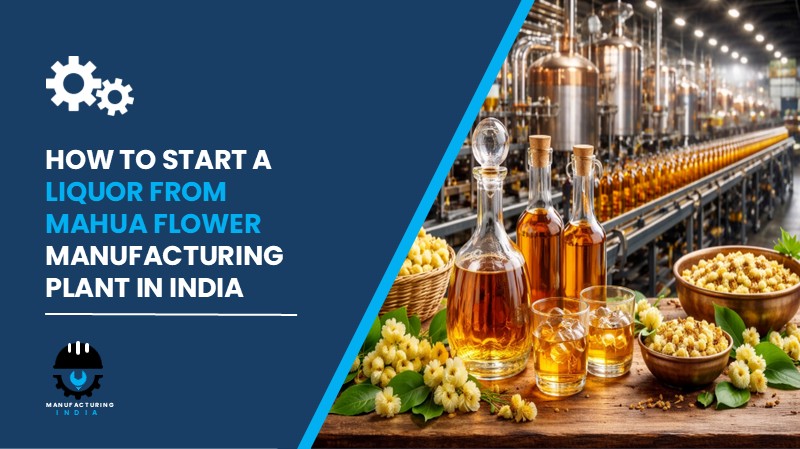
Setting up a liquor from mahua flower manufacturing plant in India presents a compelling investment case driven by rising consumer interest in craft, heritage, and indigenous alcoholic beverages. The alcoholic beverage industry, hospitality and tourism sector, craft spirits market, and export-oriented specialty spirits segment are all emerging as strong demand drivers for this unique traditional product. Mahua flower liquor produced from the fermentable, sugar-rich blooms of the Mahua tree found across central and eastern India has historically been a staple of tribal communities and is now attracting commercial attention from investors, distillers, and agro-entrepreneurs seeking differentiated market positioning.
India’s natural advantages make the case for this production even stronger. The country produces an estimated 85,000-100,000+ tonnes of Mahua flowers annually across central and eastern India, with approximately 90% of this harvest channelled into alcohol production. Government initiatives aimed at formalising country liquor production and improving quality standards, combined with the broader Make in India push, have created a supportive regulatory and commercial environment. States such as Madhya Pradesh, Odisha, Jharkhand, and Chhattisgarh where Mahua trees grow abundantly offer ideal locations for unit establishment, with proximity to raw material sources and access to tribal supply chains serving as built-in cost advantages.
Setting up a liquor from mahua flower manufacturing plant in India offers a compelling blend of policy support, cost-competitive raw material sourcing, and growing demand across the alcoholic beverages, hospitality, and craft spirits sectors. With gross profit margins of 40-50% and net margins of 15-25%, combined with a scalable production range of 100,000-250,000 litres per annum, this investment offers strong financial viability and long-term sustainability.
What is Liquor from Mahua Flower?
Mahua flower liquor is a traditional form of liquor produced through the process of fermentation and distillation of the flowers of the Mahua tree, which is found in the central and eastern regions of India. The Mahua flowers are sweet in nature and have a soft texture, giving them naturally fermentable sugars that make them ideal to produce alcohol without the need for yeast. Mahua flower liquor has a distinct taste and has been in use for a long time by the tribal people of rural India. In recent times, Mahua liquor has become popular as a commercial form of liquor, gaining recognition in both domestic and export markets.
The production process involves Mahua flower collection, cleaning and sorting, drying, fermentation using yeast, distillation, maturation, filtration, and finally bottling and packaging. With improved distillation, filtration, and ageing techniques, the product is increasingly being positioned as a premium indigenous spirit, comparable to rum or brandy in select markets. End-use industries served include the alcoholic beverages sector, hospitality and tourism, the craft and heritage liquor industry, and export-oriented specialty spirits markets.
Cost of Setting Up a Liquor from Mahua Flower Manufacturing Plant in India
The overall cost of establishing a liquor from mahua flower manufacturing plant depends on several variables including plant capacity, chosen technology, geographic location, level of automation, and regulatory compliance requirements. Investors should evaluate both capital expenditure (CapEx) and operational expenditure (OpEx) carefully before committing resources.
1. Capital Expenditure (CapEx)
The total capital investment covers land acquisition, site preparation, civil construction, and all necessary infrastructure. Land and Site Development costs include charges for land registration, boundary development, and related expenses, forming a substantial portion of the overall investment. Setting up within a designated SEZ or state industrial estate can offer tax exemptions, subsidised land rates, and faster regulatory clearances. Civil Works and Construction encompass the manufacturing shed, quality control laboratory, raw material and finished goods storage areas, and administrative block — all essential for operational efficiency and compliance.
Machinery and Equipment represent the largest single component of capital expenditure for a liquor from mahua flower manufacturing plant. Key machinery required includes:
- Flower cleaning and sorting equipment
- Fermentation tanks
- Distillation units (pot stills or column stills)
- Condensers and alcohol recovery systems
- Filtration and clarification units
- Bottling, capping, and labelling machines
- Quality testing and alcohol measurement instruments
Other Capital Costs include effluent treatment plant (ETP) installation, pre-operative expenses, commissioning charges, and applicable import duties on specialised equipment.
Access the Detailed Feasibility Analysis: https://www.imarcgroup.com/liquor-from-mahua-flower-manufacturing-plant-project-report/requestsample
2. Operational Expenditure (OpEx)
Raw Material Cost is the dominant driver of the operational cost structure. Key inputs mahua flowers, jaggery/sugar, yeast, and water together account for approximately 45-55% of total OpEx. Negotiating long-term contracts with reliable suppliers, particularly tribal forest cooperatives and rural procurement bodies, is recommended to stabilise pricing and ensure a consistent supply. Utility Cost, covering electricity, water, and steam, constitutes 15-20% of OpEx. Remaining operating costs include transportation, packaging, salaries and wages, maintenance, depreciation, and applicable taxes. By the fifth year of operations, the total operational cost is expected to increase substantially owing to inflation, market fluctuations, and potential rises in the cost of key input materials.
3. Plant Capacity
The proposed manufacturing facility is designed with an annual production range of 100,000-250,000 litres, enabling economies of scale while maintaining operational flexibility. Capacity can be customised per individual investor requirements and project scale. As utilisation rates rise toward the upper end of this range, fixed cost absorption improves significantly, and profitability strengthens in direct proportion.
4. Profit Margins and Financial Projections
The financial projections for this investment have been developed on the basis of realistic assumptions related to capital investment, operating costs, manufacturing capacity utilisation, pricing trends, and demand outlook. Gross profit margins typically range between 40–50%, supported by stable demand and value-added applications. Net profit margins are projected at 15–25% under normal operating conditions. The detailed project economics also cover net present value (NPV), internal rate of return (IRR), payback period analysis, profitability account, and uncertainty and sensitivity analysis — providing investors with a comprehensive view of the plant’s financial viability and long-term sustainability.
Why Set Up a Liquor from Mahua Flower Plant in India?
Utilisation of Abundant Forest-Based Resources. Mahua flowers are abundantly available in forest regions of central and eastern India and are often underutilised. India produces an estimated 85,000–100,000+ tonnes annually, with approximately 90% of this harvest traditionally used to produce alcohol, providing a ready and large-scale raw material base for commercial manufacturing.
Growing Demand for Craft and Heritage Spirits. Consumers are increasingly seeking authentic, region-specific alcoholic beverages, creating strong market space for mahua liquor in the premium and craft segments. Rising disposable incomes and evolving preferences toward differentiated alcoholic beverages further support demand growth within this category.
Government Policy and Regulatory Tailwinds. Government initiatives aimed at formalising country liquor production, improving quality standards, and enhancing tribal incomes are supporting organised manufacturing activity. Programmes designed to promote rural enterprise and build non-liquor value chains such as the ‘liquor to lifestyle’ initiative in Odisha are channelling institutional investment into Mahua-based processing infrastructure.
Cost-Competitive Manufacturing. Mahua flowers are locally sourced and seasonal, making raw material procurement relatively economical compared to grain- or fruit-based spirits. The tribal supply chain is well-established in central and eastern India, and proximity to forest-based sourcing regions reduces inbound logistics costs substantially, supporting competitive OpEx structures.
Active Industry Investment. In January 2026, a memorandum of agreement for the construction of a Mahua processing plant was signed by the National Institute of Technology-Rourkela (NIT-R) and the Odisha Rural Development and Marketing Society (ORMAS), Sundargarh, with the unit planned for the Kuanrmunda block of Sundargarh district. In September 2024, South Seas Distilleries (Maharashtra) announced the addition of Six Brothers Small Batch (Original) and Six Brothers 1922 Resurrection to its spirits portfolio, both manufactured using mahua (madhuca longifolia).
Expanding Export and Specialty Markets. Mahua liquor has emerging potential in international craft alcohol markets, particularly among consumers seeking ethnic, organic, and traditional spirits. The broader Indian alcoholic beverage market, per ISWAI data, is expected to grow to US$64 billion over the next five years, securing India’s position as the fifth-largest contributor to global market revenues.
Manufacturing Process – Step by Step
The liquor from mahua flower manufacturing process uses fermentation and distillation as the primary production method, converting the natural sugars in Mahua flowers into alcohol through a multi-stage operation involving material handling, unit operations, and quality checks.
- Mahua Flower Collection: Seasonal harvesting and procurement of fresh Mahua flowers from forest regions and tribal suppliers.
- Cleaning and Sorting: Raw flowers are passed through flower cleaning and sorting equipment to remove debris, damaged blooms, and foreign matter.
- Drying: Cleaned flowers are dried to reduce moisture content, concentrating fermentable sugars and extending material shelf life.
- Fermentation: The dried flowers, along with jaggery/sugar, yeast, and water, are loaded into fermentation tanks where sugars are converted to alcohol over a defined period.
- Distillation: The fermented mash is processed through distillation units (pot stills or column stills) to separate and concentrate alcohol; condensers and alcohol recovery systems capture and refine the distillate.
- Maturation: The distilled spirit undergoes a maturation phase to develop its characteristic flavour profile.
- Filtration and Clarification: The matured spirit is passed through filtration and clarification units to achieve the required purity, clarity, and consistency.
- Quality Testing: Quality testing and alcohol measurement instruments are used to verify concentration, purity, and stability against defined standards.
- Bottling and Packaging: Finished product is processed through bottling, capping, and labelling machines, then dispatched to alcoholic beverage retailers, hospitality operators, export intermediaries, and craft spirits distributors.
Key Applications
Liquor from Mahua flower serves a range of industries across the domestic and export markets, with applications spanning traditional consumption to premium and tourism-linked segments.
- Alcoholic Beverage Industry: Used as both a country liquor and a craft spirit depending on processing level and branding; sold in bottled form through regulated retail channels.
- Hospitality and Tourism: Increasingly introduced at heritage resorts, eco-tourism destinations, and tribal tourism circuits as a culturally authentic beverage enhancing local visitor experiences.
- Craft and Premium Spirits: With improved distillation, filtration, and ageing techniques, mahua liquor is being positioned as a premium indigenous spirit comparable to rum or brandy in select markets.
- Export and Specialty Markets: Carries emerging potential in international craft alcohol markets, particularly among consumers seeking ethnic, organic, and traditional spirits.
Leading Manufacturers
The global liquor from mahua flower industry comprises a mix of government-backed initiatives and private craft distillers building commercial-scale operations. Key players in the market include:
- Mond (Madhya Pradesh Government Initiative)
- DesmondJi
- Six Brothers Mahura
- MAH Spirit
Timeline to Start the Plant
- Feasibility study and project report preparation
- Land acquisition and site development
- Regulatory approvals and environmental clearances
- Factory licence and fire safety compliance
- Machinery procurement and installation
- Raw material supplier agreements and supply chain setup
- Trial production and quality testing
- Commercial production launch
Licences and Regulatory Requirements
Starting a liquor from mahua flower manufacturing unit in India requires several approvals, with alcohol production subject to additional state-level excise regulations beyond standard manufacturing licences:
- Business registration (Proprietorship, LLP, or Pvt Ltd)
- Factory Licence under the Factories Act
- State Excise Department licence for manufacture of country/craft liquor
- Environmental Clearance from State Pollution Control Board
- GST Registration
- Fire Safety NOC
- Effluent Treatment Plant (ETP) operational clearance
- Occupational Health and Safety compliance
Key Challenges to Consider
High Capital Requirements. The machinery-intensive nature of the production setup spanning fermentation tanks, distillation units, filtration systems, and bottling lines — means initial CapEx can be significant, particularly for investors targeting the upper end of the 100,000-250,000 litre annual capacity range.
Raw Material Price Volatility. Mahua flowers are a seasonal forest produce, and supply availability can fluctuate with weather conditions and harvest yields. Prices of supporting inputs jaggery/sugar, yeast, and water — are also subject to market-driven variability, directly impacting the 45–55% raw material share of OpEx.
Regulatory Compliance. Alcohol manufacturing in India is governed by state-level excise policy, which varies across jurisdictions. Navigating excise licensing, environmental clearances, and ETP compliance demands dedicated regulatory expertise and can extend project timelines.
Competition from Established Players. The market includes both government-backed manufacturers such as Mond (Madhya Pradesh Government Initiative) and private craft distillers including DesmondJi, Six Brothers Mahura, and MAH Spirit, requiring new entrants to build brand differentiation and distribution strength from the outset.
Technology and Quality Consistency Pressure. Advancements in fermentation and distillation technologies are enabling consistent quality at commercial scale, but new facilities must invest in robust quality control systems and analytical instrumentation to meet regulatory standards and premium market expectations.
Skilled Manpower. Operating distillation, filtration, and quality testing equipment requires trained technical personnel. Finding and retaining skilled distillery operators and quality assurance professionals in forest-adjacent locations can be a challenge that needs proactive workforce planning.
Frequently Asked Questions
1. How much does it cost to set up a liquor from mahua flower manufacturing plant in India? The total setup cost depends on plant capacity, location, technology, and level of automation. Key cost components include land and site development, civil construction, machinery (fermentation tanks, distillation units, filtration and bottling systems), raw material stockpiling, and regulatory compliance. A detailed breakdown is available in the IMARC Group project report.
2. Is liquor from mahua flower manufacturing profitable in India in 2026? Yes. The project demonstrates healthy profitability potential with gross profit margins of 40–50% and net profit margins of 15-25% under normal operating conditions, supported by stable demand across the alcoholic beverage, hospitality, and craft spirits segments.
3. What machinery is required for a liquor from mahua flower plant in India? Essential machinery includes flower cleaning and sorting equipment, fermentation tanks, distillation units (pot stills or column stills), condensers and alcohol recovery systems, filtration and clarification units, bottling, capping, and labelling machines, and quality testing and alcohol measurement instruments.
4. What licences and approvals are required to start a liquor from mahua flower plant in India? Key approvals include business registration, a Factory Licence, state excise department licence, Environmental Clearance from the State Pollution Control Board, GST Registration, Fire Safety NOC, ETP operational clearance, and Occupational Health and Safety compliance.
5. What raw materials are needed for liquor from mahua flower manufacturing? The primary raw materials are mahua flowers, jaggery/sugar, yeast, and water. Raw materials account for 45–55% of total operating expenditure, making reliable supplier contracts essential to production economics.
6. What are the environmental compliance requirements for a liquor from mahua flower plant in India? Plants must obtain Environmental Clearance from the State Pollution Control Board, operate an approved Effluent Treatment Plant (ETP), and comply with emission standards. Advanced monitoring systems should be installed to detect process deviations, and all waste streams must be managed per regulatory norms.
7. What is the best location to set up a liquor from mahua flower plant in India? Proximity to Mahua flower harvesting regions in central and eastern India including Madhya Pradesh, Odisha, Jharkhand, and Chhattisgarh is the primary locational advantage, reducing raw material inbound costs and enabling tribal community supply chain integration.
8. What is the break-even period for this type of plant in India? Break-even timelines depend on plant capacity, capacity utilisation rates, and prevailing market pricing. The IMARC Group project report covers payback period analysis, NPV, and IRR calculations to provide investors with a clear picture of financial recovery timelines.
9. What government incentives are available for manufacturers in India? Relevant incentives may include state industrial promotion schemes, tribal enterprise development grants, Make in India benefits, MSME credit-linked capital subsidy schemes, and state excise policy provisions for formalised country liquor producers. Investors should verify applicable schemes with the respective state government departments.
Key Takeaways for Investors
Establishing a liquor from mahua flower manufacturing plant in India represents a well-rounded opportunity supported by growing demand from the alcoholic beverages sector, the hospitality and tourism industry, craft and premium spirits buyers, and export-oriented specialty markets. The financial profile is robust across plant capacities, with gross margins of 40-50% and net margins of 15-25%, making the investment viable for both emerging entrepreneurs and established distillery operators seeking product diversification. The broader Indian alcoholic beverage market is projected to reach US$64 billion over the next five years, per ISWAI data, with India positioned as the fifth-largest contributor to global market revenues creating a large, growing addressable market for indigenous spirits. With an abundant and cost-competitive raw material base, active institutional investment in Mahua processing infrastructure, and rising consumer premiumisation trends, demand sustainability for commercially manufactured Mahua flower liquor is structurally well-supported over the medium and long term.
About the Author