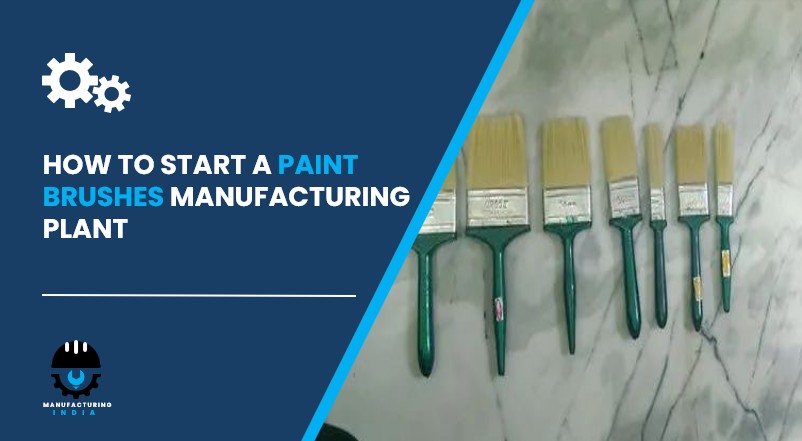
Setting up a paint brushes manufacturing plant in India presents a highly compelling investment opportunity, driven by accelerating infrastructure development, expanding construction and real estate activity, rising demand across the automotive and industrial maintenance sectors, sustained growth in decorative and architectural coatings consumption, and the growing penetration of professional and DIY painting tools across consumer, institutional, and export markets. As one of the most strategically significant segments of the global painting tools and hardware accessories industry, paint brushes manufacturing combines precision bristle tufting, handle forming, ferrule assembly, adhesive bonding, surface finishing, and packaging operations to serve a broad range of construction, automotive, furniture, industrial, and consumer end-use markets.
The global paint brushes market size was valued at USD 4.52 Billion in 2025. According to IMARC Group estimates, the market is expected to reach USD 6.95 Billion by 2034, exhibiting a CAGR of 4.9% from 2026 to 2034. The market is propelled by sustained construction sector growth, accelerating urban infrastructure expansion in emerging economies, rising consumer preference for quality painting tools in DIY and professional segments, and the increasing penetration of specialised brush variants across industrial, automotive, and decorative end-use applications. North America accounts for a meaningful share of the overall market, supported by mature home improvement retail networks, renovation-driven demand, and active industrial maintenance and coating markets.
Expanding adoption of synthetic bristle variants (nylon and polyester), growing demand for value-added brush formats across professional trade and DIY segments, and the increasing use of paint brushes across furniture finishing, automotive refinishing, and architectural coating applications continue to elevate demand for high-quality brush products. The shift from low-cost commodity brushes toward dimensionally precise, long-life, and application-specific formats integrates paint brushes manufacturing as a core operation in modern construction, furniture, automotive, and consumer hardware supply chains.
Paint brushes manufacturing sits at the intersection of precision materials processing, assembly engineering, and downstream construction, automotive, and industrial coating value chains, supported by a structurally growing global paints and coatings industry. With gross profit margins typically ranging between 35 to 45% and a well-defined break-even trajectory at scale, a dedicated paint brushes manufacturing plant represents both a financially sound and strategically well-timed investment for hardware brands, industrial groups, and institutional investors targeting the evolving global construction, furniture, automotive, and consumer painting tools markets.
What are Paint Brushes?
A paint brush is a hand-held painting tool comprising a bundle of bristles or filaments attached to a handle via a ferrule, designed to apply paint, varnish, stain, adhesive, or other liquid coatings to a wide range of surfaces including walls, wood, metal, masonry, automotive panels, and industrial equipment. Paint brushes are manufactured in a broad range of sizes, shapes, handle materials, ferrule types, and bristle compositions to address the specific requirements of architectural, decorative, industrial, automotive, and consumer painting applications.
Bristles are produced primarily from natural animal hair (hog bristle, ox hair, horsehair, and badger hair) and synthetic polymer filaments (nylon, polyester, and nylon-polyester blends), selected based on the type of coating medium, surface substrate, and application technique. Natural bristles are preferred for oil-based paints and varnishes due to their high paint-holding capacity and controlled release characteristics, while synthetic filaments are favoured for water-based latex and emulsion coatings, offering superior moisture resistance, shape retention, and consistent performance across multiple coats.
Standard paint brush product types include flat brushes, angled sash brushes, round brushes, chip brushes, foam brushes, wall brushes, varnish brushes, detail and trim brushes, specialty brushes for textured coatings, and industrial paint brushes for machinery and structural steel maintenance. Handles are produced from hardwood, soft wood, plastic, or composite materials, finished with lacquer, paint, or clear coating for aesthetics and durability. Ferrules are formed from stainless steel, tin-plated steel, or aluminium, crimped or epoxy-bonded to secure the bristle plug to the handle.
The paint brushes manufacturing sequence broadly involves raw material receipt and quality inspection, bristle sorting and flagging, plug formation and tufting, ferrule assembly and crimping, adhesive filling and curing, handle forming and finishing, ferrule-handle assembly, final shaping and trimming, quality inspection, and retail or bulk packaging. End-use segments served include residential and commercial construction, architectural and decorative coatings, furniture and wood finishing, automotive refinishing and detailing, industrial maintenance and machinery coating, marine and offshore coatings, and consumer DIY and home improvement.
Cost of Setting Up a Paint Brushes Manufacturing Plant
The total cost of establishing a paint brushes manufacturing plant depends on several variables including plant capacity, level of automation, chosen manufacturing technology (fully automated tufting and assembly versus semi-automated or manual operations), geographic location, raw material sourcing strategy, product mix across brush sizes and types, and applicable regulatory compliance requirements. A thorough feasibility assessment covering all CapEx and OpEx components is essential before committing capital, given the quality-sensitive and specification-driven nature of paint brushes manufacturing.
1. Capital Expenditure (CapEx)
Capital investment for a paint brushes manufacturing plant covers several broad cost heads. Land and site development forms a meaningful part of the overall investment, encompassing land registration charges, boundary development, drainage, site grading, and related civil infrastructure expenses. A typical paint brushes facility requires a land parcel sized to accommodate the production floor, bristle processing and storage area, handle manufacturing section, ferrule assembly zone, finishing and inspection area, finished goods warehousing, and on-site utility installations. Investors may consider locating the facility in proximity to bristle and synthetic filament suppliers, wood and metal hardware vendors, paint and coatings manufacturing clusters, retail and hardware distribution hubs, or port-connected logistics centres for export-oriented strategies.
Civil works and construction costs cover the production shed, raw material storage area, bristle processing section, handle forming and finishing bay, assembly and inspection zone, finished goods warehousing, quality control laboratory, and the administrative block. Machinery and equipment costs represent the largest single portion of total capital expenditure. Key machinery and equipment required includes:
- Raw material handling and storage systems (bristle storage racks, sorting and flagging tables, filament cutting machines, moisture-controlled bristle conditioning chambers, ferrule storage bins, handle stock racks, and automated material conveyors)
- Bristle processing and flagging machines (automatic flagging and tipping machines that split bristle tips to increase paint-holding capacity, combing and sorting units for separating and aligning natural and synthetic filament bundles, and length-sorting machines for consistent plug formation)
- Tufting and plug-forming machines (automatic tufting machines, semi-automatic hand-tied tufting frames, plug-forming jigs and crimping presses for assembling bristle bundles into the target weight, density, and shape for each brush specification)
- Ferrule forming and stamping machines (progressive die stamp presses for stainless steel and tin-plated ferrule blanks, roll-forming machines, ferrule sizing and depth-setting tools, and ferrule surface finishing lines for brushed or bright finish requirements)
- Handle turning and forming machines (wood turning lathes for hardwood and soft wood handle production, CNC router machines for profiled handle shapes, injection moulding machines for plastic handle variants, and automated sanding and shaping lines for finished handle geometry)
- Handle finishing lines (spray lacquering and painting booths, UV curing ovens, hot stamping and pad printing machines for brand and size marking on handles, and dip lacquering lines for high-volume commodity handle finishing)
- Adhesive filling and curing systems (precision adhesive dispensing machines for epoxy and polyurethane adhesive filling into ferrule plugs, batch curing ovens, UV curing systems for fast-cure adhesive variants, and automated pot life management systems)
- Ferrule assembly and crimping machines (automatic ferrule loading and pressing machines, crimping and swaging presses for mechanical ferrule retention, and robotic pick-and-place units for high-speed handle-ferrule assembly in automated lines)
- Final shaping, trimming, and flagging equipment (automatic trim and cut machines for final bristle length standardisation, flagging tip-refinement machines, shape-setting forms and moulds, and power trimming cutters for specialty brush profiles)
- Inspection and quality control equipment (bristle density gauges, flagging percentage testers, ferrule pull-out strength testers, visual inspection light boxes, handle surface finish testers, paint-holding capacity test rigs, and dimensional measurement instruments)
- Automated assembly and packaging lines (robotic pick-and-place units, flow wrap and heat-seal packaging machines, blister card assembly stations, shelf-ready display packaging machines, barcode labelling and printing units, and carton sealing and palletising equipment)
- Utility systems (electrical substations and transformers, compressed air compressors and dryers, water supply and treatment systems, LPG or natural gas supply for curing ovens, spray booth exhaust and air handling units, and climate control systems for bristle storage areas)
- Effluent and emission control equipment (solvent vapour recovery units for lacquering and painting operations, spray booth filtration and exhaust treatment systems, adhesive waste management stations, and wastewater treatment plants for handle washing and finishing effluents)
- Material handling and transport equipment (overhead cranes, forklifts, pallet trucks, tote bins, handle and ferrule trolleys, and on-site logistics infrastructure for movement of raw materials, work-in-progress, and finished goods)
Other capital costs include utility connections (electricity, water, compressed air, and process gas supply), pre-operative expenses, plant commissioning costs, tooling and fixture costs for tufting and assembly machines, product qualification and trial production runs, and applicable import duties on specialised automated tufting equipment, flagging machines, and quality measurement instruments not manufactured domestically.
Request a Sample Report for In-Depth Market Insights: https://www.imarcgroup.com/paint-brushes-manufacturing-plant-project-report/requestsample
2. Operational Expenditure (OpEx)
The operating cost structure of a paint brushes manufacturing plant is heavily weighted toward raw materials. Raw material costs (encompassing synthetic bristles — nylon and polyester filament bundles — natural animal hair bristles, hardwood and plastic handle blanks, stainless steel and tin-plated ferrule blanks, epoxy and polyurethane adhesives, lacquers and paints for handle finishing, and packaging components) account for approximately 60 to 70% of total OpEx, with synthetic bristle filaments (nylon and polyester) typically representing the single largest raw material cost component due to their global polymer pricing exposure and the precision quality grade required for professional-grade brush applications. Entering long-term supply agreements with reliable bristle filament producers, ferrule blank manufacturers, hardwood handle suppliers, and adhesive vendors is essential to mitigate input price volatility and maintain production continuity.
Utility costs, particularly electricity for tufting and assembly operations, compressed air, lacquer spray booth exhaust handling, and curing ovens, along with adhesive materials and handle finishing consumables, account for 5 to 10% of OpEx. Additional operating costs include packaging materials (retail cards, plastic sleeves, tissue wraps, display packs, cartons, and shelf-ready packaging), transportation and distribution logistics, salaries and wages for tufting machine operators, ferrule assembly technicians, handle finishing staff, quality control inspectors, and sales personnel, periodic tooling replacement (tufting needles, ferrule dies, trimming blades, and moulding inserts), maintenance of tufting machines and assembly equipment, solvent and lacquer consumables for handle finishing lines, quality testing consumables, and applicable regulatory and product certification costs.
3. Plant Capacity
The proposed paint brushes manufacturing facility is designed with an annual production capacity ranging between 5 to 20 million units, enabling meaningful economies of scale while preserving operational flexibility across the full product range, from standard flat and round brushes in commodity nylon-polyester formats to premium professional sash brushes, angled trim brushes, natural bristle varnish brushes, industrial chip brushes, and specialty decorative and textured coating brushes. Plant capacity can be customised based on the investor’s specific capital availability, target market scale, and chosen product mix across end-use segments such as architectural construction, furniture finishing, automotive refinishing, industrial maintenance, DIY consumer, and export channels.
Profitability improves considerably at higher capacity utilisation levels, given the fixed-cost component of tufting, ferrule assembly, and handle finishing operations, making early off-take agreements with paint manufacturers, hardware retailers, home improvement chains, automotive aftermarket distributors, industrial MRO suppliers, and private label export customers strategically important.
4. Profit Margins and Financial Projections
A paint brushes manufacturing plant demonstrates healthy profitability potential under normal operating conditions. Gross profit margins typically range between 35 to 45%, supported by stable and growing demand across construction, automotive, industrial maintenance, furniture, and consumer DIY markets; the structural shift toward premium synthetic and natural bristle variants; growing infrastructure and residential construction spending across emerging economies; and differentiation opportunities through professional-grade, ergonomic handle, and specialty coating brush product lines. Net profit margins range between 15 to 25%.
Financial projections incorporate NPV analysis, IRR calculations, payback period modelling, and sensitivity analysis across plant capacity utilisation, raw material pricing, utility costs, and end-market demand scenarios. These projections are developed based on realistic assumptions related to capital investment, operating costs, capacity utilisation, and demand outlook, providing investors with a comprehensive view of long-term financial viability.
Why Set Up a Paint Brushes Manufacturing Plant?
- Essential Tool Across Industries: Paint brushes are indispensable application tools used in virtually every construction, renovation, furniture, automotive, industrial, and household activity, making them a high-volume, recurring-demand product category with sustained replacement and consumption cycles across the global painting tools and hardware ecosystem.
- Urbanisation and Infrastructure Megatrend: Rapid urban population expansion across India, Southeast Asia, the Middle East, and Africa is driving large-scale residential and commercial construction, public infrastructure projects, and renovation activity, creating sustained demand for architectural and construction-grade paint brushes across emerging economies.
- Paints and Coatings Industry Structural Growth: The global paints and coatings industry continues to expand driven by construction, automotive, and industrial maintenance demand. India’s paints and coatings industry alone is projected to reach USD 12.22 billion within five years, directly creating robust and structurally growing demand for complementary painting tools including brushes.
- Synthetic Bristle Innovation Driving Margins: Growing adoption of high-performance nylon and polyester bristle variants, premium flagged-tip filaments, and advanced synthetic blends optimised for waterborne and high-solid coating systems are creating attractive value-added margin opportunities for paint brush manufacturers with in-house bristle processing and advanced tufting capabilities.
- DIY and Home Improvement Market Expansion: The accelerating global penetration of DIY home improvement culture, home renovation programmes, and e-commerce retail for painting tools is creating a structurally growing demand stream for retail-packaged paint brushes, opening a fast-growing diversification channel for hardware brands and private label manufacturers.
- Automotive and Furniture End-Market Off-Take: Continued growth in global vehicle production, including electric vehicles, and expanding furniture and interior decoration manufacturing supports stable industrial demand for precision detail brushes, automotive touch-up brushes, and furniture finishing brushes used in production lines and professional refinishing workshops.
- Moderate Entry Barriers with Brand Differentiation Potential: Paint brushes manufacturing requires consistent bristle processing quality, controlled adhesive bonding, and precise assembly discipline, creating moderate but justifiable entry barriers and supporting structurally protected margins for established and well-capitalised producers operating at scale with strong brand and channel relationships.
- Government Policy and Manufacturing Support: Public sector investment in affordable housing, smart cities, industrial modernisation, and manufacturing incentive schemes such as India’s Make in India and Production Linked Incentive (PLI) initiatives indirectly support sustained paint brushes consumption growth and provide favourable policy frameworks for new domestic manufacturing capacity.
- Import Substitution and Export Potential: Many emerging markets continue to rely on imported professional-grade and specialty paint brushes, creating attractive import substitution opportunities for new domestic capacity, while strategically located plants near port logistics can also serve regional export markets across Asia, Africa, the Middle East, and Europe.
- High-Volume Recurring Consumption Economics: Paint brushes are semi-consumable tools with a finite operating life depending on usage intensity, coating medium, and cleaning discipline, supporting a steady and predictable replacement cycle that provides long-term revenue visibility when paired with a stable retail distribution and institutional customer portfolio.
How Paint Brushes are Manufactured
The paint brushes manufacturing sequence encompasses raw material reception and quality inspection, bristle processing and flagging, plug formation and tufting, ferrule forming and preparation, adhesive filling and curing, handle forming and finishing, ferrule-handle assembly, final trimming and shaping, quality inspection, and retail packaging as the core stages of production. Each stage involves specific unit operations, quality assurance checkpoints, and process control protocols aligned to product specifications and applicable painting tools standards.
- Raw Material Reception and Quality Inspection: Synthetic bristle filaments (nylon, polyester, and nylon-polyester blends), natural animal hair bristles, hardwood and plastic handle blanks, ferrule blank coils, epoxy and polyurethane adhesives, lacquers, handle paints, and packaging materials are received from suppliers, sampled, and tested for filament diameter, bristle flagging percentage, handle dimensional tolerance, ferrule blank thickness, and surface quality before being conveyed to dedicated storage areas.
- Bristle Sorting, Conditioning, and Flagging: Received bristle filament bundles are sorted by length, diameter, and grade, conditioned under controlled humidity to achieve consistent pliability and handling characteristics, and processed through automatic flagging and tipping machines that mechanically split the tips of synthetic filaments to create microscopic flag tips that enhance paint-holding capacity, smooth release, and finish quality.
- Plug Formation and Tufting: Conditioned and flagged bristle bundles are weighed and assembled into precise plug formations matching the specified density, weight, shape, and size for each brush product specification. Automatic or semi-automatic tufting machines assemble the bristle plug into the ferrule cavity, ensuring consistent density, taper, and shape across production batches.
- Ferrule Forming and Preparation: Stainless steel, tin-plated steel, or aluminium coil stock is processed through progressive die stamp presses to form ferrule blanks in the specified width, depth, and profile for each brush size. Ferrule edges are deburred, surfaces cleaned and degreased, and ferrule cavities sized to accept the tufted bristle plug and handle assembly with precision fit and adhesive retention.
- Adhesive Filling and Curing: Precision adhesive dispensing machines fill measured doses of epoxy or polyurethane adhesive into the ferrule cavity around the tufted bristle plug, encapsulating the bristle bundle and bonding it permanently to the ferrule. Filled assemblies are loaded onto conveyor ovens or UV curing systems for controlled cure at specified temperature and time profiles, ensuring full adhesive cross-linking, bristle retention strength, and solvent and water resistance.
- Handle Forming and Finishing: Hardwood or soft wood blanks are processed through automatic wood turning lathes or CNC router machines to produce the specified handle profile, ergonomic grip taper, and shank diameter. Turned handles are sanded smooth, conveyed through dip lacquering or spray lacquering and painting lines, and cured in conveyor ovens. Brand names, size designations, and product markings are applied using hot stamping, pad printing, or laser engraving operations.
- Ferrule-Handle Assembly and Crimping: Cured bristle-ferrule assemblies are loaded onto automatic ferrule pressing and crimping machines that drive the hardened ferrule shank over the handle shank with precision depth and force control, forming a permanent mechanical and adhesive bond. Automated vision inspection cameras or gauge sensors verify ferrule depth, alignment, and axial runout on each assembled brush.
- Final Trimming and Shaping: Assembled brushes pass through automatic trim machines that cut the bristle bundle to the final specified length and profile shape, ensuring consistent flag-to-tip geometry, edge profile, and overall brush length per product specification. Specialty angled, oval, and shaped brush profiles are processed through dedicated trim and shaping jigs.
- Inspection and Quality Testing: Finished brushes undergo bristle density and weight verification, flagging percentage assessment, ferrule pull-out strength testing, bristle loss and shedding evaluation, handle surface finish inspection, dimensional verification, and sampling-based painting performance assessment. Statistical process control is maintained for each production lot to ensure compliance with applicable BS, EN, ASTM, BIS, and internal quality standards.
- Packaging and Dispatch: Inspected brushes are individually wrapped in tissue or sleeve packaging, assembled into retail card blister packs, shelf-ready display packaging, or bulk trade cartons, barcode labelled, and palletised for dispatch to paint manufacturers, hardware retail chains, home improvement stores, e-commerce fulfilment centres, industrial distributors, and export customers.
- Final Quality Audit: Production samples from each lot undergo final dimensional verification, bristle retention strength testing, solvent and water immersion testing for adhesive integrity, and packaging inspection. Each batch is released only upon passing all specified quality parameters and certification requirements.
Key Applications
Paint brushes manufactured at a dedicated processing facility serve a broad range of end-use channels, each with specific bristle type, handle format, size, and performance requirements.
- Construction and Architectural Coatings: Paint brushes are widely used in residential and commercial construction for applying interior and exterior wall paints, primers, undercoats, and decorative finishes, supplied through hardware retailers, professional painting contractors, paint manufacturers, and large construction supply chains.
- Furniture and Wood Finishing: Varnish brushes, flat brushes, and specialty stain brushes are extensively used in furniture manufacturing, cabinetry, woodworking workshops, and joinery for applying lacquers, polyurethane varnishes, stains, oil finishes, and decorative coatings to wood surfaces.
- Automotive Refinishing and Detailing: Automotive original equipment and aftermarket channels use fine-tipped detail brushes, touch-up brushes, and epoxy application brushes for body repair, refinishing, panel coating, and corrosion protection operations across professional body shops and service centres.
- Industrial Machinery Maintenance: Industrial flat brushes, chip brushes, and specialty coating brushes are used extensively across factories, power plants, refineries, warehouses, and process industries for applying rust inhibitors, protective coatings, maintenance paints, and sealants on equipment, structural steel, and plant infrastructure.
- Marine and Offshore Coatings: Heavy-duty flat brushes and specialty marine coating brushes are used in shipyards, offshore platforms, port infrastructure maintenance, and marine vessel maintenance for applying anti-corrosion coatings, anti-fouling paints, and epoxy coatings on marine structures.
- Decorative and Artistic Applications: Fine art brushes, decorative finish brushes, and specialty faux finish brushes are used by decorators, interior designers, artists, and renovation contractors for applying specialty finishes including texture coatings, Venetian plaster, metallic paints, and feature wall treatments.
- DIY and Home Improvement: Retail-packaged paint brushes in single and multi-pack configurations are sold through hardware retailers, home improvement stores, paint brand retail outlets, and e-commerce platforms to homeowners, hobbyists, and tradespeople for general repair, renovation, surface painting, and household maintenance.
- Industrial MRO and Institutional Supply: Paint brushes are used across industrial maintenance, repair, and operations (MRO) functions in factories, commercial buildings, institutions, and infrastructure operations, supplied through industrial distributors, government procurement, and institutional supply chains.
Leading Paint Brushes Manufacturers
The global paint brushes manufacturing industry is served by several multinational and large regional companies with extensive production capacities and diverse product portfolios across construction, industrial, automotive, and consumer markets. Key players include:
- Purdy (a Sherwin-Williams Company)
- Wooster Brush Company
- Proform Technologies
- Benjamin Moore & Co.
- The Sherwin-Williams Company
- Nippon Paint Holdings Co., Ltd.
- Asian Paints Limited
- Royal Brush Manufacturing
- Pinnacle Brush Company
- Premier Paint Roller Company LLC
- Corona Brushes, Inc.
- Dura Paints (Pty) Ltd.
- Pental Eterna Brushes & Tools
- FM Brush Company
Recent Industry Developments
- December 2025: Plaid Enterprises introduced a licensed paint and brush collection in partnership with the EttaVee lifestyle brand, featuring curated 13-piece sets reflecting the brand’s vibrant aesthetic and encouraging expressive creativity across the professional and hobby painting market.
- April 2025: Purdy, a leading professional painting tools brand, celebrated its centennial milestone by introducing three new products — the Altitude Roller Cover, the POLE+ Extension Pole, and the Pro-Extra High-Capacity Brush — continuing the company’s legacy of delivering high-quality, reliable painting tools for both professional and DIY markets.
- November 2024: Wooster Brush Company expanded its Silver Tip professional brush range with new angled sash and trim brush variants featuring advanced synthetic bristle blends optimised for smooth application of waterborne latex and acrylic coatings, targeting professional trade painters and interior decoration contractors.
Timeline to Start the Plant
Investors planning a paint brushes manufacturing plant should anticipate the following phased development timeline, typically ranging from 10 to 16 months depending on site development requirements, regulatory approval timelines, and the lead time for automated tufting machines, ferrule stamping equipment, and handle finishing lines:
- Feasibility study and detailed project report preparation
- Land acquisition, site assessment, and environmental impact review
- Regulatory approvals, factory licence, environmental clearances, and utility connections
- Civil construction: production floor, bristle and raw material storage, handle finishing area, assembly section, quality laboratory, and finished goods warehousing
- Specialised machinery procurement, tufting machine installation, ferrule stamping and assembly line commissioning, and handle finishing line setup
- Raw material supplier agreements (synthetic bristle filaments, hardwood handle blanks, ferrule blank coils, adhesives, lacquers, and packaging materials) and electricity and utility contracts
- Plant commissioning, trial production runs, and process parameter optimisation
- Product qualification, BIS certification, and downstream retailer and OEM technical qualification
- Distribution channel development and key account relationships, commercial production ramp-up to design capacity
Licences and Regulatory Requirements
Starting a paint brushes manufacturing unit requires several approvals, which vary by country and jurisdiction:
- Business registration (Proprietorship, LLP, or Private Limited Company)
- Factory Licence under applicable factories legislation
- Industrial Entrepreneur Memorandum (IEM) filing with the Department for Promotion of Industry and Internal Trade (India)
- Environmental Clearance from the relevant national authority (where applicable based on project scale)
- Consent to Establish and Consent to Operate from the relevant State Pollution Control Board
- Air emission compliance permits for spray booth lacquering and paint finishing operations
- Hazardous waste authorisation for adhesive residues, solvent waste, and spray booth filter waste
- Bureau of Indian Standards (BIS) certification under applicable product and safety standards
- GST or VAT Registration
- Fire Safety NOC and solvent storage permit (where applicable for lacquering operations)
- Electricity Board approval and grid connectivity permits
- ISO 9001 Quality Management System certification (recommended for retail, industrial, and export supply)
- ISO 14001 Environmental Management System certification
- ISO 45001 Occupational Health and Safety Management System certification
- Import or export code (for international trade in paint brushes and painting tools)
- MSME registration (where applicable, for access to government subsidy and incentive schemes in India)
- EPR (Extended Producer Responsibility) registration for plastic packaging compliance
Key Challenges to Consider
- Raw Material Price Volatility: Synthetic bristle filaments (nylon and polyester) are subject to global polymer commodity market fluctuations, crude oil price movements, and supply concentration risks. Hardwood handle material costs are exposed to timber market dynamics. Managing raw material cost volatility through long-term procurement agreements, multi-source qualification, and inventory management is a critical commercial priority.
- Bristle Quality and Process Consistency: Paint brushes are application tools where minor deviations in bristle flagging percentage, plug density, adhesive cure, or ferrule crimping directly impact paint-holding capacity, bristle shedding, and brush life. Maintaining tight statistical process control across tufting, adhesive filling, and assembly operations is essential to deliver consistent product quality and protect brand reputation.
- Competition from Low-Cost Imports: The global paint brushes market includes low-cost imports from high-volume manufacturing centres, particularly China, which compete aggressively on price in commodity brush segments. Differentiated products, premium synthetic bristle performance, professional-grade ergonomics, regional cost advantage, private label arrangements, and strong retailer and contractor relationships are essential for new entrants to gain and defend market share.
- Seasonal and Construction-Cycle Demand Variability: Paint brushes demand is closely tied to construction cycles, renovation seasons, and industrial maintenance budgets. Diversification across construction, automotive, industrial, furniture, and consumer DIY end-use segments is essential to smooth demand volatility across seasonal and economic cycles.
- Solvent and Lacquer Emission Compliance: Handle finishing operations using solvent-based lacquers and paints generate volatile organic compound (VOC) emissions that require spray booth exhaust treatment, solvent vapour recovery, and regulatory compliance monitoring. Increasing regulatory pressure on VOC emissions from industrial coating processes may require additional investment in compliant water-based finishing systems.
- Counterfeit and Sub-Standard Product Competition: The paint brushes market in many emerging economies is exposed to counterfeit branded products and sub-standard imports that compete on price through inferior bristle quality and poor ferrule retention. Investing in brand building, quality assurance, consumer education, and retail trust is critical to defending market share.
- Skilled Workforce Availability: Tufting machine operation, bristle plug assembly, ferrule assembly, and quality control require skilled operators with training and attention to process discipline. Building and retaining a capable workforce through structured training and competitive compensation is essential in markets with limited skilled manufacturing labour.
- Retail Channel Concentration Risk: A significant portion of paint brush volumes in developed markets is concentrated in large home improvement chains and paint brand retail networks. Building balanced channel exposure across professional trade, modern retail, industrial distribution, and direct e-commerce reduces concentration risk and supports revenue resilience.
Project Economics
Capital Expenditure (CapEx) and Operational Expenditure (OpEx) Analysis
Capital Investment (CapEx)
Machinery costs account for the largest portion of the total capital expenditure, with automatic tufting machines, ferrule stamping presses, handle turning and finishing lines, adhesive dispensing and curing systems, and automated packaging equipment together representing the most significant equipment investments. The cost of land and site development, including charges for land registration, boundary development, and other related expenses, forms a substantial part of the overall investment. This allocation ensures a solid foundation for safe, continuous, and efficient plant operations across the multi-year asset depreciation cycle.
Operating Expenditure (OpEx)
In the first year of operations, the operating cost for the paint brushes manufacturing plant is projected to be significant, covering raw materials (with synthetic bristle filaments, handles, ferrules, and adhesives accounting for 60 to 70% of total OpEx), utilities (particularly electricity and compressed air at 5 to 10% of OpEx), depreciation, taxes, packaging, transportation, and repairs and maintenance. By the fifth year, the total operational cost is expected to increase substantially due to factors such as inflation, market fluctuations, polymer and raw material price escalation, and potential increases in labour and logistics costs.
Frequently Asked Questions
1. How much does it cost to set up a paint brushes manufacturing plant?
Total setup cost depends on plant capacity, level of automation, manufacturing technology configuration (manual or semi-automated tufting versus fully automated high-speed lines), product range, geographic location, and applicable regulatory requirements. Capital investment covers land, civil works, raw material storage and handling systems, bristle processing and flagging machines, tufting equipment, ferrule stamping and assembly lines, handle forming and finishing equipment, adhesive dispensing and curing systems, laser marking units, inspection equipment, automated packaging lines, utility infrastructure, emission control equipment, and pre-operative costs. A detailed project report provides capacity-specific cost estimates.
2. Is paint brushes manufacturing profitable?
Yes. Gross profit margins typically range between 35 to 45% and net margins between 15 to 25%, supported by growing demand across construction, automotive, furniture, industrial maintenance, and DIY markets; the structural shift toward premium synthetic and professional-grade brush variants; rising infrastructure investment across emerging economies; and product differentiation opportunities through advanced bristle technology, ergonomic handles, and specialty application brush formats.
3. What machinery is required for a paint brushes manufacturing plant?
Essential machinery and equipment includes bristle sorting and flagging machines, automatic tufting and plug-forming machines, ferrule forming and stamping presses, ferrule assembly and crimping machines, adhesive dispensing and curing systems, wood turning and handle shaping lathes, CNC router machines for profiled handle forms, handle finishing spray lacquering and UV curing lines, hot stamping and pad printing units, automatic trim and shaping machines, optical and visual inspection equipment, automated packaging lines, utility infrastructure (electricity, compressed air, LPG or gas for curing ovens), spray booth exhaust and VOC treatment systems, and effluent treatment plants.
4. What licences and approvals are required to start a paint brushes manufacturing plant?
Required approvals include business registration, a Factory Licence, Industrial Entrepreneur Memorandum filing (India), Environmental Clearance from the relevant national authority where applicable, Consent to Establish and Operate from the State Pollution Control Board, air emission compliance permits for lacquering operations, hazardous waste authorisation, fire safety NOC, GST or VAT registration, ISO 9001 quality management certification, ISO 14001 environmental management certification, and ISO 45001 occupational health and safety certification.
5. What raw materials are needed for paint brushes manufacturing?
Primary raw materials include synthetic bristle filaments (nylon monofilaments and polyester filament bundles in specified diameters and flagging grades), natural animal hair bristles (hog bristle, ox hair, or horsehair for premium and specialty variants), hardwood handle blanks (beech, ash, or pine), plastic handle granules (for injection-moulded handles), stainless steel, tin-plated steel, or aluminium ferrule blank coils, epoxy and polyurethane adhesives, solvent-based and water-based handle lacquers and paints, and packaging materials (retail cards, plastic sleeves, tissue wraps, display cartons, and shelf-ready packs). Raw materials collectively account for approximately 60 to 70% of total operating costs.
6. What are the environmental compliance requirements?
Operators must obtain Consent to Operate, install and maintain effective spray booth exhaust filtration and solvent vapour recovery systems for handle lacquering and painting operations, manage adhesive waste and epoxy residues as hazardous waste where applicable, treat wastewater from handle washing and finishing operations through dedicated treatment plants, and adhere to applicable VOC emission norms. Transition to water-based lacquers and UV-cure finishing systems supports compliance with increasingly stringent VOC regulations.
7. What is the best location to set up a paint brushes manufacturing plant?
Ideal locations offer proximity to synthetic bristle filament suppliers, hardwood handle manufacturers, and ferrule blank vendors to minimise raw material procurement and logistics costs; access to reliable and competitively priced electricity for tufting, curing, and assembly operations; compliance with industrial zoning and air quality regulations for lacquering operations; availability of a skilled assembly and quality control workforce; robust road and rail logistics infrastructure; and access to construction, furniture, automotive, and paint brand distribution networks and port logistics for export markets.
8. How long does it take to start a paint brushes manufacturing plant?
The timeline typically ranges from 10 to 16 months, depending on site development requirements, regulatory approval timelines, tufting machine and automated assembly line procurement lead times, civil works completion, equipment installation and commissioning, trial production runs, and product qualification testing under applicable BIS and ISO standards.
9. What government incentives are available for paint brushes manufacturers?
In India, the MSME capital subsidy programmes, state-level industrial promotion policies, infrastructure development incentives, and export promotion schemes provide meaningful support to new paint brushes manufacturers. State-level concessions on power tariffs, stamp duty, and GST reimbursement, along with priority allocation of land in industrial corridors, offer additional benefits. The Make in India initiative and sector-specific manufacturing incentive programmes create favourable frameworks for domestic capacity expansion and export-oriented production.
10. What is the break-even period for a paint brushes manufacturing plant?
Break-even typically ranges from 3 to 5 years, depending on scale, automation level, raw material and energy procurement strategy, product mix between commodity nylon-polyester brushes and premium professional-grade variants, and customer off-take contract flow. Securing early supply agreements with paint manufacturers, hardware retail chains, home improvement stores, industrial distributors, and private label export customers can significantly support a smoother ramp-up and faster break-even achievement.
Key Takeaways for Investors
The paint brushes manufacturing plant opportunity is underpinned by sustained demand growth across construction and infrastructure, furniture and wood finishing, automotive and vehicle refinishing, industrial and machinery maintenance, marine coatings, decorative and specialty finishes, and consumer DIY and home improvement markets — all aligned with global urbanisation, infrastructure investment, and paints and coatings industry expansion megatrends.
The structural shift toward higher-quality synthetic bristle variants, the growing professional and trade painting market, rising consumer preference for reliable and long-life painting tools, and the long-term expansion of construction, manufacturing, and renovation activity across emerging and developed markets create a robust and diversified demand base for well-positioned paint brushes manufacturers.
With a well-defined market demand base across multiple end-use segments, rich product differentiation opportunities across flat, angled, round, specialty, industrial, and professional formats, capital-efficient processing economics with multi-year asset life, and the fundamental role of paint brushes in delivering the quality outcomes demanded by construction, automotive, industrial, and consumer paint applications, paint brushes manufacturing offers both medium-term commercial viability and long-term demand sustainability for well-positioned producers operating at scale with strong brand, distribution, and quality foundations.
About the Author