Setting up a wet wipe manufacturing plant in India presents a compelling investment case driven by the country’s rapidly growing hygiene awareness, expanding organised retail and e-commerce distribution channels, rising demand for convenient personal care products across urban and semi-urban households, and the accelerating adoption of disposable cleaning and disinfection solutions across healthcare, infant care, and household cleaning applications. Wet wipes commonly made from non-woven fabrics soaked in water, surfactants, preservatives, fragrances, and skin-conditioning agents have evolved from a niche personal care product into an essential daily hygiene category for hundreds of millions of Indian consumers across baby care, facial cleansing, surface sanitisation, and medical hygiene segments. The India wet wipe market was valued at USD 1.16 billion in 2025 and is projected to reach USD 1.86 billion by 2034 at a CAGR of 5.4% one of the most consistent and demand-resilient growth trajectories among all consumer hygiene product categories in India’s retail landscape.
India’s structural advantages make it a strategically sound location for establishing a wet wipe manufacturing facility. The expanding domestic organised retail network, rapid e-commerce grocery channel growth, and improving cold-chain and logistics infrastructure collectively ensure that domestically manufactured wet wipes can reach consumers across Tier 1, Tier 2, and Tier 3 markets efficiently a distribution reach that import-dependent supply chains cannot match for speed, cost, or product customisation. The government’s support for consumer goods manufacturing under Make in India, PLI scheme incentives for textiles and nonwoven fabric processing, and state-level manufacturing investment schemes in Maharashtra, Gujarat, and Rajasthan provide investors with competitive land costs, nonwoven fabric supply chain access, and favourable policy conditions for building locally produced wet wipe brands and private-label manufacturing capacity at scale.
A wet wipe manufacturing plant in India is positioned within an India market valued at USD 1.16 billion in 2025 growing at 5.4% CAGR toward USD 1.86 billion by 2034, driven by hygiene awareness, urbanisation, convenience lifestyle adoption, and accelerating innovation in biodegradable and alcohol-free formulations. With gross profit margins of 35–45% and net margins of 15–20% at 500 million to 1 billion wipes annual production capacity, and supported by a large domestic retail distribution network and growing institutional healthcare demand, this investment delivers commercially strong and scalable returns.
What is a Wet Wipe?
Wet wipes, also referred to as baby wipes or moist towelettes, are commonly made from non-woven fabrics that are soaked in water, detergent, or disinfectant. Over a variety of processes such as spunlace and airlaid, non-woven fabrics are made and then blended with specific formulations consisting of water and surfactants, as well as preservatives, fragrances, and skin-conditioning agents. Wet wipes are made up of cottony material and sold mainly for their gentleness and versatility in cleaning, coming with the advantages of being easy to carry, convenient, and hygienic. Depending on the product and application, they are capable of providing antiseptic action, skin-care advantages, or deactivation of germs on surfaces.
Their complex character makes them suitable for use across personal hygiene, infant care, household cleaning, and medical applications. The primary production method involves nonwoven fabric cutting, liquid formulation preparation, impregnation, folding, sealing, and packaging a multi-step manufacturing process integrating raw material handling, chemical formulation, fabric processing, and automated assembly at each stage. End-use industries served include personal care, healthcare, and household cleaning covering applications from facial cleansing, baby care, and makeup removal through to surface sanitisation, patient hygiene, and wound care in clinical environments.
Cost of Setting Up a Wet Wipe Manufacturing Plant in India
The total investment required to establish a wet wipe manufacturing plant in India depends on plant capacity, product range breadth, geographic location, level of automation, and compliance with FSSAI, cosmetics, and healthcare product regulatory requirements. Investors must account comprehensively for both one-time capital expenditure and recurring operational costs when preparing a feasibility study or detailed project report (DPR).
1. Capital Expenditure (CapEx)
Land and Site Development constitutes a foundational investment. Costs for land registration, boundary construction, internal road layout, drainage infrastructure, and site levelling vary based on whether the facility is within a government-notified consumer goods or personal care manufacturing zone, a nonwoven fabric processing cluster, or on privately acquired industrial land. Manufacturing clusters in Maharashtra, Gujarat, and Rajasthan offer infrastructure-ready sites with access to nonwoven fabric supply chains, logistics networks for organised retail and institutional distribution, and proximity to large urban consumer markets.
Civil Works and Construction encompasses the main nonwoven fabric cutting and slitting hall, liquid formulation preparation and mixing room, impregnation production line area, folding and sealing production zone, quality control laboratory, finished goods warehouse, and administrative block. Hygiene product manufacturing requires food-contact-grade construction standards throughout production areas including hygienic wall and floor surfaces, pest exclusion design, and controlled-humidity storage for finished wipe products adding to civil construction costs relative to standard light manufacturing facilities.
Machinery and Equipment represent the single largest component of capital expenditure. Key machinery required for a wet wipe manufacturing plant includes:
- Nonwoven slitting machines
- Liquid mixing tanks
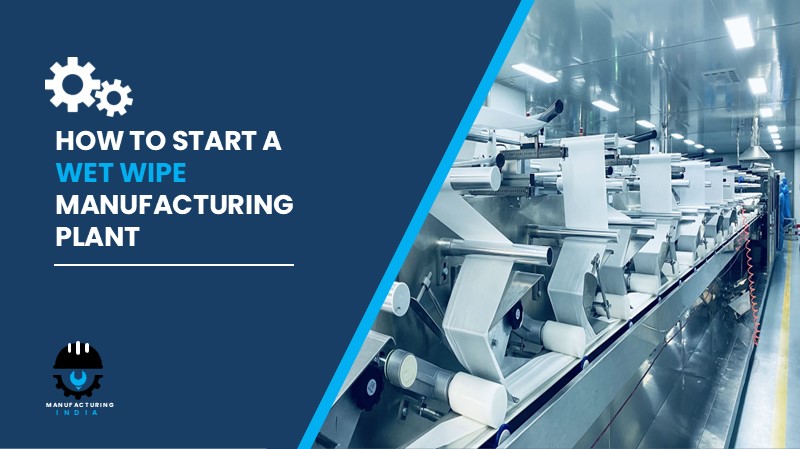
- Impregnation lines
- Folding machines
- Sealing units
- Automated packaging systems
Other Capital Costs include the effluent treatment plant (ETP) for managing liquid formulation preparation and equipment cleaning waste streams, pre-operative expenses covering regulatory filings and feasibility study preparation, plant commissioning charges, utility connection fees, and import duties applicable to specialised automated impregnation lines or high-speed packaging systems sourced internationally.
Request a Sample Report for In-Depth Market Insights: https://www.imarcgroup.com/wet-wipe-manufacturing-plant-project-report/requestsample
2. Operational Expenditure (OpEx)
Raw Material Cost is the dominant driver of operating expenditure for this plant type, accounting for approximately 65–75% of total OpEx. The primary inputs are nonwoven fabric and solutions the latter comprising water, surfactants, preservatives, fragrances, and skin-conditioning agents formulated for each product variant. Nonwoven fabric the physical substrate that gives each wipe its texture, absorbency, and cleansing performance represents the largest single raw material cost item, with its price influenced by polypropylene and polyester commodity markets for spunbond and spunlace fabrics, and by viscose or cotton fibre commodity markets for natural fibre wet wipe variants. Investors are advised to negotiate long-term supply contracts with domestic nonwoven fabric manufacturers and chemical ingredient distributors to stabilise input costs and ensure production continuity. Proximity to nonwoven fabric manufacturing clusters in Gujarat, Tamil Nadu, and Andhra Pradesh reduces inbound logistics costs materially.
Utility Costs – covering electricity for liquid mixing tanks, impregnation lines, folding machines, sealing units, and automated packaging systems account for approximately 10–15% of total OpEx, reflecting the moderate energy intensity of wet wipe assembly operations relative to process-heavy manufacturing categories. Impregnation and sealing operations are the most energy-intensive process steps, and investors in regions with competitive industrial electricity tariffs and reliable grid supply are better positioned to manage this cost component over the plant’s operational life.
Other Operating Costs include outbound transportation to organised retail chains, e-commerce distribution centres, baby care product distributors, hospital and healthcare facility procurement agencies, and institutional cleaning supply companies; packaging materials for individual wipe packs, flow-packs, canisters, and bulk institutional formats; employee salaries and wages for production line operators, formulation technicians, quality inspectors, and regulatory compliance personnel; equipment maintenance; quality assurance testing for formulation safety, microbial sterility, and cosmetics regulation compliance; depreciation on civil and machinery assets; and applicable taxes including GST. By the fifth year of operations, total operational costs are expected to increase substantially due to inflation, market fluctuations, potential rises in nonwoven fabric and formulation chemical prices, supply chain disruptions, rising consumer demand, and shifts in the global economy.
3. Plant Capacity
The proposed wet wipe manufacturing facility is designed with an annual production capacity ranging between 500 million and 1 billion wipes, enabling significant economies of scale while maintaining operational flexibility across different wipe categories baby wipes, facial cleansing wipes, surface disinfectant wipes, and healthcare patient hygiene wipes and packaging formats. This capacity range is well-aligned with the requirements of organised retail chains, e-commerce platforms, hospital procurement systems, and private-label brand buyers across India’s growing domestic consumer and institutional markets. Capacity can be customised based on investor requirements, target market mix, and product portfolio strategy. Profitability improves consistently with higher capacity utilisation, and wet wipe manufacturing plants support phased capacity expansion through additional impregnation lines and packaging stations with contained incremental CapEx.
4. Profit Margins and Financial Projections
The wet wipe manufacturing plant demonstrates healthy and strong profitability potential under normal operating conditions. Gross profit margins typically range between 35–45%, supported by stable year-round demand and the value-added, brand-differentiated nature of formulated wet wipe products relative to commodity nonwoven fabric inputs. Net profit margins range between 15–20%, reflecting the moderate raw material intensity and contained utility cost of the assembly-led production model. A comprehensive financial analysis should include income projections, expenditure forecasts, gross and net margin tracking across Years 1 through 5, net present value (NPV), internal rate of return (IRR), payback period, and a full profit and loss account. Sensitivity analysis covering nonwoven fabric price movements and domestic retail selling price variability is recommended for investment-grade financial planning.
Why Set Up a Wet Wipe Manufacturing Plant in India?
Rising Hygiene Awareness Driving Structural Demand Growth. The India wet wipe market is primarily driven by growing hygiene awareness, increasing demand for convenient personal care products, and rising usage of disposable cleaning solutions across households and healthcare environments. Post-pandemic behavioural shifts toward regular surface sanitisation and hand hygiene have permanently elevated the baseline consumption of wet wipes across Indian households and institutions providing manufacturers with a structurally higher and more consistent demand floor than existed before 2020.
Urbanisation and Dual-Income Household Lifestyle Driving Convenience Product Adoption. Urban lifestyle, travel, and dual-income households are factors that push the demand for convenience products and the application of disposable wet wipes among various demographic groups. India’s rapidly expanding urban population combined with rising per-capita incomes, increasing female workforce participation, and the adoption of time-saving hygiene solutions is accelerating wet wipe penetration from occasional use toward daily habit across urban consumer households and creating the volume-driven demand platform that supports commercial-scale manufacturing investment.
Biodegradable and Eco-Friendly Innovation Creating Premium Market Expansion. Innovation in biodegradable nonwoven materials and alcohol-free formulations is reshaping product portfolios, particularly in baby care and sensitive skin segments. In March 2022, WaterWipes known for its baby wipes rolled out 100% biodegradable, plant-based, and plastic-free wipes globally, becoming the first major U.S. baby brand to do so across its entire range, manufactured using wind energy, with the shift expected to significantly reduce plastic waste, water usage, and landfill burden worldwide. This sustainability innovation trajectory is actively accelerating the expansion of the premium wet wipes market segment, creating margin-accretive product development opportunities for Indian manufacturers who invest in biodegradable substrate and natural formulation capabilities.
Healthcare and Institutional Demand Providing Stable B2B Revenue Channel. Wipes for sanitising and disinfecting will be in demand for a longer period due to the requirement for higher hygiene standards in hospitals, daycare centres, and food processing areas. India’s expanding hospital network, growing organised daycare and early childhood care sector, and increasing regulatory hygiene compliance requirements in food processing and hospitality facilities collectively provide wet wipe manufacturers with large-volume, contract-based institutional procurement channels that run alongside and independent of consumer retail demand.
New Product Launches Validating Expanding Market Segments. In June 2025, DUDE Wipes expanded into toddler care with the launch of LiL’ DUDE Wipes a new range of flushable wipes designed for children aged two to ten, backed by the brand’s plant-based, toilet-safe formulation, now available exclusively across Walmart stores nationwide and on Walmart.com marking DUDE Wipes’ entry into the kids’ hygiene segment. In January 2026, Harper Hygienics launched Kindii Water Care, a new range of baby wipes formulated for ultra-sensitive skin, suitable from a child’s first day, formulated with 99.9% water and only three components, produced from plant-derived viscose fibres, completely biodegradable, and free from microplastics. These product launches confirm the active commercial innovation and new segment expansion occurring in the global wet wipe industry signalling parallel opportunities for Indian manufacturers targeting premium and eco-friendly baby and child care segments.
Dissolvable and Plastic-Free Material Innovation Expanding Regulatory Compliance Access. In May 2025, UK-based polymer specialist Aquapak introduced a dissolvable nonwoven wet wipe made using its Hydropol polymer to combat fatbergs and sewer blockages a water-soluble, non-toxic material that fully breaks down in household wastewater systems, offering a plastic-free alternative to conventional wet wipes that contribute to long-term environmental pollution. This material innovation signals the future regulatory direction for wet wipe products in European and North American markets and creates a technology roadmap for Indian manufacturers targeting export market compliance with emerging plastic restriction frameworks.
Manufacturing Process – Step by Step
The wet wipe manufacturing process uses nonwoven fabric cutting, liquid formulation preparation, impregnation, folding, sealing, and packaging as the primary production method. Below are the main stages involved in the wet wipe manufacturing process flow:
- Raw Material Receipt and Inspection: Nonwoven fabric rolls and liquid formulation raw materials including water, surfactants, preservatives, fragrances, and skin-conditioning agents are received, inspected against specification, and cleared for the production area following incoming quality verification of fabric weight, absorbency, and formulation component purity.
- Liquid Formulation Preparation: Liquid mixing tanks blend purified water with surfactants, preservatives, skin-conditioning agents, fragrances, and other permitted ingredients in specified proportions to produce the wetting solution for the target product variant with pH, preservative concentration, and microbial safety verified before release for production use.
- Nonwoven Fabric Unwinding and Slitting: Nonwoven slitting machines unwind large-format fabric rolls and slit them to the precise width required for each wipe product format ensuring accurate wipe dimensions and minimising fabric trim waste throughout the cutting operation.
- Impregnation: Impregnation lines saturate the slit nonwoven fabric with the prepared liquid formulation at a controlled pick-up weight per unit area, ensuring each wipe contains the specified liquid loading that delivers the intended skin feel, moisturisation, and cleansing performance. Impregnation uniformity across the fabric width and along the machine direction is a critical quality parameter verified throughout the production run.
- Folding: Folding machines fold the impregnated fabric into the defined stack configuration whether Z-fold, C-fold, or lay-flat formats that fits the target packaging container and provides the pop-up dispensing function expected by the consumer for each product category.
- Cutting: After folding, cutting systems separate the continuous folded fabric web into individual wipe units of specified dimensions, with cut quality and dimensional accuracy verified to ensure consistent wipe count per pack and uniform presentation in the package.
- Sealing: Sealing units apply heat or pressure sealing to the top and sides of each filled wipe pack whether flow-pack, soft-pack, canister lid, or individual sachet format creating a hermetically sealed or resealable package that preserves wipe moisture content and prevents microbial contamination throughout the product shelf life.
- Quality Inspection and Testing: Quality control and analytical instruments verify finished wet wipe packs for liquid loading per wipe, microbial safety, pH, preservative efficacy, seal integrity, wipe count accuracy, and packaging compliance against FSSAI cosmetics regulation and buyer specification acceptance criteria. Batch release is conditional on all parameters meeting defined acceptance criteria.
- Labelling and Packaging: Automated packaging systems apply product labels with brand name, ingredient list, directions for use, allergen information, net content count, batch code, best-before date, and applicable regulatory compliance markings including BIS cosmetics certification where required before final carton packing and palletisation for despatch.
- Dispatch to End-Use Channels: Finished wet wipes are dispatched to organised retail chains, e-commerce distribution centres, baby care and personal care product distributors, hospital and healthcare facility procurement agencies, institutional cleaning supply companies, and export buyers in international personal care and hygiene product markets.
Key Applications
Wet wipes produced at this type of facility serve four primary end-use sectors with specific formulation, substrate, and packaging requirements for each:
- Personal Care: Used for facial cleansing, makeup removal, feminine hygiene, and on-the-go refreshment the largest domestic retail application segment, driven by urbanisation and the growing personal grooming routine adoption across India’s expanding middle-class consumer base.
- Baby Care: Widely utilised for infant skin cleaning due to their gentle, alcohol-free formulations one of the highest-value and most brand-loyal segments in India’s wet wipe market, driven by growing new-parent awareness of specialised baby hygiene products.
- Healthcare: Applied in hospitals and clinics for patient hygiene, wound cleaning, and surface disinfection a high-volume, contract-based institutional procurement segment requiring medical-grade formulation safety, microbial efficacy validation, and regulatory compliance documentation.
- Household Cleaning: Used for cleaning kitchen surfaces, furniture, electronic screens, and bathroom fixtures a growing domestic segment driven by urbanisation, time constraints, and increasing consumer preference for convenient, single-use cleaning solutions over traditional cloth and bucket methods.
Leading Wet Wipe Manufacturers
The global wet wipe industry is served by several large-scale multinational manufacturers with extensive production capacities and diversified application portfolios. Key players include:
- KCWW
- Unilever
- WipesPlus
- Reckitt Benckiser Group PLC
- The Clorox Company
- Johnson & Johnson Consumer Inc.
- TLC International
- The Honest Company, Inc.
- Procter & Gamble
- Himalaya Wellness Company
Timeline to Start the Plant
Investors planning to establish a wet wipe manufacturing plant in India should anticipate the following project development phases:
- Feasibility study and project report preparation
- Land acquisition and site development
- Regulatory approvals and environmental clearances
- Factory licence and fire safety compliance
- Machinery procurement and installation
- Raw material supplier agreements and supply chain setup
- Trial production and quality testing
- Commercial production launch
Licences and Regulatory Requirements
Starting a wet wipe manufacturing unit in India requires several approvals:
- Business registration (Proprietorship, LLP, or Private Limited Company)
- Factory Licence under the Factories Act
- FSSAI (Food Safety and Standards Authority of India) licence where wet wipes include food-contact or oral hygiene applications
- Cosmetics licence under the Drugs and Cosmetics Act for wet wipes classified as cosmetic products including baby wipes, facial cleansing wipes, and personal care wipes regulated by the Central Drugs Standard Control Organisation (CDSCO)
- Environmental Clearance from the State Pollution Control Board
- GST Registration
- Fire Safety NOC
- Effluent Treatment Plant (ETP) operational clearance for liquid formulation and equipment cleaning waste stream management
- Bureau of Indian Standards (BIS) certification where applicable for cosmetic product safety standards
- Occupational Health and Safety compliance covering chemical formulation handling, preservative exposure management, and machinery operation safety
- APEDA registration for manufacturers targeting international personal care and hygiene product export markets
Key Challenges to Consider
Nonwoven Fabric Price Volatility as the Dominant Cost Variable. Nonwoven fabric accounting for 65–75% of total OpEx is priced against polypropylene, polyester, or viscose fibre commodity markets subject to petrochemical and natural fibre price cycles. Securing long-term supply contracts with domestic nonwoven fabric manufacturers and maintaining strategic inventory during price-advantageous procurement windows are essential risk mitigation practices for managing this dominant cost exposure.
Cosmetics and Healthcare Product Regulatory Compliance. Wet wipes marketed for personal care, baby care, and healthcare applications in India are regulated under the Drugs and Cosmetics Act as cosmetic products requiring CDSCO licensing, approved formulation ingredient lists, labelling compliance, and in some categories, clinical safety substantiation. The regulatory landscape for wet wipes is evolving, with increasing scrutiny of preservative systems, allergen declarations, and biodegradability claims adding ongoing compliance management overhead.
Sustainability and Biodegradability Transition Pressure. Consumer awareness of single-use plastic environmental impacts and growing regulatory pressure in export markets particularly Europe, where single-use plastic regulations are tightening require wet wipe manufacturers to invest in biodegradable substrate technologies and plastic-free packaging solutions. As evidenced by WaterWipes’ global biodegradable launch and Aquapak’s May 2025 dissolvable wipe introduction, the sustainability transition is accelerating globally and Indian manufacturers targeting export markets must plan technology investment accordingly.
Formulation Expertise and Preservative System Management. Wet wipe formulation requires precise microbial challenge testing, preservative efficacy validation, and compatibility testing with substrate and packaging materials to ensure product safety, shelf life, and skin tolerance across all target user groups. Managing preservative systems for multiple product variants including alcohol-free baby formulations, antimicrobial healthcare wipes, and natural/organic personal care wipes demands dedicated formulation chemistry expertise and ongoing testing investment.
Competition from Established Multinational and Domestic Brands. India’s wet wipe market is served by established multinational brands including Johnson & Johnson, Procter & Gamble, Unilever, Reckitt Benckiser, and Himalaya Wellness, alongside growing domestic players. New entrants must differentiate through competitive pricing for private-label institutional buyers, eco-friendly and natural formulation positioning for premium retail channels, or specialised healthcare segment focus to build sustainable market share against entrenched brand loyalty.
Consumer Education and Trial Conversion Barriers. Despite growing urban penetration, wet wipe usage remains significantly lower in Tier 2 and Tier 3 Indian markets relative to urban consumption levels creating both a growth opportunity and a consumer education challenge for manufacturers seeking to expand market coverage beyond established urban buyer bases. Investment in sampling programs, in-store demonstrations, and digital consumer education is required alongside production investment to accelerate market development in emerging consumer segments.
Frequently Asked Questions
1. How much does it cost to set up a wet wipe manufacturing plant in India?
The total cost depends on plant capacity (500 million to 1 billion wipes per annum), product range breadth, location, and automation level. CapEx covers land, hygiene-grade civil construction, and machinery including nonwoven slitting machines, liquid mixing tanks, impregnation lines, folding machines, sealing units, and automated packaging systems, along with pre-operative and regulatory costs.
2. Is wet wipe manufacturing profitable in India in 2026?
Yes. With gross margins of 35–45% and net margins of 15–20%, supported by the India wet wipe market growing at 5.4% CAGR from USD 1.16 billion in 2025 toward USD 1.86 billion by 2034, rising hygiene awareness, urbanisation, and growing institutional healthcare demand, the investment presents a strong and multi-channel-backed profitability case.
3. What machinery is required for a wet wipe manufacturing plant in India?
Key equipment includes nonwoven slitting machines, liquid mixing tanks, impregnation lines, folding machines, sealing units, and automated packaging systems. Supporting systems include purified water production infrastructure, quality testing instruments for microbial safety and formulation chemistry, and ETP for process wastewater management.
4. What licences and approvals are required to start a wet wipe manufacturing plant in India?
Required approvals include business registration, CDSCO cosmetics licence under the Drugs and Cosmetics Act, Factory Licence, Environmental Clearance, GST Registration, Fire Safety NOC, ETP operational clearance, BIS certification where applicable, Occupational Health and Safety compliance, and APEDA export registration for international market access.
5. What raw materials are needed for wet wipe manufacturing?
The primary raw materials are nonwoven fabric and wetting solutions. Wetting solutions comprise water, surfactants, preservatives, fragrances, and skin-conditioning agents. Additional inputs include packaging materials for soft packs, flow packs, canisters, and individual sachets, and purified water for formulation preparation.
6. What are the environmental compliance requirements for a wet wipe manufacturing plant in India?
Environmental Clearance from the State Pollution Control Board is required, along with an ETP for managing liquid formulation and equipment cleaning waste streams, compliance with water discharge standards applicable to consumer products manufacturing operations, and adherence to solid waste management rules for nonwoven fabric trim and packaging waste disposal.
7. What is the best location to set up a wet wipe manufacturing plant in India?
States with access to nonwoven fabric manufacturing supply chains, strong organised retail and e-commerce distribution infrastructure, and consumer goods manufacturing industrial zones such as Maharashtra, Gujarat, Rajasthan, and Haryana offer the best combination of raw material access, logistics connectivity, consumer market proximity, and state-level manufacturing incentives for wet wipe manufacturing investment.
8. What is the break-even period for this type of plant in India?
The break-even period depends on plant capacity utilisation, product mix across personal care, baby care, healthcare, and household segments, nonwoven fabric procurement cost management, and retail and institutional distribution channel development speed. A full NPV and IRR analysis incorporating sensitivity testing for nonwoven fabric price movements and domestic selling price variability is recommended for investment-grade financial planning.
9. What government incentives are available for wet wipe manufacturers in India?
Make in India manufacturing incentives, PLI scheme benefits for nonwoven textile and consumer goods manufacturing where applicable, state-level consumer goods industrial zone incentive schemes in Maharashtra and Gujarat, BIS product certification support programs, and APEDA export development support for personal care and hygiene product exporters all provide relevant financial and regulatory support for qualifying wet wipe manufacturing investments.
Key Takeaways for Investors
A wet wipe manufacturing plant in India represents a commercially well-supported investment in one of India’s fastest-growing consumer hygiene product categories positioned within a domestic market valued at USD 1.16 billion in 2025 growing at 5.4% CAGR toward USD 1.86 billion by 2034, driven by hygiene awareness, urbanisation, convenience lifestyle adoption, institutional healthcare demand, and active formulation and sustainability innovation. Financial viability is demonstrated across a production capacity range of 500 million to 1 billion wipes per annum, with gross margins of 35–45% and net margins of 15–20% achievable under competitive nonwoven fabric procurement and efficient automated production operations. Active global market innovation including DUDE Wipes’ June 2025 LiL’ DUDE toddler wipe launch targeting children aged two to ten, Harper Hygienics’ January 2026 Kindii Water Care biodegradable baby wipe launch using plant-derived viscose fibres, and Aquapak’s May 2025 dissolvable nonwoven wipe introduction — confirms the sustained product innovation and segment expansion momentum that is driving wet wipe market growth across every consumer and institutional channel. With India’s urban population growing, dual-income household adoption of convenience hygiene products accelerating, and healthcare and institutional cleaning compliance requirements strengthening, the long-term demand sustainability and commercial opportunity for Indian wet wipe manufacturing investors are comprehensively and multiply well-supported throughout the decade ahead.
About the Author