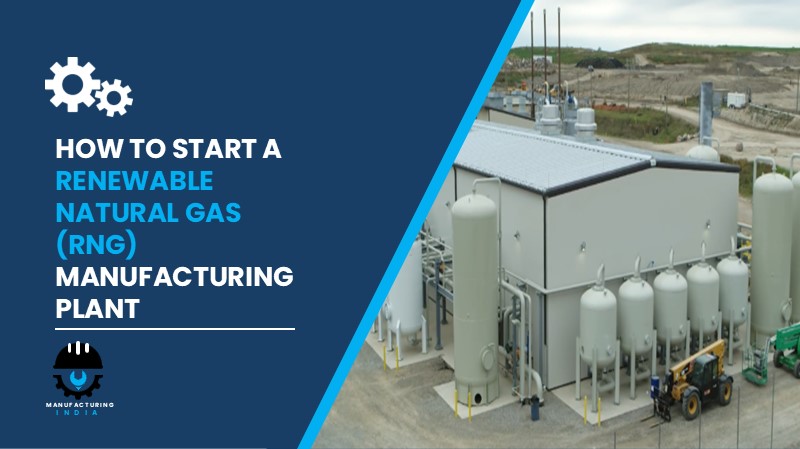
Setting up a renewable natural gas manufacturing plant in India presents a compelling investment case at the forefront of the country’s clean energy transition – one that simultaneously addresses the growing demand for low-carbon fuels across transportation, power generation, and industrial energy sectors, supports methane capture from agricultural and organic waste streams, and aligns with India’s accelerating commitment to circular economy and renewable energy expansion. Renewable natural gas (RNG), also referred to as biomethane, is a refined biogas product obtained from the anaerobic digestion of organic waste materials – with impurities including carbon dioxide, hydrogen sulphide, moisture, and particulates removed to achieve methane levels that match those found in fossil-based natural gas. RNG functions as a natural gas grid component, a renewable vehicle fuel source, a power generation fuel, and an industrial heating solution – all while reducing greenhouse gas emissions and sustaining energy resources from waste streams that would otherwise release methane directly into the atmosphere.
India’s strategic positioning for this investment is uniquely compelling and strengthening rapidly. According to IBEF, renewable resources produce 39.66% of India’s total installed power capacity, with solar energy generating 129.92 GW – forming 65% of all renewable capacity – and renewable energy capacity increasing at a compound annual rate of 18.5% to reach 250.6 GW, alongside a rise in renewable power generation to 188.35 billion units. This accelerating shift toward clean energy, combined with rising focus on decarbonisation and alternative fuels, directly supports the growth of the RNG market in India. The country’s abundant organic waste base from agricultural operations, food processing, municipal solid waste, and livestock rearing provides localized feedstock advantages that give India-based RNG producers cost-effective and dependable supply solutions, while supportive government frameworks including renewable fuel standards and waste-to-energy incentives enhance project bankability and long-term revenue stability.
A renewable natural gas manufacturing plant in India is positioned within a global market growing at 8.3% CAGR from USD 15.2 billion in 2025 toward USD 31.15 billion by 2034, driven by decarbonisation mandates, transportation sector clean fuel adoption, and circular economy alignment. With gross profit margins of 40–55% and net margins of 15–30% at 5–20 million Nm³ annual production capacity, supported by favourable policy environments, carbon credit systems, and India’s 250.6 GW renewable energy base, this investment delivers exceptional clean energy manufacturing returns.
What is Renewable Natural Gas?
Renewable natural gas (RNG), referred to as biomethane, functions as a refined biogas product that is obtained from anaerobic digestion of organic waste materials. The process of removing impurities such as carbon dioxide, hydrogen sulphide, moisture, and particulates enables RNG to reach methane levels that match those found in fossil-based natural gas. The system provides multiple environmental advantages through its capability to reduce greenhouse gas emissions while sustaining energy resources as it functions as a natural gas grid component, a renewable vehicle fuel source, and a power generation and industrial heating solution.
The primary production method involves anaerobic digestion, biogas purification and upgrading, gas compression, and grid injection – a multi-step process integrating organic waste management, biological conversion, gas treatment, and quality verification at each stage. Raw materials required include organic feedstock comprising manure and food waste, along with water and purification media. End-use industries served include transportation, power generation, and industrial energy – with applications spanning vehicle fuel as a CNG or LNG substitute, electricity generation via gas engines and turbines, industrial boilers, and grid-injected natural gas. The compatibility of RNG with existing CNG and LNG infrastructure used by public transit fleets and heavy-duty vehicles makes it particularly valuable for the transportation sector’s decarbonisation pathway.
Cost of Setting Up a Renewable Natural Gas Manufacturing Plant in India
The total investment required to establish a renewable natural gas manufacturing plant in India depends on plant capacity, technology pathway, geographic location, and compliance with environmental and regulatory requirements. Investors must account comprehensively for both one-time capital expenditure and recurring operational costs when preparing a feasibility study or detailed project report (DPR).
1. Capital Expenditure (CapEx)
Land and Site Development forms a substantial part of the total capital investment. The cost of land and site development – including charges for land registration, boundary development, and other related expenses – forms a substantial part of the overall investment, ensuring a solid foundation for safe and efficient plant operations.
Civil Works and Construction encompasses the full production facility footprint, including feedstock receiving and pre-treatment areas, digester structures, biogas collection and upgrading facilities, gas storage and compression areas, quality control laboratory, and administrative block. The layout is optimised to enhance workflow efficiency, safety, and minimise material handling, with separate areas designated for raw material storage, production, quality control, and finished goods storage, including space for future expansion.
Machinery and Equipment represent the largest portion of the total capital expenditure – machinery costs account for the largest portion of total CapEx. Key machinery required includes:
- Digesters
- Gas upgrading systems
- Compressors
- Storage tanks
- Monitoring systems
Other Capital Costs include infrastructure and utility connections for electricity, water, and steam, effluent treatment systems to minimise environmental impact, advanced monitoring systems to detect leaks or process deviations, and pre-operative expenses covering regulatory filings and plant commissioning.
Request a Sample Report for In-Depth Market Insights: https://www.imarcgroup.com/renewable-natural-gas-manufacturing-plant-project-report/requestsample
2. Operational Expenditure (OpEx)
Raw Material Cost accounts for approximately 30–40% of total operating expenses. The primary inputs are organic feedstock comprising manure and food waste, along with water and purification media. Reliable suppliers must be secured for these raw materials to ensure consistent production quality, with nearby supplier selection essential for minimising transportation costs. Long-term contracts should be negotiated to stabilise pricing and ensure a steady supply, while sustainability and supply chain risks must be regularly assessed.
Utility Costs represent the single largest operating cost component, accounting for approximately 35–45% of total OpEx – a notably higher proportion than in most other manufacturing categories, reflecting the continuous energy requirements of the anaerobic digestion process, gas upgrading systems, compression equipment, and facility operations. Managing electricity, water, and steam costs through energy efficiency optimisation and potential on-site power generation from surplus biogas is a critical operational priority for margin management.
Other Operating Costs include transportation, packaging, salaries and wages, depreciation, taxes, and other expenses. In the first year of operations, total operating costs are projected to be significant. By the fifth year, total operational costs are expected to increase substantially due to factors such as inflation, market fluctuations, and potential rises in the cost of key materials, with additional contributions from supply chain disruptions, rising consumer demand, and shifts in the global economy.
3. Plant Capacity
The proposed renewable natural gas manufacturing facility is designed with an annual production capacity ranging between 5 and 20 million Nm³, enabling economies of scale while maintaining operational flexibility across different feedstock types, upgrading technology configurations, and product offtake channels. This capacity range supports the requirements of transportation fleet operators, grid injection offtake agreements with utilities, industrial energy buyers, and power generation operators. Capacity can be customised based on investor requirements and feedstock availability. Profitability improves consistently with higher capacity utilisation.
4. Profit Margins and Financial Projections
The renewable natural gas manufacturing plant demonstrates healthy profitability potential under normal operating conditions. Gross profit margins typically range between 40–55%, supported by stable demand and value-added applications across transportation, power generation, and industrial energy sectors. Net profit margins range between 15–30%, reflecting the utility-intensive nature of the production model and the capital requirements of digestion and upgrading infrastructure. A comprehensive financial analysis should include income projections, expenditure forecasts, gross and net margin tracking across Years 1 through 5, net present value (NPV), internal rate of return (IRR), payback period, and a full profit and loss account. Sensitivity analysis and uncertainty analysis are recommended to account for feedstock price variability and revenue fluctuations across offtake channels.
Why Set Up a Renewable Natural Gas Manufacturing Plant in India?
Decarbonisation as a Structural Market Driver. The RNG decarbonisation process enables methane emission decreases and supplies green energy for transportation and industrial operations through the replacement of fossil natural gas. The RNG industry is primarily driven by low-carbon energy systems and countries enforcing stricter greenhouse gas emission reduction regulations – a policy trajectory that India is actively participating in through its renewable energy expansion and clean fuel adoption programmes.
Favourable Policy Environment Enhancing Project Bankability. Project bankability improves through government mandates, renewable fuel standards, carbon credit systems, and waste-to-energy financial incentives. Supportive policy frameworks such as renewable fuel standards, carbon pricing mechanisms, and clean energy incentives are further enhancing project viability and long-term revenue stability – creating a commercial environment where certified low-carbon gas commands premium pricing over conventional fossil alternatives.
India’s Renewable Energy Leadership Providing Clean Energy Context. According to IBEF, renewable resources produce 39.66% of India’s total installed power capacity, with solar energy generating 129.92 GW forming 65% of all renewable capacity. Renewable energy capacity increased at a compound annual rate of 18.5% to reach 250.6 GW, alongside a rise in renewable power generation to 188.35 billion units. This accelerating shift toward clean energy, combined with rising focus on decarbonisation and alternative fuels, is expected to significantly support the growth of the RNG market in India in the coming years.
Alignment with Sustainability Megatrends Expanding the Addressable Market. RNG adoption increases worldwide because organisations focus on waste management and circular economy practices and climate-neutral energy solutions. The rising need for methane capture from agricultural wastes, landfills, and wastewater treatment facilities establishes RNG as an essential element of circular economy systems and waste-to-energy processes – positioning RNG plants as integrated waste management and clean energy infrastructure that serves both commercial and public interest objectives simultaneously.
Transportation Sector Compatibility Providing Immediate Large-Volume Demand. The transportation sector uses RNG because it can operate with current CNG and LNG infrastructure that public transit fleets and heavy-duty vehicles use. This infrastructure compatibility – requiring no vehicle or distribution system modification – means that RNG can immediately substitute for fossil CNG and LNG across existing fleet operations, providing manufacturers with a large and accessible immediate demand pool without waiting for new infrastructure deployment.
Active Global Industry Investment Validating Commercial Viability. In August 2025, Emvolon – an MIT spin-off – entered into a joint venture with Montauk Renewables to advance the conversion of renewable biogas into low-carbon renewable gas–based fuels, following a successful field demonstration that validated the technology’s performance. In June 2025, Southern Company Gas strengthened its clean energy portfolio through new renewable natural gas supply agreements for its Virginia and Tennessee utility subsidiaries, expanding sustainable fuel use across local gas distribution networks. Together, these RNG purchases are expected to reduce lifecycle emissions by nearly 19,000 metric tons of CO₂e – comparable to the annual carbon absorption of more than 19,000 acres of U.S. forest – directly confirming the scale of emission reduction and commercial value that RNG supply agreements deliver.
Manufacturing Process – Step by Step
The renewable natural gas manufacturing process uses anaerobic digestion, biogas purification and upgrading, gas compression, and grid injection as the primary production method. Below are the main stages involved in the RNG manufacturing process flow:
- Feedstock Receipt and Pre-Treatment: Organic feedstocks – primarily manure and food waste, along with other organic materials – are received, weighed, and subjected to pre-treatment including sorting, shredding, and slurrying to achieve the particle size and consistency required for efficient anaerobic digestion performance.
- Anaerobic Digestion: Digesters maintain the pre-treated feedstock under controlled temperature conditions and complete absence of oxygen, where microorganisms break down organic matter through a series of biological stages to produce raw biogas. The digestion process converts organic carbon into a biogas mixture comprising primarily methane and carbon dioxide, along with trace quantities of hydrogen sulphide, ammonia, and moisture.
- Digestate Separation and Management: The digestion effluent – digestate – is separated and managed according to regulatory and commercial requirements, with solid and liquid fractions processed for potential biofertiliser applications or land spreading under applicable regulations.
- Biogas Pre-Treatment: Raw biogas is subjected to pre-treatment to remove hydrogen sulphide, moisture, and particulates before entering the upgrading system – protecting downstream equipment from corrosion and contamination and ensuring safe, efficient upgrading operation.
- Biogas Upgrading – Purification: Gas upgrading systems remove carbon dioxide and remaining impurities from the pre-treated biogas stream, concentrating methane to pipeline-quality and vehicle fuel-quality specifications – meeting the methane purity levels that match those found in fossil-based natural gas. Technology pathways include pressure swing adsorption, water scrubbing, chemical absorption, or membrane separation depending on plant scale and economic optimisation.
- Gas Quality Verification: Monitoring and control systems continuously verify the upgraded RNG stream for methane concentration, calorific value, residual impurity levels, and other quality parameters required for the target application – whether vehicle fuel, grid injection, or industrial supply – with batch release conditional on all parameters meeting specification.
- Gas Compression: Compressors pressurise the specification-compliant RNG to the required pressure for vehicle fuel dispensing as CNG, pipeline injection, or industrial supply – with compression level determined by the offtake channel and downstream infrastructure requirements.
- Storage and Dispatch: Finished RNG is held in storage tanks pending delivery or grid injection, then dispatched to transportation fleet operators as vehicle fuel, injected into gas distribution networks, or supplied to industrial energy and power generation users.
Key Applications
Renewable natural gas produced at this type of facility serves three primary end-use sectors:
- Transportation: Utilised as renewable fuel for CNG and LNG vehicles across public transit fleets, heavy-duty commercial vehicles, and private fleet operators – leveraging compatibility with existing CNG and LNG refuelling infrastructure to enable immediate deployment without new vehicle or station investment.
- Power Generation: Employed for electricity generation via gas engines and turbines – supporting on-site power generation for industrial facilities and grid-connected power supply from waste-derived clean fuel sources.
- Industrial Energy: Used as clean fuel for boilers, kilns, and thermal processes across industrial manufacturing operations seeking to decarbonise thermal energy consumption without changing existing combustion infrastructure.
Leading Renewable Natural Gas Manufacturers
The global renewable natural gas industry is served by a range of producers spanning energy companies, waste management firms, technology providers, and government entities. Key players include:
- Clean Energy Fuels Corp.
- Archaea Energy Inc.
- Xebec Adsorption Inc.
- Brightmark LLC
- Ameresco Inc.
- Montauk Renewables Inc.
- Waste Management Inc.
- Renewi PLC
- Air Liquide S.A.
- FortisBC Energy Inc.
Timeline to Start the Plant
Investors planning to establish a renewable natural gas manufacturing plant in India should anticipate the following project development phases:
- Feasibility study and project report preparation
- Land acquisition and site development
- Regulatory approvals and environmental clearances
- Factory licence and fire safety compliance
- Machinery procurement and installation
- Raw material supplier agreements and supply chain setup
- Trial production and quality testing
- Commercial production launch
Licences and Regulatory Requirements
Starting a renewable natural gas manufacturing unit in India requires several approvals:
- Business registration (Proprietorship, LLP, or Private Limited Company)
- Factory Licence under the Factories Act
- Environmental Clearance from the State Pollution Control Board including compliance with emission standards
- Consent to Establish and Consent to Operate from the State Pollution Control Board
- GST Registration
- Fire Safety NOC – including biogas flammable gas hazard and high-pressure vessel compliance
- Effluent Treatment Plant (ETP) operational clearance for digestate and process water management
- Occupational Health and Safety compliance covering biogas handling, hydrogen sulphide exposure monitoring, and compression system operations
- PNGRB (Petroleum and Natural Gas Regulatory Board) authorisation for gas grid injection where applicable
- Applicable certifications for vehicle fuel quality compliance under CNG and LNG standards
Key Challenges to Consider
Feedstock Supply Reliability and Quality Variability. Organic feedstock comprising manure and food waste – accounting for 30–40% of total OpEx – is subject to seasonal availability patterns, quality variability across different waste streams, and supply continuity risk where feedstock depends on third-party waste generators. Securing long-term feedstock supply agreements before plant commissioning is the most critical risk mitigation step for RNG project viability.
High Utility Cost Intensity. At 35–45% of total OpEx, utilities represent the largest single operating cost category for RNG plants – higher than for most other manufacturing investment types reviewed in this series. The continuous energy requirements of anaerobic digestion temperature maintenance, gas compression, and upgrading system operation make electricity and heat cost management the most important ongoing operational priority for protecting gross margins.
Regulatory Complexity Across Multiple Authorities. RNG manufacturing in India operates at the intersection of environmental, energy, waste management, and transport fuel regulatory frameworks – requiring coordinated approvals and ongoing compliance management across agencies with different inspection protocols and reporting requirements. Dedicated regulatory affairs capability is mandatory from the pre-commissioning phase.
Technology Selection for Upgrading System. The choice between pressure swing adsorption, water scrubbing, chemical absorption, and membrane separation directly determines capital cost, methane recovery efficiency, energy consumption, and operational complexity. Each pathway has different advantages at specific plant scales and feedstock compositions, requiring careful techno-economic evaluation before investment commitment.
Digestate Management Requirements. The management of digestate – the solid and liquid residue from anaerobic digestion – requires compliant handling through regulated land application or biofertiliser marketing. Building reliable digestate offtake relationships or investing in further processing capability adds to operational planning requirements beyond the core gas production investment.
Skilled Workforce for Biogas Process Operations. Operating digesters, gas upgrading units, compression systems, and process monitoring infrastructure requires engineers and operators with specialised training in biological process management, gas chemistry, and industrial safety for biogas handling – a combination of skills that remains scarce in India’s current talent market given the sector’s early-stage development.
Frequently Asked Questions
1. How much does it cost to set up a renewable natural gas manufacturing plant in India?
Total cost depends on plant capacity (5–20 million Nm³ per annum), technology pathway selection, feedstock type, and location. CapEx covers land and site development, civil works, and machinery including digesters, gas upgrading systems, compressors, storage tanks, and monitoring systems, along with effluent treatment infrastructure and pre-operative regulatory costs.
2. Is renewable natural gas manufacturing profitable in India in 2026?
Yes. With gross margins of 40–55% and net margins of 15–30%, supported by a global market growing at 8.3% CAGR toward USD 31.15 billion by 2034, favourable policy frameworks including renewable fuel standards and carbon credit systems, India’s 250.6 GW renewable energy base, and stable long-term demand from transportation, power generation, and industrial energy sectors, the investment presents an exceptional profitability case.
3. What machinery is required for a renewable natural gas manufacturing plant in India?
Key equipment includes digesters, gas upgrading systems, compressors, storage tanks, and monitoring systems. Supporting infrastructure includes feedstock pre-treatment systems, biogas desulphurisation units, digestate separation equipment, and advanced process control and leak detection safety systems.
4. What licences and approvals are required to start a renewable natural gas manufacturing plant in India?
Required approvals include business registration, Factory Licence, Environmental Clearance, State Pollution Control Board Consent to Operate, GST Registration, Fire Safety NOC with biogas hazard compliance, ETP operational clearance, PNGRB authorisation where grid injection is planned, and applicable vehicle fuel quality certifications for CNG and LNG standard compliance.
5. What raw materials are needed for renewable natural gas manufacturing?
The primary raw materials are organic feedstock – comprising manure and food waste – along with water and purification media. These inputs are processed through anaerobic digestion and gas upgrading to produce pipeline-quality renewable natural gas meeting methane purity specifications equivalent to fossil natural gas.
6. What are the environmental compliance requirements for a renewable natural gas manufacturing plant in India?
Environmental Clearance from the State Pollution Control Board is required, along with effluent treatment systems to minimise environmental impact, advanced monitoring systems to detect leaks or process deviations, compliance with emission standards applicable to biogas processing operations, and digestate management under applicable solid and liquid waste disposal regulations.
7. What is the best location to set up a renewable natural gas manufacturing plant in India?
The location must offer easy access to key raw materials including organic feedstock, water, and purification media, with proximity to target markets to minimise distribution costs. The site must have robust infrastructure including reliable transportation, utilities, and waste management systems, and must comply with local zoning laws and environmental regulations.
8. What is the break-even period for this type of plant in India?
The break-even period depends on plant capacity, feedstock cost and availability, offtake pricing for vehicle fuel and grid injection channels, and utility cost management. A detailed financial analysis including NPV, IRR, payback period, sensitivity analysis, and uncertainty analysis is recommended for investment-grade planning.
9. What government incentives are available for renewable natural gas manufacturers in India?
Government mandates, renewable fuel standards, carbon credit systems, and waste-to-energy financial incentives collectively enhance project bankability and long-term revenue stability. India’s national renewable energy programme framework and the accelerating adoption of clean energy policies across transportation and industrial sectors provide the policy foundation for RNG investment viability.
Key Takeaways for Investors
A renewable natural gas manufacturing plant in India represents one of the most financially exceptional and strategically aligned clean energy manufacturing investments available – backed by a global market valued at USD 15.2 billion in 2025 growing at 8.3% CAGR toward USD 31.15 billion by 2034, exceptional gross margins of 40–55% and net margins of 15–30% that rank among the highest profitability levels across all clean energy manufacturing categories, and structural alignment with decarbonisation megatrends, circular economy adoption, and the global transition to low-carbon transportation and industrial fuels. Financial viability is demonstrated across a production capacity range of 5 to 20 million Nm³ per annum, with the localized feedstock advantage of organic agricultural and food waste providing cost-effective and dependable supply security that manufacturing categories dependent on commodity markets cannot replicate. Active global industry development – including Montauk Renewables’ August 2025 joint venture with Emvolon to advance low-carbon renewable gas-based fuels, and Southern Company Gas’s June 2025 RNG supply agreements expected to reduce lifecycle emissions by nearly 19,000 metric tons of CO₂e – confirms the sustained commercial momentum and emission reduction credentials that are driving utility, fleet, and industrial buyer adoption of RNG at accelerating pace. With India’s renewable energy capacity having reached 250.6 GW at an 18.5% compound annual growth rate and renewable resources now producing 39.66% of total installed power capacity, the clean energy ecosystem context within which RNG manufacturing investment operates in India is both policy-validated and commercially mature.
About the Author