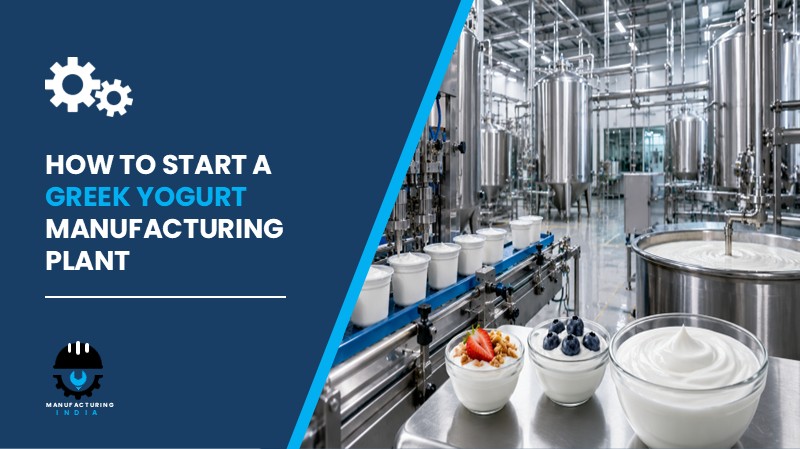
Setting up a greek yogurt manufacturing plant in India presents a compelling investment case, driven by rising consumer demand across food processing, dairy manufacturing, and commercial kitchens. As a concentrated fermented dairy product rich in protein, probiotics, and essential amino acids, Greek yogurt is rapidly transitioning from a niche import to a mainstream staple in India’s premium dairy segment. With an expanding middle class, growing fitness culture, and health-conscious urban consumers, this unit serves a market that is demonstrably underserved by domestic production capacity.
India’s advantages for Greek yogurt production are structural and durable. The country’s dairy sector, supported by approximately 150 million milk-producing households globally as documented by the Food and Agriculture Organization (FAO), provides a robust upstream raw material foundation. India’s own vast milk production network, expanding cold-chain logistics, and government-backed dairy development programmes make states such as Gujarat, Maharashtra, Punjab, and Uttar Pradesh strategically sound locations for a Greek yogurt manufacturing unit. The Make in India initiative further strengthens the case, offering policy tailwinds, industrial estate access, and potential fiscal incentives for new manufacturing entrants.
Establishing a Greek yogurt manufacturing plant in India offers investors a rare combination of policy support, cost-competitive operations, and access to a rapidly growing premium dairy market. With gross profit margins ranging between 14-22% and rising demand from the food processing, dairy manufacturing, and commercial kitchen sectors, the investment is financially viable across a wide range of plant capacities. The global market, valued at USD 10.22 Billion in 2025, provides additional export headroom for India-based producers targeting international buyers.
What is Greek Yogurt?
Greek yogurt is a concentrated fermented dairy product produced by straining regular yogurt to remove whey, which results in a thicker texture and higher protein concentration compared to conventional yogurt. It is manufactured through controlled fermentation using specific bacterial cultures, primarily Lactobacillus bulgaricus and Streptococcus thermophilus. Compared to standard yogurt, Greek yogurt contains lower lactose content, higher protein levels, reduced sugar concentration, and a distinctively creamy consistency.
The product is available in full-fat, low-fat, and non-fat variants, making it suitable for a wide demographic. It is widely recognized for its nutritional profile, including probiotics, calcium, and essential amino acids. Its functional attributes support digestive health, muscle maintenance, and satiety enhancement – making it highly relevant to India’s growing fitness and wellness consumer base.
The primary production method combines homogenization, pasteurization, and fermentation as the key process steps. End-use industries served include food processing, dairy manufacturing, and commercial kitchens, with applications spanning high-protein food products, smoothies, dipping sauces, dairy-based dressings, cultured dairy products, and nutritional snacks.
Cost of Setting Up a Greek Yogurt Manufacturing Plant in India
The total cost of establishing a Greek yogurt manufacturing plant in India depends on plant capacity, technology selection, site location, degree of automation, and regulatory compliance requirements. Investors must account for both one-time capital expenditure and recurring operational expenditure when preparing a detailed project report.
1. Capital Expenditure (CapEx)
Capital expenditure for this facility covers all one-time investments needed to bring the plant to operational readiness.
Land and Site Development: costs include charges for land registration, boundary development, and all related infrastructure preparation. Locating the plant within a Special Economic Zone (SEZ) or a state-notified industrial estate can reduce land acquisition costs and accelerate regulatory approvals.
Civil Works and Construction: covers the construction of production sheds, raw material storage areas, laboratory spaces, finished goods warehouses, and administrative office blocks. These are designed to maintain food safety and cold-chain integrity throughout the facility.
Machinery and Equipment: represents the largest single component of total CapEx. Key machinery required includes:
- Pasteurizers
- Homogenizers
- Fermentation tanks
- Cooling units
- Separators for Greek-style straining
- Mixing and blending tanks
- Filling machines
- Cold storage facilities for finished products
All machinery must be high-quality, corrosion-resistant, and tailored for Greek yogurt production, complying with applicable food safety and efficiency standards.
Other Capital Cost: include effluent treatment plant (ETP) installation, pre-operative expenses, trial run costs, and any import duties applicable on specialized food processing equipment not manufactured domestically.
Access the Detailed Feasibility Analysis, Request Sample: https://www.imarcgroup.com/greek-yogurt-manufacturing-plant-project-report/requestsample
2. Operational Expenditure (OpEx)
The operating cost structure of this facility is primarily driven by raw material consumption.
Raw Material Cost is the dominant component, accounting for approximately 62-73% of total OpEx. Key raw materials required for production include milk/cream base, cultures, thickeners, and packaging materials. To mitigate price volatility, investors are advised to establish long-term supply contracts with reliable local dairy cooperatives and material suppliers, particularly for milk/cream base which carries the highest cost sensitivity.
Utility Costs – covering electricity, water, and steam – account for 5-9% of total OpEx. Given the need for continuous refrigeration, fermentation temperature control, and pasteurization energy, utility planning is a critical operational variable.
Other Operating Costs include transportation and distribution, packaging, salaries and wages, routine maintenance, depreciation on machinery and civil works, and applicable taxes. By the fifth year of operations, the total operational cost is projected to increase substantially due to inflation, market fluctuations, supply chain disruptions, and rising raw material costs.
3. Plant Capacity
The proposed manufacturing facility is designed with an annual production capacity ranging between 50-150 MT, enabling economies of scale while maintaining operational flexibility. This capacity range is suitable for both market entry-level investors and those targeting regional distribution scale. Capacity can be customized based on investor requirements, and profitability improves materially with higher capacity utilization rates.
4. Profit Margins and Financial Projections
The project demonstrates healthy profitability potential under normal operating conditions. Gross profit margins typically range between 14-22%, supported by stable demand and value-added applications. Net profit margins range between 5-10%. Key financial metrics including NPV (Net Present Value), IRR (Internal Rate of Return), payback period, and a full profit and loss account projection are available in the detailed feasibility report. Financial projections are developed on realistic assumptions related to capital investment, operating costs, capacity utilization, pricing trends, and demand outlook, offering investors a comprehensive view of long-term sustainability.
Why Set Up a Greek Yogurt Plant in India?
Growing Health-Conscious Consumer Base: Increasing awareness regarding protein intake, gut health, and clean-label dairy products is driving demand for Greek yogurt as a functional food choice across demographics. Rising participation in fitness and sports activities has further increased demand for protein-dense dairy products among India’s urban population.
Higher Value-Added Dairy Segment: Greek yogurt commands premium pricing compared to conventional yogurt due to its higher protein concentration and specialized straining process. This improves manufacturer margins meaningfully and positions producers in a segment with lower price-based competition than commodity dairy.
Expanding Product Diversification Opportunities: Manufacturers can introduce flavored, fortified, organic, lactose-free, and plant-blended variants to cater to evolving dietary trends. This flexibility provides Indian producers with multiple product extensions from a single core manufacturing setup.
Strong Retail and Cold Chain Infrastructure: Growth of supermarkets, hypermarkets, and e-commerce grocery platforms supports wider product penetration and consistent distribution across Tier 1 and Tier 2 cities. Growth in organized retail and refrigerated logistics infrastructure is supporting product accessibility and shelf stability.
Active Industry Investment: Global industry leaders continue to invest heavily in this category. In December 2025, Danone announced a multi-year partnership with the Big Ten Conference to advance nutrition with its Oikos high-protein yogurt brand, signalling the mainstream momentum of high-protein dairy. In October 2024, Chobani introduced a new Chobani High Protein line featuring high protein Greek yogurt cups and drinks made with only natural ingredients, real fruit, and 0g added sugar, responding directly to consumer demand for clean-label protein solutions.
Export and Private Label Potential: Rising global demand for high-protein dairy products provides opportunities for export-oriented units and private-label manufacturing partnerships, giving Indian producers access to international revenue streams beyond the domestic market.
Manufacturing Process – Step by Step
The Greek yogurt manufacturing process uses homogenization, pasteurization, and fermentation as the primary production methods. The process is a multi-step operation involving unit operations, material handling, and quality checks at each stage.
- Raw Material Receipt and Inspection: Milk/cream base, cultures, and thickeners are received, inspected for quality, and stored under appropriate conditions.
- Milk Standardization: The milk is standardized to the required fat and solid-not-fat (SNF) composition using mixing and blending tanks.
- Homogenization: Milk is passed through homogenizers to break down fat globules, ensuring uniform texture and consistency in the final product.
- Pasteurization: Standardized milk is heat-treated in pasteurizers to eliminate pathogens while preserving nutritional properties.
- Cooling and Culture Addition: Pasteurized milk is cooled to fermentation temperature; cultures of Lactobacillus bulgaricus and Streptococcus thermophilus are added.
- Fermentation: The inoculated milk is held in fermentation tanks under controlled temperature and time conditions until the desired acidity is achieved.
- Straining (Greek-Style Separation): The fermented yogurt passes through separators for Greek-style straining to remove whey, yielding the characteristic thick texture and elevated protein concentration.
- Cooling: Strained Greek yogurt is cooled through cooling units to halt fermentation and bring the product to storage temperature.
- Mixing and Flavouring (if applicable): Flavours, fruit preparations, or fortification ingredients are blended using mixing and blending tanks for flavored variants.
- Filling, Sealing, and Labelling: The finished product is filled into single-serve or bulk containers using filling machines, sealed, and labelled in packaging operations.
- Cold Storage and Dispatch: Finished goods are held in cold storage facilities and dispatched via refrigerated transport to food processing companies, commercial kitchens, and retail distribution channels.
Key Applications
Greek yogurt manufactured in India serves a broad range of industries and end-use applications:
- Food Processing: Used in high-protein food products, smoothies, dairy-based dressings, cultured dairy products, and nutritional snacks.
- Dairy Manufacturing: Applied in milk standardization, pasteurization, and fermentation systems as a functional dairy ingredient.
- Food Manufacturing: Deployed in culturing, straining, and texture development processes for value-added dairy-based goods.
- Commercial Kitchens: Used as a base for dipping sauces, salad dressings, marinades, and health-focused menu items in quick-service restaurants and health-focused cafés.
- Packaging Operations: Filled, sealed, and labelled for single-serve retail packs and bulk institutional containers.
- Cold Chain Distribution: Stored and transported using refrigerated systems to retail display and foodservice delivery points.
Leading Manufacturers
The global Greek yogurt industry is served by several multinational companies with extensive production capacities and diverse application portfolios. Key players in the global market include:
- Nestlé S.A.
- Danone S.A.
- Chobani LLC
- General Mills Inc.
- FAGE International S.A.
- Lactalis Group
All of these companies serve end-use sectors such as food processing, dairy manufacturing, and commercial kitchens, providing a benchmarking reference for Indian investors planning capacity, product mix, and market positioning.
Timeline to Start the Plant
Investors should plan for a structured multi-phase project timeline from concept to commercial production:
- Feasibility study and project report preparation
- Land acquisition and site development
- Regulatory approvals and environmental clearances
- Factory licence and fire safety compliance
- Machinery procurement and installation
- Raw material supplier agreements and supply chain setup
- Trial production and quality testing
- Commercial production launch
Licences and Regulatory Requirements
Starting a Greek yogurt manufacturing unit in India requires several approvals:
- Business registration (Proprietorship, LLP, or Private Limited Company)
- Factory Licence under the Factories Act
- FSSAI (Food Safety and Standards Authority of India) licence for dairy food manufacturing
- Environmental Clearance from the State Pollution Control Board
- GST Registration
- Fire Safety NOC
- Effluent Treatment Plant (ETP) operational clearance for whey and dairy effluent discharge
- Occupational Health and Safety compliance under applicable labour and factory laws
Key Challenges to Consider
High Capital Requirements: Establishing a food-grade dairy manufacturing facility with cold storage, pasteurization, fermentation, and straining systems involves significant upfront capital, particularly for machinery and civil infrastructure.
Raw Material Price Volatility: The primary input – milk/cream base – accounts for 62-73% of total OpEx, making the unit highly sensitive to dairy commodity price cycles. Cultures, thickeners, and packaging costs add further variability.
Regulatory Compliance: Dairy food manufacturing in India is subject to FSSAI regulations, pollution control norms, and factory act compliance, requiring dedicated regulatory management resources from project inception.
Technology and Innovation Pressure: Global leaders such as Danone and Chobani are rapidly introducing high-protein, clean-label, organic, and lactose-free variants, raising the bar for product development and reformulation capabilities for new entrants.
Competition: The global market includes well-capitalized players such as Nestlé S.A., Danone S.A., Chobani LLC, General Mills Inc., FAGE International S.A., and Lactalis Group, all of whom may compete through imports or licensing arrangements in the Indian market.
Skilled Manpower: Operating fermentation systems, quality control laboratories, and food-grade production lines requires a trained technical workforce that may need targeted recruitment and ongoing training investment.
Key Takeaways for Investors
A Greek yogurt manufacturing plant in India represents a high-conviction investment opportunity, particularly for investors targeting the food processing, dairy manufacturing, and commercial kitchen sectors, all of which are experiencing structural demand growth for high-protein functional dairy products. The project is financially viable across a range of capacities from 50 to 150 MT per annum, with gross margins of 14-22% and net margins of 5-10% providing a sound return framework. The global Greek yogurt market, valued at USD 10.22 Billion in 2025, is projected to reach USD 17.71 Billion by 2034 at a CAGR of 6.3%, providing a growing export demand base alongside robust domestic growth. With India’s dairy infrastructure strengthening, organized retail expanding, and consumer preference firmly shifting toward clean-label, protein-rich functional foods, the long-term demand sustainability for domestically produced Greek yogurt is well-established.
About the Author