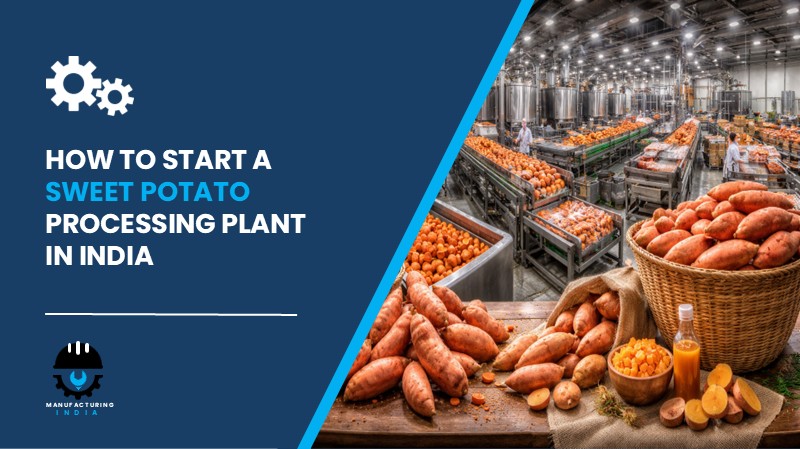
Setting up a sweet potato processing plant in India presents a compelling investment case driven by rising consumer demand for nutritious, functional foods and the rapid expansion of the processed food sector. The food and beverage industry, snack food manufacturers, frozen food processors, bakery and confectionery producers, the animal feed sector, and institutional foodservice operations all rely on processed sweet potato products from chips and frozen fries to flour, starch, puree, and baby food formulations. As India’s middle class grows and dietary awareness deepens, the demand for value-added root vegetable products continues to accelerate, making this an opportune moment for agro-processing entrepreneurs and institutional investors alike.
India’s structural advantages align closely with the requirements of sweet potato processing. The country offers abundant agricultural land, a large and cost-competitive labour pool, improving cold chain and road infrastructure, and strong government support under the Make in India initiative and Pradhan Mantri Kisan SAMPADA Yojana for food processing. States such as Odisha, Bihar, Uttar Pradesh, and Andhra Pradesh are among India’s leading sweet potato-growing regions, enabling processors to source raw materials close to the plant and reduce logistics costs substantially. For export-oriented investors, India’s positioning within South and Southeast Asia offers proximity to fast-growing markets hungry for clean-label, health-forward food ingredients.
India’s sweet potato processing sector is emerging as a high-potential investment opportunity, backed by policy support, cost-competitive manufacturing, and strong demand from food, snack, and institutional sectors. With gross margins of 25-35% and net margins of 10-18%, the economics are compelling across multiple plant capacities, and break-even viability is achievable within a realistic planning horizon.
What is Sweet Potato?
Sweet potatoes are starchy root vegetables belonging to the Ipomoea batatas species, cultivated widely for their health benefits and diverse applications. The crop is rich in complex carbohydrates, dietary fibre, beta-carotene, potassium, and essential vitamins, making it a vital dietary component across many populations and a sought-after ingredient in modern food manufacturing. Sweet potatoes are consumed fresh or processed into a range of value-added forms including dried slices, flakes, flour, starch, puree, and frozen products.
The natural sweetness of the product, combined with its functional properties, makes it suitable for use in bakery products, snacks, baby food, beverages, and animal feed formulations. Agro-processing industries consider sweet potatoes a reliable raw material because the crop can grow in multiple climates and requires minimal farming resources relative to other root vegetables. The production method is a multi-step operation encompassing raw material reception and grading, washing and peeling, slicing or cutting, blanching or cooking, drying or frying or freezing, milling where applicable, quality inspection, and packaging. End-use industries served include food and beverage manufacturers, snack food producers, frozen food processors, the bakery and confectionery industry, the animal feed sector, and institutional foodservice operators.
Cost of Setting Up a Sweet Potato Processing Plant in India
The cost of establishing a sweet potato processing plant in India depends on several interconnected variables: plant capacity, technology choices, degree of automation, site location, and the scope of regulatory compliance required. A clear understanding of both capital and operational expenditure is essential before committing to the investment.
1. Capital Expenditure (CapEx)
Capital expenditure covers all one-time investments required to bring the facility into operation. Land and site development costs including land registration, boundary development, and site preparation — form a substantial portion of the total investment. Investors may consider locating the unit within a Special Economic Zone (SEZ) or state-designated food processing industrial estate to benefit from concessional land rates, plug-and-play infrastructure, and tax incentives.
Civil works and construction encompass the main processing shed, laboratory, raw material storage, cold storage or dry storage areas, administration block, effluent treatment pits, and utilities area. The scale and specifications of civil works will vary based on plant throughput.
Machinery and equipment represent the largest single component of capital expenditure. Key machinery required includes:
- Washing and peeling units
- Slicers or cutting equipment
- Blanchers
- Dryers or fryers
- Freezing systems
- Milling equipment (where applicable)
- Quality inspection systems
- Packaging machines
Other capital costs include the effluent treatment plant (ETP), pre-operative expenses, commissioning costs, statutory deposits, and any import duties on specialised equipment procured from overseas suppliers.
Request a Sample Report for In-Depth Market Insights: https://www.imarcgroup.com/sweet-potato-processing-plant-project-report/requestsample
2. Operational Expenditure (OpEx)
The operating cost structure of this facility is dominated by raw material consumption. Fresh sweet potatoes and packaging material together represent the most significant procurement costs. Raw material costs account for approximately 50–60% of total OpEx, making supplier relationship management and contract structuring a critical priority. Long-term contracts with reliable local farmers or agricultural cooperatives help stabilise input prices and ensure consistent raw material supply throughout the processing season.
Utility costs, covering electricity, water, and steam, account for approximately 10–15% of total OpEx and are influenced by the energy intensity of drying, freezing, and blanching operations. Other recurring operating costs include transportation and distribution, packaging material procurement, salaries and wages, maintenance and repairs, depreciation on machinery and civil works, and applicable taxes and levies. By the fifth year of operations, total operational costs are expected to increase substantially due to inflation, market fluctuations, and potential rises in the cost of key input materials. Supply chain disruptions, rising consumer demand, and shifts in the global economy are additional factors projected to contribute to this increase.
3. Plant Capacity
The proposed processing facility is designed with an annual production capacity ranging between 1,000 and 5,000 MT, enabling economies of scale while maintaining operational flexibility. Capacity can be customised based on individual investor requirements, business plans, and target market volumes. As a general principle, profitability improves with higher capacity utilisation, and investors are advised to plan phased capacity expansion to manage capital risk while capturing growing market demand.
4. Profit Margins and Financial Projections
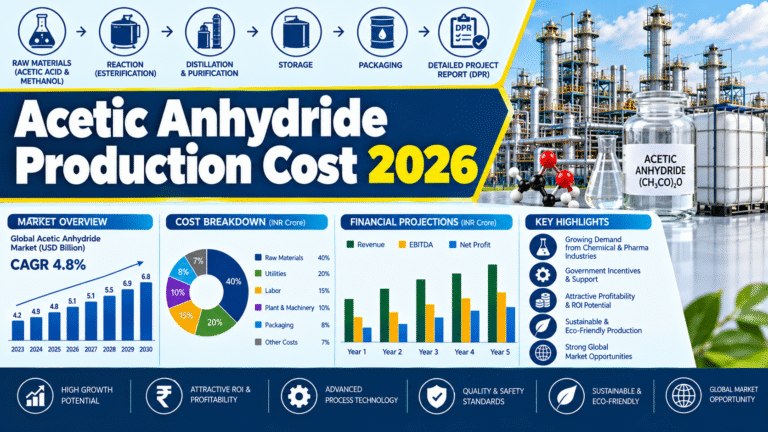
The sweet potato processing plant demonstrates healthy profitability potential under normal operating conditions. Gross profit margins typically range between 25-35%, supported by stable demand and value-added product applications. Net profit margins are projected at 10-18% over a multi-year horizon. A comprehensive financial model covering NPV, IRR, payback period, income and expenditure projections, liquidity analysis, and sensitivity analysis is available in the detailed project report. These projections are developed based on realistic assumptions relating to capital investment, operating costs, production capacity utilisation, pricing trends, and demand outlook.
Why Set Up a Sweet Potato Processing Plant in India?
Rising Demand for Nutritious and Functional Foods. The demand for processed sweet potato products is growing because consumers now recognise the product’s high content of fibre, vitamins, and antioxidants. A national survey of 2,203 U.S. adults conducted in April 2025 found that half of participants recognised the health benefits of a plant-based diet in preventing chronic diseases, and 65% expressed willingness to try such diets when shown supporting evidence a trend that mirrors India’s own shifting consumer preferences toward clean-label, nutrient-dense foods.
Expanding Processed Food and Snack Sector. The processed food industry experiences continuous growth as snack foods, frozen foods, and ready-to-eat products create ongoing demand for processed sweet potato ingredients. Food manufacturers are increasingly using sweet potato in snacks, bakery products, and infant nutrition because of the crop’s natural sweetness and health profile. This structural shift in Indian food consumption creates a resilient and expanding market for processing units.
Value Addition and Agricultural Linkages. Processing agricultural produce increases shelf life, reduces post-harvest waste, and provides farmers with multiple income pathways. For investors, this means access to relatively low-cost raw materials while generating substantially higher realisations through branded and value-added finished products. India’s large and diverse sweet potato growing base supports reliable sourcing.
Export Market Opportunities. The global sweet potato market, valued at USD 51.8 billion in 2025, is projected to reach USD 67.59 billion by 2034, exhibiting a CAGR of 3.0% from 2026 to 2034 according to IMARC Group estimates. India-based processors can tap into this growth by supplying dehydrated products, starch, and flour to international buyers preferring competitively priced, clean-label ingredients.
Active Industry Innovation. In August 2025, scientists at the Boyce Thompson Institute completed the first fully resolved genome of the disease-resistant sweet potato variety “Tanzania,” uncovering its hexaploid structure with six chromosome sets. This development equips breeders with advanced tools to enhance resilience, yield, and crop quality directly benefiting processors by improving raw material consistency. Additionally, in October 2025, IICA and FAO hosted the inaugural virtual symposium focused on next-generation sweet potato production, reinforcing global institutional commitment to advancing the crop’s commercial potential.
Scalable and Flexible Operations. Processing facilities can extend operations through modular capacity increases and product range expansion at affordable investment costs. This scalability makes the unit suitable for both start-up agro-entrepreneurs and established food companies looking to diversify their product portfolios.
Manufacturing Process – Step by Step
The sweet potato manufacturing process uses a multi-step unit operation sequence as its primary production method, covering material handling, transformation, quality checks, and packing through the following stages:
- Raw Material Reception and Grading: Incoming sweet potatoes are received, inspected, and graded by size, maturity, and quality before entering the production floor.
- Washing and Peeling: Graded tubers pass through mechanical washers to remove soil and surface impurities, followed by abrasive or steam peeling units to remove the skin.
- Slicing or Cutting: Peeled tubers are processed through slicers or cutting equipment to produce uniform shapes chips, cubes, strips, or shreds depending on the intended finished product.
- Blanching or Cooking: Sliced material is blanched in hot water or steam to deactivate enzymes, preserve colour, and improve texture before the next stage of processing.
- Drying or Frying or Freezing: Depending on the target product, blanched material is either hot-air dried, fried in oil, or passed through a freezing system for frozen product lines such as fries and cubes.
- Milling (where applicable): Dried sweet potato slices or flakes are milled into flour or powder for supply to the bakery, confectionery, and nutritional supplement industries.
- Quality Inspection: All products undergo analytical testing for moisture content, colour, texture, purity, and microbiological compliance before release.
- Packaging and Dispatch: Finished products are packed in appropriate consumer or bulk packaging and dispatched to food and beverage manufacturers, frozen food processors, retailers, animal feed producers, and institutional foodservice operators.
Key Applications
The sweet potato processing plant serves a diverse range of industries and product categories, providing versatile, nutritious ingredients across the food value chain:
- Food and Beverage Industry: Processed sweet potato products serve as ingredients providing snacks, bakery items, and ready-to-eat meals with nutritional value and natural sweetness.
- Frozen and Convenience Foods: Sweet potato fries, cubes, and slices offer foodservice operators and retailers fast-cooking options that maintain product quality.
- Bakery and Confectionery Industry: Sweet potato flour and powder are used to create gluten-free products with high amounts of dietary fibre.
- Animal Feed and Pet Food: Dried sweet potato material and processing by-products are used to produce feed ingredients containing essential nutrients for the animal feed sector.
- Snack Food Manufacturers: Chips and snack products made from sweet potato slices serve the expanding health-snack retail segment.
- Baby Food and Nutritional Supplements: The natural sweetness and high vitamin content make sweet potato purees and powders ideal for infant nutrition formulations.
Leading Manufacturers
The global sweet potato processing industry is served by several established multinational companies with extensive production capacities and broad application portfolios. Key players operating in this space include:
- Conagra Brands, Inc. (U.S.)
- Nash Produce (U.S.)
- Sweet Potato Spirit Company (U.K.)
- Ham Farms (U.S.)
- Dole Food Company, Inc. (Ireland)
These companies serve end-use sectors including food manufacturing, frozen foods, retail, and foodservice, setting the benchmark for quality, operational scale, and product innovation that new entrants must plan to compete with or complement through niche positioning.
Timeline to Start the Plant
Establishing a sweet potato processing plant in India requires methodical planning across multiple phases. A realistic project timeline covers the following stages:
- Feasibility study and project report preparation
- Land acquisition and site development
- Regulatory approvals and environmental clearances
- Factory licence and fire safety compliance
- Machinery procurement and installation
- Raw material supplier agreements and supply chain setup
- Trial production and quality testing
- Commercial production launch
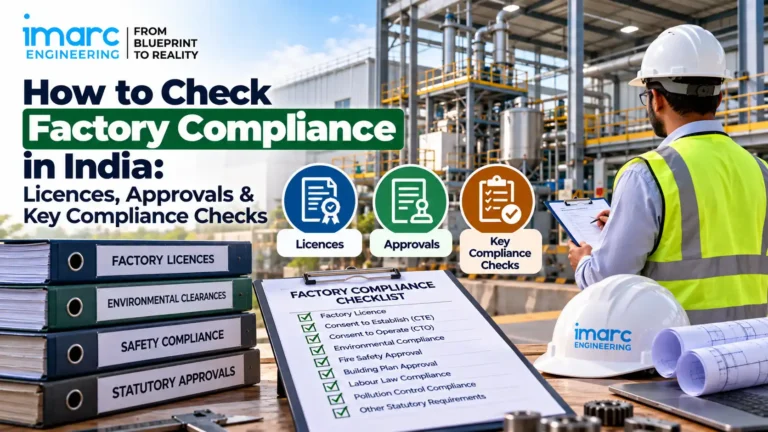
Licences and Regulatory Requirements
Starting a sweet potato processing unit in India requires several approvals:
- Business registration (Proprietorship, LLP, or Pvt Ltd)
- Factory Licence under the Factories Act
- Environmental Clearance from State Pollution Control Board
- GST Registration
- Fire Safety NOC
- Effluent Treatment Plant (ETP) operational clearance
- FSSAI Licence for food processing operations
- Occupational Health and Safety compliance
Key Challenges to Consider
High Capital Requirements. The total capital investment covering land, civil works, machinery such as washers, peelers, blanchers, dryers, freezers, milling equipment, and packaging systems — is significant and requires careful financial planning and phased investment strategy.
Raw Material Price Volatility. Fresh sweet potatoes, the primary raw material accounting for 50–60% of total OpEx, are subject to seasonal price fluctuations and harvest variability. Long-term farmer contracts and strategic raw material stockpiling are essential risk mitigation tools.
Regulatory Compliance. Food processing operations in India must comply with FSSAI standards, State Pollution Control Board norms, ETP requirements, and factory safety regulations. The multi-agency compliance burden requires dedicated regulatory management from project inception.
Technology and Innovation Pressure. Industry developments such as the completion of the Tanzania variety genome in August 2025 and ongoing improvements in processing efficiency mean that investors must stay current with technological upgrades to maintain competitive product quality and yield.
Competition. Global players such as Conagra Brands, Dole Food Company, Nash Produce, and Ham Farms set high quality and efficiency benchmarks. India-based processors must differentiate through cost leadership, niche product positioning, or export focus.
Skilled Manpower. Food processing operations require trained operators for quality control, machinery maintenance, and cold chain management. Recruiting, training, and retaining skilled staff in semi-urban or rural processing locations remains an ongoing operational challenge.
Frequently Asked Questions
1. How much does it cost to set up a sweet potato processing plant in India? The total project cost depends on capacity (ranging from 1,000 to 5,000 MT per annum), location, technology, and automation level. A detailed breakdown of CapEx and OpEx is available in the full project report.
2. Is sweet potato processing profitable in India in 2026? Yes. The facility demonstrates gross margins of 25-35% and net margins of 10-18% under normal operating conditions, supported by stable demand across food, snack, and animal feed industries.
3. What machinery is required for a sweet potato processing plant in India? Key equipment includes washing and peeling units, slicers, blanchers, dryers or fryers, freezing systems, milling equipment, quality inspection systems, and packaging machines.
4. What licences and approvals are required to start a sweet potato processing plant in India? Required approvals include business registration, Factory Licence, Environmental Clearance from the State Pollution Control Board, GST registration, Fire Safety NOC, FSSAI Licence, ETP operational clearance, and occupational health and safety compliance.
5. What raw materials are needed for sweet potato processing? The primary raw materials are fresh sweet potatoes and packaging material. Fresh sweet potatoes alone account for approximately 50–60% of total operating expenses.
6. What are the environmental compliance requirements for a sweet potato processing plant in India? Plants must install and operate an effluent treatment plant (ETP), obtain clearance from the State Pollution Control Board, and comply with emission and wastewater discharge standards. Advanced monitoring systems for process deviations are also recommended.
7. What is the best location to set up a sweet potato processing plant in India? Ideal locations are those with proximity to sweet potato growing regions (such as Odisha, Bihar, Uttar Pradesh, or Andhra Pradesh), access to reliable transport infrastructure, availability of industrial utilities, and favourable state-level food processing incentives.
8. What is the break-even period for this type of plant in India? The break-even period depends on plant capacity utilisation, pricing, and operating costs. A detailed payback period analysis is provided in the comprehensive project economics section of the full feasibility report.
9. What government incentives are available for manufacturers in India? Food processing units in India may benefit from schemes such as the Pradhan Mantri Kisan SAMPADA Yojana, PLI scheme for food processing, MSME credit-linked capital subsidy, and state-level industrial promotion policies in major agro-processing states.
Key Takeaways for Investors
The sweet potato processing plant presents a well-rounded investment opportunity with demand underpinned by the food and beverage industry, snack food manufacturers, frozen food processors, the bakery and confectionery sector, the animal feed industry, and institutional foodservice all of which require consistent, high-quality processed sweet potato ingredients. The financial model is viable across plant capacities from 1,000 to 5,000 MT per annum, with gross margins of 25-35% and net margins of 10-18% offering meaningful returns against capital committed. The global sweet potato market, valued at USD 51.8 billion in 2025 and projected to reach USD 67.59 billion by 2034 at a CAGR of 3.0%, reflects durable structural demand that extends well beyond short-term consumption trends. For investors seeking a resilient agro-processing opportunity aligned with India’s growing processed food sector, health-food shift, and export ambitions, this investment deserves serious evaluation.
About the Author