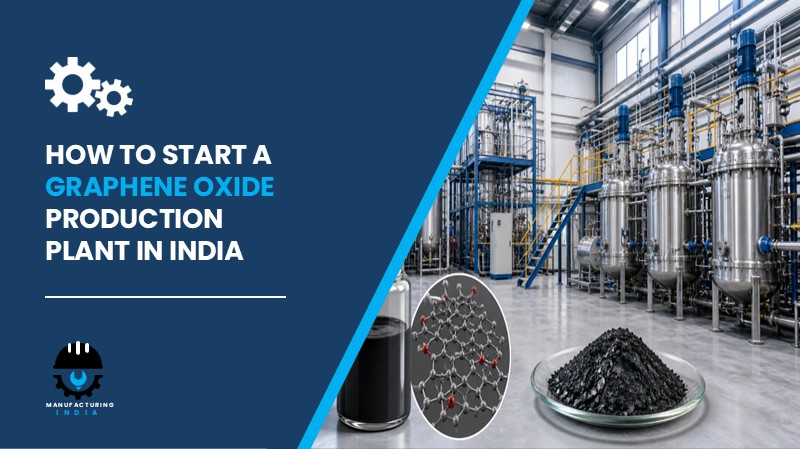
Setting up a graphene oxide production plant in India presents a compelling investment case of exceptional financial and strategic importance — one where the most extraordinary market growth rate of any advanced material category covered in this investment guide series converges with India’s rapidly expanding energy storage ecosystem, surging electronics manufacturing base, deepening biomedical research infrastructure, and growing environmental technology sector. Graphene oxide (GO) — a single-atom-thick material created through the chemical oxidation of graphite, bearing oxygen-containing functional groups that make it water-dispersible, chemically reactive, and functionally versatile across an extraordinary range of applications — is at the very frontier of advanced materials science and industrial commercialisation simultaneously. With the global graphene oxide market projected to grow from USD 327.30 Million in 2025 to USD 5,039.64 Million by 2034 at an exceptional CAGR of 35.5% — the highest growth trajectory of any product category covered in this series — the investment case for establishing early domestic production capacity in India is not merely commercially attractive; it is strategically pre-emptive, positioning the investor at the ground level of a technology market that is transitioning from research novelty to industrial necessity across energy, electronics, biomedical, water treatment, and advanced composite applications simultaneously.
India’s positioning for graphene oxide production is strengthening rapidly and from multiple directions. The world spent a record USD 2.3 Trillion on energy transition projects during 2025 — an 8% increase from 2024, spanning electrified transport (USD 893 Billion), renewable energy (USD 690 Billion), and grid infrastructure projects (USD 483 Billion) — all of which drive demand for graphene-based electrode materials in lithium-ion batteries and supercapacitors. India is a direct and growing participant in this energy transition investment wave. The India Semiconductor Mission and the PLI scheme for electronics are expanding the domestic electronics manufacturing base that creates demand for conductive inks, flexible electronics, and graphene oxide-enhanced composite materials. Government investment in research infrastructure and the ongoing research partnerships between universities and industrial manufacturers are establishing the domestic knowledge base required to develop and operate graphene oxide production facilities. Specialty chemical and advanced materials estates in Gujarat, Maharashtra, and Telangana offer the corrosion-resistant reactor infrastructure, analytical chemistry expertise, and regulatory frameworks that a graphene oxide production facility requires.
Investing in a graphene oxide production plant in India today positions the investor at the ground level of a USD 5,039.64 Billion market by 2034 growing at a CAGR of 35.5% — driven by energy storage, flexible electronics, biomedical research, water treatment, and advanced composite applications. With gross profit margins of 45–60% and net profit margins of 20–35% at annual production capacities of 50–200 MT, the unit economics are extraordinary, and India’s growing energy transition investment and electronics manufacturing ecosystem provide a structurally sound domestic demand foundation for early-mover producers.
What is Graphene Oxide?
Graphene oxide (GO) exists as a single-atom-thick material which scientists create when they chemically oxidise graphite using strong oxidising agents under controlled reaction conditions. The material dissolves in water and various solvents because its surface contains multiple oxygen-containing functional groups which include hydroxyl groups, epoxy groups, and carboxyl groups. These functional groups enable the production of films, coatings, and composites which display improved mechanical strength, thermal stability, and electrical conductivity relative to conventional carbon and polymer materials.
Scientists use graphene oxide as a multipurpose material because its high surface area, variable conductivity, and chemical reactivity provide them with a uniquely broad range of functional options across scientific and industrial applications. The material is used in energy storage devices including battery electrodes and supercapacitors, as well as in sensors, conductive inks, and polymer composites. Its biocompatibility enables application in drug delivery systems and biomedical carriers, which increases its technological importance across the healthcare and biomedical research sectors. The functional groups on the graphene oxide surface also enable chemical modification and reduction to produce reduced graphene oxide (rGO) — a higher-conductivity form used in electronics and energy applications — making graphene oxide the primary precursor for the broader family of graphene-based functional materials.
The primary production process covers graphite oxidation via the modified Hummers’ method, controlled reaction with strong oxidising agents, washing and purification, exfoliation, filtration, drying, micronisation, quality testing, and packaging. End-use industries served include energy storage, electronics, biomedical research, water treatment, aerospace and defence, coatings, and advanced materials industries. Applications span lithium-ion batteries and supercapacitors, conductive coatings, nanocomposites, filtration membranes, biosensors, and drug delivery research.
Cost of Setting Up a Graphene Oxide Production Plant in India
The cost of establishing a graphene oxide production plant in India depends on production capacity, product grade and functional group density specification, process technology selection within the modified Hummers’ method framework, geographic location, degree of automation, and the stringent chemical safety, nanomaterial handling, and quality compliance requirements applicable to graphene oxide supplied to energy storage, electronics, biomedical, and water treatment customers.
1. Capital Expenditure (CapEx)
Land and Site Development forms a foundational component of total capital investment, covering land acquisition charges, site registration, boundary development, chemical containment infrastructure for strong acid and oxidising agent storage, drainage, and site utilities. Given the use of strong oxidising agents including sulphuric acid, nitric acid, and potassium permanganate in the modified Hummers’ method, site safety infrastructure — including acid spill containment, oxidising agent segregated storage, toxic gas detection for nitrogen dioxide emissions, and emergency response systems — adds capital requirements beyond conventional chemical plant standards. Investors may explore advanced materials and specialty chemicals industrial estates in Gujarat, Maharashtra, or Telangana, where chemical handling infrastructure, research institution proximity, and electronics customer access create a commercially advantaged operating environment.
Civil Works and Construction cover the main production building housing corrosion-resistant reaction vessel systems, washing and filtration areas, ultrasonic exfoliation processing stations, drying rooms with controlled humidity, micronisation and powder handling areas with dust containment, a quality control and characterisation laboratory equipped for Raman spectroscopy, XRD, AFM, and TEM analysis, finished goods storage with humidity control for graphene oxide powder, and an administrative block.
Machinery and Equipment represent the largest single component of total CapEx for a graphene oxide production plant. Key machinery required includes:
- Reaction vessels with temperature control
- Filtration units
- Centrifuges
- Ultrasonic exfoliation systems
- Drying equipment
- Milling machines
- Automated packaging lines
Other Capital Costs include an effluent treatment plant (ETP) with capability to manage strong acid-containing and permanganate-contaminated process effluents, fume scrubbing systems for nitrogen dioxide and chlorine gas emissions from the oxidation reaction, nanomaterial containment and filtration systems to prevent graphene oxide nanoparticle environmental release, pre-operative expenses, nanomaterial safety assessment and regulatory compliance costs, commissioning charges, and import duties on specialised ultrasonic exfoliation systems or advanced characterisation instruments not available domestically.
Request a Sample Report for In-Depth Market Insights: https://www.imarcgroup.com/graphene-oxide-production-cost-analysis-report/requestsample
2. Operational Expenditure (OpEx)
Raw Material Cost is the dominant operational expense, accounting for approximately 50–60% of total OpEx. The primary raw materials are graphite, oxidising agents, and acids. Graphite — as the carbon feedstock consumed in the largest volumes and converted to graphene oxide through chemical oxidation — drives the majority of raw material cost. High-quality natural or synthetic graphite with consistent purity and particle size is essential for achieving reproducible graphene oxide quality across production batches. Oxidising agents — primarily potassium permanganate — and acids — primarily sulphuric acid and nitric acid — are consumed as process reagents in the modified Hummers’ oxidation process. Long-term procurement contracts with reliable suppliers for all three input categories are essential for production cost stability and consistent product quality.
Utility Cost is the second-largest OpEx component, representing 20–25% of total operating expenses — a relatively high proportion reflecting the energy demands of temperature-controlled reaction vessel systems, centrifuge operations, ultrasonic exfoliation systems, and drying equipment that together constitute the most energy-intensive stages of graphene oxide production. Managing utility costs through heat recovery, efficient ultrasonic processor operation, and competitive industrial electricity tariffs is important for maintaining the cost position that supports the facility’s gross margin profile.
Other Operating Costs include transportation and distribution to energy storage manufacturers, electronics producers, biomedical research institutions, water treatment technology companies, aerospace and defence contractors, and advanced composite material producers, specialised inert atmosphere packaging for moisture-sensitive graphene oxide powder, salaries and wages for materials scientists and process engineers, routine machinery maintenance including reaction vessel lining inspection and centrifuge bowl replacement, depreciation on production equipment, and applicable taxes. By the fifth year of operations, total operational costs are projected to increase substantially due to inflation, graphite and oxidising agent price movements, supply chain disruptions, and shifts in the global advanced materials economy.
3. Plant Capacity
The proposed production facility for graphene oxide is designed with an annual production capacity ranging between 50 and 200 metric tonnes, reflecting the specialty nanomaterial nature of this ultra-high-value product and the relatively small but technically demanding volumes required by energy storage, electronics, biomedical, and water treatment customers. Plant capacity can be customised per investor requirements and phased in line with secured customer purchase agreements and product qualification milestones. The ongoing research partnerships between universities and industrial manufacturers are helping to establish large-scale production facilities while developing cost-effective solutions — a collaborative model that Indian producers can participate in to accelerate both technology development and market access across multiple high-value end-use sectors.
4. Profit Margins and Financial Projections
The financial projections for a graphene oxide production plant demonstrate exceptional profitability potential under normal operating conditions. Gross profit margins typically range between 45–60% — reflecting the extraordinary value-added conversion from graphite feedstock to a precisely characterised, functionalised nanomaterial that commands premium pricing across all end-use application segments. Net profit margins are projected at 20–35% — among the strongest net margin ranges across all advanced materials manufacturing categories. A comprehensive financial analysis covering NPV (net present value), IRR (internal rate of return), payback period, gross margin progression, and net margin development across a five-year horizon is essential before committing capital, particularly given the specialised production technology and customer qualification requirements of this advanced nanomaterial category.
Why Set Up a Graphene Oxide Production Plant in India?
Expanding Advanced Materials Demand from Energy Storage and Electric Vehicles. The demand for graphene-based electrode materials is increasing because companies are investing more in renewable energy storage systems and electric vehicles. The world spent a record USD 2.3 Trillion on energy transition projects during 2025 — an 8% increase from 2024, covering electrified transport (USD 893 Billion), renewable energy (USD 690 Billion), and grid infrastructure projects (USD 483 Billion). Each of these investment streams drives demand for graphene oxide in lithium-ion battery electrodes, supercapacitors, and energy storage systems where graphene oxide’s high surface area and electrochemical activity enhance energy density and cycle life.
High-Value Specialty Product with Premium Pricing. Graphene oxide commands premium pricing due to its functional properties — the oxygen-containing functional groups, high surface area, and versatile conductivity characteristics that enable its unique performance across energy storage, electronics, biomedical, and filtration applications. This premium pricing, combined with the relatively low volume production scale of 50–200 MT annually, creates the exceptional gross margin profile of 45–60% that makes graphene oxide one of the most financially rewarding advanced materials manufacturing investments available.
Flexible Electronics and Wearable Device Technology Creating New Application Segments. The growing field of flexible electronics together with wearable device technology development creates higher market needs for conductive graphene oxide films and graphene-based composites. India’s electronics manufacturing expansion under the PLI scheme is creating domestic demand for advanced conductive and functional materials that graphene oxide uniquely enables — a demand that is currently met almost entirely through imports, creating a direct market entry opportunity for a domestic Indian graphene oxide producer.
Water Purification and Biomedical Research Driving Diversified Demand. Researchers in water purification technology and biomedical studies are investigating graphene oxide to develop membrane and therapeutic solutions. In May 2025, researchers at Northwestern University developed a non-toxic, sustainable graphene oxide-based coating which protects paper and cardboard from water and oil — a GO-Eco product providing enhanced packaging protection through its safe PFAS-free, compostable design. In March 2025, researchers at KTH Royal Institute of Technology developed a sustainable method to produce graphene oxide from commercial carbon fibres using mild nitric acid electrochemical exfoliation, offering high yields and uniform nanosheets while decreasing dependence on mined graphite — signalling both the research momentum and the production technology innovation that is accelerating graphene oxide’s commercial deployment.
Export Opportunities in Rising Global Nanomaterials Markets. Rising global demand for nanomaterials creates potential for international trade that extends well beyond India’s domestic market. As established producers in Europe, North America, and China face increasing demand from electronics, energy, and biomedical customers, an India-based graphene oxide producer with competitive cost economics and quality certification is well-positioned to capture export revenue alongside domestic market supply — a dual-revenue strategy that maximises facility utilisation and return on investment.
Research and Development Growth Accelerating Commercialisation. Increasing investments in nanotechnology accelerate commercialisation timelines for graphene oxide applications that are currently at research and early commercial stage. India’s expanding academic research ecosystem — including IITs, IISc, CSIR laboratories, and DST-funded nanotechnology centres — creates both a domestic research customer base and a talent pipeline for graphene oxide production that can be leveraged through university-industry collaboration programmes mirroring the global model of research partnerships driving large-scale production facility development.
Production Process — Step by Step
The graphene oxide production process uses graphite oxidation via the modified Hummers’ method, controlled reaction with strong oxidising agents, washing and purification, exfoliation, filtration, drying, micronisation, quality testing, and packaging as the primary production method. Each stage requires precisely controlled temperature, oxidant concentration, reaction time, and purification parameters to produce graphene oxide of the target oxidation degree, lateral flake size, functional group density, and dispersibility required by energy storage, electronics, biomedical, and water treatment customers.
- Graphite Receipt and Preparation: High-purity natural or synthetic graphite is received from certified suppliers, quality-checked for carbon content, particle size distribution, and trace metal contamination, and prepared through pre-processing — including pre-oxidation treatment where specified — to achieve the graphite quality required for consistent graphene oxide production.
- Oxidation Reaction — Modified Hummers’ Method: Graphite is added to a mixture of concentrated sulphuric acid and sodium nitrate at low temperature in reaction vessels with temperature control, followed by controlled addition of potassium permanganate as the primary oxidising agent under maintained low-temperature conditions. The reaction is subsequently heated to moderate temperature to complete the oxidation of graphite layers, intercalating oxygen-containing functional groups throughout the graphite crystal lattice to produce graphite oxide.
- Controlled Termination and Dilution: The oxidation reaction is carefully terminated by controlled addition of water and hydrogen peroxide to decompose residual permanganate, quench the reaction, and convert any remaining manganese dioxide to soluble manganese sulphate — a critical step requiring precise temperature management to prevent vigorous exothermic reaction that could compromise product quality and operator safety.
- Washing and Purification: The graphite oxide slurry is subjected to repeated washing and purification cycles using dilute hydrochloric acid followed by deionised water in filtration units, removing sulphate ions, manganese compounds, and other ionic impurities that would compromise product purity and performance in sensitive biomedical and electronics applications.
- Exfoliation: Purified graphite oxide is exfoliated into individual graphene oxide nanosheets through ultrasonic exfoliation systems — applying high-frequency ultrasonic energy to overcome the interlayer forces and separate individual oxidised graphene layers — producing a stable aqueous dispersion of single-layer and few-layer graphene oxide nanosheets.
- Centrifugation: The graphene oxide dispersion is processed through centrifuges at controlled speeds to separate single-layer graphene oxide fractions from unexfoliated graphite oxide and thick multilayer material, producing the fractionated product with the lateral size and layer number distribution required by the target application specification.
- Filtration and Collection: Centrifuge-fractionated graphene oxide dispersion is filtered through filtration units to collect the graphene oxide solid fraction, removing the bulk of the aqueous phase while retaining the graphene oxide nanosheets as a hydrogel or wet cake for downstream drying.
- Drying: Collected graphene oxide wet cake is processed through drying equipment — freeze drying, spray drying, or oven drying depending on the target product form — to remove water and produce dry graphene oxide powder or flakes of the morphology, bulk density, and dispersibility required for the target end-use application.
- Micronisation and Milling: Dried graphene oxide is processed through milling machines to achieve the target particle size distribution — fine powder for solution-based applications, specific flake size distribution for composite and coating applications — ensuring consistent product characteristics for customer application processes.
- Quality Testing: Finished graphene oxide is subjected to comprehensive characterisation including Raman spectroscopy for graphene oxide identification and oxidation degree verification, X-ray diffraction for interlayer spacing measurement, atomic force microscopy for nanosheet thickness and lateral size characterisation, elemental analysis for carbon-to-oxygen ratio, and dispersibility testing in water and target solvents, verifying specification compliance before packaging.
- Automated Packaging: Specification-compliant graphene oxide is packaged under inert atmosphere or in sealed moisture-proof containers using automated packaging lines to prevent rehydration and agglomeration during storage and transit, then dispatched to energy storage manufacturers, electronics producers, biomedical research institutions, water treatment technology companies, and advanced composite material producers.
Key Applications
Graphene oxide produced in India serves commercially diverse and technologically frontier applications across multiple high-growth industrial and research sectors:
- Energy Storage Industry: Used in lithium-ion batteries, supercapacitors, and electrode materials where graphene oxide’s high surface area and electrochemical activity enhance energy density, power density, and cycle life in next-generation energy storage devices.
- Electronics Industry: Applied in conductive inks for printed electronics, flexible electronics substrates, and sensors where graphene oxide’s unique combination of electrical conductivity and chemical functionalisation enables new electronic device architectures.
- Biomedical Sector: Utilised in drug delivery systems and biosensing research where graphene oxide’s biocompatibility, high surface area for drug loading, and surface chemistry for targeted delivery make it a promising next-generation therapeutic carrier platform.
- Water Treatment Industry: Used in advanced filtration membranes and adsorbents where graphene oxide’s atomically thin structure, functional group chemistry, and precisely controllable pore size enable highly efficient and selective water purification systems.
- Composite Materials Industry: Incorporated into polymers and coatings to enhance mechanical strength, thermal stability, barrier properties, and electrical conductivity in high-performance structural and functional composite materials for aerospace, defence, and industrial applications.
Leading Producers
The global graphene oxide industry is served by a group of specialist nanomaterials companies with diverse production capabilities and application portfolios across energy, electronics, biomedical, and industrial sectors. Key players in the global market include:
- AdNano Technologies Pvt. Ltd.
- Cheap Tubes
- Global Graphene Group
- Directa Plus S.p.A.
- First Graphene
- ACS Material
- NanoXplore Inc.
Timeline to Start the Plant
Establishing a graphene oxide production plant in India involves a structured multi-phase development sequence. Investors should plan for the following phases:
- Feasibility study and project report preparation
- Land acquisition and site development
- Regulatory approvals and environmental clearances
- Factory licence and fire safety compliance
- Machinery procurement and installation
- Raw material supplier agreements and supply chain setup
- Trial production and quality testing
- Commercial production launch
Licences and Regulatory Requirements
Starting a graphene oxide production unit in India requires several approvals spanning business registration, nanomaterial safety, chemical handling, environmental, and advanced materials compliance domains:
- Business registration (Proprietorship, LLP, or Pvt Ltd)
- Factory Licence under the Factories Act
- Environmental Clearance from the State Pollution Control Board
- GST Registration
- Fire Safety NOC
- Hazardous/Chemical compliance applicable to concentrated sulphuric acid, nitric acid, and potassium permanganate handling under the Manufacture, Storage and Import of Hazardous Chemical (MSIHC) Rules
- Nanomaterial safety compliance under India’s emerging nanotechnology regulatory framework, including occupational exposure assessment and environmental release containment requirements
- Effluent Treatment Plant (ETP) operational clearance with capability to manage strong acid-containing, permanganate-contaminated, and nanomaterial-bearing process effluents
- Occupational Health and Safety compliance including nanomaterial inhalation risk assessment and engineering controls
Key Challenges to Consider
Hazardous Chemical Oxidation Process Safety. The modified Hummers’ method uses concentrated sulphuric acid, nitric acid, and potassium permanganate — a combination of strong acids and powerful oxidising agents that creates significant chemical hazard during the reaction and termination stages. The exothermic reaction during water addition for termination, and the generation of toxic nitrogen dioxide gas during the oxidation stage, require sophisticated reactor temperature control, fume scrubbing, and emergency response infrastructure that demands dedicated process safety engineering from the earliest design stage.
Graphite Feedstock Quality Consistency. Producing consistent graphene oxide specification across production batches requires graphite feedstock with reproducible purity, particle size, and crystallinity characteristics. Natural graphite quality variation between mining sources and processing batches can cause significant variability in graphene oxide oxidation degree, flake size, and functional group distribution — making graphite supplier qualification, incoming material testing, and lot-to-lot consistency management a critical quality management priority.
Nanomaterial Occupational Health and Environmental Containment. Graphene oxide nanosheets represent a nanomaterial with airborne particle dimensions in the respirable range, requiring comprehensive occupational exposure controls including enclosed processing systems, high-efficiency filtration for exhaust air, appropriate respiratory protection, and biological monitoring for production workers. Environmental release prevention requires nanomaterial filtration from process water before ETP discharge — adding both capital cost and ongoing operational management obligations specific to nanomaterial manufacturing.
Customer Qualification and Application Development Cycles. Graphene oxide supplied to battery manufacturers, flexible electronics producers, and biomedical research customers must pass through material qualification processes that verify functional group chemistry, dispersibility, electrochemical performance, and batch-to-batch reproducibility across multiple production lots. For biomedical applications in particular, qualification and regulatory approval pathways can extend over several years, requiring patient market development investment alongside production capacity establishment.
Competition from Established Specialist Producers. The competitive landscape includes established specialist nanomaterial producers including Global Graphene Group, NanoXplore Inc., Directa Plus, First Graphene, and ACS Material, as well as AdNano Technologies Pvt. Ltd. as a significant Indian domestic player. New Indian producers must differentiate through competitive cost economics built on domestic graphite procurement, application-specific product development, established quality characterisation systems, and the supply chain advantages that proximity to India’s growing energy storage and electronics manufacturing base provides.
Evolving Regulatory Framework for Nanomaterials. India’s regulatory framework for nanomaterials is still developing, with occupational safety, environmental release, and product safety regulations for engineered nanomaterials at various stages of formulation. Producers must engage proactively with regulatory authorities and international nanomaterial safety standards to stay ahead of compliance requirements and avoid operational disruption as the regulatory framework matures.
Frequently Asked Questions
1. How much does it cost to set up a graphene oxide production plant in India?
The total setup cost depends on production capacity, product grade and functional group specification, process technology configuration, location, and safety infrastructure scale. CapEx covers land and site development with hazardous chemical plant construction, core machinery including reaction vessels with temperature control, filtration units, centrifuges, ultrasonic exfoliation systems, drying equipment, milling machines, and automated packaging lines, along with ETP with nanomaterial containment, fume scrubbing systems, and other capital costs. A detailed project report with full CapEx and OpEx breakdowns is available on request.
2. Is graphene oxide production profitable in India in 2026?
Exceptionally so. The project demonstrates gross profit margins of 45–60% and net profit margins of 20–35% under normal operating conditions — among the strongest financial performance profiles across all advanced materials categories — supported by the global market’s extraordinary 35.5% CAGR growth trajectory from USD 327.30 Million in 2025 to USD 5,039.64 Million by 2034, driven by energy storage, flexible electronics, biomedical, and water treatment applications.
3. What machinery is required for a graphene oxide production plant in India?
Key machinery includes reaction vessels with temperature control, filtration units, centrifuges, ultrasonic exfoliation systems, drying equipment, milling machines, and automated packaging lines. All process equipment must be fabricated from acid-resistant materials compatible with strong acid and oxidising agent chemistry, with enclosed systems for nanomaterial containment throughout powder handling and packaging operations.
4. What licences and approvals are required to start a graphene oxide production plant in India?
Required approvals include business registration, a Factory Licence under the Factories Act, Environmental Clearance from the State Pollution Control Board, GST registration, a Fire Safety NOC, MSIHC Rules compliance for hazardous chemical handling of sulphuric acid, nitric acid, and potassium permanganate, nanomaterial safety compliance, ETP operational clearance with nanomaterial containment capability, and Occupational Health and Safety compliance including nanomaterial inhalation risk management.
5. What raw materials are needed for graphene oxide production?
The primary raw materials are graphite, oxidising agents, and acids. Graphite accounts for approximately 50–60% of total operating expenses together with potassium permanganate and sulphuric and nitric acids, making graphite procurement strategy, supplier quality qualification, and oxidising agent sourcing the most critical cost and quality management levers for the investment.
6. What are the environmental compliance requirements for a graphene oxide production plant in India? The unit must obtain Environmental Clearance from the State Pollution Control Board, operate a certified ETP capable of managing strong acid-containing, permanganate-contaminated, and graphene oxide nanoparticle-bearing process effluents, install fume scrubbing systems for nitrogen dioxide and other oxidation reaction off-gases, implement nanomaterial release containment and air filtration systems, and maintain monitoring systems for air emissions and wastewater discharge.
7. What is the best location to set up a graphene oxide production plant in India?
Optimal locations offer proximity to high-quality graphite supply chains, established corrosion-resistant chemical manufacturing infrastructure, reliable utilities, access to energy storage, electronics, and research institution customer clusters, and regulatory environments with experience in hazardous chemical and advanced materials manufacturing. Advanced materials and specialty chemical industrial estates in Gujarat, Maharashtra, and Telangana are among the most strategically relevant options.
8. What is the break-even period for this type of plant in India?
The break-even period depends on production capacity, customer qualification timelines across energy storage and electronics sectors, capacity utilisation rate, graphite and oxidising agent pricing trends, and the product grade mix between standard and premium graphene oxide variants. The exceptional gross margins of 45–60% support faster break-even recovery than conventional chemical manufacturing. A detailed financial analysis is available via the sample request link.
9. What government incentives are available for manufacturers in India?
The Make in India initiative, Department of Science and Technology (DST) grants for nanotechnology commercialisation, PLI schemes for advanced chemistry cell batteries and electronics manufacturing, and state-level advanced materials manufacturing incentives provide financial and regulatory support for graphene oxide production investments. Export promotion benefits under specialty advanced materials categories and capital subsidy schemes from state investment promotion boards may also be applicable.
Key Takeaways for Investors
A graphene oxide production plant in India represents the most extraordinary market growth opportunity in the advanced materials manufacturing landscape — where the global market’s exceptional CAGR of 35.5% propelling it from USD 327.30 Million in 2025 to USD 5,039.64 Million by 2034 combines with gross profit margins of 45–60% and net profit margins of 20–35% to create an investment case of truly rare financial and strategic distinction. The project demonstrates compelling viability at annual production capacities of 50–200 MT — a scale that captures the full premium margin available in this high-value specialty nanomaterial while remaining practically manageable within the capital constraints of non-hyperscale investors. India’s record USD 2.3 Trillion global energy transition investment environment in 2025, expanding domestic electronics manufacturing under the PLI scheme, growing biomedical research infrastructure, and the KTH Royal Institute’s March 2025 demonstration of sustainable graphene oxide production from carbon fibres — signalling the direction of production technology innovation — all confirm that the fundamental demand and technology foundations for a commercially successful Indian graphene oxide production facility are present and strengthening. For investors with the technical capability, safety management commitment, and market development discipline required to establish a quality-certified graphene oxide production facility in India, the combination of extraordinary financial returns, a 35.5% CAGR market, and early-mover positioning in a technology category transitioning from research to industrial necessity makes this among the most strategically compelling advanced materials investments available in the Indian market today.
About the Author