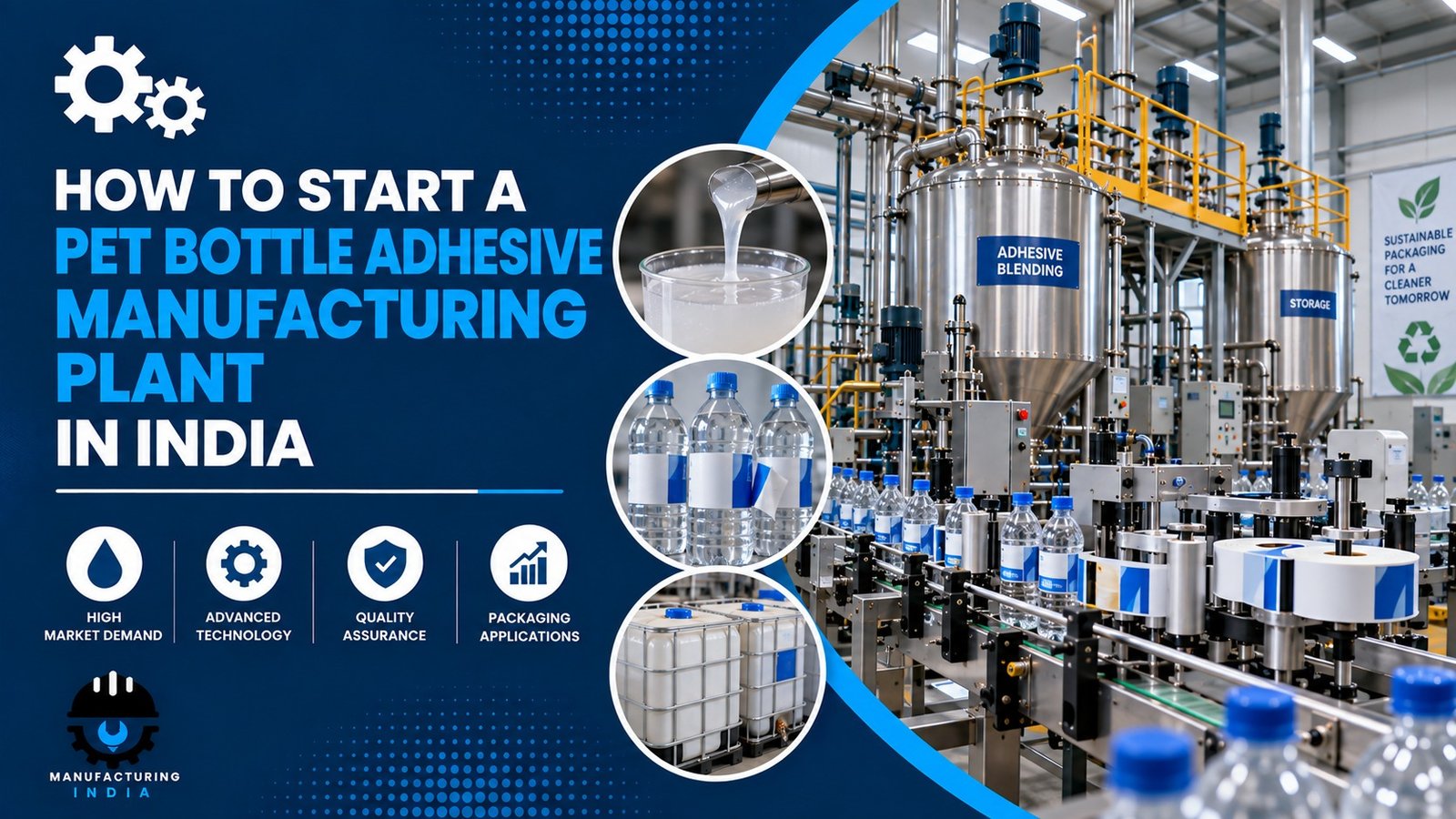
Setting up a PET bottle adhesive manufacturing plant in India presents a compelling investment case, given demand from packaging, beverage and food processing, consumer goods, labeling, printing, and recycling industries. Technological advancements in acrylic, hot-melt, and pressure-sensitive adhesive formulations are improving processing efficiency and label performance, making these bonding agents critical to India’s fast-growing packaging economy.
India’s expanding packaging and beverage industries position the country as a strategically sound base for this production, particularly as Asia Pacific already accounts for approximately 42% of the global market. With India’s pharmaceutical sector projected to grow 7–9% in FY26 on robust domestic demand and export expansion (IBEF), a well-planned facility is positioned to serve substantial and growing packaging demand.
Backed by Asia Pacific’s dominant 42% share of the global market, healthy gross margins of 30–40%, and expanding pharmaceutical and packaging demand in India, this investment offers a cost-competitive route into high-performance labeling adhesives, including hot-melt and pressure-sensitive formulations, with steady end-use demand supporting sound break-even viability.
What is PET Bottle Adhesive?
PET bottle adhesive is a specialized bonding agent designed to secure labels onto polyethylene terephthalate (PET) packaging used for beverages, cosmetics, and household products. These adhesives must offer high initial tack and clean machine operation to withstand fast-paced automated bottling lines, along with excellent moisture and temperature resistance so labels stay firmly attached during refrigeration, transport, and handling. As sustainability becomes a global priority, advanced formulations are designed to be water-soluble or alkali-washable, allowing them to detach completely from the plastic during recycling and ensuring recovered PET flakes can be repurposed into new high-quality materials.
The PET bottle adhesive manufacturing process uses raw material blending, heating and melting, dispersion, homogenization, filtration, cooling, and adhesive pellet or block formation. This method serves end-use industries such as packaging, beverage and food processing, consumer goods, labeling, printing, and recycling industries.
Cost of Setting Up a PET Bottle Adhesive Manufacturing Plant in India:
The cost of a PET bottle adhesive manufacturing plant depends on capacity, technology, location, automation, and regulatory compliance.
1. Capital Expenditure (CapEx)
Capital investment covers land acquisition, site preparation, and infrastructure, optimized through industrial estates or SEZ-linked plots offering developed utilities and faster approvals. Civil works cover the manufacturing shed, quality-control laboratory, storage areas, and administrative block.
Machinery represents a significant share of capital expenditure for a PET bottle adhesive manufacturing plant, since equipment costs scale with automation level and capacity chosen. Key machinery required includes:
- Raw material storage and feeding systems
- High-speed mixers
- Heated mixing tanks
- Melting vessels
- Polymer blending units
- Homogenizers
- Dispersers
- Filtration units
- Cooling systems
- Pelletizers or filling machines
- Packaging machines
Other capital costs include effluent treatment systems, pre-operative and commissioning expenses, and applicable import duties on specialized machinery.
Request a Sample Report for In-Depth Market Insights: https://www.imarcgroup.com/pet-bottle-adhesive-manufacturing-plant-project-report/requestsample
2. Operational Expenditure (OpEx)
Raw material cost is the largest OpEx component, at approximately 55–65% of total OpEx, comprising EVA copolymers, polyvinyl alcohol, rosin esters, plasticizers, and fillers. Long-term supplier contracts help stabilize pricing against volatility and secure consistent supply.
Utility cost, covering electricity, water, and steam, accounts for approximately 8–12% of OpEx. Other operating costs include transportation, packaging, salaries, maintenance, depreciation, and taxes. By the fifth year, operational cost is expected to rise substantially due to inflation, market fluctuations, and supply chain disruptions.
3. Plant Capacity
The proposed facility is designed with an annual production capacity ranging between 2,000–5,000 MT, enabling economies of scale while maintaining operational flexibility. Capacity can be customized based on investor requirements, and profitability generally improves with higher capacity utilisation as fixed costs are spread across greater output.
4. Profit Margins and Financial Projections
Financial projections cover net present value (NPV), internal rate of return (IRR), payback period, liquidity, and profitability analysis. Under normal operating conditions, a PET bottle adhesive manufacturing plant typically shows gross margins of 30–40% and net margins of 12–18%, reflecting healthy profitability supported by stable demand.
Why Set Up a PET Bottle Adhesive Plant in India?
A Crucial Packaging and Recycling Component: These adhesives serve as essential bonding materials for PET-based packaging, labels, caps, sleeves, and multilayer bottle applications, supporting strong adhesion, durability, and integrity for the growing beverage, food, personal care, and household packaging industries.
Moderate but Justifiable Entry Barriers: Requiring lower capital than large-scale polymer manufacturing, stringent adhesion performance, chemical compatibility, curing requirements, and formulation expertise create entry barriers favouring experienced producers with reliable performance and competitive pricing.
Megatrend Alignment: The rapid growth of bottled beverages, packaged foods, personal care products, lightweight packaging, and PET recycling is driving consistent demand for high-performance adhesives, while the focus on recyclable and lightweight packaging further supports demand for specialized formulations.
Policy and Sustainability Push: Government initiatives promoting plastic recycling, extended producer responsibility, sustainable packaging, and circular-economy practices indirectly support demand for PET-compatible adhesives that enable recyclable packaging designs.
Localization and Dependability in Supply Chains: Packaging manufacturers, converters, and PET bottle producers increasingly favour local, dependable adhesive suppliers to shorten lead times, reduce logistics costs, and maintain uninterrupted production, opening opportunities for regional manufacturers with efficient sourcing.
Growing Pharmaceutical and Packaging Demand: IBEF indicates that India’s pharmaceutical market is slated to grow 7–9% in FY26, fueled by robust domestic demand, product innovation, and expansion into Europe, indirectly supporting demand for pharmaceutical packaging and labeling adhesives.
Manufacturing Process – Step by Step:
The PET bottle adhesive manufacturing process uses raw material blending as the primary production method, followed by a series of unit operations, material handling steps, and quality checks.
- Raw Material Blending: Raw materials are combined in high-speed mixers and heated mixing tanks to form a uniform base.
- Heating and Melting: Melting vessels heat the blended material to the required processing temperature.
- Dispersion: Dispersers evenly distribute additives and polymers throughout the heated mixture.
- Homogenization: Homogenizers and polymer blending units ensure a consistent, uniform adhesive composition.
- Filtration: Filtration units remove impurities and ensure product purity.
- Cooling: Cooling systems bring the adhesive to a stable, workable temperature.
- Pellet or Block Formation: Pelletizers or filling machines shape the adhesive into pellets or blocks.
- Packaging: Packaging machines complete the process, preparing the finished adhesive for dispatch to packaging, beverage, and labeling end-users.
Key Applications:
This product serves a diverse set of end-use industries centered on packaging and bonding:
- Packaging: PET bottles, containers, and flexible packaging components.
- Food & Beverage: Bottle labeling, cap and closure bonding, and packaging assembly.
- Consumer Goods: Household, personal care, and cosmetic PET packaging.
- Industrial Packaging: Adhesive bonding for PET containers, drums, and specialized packaging systems.
Leading Manufacturers:
Leading manufacturers in this global industry include several multinational companies with extensive manufacturing capacities and diverse application portfolios. Key players include:
- Henkel
- Avery Dennison Corporation
Timeline to Start the Plant:
- Feasibility study and project report preparation
- Land acquisition and site development
- Regulatory approvals and environmental clearances
- Factory licence and fire safety compliance
- Machinery procurement and installation
- Raw material supplier agreements and supply chain setup
- Trial production and quality testing
- Commercial production launch
Licences and Regulatory Requirements:
Starting a PET bottle adhesive manufacturing unit in India requires several approvals:
- Business registration (Proprietorship, LLP, or Pvt Ltd)
- Factory Licence under the Factories Act
- Environmental Clearance from State Pollution Control Board
- GST Registration
- Fire Safety NOC
- Effluent Treatment Plant (ETP) operational clearance
- Occupational Health and Safety compliance
Key Challenges to Consider:
High Capital Requirements: Machinery is the largest share of capital expenditure, requiring significant investment before operations begin.
Raw Material Price Volatility: EVA copolymers, polyvinyl alcohol, rosin esters, plasticizers, and fillers are all subject to price fluctuations that can affect operating costs.
Regulatory Compliance: Stringent adhesion performance, chemical compatibility, curing requirements, and formulation expertise require sustained investment in quality systems.
Competition from Established Players: Multinational players such as Henkel and Avery Dennison Corporation hold extensive manufacturing capacities and diverse portfolios.
Sustainability and Formulation Pressure: Manufacturers increasingly focus on wash-off, water-based, alkali-soluble, and recycling-compatible adhesives to improve recycled PET quality.
Skilled Manpower: Formulation, blending, and quality-control work require trained personnel to maintain consistent standards.
Frequently Asked Questions:
1. How much does it cost to set up a PET bottle adhesive manufacturing plant in India?
Cost depends on capacity, automation level, land and site development, and civil works; a detailed CapEx and OpEx breakdown is covered in the full feasibility report.
2. Is PET bottle adhesive manufacturing profitable in India in 2026?
The facility demonstrates healthy profitability potential, with gross margins of 30–40% and net margins of 12–18% under normal operating conditions.
3. What machinery is required for a PET bottle adhesive plant in India?
Key machinery includes raw material storage and feeding systems, high-speed mixers, heated mixing tanks, melting vessels, polymer blending units, homogenizers, dispersers, filtration units, cooling systems, pelletizers or filling machines, and packaging machines.
4. What licences and approvals are required to start a PET bottle adhesive plant in India?
Requirements include business registration, a Factory Licence, Environmental Clearance, GST Registration, Fire Safety NOC, ETP clearance, and occupational health and safety compliance.
5. What raw materials are needed for PET bottle adhesive manufacturing? EVA copolymers, polyvinyl alcohol, rosin esters, plasticizers, and fillers are the primary raw materials.
6. What are the environmental compliance requirements for a PET bottle adhesive plant in India?
Plants require Environmental Clearance from the State Pollution Control Board, an operational Effluent Treatment Plant, and adherence to emission and safety monitoring standards.
7. What is the best location to set up a PET bottle adhesive plant in India?
Sites should offer easy access to raw materials, proximity to target markets, robust transportation and utility infrastructure, and compliance with local zoning and environmental regulations.
8. What is the break-even period for this type of plant in India?
Break-even timing depends on capacity utilisation, pricing, and cost structure, assessed through payback period and net present value analysis in the financial projections.
9. What government incentives are available for manufacturers in India?
Incentives vary by state and are typically tied to industrial estate or SEZ location, land and infrastructure support, and compliance with regulatory frameworks.
Key Takeaways for Investors
A PET bottle adhesive manufacturing plant offers a compelling opportunity supported by demand from packaging, beverage and food processing, consumer goods, labeling, printing, and recycling industries. Financial projections indicate sound viability across capacities ranging from 2,000–5,000 MT annually, with gross margins of 30–40% and net margins of 12–18%. Asia Pacific’s approximately 42% share of the global market, alongside India’s pharmaceutical sector growing 7–9% in FY26 (IBEF), points to sustained long-term demand for high-performance labeling adhesives, positioning a well-planned facility for durable relevance.
About the Author