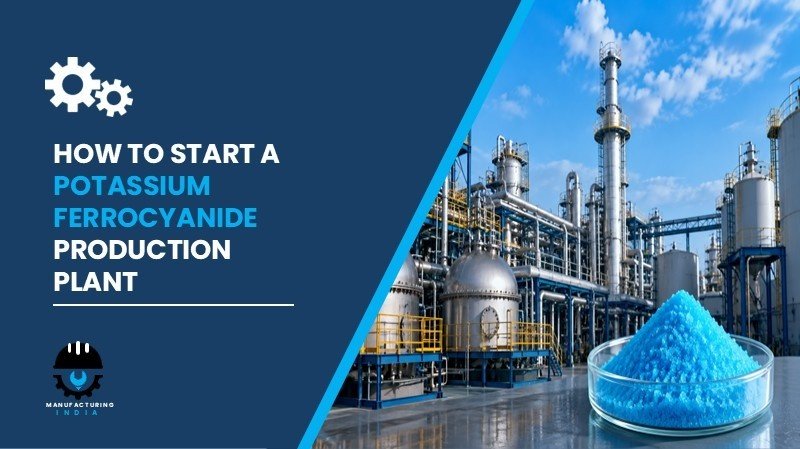
A potassium ferrocyanide production plant setup in India presents a compelling investment case for entrepreneurs targeting specialty inorganic chemicals. Demand for this compound is anchored across food processing, chemical manufacturing, metal treatment, and textile applications, where it serves as an anti-caking agent, a precursor for pigments and cyanide-based compounds, and a stabilizing agent in dyeing and printing operations. As food-grade salt producers, steel finishers, and specialty chemical formulators expand output, potassium ferrocyanide remains a critical intermediate underpinning several downstream industrial value chains.
India’s expanding industrial base, rising food processing volumes, and growing metal treatment activity make the country a strategic base for this type of production. Government initiatives promoting domestic chemical manufacturing and import substitution, combined with the country’s cost-competitive labour and land availability, support the case for setting up production capacity within India rather than relying on imports. For investors evaluating specialty chemical opportunities, a well-planned potassium ferrocyanide production plant offers a pathway to serve both domestic food-grade and industrial demand while benefiting from localization advantages.
This project offers a moderately capital-intensive but justifiable entry into a specialty chemical segment with steady, diversified demand. Gross margins in the 26-34% range and net margins of 15-21% indicate healthy break-even viability, while policy support for domestic chemical production and import substitution strengthens the long-term investment case.
What is Potassium Ferrocyanide?
Potassium ferrocyanide is an inorganic coordination compound, also known as yellow prussiate of potash, forming distinctive lemon-yellow crystals. Despite containing cyanide, the compound is highly stable and does not release toxic cyanide in the body. Its primary everyday use is as a safe, FDA-approved anticaking agent in table salts (E code E 535). Beyond its culinary use, it functions as a vital chemical reagent, used to produce deep blue pigments such as Prussian blue, and as a standard analytical tool to detect iron, copper, and other heavy metals in laboratory settings.
The potassium ferrocyanide production process relies on precipitation, filtration, drying, and crystallization as its primary unit operations. The compound serves a wide spread of end-use industries, including agriculture (fertilizers), metallurgy (ore processing), chemical manufacturing, photography, laboratory reagents, and food preservation as an anticaking agent.
Cost of Setting Up a Potassium Ferrocyanide Production Plant in India
The cost of setting up this plant depends on capacity, technology, location, automation level, and regulatory compliance requirements.
1. Capital Expenditure (CapEx)
For a potassium ferrocyanide production plant, land and site development form a substantial part of the overall investment, covering land registration charges, boundary development, and related expenses; investors can evaluate options within industrial estates or SEZs to streamline approvals and infrastructure access. Civil works cover the construction of the production shed, quality control laboratory, raw material and finished goods storage areas, and the administrative block, all designed to support safe and efficient operations.
Key machinery required includes:
- Reaction vessels
- Filtration units
- Crystallization tanks
- Centrifuge separators
- Drying ovens
- Granulation drums
- Packaging machines
Machinery costs account for the largest portion of total capital expenditure, and all equipment must be corrosion-resistant and compliant with industry safety and reliability standards. Other capital costs cover effluent treatment plant installation, pre-operative expenses, and commissioning costs associated with bringing the facility to operational readiness.
Request a Sample Report for In-Depth Market Insights: https://www.imarcgroup.com/potassium-ferrocyanide-manufacturing-plant-project-report/requestsample
2. Operational Expenditure (OpEx)
Raw material cost is the largest component of operating expenses, with ferrous sulfate, potassium cyanide, and water together accounting for approximately 52-62% of total OpEx. Securing these inputs through long-term supplier contracts helps stabilize pricing and ensure a consistent supply for continuous production. Utility costs, covering electricity, water, and steam, represent approximately 8-12% of OpEx and are essential for running reaction, filtration, drying, and crystallization equipment.
Other operating costs include transportation, packaging, salaries and wages, depreciation, taxes, and repairs and maintenance. In the first year of operations, the total operating cost is projected to be significant, and by the fifth year, this cost is expected to increase substantially due to inflation, market fluctuations, and rising costs of key raw materials, along with supply chain disruptions and shifts in the global economy.
3. Plant Capacity
The proposed potassium ferrocyanide production facility is designed for an annual capacity of 5,000 MT, enabling economies of scale while preserving operational flexibility. Capacity can be customized to suit individual investor requirements, and profitability generally improves as capacity utilisation increases, spreading fixed costs across higher output volumes.
4. Profit Margins and Financial Projections
The project demonstrates healthy profitability potential under normal operating conditions. Gross profit margins typically range between 26-34%, while net profit margins range between 15-21%, supported by stable demand and value-added applications. Financial projections for the potassium ferrocyanide production plant, including net present value (NPV), internal rate of return (IRR), and payback period, are developed based on realistic assumptions related to capital investment, operating costs, capacity utilisation, pricing trends, and demand outlook, offering a comprehensive view of the project’s viability and long-term sustainability.
Why Set Up a Potassium Ferrocyanide Plant in India?
Essential Specialty Chemical Across Multiple Industries: Potassium ferrocyanide is widely used in food-grade anti-caking agents, metal treatment processes, pigments, chemical synthesis, laboratory reagents, and specialty industrial formulations, making it an important intermediate across diverse end-use sectors.
Moderate but Justifiable Entry Barriers: Production requires precise process control, strict purity standards, handling of cyanide-based intermediates, environmental compliance, and robust quality assurance systems. These requirements create entry barriers that favor experienced, compliant producers.
Alignment with Industrial and Specialty Chemical Growth: Expanding demand from food processing, metal finishing, specialty chemicals, pigments, and industrial manufacturing supports steady consumption of potassium ferrocyanide, with growing industrialization driving demand for high-purity grades.
Policy and Manufacturing Development Support: Government initiatives promoting domestic chemical production, import substitution, food processing industries, and industrial manufacturing expansion indirectly support demand for specialty inorganic chemicals such as potassium ferrocyanide.
Localization and Reliable Supply Chain Advantage: Industrial consumers increasingly prefer dependable local suppliers capable of ensuring regulatory compliance, consistent quality, shorter lead times, and secure raw material sourcing, creating opportunities for regional producers with strong environmental and safety management practices.
Steady Regional Demand Base: Asia-Pacific accounts for over 35% of the global potassium ferrocyanide market share, positioning India within the largest demand region and supporting the long-term viability of a domestic production base.
Manufacturing Process – Step by Step
The potassium ferrocyanide production process uses precipitation, filtration, drying, and crystallization as its primary production method.
- Raw Material Preparation: Ferrous sulfate, potassium cyanide, and water are measured and prepared according to mass balance requirements before being fed into the reaction vessels.
- Precipitation: The prepared raw materials undergo a controlled reaction within the reaction vessels to precipitate the compound.
- Filtration: The precipitated material passes through filtration units to separate solids from the liquid phase.
- Crystallization: The filtered material is processed in crystallization tanks to form potassium ferrocyanide crystals.
- Centrifuge Separation: Centrifuge separators are used to further separate and concentrate the crystallized product.
- Drying: The separated crystals are dried in drying ovens to achieve the required moisture content and stability.
- Granulation: Granulation drums process the dried material into the required particle size and form.
- Quality Testing: Technical tests and quality assurance checks confirm the product meets required purity and performance standards.
- Packaging and Dispatch: Packaging machines prepare the finished product for dispatch to food processing, chemical manufacturing, metal treatment, and textile industry customers.
Key Applications
Potassium ferrocyanide serves a wide range of industrial and food-related applications:
- Food Processing: Used as an anti-caking agent and salt additive to improve flowability and prevent clumping.
- Chemical Manufacturing: Utilized as a precursor in the production of pigments, specialty chemicals, and cyanide-based compounds.
- Metal Treatment: Applied in steel cementation, metal surface finishing, corrosion inhibition, and metal purification processes.
- Textile Industry: Used in dyeing, printing, and fabric treatment operations as a stabilizing and processing agent.
Leading Manufacturers
Leading producers in the global potassium ferrocyanide industry include multinational companies with extensive production capacities and diverse application portfolios:
- Powder Pack Chem
- A. B. Enterprises
- Triveni Interchem Pvt. Ltd.
- Cynor Laboratories
Timeline to Start the Plant
- Feasibility study and project report preparation
- Land acquisition and site development
- Regulatory approvals and environmental clearances
- Factory licence and fire safety compliance
- Machinery procurement and installation
- Raw material supplier agreements and supply chain setup
- Trial production and quality testing
- Commercial production launch
Licences and Regulatory Requirements
Starting a potassium ferrocyanide production unit in India requires several approvals:
- Business registration (Proprietorship, LLP, or Pvt Ltd)
- Factory Licence under the Factories Act
- Environmental Clearance from State Pollution Control Board
- GST Registration
- Fire Safety NOC
- Hazardous/Chemical compliance for cyanide-based intermediate handling
- Effluent Treatment Plant (ETP) operational clearance
- Occupational Health and Safety compliance
Key Challenges to Consider
High Capital Requirements: For any potassium ferrocyanide production plant, machinery costs, including reaction vessels, filtration units, crystallization tanks, and centrifuge separators, form a large share of the total investment, requiring careful capital planning.
Raw Material Price Volatility: Ferrous sulfate and potassium cyanide prices can fluctuate, and since raw materials account for 52-62% of OpEx, price swings directly affect plant profitability.
Regulatory Compliance: Handling cyanide-based intermediates demands strict safety protocols, environmental compliance, and continuous monitoring systems to detect leaks or process deviations.
Quality and Process Control Pressure: Achieving consistent purity for food-grade and industrial-grade applications requires precise process control and robust quality assurance systems at every production stage.
Competition: Producers such as Powder Pack Chem, A. B. Enterprises, Triveni Interchem Pvt. Ltd., and Cynor Laboratories represent an established competitive landscape that new entrants must account for.
Skilled Manpower: Operating reaction, filtration, crystallization, and drying equipment safely requires trained personnel, and building this workforce can be a challenge in certain locations.
Frequently Asked Questions
1. How much does it cost to set up a potassium ferrocyanide production plant in India?
Total cost depends on plant capacity, technology, automation level, and location, covering land, civil works, machinery, and other capital costs.
2. Is potassium ferrocyanide production profitable in India in 2026?
Yes, the project shows healthy profitability potential, with gross margins of 26-34% and net margins of 15-21% under normal operating conditions.
3. What machinery is required for a potassium ferrocyanide plant in India?
Key machinery includes reaction vessels, filtration units, crystallization tanks, centrifuge separators, drying ovens, granulation drums, and packaging machines.
4. What licences and approvals are required to start a potassium ferrocyanide plant in India?
Requirements include business registration, a Factory Licence, Environmental Clearance, GST Registration, Fire Safety NOC, chemical compliance, and ETP clearance.
5. What raw materials are needed for potassium ferrocyanide production?
The primary raw materials are ferrous sulfate, potassium cyanide, and water.
6. What are the environmental compliance requirements for a potassium ferrocyanide plant in India?
Plants require Environmental Clearance from the State Pollution Control Board, an operational Effluent Treatment Plant, and monitoring systems to manage cyanide-based intermediate handling safely.
7. What is the best location to set up a potassium ferrocyanide plant in India?
Sites should offer easy access to ferrous sulfate, potassium cyanide, and water, along with reliable transportation, utilities, and waste management infrastructure, while complying with local zoning and environmental regulations.
8. What is the break-even period for this type of plant in India?
Break-even timing depends on capacity utilisation, pricing, and cost structure; the financial analysis in the project report covers payback period, NPV, and IRR in detail.
9. What government incentives are available for producers in India?
Government initiatives promoting domestic chemical production, import substitution, and industrial manufacturing expansion indirectly support specialty chemical producers such as potassium ferrocyanide plants.
Key Takeaways for Investors
A potassium ferrocyanide production plant taps into steady, diversified demand from food processing, chemical manufacturing, metal treatment, and textile industries, supported by the compound’s role as a stable, FDA-approved anticaking agent and industrial reagent. Financial projections indicate viability across a range of plant capacities, with the proposed 5,000 MT annual facility offering gross margins of 26-34% and net margins of 15-21%. With Asia-Pacific accounting for over 35% of the global market, and India’s cost-competitive manufacturing base and policy support for domestic chemical production, sustained demand for locally produced potassium ferrocyanide is expected to continue over the coming years.
About the Author