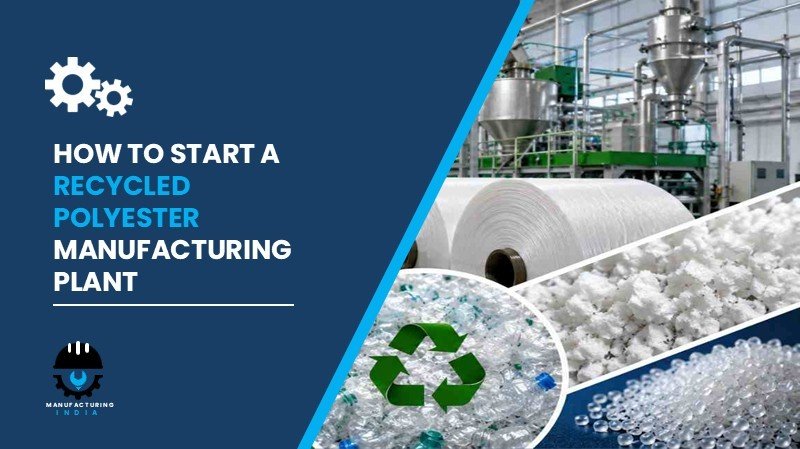
A recycled polyester manufacturing plant setup in India presents a compelling investment case, driven by rising demand from the textiles and apparel, home furnishings, automotive, packaging, industrial fabrics, and construction sectors. Recycled polyester, commonly known as rPET, is produced by transforming post-consumer PET bottles and post-industrial PET waste into high-quality fibers instead of relying on virgin petroleum-based plastic. As global brands expand the use of recycled content to meet sustainability targets, this facility is positioned to serve fast-growing, environmentally conscious demand across multiple industries.
India’s expanding textile and packaging base, along with a large volume of post-consumer plastic waste available for recycling, makes the country a strategically sound location for this production. Governments continue introducing regulations promoting plastic waste collection, recycling, and extended producer responsibility (EPR). For investors evaluating this type of plant in India, steady feedstock availability, policy support, and multi-sector demand strengthen the long-term investment case.
This investment benefits from policy-driven recycling mandates, cost-competitive feedstock sourcing, and consistent demand from textiles, packaging, home furnishings, and automotive industries. With gross margins of 20-28% and net margins of 7-14%, the project shows healthy profitability potential and a viable path to break-even under normal operating conditions.
What is Recycled Polyester?
Recycled polyester, often called rPET, is made by melting down existing plastics – disposable water bottles, fishing nets, and textile waste – and spinning them into new, high-quality fibers. This process mimics the strength and durability of traditional polyester while lowering carbon emissions and keeping plastic pollution out of landfills and oceans.
The recycled polyester manufacturing process uses sorting, washing, shredding, melting, extrusion, filtration, spinning, drawing, and winding as its core unit operations. Output serves textiles and apparel, home furnishings, automotive, packaging, industrial fabrics, and construction, with finished material used in polyester yarns, fabrics, clothing, carpets, home textiles, automotive textiles, filling materials, and industrial fabrics.
Cost of Setting Up a Recycled Polyester Manufacturing Plant in India
Overall cost for a recycled polyester manufacturing plant depends on capacity, technology selected, location, automation level, and regulatory compliance requirements.
1. Capital Expenditure (CapEx)
CapEx begins with land and site development, including land registration and boundary development; investors can evaluate SEZ or industrial estate options to streamline approvals. Civil works cover the processing shed, quality-control lab, storage, and administrative block.
Machinery represents the largest single share of capital investment. Key machinery required includes:
- Bottle sorting systems
- Bale breakers
- Shredders/granulators
- Washing and drying units
- Hot-washing systems
- Extrusion lines
- Melt filtration units
- Spinning machines
- Drawing units
- Texturizing machines
- Winding/packaging machines
Other capital costs cover ETP installation, pre-operative expenses, commissioning, and applicable import duties. The exact CapEx break-up is gated behind a sample report in the source data; what is confirmed is that machinery costs form the largest portion of capital expenditure, with land and site development forming a substantial secondary share.
Request a Sample Report for In-Depth Market Insights: https://www.imarcgroup.com/recycled-polyester-manufacturing-plant-project-report/requestsample
2. Operational Expenditure (OpEx)
Raw material cost is the largest OpEx component, with post-consumer PET bottles and post-industrial PET waste together accounting for approximately 40-55% of total operating expenses. Long-term supplier contracts help stabilize pricing and reduce feedstock volatility.
Utility costs – electricity, water, and steam – make up approximately 16-20% of OpEx. Other operating costs include transportation, packaging, salaries, maintenance, depreciation, and taxes. By the fifth year, total operational cost is projected to rise substantially due to inflation, market fluctuations, and rising demand.
3. Plant Capacity
The facility is designed with an annual capacity ranging between 10,000-40,000 MT, allowing economies of scale while maintaining operational flexibility. Capacity can be customized based on investor requirements, and profitability generally improves with higher capacity utilisation.
4. Profit Margins and Financial Projections
Financial projections cover capital investment, operating costs, capacity utilisation, and demand outlook, providing a view of ROI, profitability, and long-term sustainability, including NPV and payback period. Under normal operating conditions, gross profit margins typically range between 20-28%, while net profit margins range between 7-14%.
Why Set Up a Recycled Polyester Plant in India?
Crucial Sustainable Textile Material: Recycled polyester is a key raw material for sustainable textile and nonwoven applications, supporting apparel, home furnishings, automotive textiles, packaging, and industrial fabrics – positioning the plant as an important contributor to circularity and resource efficiency.
Moderate but Justifiable Entry Barriers: Consistent feedstock quality, advanced sorting and cleaning systems, and customer approvals create entry hurdles that favour experienced, cost-competitive producers, even though capital intensity is lower than for specialized polymer manufacturing.
Megatrend Alignment: Growing focus on circular economy practices, sustainable fashion, and plastic waste reduction is driving consistent demand, as apparel and technical textile industries increasingly adopt recycled materials.
Policy and Sustainability Push: Government initiatives promoting plastic waste management, recycling infrastructure, and extended producer responsibility indirectly support demand, while corporate sustainability commitments and recycled-content targets further encourage adoption.
Active Industry Investment: As per IBEF, the packaging industry’s growth is projected to reach Rs. 29,563 crore (USD 3.4 Billion) by 2027, reflecting the scale of downstream demand a recycled polyester manufacturing plant can tap into. The global market itself was valued at USD 16.60 Billion in 2025 and is expected to reach USD 36.96 Billion by 2034, growing at a CAGR of 9.3% from 2026 to 2034.
Local Supply Chain Preference: Textile manufacturers and converters increasingly favour local, dependable suppliers to shorten lead times and ensure consistent recycled-content supply, creating opportunities for regional producers with efficient collection and processing operations.
Manufacturing Process – Step by Step
The recycled polyester manufacturing process uses sorting, washing, shredding, melting, extrusion, filtration, spinning, drawing, and winding as the primary production method.
- Sorting: PET bottles and post-industrial PET waste are sorted using bottle sorting systems and bale breakers to separate usable feedstock from contaminants.
- Washing: Sorted material passes through washing and drying units and hot-washing systems to remove labels, adhesives, and residual contaminants.
- Shredding: Cleaned PET is processed through shredders/granulators to produce uniform flakes.
- Melting and Extrusion: Shredded material is melted and passed through extrusion lines to form a continuous polymer stream.
- Filtration: Melt filtration units remove impurities to ensure consistent fiber quality.
- Spinning: Spinning machines convert the filtered melt into continuous polyester filaments.
- Drawing: Drawing units stretch the filaments for required strength and fineness; texturizing machines are used where bulk or crimp is needed.
- Winding and Packaging: Winding/packaging machines finish and package the fiber for dispatch to textile, home furnishing, automotive, and packaging industries.
Key Applications
- Textiles & Apparel: Manufacturing of fibers and fabrics for clothing, sportswear, and fashion products.
- Packaging: Production of PET bottles, food and beverage containers, and sustainable packaging materials.
- Home Furnishings: Carpets, upholstery, curtains, bedding, and other household textile products.
- Automotive: Seat fabrics, carpets, insulation materials, interior trims, and other vehicle components.
Leading Manufacturers
Leading manufacturers in the global recycled polyester industry operate extensive capacities and diverse application portfolios. Key players include:
- Indorama Ventures Public Company Limited
- Alpek Polyester
- Clear Path Recycling
These companies serve textiles and apparel, home furnishings, automotive, packaging, industrial fabrics, and construction.
Timeline to Start the Plant
- Feasibility study and project report preparation
- Land acquisition and site development
- Regulatory approvals and environmental clearances
- Factory licence and fire safety compliance
- Machinery procurement and installation
- Raw material supplier agreements and supply chain setup
- Trial production and quality testing
- Commercial production launch
Licences and Regulatory Requirements
Starting this manufacturing unit in India requires several approvals:
- Business registration (Proprietorship, LLP, or Pvt Ltd)
- Factory Licence under the Factories Act
- Environmental Clearance from State Pollution Control Board
- GST Registration
- Fire Safety NOC
- Effluent Treatment Plant (ETP) operational clearance
- Occupational Health and Safety compliance
Key Challenges to Consider
High Capital Requirements: Machinery for sorting, washing, extrusion, filtration, spinning, and winding represents a significant upfront investment, making access to capital a key planning consideration for a recycled polyester manufacturing plant.
Raw Material Price Volatility: Since post-consumer PET bottles and post-industrial PET waste make up 40-55% of OpEx, fluctuations in feedstock availability and pricing directly affect profitability.
Regulatory Compliance: Environmental clearances, effluent treatment obligations, and safety protocols must be maintained continuously.
Consistent Feedstock Quality: Advanced sorting, cleaning, and quality-assurance systems are needed to maintain fibre quality standards and secure customer approvals.
Competition: Established players such as Indorama Ventures Public Company Limited, Alpek Polyester, and Clear Path Recycling operate at scale, requiring new entrants to compete on quality and cost.
Skilled Manpower: Operating extrusion lines, filtration units, and spinning and drawing equipment requires trained technical staff.
Frequently Asked Questions
1. How much does it cost to set up a recycled polyester manufacturing plant in India?
Total cost depends on capacity, technology, location, and automation level, covering land, civil works, machinery, and other capital costs; machinery is the largest share.
2. Is recycled polyester manufacturing profitable in India in 2026?
The plant demonstrates healthy profitability, with gross margins of 20-28% and net margins of 7-14% under normal operating conditions.
3. What machinery is required for a recycled polyester plant in India?
Key machinery includes bottle sorting systems, bale breakers, shredders/granulators, washing and drying units, hot-washing systems, extrusion lines, melt filtration units, spinning machines, drawing units, texturizing machines, and winding/packaging machines.
4. What licences and approvals are required to start a recycled polyester plant in India?
Requirements include business registration, a Factory Licence, Environmental Clearance from the State Pollution Control Board, GST Registration, Fire Safety NOC, ETP clearance, and Occupational Health and Safety compliance.
5. What raw materials are needed for recycled polyester manufacturing?
The primary raw materials are post-consumer PET bottles and post-industrial PET waste, together accounting for 40-55% of operating expenditure.
6. What are the environmental compliance requirements for a recycled polyester plant in India?
Plants require Environmental Clearance from the State Pollution Control Board, an operational Effluent Treatment Plant, and adherence to safety and monitoring protocols.
7. What is the best location to set up a recycled polyester plant in India?
Site selection should prioritise access to PET bottles or PET waste, proximity to target markets, and robust transportation and utility infrastructure.
8. What is the break-even period for this type of plant in India?
Break-even timing depends on capacity utilisation, pricing trends, and cost structure; the full feasibility report details payback period and NPV.
9. What government incentives are available for manufacturers in India?
Initiatives promoting plastic waste management, recycling infrastructure, extended producer responsibility, and circular economy practices indirectly support producers.
Key Takeaways for Investors
A recycled polyester manufacturing plant is well positioned to serve consistent demand from textiles and apparel, home furnishings, automotive, and packaging industries, backed by a global market valued at USD 16.60 Billion in 2025 and projected to reach USD 36.96 Billion by 2034 at a CAGR of 9.3%. The project shows financial viability across the proposed 10,000-40,000 MT annual capacity range, with gross margins of 20-28% and net margins of 7-14%. With raw material costs at 40-55% of OpEx, securing reliable, long-term PET waste supply contracts is central to protecting profitability. As sustainability commitments, EPR regulations, and recycled-content targets continue to expand, demand for this segment is set to remain on a sustained growth path through 2034.
About the Author